
Why does a vape box display its puff count boldly while hiding crucial details in much smaller print? SOEKE S9 28000 Puffs Tobacco and Cool Mint: Product Labelling Explained helps you examine those details systematically. However, packaging can differ across markets, production runs, and product versions.
A retailer photograph may not match the carton you receive. Therefore, always treat the physical package as your starting point and confirm its claims through reliable sources. This neutral guide helps adult consumers, retailers, and distributors interpret labels. It does not recommend using nicotine products.
1. SOEKE S9 28000 Puffs Tobacco and Cool Mint Labelling Explained
Where to look on the package
Begin with the front panel, where the most prominent product information usually appears. Look for the SOEKE brand, S9 model name, flavour, and 28000-puff designation. Additionally, note whether the puff figure includes qualifying language such as “up to.” Photograph the panel before opening the carton.
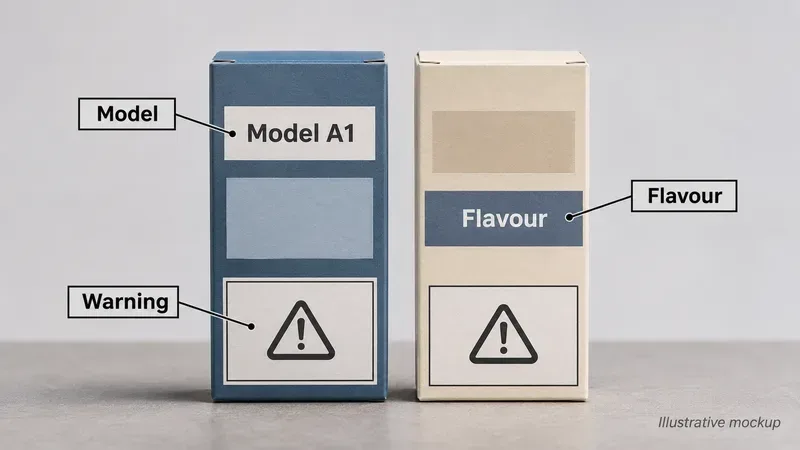
Next, inspect both side panels, the rear panel, and every end flap. These areas may carry nicotine information, liquid capacity, battery details, warnings, and distributor information. Moreover, examine any insert included inside the carton. Important instructions may appear there instead of on the outer package.
Finally, inspect the device without dismantling it. Look for printed or engraved markings near its base, charging port, or mouthpiece. Specifically, compare those markings with the carton before using or selling the product. Differences in model, flavour, or nicotine strength require clarification.
- Front panel: Brand, model, flavour, and headline puff claim.
- Side and rear panels: Warnings, ingredients, specifications, and responsible-business details.
- End flaps and base: Batch codes, serial numbers, dates, or verification labels.
- Insert: Operating, charging, storage, and handling instructions.
- Device body: Model markings, caution text, electrical symbols, or capacity details.
Placements may differ on the exact SOEKE S9 pack in your market. Therefore, this list describes inspection points rather than confirmed label locations. Record missing information as unverified. Do not fill gaps using photographs of another flavour or product version.
How Tobacco and Cool Mint identify variants
“Tobacco” and “Cool Mint” should first be treated as flavour identifiers. The printed names help distinguish one variant from another. However, a flavour name does not establish the complete ingredient mixture. Check the ingredient declaration and nicotine statement for the exact variant.
Packaging may also use colour, abbreviations, or variant codes. For instance, brown graphics might distinguish Tobacco, while green or blue may distinguish Cool Mint. Still, colour conventions can change between production runs. Match the written flavour name and code instead of relying on colour alone.
Most importantly, “Tobacco” does not prove that the liquid contains tobacco leaf. Likewise, “Cool Mint” does not automatically establish menthol content. Neither name confirms nicotine strength, manufacturing quality, or relative safety. Only verified declarations and supporting documentation can clarify those points.
2. What the 28000-Puff Count Means
How to read the advertised estimate
The 28000-puff figure describes an advertised performance estimate, not a guaranteed supply of identical puffs. First, check whether the package says “up to 28000 puffs.” That wording signals a possible maximum under particular conditions. However, those conditions may not match everyday use.
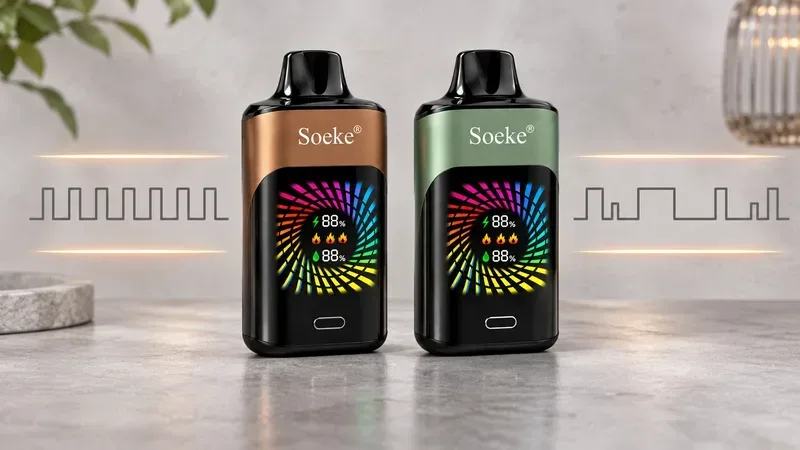
A useful test disclosure would identify draw duration, intervals between draws, device mode, and the counting endpoint. For example, a laboratory might use short machine draws at fixed intervals. It might stop when vapour output reaches a defined threshold. Longer human draws could consume more liquid and battery energy each time.
Additionally, determine whether the manufacturer publishes a test protocol for the exact model and variant. A general protocol for another device cannot confirm this claim. If no method appears on the carton, insert, or verified documentation, record the method as unverified. Do not invent an explanation from the number alone.
Without a disclosed method, the figure provides no guaranteed minimum and no fixed lifespan. It cannot tell you how many days the device will last. In fact, two adults could reach very different totals from comparable devices. Their drawing patterns and device conditions may differ substantially.
Why actual puff counts vary
Draw length directly affects liquid and energy use. A two-second draw and a five-second draw should not count as equal consumption events. Moreover, frequent draws can keep the coil warm and alter operating conditions. Wider spacing may allow the device to cool between uses.
Device settings can also matter when adjustable modes are available. A higher-output mode may produce more aerosol while consuming resources faster. Meanwhile, battery condition and charging behaviour can affect consistent power delivery. Liquid flow, temperature, and component tolerances may add further variation.
- Length and intensity of each draw.
- Frequency and spacing between draws.
- Selected output mode, when available.
- Battery charge, condition, and power delivery.
- Liquid consumption and coil performance.
- The test endpoint used to define an exhausted device.
Therefore, headline puff counts from different devices are not automatically comparable. One brand may use shorter test draws or a different endpoint. Another may test a lower output setting. Meaningful comparison requires reasonably similar test conditions and transparent methods.
3. How to Read Nicotine Strength, Ingredients, and Device Specifications
Nicotine concentration and ingredients
Start with the outer carton and any insert when checking nicotine strength. Then inspect the device for a matching label or engraving. Specifically, confirm that every visible declaration refers to the same flavour and market version. A nearby retailer listing cannot replace the physical label.
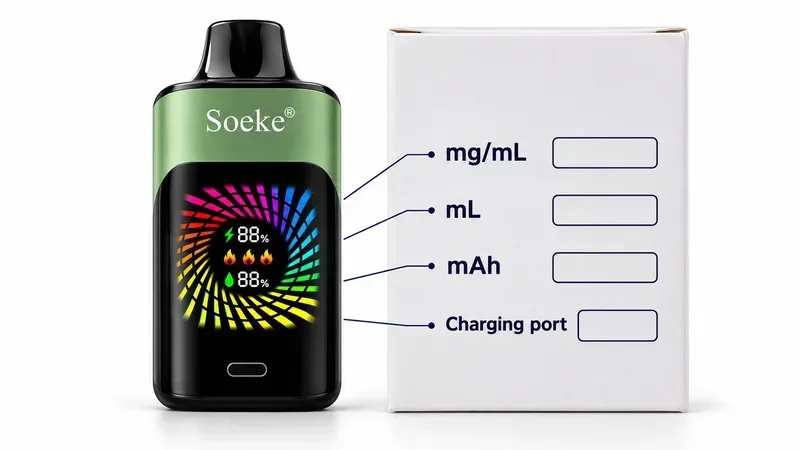
A value in mg/mL states how many milligrams of nicotine occur in each millilitre of liquid. For example, 20 mg/mL means each millilitre contains 20 milligrams under the stated formulation. It does not describe total nicotine unless you also know the liquid volume. Therefore, concentration and total quantity are different measurements.
A percentage requires more context before reliable conversion. The label must establish whether the percentage uses a weight, volume, or another basis. Moreover, formulation density may matter for some calculations. Do not assume that an unexplained percentage converts perfectly using a simple shortcut.
Look separately for an ingredient declaration. It may identify nicotine, flavourings, propylene glycol, vegetable glycerin, or other components. However, never assume one flavour shares another flavour’s ingredient list. Match the declaration to Tobacco or Cool Mint and the intended sales market.
If the carton and insert disagree, stop and document both statements. For instance, photograph the panels beside the product code and batch number. Then ask the supplier for written clarification. Retailers should avoid selecting the more convenient value without evidence.
E-liquid capacity and hardware details
Liquid capacity normally uses mL, meaning millilitres. Battery capacity normally uses mAh, meaning milliampere-hours. These measurements describe different parts of the product. Neither measurement independently confirms the advertised puff count.
A charging-port label may identify a connector type or permitted electrical input. Coil markings may describe coil design or resistance. Additionally, mode labels may identify adjustable power or airflow options. Check the instructions before operating any unfamiliar control.
A rechargeable disposable allows users to recharge its battery during the product’s intended service period. However, recharging does not necessarily make the device refillable or permanently reusable. The unit may still require disposal after its liquid or coil reaches its endpoint. Never open or refill it unless verified instructions expressly permit that action.
- mL: The stated volume of e-liquid.
- mAh: A battery-capacity rating, not a runtime guarantee.
- Charging input: The accepted voltage or current, when stated.
- Coil information: The heating-element type or resistance, when provided.
- Mode label: An available output or airflow selection.
If any specification is absent, label it unverified in your records. Furthermore, seek official documentation tied to the exact model, flavour, market, and batch. Avoid borrowing capacity figures from visually similar products. Similar housing does not prove identical internal hardware.
4. Nicotine Warnings, Age Restrictions, and Packaging Symbols
Health warnings and adult-use markings
Search the principal panels for a nicotine addiction warning. Then examine side panels for age, handling, and storage statements. In the United States, the FDA warning requirements explain wording, visibility, placement, and formatting rules. Other markets can require different statements.
Vaping carries health risks, and nicotine can cause dependence. These products are only for adults of legal age where local law permits them. Most importantly, minors and non-smokers should not use them. Pregnant people and anyone advised to avoid nicotine should also avoid use.
The CDC health guidance states that no tobacco product, including e-cigarettes, is safe. It also advises youth, young adults, and pregnant people not to use e-cigarettes. Additionally, adults who never used tobacco should not start. A flavour description or sleek package does not reduce these concerns.
Handling instructions may warn against swallowing liquid, skin contact, heat, or damaged batteries. Storage language may require a cool, dry place away from sunlight. Therefore, read every caution before opening the pack. Do not treat small print as optional information.
Exact warning wording and legal-age markings vary by jurisdiction. For example, an age numeral may reflect a particular market’s minimum age. However, the printed symbol does not override local law. Sellers must check the rules that apply at the point of sale.
What common symbols refer to
An age numeral inside a circle commonly indicates an adult-use restriction. A caution triangle usually points to a hazard or instruction requiring attention. Meanwhile, material recycling marks can identify packaging materials. Their presence does not guarantee acceptance by every local recycling program.
A crossed-out wheeled bin generally signals separate collection for electrical or electronic waste. However, inspect which item carries the mark. A mark on the carton may concern packaging, while a device mark may concern electronics or its battery. Do not assume one symbol covers every component.
- Age numeral: A market-specific age restriction or adult-use notice.
- Caution triangle: A prompt to read safety or handling information.
- Material code: Identification of paper, plastic, or another packaging material.
- Recycling arrows: Material information, not guaranteed curbside acceptance.
- Crossed-out bin: Separate collection may apply to electronics or batteries.
Local collection guidance determines the correct disposal route. The EPA e-cigarette disposal guidance advises against household trash and recycling in the United States. Specifically, lithium batteries can cause fires when damaged. Nicotine can also endanger workers and the environment.
5. How to Check Authenticity, Batch Codes, and Dates
Where codes appear and what they identify
Examine end flaps, base panels, seals, and applied stickers under good lighting. Look for labels such as LOT, batch, serial, QR, or security code. Additionally, check whether a scratch panel conceals a verification number. Do not damage a seal before deciding whether to accept the product.
A batch or lot code usually connects multiple units to one production run. A serial number may identify a single unit. However, code formats differ among manufacturers and versions. A string of characters should not be decoded through guesswork.
A QR code may lead to product information, verification, instructions, or marketing. Before entering any code, confirm the manufacturer’s verification channel independently. For instance, obtain the destination from verified packaging or established supplier documentation. Avoid submitting codes through a copied retailer image or unexpected message.
Also compare the physical carton with reliable information for the same version. Match the flavour, market, nicotine declaration, capacity, model, and pack design. Notably, an authorised retailer’s image may still show older packaging. A visual difference calls for investigation, not an automatic authenticity judgment.
- Photograph the complete unopened carton.
- Capture every panel and the intact seal.
- Record the lot, serial, and date exactly.
- Note the seller, purchase date, and invoice reference.
- Save verification results without publicly exposing unique codes.
Do not share a complete scratch code or serial number in a public review. Someone else could copy and submit it first. Furthermore, successful code recognition does not prove every product detail by itself. Confirm the code, packaging, seller, and specifications together.
How to check dates and spot discrepancies
Look for MFG, DOM, EXP, or best-before wording near the batch details. MFG or DOM often indicates manufacture, while EXP commonly indicates expiry. However, rely on the label’s stated legend or supplier explanation. Abbreviations can vary between markets.
Date formats can also create confusion. For example, 04/06 may mean April 6 or June 4. Therefore, do not decode an ambiguous date without supporting information. Ask the supplier to confirm the format in writing.
Inspect seals for lifting, double application, cuts, or adhesive residue. Also look for blurred printing, inconsistent fonts, spelling differences, or overprinted specifications. Poor printing alone does not prove counterfeiting. Still, several unexplained discrepancies justify closer review.
- Mismatched nicotine strength between the carton and device.
- Different flavour names on separate panels.
- Missing importer, manufacturer, or traceability information where required.
- A batch code that appears altered or duplicated.
- A verification code that repeatedly fails through the confirmed channel.
- A date that conflicts with supplier records or storage guidance.
When discrepancies appear, keep the product unused and retain its packaging. Retailers should isolate affected units from the same lot. As a result, the supplier can examine consistent evidence. Escalate unresolved concerns to the relevant local regulator.
6. What to Do About Missing Labels, Safety Concerns, and Disposal
How to check local requirements and handle missing information
Label rules depend on where a product will enter sale. Compare the pack with current regulator guidance for that intended market. Specifically, check warning language, ingredient disclosure, nicotine concentration, capacity limits, and age rules. Also review local restrictions on flavours, imports, and sales channels.
The FDA overview of e-cigarette regulation provides United States information for consumers, retailers, importers, and manufacturers. However, it does not determine requirements in another country. Consult the responsible regulator for the destination market. Rules can also change, so verify them near the transaction date.
Packs can vary by market, version, and production run. A retailer listing might use a stock image from another jurisdiction. Therefore, compare like with like. Match the SOEKE S9 model, Tobacco or Cool Mint flavour, nicotine version, and intended market.
Consumers should pause the purchase or use when essential information is missing. Examples include absent nicotine strength, unreadable warnings, unexplained capacity, or conflicting product codes. Additionally, ask the seller for photographs or written documentation before proceeding. Avoid relying on verbal reassurance alone.
Retailers and distributors need a more structured response. Hold affected stock away from sale until the discrepancy receives proper review. Furthermore, preserve invoices, shipping records, carton photographs, and lot information. Contact the supplier or regulator with precise evidence.
- Record the exact product and flavour name.
- Photograph every carton panel and device marking.
- List each missing or conflicting statement.
- Identify the lot, serial number, and date markings.
- Document the supplier and delivery information.
- Seek written confirmation before releasing held stock.
Do not correct a commercial label with an improvised sticker unless the responsible authority permits that process. Likewise, do not combine cartons and devices from different batches. Such actions can weaken traceability. They may also conceal the original problem from later reviewers.
How to store, charge, and dispose of the device safely
Keep unopened and used devices away from children and pets. Store them securely, following verified temperature and moisture instructions. Moreover, prevent access to loose devices in bags, drawers, or vehicles. Small children may mistake colourful products for ordinary consumer items.
Avoid contact with leaked liquid. Nicotine exposure can occur through swallowing, inhalation, skin, or eyes. If exposure may have occurred, seek prompt poison-control or medical advice appropriate to your location. For severe symptoms, contact emergency services immediately.
The CDC nicotine exposure information notes that acute exposure can be toxic. Therefore, wash exposed skin according to professional guidance and remove contaminated clothing. Do not induce vomiting unless a medical professional instructs you. Keep the package available when requesting help.
Only charge the device according to verified instructions for the exact version. Use the stated electrical input and a compatible power source. Additionally, place the device on a stable surface away from heat and combustible materials. Avoid unattended charging whenever the instructions warn against it.
Never use or charge a device that leaks, swells, overheats, smells unusual, or shows impact damage. Stop using it if the charging port becomes loose or scorched. Meanwhile, keep the damaged unit away from ignition sources. Ask the supplier or local waste authority how to handle it safely.
Do not puncture, crush, burn, or dismantle the device. Keep an embedded battery in place unless authorised instructions require specialist removal. In fact, opening the housing can expose liquid and damage the battery. A damaged lithium battery can create a serious fire risk.
Ask your local waste authority where it accepts complete vaping devices. Suitable routes may include household hazardous-waste or specialist electronic-waste collection. However, programs differ between cities and countries. Confirm acceptance before travelling to a collection point.
Keep the complete device out of household trash and curbside recycling. The EPA explains that compaction can damage lithium batteries and start fires. Additionally, residual nicotine may expose waste workers or enter the environment. Follow the EPA disposal guidance where it applies.
- Keep the device away from children, pets, heat, and moisture.
- Avoid leaked liquid and seek advice after suspected exposure.
- Follow verified charging limits for the exact product version.
- Stop using leaking, swollen, hot, or damaged devices.
- Leave embedded batteries inside the device.
- Use an approved local collection route for the complete unit.
- Never place the device in household trash or curbside recycling.
Conclusion
The 28000-puff count remains an estimate rather than a guaranteed lifespan. Tobacco and Cool Mint identify variants, but they do not establish ingredients, strength, quality, or safety. Therefore, check nicotine concentration, capacity, warnings, symbols, dates, and traceability codes against the exact pack. Market-specific rules and documentation matter.
Photograph every carton panel and the batch code before using or selling the product. Then compare them with verified information for the same version and intended market. Finally, resolve missing or conflicting details with the supplier or local regulator before proceeding.







