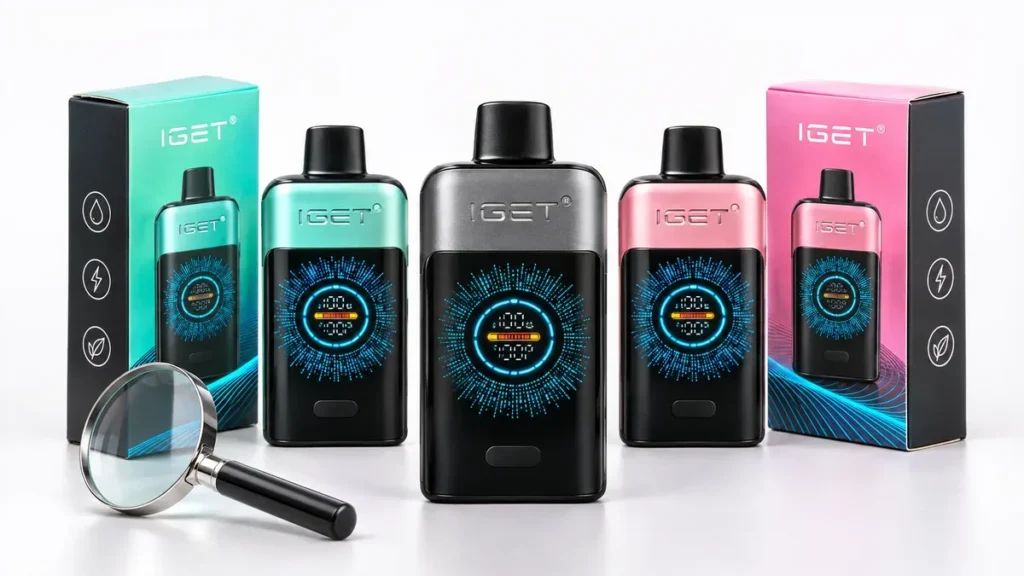
Two sellers can promise 10,000 puffs while listing entirely different liquid volumes. So, which figure actually appears on the package? The question behind IGET Bar Pro 10000 Puffs: E-Liquid Capacity and Labelling Accuracy sounds simple. However, the available evidence does not provide a verified answer for every variant and market.
Search results often blend several evidence types. Retailer descriptions may appear beside package photographs, manufacturer claims, and laboratory findings for unrelated devices. As a result, a capacity figure can lose its original context. A repeated number may look authoritative, even when every seller copied the same description.
Three measurements also cause confusion. Puff count describes claimed device output under particular conditions. Millilitres describe the liquid volume inside the device. Meanwhile, milligrams per millilitre describe nicotine concentration, not reservoir size or total puff output.
Therefore, each claim needs a traceable source. A clear package panel can document what one product label declares. However, only a suitable measurement can estimate the liquid actually present. The following sections separate those questions and explain what stronger evidence would require.
1. IGET Bar Pro 10000 Puffs E-Liquid Capacity and Labelling Accuracy
What the available sources establish
The packaging volume for the exact variant and market remains unverified in the reviewed sources. A retailer comparison of published specifications records two competing figures. Some retailer listings report 15 mL, while others report 20 mL. Neither figure should automatically become a confirmed package statement.
Specifically, both numbers come from retailer reporting within that comparison. The page does not present an independent fill-volume result for the exact model. Moreover, agreement among several stores would not prove either figure. Sellers may copy product data from distributors, catalogues, or shared listing templates.
The difference is substantial. A 20 mL claim is one-third larger than a 15 mL claim. However, that calculation only compares the published numbers. It does not show which volume appears on a package or how much liquid a tested device contains.
Identify the product before reading the number
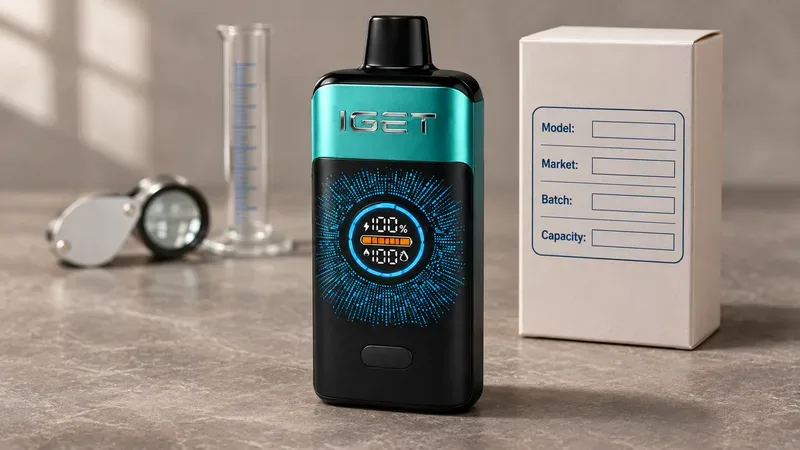
A useful package record must identify more than the words “Bar Pro.” Similar names can cover different products, revisions, or regional releases. Therefore, record the full model name and advertised puff count. Also note the flavour, nicotine marking, market, and visible importer details.
Next, look for a production date, packaging revision, batch number, or lot code. These details help connect the label to a specific physical sample. Additionally, photograph every relevant panel under clear lighting. A cropped front image rarely proves what the side or back panel states.
A strong photo record should capture several identifiers:
- The complete product and variant name.
- The 10,000-puff wording, including any qualifier such as “up to.”
- The stated liquid volume, if the package provides one.
- The nicotine declaration and its unit.
- The batch, lot, production, or expiry information.
- The intended market, importer, or responsible supplier.
If a dated, legible photograph becomes available, transcribe the wording exactly. For instance, write “20 mL printed on the side panel” rather than “the device contains 20 mL.” Most importantly, state which package the image documents. One package cannot establish the labelling used across every market or production revision.
2. How to Trace a Capacity Figure to Its Source
Separate declarations from measurements
Packaging and manufacturer documents serve different purposes. A legible package records a declaration for the photographed sample. Meanwhile, a manufacturer specification records what the company declares for the named version. Neither source independently proves the physical fill inside a device.

For every record, capture the source, access date, market, and exact wording. Additionally, save enough surrounding context to identify the product. A lone screenshot showing “20 mL” may belong to another model. Therefore, the product name and specification should appear together whenever possible.
Retailer listings require extra caution. Treat each volume as a seller claim unless the page supplies a clear package image or traceable manufacturer document. Moreover, several stores may use identical catalogue text. Repetition can reflect shared copying rather than separate confirmation.
What independent evidence should disclose
A credible measurement report should name the laboratory and exact product tested. It should also identify the market, batch, sample count, and analytical method. Furthermore, the report should provide results rather than simply repeating package values. Without those details, readers cannot judge whether the findings apply to their device.
An evidence table keeps these distinctions visible:
| Source type | Variant and market | Date | Reported figure | What the evidence supports |
|---|---|---|---|---|
| Physical package photograph | Exact identifiers must remain visible | Photo and package dates | Exact printed wording | A label declaration for that sample |
| Manufacturer document | Named version and intended market | Publication or revision date | Declared specification | The company’s claim for that version |
| Retailer listing | Whatever version the seller identifies | Access or update date | 15 mL or 20 mL | A seller-published claim |
| Independent laboratory report | Tested units, batches, and market | Purchase and test dates | Measured result and uncertainty | Findings for the tested samples |
Notably, evidence strength depends on traceability, not presentation quality. A polished product page can still contain a typing error. On the other hand, a plain laboratory report may provide sample-level results and uncertainty. Therefore, follow each number back to its earliest identifiable source.
Keep label claims and measured findings in separate notes. For example, record “retailer reports 15 mL” beside its source. Then reserve “measured 15 mL” for a documented test result. This small wording change prevents a seller specification from becoming an invented laboratory finding.
3. What the 10,000-Puff Claim Says About Liquid Volume
Puffs do not convert reliably into millilitres
An advertised puff count cannot establish stored liquid volume. Puff size changes with duration, airflow, device power, and user behaviour. Moreover, liquid consumption per draw varies as the coil and battery operate. Therefore, dividing 10,000 by an assumed conversion rate produces only an estimate.
Consider two users taking different draws. One takes short, gentle puffs, while another inhales deeply for several seconds. The second user may consume more liquid during each draw. As a result, both users can obtain very different totals from identical devices.
The word “millilitres” can also describe two unrelated quantities. A testing machine may draw a stated volume of air during one puff. Separately, the device may hold a stated volume of e-liquid. Therefore, a 55 mL machine puff does not mean the machine consumed 55 mL of liquid.
Machine settings shape the final count
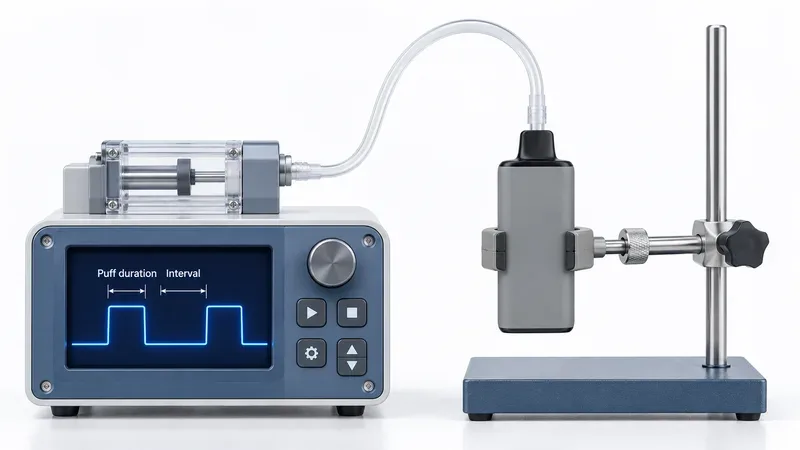
A puff machine creates repeatable draws under controlled conditions. It can regulate puff duration, airflow, drawn air volume, and intervals between puffs. Additionally, the operator may control device position and environmental conditions. These settings let researchers compare samples under the same regime.
The CORESTA guidance on vaping regimes explains considerations for machine testing of e-vapour devices. However, a regime does not create one universal conversion between puffs and liquid volume. The chosen settings still affect aerosol production and device lifetime. Consequently, advertisers should disclose the regime supporting a puff claim.
A lifetime test also needs a stopping rule. For instance, the laboratory might stop when aerosol mass falls below a stated threshold. Alternatively, it might stop after battery failure, persistent dry puffs, or another defined condition. Without that endpoint, “10,000 puffs” lacks a reproducible finish line.
Before comparing an advertisement with a laboratory result, check for these details:
- Puff duration in seconds.
- Air volume or flow rate for each draw.
- The interval between consecutive puffs.
- The number and batch of devices tested.
- Battery charging or conditioning procedures.
- The stopping point used to define device exhaustion.
If the advertiser omits those settings, the count remains difficult to evaluate. In fact, two careful laboratories could report different totals after using different regimes. Most importantly, neither result would directly prove a 15 mL or 20 mL fill. Puff performance and fill volume require distinct evidence.
4. How Labs Measure E-Liquid Volume in Sealed Disposables
Sample selection comes first
A useful test begins with documented, unused devices. Researchers should record the full model, flavour, market, seller, purchase date, and package identifiers. Additionally, they should photograph intact packaging before opening each unit. This record helps prevent confusion with a similar model or revision.
Testing one unit provides limited information. A single result cannot show whether devices vary across a batch. Moreover, one batch cannot describe every production run or market version. Therefore, stronger studies include multiple units and, when practical, multiple batches.
Researchers should also explain how they selected samples. Random selection reduces the risk of choosing only convenient units. Meanwhile, sealed storage protects samples from leakage, evaporation, or contamination before testing. These controls strengthen the connection between the purchased product and the reported measurement.
From liquid mass to estimated volume
Labs can extract liquid from absorbent material inside a disposable device. They then determine the recovered liquid’s mass using a calibrated balance. Next, they measure or estimate the liquid’s density. Dividing mass by density gives an estimated volume.
The relationship is straightforward: volume equals mass divided by density. For instance, 16.8 grams divided by 1.12 grams per millilitre equals 15 millilitres. However, the arithmetic is only as reliable as the extraction and density measurements. Liquid remaining inside the device can lower the recovered amount.
A published survey of disposable vape volume and nicotine content illustrates an extraction-based approach. Researchers used centrifugation to recover e-liquid from device components. They calculated density by dividing an aliquot’s mass by its volume. For some products, the researchers used a stated density assumption based on published results.
The survey also recognized that extraction might not recover every drop. Therefore, its authors applied an adjustment for assumed extraction losses. That choice shows why the method section matters. A final number can change when researchers use different recovery assumptions or density values.
Residual liquid and measurement uncertainty
Disposable devices often hold liquid in porous or absorbent material. Some liquid may remain trapped after disassembly or centrifugation. Additionally, small amounts can stay on tools, containers, or internal surfaces. These losses can make recovered volume lower than the original factory fill.
Density introduces another consideration. Flavour ingredients and the proportions of major liquid components can affect density. Consequently, a generic density value may not perfectly represent every formulation. Direct density measurement usually provides stronger support than an unexplained assumption.
Every instrument also has limits. Balances, pipettes, and volumetric equipment contribute measurement uncertainty. Moreover, extraction repeatability may vary between technicians or device designs. A careful report describes these influences and explains any correction applied to the results.
How to interpret a laboratory result
A complete report should state the sample count and each unit’s result. At minimum, it should provide the range and a suitable summary value. Furthermore, readers need any stated measurement uncertainty. Reporting only a rounded average can hide meaningful differences between units.
Unit-to-unit variation and measurement uncertainty are not the same issue. Variation describes real differences observed among tested devices. In contrast, uncertainty describes doubt around each measurement process. Therefore, a wide result range does not automatically mean the laboratory performed poor measurements.
Suppose five devices yield estimated volumes between 14.4 mL and 15.6 mL. That range describes differences among those five samples. If the stated uncertainty equals plus or minus 0.3 mL, that value describes measurement confidence. Both pieces of information help readers compare results with a label declaration.
The cited survey demonstrates why testing can reveal label differences across disposable products. However, its findings should not transfer automatically to an untested model. No independent fill-volume result for this exact IGET model appeared in the reviewed sources. Therefore, the 15 mL and 20 mL figures remain retailer-reported specifications, not verified measurements.
5. Why Packaging and Retailer Capacity Figures Can Differ
Several explanations may fit the conflict
Different market versions could carry different specifications. Manufacturers sometimes adjust products for local requirements, distributors, or supply arrangements. Additionally, a later production revision may use updated packaging or internal components. A seller may overlook those distinctions when building one general product page.
Similar model names can also cause errors. A store might combine specifications from a related device with the Bar Pro 10000 listing. Moreover, copied descriptions can spread one mistake across many websites. A typing error may then appear more credible because several pages repeat it.
The word “capacity” may create another mismatch. One source might describe the reservoir’s theoretical maximum. Another might describe the intended factory fill. However, those values need not match because manufacturers may leave headspace or use absorbent material that retains liquid.
How to reconcile 15 mL and 20 mL
Start by placing the sources side by side. Compare their publication dates, named markets, product images, flavour variants, and visible identifiers. Specifically, inspect the wording around each volume. “Tank capacity,” “pre-filled liquid,” and “contains” may describe different concepts.
Next, check whether either source shows the actual relevant packaging panel. A clear image should connect the volume to the complete product identity. Furthermore, look for a batch or revision marker. Without that context, even a genuine package image may document another release.
When sources still conflict, preserve the disagreement. State that one retailer reports 15 mL and another reports 20 mL. Do not average the figures or choose the more common number. As a result, readers can see precisely what the evidence establishes.
Several forms of evidence could resolve the discrepancy:
- A dated, legible package photograph for the exact market version.
- A traceable manufacturer document naming that specific variant.
- A laboratory report covering identified, unopened retail samples.
- Multiple sample results with density, method, and uncertainty details.
Even then, one finding may apply only to the tested revision. Therefore, future comparisons should retain dates and identifiers. Product packaging can change while an older retailer description remains online. Traceability matters more than selecting a single convenient number.
6. E-Liquid Volume in mL vs Nicotine Concentration in mg/mL
Two units answer different questions
Millilitres measure liquid volume. By contrast, milligrams per millilitre describe nicotine mass within each millilitre of liquid. Therefore, a 15 mL capacity claim does not reveal nicotine concentration. The package or a chemical analysis must provide separate evidence.
For illustration, imagine a verified 15 mL fill at 20 mg/mL. Multiplying those values gives 300 mg of nicotine in the original liquid. However, that calculation requires both inputs to be accurate. It also describes contained nicotine, not the amount a person absorbs.
A 20 mL device could contain a lower concentration than a 15 mL device. Conversely, the smaller device could contain more total nicotine if its concentration is much higher. Consequently, volume alone cannot establish strength, exposure, or delivered dose. Device performance and user behaviour add further differences.
Percentage labels need context
Some labels express nicotine with a percentage. Before converting that figure, check what the percentage represents. It could refer to mass per volume, mass per mass, or another declared basis. Additionally, nicotine salt wording may describe formulation without clarifying the calculation basis.
A reader should not assume every percentage converts identically into mg/mL. Instead, record the exact label wording and any explanatory statement. If the basis remains unclear, describe the percentage as printed. Avoid presenting an inferred conversion as a confirmed specification.
Laboratories also test volume and nicotine concentration differently. Fill-volume work involves extraction, mass, density, and volume calculations. Meanwhile, nicotine analysis uses a suitable chemical method and calibrated standards. Therefore, passing one measurement does not validate the other.
A complete assessment may report three separate findings:
- The label’s stated liquid volume.
- The measured liquid volume for each tested unit.
- The measured nicotine concentration in the extracted liquid.
Researchers can multiply measured volume by measured concentration to estimate total nicotine in the recovered liquid. However, uncertainty from both measurements affects that estimate. Most importantly, total contained nicotine does not equal nicotine absorbed by a user. Aerosol generation, inhalation, and biological uptake remain separate questions.
Conclusion
The available evidence does not settle the exact packaging claim for every IGET Bar Pro 10000 variant. Retailer-reported figures of 15 mL and 20 mL remain in conflict. Moreover, repeated seller listings do not turn either number into a verified label declaration. A dated package image must show the relevant panel and exact product identity.
The 10,000-puff claim cannot establish liquid volume. Its meaning depends on puff duration, airflow, intervals, sample selection, and a defined stopping point. Therefore, any comparison with laboratory performance needs the advertiser’s test settings. Millilitres of drawn air must also remain separate from millilitres of stored liquid.
An independent fill measurement should identify the variant, market, batch, and tested samples. It should explain extraction, density, corrections, results, and uncertainty. Additionally, nicotine concentration needs a separate chemical measurement. Neither capacity nor puff count can prove nicotine strength.
When checking any capacity figure, record the exact model, market, and source date. Then look for the relevant packaging panel or a traceable laboratory report. Until that evidence appears, describe 15 mL and 20 mL as retailer claims. Do not present either figure as a confirmed label statement or measured result.