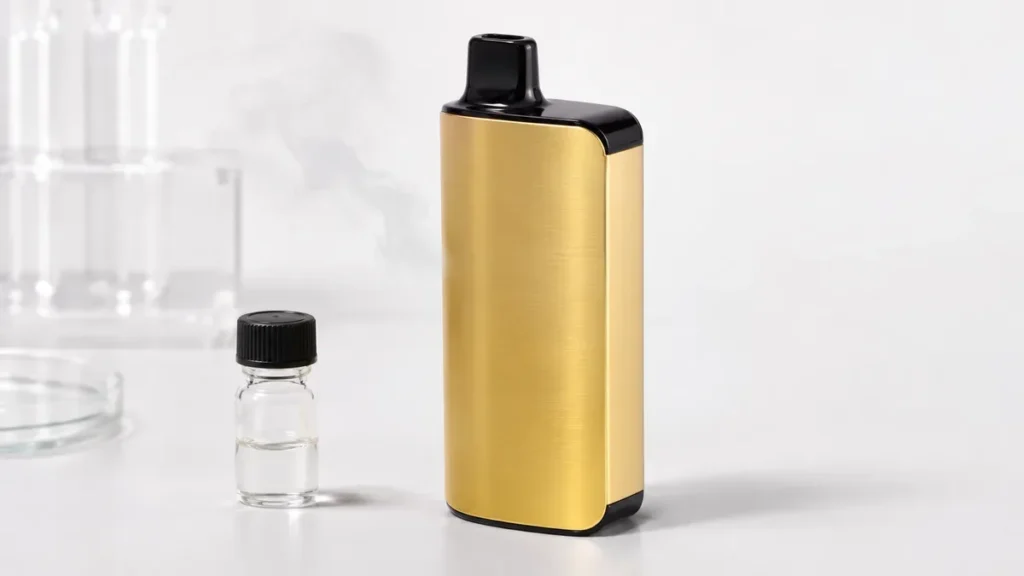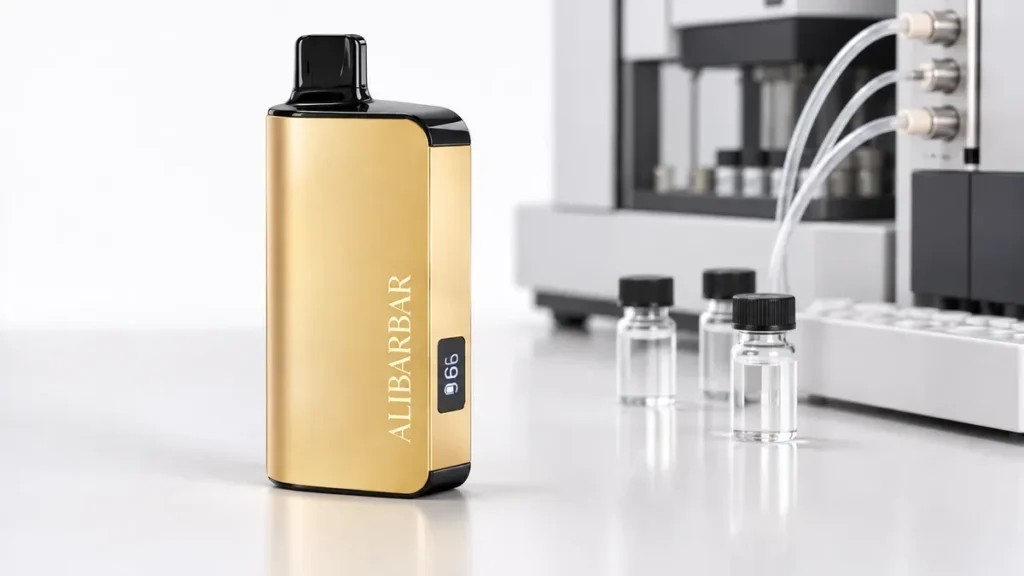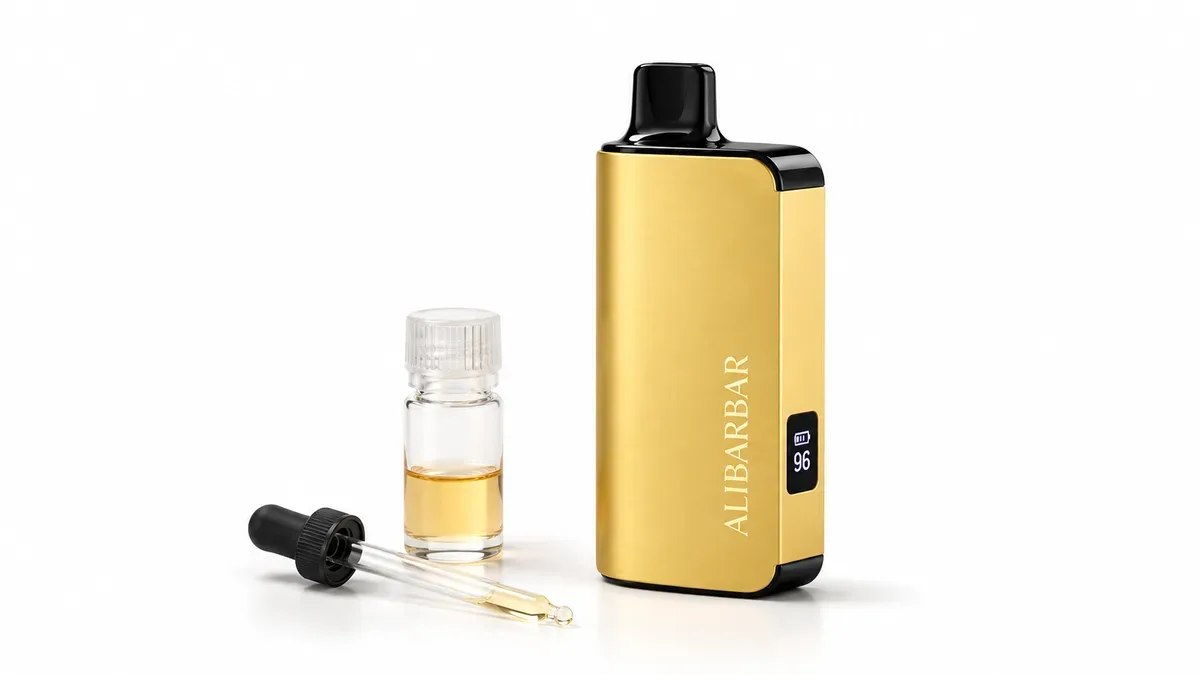
If a vape label says “9000 puffs,” what can that number tell you about the liquid inside? ALIBARBAR INGOT 9000 Puffs: Understanding E-Liquid Composition Claims starts with a distinction between an advertised count and a chemical measurement. However, packaging, retailer listings, and lab reports can appear side by side, making their claims look equally well supported. The difference becomes clearer when you ask what each source actually checked.
For instance, a box can show how a company describes a flavor, while a lab can measure nicotine in a submitted sample. A puff test answers a separate question about how a device performs under defined conditions. Therefore, checking a claim starts with identifying the exact device and finding evidence that answers the right question.
ALIBARBAR INGOT 9000 Puffs and Its E-Liquid Composition Claims
What the product name tells you
ALIBARBAR INGOT identifies the device discussed here, and “9000 Puffs” gives its advertised puff count. The supplied product name includes no ingredient list, nicotine concentration, or laboratory results. Therefore, those details remain unverified for the exact device described here. A familiar product name can help you identify a listing, but the details still need their own sources.
For instance, imagine a package with “9000 Puffs” on the front and a flavor name underneath. The count describes advertised performance, while the flavor name describes how the seller presents the product. Neither phrase identifies the chemicals in the reservoir. However, a side panel might carry a separate ingredient disclosure or nicotine statement worth recording word for word.
What each source can establish
- Packaging and manufacturer materials document claims the seller or manufacturer makes about the product. Look for details that tie the statement to a particular version, flavor, or market.
- Retailer listings document what a particular retailer reports. A listing may repeat a manufacturer’s description, summarize it, or use a photo from another version.
- Independent laboratory reports document what a lab measured in the submitted sample under the stated testing conditions. The sample description and method determine how far you can apply the findings.
For example, three shops could repeat the same nicotine figure because they copied a common description. That repetition gives you three places where the claim appears and potentially just one source for it. Similarly, a cropped package photo might show a percentage while leaving out the flavor or market. A full image makes it easier to check whether those details match the claim.
However, a discrepancy between sources can be a finding in its own right. Suppose a reseller page describes one flavor while the package photo shows another. Keep each claim beside its source and record the mismatch. That simple record helps you see which questions remain open before you look for stronger evidence.
How to Read a Vape Ingredient Label
Recognize common ingredient categories
The U.S. Food and Drug Administration describes propylene glycol, vegetable glycerin, flavorings, and nicotine as common e-liquid ingredients. Propylene glycol and vegetable glycerin can serve as base liquids that carry other ingredients. However, the FDA’s general description cannot establish what the ALIBARBAR INGOT 9000 Puffs contains. For that, look for a product-specific source linked to the version you are checking.
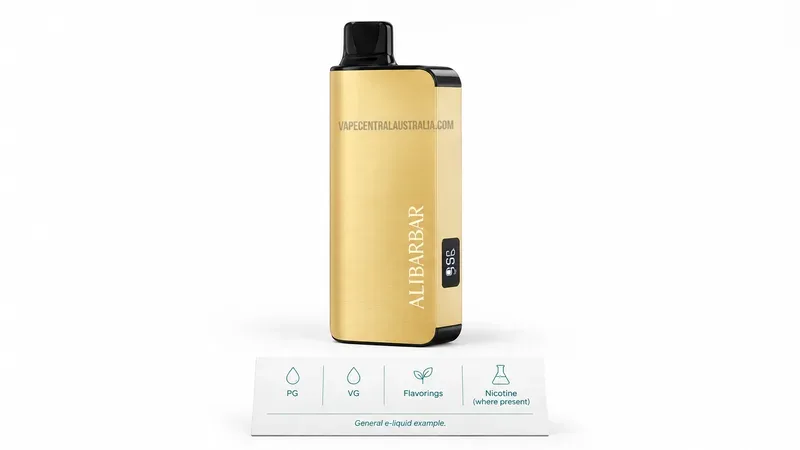
- Propylene glycol may appear as PG. If a matching disclosure names it, you can record that as a declared ingredient.
- Vegetable glycerin may appear as VG. A label can name it without stating how much the liquid contains.
- Flavorings can appear as a single category or as individually named substances. A flavor name on the front gives you less chemical detail than either type of disclosure.
- Nicotine may appear in an ingredient list, a warning, or a separate concentration statement. The wording and units determine what the label actually claims.
Check how much detail the disclosure gives you
For instance, a label that says “flavorings” identifies a category without naming the compounds within it. A more detailed disclosure might name one flavoring compound and leave others grouped together. Additionally, a list can name every substance the company chooses to disclose and still give no quantities. Record the level of detail the source provides instead of filling gaps from similar products.
Similarly, a statement such as “contains propylene glycol and glycerin” gives you two declared ingredients. You would need a separate quantitative statement to identify their proportions. If a source gives a ratio, record which ingredient comes first and whether it explains how the ratio was measured. Those details matter when you compare it with another disclosure.
However, a missing entry can be hard to interpret if you only have one panel or a cropped image. The source might show a shortened description or send readers to a separate ingredient statement. A brand logo and a recognizable flavor color do little to resolve that gap. Instead, look for the full disclosure and check which product version it covers.
Finally, keep the label wording separate from any laboratory result in your notes. A label may disclose a broad category, while a lab identifies only the particular compounds it tested. That difference explains why a report can answer a narrow question even when the ingredient list remains incomplete.
What Nicotine Percentages and mg/mL Mean on Vape Labels
Copy the full nicotine statement
Start with a label or manufacturer statement that matches the exact variant. Then copy the nicotine wording, number, and unit together so that someone else can check your reading. For instance, “contains nicotine,” “20 mg/mL,” and “2%” make claims with different levels of detail. These examples illustrate possible label formats and carry no finding about this product.
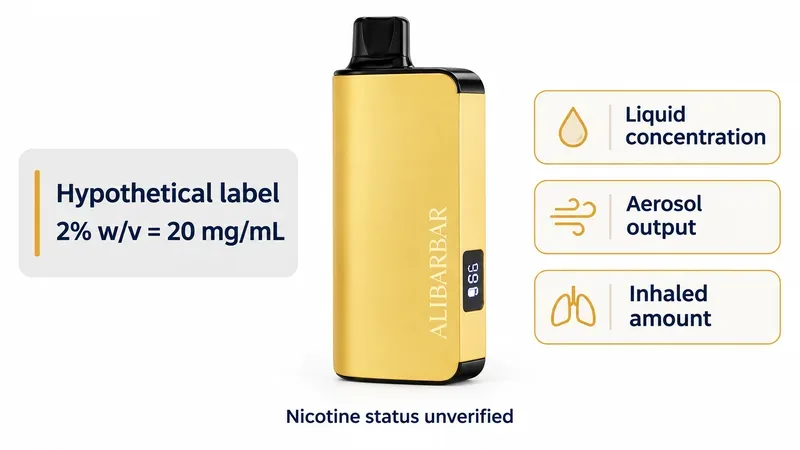
Specifically, mg/mL means milligrams of nicotine per milliliter of liquid. A hypothetical concentration of 20 mg/mL describes 20 milligrams in each milliliter of that liquid. However, a percentage needs a stated basis before you can convert it reliably. A percentage by mass describes a share of the liquid’s mass and requires its density for conversion to mg/mL.
For instance, 2% weight by volume means 2 grams per 100 milliliters, which equals 20 mg/mL. A 2% figure by mass means 2 grams per 100 grams of liquid. Therefore, a label that gives only “2%” leaves out a detail you need for an exact conversion. Preserve the original unit while you look for the manufacturer’s definition.
Keep concentration, total content, and exposure separate
- Liquid concentration describes how much nicotine a given volume or mass of liquid contains. Read the unit alongside the number.
- Total nicotine in the reservoir describes the amount across the entire liquid fill. Estimating it from mg/mL requires the liquid volume for that same reservoir.
- Inhaled nicotine describes the amount a person breathes in. It depends on what enters the aerosol and how much of that aerosol reaches the person.
For instance, if a hypothetical reservoir contains 2 mL at 20 mg/mL, that liquid contains 40 mg in total. The calculation describes the reservoir at the stated fill volume and concentration. However, it gives no direct measurement of nicotine in the aerosol or the amount a person inhales. A lab would need different measurements to address those questions.
Meanwhile, the product name and advertised puff count provide no nicotine figure for the exact variant. If you lack a matching label or report, record its nicotine status as unverified. That wording preserves the difference between missing documentation and a documented claim of zero nicotine.
What the Advertised 9000 Puffs Actually Measures
Look for the conditions behind the count
For the ALIBARBAR INGOT 9000 Puffs, the name gives an advertised count. A published protocol would help you determine whether that count came from machine testing and how the test worked. Specifically, a useful protocol would define what counts as one puff and when the machine stops counting. Small differences in those definitions can make two figures hard to compare.
For instance, the Cooperation Centre for Scientific Research Relative to Tobacco describes machine procedures that specify puff volume and duration. A useful report would also tell you how much time passed between puffs. However, a general test method still leaves an open question about which settings a company used for this device. Look for a document that ties those settings to the advertised result.
- Puff definition Give the air volume, duration, and interval between puffs so another reader can understand the testing pattern.
- Device conditions Identify the version and starting battery charge, and explain whether the protocol allowed recharging.
- End point Explain whether the count stopped when aerosol output fell below a threshold, the battery stopped, or another condition occurred.
- Reported result State how many devices the test covered and whether the advertised figure represents an average or another summary.
Separate puff count from chemical evidence
For example, imagine two reports that both show 9000 puffs. One counts each machine draw until the device stops activating. Meanwhile, the other counts only draws that produce aerosol above a defined threshold. Even with identical numbers, each report would describe a different performance measure.
Moreover, two liquids could support the same advertised count while having different formulas or nicotine concentrations. The count gives no list of ingredients and no measurement in milligrams per milliliter. Therefore, dividing a reservoir’s nicotine content by 9000 cannot establish the nicotine a person inhales per puff. That arithmetic leaves out how much nicotine the device actually transfers into each puff of aerosol.
Finally, a machine count describes a repeatable test pattern if the report gives enough detail. Real draws can vary in length and volume. Treat “9000 puffs” as the advertised figure until you can connect it to a documented protocol and result.
How to Verify Ingredient and Nicotine Claims for a Specific Batch
Match the product before reading the result
Start by recording the exact variant, flavor, market, and batch identifier from the packaging or a clear photo. Then compare those details with the source that makes the claim. For example, the same front-panel design could appear on packaging for multiple markets. A shared appearance gives you a reason to check the details, especially when a listing omits the batch code.
- Variant Compare the full model name and any version or product code printed on the packaging.
- Flavor Match the exact flavor wording, including any suffix that distinguishes it from another version.
- Market Check the intended country or region if the label or accompanying records identify one.
- Batch identifier Copy the complete lot or batch code, including letters and leading zeros, and compare it with the report.
However, a lab may assign its own sample ID and record the manufacturer’s batch identifier elsewhere. Look for a report entry or accompanying record that connects the two codes. If the report lists only the brand and flavor, describe the finding at the sample level. A report date close to a package date cannot establish that both came from the same batch.
Read what the lab tested and what it found
Specifically, check whether the independent lab tested reservoir liquid, collected aerosol, or another material. Then locate the substances measured, the units, the test date, and the method’s stated limits. For a numerical claim, check that the method can measure reliably around the concentration the label gives. A nicotine result tells you nothing about a flavoring compound the lab left outside its test.
For instance, imagine a label that claims 20 mg/mL and a matching sample result near that figure. Check whether the report gives an uncertainty range before interpreting the difference. Meanwhile, a result that says “below the reporting limit” tells you the method could not report a reliable amount above its threshold. The threshold matters when you evaluate a claim that the liquid contains zero nicotine.
Additionally, check how many units the lab received and whether it tested them individually or combined their liquid. A result from one unit describes that unit under the stated method. Several units from the same batch give you more evidence about variation within that batch. A pooled sample can hide differences among individual units.
Finally, write your conclusion at the same level as the evidence. If the sample ID, batch code, and method all line up, say what the lab measured in the matching sample. If the batch link is missing, keep that gap visible beside the result.
E-Liquid Ingredients Versus Aerosol Emissions
Ask whether the evidence describes liquid or aerosol
An ingredient disclosure describes what the company says it put into the liquid. A liquid test measures selected substances in a sample from the reservoir or another identified container. Meanwhile, an aerosol test measures selected substances that a device releases under specified conditions. Each source answers a different question, even when all three sources mention nicotine.
- Ingredient disclosure answers which ingredients or categories the manufacturer declares for a particular product.
- Liquid testing answers which selected substances the lab detected or measured in the liquid sample.
- Aerosol testing answers which selected substances the lab measured in emissions and under which collection conditions.
For instance, a liquid report might express nicotine in mg/mL, while an aerosol report gives nicotine in micrograms per puff. Those units describe different materials and quantities. Therefore, you need details about aerosol generation and collection to interpret the emissions figure. Check whether the number represents one puff, an average across a series, or the total for the collection period.
Understand why an ingredient list cannot establish inhalation safety
When a device heats e-liquid, some ingredients can enter the aerosol and some compounds can form during heating. Additionally, device components can contribute substances that the company did not add to the liquid. Researchers have measured compounds such as aldehydes and metals in emissions from some devices. Identifying those substances in this product would require an aerosol test on a matching sample.
For instance, an ingredient label might list glycerin without giving any information about the emissions produced during heating. A lab examining the aerosol could look for selected compounds formed during that process. However, its findings would apply to the substances it measured and the conditions it used. A different heat setting or collection period could change the measurements.
Moreover, how people encounter a substance matters when assessing risk. A substance used in food reaches the body through a different route when someone breathes it in. Evaluating inhalation safety takes evidence about what reaches the lungs, how much, and how often exposure occurs. A label gives you information about the declared formula, so it cannot answer those exposure questions by itself.
Similarly, an emissions report can help address exposure without measuring what a particular person absorbed. A machine collects aerosol under set conditions, while human breathing patterns vary. So check whether a claim refers to what the device emitted, what someone inhaled, or what their body absorbed.
Conclusion
The ALIBARBAR INGOT 9000 Puffs name gives you an advertised puff count. For ingredient and nicotine claims, look for documentation covering the exact variant. Independent verification requires a matching sample and a test that measures the substance in question. Meanwhile, aerosol testing answers a separate question about what the device releases under documented conditions.
When you encounter a claim, record its source, exact wording, flavor, market, and batch identifier. If a lab report is available, check its sample ID, test date, and substances measured before applying the finding. Finally, note whether the report covers the liquid or the aerosol. Those details let someone else follow the evidence and see exactly what it establishes.