
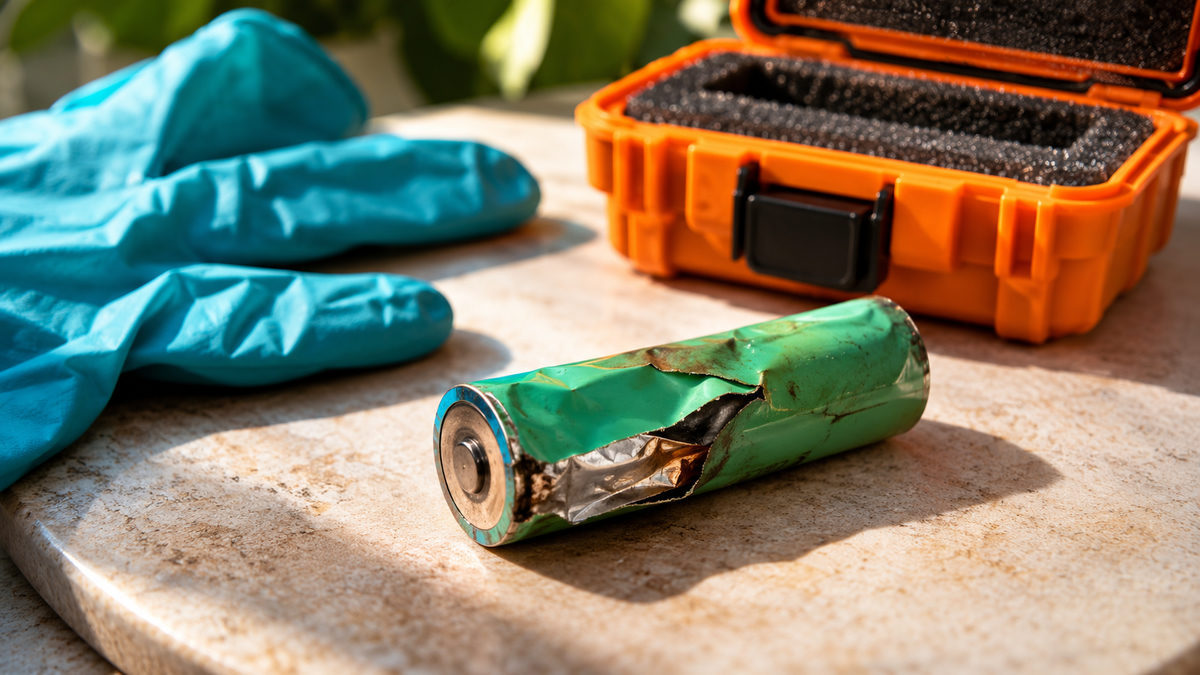
Your vape feels unusually hot, gives off a sweet or metallic smell, or suddenly looks swollen. Knowing what to do with a damaged vape battery could prevent burns, toxic exposure, or a serious fire. Lithium-ion batteries can short-circuit, leak chemicals, release flammable gases, and enter thermal runaway. Act quickly. Saving the battery, charger, or device is never worth the risk.
Damage can affect removable cylindrical cells, proprietary battery packs, and batteries sealed inside disposable or rechargeable vapes. A battery may also look perfectly normal while hiding damage from an impact, heat, moisture, or improper charging. This guide covers how to spot trouble, respond safely, handle exposure, arrange disposal, and choose a compatible replacement.
1. How to Tell Whether a Vape Battery Is Damaged
Visible warning signs
A healthy battery should retain its original shape, with no leaks, dents, or corrosion. Swelling is a sign that gases have built up inside the cell. A puncture or deep dent can also damage the thin layers that keep reactive materials apart. If those materials touch, they may cause an internal short circuit.
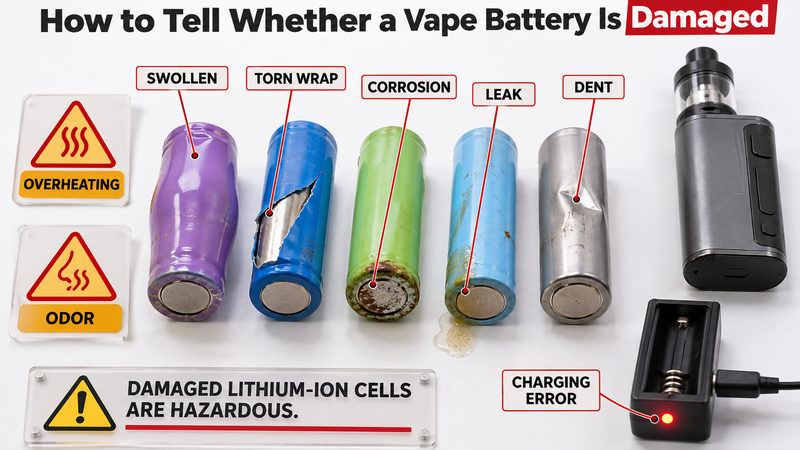
Inspect removable batteries carefully, without squeezing, peeling, or pressing them. Do not try to remove a battery if the device feels hot, hisses, smokes, or releases gas. Back away and treat it as an emergency. Never open a sealed device simply to inspect the battery.
Watch for these physical warning signs:
- A swollen, bulging, warped, or misshapen battery
- A torn, melted, or badly damaged outer covering
- Deep dents, punctures, cracks, or crushing
- Rust, green residue, white deposits, or serious corrosion
- Liquid, sticky residue, or unusual staining near the battery
- Burn marks, melted plastic, or heat-discolored terminals
- A loose, bent, recessed, or damaged positive terminal
Heat, odor, sound, and performance changes
Some warning signs only appear while the battery is charging or powering the device. Unusual heat, for example, may point to excessive current, an internal fault, or an incompatible charger. A little warmth can be normal during use. A battery that becomes painful to touch is not.
A chemical, metallic, solvent-like, or sweet smell may indicate leaking electrolyte or venting gases. Popping, crackling, or hissing can signal rapid internal failure. Smoke or vapor coming directly from the battery is never part of normal vaping. If any of these signs appear, stop approaching or handling the device.
Changes in performance can also reveal developing damage:
- The battery drains much faster than usual
- The device turns off despite showing available charge
- Charging stops, restarts, or takes unusually long
- The charger or battery becomes excessively hot
- The device activates without a normal command
- The battery no longer fits correctly in its compartment
- The device reports repeated battery or resistance errors
Why hidden damage matters
Lithium-ion cells pack considerable energy into a small space. Inside each cell, a separator keeps the positive and negative materials apart. Impact, overheating, manufacturing defects, or electrical abuse can damage that separator. A short circuit may then produce heat faster than the cell can release it.
Thermal runaway starts when rising temperatures trigger reactions that generate still more heat. Once obvious venting begins, the process can accelerate within seconds. Flames may ignite nearby paper, fabric, furniture, or charging cables as well. A small vape battery can still create a serious fire risk.
These risks affect removable 18650-style cells and similar cylindrical batteries. They also apply to proprietary pods, disposable vapes, and rechargeable devices with built-in cells. A sealed design does not make a damaged battery harmless. It only changes how the complete device must be isolated and discarded.
2. What to Do With a Damaged Vape Battery Immediately
Follow this emergency checklist
Your first move depends on whether the battery is actively failing. Smoke, flames, hissing, rapid swelling, venting, or intense heat all point to immediate danger. Get people and animals away from the area. If a fire, heavy smoke, or an uncontrolled reaction develops, call your local emergency service.
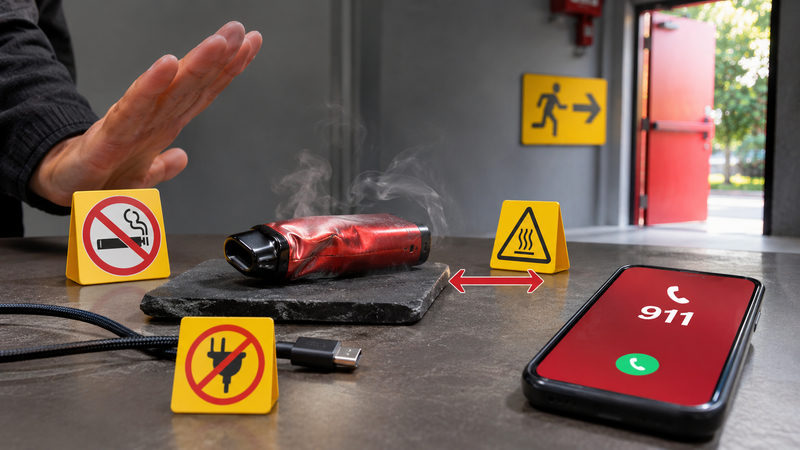
Take these steps without testing the battery:
- Stop using and charging the vape immediately.
- Unplug the charger from the wall when you can do so safely.
- Keep your face and bare hands away from the battery.
- Move people, pets, and combustible materials away.
- Do not press buttons or attempt another puff.
- Do not recharge the battery to confirm the problem.
- Contact emergency services if the battery smokes, burns, or continues heating.
Do not carry an actively failing device through your home. Never put it in your pocket, bag, vehicle, sink, or household bin either. Moving it could worsen the internal damage or spread burning material. Avoid the fumes, and leave any enclosed area where smoke or strong odors are present.
When movement may create greater danger
A cool battery with slight visible damage is different from one that is smoking. If it remains stable, you may prepare an isolated area away from children and anything combustible. But if the battery keeps heating or changing shape, do not improvise. Distance and professional emergency assistance offer far better protection than rushed handling.
If it is safe, switch off the device using its normal controls. You can also disconnect the external charging power, provided you do not have to touch the hot device or a damaged cable. Never pry out a stuck cell with metal tools. Metal can connect both terminals and produce a powerful external short circuit.
Never set a damaged battery directly on wood, carpet, bedding, paper, or plastic. Do not cover it with clothing or close it inside an ordinary airtight container. A failing cell can release hot gases and build pressure. Follow local emergency guidance on suitable isolation materials and locations.
Actions that can make the situation worse
It can be tempting to test a suspect battery in another vape or charger. Don’t. That test may turn an intermittent internal fault into a short circuit. A battery can appear to work normally just moments before it fails, so apparent operation proves nothing about its safety.
Steer clear of these common mistakes:
- Charging the battery for “just a few minutes”
- Cooling it in a refrigerator or freezer
- Submerging it in water without emergency-service direction
- Puncturing a swollen pouch to release pressure
- Crushing, bending, or squeezing the battery
- Covering terminals while the battery remains hot
- Mailing or transporting it without approval
- Throwing it into household rubbish or curbside recycling
Your safety comes before recovering the device, tank, charger, or remaining e-liquid. Replacing several components costs far less than treating a burn or repairing fire damage. Once serious battery damage is suspected, retire the affected equipment. One more attempt is not worth the gamble.
3. Safe Removal, Isolation, and First Aid
Handling a removable battery
Only consider removing the cell after it has cooled, remains stable, and can come out through the manufacturer’s normal battery door. First, turn off the vape and disconnect every charging cable. Remove metal jewelry from your hands, and keep keys and tools well away. Stop immediately if the battery is stuck, swollen against the compartment, or actively venting.
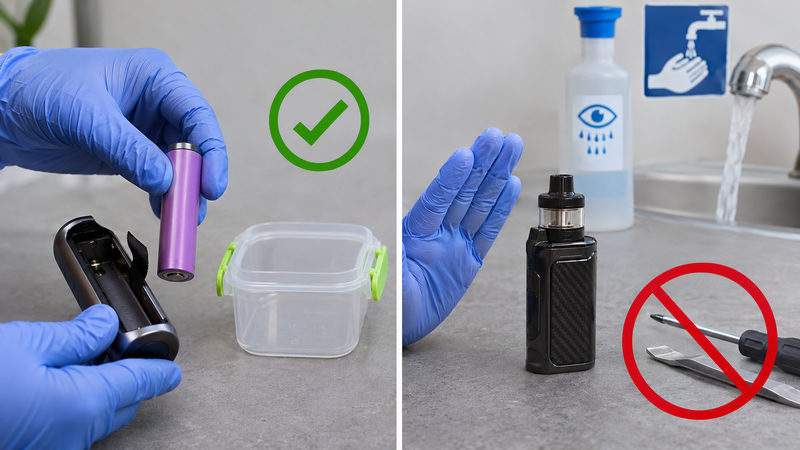
Handle it with clean, dry hands or suitable nonconductive protection recommended by local safety authorities. Never touch both terminals with a metal object. Take care not to squeeze the cell or tear its covering during removal. If it will not come out normally without force, leave it in place and contact a qualified disposal program.
After removal, separate the battery from other cells and combustible materials. Make sure its exposed terminals cannot touch coins, cables, foil, or the metal walls of a container. Do not tape a battery while it is hot, leaking, or venting. First ask the receiving facility for its exact isolation and terminal-protection instructions.
Handling a built-in battery
With a sealed vape, the rule is simple: do not dismantle it. Screws, glued panels, and plastic seams do not mean the battery is safe to remove. Prying into the casing could puncture a hidden pouch cell. A device that seemed quiet can then vent, ignite, or spray hot material without warning.
Turn off the device normally if you can do so safely. Then isolate the entire device according to instructions from the manufacturer or a local hazardous-waste facility. Keep it away from chargers and anything that can burn. When contacting the receiving program, explain that the potentially damaged battery is still installed.
Disposable vapes contain lithium batteries too, even after the liquid is gone. Never crush, drill, burn, or open one to recover its cell. Treat a damaged disposable as battery-containing electronic waste. Being small does not make it suitable for household rubbish.
Temporary isolation and monitoring
Temporary storage should last only until an approved facility tells you what to do next. Pick a place that children and pets cannot reach, well away from heat, sunlight, water, and flammable materials. Local programs may specify particular containers or packaging, though. Check their requirements before putting a damaged battery inside anything.
Keep the battery separate from healthy cells and ordinary electronics. Never leave it unattended in a parked vehicle, especially in hot weather. From a safe distance, watch for heat, odors, swelling, smoke, or noise. If anything worsens, move away and call emergency services.
First aid after electrolyte exposure
Leaking electrolyte can irritate or burn the skin and eyes. If it touches skin, remove contaminated clothing and rinse the affected area with plenty of clean water. Keep rinsing for at least 15 minutes unless local medical guidance says otherwise. Then call a poison center or medical professional for advice.
If electrolyte gets into an eye, start rinsing gently right away. Hold the eyelids open and flush with clean, lukewarm water for at least 15 minutes. Remove contact lenses only if they come out easily. Seek urgent medical care, as chemical eye injuries can worsen fast.
If someone breathes in fumes, get them into fresh air without entering a dangerous smoke-filled space yourself. Call emergency services if they have trouble breathing, chest pain, confusion, persistent coughing, or faintness. If ingestion is suspected, do not induce vomiting. Contact emergency medical services or a poison center immediately.
Once you have helped the person, do not touch the damaged battery to investigate the leak. Keep everyone else away, and ventilate the area only if it is safe to do so. Tell responders that a lithium-ion vape battery is involved. That information will help them choose the right protective measures.
4. Can You Repair or Rewrap a Damaged Vape Battery?
Damage that always requires replacement
Do not repair a battery that is swollen, leaking, punctured, deeply dented, corroded, heat-damaged, or giving off an abnormal odor. Venting, hissing, burn marks, and terminal damage also mean the cell must be permanently retired. Stop using it and arrange proper recycling or hazardous-waste handling. No home repair can make its internal separator trustworthy again.
A rewrap replaces only the thin outer plastic covering on certain cylindrical cells. It cannot fix crushed internal layers, contaminated electrolyte, damaged terminals, or chemical changes caused by heat. Rewrapping also requires the correct insulating components and a careful inspection. One mistake near the positive terminal could cause a direct short circuit.
Even a small tear in the covering needs attention because exposed metal can touch the device or another conductive object. The trouble is that visible wrap damage may come with hidden impact damage. Most users cannot reliably tell a cosmetic flaw from an internal failure. When the cell’s condition is uncertain, replacement is the safer choice.
Why home testing cannot prove safety
A voltage reading tells you only part of the story. A damaged cell may display a normal voltage while internal leakage or separator failure is developing. Basic chargers and multimeters cannot confirm that the internal structure is safe. Even specialized testing would not make a badly damaged consumer cell economical to repair.
Do not charge a suspect battery just to see whether it still holds power. Do not test it in a lower-powered vape either. Both charging and discharging create heat inside the cell, potentially triggering the very short circuit or thermal runaway you are trying to rule out.
Never patch holes, glue dents, solder damaged terminals, or puncture a swollen battery. Do not combine parts from two battery packs. Lithium-ion cells depend on carefully matched protection systems and controlled manufacturing. Improvised repairs can defeat those safeguards and expose reactive materials inside the cell.
A damaged battery is worth very little compared with the harm it might cause. Saving one cell may avoid a modest replacement cost, but a single failure could damage a charger, device, room, or vehicle. Replace it and handle the old battery as hazardous electronic waste.
5. How to Dispose of and Transport Damaged Vape Batteries
Find a program that accepts damaged cells
Never put a damaged vape battery in household rubbish or ordinary curbside recycling. Collection trucks and sorting machinery can crush batteries, starting fires among paper and plastic. Contact a household hazardous-waste facility, approved battery recycler, or local waste authority instead. Explain the battery’s condition before you visit.
Acceptance policies differ among countries, cities, retailers, and collection programs. Some drop-off sites take healthy batteries but refuse swollen, leaking, recalled, or fire-damaged cells. Others require an appointment or direct delivery to a hazardous-waste location. Confirm that the program will accept the item before you store, package, or transport it.
Share these useful details when you call:
- Whether the battery is removable or built into the vape
- Whether it is swollen, leaking, dented, punctured, or corroded
- Whether it became hot, smoked, hissed, or caught fire
- Whether it has cooled and remained stable
- The battery model or device model, when available
- Your intended transport method and travel distance
Follow the receiving facility’s packaging rules
Ask the facility exactly how the battery should be prepared. Get clear instructions on terminal protection, individual containment, labeling, and leak management. Standard battery-recycling guidance may not apply to a damaged cell. The requirements can change depending on the severity of the damage and local transport rules.
Never send a damaged lithium-ion battery through regular mail or a parcel service without explicit authorization. Many carriers restrict defective, damaged, or recalled lithium batteries, and air transport often has especially strict controls. Speak with both the carrier and the receiving program before arranging a shipment.
For local delivery, follow only the packaging method approved by the facility. Keep the battery away from passengers, direct sunlight, heat sources, loose metal, and combustible cargo. Drive straight to the destination rather than leaving it in the vehicle. Parked cars heat up quickly, putting extra stress on the battery.
Manage delays without creating new risks
Some collection events happen only on selected days. Even so, do not store a damaged battery for weeks without professional advice. Tell the local authority about the delay and ask for temporary storage instructions. It may be able to direct you to another facility that handles urgent damaged-battery cases.
If the battery becomes hot, swells further, leaks, smells, hisses, or smokes during storage, do not transport it. Get people away and contact emergency services for immediate guidance. Tell responders if the battery was previously exposed to fire or water. It may still hold energy and fail again after appearing quiet.
Keep any reference number or written instructions supplied by the receiving program. This can help staff identify the handling procedure you agreed on when you arrive. Follow the manufacturer’s disposal directions where they match local requirements. Always confirm the relevant local fire, waste, and transport rules.
6. Choosing a Replacement and Preventing Future Damage
Match the battery to the device
Choose a replacement based on the vape manufacturer’s specifications, not looks alone. Two cylindrical cells may be the same size while differing in chemistry, current capability, and terminal design. Check the exact cell format, voltage range, discharge rating, and approved model. If anything remains unclear, consult the device manual or contact the manufacturer.
Do not choose a battery simply because its label promises exceptional capacity. Extremely high capacity claims may disguise poor current capability or counterfeit construction. Vaping devices can draw substantial current during each activation, and an unsuitable cell may overheat even when it fits perfectly.
Purchase batteries and chargers from established, traceable suppliers. Look for inconsistencies in the packaging, batch information, and manufacturer markings. Avoid loose cells with altered labels, damaged coverings, or uncertain origins. Counterfeit batteries may not deliver the performance or quality controls promised on their wrappers.
For a device that uses two or more removable cells, follow the manufacturer’s matching instructions. Where required, use cells of the same approved model, age, and usage history. Keep paired cells together during both charging and use. Never combine an old cell with a new replacement in the same device.
Reduce everyday physical and electrical damage
Carry spare removable batteries in purpose-made protective cases only. Keys and coins can connect both terminals, causing the cell to heat rapidly. A loose battery may short-circuit inside a pocket within seconds. Never carry an unprotected cell in clothing, bags, or toolboxes.
Protect the vape from drops, crushing, water, and extreme temperatures. Do not leave it on a car dashboard or next to a heater, for example. If a battery has suffered a severe fall, check the manufacturer’s guidance before using it again. Internal damage may be present even when the outer covering looks fine.
Build these safer habits into your routine:
- Inspect removable cells regularly under good lighting
- Keep battery compartments clean and dry
- Prevent e-liquid from reaching contacts or charging ports
- Use the manufacturer-approved charging equipment
- Charge on a stable, noncombustible surface
- Keep charging equipment away from bedding and sofas
- Disconnect the device after charging finishes
- Replace damaged cables, plugs, and chargers promptly
Charge with attention
Charge the device somewhere you can quickly notice unusual heat, smells, sounds, or swelling. Keep it visible, but do not place it near an exit or escape route. Avoid charging while you sleep or when nobody is nearby. Spotting a problem early gives you more time to disconnect the power and get to safety.
Use only the charging method specified for your device. Just because a connector fits does not mean it provides the correct voltage, current control, or communication. Avoid unknown adapters and damaged charging cables. If either the charger or battery becomes unusually hot, stop charging immediately.
Replace batteries according to their condition, performance, and the manufacturer’s guidance. Rapid capacity loss, repeated errors, or abnormal heat may indicate deterioration. Age by itself does not reveal every fault. Regular inspections and careful charging offer better protection than waiting for complete failure.
Conclusion
Take a damaged vape battery out of service immediately. Swelling, leakage, punctures, serious corrosion, heat damage, smoke, hissing, or venting may signal a short circuit. These problems can lead to chemical exposure, fire, or thermal runaway. Never recharge or test the battery to find out whether it still works.
Handle it as little as possible, and never take apart a sealed vape to reach the battery. If electrolyte reaches the skin or eyes, rinse promptly and seek professional medical advice. Move away from smoke and fumes, and call emergency services if the battery is actively failing. Protecting people comes before saving any device.
Arrange disposal through an approved hazardous-waste or battery-recycling program. Before packaging or transporting the item, make sure the facility accepts damaged lithium-ion batteries. Stop using the affected battery or device now. Check the manufacturer’s instructions, then contact an approved local facility for its damaged-battery handling and drop-off requirements.







