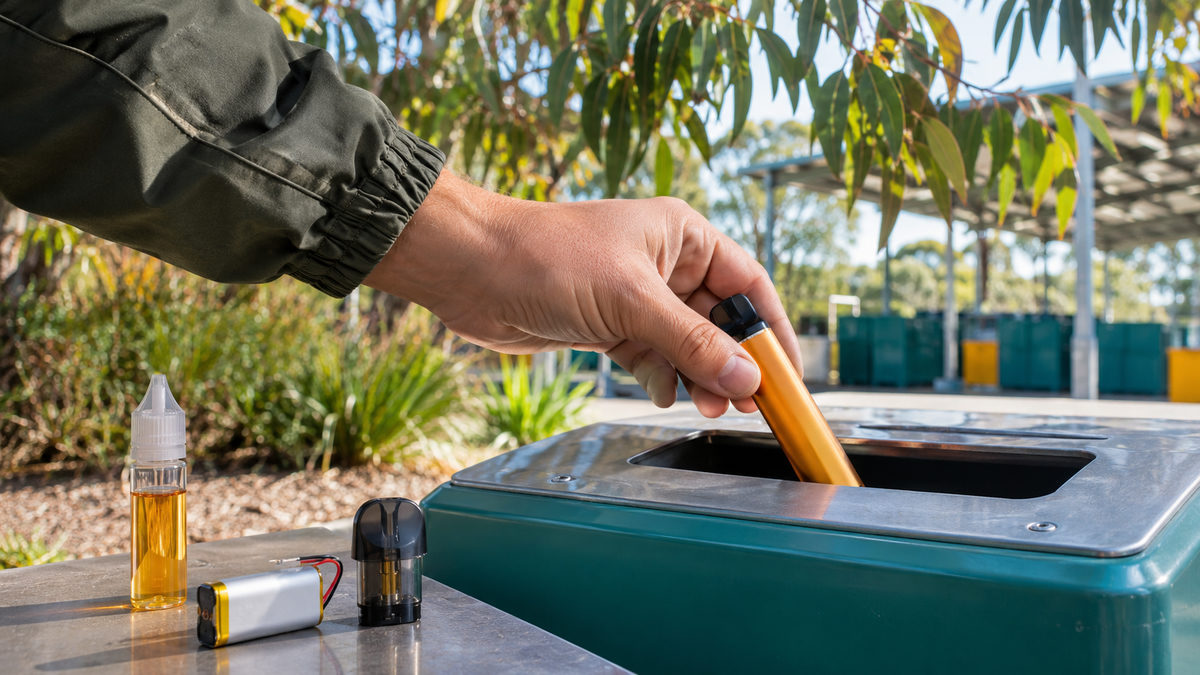
An unwanted vape may look harmless, but a single crushed battery can spark a dangerous fire in a waste truck. Knowing how to dispose of vapes safely in Australia helps protect workers, children, wildlife and local waterways. Disposal rules differ between councils, facilities and service providers, though. Before transporting a vape, identify the device, inspect its condition and confirm that your chosen service will accept it.
Vapes contain a mix of lithium-ion batteries, electronics, plastics and liquid that may include nicotine. No single collection service takes every device or component. This guide covers practical disposal options for complete devices, removable batteries, pods and e-liquid, along with damaged products, emergencies and larger collections from schools or workplaces.
1. How to Dispose of Vapes Safely in Australia: The Short Answer
Never place a vape in a yellow-lid kerbside recycling bin. Collection trucks and sorting equipment can crush the lithium-ion battery, causing it to ignite among paper, cardboard and other flammable materials. The risk remains even when the liquid is gone or the device no longer works.
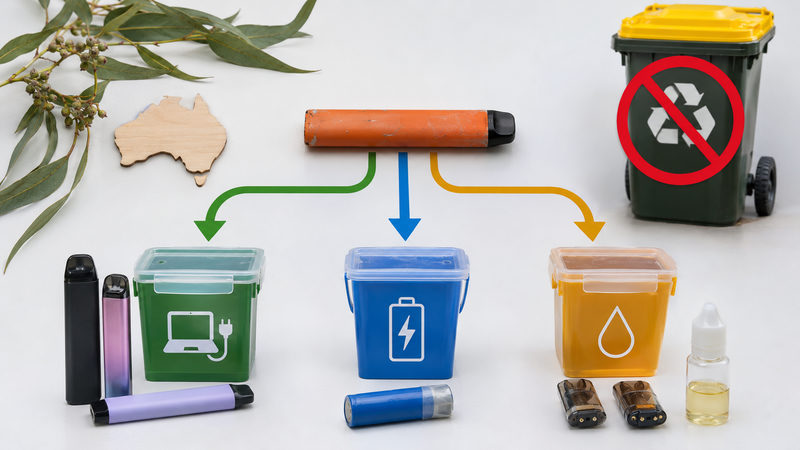
Take battery-powered devices to an approved e-waste, battery or household hazardous-waste service instead. Check first that the facility accepts your exact item. Some locations take removable batteries but not complete vapes that still contain liquid, while others handle embedded-battery devices through a separate collection stream.
Local advice about putting intact vapes in general rubbish can vary, so contact your council rather than assuming the household bin is suitable. The Australian Government advises that vapes contain hazardous chemicals, electronic components and lithium-ion batteries. Its recommendation is to use designated disposal services, not kerbside bins.
Quick disposal decision guide
- Complete disposable vape: Use a facility that explicitly accepts complete vapes or suitable embedded-battery e-waste.
- Sealed-battery device: Keep it intact and confirm acceptance with an e-waste or hazardous-waste provider.
- Removable battery: Prepare it according to provider instructions, then use an approved battery collection service.
- Leaking pod or nicotine liquid: Ask your council or hazardous-waste provider for a nicotine-contaminated waste route.
Above all, never crush, puncture, burn or dismantle a vape. Do not try to remove a battery that is glued, soldered or sealed in place. Never pour e-liquid into plumbing, stormwater or soil either. If you are unsure what to do, store the item safely and ask the intended facility for guidance.
2. Why Vape Disposal Requires Special Handling
Vapes combine several waste types
A vape is much more than a plastic container. Inside, it may have a circuit board, wiring, metal, glass, a heating element and a battery. Pods and internal wadding can also hold leftover liquid, even when the device seems empty. This combination makes ordinary household recycling unsuitable.
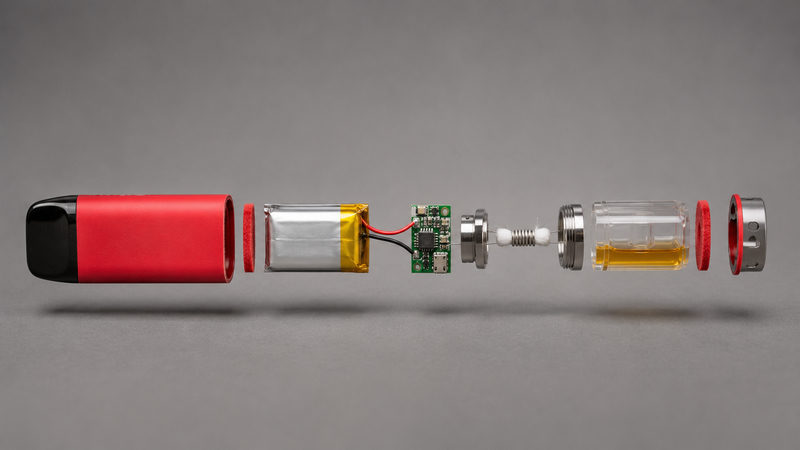
Most disposable models have an embedded lithium-ion battery, and it may still hold energy after the vape stops producing aerosol. A fault, short circuit or hard impact can release that energy very quickly. In other words, an apparently “dead” vape still requires careful handling.
Pods, cartridges and internal components may contain nicotine-contaminated liquid as well. Because labels do not always reliably describe the contents, handle unknown liquid with care and keep it away from skin, children and animals. Never smell or taste residue you cannot identify.
Fire, health and environmental risks
Waste trucks compact rubbish so they can carry more of it. During compaction, a battery may be punctured or its terminals forced against conductive metal. That short circuit can produce intense heat, smoke or fire. The same thing can happen in sorting facilities or landfill machinery.
Nicotine brings a different danger. Children and pets may swallow brightly coloured pods or lick liquid that has leaked from them. Waste workers and wildlife can also come into contact with residue through torn bags or litter. Exposure may cause nausea, vomiting, agitation, an increased heart rate and, in significant cases, serious symptoms.
Discarded vapes also leave plastics, electronic waste and metals in the environment. Leaking batteries and residual liquid can pollute soil or water, while fires create further contamination and put emergency workers in danger. A littered device may remain in the environment long after anyone can use it.
For practical purposes, a vape belongs to several waste categories at once: electronics, batteries and potentially hazardous liquid. Its classification can also change if it leaks, overheats or becomes damaged. The appropriate collection route ultimately depends on local authorities and the facility receiving it.
3. Step-by-Step Vape Disposal for Every Device and Component
Inspect and prepare the device
Start by switching off a reusable device, where possible, and allowing it to cool. Without opening the casing, look for heat, swelling, punctures, corrosion or leaks. Do not repeatedly press its buttons or charge it just to see whether it still works. Testing an unsafe battery could make an internal fault worse.
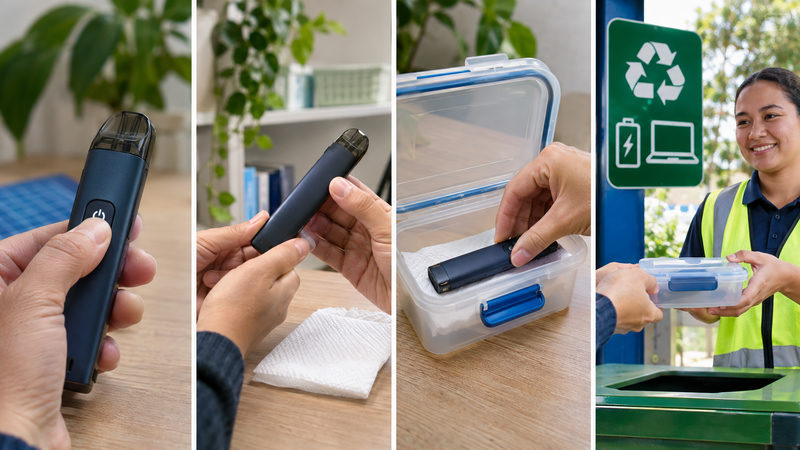
Keep the vape dry, out of direct sunlight and beyond the reach of children and pets. Store it away from paper, fuel, aerosols and other combustible materials. If the device is cool and intact, place it in a sturdy container for transport and follow any packaging directions from the receiving facility.
Disposable and built-in-battery vapes
Leave a disposable or sealed-battery vape in one piece. Only take it to a facility that has confirmed it accepts vapes or similar embedded-battery devices. When asking, describe the item clearly: it is a vape with a sealed lithium-ion battery and possible liquid residue. That detail helps staff direct it to the correct waste stream.
Do not force open the casing with a knife, screwdriver or pliers. Avoid pulling wires or cutting into the battery wrapping. Glued and soldered batteries are not intended for routine removal, and trying to extract one can cause a short circuit, puncture or chemical leak.
Reusable devices and removable batteries
Only remove a battery if the manufacturer designed it to be taken out by the user. Both the device and battery should be cool, dry and free from damage. If you need tools or force, stop. Leave the unit intact and ask an appropriate facility how to handle it.
Pay close attention to the collection provider’s preparation instructions. You may be asked to cover exposed terminals with non-conductive tape and keep each battery separate. During transport, make sure batteries cannot touch coins, keys or other metal objects. Never put an unprotected, loose lithium-ion battery in a pocket or bag.
B-cycle participants accept eligible loose batteries under specific conditions, but that does not mean every public battery box takes complete vaping devices. Check the battery’s chemistry, size and condition before you visit. Damaged batteries often need specialist handling and should not go into a standard retail collection bin.
Pods, cartridges and e-liquid
Check your council’s instructions for empty pods and cartridges. Their mix of plastics, metal coils and nicotine residue often rules out kerbside recycling, so keep them out of the yellow-lid bin. If a component is leaking, contain it as directed by a professional until it can be disposed of.
Keep unwanted e-liquid in its original container, with the label attached and the lid tightly closed. Ask your council, pharmacy or household hazardous-waste provider what to do next. Never pour it into a drink bottle or food container, where someone could mistake it for something safe to consume.
Do not pour e-liquid into a sink, toilet, stormwater drain or onto soil. Liquid-filled pods do not belong in household recycling either. A hazardous-waste provider may have specific packaging rules or quantity limits, so confirm the requirements before taking the liquid out of secure storage.
4. Damaged Vapes, Battery Fires and Nicotine Emergencies
Swollen, leaking, punctured or overheated devices
Stop using or charging a damaged vape straight away. Keep people and animals clear, and do not touch leaking material with bare skin. A swollen or unusually hot battery can deteriorate quickly, often with little warning.
If you can do so safely, isolate the device from anything combustible and place it in a well-ventilated location. Do not seal a hot or actively venting battery in an airtight container, as pressure and flammable gases may accumulate. If the device is smoking or heating rapidly, do not put yourself at risk by trying to move it.
A damaged vape should never go into an ordinary battery collection box. Do not store it beside other vapes or transport it before seeking advice. Contact the council, hazardous-waste facility, supplier or a battery specialist first, clearly describing any heat, swelling, punctures, corrosion, leaking or unusual smells.
The service receiving the vape may ask for special packaging or direct you to a different facility. Follow those instructions rather than improvising with water, sand or sealed packaging. Battery conditions vary, and so do the controls needed to manage them. Professional guidance also makes transport in your vehicle safer.
Smoking, hissing or burning devices
Hissing, rapid heating, smoke or flames signal an immediate fire risk. Move away, alert everyone nearby and call Triple Zero (000) if there is a fire or anyone’s safety is at risk. Follow the emergency operator’s directions. Do not touch the device or move closer to inspect it.
When a lithium-ion battery fails, it can release intense heat, hazardous fumes and projectiles. Stay out of the smoke and avoid re-entering the area unless necessary. The battery may reignite even after the flames seem to be out, so wait for emergency authorities to confirm that both the area and device are safe.
Nicotine exposure
If liquid gets on the skin, carefully remove contaminated clothing and rinse the area under cool running water. For eye exposure, hold the eye open gently and rinse it with water for 15 minutes. Take care not to spread the liquid onto unaffected skin. When safe, keep the product or its label nearby so it can be identified.
If someone may have swallowed nicotine, had significant exposure or developed symptoms, call the Australian Poisons Information Centre on 13 11 26. Do not wait for symptoms to appear, and do not induce vomiting unless a specialist tells you to. Call 000 immediately for collapse, breathing difficulty, seizures or any other urgent emergency.
Emergency and product-safety advice can change over time. Publishers should therefore check fire-service, product-recall and poison-information guidance immediately before publication. Current contact details and exposure instructions are available through the Poisons Information Centre first-aid guidance.
5. Where to Dispose of Vapes Near You
Local collection options
Your council’s official waste directory is the best place to begin. Look for vape disposal, e-waste, household hazardous waste and embedded batteries. Check permanent facilities, transfer stations and scheduled collection events too, as each service may accept different parts of a vaping product.
Community Recycling Centres and state household chemical programs may provide suitable options. Their standard acceptance lists, however, often mention batteries without specifically naming complete vapes. Call ahead and explain that the device contains electronics, a lithium-ion battery and possibly nicotine residue.
Battery providers, participating retailers and pharmacies may also offer relevant services, but returns are not universal or automatic. A pharmacy, for instance, might take certain removable pods or liquids while refusing disposable devices. A retailer could accept loose batteries but exclude products with batteries still inside.
A few targeted search phrases can help you find nearby services, including “vape recycling near me,” “local council e-waste collection” and “battery recycling drop-off.” Always confirm the details on the provider’s official website. Third-party maps and old directory entries may no longer reflect current conditions.
Questions to ask before visiting
- Do you accept complete disposable or rechargeable vaping devices?
- Do you accept removable lithium-ion batteries from reusable vapes?
- Can you take nicotine-contaminated pods, cartridges or leftover e-liquid?
- Do damaged or recalled products require special packaging or an appointment?
- What limits apply to households, businesses, schools or large quantities?
- Are there fees, residency conditions or identification requirements?
Find out whether damaged products need to go to a different site. Before moving any swollen, leaking or recalled device, ask for transport instructions as well. A battery symbol or e-waste sign alone does not mean the operator accepts intact vapes. Direct confirmation is the only reliable answer.
6. State, Territory and Organisational Disposal Responsibilities
State and territory resource directory
| Jurisdiction | Official starting points | What to confirm |
|---|---|---|
| ACT | ACT Government City Services, Recyclopaedia and Access Canberra council services | Embedded-battery and hazardous-liquid acceptance |
| New South Wales | NSW EPA Community Recycling Centres, Chemical CleanOut and local council directory | Whether the chosen centre accepts complete vapes |
| Northern Territory | NT Government waste guidance and the relevant municipal council | Local transfer-station and hazardous-waste conditions |
| Queensland | Queensland environment department waste guidance and local government directory | Battery, e-waste and chemical collection routes |
| South Australia | Green Industries SA, Household Hazardous Waste program and council finder | Product type, quantity limits and site rules |
| Tasmania | ReThink Waste Tasmania, EPA Tasmania and local council services | Regional collection availability and accepted components |
| Victoria | Sustainability Victoria, Detox Your Home and Know Your Council | Whether e-waste sites accept liquid-containing devices |
| Western Australia | WA Waste Authority, Household Hazardous Waste program and local council directory | Participating facility, packaging and eligibility rules |
Services, fees and waste classifications may differ between councils in the same jurisdiction. Treat the table as a starting point, not as confirmation that a facility will accept your item. Before publication, check the latest federal, state, territory, council, product-safety and recycling-program guidance. After that, contact the chosen facility directly.
Parents and carers
If you find a vape in a child’s possession, put it somewhere they cannot reach it. Do not charge, test or take it apart. Check only for visible damage, then arrange safe disposal. If nicotine exposure may have occurred, contact the Poisons Information Centre promptly.
The incident can also open the door to a calm conversation about health, safety and lawful access. Do not open the device in an attempt to identify what is inside; packaging may be misleading, and unknown products can contain nicotine. For help with nicotine dependence, speak with a pharmacist or health professional.
Schools, workplaces, accommodation providers and retailers
Organisations should have a written process for surrendered, confiscated or abandoned vapes. Record each item, its condition, the date and where it is stored. Nominate trained staff to control access and organise collection. Recovered devices should never be tested or dismantled by staff.
Keep intact, cool devices upright in a secure, dry place away from ignition sources. Damaged products may need different controls, so seek professional guidance before isolating them. Arrange an approved collection before the quantity grows. When multiple batteries are stored together, one failure can have much greater consequences.
Ask the provider about commercial-load conditions, dangerous-goods transport and any required documentation. Programs intended for households may not accept waste produced by organisations. Never mail vapes or lithium-ion batteries without clear approval from both the carrier and recipient. All relevant packaging and shipping requirements must be followed.
7. Disposal Mistakes to Avoid and Ways to Reduce Vape Waste
Common disposal mistakes
- Placing complete vapes or batteries in yellow-lid recycling
- Crushing vapes in rubbish or waste compactors
- Burning, puncturing or dismantling devices
- Leaving complete vapes in unapproved public battery bins
- Stockpiling damaged devices beside intact products
- Mixing loose batteries with keys, coins or tools
- Transporting hot, swollen or leaking devices without advice
- Pouring e-liquid into plumbing, stormwater or soil
- Mailing batteries or vapes without explicit approval
Littering brings many of the same hazards beyond the waste system. Before anyone collects it, a discarded device could be found by a child, pet or wild animal. Rain may also wash residue into drains and waterways. Only pick up an abandoned vape if it looks cool, intact and safe to touch.
Practical final checklist
- Identify the item as a complete vape, reusable device, loose battery, pod, cartridge or liquid.
- Check visually for heat, swelling, corrosion, punctures or leaks without dismantling anything.
- Keep unsafe items isolated and obtain professional advice before transport.
- Protect removable battery terminals when the collection provider directs you to do so.
- Confirm acceptance, packaging, quantity, fees and transport requirements.
- Deliver the waste promptly instead of allowing devices to accumulate.
Reducing future waste
Avoid disposable devices and purchases you do not need. Where possession and use are lawful, longer-lasting products with replaceable components may create less waste. Even then, every battery and liquid component needs an approved disposal route at the end of its life. A reusable vape still does not belong in kerbside recycling.
Purchase only what you need and look after lawful equipment according to the manufacturer’s instructions. Replace damaged components promptly, and stop using any unsafe battery. Once a product is no longer wanted, arrange disposal rather than leaving it in storage indefinitely. Anyone dealing with nicotine dependence can seek support from a pharmacist, doctor or quit service.
Conclusion
Keep vapes out of kerbside recycling. Their batteries, electronics and nicotine residue all need separate handling. Leave complete devices intact, isolate damaged products with care and prepare removable batteries as the provider instructs. E-liquid should never be poured into drains, toilets, stormwater or soil.
Identify your vape type and condition today. Check your council’s official waste guide, then call the collection facility you plan to use. Before leaving home, confirm its acceptance, packaging and transport requirements. One short call could prevent a fire, an exposure incident or a wasted trip.