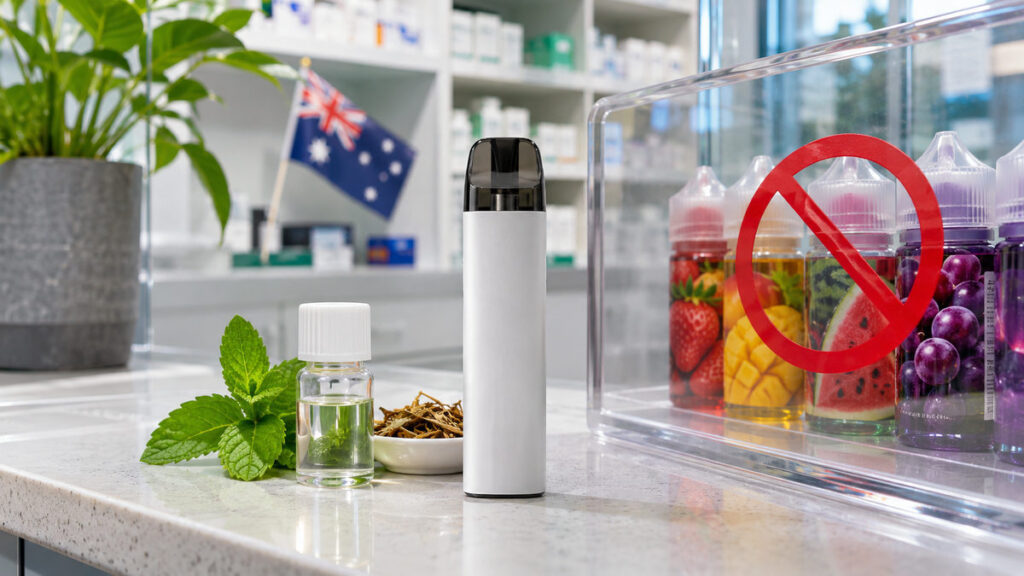
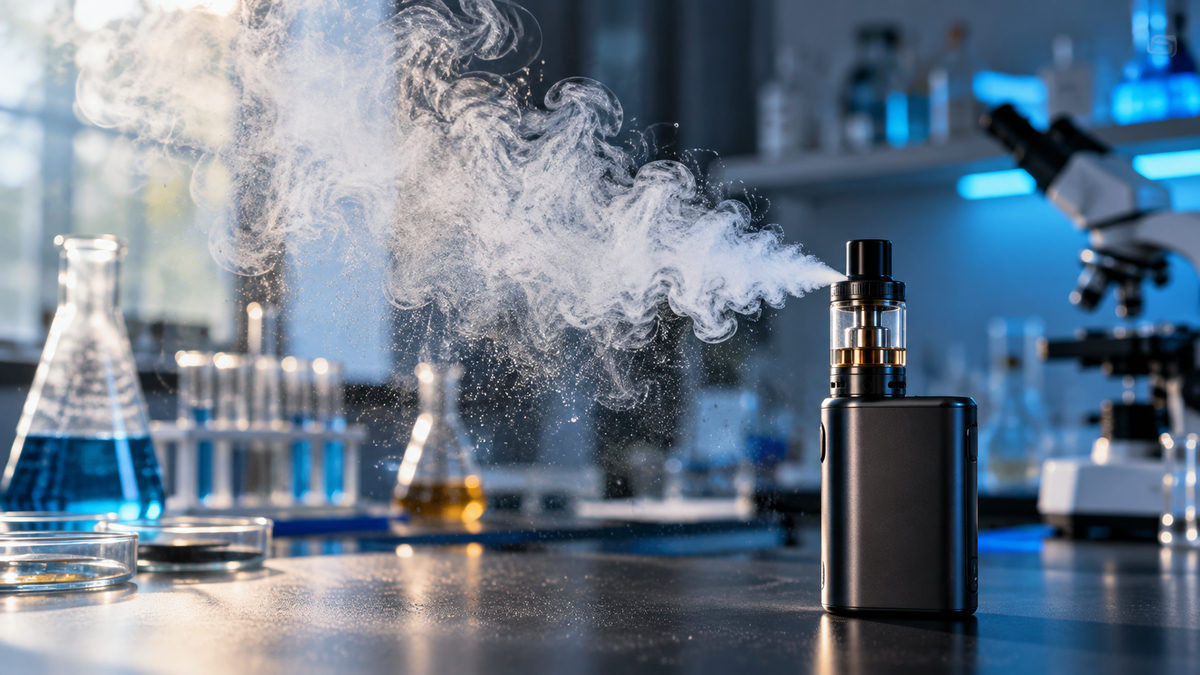
That fading cloud may look simple, but it contains far more than water. What Is in Vape Aerosol? Understanding Chemical Exposure starts by separating the visible mist from what is actually inside it. Users and bystanders may breathe in droplets, particles, nicotine, flavorings, metals, and compounds formed during heating.
Conflicting claims can make it hard to separate known hazards from questions researchers have yet to answer. Exposure can change with the product’s design, power settings, liquid ingredients, and the way someone uses it. This guide breaks down those differences and shares practical ways to protect users, families, and people in shared indoor spaces.
1. What Is in Vape Aerosol? Understanding Chemical Exposure
E-cigarette aerosol is a mixture of fine liquid droplets, ultrafine particles, gases, and chemicals suspended in the air. A battery-powered device produces it by heating e-liquid near a metal coil. With each puff, the resulting aerosol enters the mouth and lungs.

Calling these emissions harmless water vapor gives the wrong impression. Some liquids may contain water, but it is not necessarily their main ingredient. The visible cloud can carry nicotine, solvents, flavorings, metals, and new byproducts created by heat.
E-liquid and aerosol are not the same material. The liquid in the bottle may contain propylene glycol, vegetable glycerin, nicotine, flavorings, acids, and sweeteners. After heating, those ingredients can react, break down, or combine to form other compounds.
The liquid also comes into contact with the wick, coil, seals, solder, and other parts of the device. This contact may add metals or contaminants that do not appear on the package. An ingredient list, then, cannot tell you everything that reaches the lungs.
Hazard, exposure, and risk are different
A chemical hazard is a substance’s capacity to cause harm. Exposure is about how much enters the body, how often that happens, and how long it continues. The actual health risk depends on both, along with a person’s individual vulnerability.
Consider the setting. Brief exposure outdoors is different from repeated vaping inside a small vehicle. In the same way, an occasional low-output puff is not comparable to frequent use at high power. A product label cannot account for these differences.
2. How E-Cigarettes Turn E-Liquid Into Aerosol
Most e-cigarettes work in much the same way. The battery powers a heating coil, and a wick pulls liquid from a reservoir toward it. Heat converts some of that liquid into an aerosol that can be inhaled.
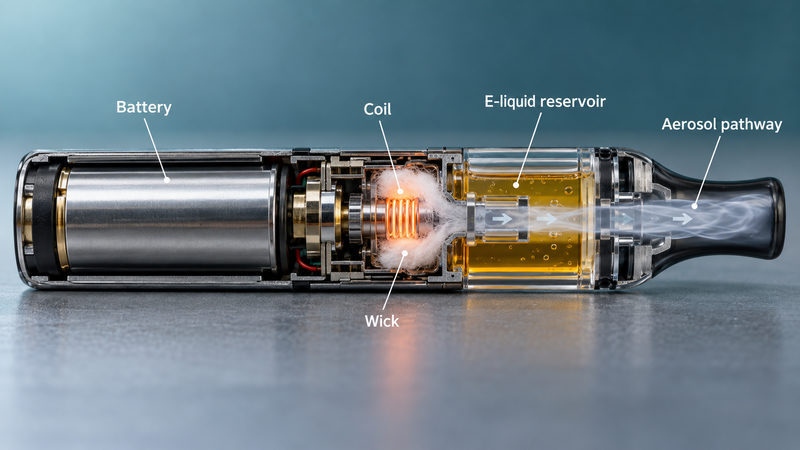
The main solvents play different roles. Propylene glycol carries flavor and produces a sharper feeling in the throat. Vegetable glycerin makes denser clouds and gives the liquid a thicker consistency.
Nicotine, meanwhile, drives dependence and may be supplied as freebase nicotine or nicotine salts. Acids can make high nicotine concentrations feel smoother and less harsh. Flavorings, sweeteners, and cooling agents shape the taste, aroma, and physical sensation.
- Propylene glycol: Carries flavor and helps create a thinner liquid.
- Vegetable glycerin: Produces larger visible clouds and adds sweetness.
- Nicotine: Delivers stimulant effects and can quickly reinforce repeated use.
- Flavorings: Create fruit, mint, dessert, tobacco, and beverage profiles.
- Additives: Acids, sweeteners, and cooling agents adjust harshness and sensory appeal.
Why operating conditions matter
Device power has a major effect on aerosol production and chemical formation. A higher wattage can heat more liquid with every puff. Under some conditions, though, the added heat may also cause more of the solvents to break down.
Emissions are also shaped by the coil material, resistance, airflow, and wick design. A long puff sends more energy through the device than a short one. Frequent use can also leave the coil hot between inhalations.
The amount of liquid and the condition of the coil matter just as much. If the wick is not properly saturated, it cannot cool the coil effectively. The result may be a harsh “dry puff” with more products of thermal decomposition.
A burnt taste, unusual heat, or throat irritation often warns users that the device is overheating. Still, chemical changes can begin before those signs are easy to notice. Aging coils, damaged wicks, and thick residue may alter emissions even further.
3. Chemicals and Particles Commonly Found in Vape Emissions
There is no single recipe for vape emissions. The mixture shifts from one product and use pattern to another, but common components include nicotine, propylene glycol, vegetable glycerin, flavoring substances, volatile compounds, and microscopic particles. Laboratories have also found carbonyls and trace metals in many products.
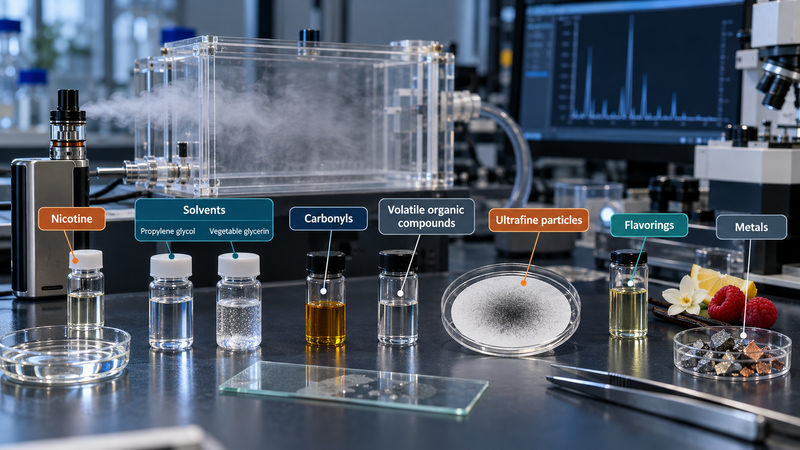
Nicotine, solvents, and flavorings
Nicotine exposure can differ sharply between liquids and devices. With frequent use, some compact products deliver substantial amounts. Nicotine can also raise the heart rate, temporarily increase blood pressure, and encourage dependence.
Propylene glycol and vegetable glycerin make up much of the cloud people can see. Both are used in foods and other consumer products, but inhaling them is a different kind of exposure. The lungs do not handle substances in the same way as the digestive system.
A flavoring mixture may contain dozens of separate chemicals. Diacetyl, for example, creates a buttery flavor and has caused serious workplace lung disease at high inhaled exposures. Approval for use in food does not prove that repeated inhalation is safe.
Cooling agents can likewise create an intense cold feeling without the familiar flavor of menthol. Sweeteners may break down during heating or leave residue on the coil. A pleasant taste tells you little about respiratory safety.
Carbonyls and volatile compounds
When solvents and flavoring ingredients are heated, they can produce formaldehyde, acetaldehyde, and acrolein. At sufficient exposures, these carbonyl compounds can irritate tissue and damage cells. Their concentrations vary widely between products, devices, and laboratory testing methods.
Carbonyl formation may rise when temperatures are high or the wick lacks enough liquid. Long puffs, limited airflow, and heavy buildup on the coil can also change the heating process. Even so, measured levels may shift from one puff to the next.
Other volatile organic compounds can come from the original ingredients, chemical reactions, packaging, or materials inside the device. That is why researchers need to test the aerosol people actually inhale. Analyzing only the unheated liquid misses compounds formed during ordinary use.
Ultrafine particles and metals
Many aerosol droplets are small enough to travel deep into the respiratory system. Once they enter the surrounding air, their size and composition can shift. Droplets may evaporate, merge with one another, or settle on nearby surfaces.
Researchers have also detected nickel, chromium, lead, tin, copper, and manganese in some emissions. Possible sources include coils, solder, electrical contacts, and other internal parts. The amounts measured may depend on the device’s age, manufacturing quality, and operating temperature.
A nicotine-free label does not mean users avoid solvents, particles, flavoring chemicals, or byproducts created by heat. In some laboratory tests, products labeled nicotine-free have even contained nicotine. Manufacturing mistakes, contamination, or inaccurate labeling may account for the difference.
So, “nicotine-free” is not the same as chemical-free or risk-free. The label makes a claim about just one ingredient. Independent testing matters because packaging cannot identify every substance a user might inhale.
4. Vape Aerosol Health Effects and Vulnerable Groups
Some effects appear during exposure or soon afterward. People may experience throat or eye irritation, coughing, headaches, dizziness, nausea, or trouble breathing. Nicotine can also trigger a racing heartbeat, shakiness, sweating, or vomiting.
Symptoms vary with the dose, the product, and the person’s sensitivity. Someone who has asthma may respond differently from a healthy adult. Ongoing breathing difficulty, chest pain, confusion, or severe vomiting calls for prompt medical attention.
What researchers know
Research has linked vaping to airway irritation, inflammation, cardiovascular stress, toxicant exposure, and nicotine dependence. Studies in laboratories and people have also found changes in blood vessels and respiratory function. The effects, however, differ with the product and pattern of use.
Long-term effects are more difficult to track because liquids and devices evolve so quickly. Many people who vape have also smoked, which makes direct comparisons harder. Uncertainty about future disease should not be mistaken for a lack of evidence that concerns exist.
How a study is designed affects what its findings can tell us. Experiments on cells can reveal biological effects, but they cannot predict every outcome in the real world. Population studies show broader patterns, yet they may have trouble separating the effects of vaping from smoking and other exposures.
People who need extra protection
Adolescents face distinct risks because the brain keeps developing into early adulthood. Nicotine can deepen dependence and affect attention, learning, mood, and impulse control. Flavors and easy-to-conceal devices may also promote frequent use before the signs of dependence are clear.
Pregnant people should avoid nicotine and aerosol exposure that serves no medical purpose. Nicotine can cross the placenta and interfere with fetal development. Solvents, particles, and other chemicals add further exposure without offering any pregnancy-related benefit.
Compared with adults, children breathe more air for their body size. They also touch contaminated objects and often bring their hands close to their mouths. Both airborne aerosol and residue on surfaces therefore warrant care around children.
Irritants and nicotine may affect people with asthma, lung disease, or cardiovascular conditions more strongly. Non-users gain nothing from being exposed against their will. Everyone deserves a say in the air they breathe.
5. Secondhand Aerosol, Thirdhand Residue, and Indoor Air
Exhaled aerosol does not disappear the moment the visible cloud fades. Users release nicotine, particles, volatile compounds, and other substances into the air around them. In some conditions, devices may also release material between puffs.
Several everyday factors determine the indoor concentration. These include the size of the room, ventilation, device output, number of users, puff frequency, and distance from the source. Repeated vaping in a car, for example, can concentrate emissions around nearby passengers.
Passive exposure is not the same as vaping directly. Bystanders usually encounter a more diluted form of the emissions inhaled by the user. Vape aerosol also has a different chemical profile from cigarette smoke, so the two should not be treated as identical.
What remains after the cloud fades
Parts of the aerosol can settle on clothing, furniture, walls, windows, carpets, vehicle interiors, and dust. This leftover contamination is commonly known as thirdhand residue. Nicotine and other chemicals may remain long after vaping has stopped.
Children can come into contact with residue while crawling or playing. Their hands may then carry contamination from a surface to their mouths. The health implications depend on the substance and level of exposure, but avoiding that contamination is a reasonable precaution.
An open window or a fan may lower the concentration of pollutants in the air. Depending on the filter and airflow, an air cleaner may capture some particles as well. But these measures may leave gases behind, along with material that has already settled on surfaces.
Ventilation and filtration alone cannot promise an exposure-free room. Vape-free indoor policies provide more reliable protection. Clear policies also remove the need to debate acceptable distances, ventilation levels, or cloud sizes.
6. Vape Aerosol vs Cigarette Smoke and Different Devices
Cigarettes burn tobacco; e-cigarettes heat liquid. Burning tobacco creates smoke with thousands of chemicals and many toxic products. Heating produces a different mixture and generally changes a person’s exposure to numerous harmful substances.
Adults who smoke may reduce their exposure to some combustion-related toxicants by switching completely from cigarettes. That does not make vaping harmless. Young people, pregnant people, and non-users should not take up vaping because they believe it offers a health advantage.
Using both products needs careful consideration, too. Someone who continues smoking several cigarettes while also vaping may still receive substantial smoke exposure. Simply adding an e-cigarette, without stopping combustible tobacco, may offer far less benefit than switching completely.
Why device categories do not guarantee safety
Disposable devices come prefilled and need little upkeep. Pod systems typically pair compact coils with concentrated nicotine salts. Refillable devices give users more control over the liquid, power, airflow, and replacement components.
- Disposable devices: Quality control, nicotine strength, and coil performance can vary between brands or batches.
- Pod systems: Nicotine formulation may support frequent use with less throat harshness.
- Refillable devices: Custom power settings and liquids can produce highly variable emissions.
A device is not universally safer simply because of its category, shape, or label. Its liquid, power, coil design, upkeep, and manufacturing quality all affect emissions. User modifications can also push it beyond the conditions it was built to handle.
Two identical devices can behave differently after several weeks. One may still have a clean, well-saturated coil, while the other has accumulated residue or suffered wick damage. Meaningful comparisons must account for the actual product, its current condition, and how it is used.
7. How to Reduce Vape Chemical Exposure
Keeping indoor spaces vape-free is the most dependable way to protect bystanders. Clear rules belong in homes, vehicles, schools, workplaces, and shared facilities. They protect everyone without asking people to assess the risk of every cloud that passes by.
Do not vape around children, pregnant people, anyone with asthma, or people who have not agreed to the exposure. In an enclosed room, moving a few steps away does little. Go outside instead, keeping clear of doors, windows, and air intakes.
Windows, fans, and air purifiers may reduce some pollutants. None of them, though, can ensure that every gas, particle, or trace of surface residue is removed. Preventing the emissions at their source is more reliable than cleaning the air afterward.
Safer choices for current users
- Do not modify devices or bypass their built-in safety controls.
- Avoid homemade liquids and products from unverified sources.
- Replace damaged, leaking, heavily coated, or burnt-tasting coils.
- Stop using any device that overheats, sparks, swells, or behaves unusually.
- Keep liquids and devices locked away from children and pets.
Get professional help if coughing, breathing problems, or chest discomfort persist, or if poisoning is suspected. Pregnant people should also speak with a qualified healthcare professional about nicotine exposure. If symptoms are severe, seek urgent medical care.
Anyone who wants to cut back or stop using nicotine can ask about counseling and approved cessation treatments. Sound medical advice should account for the type of product used and the person’s smoking history. Researchers and health writers, meanwhile, should clearly report study designs, dates, products, and important limitations.
Conclusion
Vape aerosol is more than harmless water vapor. It may contain the liquid’s original ingredients, ultrafine particles, metals, and new compounds produced during heating. The precise exposure depends on the product design, settings, coil condition, user behavior, and surrounding environment.
Vape aerosol differs from cigarette smoke, but having lower levels of some toxicants is not proof of safety. This is especially relevant for adolescents, pregnant people, children, non-users, and those with existing health conditions. Using both products can also leave someone substantially exposed to combustible smoke.
Keep shared indoor areas vape-free, and do not expose vulnerable people. Ask for medical advice if symptoms are worrying or if exposure happens during pregnancy. For support with reducing or stopping nicotine use, contact a qualified healthcare professional or cessation service.