

What happens when a quick puff becomes the first thing you reach for each morning? How to Quit Vaping in Australia: Planning and Support Options begins with recognising that pattern. Whether you vape throughout the day or mainly when you feel stressed, quitting can bring up questions about cravings, withdrawal, and where to find reliable help.
Quitting can be tough when nicotine dependence, automatic habits, social pressure, and easy access all play a part. Conflicting advice may also leave you wondering whether to stop all at once or cut down gradually. A practical plan helps you understand your use, prepare for withdrawal, consider treatment, and find support in Australia.
1. Why Quitting Vaping Can Be Difficult—and Worthwhile
Nicotine reaches your brain quickly and activates its reward system. Each puff can therefore reinforce the desire to do it again. Dependence may be stronger with high nicotine concentrations and frequent use, especially if you take small puffs all day.

But nicotine is only part of the picture. Your brain may begin to associate vaping with coffee, driving, work breaks, gaming, alcohol, or spending time with other people. Feelings such as stress, boredom, loneliness, and frustration can also become strong triggers.
Think about someone who vapes on every commute and after each meal. The physical withdrawal may ease, yet those familiar moments can still bring on an urge. That is why quitting successfully usually means tackling both nicotine dependence and the routines built around it.
Living vape-free may make breathing more comfortable, reduce nicotine dependence, save money, and make everyday life simpler. Spending $30 every five days, for example, comes to about $180 over one month. Health improvements and withdrawal recovery do not follow the same schedule for everyone, though, so try not to measure your progress against a fixed timeline.
Some people vape and smoke cigarettes, a pattern clinicians call dual use. One point matters above all: quitting vaping should never lead you back to cigarettes. If you use both, ask a health professional to help you work toward becoming smoke-free and vape-free.
2. How to Quit Vaping in Australia: Planning and Support Options
Assess Your Current Vaping Pattern
Begin by tracking your vaping across three ordinary days. Write down each occasion, the nicotine strength, what was happening beforehand, and how intense the urge felt. Pay particular attention to whether you vape soon after waking or get up during the night to vape.
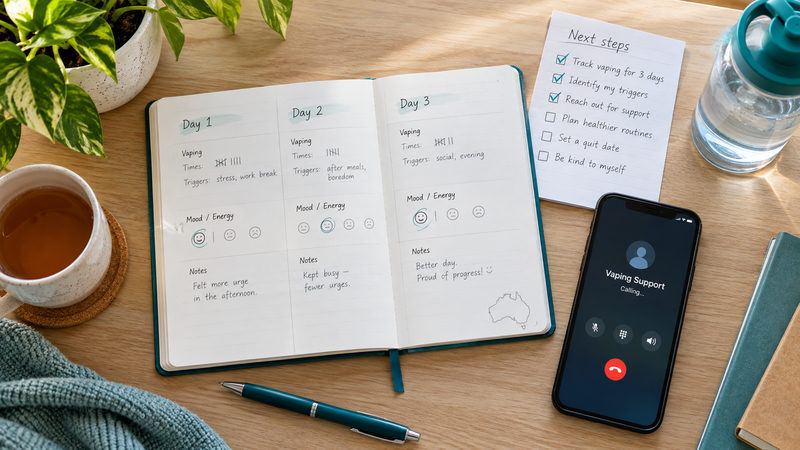
Work out how much you spend each week, too, and pinpoint the situations in which saying no feels hardest. That could be while driving, drinking alcohol, studying, working under pressure, or being around friends who vape. The more honest the picture, the easier it is to choose strategies you can actually follow.
Your assessment should also cover several personal factors:
- Your main reasons for quitting and any worries about stopping.
- Previous attempts, including what helped and what led to vaping again.
- Current or recent cigarette use and any fear of returning to smoking.
- Mental health concerns, major stressors, pregnancy, and existing health conditions.
- Devices, nicotine strengths, refill patterns, and daily vaping frequency.
Previous attempts are useful evidence, not wasted effort. Maybe mornings went smoothly, but parties were difficult. Keep whatever worked and reinforce your plan where you already know the risks are likely to appear.
Build Your Vape-Free Action Plan
Pick a realistic quit date that gives you time to prepare without letting the decision drift. A date within the next two weeks may be enough. Try not to choose a day that already involves unusual pressure, major travel, or an important examination.
Put your reasons somewhere you will see them, then tell supportive people exactly what you need. You might ask friends not to offer you a vape or use one beside you. It also helps to arrange a conversation with a GP, pharmacist, counsellor, or Quitline before the quit date arrives.
Prepare the environment before quitting:
- Remove vapes, pods, chargers, liquids, and hidden emergency supplies.
- Prepare water, sugar-free gum, healthy snacks, and safe oral substitutes.
- Change routines linked with vaping, including coffee breaks and driving routes.
- Plan short activities for boredom, stress, and sudden cravings.
- Save support numbers and arrange check-ins with someone you trust.
Write down what you will do in each likely high-risk situation. You could step outside a party for a while, keep a drink in your hand, text someone supportive, or practise saying, “No thanks, I’ve quit.” Having an answer ready means fewer decisions to make when a craving hits.
3. Should You Quit Vaping Cold Turkey or Reduce Gradually?
Stopping on a chosen date draws a clear line between vaping and being vape-free. Some people appreciate that simplicity because there is no daily bargaining with themselves. The first stage of withdrawal can feel intense, however, particularly after frequent vaping or high nicotine exposure.
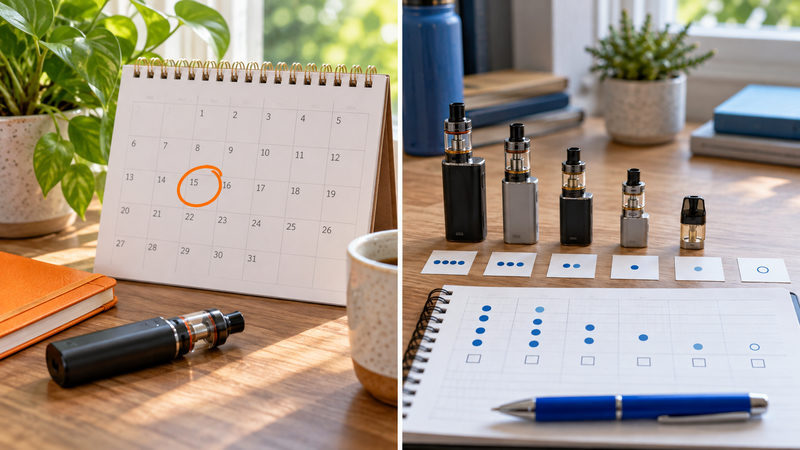
Cutting down gradually may feel more manageable and gives you time to build different routines. But without a clear structure, reduction can drag on indefinitely. A tapering plan needs measurable limits, regular check-ins, and a firm date for stopping completely.
Practical tapering methods include:
- Reducing the number of planned vaping occasions each day.
- Delaying the first morning use by increasing periods.
- Keeping the bedroom, car, workplace, or entire home vape-free.
- Creating vape-free hours and extending them every few days.
- Leaving the device at home during selected short trips.
- Setting a final date when vaping stops completely.
Someone might begin by delaying their morning vape by 30 minutes for three days. They could then stop vaping in the car and during all meals. The key is to check that total use is genuinely falling, rather than unconsciously taking deeper or more frequent puffs.
Your level of dependence and what happened during earlier quit attempts can help determine which approach suits you. Pregnancy, cigarette use, mental health, and medical conditions also need careful thought. A GP or pharmacist can talk through the options and help guard against a return to smoking.
4. Nicotine Withdrawal Timeline and Ways to Manage Cravings
What Withdrawal May Feel Like
Nicotine withdrawal may leave you irritable, restless, anxious, low in mood, headachy, or unable to concentrate properly. Tiredness, disrupted sleep, a bigger appetite, and digestive changes are also possible. The experience varies widely, both from person to person and from one quit attempt to another.
Symptoms often appear soon after you stop using nicotine. They are commonly at their strongest during the first several days and then tend to ease over the following weeks. Even after the physical symptoms improve, familiar routines and emotional triggers can still bring on occasional cravings.
A craving may feel urgent, but give it time and it usually changes. Try thinking of it as a wave passing through. Notice it building, resist the impulse to act straight away, and concentrate only on getting through the next few minutes.
Practical Responses to Cravings
When an urge appears, try this simple sequence:
- Delay: Wait before making any decision about vaping.
- Breathe: Take slow breaths, with a longer and relaxed exhale.
- Drink: Sip water slowly and notice the physical sensations.
- Move: Walk, stretch, climb stairs, or complete a brief household task.
- Replace: Use sugar-free gum or another safe oral substitute.
- Distract: Start a game, message someone, shower, or change locations.
- Connect: Contact a supporter, counsellor, pharmacist, or Quitline.
Support your sleep by waking at a consistent time and cutting back on caffeine later in the day. Where possible, limit strong triggers during the first few days. Before going to a social gathering, rehearse a short response in case someone pressures you to vape.
Withdrawal can bring low mood or anxiety, but severe distress calls for prompt help. Seek urgent care if you experience suicidal thoughts, chest pain, trouble breathing, fainting, or any other worrying symptoms. Contact a health professional as well if your mental health continues to worsen or the symptoms become too difficult to manage.
5. NRT, Medicines, and Professional Vaping-Cessation Care
How Nicotine Replacement Therapy May Help
Nicotine replacement therapy, or NRT, delivers a measured amount of nicotine without exposing you to vape aerosol. It may ease cravings and withdrawal while you work on changing established habits. Options can include patches, gum, lozenges, inhalers, and oral sprays.
Patches release nicotine steadily, whereas gum, lozenges, and sprays work faster. A clinician may therefore recommend a long-acting patch alongside a quicker product for sudden cravings. Which option is right depends on your nicotine exposure, preferences, health needs, and the product instructions.
Availability, age restrictions, dosing guidance, suitability, and subsidy arrangements may change. Check the latest details with an Australian GP or pharmacist. They can show you how to use the product correctly, explain possible side effects, and advise you if cravings persist.
When to Discuss Other Medicines
In some cases, a clinician may consider other medicines for nicotine dependence. The evidence and approved uses, however, may not be the same for quitting vapes as they are for quitting cigarettes. Never take borrowed tablets, use an old prescription, or combine treatments without professional advice.
Your assessment may cover:
- How often you vape and the likely amount of nicotine you receive.
- Whether you also smoke cigarettes or recently stopped smoking.
- Your age, medical history, pregnancy, or breastfeeding status.
- Mental health symptoms and any earlier reactions to medicines.
- Prescription medicines, non-prescription products, and supplements.
- Your previous quit attempts and current withdrawal concerns.
Make sure the clinician knows if stopping vaping might lead you back to cigarettes. A coordinated approach can address both products while helping you manage withdrawal. Counselling and hands-on support may also make medication-based care more effective.
Do not try to turn unregulated nicotine products into a makeshift treatment. Talk to a qualified professional about recognised options instead. Australian Government health services offer current guidance on quitting methods, medicines, and available support.
6. Australian Support for Adults, Teenagers, and Pregnancy
Support Available Across Australia
Quitline helps people who want to stop vaping, not just those quitting smoking. Call 13 7848 for confidential, non-judgmental counselling and support in creating a personal plan. Counsellors can talk through your cravings, triggers, motivation, previous attempts, and ways to prevent relapse.
GPs and pharmacists can assess your nicotine dependence and discuss treatments that may suit you. Counsellors and state or territory health services may offer further behavioural or mental health support. Reputable Australian quit apps and online programs can be useful for tracking progress, savings, and triggers too.
Opening hours, eligibility, service availability, and access to products can change, so check official Australian health services for current information. If needed, ask about interpreters, culturally appropriate care, or disability support.
Help for Teenagers and Young Adults
Young people deserve help that is confidential, respectful, and free of judgement. A GP, pharmacist, counsellor, school wellbeing worker, or trusted adult can be a good place to begin. Support should look at stress, social pressure, worries about concentration, and vaping within friendship groups.
Having family involved can be helpful when it feels safe and supportive. Punishment and shame, on the other hand, may shut down honest conversation. A more useful approach focuses on dependence, practical ways to cope, and the young person’s own reasons for wanting to quit.
Pregnancy and Breastfeeding
If you are pregnant or breastfeeding, seek advice promptly before using any cessation product. Speak with a GP, midwife, obstetric clinician, pharmacist, or Quitline. They can adapt the support to your nicotine exposure, medical history, and the needs of both parent and baby.
Above all, trying to quit vaping should not send you back to cigarettes. Do not choose your own dose or take medicine prescribed for someone else. Professional guidance can help balance withdrawal management with the particular needs of pregnancy or breastfeeding.
7. Preventing Relapse and Staying Vape-Free
Relapse prevention begins before you encounter the first tough moment. Think ahead about stress, parties, alcohol, boredom, work breaks, driving, and being around friends who vape. Make vaping less convenient by clearing devices and supplies from your home, bag, car, and workplace.
Create everyday routines that keep your mood and energy steadier. Drink water, stay active, practise slow breathing, and look after your sleep schedule. Mark your milestones, and keep track of the money you are no longer spending on vaping.
Ask a friend or relative to keep you accountable without making you feel watched. You could arrange a quick message after a party or a stressful day at work. Be clear with friends who vape about what would help, whether that means not offering you one or keeping their devices out of view.
A lapse is a single or brief episode of vaping after you have quit. It does not have to become a full return to regular use. Stop straight away, get rid of any remaining supplies, and work out what triggered it while the details are still clear.
Then adjust your plan and reconnect with personal or professional support. Perhaps alcohol lowered your resolve, or an unexpected argument took you by surprise. That knowledge can help you respond more effectively next time.
Keep this short checklist handy before and after your quit date:
- Motivation: Keep your personal reasons visible and specific.
- Quit date: Choose a clear date or firm tapering end date.
- Treatment advice: Speak with a GP or pharmacist about suitable options.
- Trigger control: Remove supplies and prepare responses for risky situations.
- Support contacts: Save Quitline and trusted personal contacts.
- Crisis signs: Seek urgent help for severe distress or concerning physical symptoms.
- Relapse response: Stop, review the trigger, adjust the plan, and restart promptly.
Conclusion
Quitting vaping often feels more manageable when you have a personal plan and know what to expect from withdrawal. Practical ways to handle cravings, suitable treatment, and ongoing support can all help you remain vape-free. If you lapse, treat it as useful information—not evidence that the attempt has failed.
Take one step today. Choose a quit date, talk with your GP or pharmacist, or call Quitline on 13 7848. Confidential support can help you move forward with quitting vaping.