
Why can one Australian adult get a 20 mg/mL vape without a prescription when another rule refers to 50 mg/mL? Understanding Nicotine Concentration Limits in Australia Explained comes down to two separate thresholds. Commonwealth requirements also overlap with state and territory laws, prescribing rules, and nicotine-labelling conventions.
These rules cover therapeutic vapes used to help people quit smoking or manage nicotine dependence. They do not establish an unrestricted consumer market. This guide covers pharmacy access, strength calculations, product standards, imports, and safety, but it is not personalised medical or legal advice.
1. Nicotine Concentration Limits in Australia Explained
The scope of Australia’s therapeutic vaping framework
Australian law classifies lawful vaping products as therapeutic goods intended for specific health purposes, including quitting smoking and managing nicotine dependence. Pharmacies cannot supply them as ordinary recreational products. A pharmacist or prescriber must decide whether there is an appropriate therapeutic purpose.
As a general rule, vapes can only be sold through participating Australian pharmacies. That includes products labelled nicotine-free. Vape shops, tobacconists, convenience stores, and ordinary online retailers cannot lawfully sell them. Limited exceptions may apply to standalone device components.
Pharmacy access does not mean every vape is lawful. A product must meet Commonwealth notification and product requirements, while its supply must comply with the relevant state or territory legislation. Where a patient lives can therefore affect access.
The three concentration bands at a glance
| Nicotine concentration | General pathway | Key restriction |
|---|---|---|
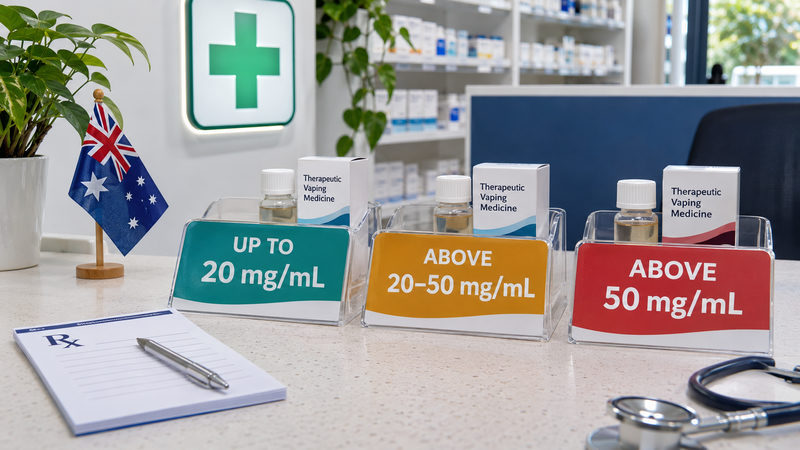
| Up to and including 20 mg/mL | Potential Schedule 3 pharmacist-only supply for adults aged 18 or over | Requires a clinical consultation and must be permitted under local law |
| Above 20 mg/mL through 50 mg/mL | Schedule 4 prescription from a medical practitioner or nurse practitioner | Pharmacy, product, clinical, and local legal requirements still apply |
| Above 50 mg/mL | No lawful therapeutic pathway | Not permitted, even when a person holds a prescription |
Products containing no more than 20 mg/mL may be eligible for pharmacist-only supply. Where local legislation allows it, an eligible adult may not need a prescription. The pharmacist must still decide whether supply is clinically appropriate. Simply meeting the age and concentration limits does not guarantee access.
Anything above 20 mg/mL requires a prescription, up to the legal maximum of 50 mg/mL. An Australian medical practitioner or nurse practitioner may prescribe such a product when clinically appropriate. The pharmacy must also follow the required pathway for accessing an unapproved therapeutic good.
Therapeutic vaping substances cannot contain more than 50 mg/mL of nicotine base or equivalent nicotine base. Crucially, that figure is a legal product ceiling—not a recommended dose, a safety threshold, or a suitable starting strength. Higher concentrations may increase poisoning risks and may be unsuitable for an individual’s needs.
2. Buying Therapeutic Nicotine Vapes Through a Pharmacy
Access without a prescription for adults
An adult aged 18 or over may ask for a therapeutic vape containing no more than 20 mg/mL. The request must be made through a participating pharmacy, and local legislation must permit non-prescription supply. The pharmacist must also determine that the product is suitable for quitting smoking or treating nicotine dependence. It cannot be bought like an ordinary retail product without a consultation.

The pharmacist will first request evidence of the patient’s identity and age. Next comes a professional consultation to assess whether the treatment is appropriate. This may cover smoking or vaping patterns, previous attempts to quit, existing health conditions, and current medicines. If the likely risks outweigh the benefits, the pharmacist can refuse supply.
The consultation must address an appropriate dose and frequency. The pharmacist should also explain possible medicine interactions and discuss registered treatment alternatives, which may include nicotine patches, gum, lozenges, sprays, or other suitable therapies. Information about behavioural and cessation support should be provided as well.
Therapeutic vapes supplied by pharmacies are generally unapproved goods. The pharmacist must explain that the product is not included in the Australian Register of Therapeutic Goods, and the patient must give informed consent before receiving it. Why does this matter? Notification and formal medicine approval are not the same process.
Without a prescription, the quantity supplied must not exceed what is reasonably needed for one month of therapeutic use. The pharmacist may provide that monthly quantity only once during the month. This does not mean every patient receives the same number of pods or millilitres; the product and treatment plan determine the appropriate amount.
Pharmacists are not required to stock, prescribe, dispense, or supply therapeutic vapes. A pharmacy may choose to offer only registered cessation medicines. A pharmacist can also decline supply because of clinical concerns, product availability, or professional obligations. Identification and an eligible nicotine concentration do not compel a sale.
When a prescription is required
A prescription is necessary when the nicotine concentration is above 20 mg/mL. It may also be needed when a patient has complex clinical needs. In jurisdictions that do not allow Schedule 3 supply, every therapeutic vape requires a prescription issued by a medical practitioner or nurse practitioner.
Anyone under 18 needs a prescription to access a therapeutic vape. Even then, state or territory laws may prohibit or further limit supply to minors. A prescription does not override those local restrictions, so prescribers and families should check the rules where the patient lives.
Nor does a valid prescription make every product available. The pharmacy must supply a permitted product and meet any applicable special-access requirements. The pharmacist must also follow dispensing, supply, and professional-practice laws, and the product must stay within the 50 mg/mL ceiling.
Legal and illegal places of supply
Lawful retail supply generally takes place through a registered, participating Australian pharmacy. Products should be kept behind the counter under the pharmacist’s control and supplied directly to the patient or the patient’s carer. An unrelated third party cannot collect them as though they were an ordinary retail purchase.
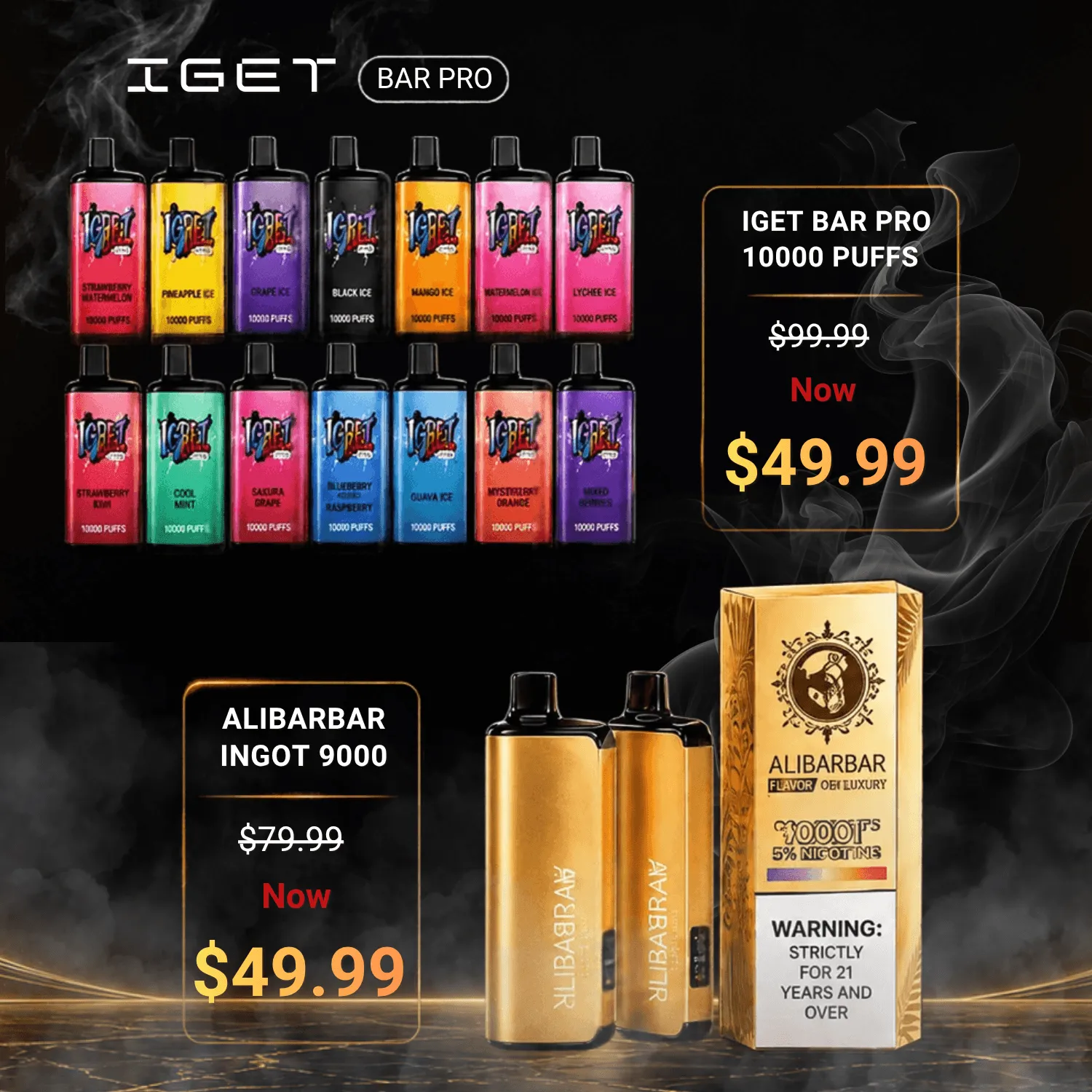
Vape shops, tobacconists, convenience stores, market stalls, and social-media sellers cannot lawfully retail vapes. The same warning applies to unauthorised websites offering delivery within Australia. Colourful packaging or a nicotine-free claim is no proof of lawful supply. Treat non-pharmacy offers as a serious red flag.
3. Why Australian Rules Mention Both 20 mg/mL and 50 mg/mL
Access threshold versus product ceiling
The 20 mg/mL figure determines access through the potential pharmacist-only pathway. It is not Australia’s maximum permitted strength for therapeutic products. Eligible adults may request a product at or below this concentration without a prescription, but they must still complete a pharmacist consultation and satisfy every other condition.
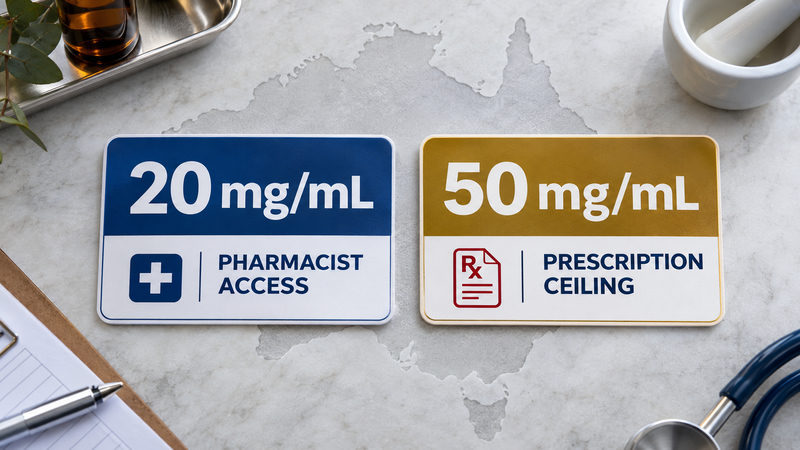
The 50 mg/mL figure has a different role: it is the maximum nicotine concentration allowed in a therapeutic vaping substance. Manufacturers must express that limit as nicotine base or equivalent nicotine base. This gives regulators a consistent way to compare freebase and salt formulations.
Take an adult seeking a product labelled 20 mg/mL. After a suitable consultation, a participating pharmacist may supply it without a prescription. Local law must allow that pathway, however, and the pharmacist can still say no. The product must also appear on the relevant TGA list or register.
Now take a product labelled 21 mg/mL. That extra milligram per millilitre moves it into Schedule 4 prescription access. A 50 mg/mL product also requires a prescription. Neither is eligible for prescription-free Schedule 3 supply.
At 50.1 mg/mL, a product would exceed the legal ceiling. A pharmacist therefore cannot lawfully supply it as a therapeutic vaping substance, and a prescription cannot authorise it. The same rule applies when concentration is expressed as an equivalent nicotine-base measurement.
Commonwealth and state or territory requirements
Commonwealth rules cover therapeutic goods, medicine scheduling, product standards, notification, and importation. States and territories govern key aspects of prescribing, possession, dispensing, and supply. Both layers of law may apply to the same transaction. Complying with one does not excuse a breach of the other.
Local legislation can be stricter than the national framework, particularly for supply to minors and pharmacist-only access without a prescription. Professional requirements and individual pharmacy policies may also affect availability. As a result, a pathway allowed nationally may still be unavailable in a particular jurisdiction or pharmacy.
Check current Therapeutic Goods Administration guidance before taking action, along with information from the relevant state or territory health department. Rules, product listings, and implementation details can change. A broad national summary cannot replace up-to-date official guidance.
Choosing a clinically appropriate strength
The highest permitted concentration is not necessarily the most effective. Treatment decisions depend on factors such as nicotine dependence, smoking history, and previous withdrawal symptoms. Other medicines and health conditions may also alter the risk. Side effects can be a sign that the strength, dose, or product needs to be reviewed.
Two adults might smoke the same number of cigarettes yet react very differently to nicotine. One may still have cravings at a low dose; the other may feel nauseous or dizzy at the same strength. Concentration alone cannot define the right treatment plan.
Goals matter too. Some patients want to quit smoking first and gradually stop using nicotine later. Others need help to stop both smoking and vaping. A pharmacist, medical practitioner, or nurse practitioner should help choose the strength and dosing. Regular reviews can then identify side effects or ongoing dependence.
4. Vape Strength, Percentages, and Nicotine Salts
What mg/mL means
The abbreviation mg/mL means milligrams of nicotine per millilitre of vaping liquid. A concentration of 20 mg/mL, for example, means that each millilitre contains 20 milligrams of nicotine under the stated base-form measurement. It shows concentration, not the total nicotine in the container. Container size matters too.
To estimate the total nicotine, multiply the concentration by the volume of liquid. So, 20 mg/mL multiplied by 2 mL gives 40 mg in the container. A 10 mL bottle at 20 mg/mL contains 200 mg in total. This calculation does not show how much nicotine the user will absorb.
Exposure can vary with device design, puffing behaviour, and the amount of liquid left after use. Users may not absorb every milligram in a container. Total content should never be treated as a dosing instruction; a health professional should explain the dose and frequency for the selected product.
Converting nicotine percentages
Some liquid labels show nicotine as a percentage rather than mg/mL. Using the standard conversion, 1% equals 10 mg/mL. That makes 2% equal to 20 mg/mL and 5% equal to 50 mg/mL. These examples assume the percentage follows the usual convention for liquid labelling.
Percentage × 10 = mg/mL. Conversely, mg/mL ÷ 10 = percentage. For example, 1.8% multiplied by 10 gives 18 mg/mL. Under the same convention, a label showing 30 mg/mL corresponds to 3%.
Read each label closely. Concentration, total nicotine, nicotine form, and container volume are separate pieces of information. A statement such as “50 mg” might describe the total content, not a concentration of 50 mg/mL. If a label is incomplete or unclear, ask a professional to review it before use.
Freebase nicotine and nicotine salts
Freebase nicotine is nicotine in its unprotonated form. Nicotine salts combine nicotine with an acid, such as benzoic or lactic acid. That chemical difference can affect the formulation and the sensory experience, but it does not eliminate the risks of dependence or poisoning.
Not all of a nicotine salt’s mass is nicotine; some comes from the acid component. Australian requirements therefore assess salt products by their equivalent nicotine-base concentration. This makes it easier to compare different chemical forms on a consistent basis.
A manufacturer might use a salt whose total chemical mass is greater than its nicotine-base contribution. The label should give the correct equivalent base concentration rather than leaving consumers to work it out. Because the conversion depends on the salt’s composition and preparation, manufacturers should establish it using validated methods.
Consumers should not try to make these conversions at home using general online tables. Different salts have different molecular relationships, and products containing mixed salts are more complicated still. The sponsor must hold suitable evidence supporting the labelled concentration. A pharmacist can help explain a compliant label.
The actual amount of nicotine base, nicotine salt, or equivalent base must generally be close to what the label states. TGA standards usually require the actual concentration or content to fall within 90% to 110% of the declared amount. A compliant 20 mg/mL declaration therefore allows for limited manufacturing variation, not a deliberately misleading label.
5. TGA Standards, Notified Products, and Import Rules
Standards for pharmacy-supplied products
Pharmacies cannot simply select therapeutic vapes from the unrestricted international market. Lawful supply generally requires the product to appear on the TGA’s notified vape list. Alternatively, an applicable product may be included in the Australian Register of Therapeutic Goods. Even with a prescription, an unlisted product cannot be supplied outside the lawful pathways.
Therapeutic Goods Order 110 establishes minimum requirements for relevant unapproved vaping goods. It covers permitted ingredients, nicotine accuracy, warnings, pharmaceutical-style labelling, child-resistant packaging, and restrained presentation. These standards are intended to reduce identifiable risks, although they cannot make vaping risk-free.
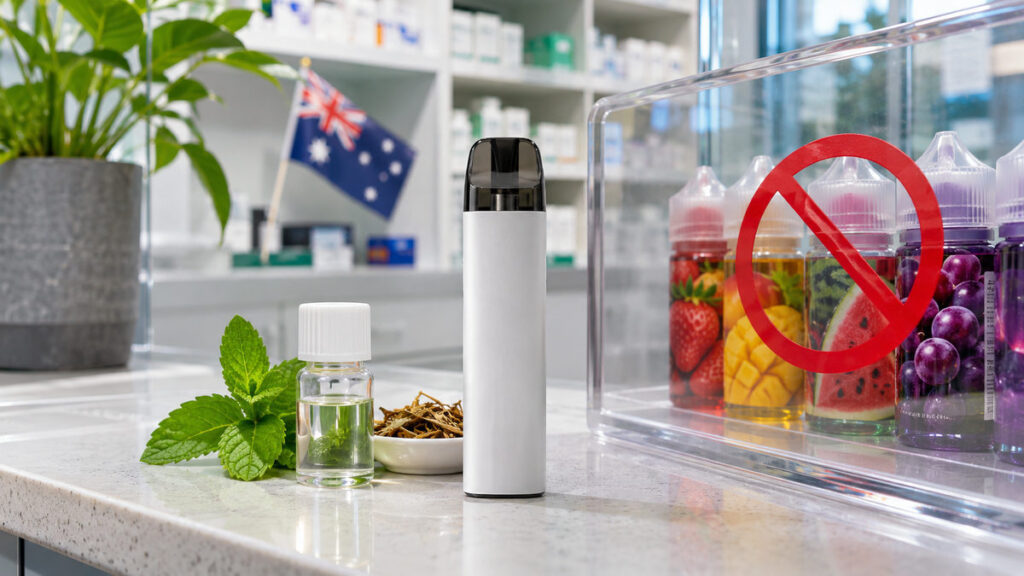
Formulations are subject to tight ingredient controls. Nicotine may be used as the active ingredient alongside permitted formulation ingredients. Flavours are limited to mint, menthol, and tobacco, subject to detailed requirements. Mixed flavours and unrelated options, including fruit or confectionery varieties, are not allowed.
Plain presentation helps separate therapeutic supply from consumer marketing aimed at young people. Labels must display the required warnings and product information. Child-resistant packaging also lowers the chance of accidental access when used properly, but it cannot replace careful household storage in a locked, elevated location.
Notified does not mean TGA approved
A notified product is generally still an unapproved therapeutic good. Its sponsor has told the TGA that the product meets the applicable standards. That does not mean the TGA evaluated it individually in the same way as a registered medicine. Consumers need to understand that distinction when reading a listing.
Notification does not involve the same assessment of safety, quality, efficacy, or performance as inclusion in the ARTG. The standards provide minimum controls for lawful access, but they cannot promise successful smoking cessation or an absence of harm. Clinical guidance still matters.
Current TGA patient guidance states that no therapeutic vapes for smoking cessation or nicotine dependence are included in the ARTG. Because the register may change, readers should confirm this before deciding what to do. They should also check that a notified product remains active, as sponsors may withdraw notices and the TGA may cease listings.
Imports and overseas purchases
Vaping goods are prohibited imports unless a specific permission or exemption applies. These controls cover devices, accessories, and vaping substances, including liquid nicotine. Previous assumptions about personal importation no longer offer a reliable route, and individuals generally cannot obtain commercial import licences for personal purchases.
Having a prescription does not, by itself, authorise someone to order vapes from an overseas website. The importer may require an Office of Drug Control licence and a permit for every consignment. The goods must also meet therapeutic-goods requirements before importation. Without valid authority, Australian Border Force may seize them on arrival.
Limited traveller exemptions may have their own conditions and quantity limits. Those rules are different from ordering products through international post or freight. Travellers should check the exact requirements before leaving and should not depend on assurances from an overseas retailer.
Before importing or travelling, consult current information from the TGA, Office of Drug Control, and Australian Border Force. Confirm the product’s eligibility, required documents, permitted quantities, and transport method. Different rules may apply to cannabis or other controlled substances. If the position is still unclear, professional advice may be worthwhile.
6. Health Risks and Alternatives for Quitting Smoking
Risks of concentrated nicotine
Nicotine can cause dependence and serious harm when exposure is excessive. Early signs may include nausea, vomiting, dizziness, sweating, and headache. Severe poisoning can lead to confusion, cardiovascular effects, seizures, or loss of consciousness. Symptoms need prompt attention, particularly after exposure to concentrated liquid.
Accidental swallowing is a major hazard. Nicotine may also reach the skin or eyes through a leaking container. Children and pets are especially vulnerable because even small quantities may cause severe poisoning. A small bottle or pleasant smell can make accidental contact more likely.
Keep every product upright, locked away, and out of sight in its original child-resistant packaging. Clean up leaks carefully and follow professional advice after contact with the skin or eyes. Never pour vaping liquid into drink bottles, food containers, or unlabelled vessels.
Legal availability does not mean a product is safe for a particular person. Nor does the 50 mg/mL ceiling represent a safe exposure level. Health conditions, medicines, dosing habits, and accidental contact can all change the risk. Do not dismiss adverse symptoms simply because the product came from a pharmacy.
Call Triple Zero (000) for a life-threatening emergency. For urgent poisoning advice in Australia, call the Poisons Information Centre on 13 11 26. Get advice promptly after suspected swallowing or significant exposure to the skin or eyes, and keep the product container nearby when speaking to emergency or poison specialists.
Evidence-based cessation options
Therapeutic vapes are not regarded as first-line treatment for smoking cessation or nicotine dependence. When a health professional considers them appropriate, they should be used as part of a broader plan. That plan should cover triggers, withdrawal, follow-up, and the eventual reduction of nicotine. Merely switching products may leave the underlying dependence untouched.
Behavioural counselling can help patients identify habits and routines connected with smoking. Quitline offers structured coaching and practical strategies, while support from family, workplaces, or the community may strengthen a quit attempt. Combining behavioural help with suitable treatment can make the plan easier to follow.
Registered nicotine replacement therapies include patches, gum, lozenges, oral sprays, and inhalators. They provide nicotine without tobacco smoke and come with established instructions. Some patients may benefit from using a long-acting patch together with a short-acting product, though a pharmacist or prescriber should confirm whether that approach is suitable.
Other approved pharmacotherapies can be prescribed when appropriate. Contraindications, medicine interactions, pregnancy, and existing health conditions all need careful consideration. A medical practitioner or nurse practitioner can compare the available prescription treatments, while regular follow-up can help manage side effects and setbacks.
Treatment should ultimately reflect the individual’s dependence and goals. Discuss the benefits and risks with a pharmacist, medical practitioner, or nurse practitioner. This is general information, not a substitute for personalised medical or legal advice. Local legislation and individual clinical circumstances may point to a different pathway.
Conclusion
Australia applies two separate nicotine thresholds. Eligible adults may be able to obtain products containing no more than 20 mg/mL without a prescription from participating pharmacies. Local law must allow it, and the pharmacist must consider the product clinically appropriate. Monthly quantity, informed-consent, and product-listing requirements still apply.
Products above 20 mg/mL and up to 50 mg/mL require a prescription. Anything over 50 mg/mL is prohibited, even if someone has a prescription. The ceiling is not a safety recommendation. Access remains subject to TGA standards, notified-product rules, pharmacy obligations, and state or territory legislation.
Before relying on a general summary, check the latest guidance from the TGA and the relevant state or territory. Then talk to a participating pharmacist or authorised prescriber about suitable treatment for quitting smoking. If nicotine poisoning is suspected, act quickly: call 000 for life-threatening symptoms or 13 11 26 for urgent poisoning advice.