
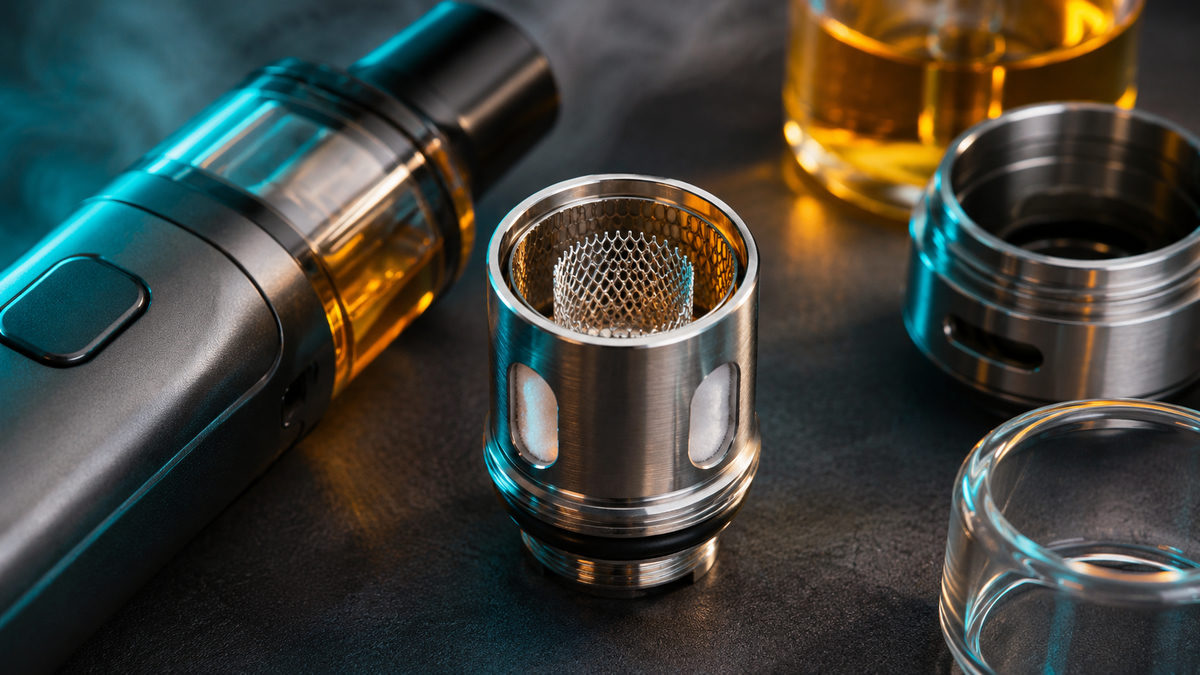
Why can two devices using similar e-liquid deliver completely different flavor, vapor, and heating speed? What Is a Mesh Coil in a Vaping Device? It comes down largely to the small heating element inside the pod or tank. Its shape affects how fast the e-liquid heats and how evenly the vapor develops.
Terms such as mesh, sub-ohm, resistance, and recommended wattage can be confusing at first. Yet these details directly influence compatibility, coil life, liquid consumption, and daily performance. Understanding them helps adult users avoid burnt coils, leaks, and purchases that do not suit their needs.
1. What Is a Mesh Coil in a Vaping Device?
A mesh coil is a heating element that vaporizes e-liquid held in the wick around it. That wick usually contains cotton, though manufacturers may use other materials. When the device supplies power, the mesh heats the saturated wick and produces an inhalable aerosol.
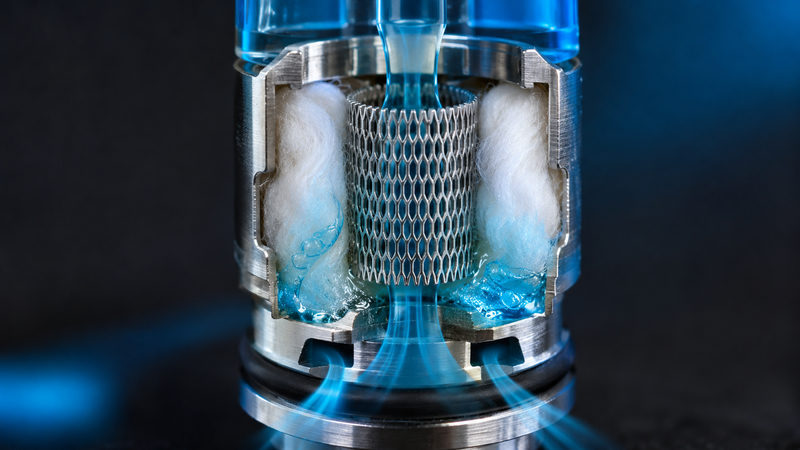
Despite the name, the element may not look much like a traditional coil. It often resembles a perforated strip, a fine grid, or a woven sheet. Manufacturers may curve this sheet into a cylinder so it fits inside a compact coil head.
Why the shape matters
A conventional round-wire coil touches the wick along a few narrow lines. Mesh, by comparison, sits against a broader section of the wick across its patterned surface. That allows it to heat more saturated material with each puff.
A larger contact area does not guarantee better performance on its own. It can, however, spread heat across more cotton when the wick is properly saturated. This may prevent isolated hot spots from burning one small section before the rest has heated evenly.
Mesh elements can be made from Kanthal, stainless steel, or various proprietary alloys. Each material behaves differently in terms of resistance and heating. Check the product documentation, since the material used can vary from one coil series to another.
Three common mesh formats
- Replaceable mesh coil heads: These removable units fit a specific tank or refillable pod. Users replace the entire head when performance declines.
- Integrated pod mesh coils: The heating element forms part of the pod. Therefore, users discard and replace the pod rather than removing a separate coil.
- Rebuildable mesh elements: Experienced users install mesh strips and wicking material in compatible rebuildable hardware. These systems require careful fitting and technical knowledge.
These formats are not interchangeable. Even if a mesh head appears to fit, it may have different seals, contacts, or dimensions. Always match the exact coil series and resistance to the pod or tank approved for it.
2. How Mesh Coil Technology Works
When a user activates the device, electrical current passes through the mesh. The material resists the current, converting electrical energy into heat. That heated surface then vaporizes the e-liquid held nearby in the wick.
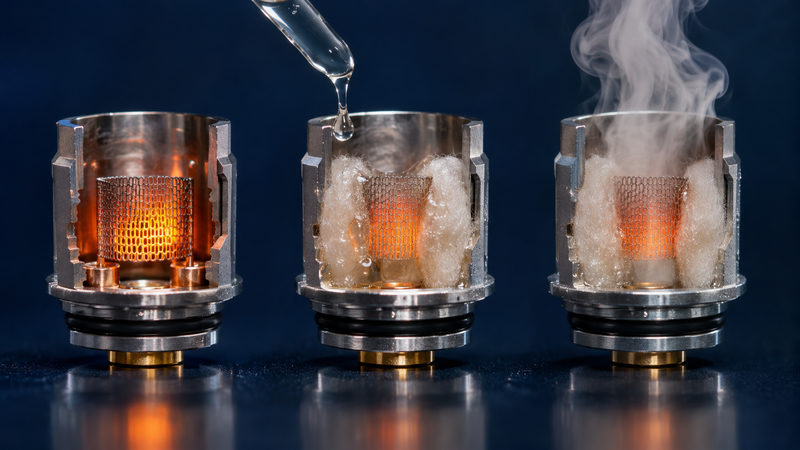
At the same time, capillary action continuously pulls liquid from the tank or pod into the wick. Think of water spreading through the corner of a paper towel. The liquid naturally moves toward the drier areas around the heating element.
Surface area and heat distribution
Mesh carries electricity through a network of small openings and connected sections. Its broad surface can therefore heat more e-liquid at once than some compact round-wire designs. With enough airflow, the resulting vapor may feel dense and consistent.
Broader contact with the wick can also reduce concentrated hot spots. A narrow wire may produce intense heat along one thin line of cotton. Properly fitted mesh spreads that energy over a wider area.
This construction often gives mesh a quick ramp-up time. Put simply, it reaches operating temperature soon after activation. Vapor can begin forming almost immediately, without a lengthy preheating period.
Other factors still control performance
Mesh shape is only one part of the equation. Resistance determines how the element responds to the device’s power output, while wattage, airflow, liquid supply, and puff length all influence the temperature reached during use.
The device’s control circuitry matters too. A regulated device monitors power delivery and may protect against short circuits or excessively long activation. Those safeguards cannot make an incompatible, damaged, or completely dry coil safe to use.
For example, a powerful mesh head can perform badly when its airflow is almost closed. With less cooling, the vapor may become uncomfortably hot. Thick liquid can cause a similar problem if it cannot replenish a small wick between repeated puffs.
Consistent mesh performance depends on balance. The element needs appropriate power, a steady liquid supply, and enough airflow for its intended output. If any one of these falls outside the proper range, flavor and coil life can deteriorate fast.
3. Mesh Coil vs. Regular Wire Coil
A mesh element is usually a flat or curved patterned sheet. Conventional coils use round wire formed into loops around a wick. More elaborate versions may feature parallel wires, twisted strands, or Clapton-style wire covered by an outer wrap.
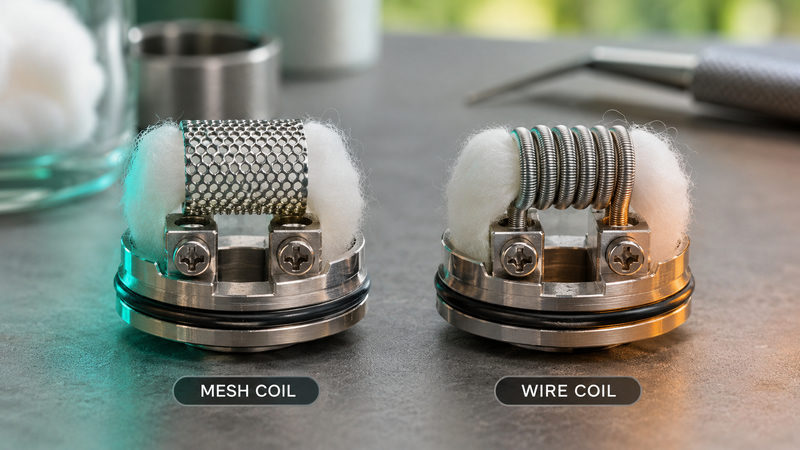
Because mesh covers a wider area, it generally offers more heating surface for its size. It also touches more of the wick. When that wick fits properly and stays saturated, heat can spread more evenly.
Differences during everyday use
- Ramp-up: Mesh often heats quickly because its patterned material has relatively low mass. However, wire thickness and construction can change this comparison.
- Flavor: Broad, even heating may provide consistent flavor across a puff. Liquid quality, airflow, and temperature remain equally important.
- Vapor density: Many mesh heads support dense vapor because they heat a substantial liquid area. Higher output also increases liquid consumption.
- Resistance: Both formats offer several resistance options. Mesh does not always mean low resistance or high power.
- Wattage: Some mesh heads operate below 20 watts, while larger versions need far more power. Traditional wire coils also cover wide power ranges.
- Hot spots: Mesh can reduce localized heating when installed correctly. However, poor wick contact can still create dry areas and harsh flavor.
Is mesh always better?
No single coil format works best in every device or for every user. Coil geometry, manufacturing quality, chamber size, and airflow may matter more than the basic shape of the heating element. E-liquid composition also changes how a setup tastes and how well it wicks.
One person might prefer the cool, tight draw of a modest wire coil. Someone else may want warm vapor and open airflow from a large mesh head. Neither choice makes the other setup technically inferior.
Traditional wire can work well in low-power devices with small liquid channels. It may also be a better match for specialized rebuildable setups or tightly restricted airflow. For experienced users who build their own coils, simple wire can cost less as well.
Mesh, meanwhile, often appeals to users who want fast heating and uniform vapor from a replaceable head. It delivers convenient performance without requiring manual coil building. Even so, the decision should be based on the complete device—not the word “mesh” by itself.
4. Mesh Coil Benefits and Disadvantages
Potential benefits
Fast ramp-up is one of the most obvious mesh coil benefits. Vapor can appear almost as soon as the device activates. Broad heat distribution may also keep the flavor consistent from the start of a normal puff to the finish.
Mesh may create fewer hot spots than a narrow element with uneven spacing. But this depends on full contact with a properly saturated wick. In a well-designed mesh head, that broad contact can produce dense vapor without scorching isolated sections of cotton.
Stable surface contact may also make performance more predictable throughout the coil’s usable life. Good maintenance and sensible operating habits still count. Clean liquid, suitable power, and enough time between puffs help the wick keep the entire mesh surface supplied.
Possible disadvantages
- Higher liquid use: A high-output mesh head can vaporize substantial e-liquid during each puff.
- Greater battery demand: High wattage drains batteries faster than modest power, regardless of the element’s shape.
- Replacement cost: Proprietary mesh heads or integrated pods may cost more than simple wire alternatives.
- Limited compatibility: Similar-looking coils rarely work safely across unrelated tanks, pods, or device families.
Mesh construction alone does not determine consumption. Resistance, wattage, puff duration, airflow, and chamber design all influence liquid and battery use. A 12-watt mesh pod, for example, may consume less than a powerful tank fitted with traditional wire.
A dry mesh surface can produce an immediate burnt taste. Because the element heats a relatively large area of the wick at once, poor saturation may damage more cotton in a single under-supplied puff.
Proprietary pods can present another practical drawback: compatible alternatives may be limited. If the manufacturer stops supplying a particular model, a different mesh coil probably will not fit. Checking local coil availability before buying a device can help avoid this problem.
5. Resistance, Wattage, E-Liquid, and Device Compatibility
Coil resistance is measured in ohms and shown with the Ω symbol. In a compatible regulated system, lower resistance often permits higher current and greater power. Actual performance, though, depends on the device’s circuitry and its specified operating range.
Not every mesh coil is sub-ohm. Some compact mesh pods use elements above 1.0 ohm and run at low power. Buyers should read the resistance marking rather than assume that every mesh product is designed for high-output vaping.
Low-power pods and high-power tanks
A low-wattage pod mesh coil usually has tighter airflow and produces a modest amount of vapor. Compared with a large tank, it may use less liquid and battery power. Many of these pods are suited to mouth-to-lung or restricted direct-to-lung use.
High-wattage mesh tanks typically combine lower resistance with larger liquid ports and more open airflow. They can produce warmer, denser vapor, but they also consume more liquid. Their power requirements call for a suitable device and batteries that are handled correctly.
The coil design and available airflow determine the intended draw. Mouth-to-lung systems mimic a tighter, two-stage draw. Restricted direct-to-lung and direct-to-lung systems allow progressively greater amounts of air and vapor.
Choosing the correct wattage
The best guide is the wattage range printed on the coil or provided by its manufacturer. A label may show 40–50 watts, for instance. Once the coil is primed, start near 40 watts and increase the power gradually only if needed.
Do not exceed the stated range simply to produce more vapor. Too much power can vaporize liquid faster than the wick can replace it, causing the cotton to overheat. Going far below the range may lead to weak vapor, condensation, or flooding in some designs.
Matching the e-liquid
Propylene glycol generally makes e-liquid thinner, while vegetable glycerin makes it thicker. Thin liquid may flood some large ports; thick liquid can move too slowly through small openings. Follow the ratio range recommended by the manufacturer.
Both nicotine salt and freebase liquids can work in compatible systems. The nicotine strength, however, must match the coil’s vapor output and the intended device category. High-output equipment delivers considerably more aerosol with each puff.
A strength made for a small pod may therefore feel excessive in a powerful tank. Adult users should read both the liquid label and the device guidance with care. Anyone who experiences unpleasant effects should stop using the product and seek appropriate medical advice.
Mesh coil compatibility checklist
- Confirm the exact coil series and product code.
- Match the approved pod or tank model.
- Check the marked resistance in ohms.
- Review the complete recommended wattage range.
- Confirm that the airflow supports the intended draw.
- Ensure the device and battery can supply the required power.
- Follow the manufacturer’s installation and liquid guidance.
A physical fit does not prove electrical compatibility. Two heads can have similar dimensions yet use different contacts or airflow paths. If there is any doubt, stick to the combinations listed in the official instructions.
6. How to Prime and Break In a New Mesh Coil
Start by confirming that the replacement coil matches the exact model and approved resistance. Check the seals for damage before installing it. Remove any protective film or packaging mentioned in the product instructions as well.
Prime the wick carefully
Some manufacturers allow users to prime the coil directly through its exposed cotton ports. When permitted, add a few drops of e-liquid to those visible sections. Keep excess liquid out of the central airflow tube, as it may cause leakage or gurgling.
Install the coil securely, taking care not to force its threads or seals. Fill the pod or tank through the proper opening. Then leave it to sit for the saturation period recommended by the manufacturer before activating the device.
Five to ten minutes is a typical waiting time, though instructions differ. Thick e-liquid and large sections of cotton may take longer to saturate. Use the guidance provided for the specific coil instead of treating one interval as a universal rule.
Break in the coil at lower power
Start close to the bottom of the printed wattage range. With a 40–50-watt coil, for example, around 40 watts is a sensible starting point. Raise the power gradually, and only while the flavor and vapor remain stable.
Keep the first few puffs gentle rather than taking long draws in quick succession. A short pause between puffs gives the wick time to draw in more liquid. This simple habit lowers the chance of overheating cotton that is not yet fully saturated.
Make sure the liquid stays above the coil’s intake ports while the device is in use. If the ports become exposed, they may pull in air instead of liquid. Refill before the tank is nearly empty, particularly if tilting the device changes which ports remain covered.
Clean away spilled e-liquid from the device and its electrical contacts using appropriate care. Stop using it if it becomes unusually hot, activates unexpectedly, or shows signs of battery damage. Always follow the manufacturer’s instructions for battery use, charging, and cleaning.
7. Mesh Coil Lifespan, Burnt Taste, and Replacement
There is no fixed lifespan for every mesh coil. One user may need a replacement after several days, while another can use the same coil for longer. Frequency of use, wattage, liquid ingredients, airflow, wicking, and the device’s condition all play a part.
Sweetened or strongly flavored liquids can leave deposits on the heating surface. Frequent, lengthy puffs may also wear out the wick faster. For that reason, counting elapsed days is not a reliable replacement schedule.
Signs that a mesh coil needs replacement
- A persistent burnt taste remains after checking the liquid level.
- Flavor becomes muted, distorted, or noticeably different.
- Vapor output drops despite normal settings and battery charge.
- Unusual gurgling or recurring leakage develops.
- Liquid in the tank becomes unusually dark.
- Visible cotton appears scorched, collapsed, or badly deteriorated.
A single symptom does not necessarily mean the coil has failed. Gurgling, for instance, might result from overfilling or a damaged seal. Several symptoms that persist, however, are a good reason to inspect and replace the coil.
What causes a burnt mesh coil?
Poor priming often causes a coil to burn immediately after installation. The same can happen when a low liquid level exposes the intake ports. Excessive wattage is another common cause, since it may vaporize liquid faster than the cotton can replenish it.
Repeated puffs without a pause also leave too little recovery time. Thick liquid can make matters worse in a small pod with narrow channels. At the other extreme, very thin liquid may flood hardware intended for thicker mixtures.
Sweetener buildup is another frequent culprit. Residue coats the heating surface and alters the way it transfers heat. Flavor may become darker or taste caramelized before there is any obvious damage to the wick.
How to help a coil last longer
- Remain within the printed wattage range.
- Keep the wick ports covered with e-liquid.
- Pause between longer or repeated puffs.
- Use an e-liquid viscosity approved for the device.
- Keep the pod, tank, airflow path, and seals clean.
- Replace damaged seals and install each coil correctly.
A coil with a persistent burnt taste will not recover simply by soaking it longer. Continued use usually tastes unpleasant and can cause further damage to the wick. Replace the coil head or integrated pod instead of raising the power or adding more liquid.
If new coils keep failing, check the installation, seals, airflow, and device settings. Make sure the coil series came from a reliable source. Repeated overheating or electrical warnings need immediate attention in line with the manufacturer’s instructions.
Adult-use notice: Vaping products and nicotine are intended only for adults where legally permitted. Nicotine is addictive and is not risk-free. Users must follow applicable laws, battery safety guidance, product warnings, and manufacturer instructions.
Conclusion
A mesh coil uses a grid-like heating element that makes broad contact with the wick. This design can heat e-liquid quickly and distribute that heat evenly. Still, flavor, vapor, and reliability depend just as much on resistance, airflow, power, liquid supply, and device quality.
Thorough priming helps protect the wick during its first uses, while replacing the coil at the right time prevents lingering burnt flavor and poor performance. Careful compatibility checks also reduce problems with fit, power requirements, and unsuitable e-liquid.
Before buying or installing a mesh coil, verify its exact compatibility and wattage information with the device manufacturer. Prime it fully, then start near the lower end of its rated power range. Stop using any device that shows signs of damage, abnormal heating, or battery trouble.







