
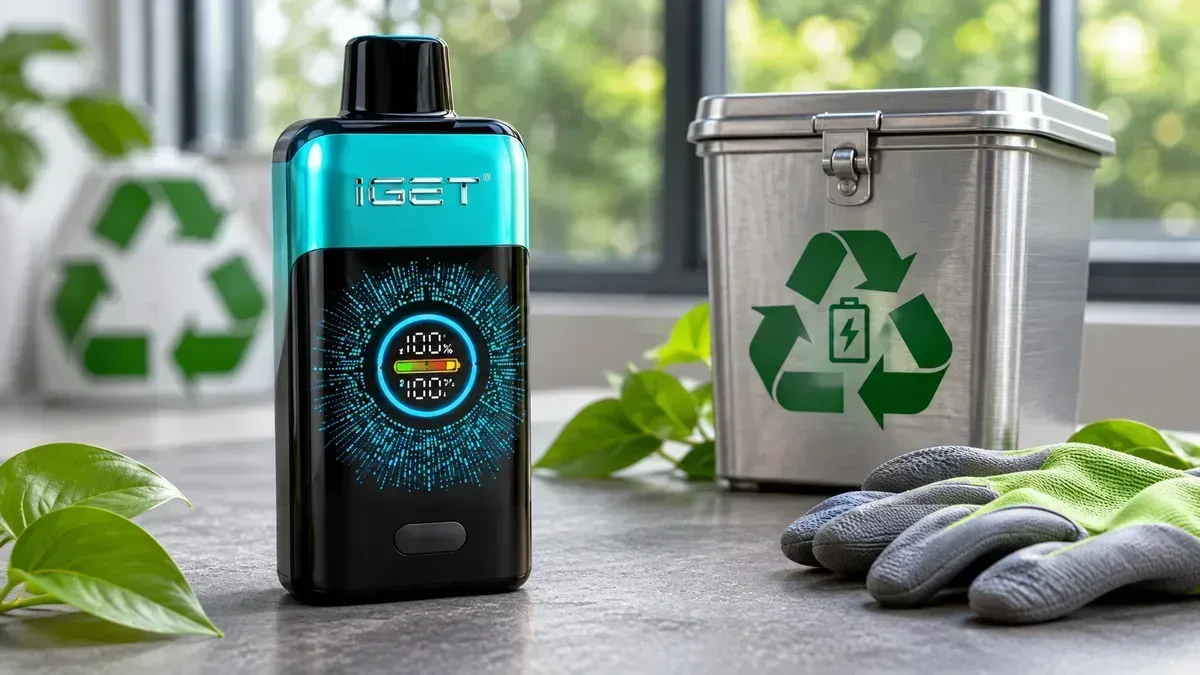
What’s left inside an IGET Bar Pro after the last puff? The casing still holds a battery, electronics, and possibly some e-liquid. That’s the starting point for IGET Bar Pro 10000 Puffs: Environmental Impact and Disposal Considerations.
Many adults face the same decision when a vape stops working. Should it go in the rubbish, the curbside recycling cart, a battery bin, or a specialist collection point? In fact, a crushed battery can start a fire, while discarded devices can release residue and materials into the environment. The right route depends on which local service accepts a complete used vape.
IGET Bar Pro 10000 Puffs: Environmental Impact and Disposal Considerations
What remains after the last puff?
The IGET Bar Pro 10000 Puffs is a high-capacity disposable electronic vape. Its design is for disposal at the end of its usable life. Owners generally replace depleted units instead of repeatedly refilling them or maintaining their internal parts. However, the components inside remain part of the waste stream long after the device stops producing vapour.
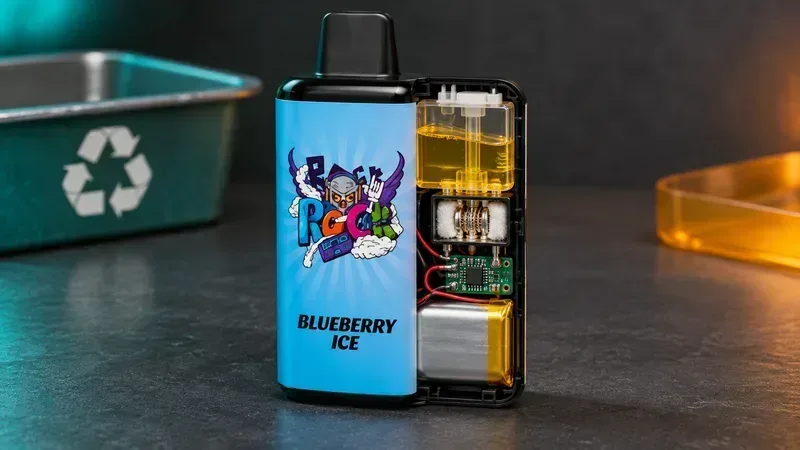
Inside, a battery powers the heating element, and circuitry controls how the device operates. The casing encloses these parts along with the reservoir and material that draws liquid toward the heater. Additionally, the reservoir or wick can retain e-liquid after the device stops working. Together, these features make a spent vape battery-powered electronic waste that can require specialist handling.
To check the specifications, look for current manufacturer documentation that matches the model identifier on your device or packaging. Specifically, look for the battery chemistry, rated capacity, casing materials, and any instructions about collection or recycling. A similarly named product can use different components. If the documentation leaves a detail unclear, ask the manufacturer to confirm it before relying on it.
What the advertised puff count tells you
The advertised 10,000-puff figure provides a rough basis for comparing labelled capacities. However, two people using the same model can get different counts because their draws differ in length. For instance, someone who takes longer draws may use the available liquid in fewer puffs. A fault or early battery failure can also end the device’s useful life sooner.
Therefore, treat environmental comparisons based on advertised puffs as estimates. A label can help you compare two products on paper, but the devices may deliver different amounts of actual use. For instance, two devices with the same advertised count can differ in weight and materials. This guide is for adults seeking environmental and disposal information, and it does not encourage vaping or nicotine use.
The Disposable Vape Lifecycle and Its Environmental Footprint
From raw materials to the shop shelf
A disposable vape begins as several separate supply chains. Battery and electronic parts draw on mined minerals and metals, while many plastic parts begin with petroleum-based feedstocks. Meanwhile, packaging requires its own materials, which can include paperboard and plastic film. Each material needs processing before a manufacturer can turn it into a component.
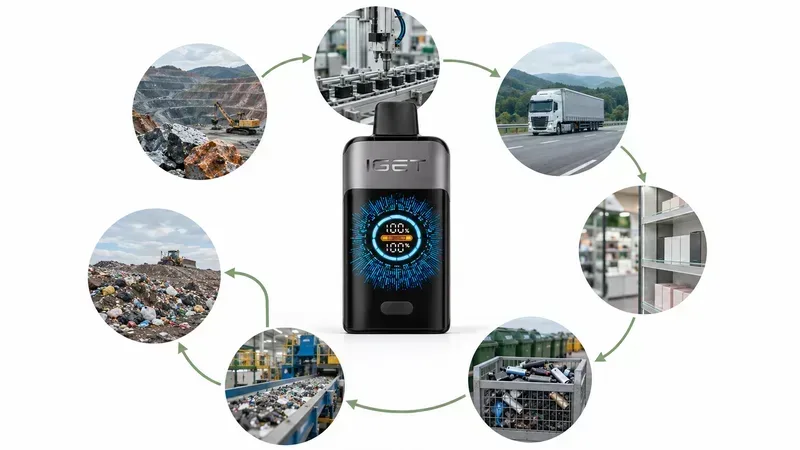
Lithium extraction can consume water and disturb land, depending on the deposit and extraction method. Additionally, mining and refining other metals for wiring and circuitry can generate waste and use substantial energy. Copper, for example, may move through several processing stages before reaching an electronics factory. The exact combination of materials depends on the design and the suppliers.
Factories use energy to produce batteries, circuit boards, moulded casings, and packaging. Moreover, assembly and testing add more steps before a finished device reaches a shop. If factories, warehouses, and retailers operate in different countries, the device may travel through several international freight hubs. Consequently, some of its environmental footprint already exists before anyone opens the box.
During use, the battery powers the heater and the device gradually consumes its e-liquid. However, a worn battery or failed component can interrupt that process and leave some liquid inside. Once the device leaves the user’s hands, its final destination depends on how people collect and sort it. A curbside cart and a specialist collection point send the same device to very different places.
What happens when a vape becomes waste?
In a landfill, a discarded vape takes recoverable metals and electronic components out of circulation. Meanwhile, plastic casings add to the volume of waste, and littered devices face sunlight, weather, and physical damage. Over time, a damaged casing can shed plastic fragments or expose metal parts and residual liquid. Runoff can then carry some of those materials into nearby soil, drains, or waterways.
For instance, a vape dropped beside a storm drain can sit through repeated rain and traffic before anyone removes it. Even intact litter can become damaged as vehicles pass over it or maintenance crews move it. Conversely, specialist collection sends the device to a facility equipped to handle its mixed materials. What happens next depends on the facility and its treatment process.
Recycling can recover some resources, such as metals that a processor can safely separate. However, recovery varies with the device’s design, condition, and the equipment available. Some components or residues may need separate treatment or disposal. Recycling addresses what happens at the end of the device’s life, while extraction, manufacturing, and transport have already used resources.
Battery, E-Liquid, and Fire Risks in Vape E-Waste
How battery damage can cause a fire
Disposable vapes commonly contain lithium-based batteries. However, check current manufacturer documentation for the battery chemistry and specifications of your exact IGET model. A device that produces no vapour can still hold an electrical charge. For instance, the device may stop because it ran out of liquid or a component failed.
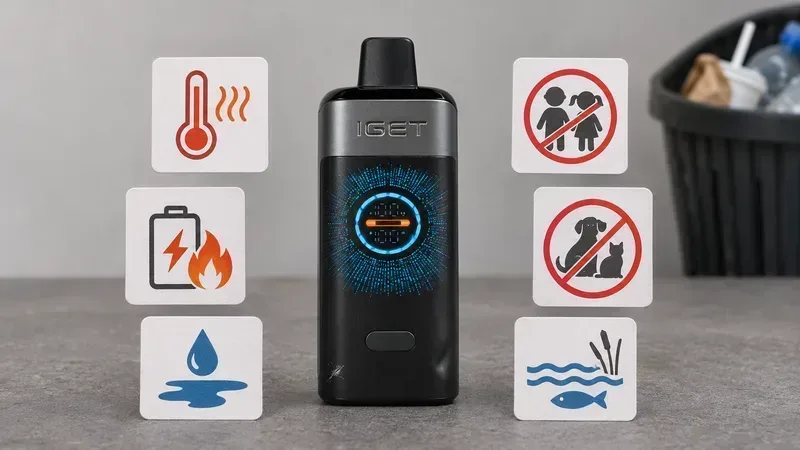
Crushing, puncturing, or compacting a vape can damage the battery and cause an internal short circuit. Similarly, excessive heat can damage a cell, and exposed contacts can short if they touch conductive metal. A damaged cell can heat rapidly, release smoke, or catch fire. In some cases, the heat drives a self-sustaining reaction called thermal runaway.
Those conditions can arise at several points in waste handling. For example, a household bin can hide a damaged vape among paper and other combustible material. Later, a waste truck or compactor can put the device under pressure. Sorting facilities, recycling plants, and storage areas also face risks, especially when staff handle mixed waste.
The U.S. Environmental Protection Agency describes these risks in its guidance on safely disposing of e-cigarettes. In particular, it directs households toward hazardous-waste collection and away from household trash and curbside recycling. The same small device can travel through bins, trucks, and machinery before anyone spots it. Keeping it out of those waste streams prevents unnecessary handling and compaction.
Why an empty vape can still leak
Even when the device stops producing vapour, the wick or reservoir can retain liquid. Moreover, nicotine-containing e-liquid can harm children, adults, pets, or wildlife if they swallow it or absorb it through skin. A small leak can spread onto a countertop, bag, or other items. Outdoors, leaked liquid may reach soil or water, especially near drains.
Therefore, avoid touching leaked e-liquid with bare skin and keep children and pets away from the area. If it gets on your skin, wash the area promptly with soap and water. Contact your local poison control service after suspected exposure and follow the product’s first-aid instructions. If a pet may have touched or swallowed the liquid, contact a veterinarian promptly.
For a leaking device or contaminated materials, ask your local hazardous-waste service how to handle the cleanup and disposal. Specifically, mention any visible damage or battery heating when you call. Liquid exposure and battery damage can happen together after a device cracks. The facility may give you different instructions for a leaking unit and an intact one.
How to Dispose of an Empty IGET Bar Pro Safely
Stop using it and check its condition
Stop using the device once it runs out, develops a fault, or shows signs of damage. In particular, stop if it leaks, swells, becomes unusually hot, or makes an electrical crackling sound when idle. Leave a depleted or faulty device disconnected from any charger. If you notice smoke, hissing, or rapidly increasing heat, move away and contact local emergency services.
Keep the casing closed and the battery inside. Never puncture, crush, or burn a used vape, and leave the heating components and reservoir in place. Only consider removing a battery if the manufacturer designed it for user removal and qualified local guidance explicitly permits it. Otherwise, tell the collection service you have a complete device with the battery fitted.
For an intact, cool device, choose a dry storage spot away from heat, direct sunlight, and moisture. Also, keep it apart from keys, coins, and other loose metal, especially if the casing has exposed contacts. Store it somewhere children and pets cannot reach, such as a secure cupboard. Arrange a drop-off once you confirm which facility will take it.
However, a swollen, damaged, or leaking vape may need different handling. If the device is cool and stable, call the local hazardous-waste facility before moving or packing it. Describe what you can see without opening the casing. Follow the instructions the facility gives you for that condition, including any directions about whether to transport it yourself.
Confirm a collection point before you leave
Unless your local authority expressly permits complete vapes in household waste or curbside recycling, keep them out of both. Instead, look for an approved collection option that names used vapes among its accepted items. Possible routes include retailer take-back, dedicated vape collection points, e-waste centres, and household hazardous-waste facilities. In some places, a council collection event or another authorised service may also accept them.
Before setting out, ask whether the site takes complete disposable vapes with the battery inside. For example, you can say, “I have an intact used IGET Bar Pro with its battery fitted. Can I bring it here?” A site can accept household batteries and still exclude vapes. Mention any leaks, swelling, or damage during the same call so staff can advise you.
Once the site confirms acceptance, ask what it requires for the drop-off. In particular, check any instructions that apply to complete devices.
- Ask how to package each device and whether it needs an individual container or bag.
- Confirm whether staff require protection for any accessible terminals or contacts and how to apply it safely.
- Check quantity limits, appointment requirements, and any separate rules for damaged devices.
- Follow the site’s transport instructions and use the designated handover point when you arrive.
Finally, tell staff what you’re handing over if the site offers a staffed drop-off. For instance, a facility may collect vapes at its hazardous-waste counter and household batteries at a separate station. If your first choice declines the item, ask the local waste authority which nearby service accepts complete devices. Keep an intact unit in safe storage while you arrange the next drop-off.
Can an IGET Bar Pro Be Recycled—and Where?
Why acceptance varies by program
Some materials inside an IGET Bar Pro may be recoverable through a specialist process. However, accepting a complete device takes equipment and procedures that many recycling programs lack. The sealed casing holds mixed plastics and metals, a fitted battery, and small electronic parts. Additionally, residual e-liquid can contaminate materials and complicate handling when a processor opens the device.
For example, a recycling centre may handle circuit boards while excluding vapes that contain a liquid reservoir. Likewise, a battery service may collect loose cells and turn away devices with attached electronics. A facility’s acceptance list tells you whether it can handle the whole vape. If it accepts the device, you can also ask what happens to the battery and casing after collection.
Which collection option should you check?
- Retailer take-back. Ask whether the retailer accepts the brand and condition of your unit, and whether staff receive it directly.
- Dedicated vape bins. Read the label and check the host’s policy, particularly if your device leaks or shows damage.
- Battery recycling services. Use these only if the operator explicitly accepts intact vapes. Ordinary battery bins may accept loose cells only.
- E-waste centres. Ask whether the site accepts small devices that combine batteries, electronics, and residual liquid.
- Household hazardous-waste facilities. Check whether they accept nicotine vapes and whether you need an appointment or proof of residency.
Start with your municipal waste directory or your environmental agency’s guidance. Then compare the published list with the retailer’s policy or the facility’s acceptance criteria. For instance, a council listing may direct you to an e-waste depot, while the depot lists vapes separately. A quick call before travelling can confirm the right location and any restrictions.
Additionally, regulations and legal responsibilities vary by country, state, province, and municipality. A retailer’s collection duties may differ from the instructions a local authority gives households. Policies can also change when a collection contract or local rule changes. Therefore, confirm the current requirements for your area instead of relying on a previous visit or another region’s advice.
Where local rules permit take-back, retailers can make disposal easier with clearly labelled collection points and trained staff. Specifically, staff need procedures for receiving used devices and responding to leaks or damage. Retailers also need secure storage and an authorised waste contractor that accepts the collected devices. Clear labels help customers find the right bin and keep complete vapes out of ordinary battery collections.
High-Puff Devices, Waste per Puff, and Lower-Waste Alternatives
Compare equivalent use and total material
Imagine comparing one device labelled for 10,000 puffs with four devices labelled for 2,500 puffs each. On paper, they offer the same number of puffs. For some users, the higher-capacity device could replace all four smaller units. In that scenario, the user discards one casing and one set of packaging instead of four of each.
However, a high-capacity device may contain a larger battery, more liquid, or more casing material. It may therefore become a larger single waste item. To compare waste per puff, divide the total discarded mass, including packaging, by the puffs each option actually delivers. Also compare total material per device, because a waste facility handles each unit as a whole.
For example, suppose the packaging and spent high-capacity device together weigh 60 grams in a hypothetical comparison. Four smaller devices with packaging might total 80 grams. If both options deliver 8,000 puffs, the figures are 7.5 and 10 grams per 1,000 puffs, respectively. These illustrative figures show how to compare equivalent use without assuming the advertised count.
However, if the larger device fails after 4,000 puffs, its figure rises to 15 grams per 1,000 puffs. Material composition and disposal outcomes matter too, even when two devices produce similar waste weights. For instance, one collection program may recover some battery metals while another manages the entire unit as hazardous waste. A higher puff rating alone cannot establish a smaller environmental footprint.
Reduce the number of devices you discard
For adults who already vape, refillable or reusable rechargeable systems can spread the material cost of durable parts across many uses. For instance, a reusable device can retain its casing and main electronics through several changes of liquid or pods. However, coils, pods, spent batteries, and e-liquid containers still need appropriate disposal. The amount of waste depends on how long the lasting parts actually serve.
Quitting nicotine use and stopping vaping avoids future vape-device waste. Meanwhile, adults who continue to vape can reduce litter and route used devices into appropriate collection. If you already have disposable units at home, their condition determines how to store them and when to call the facility.
- Prevent litter by keeping spent vapes with you until you can store them safely or reach an approved collection point.
- If you already buy vaping products, choose legitimate products with identifiable manufacturers and accessible handling instructions.
- Use devices only as designed and remove faulty units from use promptly.
- Group intact used units securely for a planned drop-off, following the facility’s storage, packaging, and quantity instructions.
- Support verified take-back programs that explain which devices they accept and how they manage collected waste.
Conclusion
Treat a used IGET Bar Pro as battery-powered electronic waste. Its casing and electronics contain materials that specialist processors may recover. Meanwhile, the fitted battery can start a fire if damaged, and leftover e-liquid can expose people, animals, or the environment. Keep the device intact and store it safely while you arrange collection.
Check your local authority’s current e-waste or hazardous-waste directory before you go. Then contact the facility or retailer and confirm it accepts complete disposable vapes with their batteries fitted. Mention any damage or leakage, and follow the service’s packaging and transport instructions for your drop-off.







