What should you do when a vape becomes unusually hot, stops charging, or loses power within hours? ALIBARBAR INGOT 9000 Puffs: Electrical Safety and Battery Testing starts with one rule: treat unexpected heat as a warning. Buyers and sellers need practical guidance, yet product specifications and protection claims can remain unclear. Therefore, confirm model-specific information before trusting any battery, charger, or safety claim.
This guide separates documented facts from general lithium-ion practices. It explains professional testing, safe consumer checks, charging, troubleshooting, emergency response, storage, authenticity, and disposal. However, never open the housing or experiment with the internal battery. A damaged rechargeable device can fail suddenly, even after appearing normal.
1. ALIBARBAR INGOT 9000 Puffs: Electrical Safety and Battery Testing Basics
This guide focuses on electrical safety, not product performance claims or vaping technique. Confirm the battery type, rated capacity, charging input, charging time, and protective features before use. Specifically, consult current manufacturer documents, reliable packaging, or durable labels attached to the device. If those sources conflict, ask the manufacturer or supplier for written clarification.
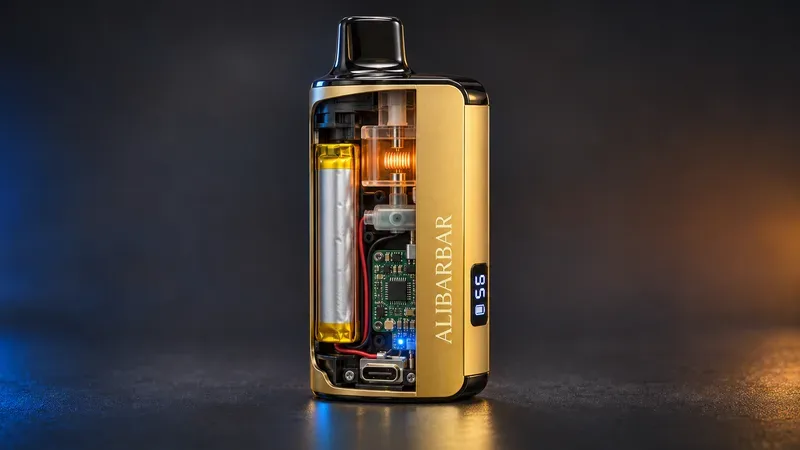
A rechargeable vape combines several electrical and mechanical parts inside a compact housing. The battery supplies energy, while control electronics manage power delivery to the heating coil. Meanwhile, an airflow sensor may activate the coil when the user inhales. An indicator light or display can report charging, low power, activation, or possible faults.
What the 9,000-puff figure actually means
The advertised 9,000-puff figure estimates usage under particular conditions. It does not directly state battery capacity, operating time, charging speed, or electrical safety. For instance, two people may reach very different puff totals from identical devices. One may take short, infrequent puffs, while another takes longer puffs throughout the day.
Several variables can change real-world performance:
- Puff duration and the time between puffs
- Frequency of daily use
- Coil resistance and power-management settings
- Remaining liquid and liquid flow to the coil
- Ambient temperature during use and charging
- Battery age and previous charging behavior
- Manufacturing consistency and storage history
Long puffs usually demand more energy than short puffs. Moreover, repeated use can warm the coil, electronics, and battery before they cool naturally. Very cold conditions may temporarily reduce available power. On the other hand, high temperatures can accelerate battery aging and increase electrical risk.
A puff estimate also cannot prove that every internal component will last equally long. The liquid may run out before the battery reaches its expected cycle life. Alternatively, a connection, sensor, or coil may fail while the battery still holds energy. Therefore, judge unusual behavior by verified specifications and physical warning signs, not the puff number alone.
This product is intended only for adults where its sale and use are legal. Nicotine can cause dependence and carries health risks. Most importantly, safer battery handling only reduces certain electrical hazards. It does not make vaping harmless or remove nicotine-related risks.
2. Electrical Risks and Expected Battery Protection Features
Lithium-ion cells store substantial energy inside a small space. Overheating can begin with excessive current, an internal short, damaged insulation, or abnormal charging. Furthermore, physical damage may allow internal cell layers to contact each other. That contact can generate rapid heat and, in severe cases, smoke, fire, or venting gases.
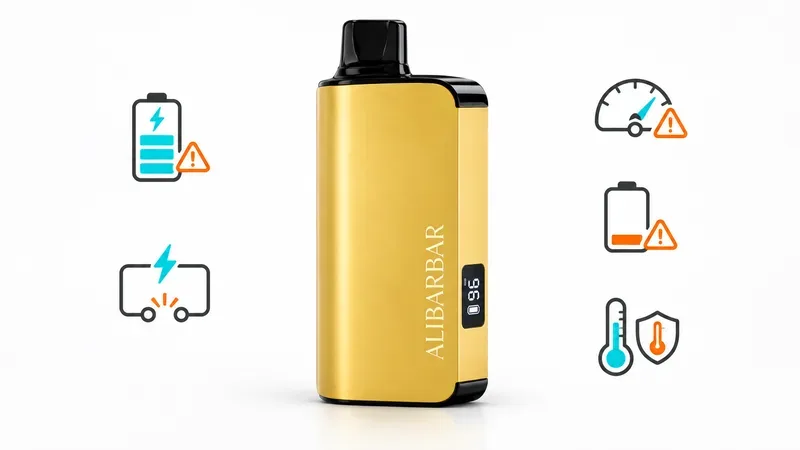
Overcharging pushes a cell beyond its intended upper voltage. Deep discharge, by contrast, lowers voltage beyond a safe operating range. Both conditions can damage the cell and affect later charging behavior. Additionally, liquid ingress can corrode contacts or create unintended electrical paths between components.
What protective electronics should do
Many rechargeable devices use safeguards to watch battery and charging conditions. Overcharge protection should stop or limit charging at the approved upper threshold. Over-discharge protection should prevent the battery from supplying power below its safe lower limit. Meanwhile, short-circuit and overcurrent safeguards should interrupt abnormal current flow.
Temperature protection may reduce power or shut the device down when heat exceeds a defined limit. However, these functions depend on suitable components, correct assembly, and reliable calibration. Do not assume the ALIBARBAR INGOT 9000 contains a specific safeguard without credible documentation. A marketing phrase alone cannot confirm the design, threshold, or test performance.
Protection electronics reduce risk, but they cannot repair physical or chemical damage. A crushed cell may develop an internal fault that electronics cannot detect immediately. Likewise, a wet, counterfeit, modified, or defective device may behave outside its intended design. Therefore, stop using any unit with serious damage, even when its indicator still works.
Why charging-port condition matters
The charging port creates a small contact area that carries electrical current. A bent or loose contact can interrupt that current repeatedly. As a result, the connection may develop abnormal resistance and produce concentrated heat. Severe damage can also cause sparking or electrical arcing inside the port.
Corrosion, pocket debris, dried liquid, and heat-damaged plastic can create similar problems. Notably, a device should not require pressure or a particular cable angle to maintain charging. Discoloration around the port may indicate previous overheating. Stop charging if the connector feels loose, smells unusual, or becomes hotter than the surrounding housing.
3. How ALIBARBAR INGOT 9000 Battery Testing Should Work
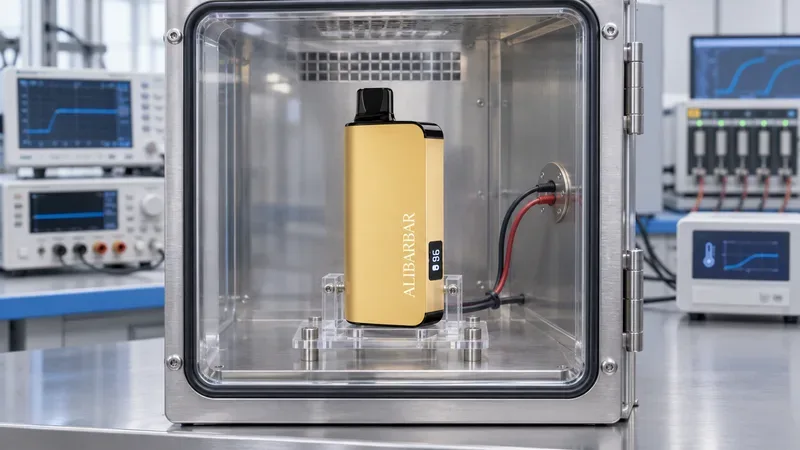
Battery testing falls into two distinct categories. Qualified laboratories can measure electrical performance under controlled conditions using calibrated equipment. Consumers and retailers should limit themselves to visual inspection and normal operational observations. Specifically, ordinary users should never reproduce destructive laboratory tests at home or in a shop.
Professional performance measurements
A laboratory can measure capacity by charging and discharging the battery under defined limits. Technicians record the energy delivered before the device reaches its normal cutoff point. Moreover, they compare measured capacity with the stated rating and permitted tolerances. The test conditions must include current, voltage, temperature, equipment accuracy, and cutoff criteria.
Charge and discharge profiles reveal how voltage changes during operation. Current monitoring shows whether the charging circuit draws stable and appropriate power. Meanwhile, voltage stability analysis can expose sudden drops, unstable cutoffs, or irregular power delivery. Temperature sensors can identify excessive heating around the cell, circuit board, coil, or charging port.
One test result does not describe the battery’s entire useful life. Therefore, laboratories may repeat controlled charge and discharge cycles. Cycle testing tracks capacity loss, internal resistance, charging consistency, and heat generation over time. A rising internal resistance often causes larger voltage drops and more heat under load.
Testing should also consider realistic intervals between puffs. For example, twenty rapid activations may produce different temperatures than twenty activations spread across an hour. Additionally, test equipment should stop the sequence if the device exceeds defined safety limits. Technicians must document any shutdown, deformation, leakage, smoke, or abnormal odor.
Controlled fault testing
Qualified facilities may examine how a device responds to abnormal electrical conditions. Tests can cover charger irregularities, excessive current, deep discharge, short-circuit response, and abnormal temperatures. However, trained personnel conduct these procedures inside suitable containment systems. They also use remote controls, fire precautions, ventilation, and calibrated measuring instruments.
Credible fault testing follows a written method with clear pass-and-fail criteria. The final report should identify the exact product, model, sample quantity, laboratory, equipment, conditions, and results. Furthermore, it should distinguish a complete-device test from a test covering only the internal cell. A cell certificate does not automatically prove the finished vape meets the same requirements.
Do not rely on a named standard without checking the report behind the claim. Applicable frameworks vary by product design, market, transport method, and test purpose. Therefore, mention a standard only when credible evidence connects it to the exact model. The report must also identify the method, laboratory, test date, and outcome.
Checks consumers and retailers can perform
Safe checks remain simple and non-invasive. Inspect the housing, port, labels, connector fit, indicator behavior, and temperature during ordinary charging. Moreover, compare several genuine units for unusual differences in weight, finish, packaging, or charging behavior. Record the supplier, batch details, symptoms, charging source, cable, and approximate operating time.
- Check for swelling, cracks, dents, leakage, or discoloration.
- Confirm the cable fits without force or sideways pressure.
- Watch for repeated error indicators or unexplained activation.
- Stop if heat rises rapidly or remains after disconnection.
- Quarantine damaged stock away from combustible materials.
Never puncture, crush, disassemble, or deliberately short-circuit the device. Likewise, never bypass protective circuits or apply an unapproved voltage. These actions can trigger an immediate internal failure. They can also create delayed damage that becomes dangerous during the next charge.
4. Charging Time, Equipment, and Safe Charging Practices
The correct charging time depends on more than a puff claim. Verified battery capacity and documented charging input provide the starting information. However, remaining charge, temperature, cable resistance, and charging-circuit behavior also affect the result. Battery age can further change how quickly the device charges and how long it runs.
Follow the current manufacturer’s instructions instead of relying on an unsupported time estimate. For example, a seller’s informal “about one hour” promise may not match every production batch. Furthermore, an indicator can behave differently during charging, completion, or a fault. Confirm what each light pattern means through model-specific documentation.
Choose compatible charging equipment
Use a sound cable that fits securely and matches the documented connector type. Connect it to a suitable power source that meets the stated input requirements. Additionally, inspect both cable ends for bent metal, looseness, cuts, exposed conductors, or heat damage. Replace a questionable cable instead of twisting it until charging begins.
Avoid improvised adapters, damaged leads, and unknown fast chargers. High-output equipment may support several charging modes, but the device must negotiate or tolerate them correctly. Therefore, do not assume a powerful charger will always charge safely or faster. Use only equipment that the manufacturer identifies as suitable.
Inspect the port before charging
Look for looseness, bent contacts, compacted debris, corrosion, moisture, and discoloration. Never insert metal tools into the port. Instead, follow the manufacturer’s cleaning guidance or ask the seller for help. If moisture may be present, do not connect power merely to test whether charging works.
Place the device on a stable, nonflammable, uncovered surface during charging. Keep it away from bedding, upholstery, paper, direct sunlight, heaters, and cooking areas. For instance, a ceramic surface offers better observation than a sofa or pillow. Keep the surrounding area clear so heat can escape naturally.
Monitor the device and check periodically for abnormal heat, odor, noise, or changing shape. Moreover, disconnect it after charging completes according to the documented indicator behavior. Do not charge overnight or while nobody can respond to a fault. Unattended charging can allow a small warning sign to develop into a serious incident.
If charging produces rapid heat, smoke, hissing, or swelling, disconnect power only when you can do so safely. Do not touch a dangerously hot or visibly failing device. Instead, move people away and contact emergency services if fire, smoke, or immediate danger develops. Follow local emergency guidance rather than carrying a failing battery through occupied areas.
5. Overheating, Charging Failure, and Battery Warning Signs
Mild warmth can occur during charging or repeated vaping. However, the temperature should not rise rapidly or become painful to touch. Persistent heat near the battery or port needs attention. Localized heating may indicate a poor connection, damaged component, excessive current, or internal fault.
Stop using and charging the device when serious warning signs appear. Most importantly, do not test it again after it cools. A temporary temperature drop does not reverse internal damage. Isolate it safely from people and combustible materials, following local emergency guidance.
Critical signs of possible battery failure
- Swelling or separation between housing sections
- Hissing, popping, crackling, or unexpected buzzing
- Smoke, sparks, or visible vapor from the charging area
- A chemical, solvent-like, or unusually sweet odor
- Liquid leakage from places unrelated to normal airflow
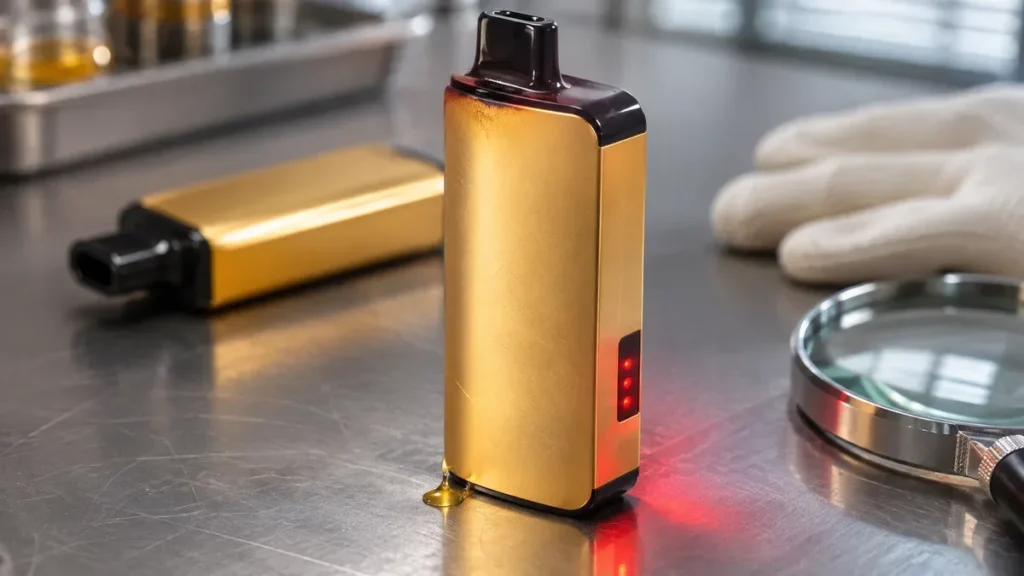
- Housing deformation, melting, discoloration, or scorching
- Rapid power loss after an apparently complete charge
- Unexplained activation without normal inhalation
- Heat that persists after use or disconnection
Smoke, hissing, swelling, or rapid heating can signal an active emergency. Therefore, avoid holding, squeezing, or transporting the device. Move away and warn other people nearby. Contact local emergency services if a fire or immediate threat develops.
When the device will not charge
Begin with non-invasive checks and keep the housing closed. Confirm that the power source works with another suitable item. Next, try a compatible, undamaged cable approved for the device. Observe the indicator without repeatedly reconnecting the plug.
Inspect the port under good lighting for debris, moisture, corrosion, bent contacts, or heat damage. Additionally, consider the surrounding temperature. Charging may become unreliable when the device is extremely cold or already hot. Let it return naturally to a moderate room temperature before following manufacturer guidance.
Do not apply external heat from a hair dryer, radiator, or heat gun. Furthermore, do not scrape contacts with pins, blades, or other metal objects. These methods can damage insulation or bridge electrical contacts. Ask the seller or manufacturer for assistance when simple checks do not resolve the problem.
Interpreting other symptoms
Reduced runtime can result from battery aging, cold conditions, heavy use, longer puffs, or internal damage. Weak vapor may also involve low liquid flow, coil condition, airflow, or power control. Therefore, weak output does not identify the battery as the sole cause. Look at the complete pattern of symptoms.
Blinking indicators may report low charge, excessive puff duration, a short circuit, overheating, or another fault. Meanings vary across models and production versions. Consequently, consult verified instructions instead of guessing from another device. Repeated unexplained blinking deserves support from the manufacturer or supplier.
Intermittent charging often points to cable damage, port wear, contamination, or a loose internal connection. Unexpected shutdowns may involve low voltage, excessive temperature, unstable electronics, or battery deterioration. Stop using a device that repeatedly overheats or drains unusually fast. Likewise, retire one that charges only when the connector stays at an angle.
6. Safe Storage, Transport, Drops, and Water Exposure
Store the device in a cool, dry location away from sunlight, heaters, hot vehicles, and moisture. Keep it beyond the reach of children and pets. Moreover, avoid locations where the device could fall, become crushed, or activate accidentally. Do not leave it on a vehicle dashboard or beside a sunlit window.
Bags and pockets can expose a device to pressure and sharp objects. Use a suitable protective compartment that prevents crushing and accidental activation. Additionally, separate the device from coins, keys, tools, and other metal objects. These items can damage the charging port or bridge exposed contacts.
After impact or crushing
Stop use after a significant drop, crushing event, puncture, or visible housing deformation. Damage inside the cell may remain hidden. Therefore, do not judge safety only by whether the indicator lights up. Ask the seller, manufacturer, or a qualified professional about the safest next step.
Do not squeeze a dent back into shape or tape a split housing closed. Furthermore, never continue charging a unit with new gaps, rattling parts, or a shifted port. These signs may reveal broken supports or displaced electrical components. Place the device in an appropriate isolation area while arranging safe disposal.
Water and liquid exposure
Water can enter around the port, airflow path, seams, or indicator. Even after the outside dries, trapped moisture can corrode contacts. As a result, delayed faults may appear hours or days later. Conductive residue can also remain after the visible water evaporates.
Never charge a wet or water-exposed device. Do not use a heater, oven, microwave, or hair dryer to dry it. Most importantly, do not assume it is safe because it still operates. Contact the manufacturer or seller for handling and disposal guidance.
Retailers and distributors should isolate damaged returns from saleable stock. They should prevent terminal contact, record the incident, and preserve traceable product details. Additionally, staff should follow local hazardous-goods procedures for storage and transport. A swollen or leaking return should never enter an ordinary parcel stream without approved handling.
7. Authenticity Checks, Battery Aging, and Safe Disposal
Counterfeit or poorly controlled products can introduce several hidden risks. Manufacturers may use lower-quality cells, weak wiring, unreliable charging circuits, or misleading labels. Some units may lack the protections suggested by their packaging. Therefore, appearance alone cannot confirm electrical quality.
Checking authenticity
Buy from a reputable authorized seller that provides traceable invoices and responsive support. Check packaging quality, batch or serial details, tamper evidence, verification codes, and manufacturer contact information. Moreover, compare the device with official product imagery. Look closely at spelling, finish, labels, port alignment, and print consistency.
A successful verification code offers useful evidence, but it does not prove authenticity alone. Counterfeiters can copy genuine codes or reuse photographed labels. Therefore, consider the seller, packaging, device finish, documentation, and code together. Ask the supplier about any mismatch before charging or selling the unit.
Businesses should retain purchase records and batch information for complaints. Additionally, they should record overheating, leakage, charging failure, and other electrical incidents consistently. Patterns across several units may reveal a batch or supply-chain problem. Prompt reporting also helps the supplier investigate affected stock.
Why battery performance declines
Rechargeable batteries lose capacity gradually through normal use and calendar aging. Frequent use and long puffs can increase the number and depth of discharge cycles. Meanwhile, repeated deep discharge may place greater stress on the cell. Charging frequency also reflects energy use, although careful partial charging may reduce certain stresses.
High temperatures generally accelerate chemical aging. Cold conditions can temporarily reduce available output and charging performance. Furthermore, long storage at extreme charge levels may affect battery health. The exact result depends on cell chemistry, control electronics, temperature, and storage duration.
Aging may appear as shorter runtime, larger voltage drops, slower charging, or more heat under the same use. However, sudden performance loss deserves more caution than gradual decline. Rapid change can indicate damage, a poor connection, or an internal fault. Stop using the device when reduced runtime appears alongside heat, swelling, odor, or erratic charging.
Responsible disposal
Never place a depleted, swollen, leaking, overheated, or damaged device in household trash. Ordinary recycling bins are also unsuitable because handling equipment can crush the battery. As a result, hidden lithium-ion cells can start fires during collection or processing. Treat the entire device as battery-containing electronic waste.
Use a local battery, electronic-waste, or household hazardous-waste program. In the United States, the Environmental Protection Agency provides guidance for used lithium-ion batteries. Elsewhere, contact the relevant municipal waste service or environmental authority. Always follow the receiving facility’s packaging and transport instructions.
Tell the facility when a device is swollen, leaking, scorched, or previously overheated. Moreover, do not mail a damaged battery unless an authorized specialist provides compliant instructions. Businesses should follow applicable hazardous-goods rules and carrier requirements. Keep damaged units separated so their terminals and ports cannot contact metal objects.
Conclusion
Electrical safety depends on verified information, careful inspection, compatible charging equipment, and active supervision. Moderate storage conditions also protect the device from unnecessary heat, moisture, and physical stress. Most importantly, respond immediately when abnormal heat or visible damage appears. A working indicator never proves that a damaged battery remains safe.
Never perform invasive battery tests or continue using a swollen, wet, leaking, or unusually hot device. The same caution applies to intermittent charging and physical damage. Therefore, ask the manufacturer or supplier for model-specific battery specifications and test documentation. Do this before relying on any protection claim.
Use a six-step safety check: inspect, charge correctly, monitor, store safely, stop at warning signs, and recycle responsibly. Additionally, keep purchase and batch details when reporting a problem. These simple habits support faster investigation and safer handling. When uncertainty remains, stop using the device and seek qualified guidance.