
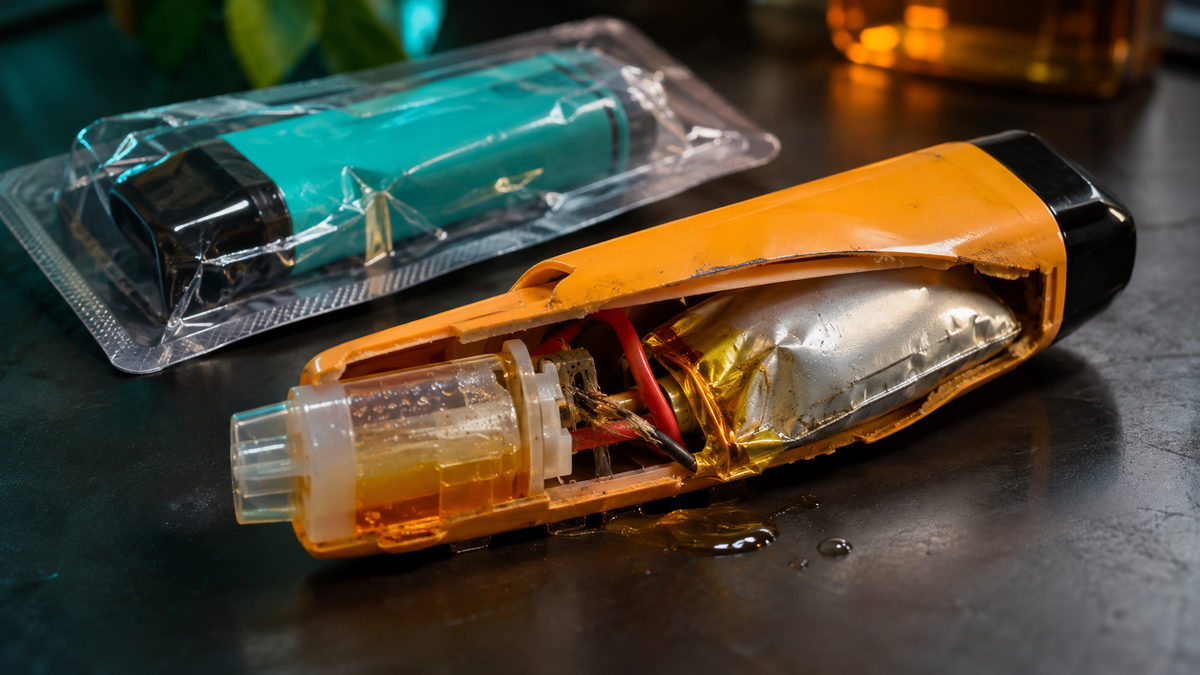
Could convincing packaging be hiding an unsafe battery, contaminated liquid, or wildly inaccurate nicotine levels? What Are the Risks of Counterfeit Vaping Devices? They include poisoning, lung injury, burns, fires, and unexpected exposure to drugs. Copied branding, unfortunately, can make a dangerous product look perfectly legitimate.
Counterfeiters can replicate boxes, security labels, QR codes, and familiar device designs. Some even reuse genuine codes or put fake cartridges inside authentic-looking packaging. That means a quick visual inspection can easily miss serious defects.
This guide looks at the health, battery, quality, and legal dangers associated with counterfeit vapes. It also explains the warning signs, safer ways to buy these products, and what to do after finding or using a suspicious device.
1. What Are the Risks of Counterfeit Vaping Devices?
A counterfeit vaping device is an unauthorized copy sold using another company’s name or branding. It might imitate a disposable vape, refillable device, cartridge, pod, charger, or replacement battery. Put simply, the seller passes it off as genuine even though the brand owner never approved it.

Counterfeit, however, does not mean quite the same thing as illicit, unlicensed, tampered, or generic. An illicit product might break local sales rules without copying a brand. A tampered product, meanwhile, may have been genuine before someone altered its liquid, cartridge, software, or battery.
A badly manufactured generic vape can be dangerous too. It only becomes counterfeit when it falsely copies another company’s identity or protected product. Because these categories can overlap, assessing an unknown device is rarely straightforward.
Why Counterfeit Products Create Extra Uncertainty
Legitimate manufacturers generally follow documented specifications for materials, batteries, liquids, and assembly. Counterfeit producers may change ingredients or components from one batch to the next. Two devices sold in identical boxes could therefore behave very differently.
Common weaknesses can include:
- Unreliable manufacturing and hygiene standards
- Missing or inaccurate ingredient information
- Little or no quality testing
- No dependable batch traceability
- No meaningful warranty or technical support
- Limited accountability when someone experiences harm
A seller, for example, may vanish after accepting payment through an informal account. The manufacturer named on the package might never have made the device at all. Consumers and doctors are then left trying to identify unknown ingredients or battery specifications.
Authentic vaping products still carry health risks and may contain addictive nicotine. Counterfeit versions add yet another unknown. Users cannot be sure what they are inhaling, how much nicotine they are getting, or whether the battery meets even basic safety expectations.
2. Health Risks From Unknown or Contaminated Ingredients
Counterfeit vape liquid may contain far more or less nicotine than the label claims. A product advertised as nicotine-free could contain nicotine after all. On the other hand, one labeled as moderate might deliver a much stronger dose than expected.
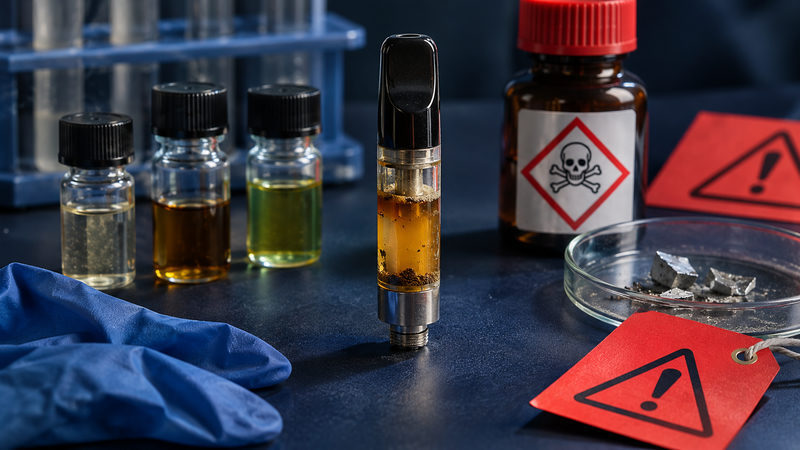
Unpredictable nicotine levels can lead to dizziness, headache, nausea, sweating, tremors, or a racing heartbeat. Larger exposures may cause severe weakness, confusion, vomiting, seizures, or loss of consciousness. Children are especially vulnerable because even a small exposure to vape liquid can become an emergency.
Counterfeit liquids may also contain undeclared drugs, additives, or thinning agents. Poor production practices can introduce residual solvents, cleaning chemicals, microbes, or particles as well. Only laboratory testing can identify a particular contaminant with confidence.
Chemicals and Metals May Enter the Aerosol
Cheap heating coils and low-quality internal parts may release metals into the aerosol. These contaminants can include lead, nickel, chromium, or other metals. Their presence and concentration vary, though, so no one can confirm exposure from appearance alone.
Flavoring chemicals raise further concerns when manufacturers use unsuitable ingredients or excessively high concentrations. A substance considered acceptable in food is not automatically safe to inhale. Heat can also alter chemicals, producing new compounds that irritate the body.
Possible warning symptoms include:
- Persistent coughing or throat irritation
- Shortness of breath or chest discomfort
- Dizziness, nausea, or unusual intoxication
- Rapid heartbeat or other cardiovascular symptoms
- Severe vomiting, weakness, or confusion
- Worsening breathing problems after vaping
Someone might expect a familiar nicotine effect, for example, but become disoriented after only several puffs. That unexpected reaction could come from excess nicotine, an undeclared substance, or a different contaminant. The right response is to stop using the product, not try it again to see what happens.
Serious lung injury may cause chest pain, breathing difficulty, fever, coughing, or low oxygen levels. Those symptoms can also point to an infection or another medical condition. A clinician needs to examine the person and decide which tests or treatment are appropriate.
Smell, color, and flavor cannot tell you whether a liquid is safe. Clear liquid can still hold dangerous substances. A normal taste is no proof of accurate nicotine levels or clean manufacturing either.
3. Battery, Fire, Leakage, and Device-Failure Hazards
Vaping devices position powerful batteries close to the face, hands, and clothing. Poorly made copies may contain damaged cells, thin insulation, or internal components that do not match. Faulty charging circuits may also fail to regulate voltage, current, or temperature.
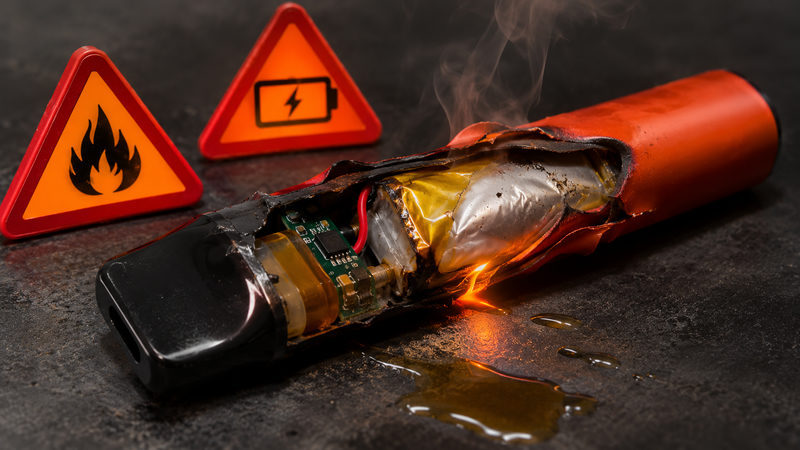
A short circuit can release energy in seconds, creating intense heat. An unstable lithium-ion cell may vent hot gas, catch fire, or explode. Weak temperature controls make this more likely, particularly during charging or repeated use.
Counterfeit chargers and cables bring their own risks. They may supply unsuitable power or lack reliable protective components. Just because a plug fits does not mean the charger is safe for that device.
Warning Signs of an Unsafe Device
Stop using a vape if it becomes unusually hot or activates by itself. Swelling, hissing, crackling, smoke, and sharp chemical odors are urgent warning signs. They may signal an internal short circuit, a damaged cell, or overheating liquid.
Other concerning signs include:
- A swollen, cracked, or distorted casing
- Liquid leaking near the battery or charging port
- Loose components or a moving internal battery
- Repeated charging failures or sudden power loss
- Unexpected activation inside a bag or pocket
- Smoke, sparks, popping sounds, or burning odors
A failing device can cause facial injuries, burned hands, exposure to toxic smoke, property damage, or fire. A leaking cartridge may also put concentrated nicotine directly on the skin. If liquid enters the device, it can increase the risk of electrical failure.
Do not charge, open, puncture, crush, or try to repair a suspicious vape. Never carry one loose in a pocket alongside keys or coins. Metal objects can connect exposed contacts and trigger a dangerous short circuit.
If the device starts heating up, move away and keep others clear if you can do so safely. Do not pick up a smoking or swollen battery with bare hands. If it catches fire or poses an immediate danger, contact emergency services.
4. How to Spot a Fake Vape Before Buying or Using It
An unusually low price is often the first clue. A new device selling for half its normal market price, for instance, deserves a much closer look. Price alone, however, cannot prove that a product is counterfeit.
Examine the packaging under good lighting before opening it. Watch for spelling mistakes, blurred printing, mismatched colors, incorrect logos, or crooked labels. Missing compliance information, importer details, or required warnings may also indicate trouble.
Look closely at the product’s physical condition too. Broken seals, flimsy construction, loose parts, leaking cartridges, and damaged charging ports all call for caution. Inconsistent flavor names or nicotine statements can also expose copied or altered packaging.
Checking Codes and Product Records
Many manufacturers use a scratch code, QR code, serial number, or batch number. When an official verification page is available, enter the details there. Type the manufacturer’s known website address yourself instead of relying on a questionable QR destination.
Make sure the result matches the device, flavor, nicotine strength, and package information. You can also see whether the manufacturer lists the seller as an authorized retailer. A seller missing from that list is not automatic proof of fraud, but it does create more uncertainty.
Use this verification sequence:
- Inspect seals, printing, warnings, and product details.
- Find the serial, scratch, batch, or authentication code.
- Visit the manufacturer’s known verification page independently.
- Confirm that the result matches the exact product.
- Check whether the code shows repeated or earlier verification.
- Ask the manufacturer when information remains inconsistent.
Counterfeiters can copy security stickers or attach fake QR codes to packages. They may also reuse a single genuine serial number on hundreds of devices. A successful code check can reduce suspicion, but it cannot guarantee that the product is safe.
Be wary if the verification page has an unusual domain or asks for personal details it does not need. A QR code can lead to a remarkably convincing fake website. Good-looking packaging should never be treated as proof of quality on its own.
5. Safer Purchasing Practices for Consumers and Retailers
Where vape sales are legal, consumers should buy from authorized retailers that provide clear business information and return procedures. Compare the asking price with the product’s usual market range. Huge discounts might point to counterfeiting, theft, old stock, or poorly handled inventory.
Whenever possible, inspect the package before paying. Check the flavor, nicotine strength, model number, seals, and required warnings against one another. Keep the receipt too; it documents the seller, purchase date, price, and product description.
Avoid modified devices and loose cartridges sold without their original packaging. Be cautious with social media accounts, street sellers, informal contacts, and unverified marketplaces. If the product fails or causes harm, these channels may offer almost no traceability.
Controls for Vape Retailers
A supplier’s verbal promise is not enough for retailers. They should confirm business registrations, contact details, distribution rights, and authorization from the brand. Itemized invoices should also list product models, quantities, batch numbers, and shipment dates.
Useful inventory controls include:
- Buying through documented and authorized distribution channels
- Checking supplier credentials before placing an order
- Recording batch, lot, and serial information
- Inspecting seals and packaging when stock arrives
- Comparing products with verified reference samples
- Training staff to recognize suspicious differences
- Quarantining questionable products away from saleable stock
Suppose an employee notices that a new shipment has lighter boxes and different warning labels. The retailer should halt sales and compare that batch with verified stock. A basic receiving check can keep many questionable devices from ever reaching customers.
Retailers should investigate repeated verification codes and product differences that have no clear explanation. When the evidence points to counterfeiting, they should alert the supplier, manufacturer, or regulator. Continuing to sell the remaining stock while awaiting answers could put customers at needless risk.
Clear records make recalls and customer notifications much easier. They allow a retailer to pinpoint affected batches without pulling unrelated products. Good documentation also reveals where the goods originated and when each shipment arrived.
6. What to Do With a Suspected Counterfeit Vape
Stop using a suspected counterfeit at once. Do not take one more puff just to compare its flavor or nicotine effect. And do not charge, dismantle, puncture, or attempt to fix it.
Keep the device away from children, pets, water, direct sunlight, heat, and anything combustible. If it is hot, swollen, leaking, or smoking, avoid handling it unless absolutely necessary. Move everyone away and call emergency services if there is an immediate fire hazard.
Take photographs of the packaging, device, seals, codes, receipts, and seller details. Note the purchase date, any symptoms, and any unusual device behavior. This evidence can help doctors, manufacturers, retailers, and regulators investigate what happened.
Medical Help and Safe Disposal
Get urgent medical help for breathing difficulty, chest pain, seizures, fainting, confusion, or loss of consciousness. Severe weakness and ongoing vomiting also need prompt assessment. If nicotine poisoning is suspected, seek professional guidance immediately.
Call emergency services when symptoms are severe or getting worse quickly. Do not give an unconscious person food, drinks, or home remedies. Tell the clinicians what the product claimed to contain and when the exposure happened.
If liquid gets on the skin, remove contaminated clothing and rinse the affected area with water. Then follow instructions from local poison-control or medical professionals for that particular exposure. Never induce vomiting after someone swallows vape liquid unless a qualified professional specifically tells you to.
Reach out to the manufacturer or retailer through independently verified contact information. Do not mail the device unless they give you safe, lawful shipping instructions. Damaged lithium batteries can start fires in transit and may be subject to special shipping restrictions.
Keep a stable device isolated until you receive proper disposal guidance. Ask a local hazardous-waste program or battery-disposal service how to handle vaping devices with built-in batteries. A damaged battery should never go into ordinary household recycling.
Report the product to the appropriate consumer protection body, public health agency, manufacturer, or local regulator. Provide photographs and identifying information, but keep sensitive payment details private. Such reports can contribute to investigations, public warnings, product seizures, or wider recalls.
7. Counterfeit Vape FAQs: Safety, Legality, and Parents
Does Poor Packaging Prove a Vape Is Fake?
No. A single packaging defect does not prove that a vape is counterfeit. Still, spelling mistakes, fuzzy printing, broken seals, and incorrect logos are reasonable grounds for concern. When several warning signs appear together, independent verification matters even more.
Can a Copied QR Code Pass an Authentication Check?
Yes. Counterfeiters can duplicate genuine QR codes or reuse valid serial numbers. Check that the result corresponds to the exact model and batch. A warning that the same code has been verified repeatedly may mean it appears on many copied packages.
Does a Suspiciously Cheap Price Mean Counterfeit?
A remarkably low price is a warning sign, not definitive proof. The seller could instead be offering expired, stolen, damaged, or unauthorized stock. Any of those explanations still gives a buyer good reason to leave.
Can Disposable Vapes and Cartridges Both Be Counterfeited?
Yes. Counterfeiters reproduce disposable vapes, refillable devices, pods, cartridges, chargers, and replacement parts. They may even refill genuine used cartridges with unknown liquid. Careful sourcing matters for sealed and refillable products alike.
Are Informal Sellers Always Selling Fakes?
No, but informal sales generally come with less traceability and accountability. Buyers may get no receipt, batch information, or dependable way to return the product. An unknown social account simply cannot offer the same assurance as an authorized retailer.
Can Fake Vapes Cause Poisoning or Lung Injury?
Yes. Unknown nicotine concentrations and contaminants can cause poisoning, irritation, or severe illness. Symptoms alone, however, cannot reveal exactly which substance caused the problem. Medical assessment and laboratory tests may be needed.
Can a Counterfeit Vape Catch Fire or Explode?
Yes. Dangerous batteries and defective circuits can overheat, vent, ignite, or explode. Damage, poor insulation, improper charging, and internal short circuits all raise the risk. Stop using any vape that turns hot, swells, makes unusual noises, or behaves unpredictably.
What Should Parents Watch For?
Parents might find unfamiliar packaging, concealed cartridges, modified electronics, or deliveries no one has explained. New charging cables and sweet chemical smells may also be worth a calm conversation. Pay attention to sudden nausea, coughing, dizziness, or unusual intoxication as well.
Start the conversation without making immediate accusations. Ask what is in the device, where it came from, and whether anyone feels unwell. Above all, keep leaking devices and liquids safely away from younger children and pets.
Is Buying or Selling Counterfeit Vapes Illegal?
The law differs across countries, states, and local areas. Counterfeiting, trademark infringement, unsafe goods, tax violations, and unauthorized nicotine sales may each carry separate consequences. Age restrictions and import rules can apply independently too.
Buyers should not assume that every product is lawful simply because vaping sales are legal. Retailers, likewise, must understand the licensing, labeling, and product requirements in their area. If the rules are unclear, contact the relevant local regulator or consumer protection authority.
Conclusion
Counterfeit vaping devices bring together unknown ingredients, unreliable nicotine labels, defective components, and poor traceability. Users may suffer poisoning, lung irritation, unexpected intoxication, burns, fire, or explosion. With so little accountability, every incident becomes harder to investigate.
Packaging inspections and authentication tools can lower the risk, but neither offers a guarantee. Counterfeiters can duplicate labels, websites, serial numbers, and security codes. No matter how convincing the box looks, it cannot prove the liquid or battery meets reliable standards.
Authentic vaping products are not risk-free either. The safest way to avoid vaping-related harm is not to vape. Anyone who wants to quit can speak with a qualified healthcare professional about appropriate support.
Stop using any device you suspect is counterfeit, and store it safely without charging it. Record its identifying details and get medical help if serious symptoms develop. Then report the product to the appropriate manufacturer, retailer, health agency, consumer body, or local regulator.







