A colourful highlighter may look harmless, yet it can deliver nicotine within seconds. Youth Vaping in Australia: Public Health Concerns remain important, even as recent use declines. In 2025, an estimated 6.4% of Australians aged 14–17 currently vaped, and 3.4% vaped daily.
Families still have to contend with addictive products, illegal sales, uncertain ingredients, and conflicting claims about safety. Educators and health professionals face changing regulations as well. This guide covers prevalence, health risks, Australian laws, prevention, warning signs, and practical support for quitting.
1. Youth Vaping in Australia: Public Health Concerns and Prevalence
What vaping means
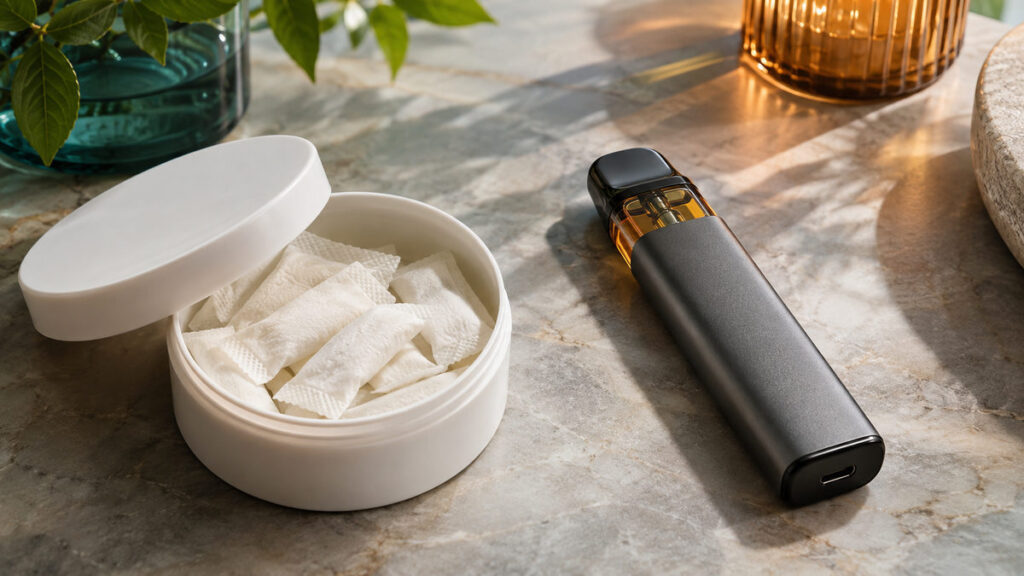
Vaping involves using a battery-powered device to heat a liquid for inhalation. The devices are known as vapes or electronic cigarettes. They do not produce harmless water vapour. Instead, they create an aerosol containing tiny droplets, particles, and chemicals.

Refillable devices have a tank that the user fills with vaping liquid, while pod devices rely on replaceable or refillable cartridges. Disposable vapes come prefilled and are thrown away once the liquid or battery runs out.
Young Australians may come across small devices designed to resemble pens, highlighters, or USB drives. Some illegal products contain high concentrations of nicotine and can deliver repeated doses. Even products sold as nicotine-free may contain undeclared nicotine or other ingredients that are inaccurately labelled.
Understanding the latest figures
Australia’s latest national estimates come from the AIHW National Drug Strategy Household Survey 2025. About 20% of 14–17-year-olds had tried vaping at some point. An estimated 6.4% currently vaped, and 3.4% reported daily use.
These figures are estimates, not exact counts of Australian teenagers. More than 17,500 Australians aged 14 or older took part in the survey between June and December 2025. The smaller sample of 14–17-year-olds produced greater sampling error, so AIHW recommends caution when interpreting several of the estimates.
Even so, the trend is encouraging. Lifetime use among 14–17-year-olds dropped from 28% in 2022–2023 to 20% in 2025. Current use fell from 9.7% to an estimated 6.4%, while daily use was broadly unchanged at 3.5% and 3.4%.
Young adults recorded declines too. In 2025, 14% of 18–24-year-olds currently vaped, down from about 21% in 2022–2023. Daily use remained significant, however, at 8.3%, compared with 9.3% previously.
Among 14–17-year-olds, lifetime, current, and daily vaping measures were higher for females than males in 2025. Broader data also points to differences linked with disadvantage and remoteness. Still, patterns across the adult population should not be assumed to apply to every teenager or community.
Different measures tell different stories
- Lifetime use means someone has ever tried vaping, even once or twice.
- Current use includes daily, weekly, monthly, and less frequent use.
- Frequent use generally describes regular use, although survey definitions can differ.
- Daily use means vaping every day and may suggest greater exposure.
- Nicotine dependence involves cravings, reduced control, tolerance, withdrawal, or continued use despite harm.
Trying a vape is not the same as using one daily or becoming dependent. Every figure should therefore be presented with its measure, survey year, age range, and collection method. The 2022–2023 Australian Secondary Students’ Alcohol and Drug Survey adds useful school-based evidence from secondary students and complements the household survey.
2. Why Australian Teenagers Are Attracted to Vaping
Products designed to feel familiar
Sweet flavours, bright packaging, and technology-inspired designs can make illegal vapes seem harmless. Their low odour also makes them easier to hide than smoking. Disposable devices add another layer of appeal: they offer novelty without requiring users to learn about tanks, coils, or refilling.
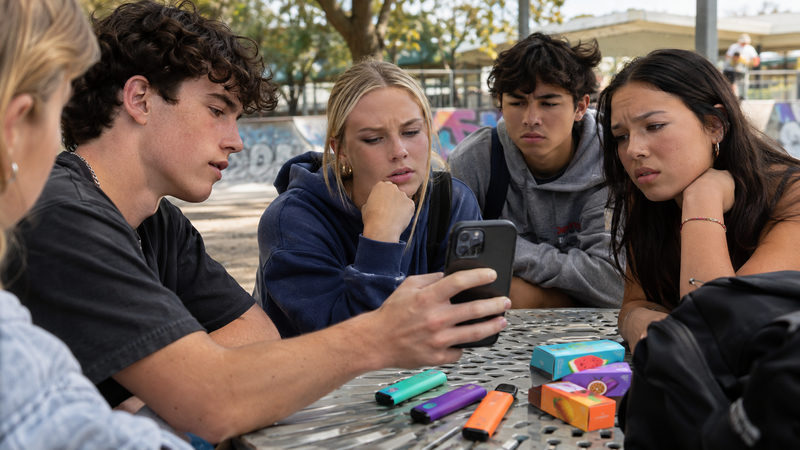
One teenager might first try a vape at a party because friends are passing it around. Another might experiment during a stressful school week or simply out of boredom. Curiosity, social belonging, sensation-seeking, and perceived stress can all shape the same decision.
Many teenagers mistakenly think vaping creates little more than flavoured steam. Sleek devices reinforce that idea because they look like everyday electronics. But the outside tells you nothing about nicotine strength, contaminants, or manufacturing quality.
Social and digital influences
Social media can make vaping seem normal even where direct advertising is banned. Influencer-style posts, user videos, product reviews, and retailer accounts may weave devices into appealing lifestyles. After a single interaction, recommendation systems can expose young users to similar content again and again.
Marketing may feature cartoons, youth-oriented imagery, playful flavour names, or messages tied to confidence and independence. Compact designs can make vaping appear clean, modern, and socially convenient. Covert promotions are especially difficult to spot because they may resemble personal recommendations rather than paid advertising.
Legal restrictions have less effect when illegal products remain easy to obtain. Friends, older peers, relatives, informal sellers, and online stores may all act as supply routes. AIHW found that most people who vaped during 2025 obtained their products outside lawful pharmacy pathways.
Stress, dependence, and unequal risks
Some teenagers report that vaping helps them relax or focus. Nicotine can briefly ease withdrawal, which may create the impression that it is relieving stress. In reality, dependence and withdrawal can contribute to irritability, anxiety, disrupted sleep, and difficulty concentrating.
Mental health needs careful discussion. Vaping may occur alongside distress, but that association does not show that vaping caused every emotional problem. Support should look at the whole picture, including nicotine use, sleep, relationships, school pressures, safety, and existing mental-health needs.
Prevention also needs to reflect unequal experiences. Aboriginal and Torres Strait Islander young people deserve culturally safe, community-led responses. Rural, remote, culturally diverse, LGBTQIA+, and disadvantaged communities likewise need support designed around their local strengths, barriers, and available services.
3. Nicotine, Vape Chemicals, and Health Risks for Teenagers
What may enter the lungs
Vape liquid often contains propylene glycol, vegetable glycerine, flavourings, and sometimes nicotine. When heated, it can form an aerosol containing ultrafine particles and volatile organic compounds. Metals may also enter the aerosol from heating coils or other parts of the device.
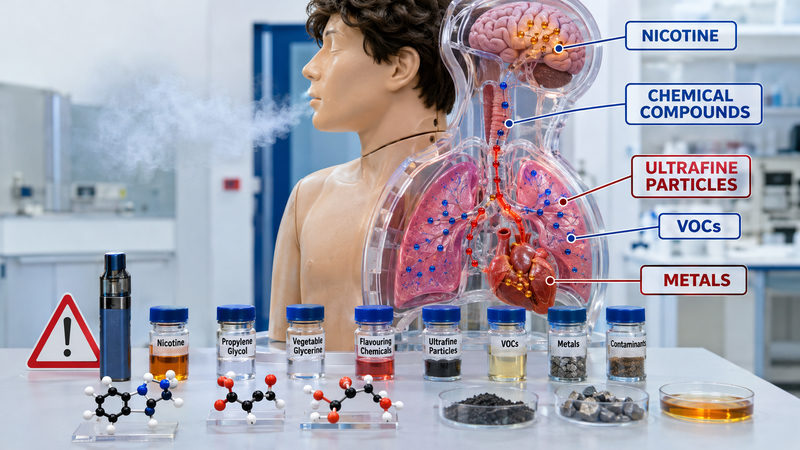
Contents can differ considerably between products, batches, and patterns of use. Emissions are affected by temperature, device power, liquid composition, and maintenance. Illegal imports may also lack dependable manufacturing standards, ingredient controls, testing, or traceable supply records.
Labels do not always clear up the uncertainty. Some illegal products contain undeclared nicotine or give misleading information about concentration. A vape labelled nicotine-free may therefore still expose a teenager to nicotine.
Even a genuinely nicotine-free vape is not risk-free. Aerosol particles, solvents, and flavouring chemicals may irritate the airways and other tissues. An ingredient considered suitable for food does not automatically become safe when it is heated and inhaled.
Nicotine and the developing brain
Nicotine reaches the brain quickly, activating receptors involved in attention and reward. During adolescence, the brain is still developing systems that influence learning, decision-making, mood, and impulse control. Repeated exposure can strengthen powerful connections between particular situations, feelings, and nicotine use.
Evidence supports concerns about nicotine dependence and possible effects on attention, learning, mood, and reward pathways. Researchers are still examining the extent, persistence, and real-world impact of some developmental effects. Findings can also be complicated by other influences, including stress and concurrent substance use.
With repeated exposure, tolerance can develop, so the same amount of nicotine feels less effective. A young person may begin vaping more often or turn to stronger products. Cravings and withdrawal can then make quitting difficult, even when they genuinely want to stop.
Dependence does not follow one fixed timeline. Dose, frequency, product strength, inhalation patterns, genetics, and personal vulnerability all play a part. High-strength products and repeated use across the day can result in substantial nicotine exposure.
Immediate and developing health concerns
Short-term effects may include coughing, throat irritation, breathlessness, headaches, dizziness, and nausea. Nicotine can raise heart rate and blood pressure as well. These symptoms may affect exercise, sport, sleep, classroom attention, and everyday comfort.
Respiratory concerns include irritated airways and poorer respiratory wellbeing. Cardiovascular effects, particularly over long periods, are still being studied. Teenagers who vape regularly may also experience dry mouth, gum irritation, and other oral-health problems.
Widespread youth vaping is a relatively recent development, so researchers do not yet have decades of health data. That gap is not evidence of safety. Some long-term respiratory, cardiovascular, oral, and developmental consequences may simply take years to become fully understood.
The devices themselves carry physical risks. Poorly manufactured or damaged batteries may overheat, catch fire, or explode. The result can be burns, facial injuries, or harm caused by leaking liquids.
Poisoning and exposure to other people
Nicotine liquid can cause poisoning if it is swallowed or absorbed through the skin or eyes. Inhaling too much may also lead to serious symptoms. Highly concentrated liquids are particularly dangerous for young children and pets because even small amounts can cause severe harm.
Signs of poisoning may include nausea, vomiting, sweating, dizziness, confusion, weakness, or an abnormal heart rate. Leaking products should never be left near food, drinks, children, or animals. Do not induce vomiting unless a qualified professional specifically tells you to do so.
Second-hand aerosol may expose people nearby to nicotine, fine particles, and chemicals. It is not harmless indoor air. Vaping around children, pregnant people, or anyone with a respiratory illness creates exposure that can be avoided.
Vaping compared with smoking
Combustible cigarettes burn tobacco, producing a large mixture of toxic chemicals. An established adult smoker may be exposed to fewer toxicants after completely replacing cigarettes with regulated vaping products. Fewer toxicants, however, does not mean zero exposure or zero risk.
That comparison does not support vaping among teenagers who do not smoke. Starting nicotine use provides no health benefit to a young non-smoker. Using cigarettes and vapes together may also leave much of the harm associated with smoking in place.
Research links adolescent vaping with a greater likelihood of later cigarette smoking and dual use. Observational findings, however, do not prove a simple gateway process for every young person. Peer groups, risk-taking, and other shared factors may influence both behaviours.
4. Australian Vaping Laws, Pharmacy Access, and Enforcement
Where vapes may lawfully be supplied
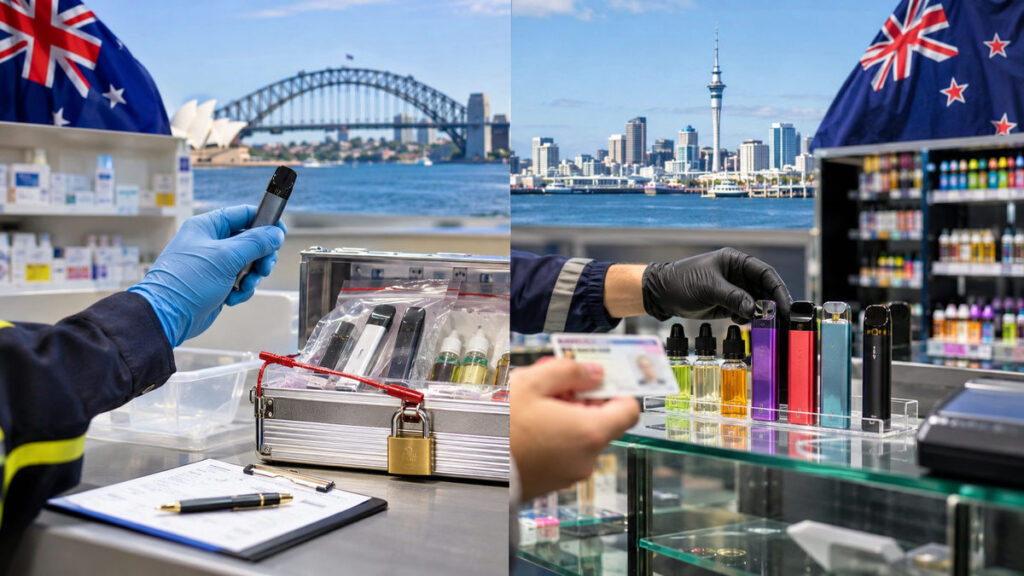
Vapes cannot legally be sold as ordinary consumer goods in Australia, regardless of whether the seller says they contain nicotine. Tobacconists, convenience stores, vape shops, and other general retailers are therefore prohibited from selling them.
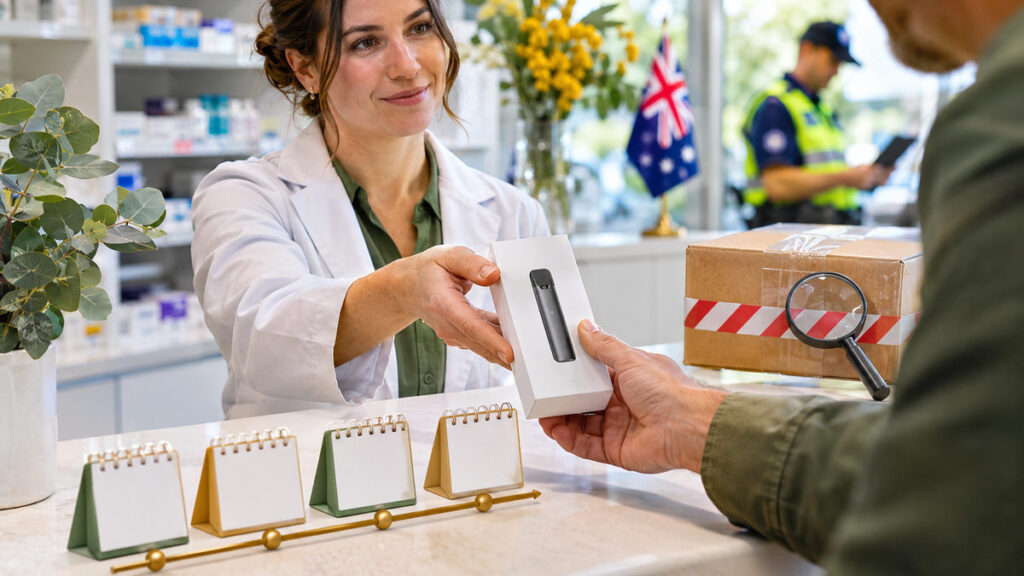
The lawful products are therapeutic vapes supplied through participating pharmacies. Pharmacists may provide them for smoking cessation or the management of nicotine dependence when clinically appropriate. They are not ordinary lifestyle products, though, and pharmacies are not required to stock them.
Anyone under 18 needs a prescription from a medical practitioner or nurse practitioner. Supply must also be clinically appropriate and comply with the law in the relevant state or territory. Some jurisdictions may have stricter requirements.
Eligible adults may obtain specified therapeutic vapes containing no more than 20 mg/mL nicotine without a prescription. They must consult a participating pharmacist and satisfy any jurisdictional conditions. Pharmacy supply is subject to quantity limits, and products with higher nicotine concentrations require a prescription.
National controls and local differences
Federal controls apply to importation, domestic manufacture, commercial possession, supply, presentation, advertising, and promotion. Product rules also limit flavours, packaging, ingredients, and nicotine concentrations. For current requirements, readers should consult the TGA vaping hub.
Federal therapeutic-goods law does not make an individual’s possession of a vape for personal use a criminal offence. State and territory laws may still regulate possession by minors, as well as vaping at school, in public, and in smoke-free or vape-free locations.
Families should check the guidance issued by their state or territory health department. Rules on purchasing, possession, school policies, public use, enforcement, and penalties can vary. A retailer’s summary is no substitute for official government information.
Penalties and illicit-market risks
Unlawful commercial activity can lead to substantial civil or criminal penalties. As of November 2026, relevant federal criminal penalties reached seven years’ imprisonment or 5,000 penalty units per contravention. This was equal to $1.82 million for an individual or $9.1 million for a corporation.
Federal civil penalties reached 7,000 units, equivalent to $2.548 million, for an individual. Corporations faced penalties of up to 70,000 units, or $25.48 million, per contravention. Penalty-unit values can change, and offences in individual jurisdictions may carry different consequences.
These provisions are aimed at unlawful importers, manufacturers, suppliers, advertisers, and commercial sellers. Selling illegal vapes to minors may also breach state or territory law. Publishers should verify every penalty using current TGA and jurisdictional information before publishing.
The illicit market is not only a legal concern. Unknown ingredients, uncertain nicotine strengths, counterfeit products, faulty batteries, and uncontrolled access by young people all increase health risks. Reliable advice is available from the Australian Government health department, TGA, and each jurisdiction’s health department.
5. Recognising Vaping and Helping a Teenager Quit
Possible signs without assumptions
No single sign confirms that a teenager is vaping. A sweet smell could come from food, and irritability might reflect stress or a lack of sleep. When several changes appear together, though, it may be time for a calm and curious conversation.
- Unfamiliar sweet smells, small devices, pods, or charging cables
- Frequent charging or unexplained spending
- Increased thirst, coughing, headaches, or breathlessness
- Repeatedly leaving classrooms, meals, or social situations
- Secrecy, cravings, irritability, or difficulty concentrating
Starting with accusations can shut down communication before anything useful is learned. Searching belongings without context may also damage trust while missing broader concerns about wellbeing. A better approach is to focus on safety, patterns of behaviour, and the teenager’s own account of what is happening.
Starting a useful conversation
Pick a calm moment instead of raising the subject in the middle of an argument. Ask open questions: what do they notice among their friends, or what does vaping do for them? Listen first. Advice and corrections can come later.
Recognise the reality of peer pressure, cravings, stress, and the fear of being left out. Give accurate information without overstating the harms, since exaggerated claims can quickly erode trust. Keep the conversation centred on health, independence, and support—not blame.
Educators and health professionals should provide confidential, non-judgmental screening within appropriate privacy limits. Useful questions cover devices, nicotine content, frequency, triggers, and concurrent smoking. Screening should also explore dependence, readiness to quit, mental health, and pressures at home or school.
Withdrawal and a practical quitting plan
Nicotine withdrawal can bring cravings, irritability, restlessness, anxiety, low mood, and headaches. Some people also experience disrupted sleep, increased appetite, and trouble concentrating. Tough early days do not mean a teenager is unmotivated.
- Identify personal reasons for stopping, such as sport, money, health, or freedom from cravings.
- Choose a quit date or structured reduction plan with professional guidance.
- Remove devices, liquids, chargers, and other reminders safely.
- Anticipate triggers involving friends, stress, boredom, travel, or social events.
- Practise alternatives, including movement, water, breathing exercises, music, or messaging a supporter.
- Arrange follow-up and decide how to respond to a slip.
Behavioural counselling is central to quitting because it helps teenagers recognise triggers and develop coping skills. Telephone, digital, school, and clinical support can provide help between appointments. Regular follow-up also gives the plan room to change when circumstances do.
For someone under 18, nicotine-replacement therapy or other medicines should be considered only with guidance from a qualified professional. A clinician needs to assess age, dependence, health conditions, contraindications, and current Australian recommendations. Families should never share adult medicines or make up their own doses.
A slip provides information; it does not prove failure. Look at what happened, identify the trigger, and revise the plan. The next attempt can then offer stronger support at the point where the risk was greatest.
When urgent help is necessary
Call Triple Zero on 000 for severe breathing difficulty, chest pain, blue or grey lips, seizure, confusion, collapse, or serious burns. Persistent vomiting or symptoms that worsen rapidly also need urgent assessment. After a serious exposure, do not wait to see whether the symptoms pass.
If nicotine-liquid poisoning is suspected, call the Australian Poisons Information Centre on 13 11 26. Keep the product or packaging nearby when it is safe to do so, as those details may help guide advice. Prevent any further contact with the skin, eyes, or mouth while following professional instructions.
6. Preventing Youth Vaping: Schools, Families, Health Services, and Policy
Effective prevention takes more than a frightening presentation in a classroom. It requires accurate education, trusted relationships, reduced access, early identification, quitting support, enforcement of advertising rules, and attention to broader wellbeing. Each setting has its own part to play.
Supportive action across settings
- Schools: Teach curriculum-based health content, maintain consistent vape-free policies, train staff, and provide confidential referral pathways.
- Families: Set clear expectations, model nicotine-free behaviour, discuss marketing tactics, practise refusal skills, and monitor wellbeing.
- Health services: Screen confidentially, assess dependence and co-occurring concerns, offer brief intervention, and arrange follow-up.
- Community organisations: Develop locally relevant responses with young people, families, and trusted community leaders.
- Governments: Enforce supply controls, monitor markets, restrict promotion, educate the public, and improve equitable quitting care.
- Digital platforms: Enforce advertising rules, reduce youth exposure, improve transparency, and address covert promotional material.
Punishment by itself may simply drive vaping out of sight without addressing dependence. School consequences should include education, assessment, and options for referral. Communication with parents should protect the student’s dignity and comply with legal privacy obligations.
Aboriginal Community Controlled Health Organisations are well placed to lead culturally safe, community-governed responses. Prevention programs must also take account of service shortages, transport difficulties, discrimination, language, and digital access. Giving everyone the same information does not necessarily give everyone the same access to help.
Reliable information and support
Young people can ask a GP, pharmacist, school health professional, or Aboriginal Community Controlled Health Organisation for help. Quitline provides free, confidential support on 13 7848. My QuitBuddy and Healthdirect can also complement guidance from a qualified professional.
For evidence and regulatory guidance, use AIHW, TGA, and federal or state health department sources. Editorial evidence note: Check every prevalence figure, law, penalty, service detail, and link immediately before publication. Survey releases, regulations, penalty-unit values, and services may change.
Conclusion
Youth vaping remains a significant Australian public-health concern, despite recent falls in experimentation and current use. Nicotine dependence, uncertain contents, illegal access, and risks to adolescent health still demand attention. Prevention needs a balanced mix of accurate information, early support, proportionate regulation, and coordinated action.
Begin with a calm conversation and listen to the young person without blame. Help is available through a GP, pharmacist, school health professional, Aboriginal Community Controlled Health Organisation, or Quitline on 13 7848. For life-threatening symptoms, call 000 immediately.