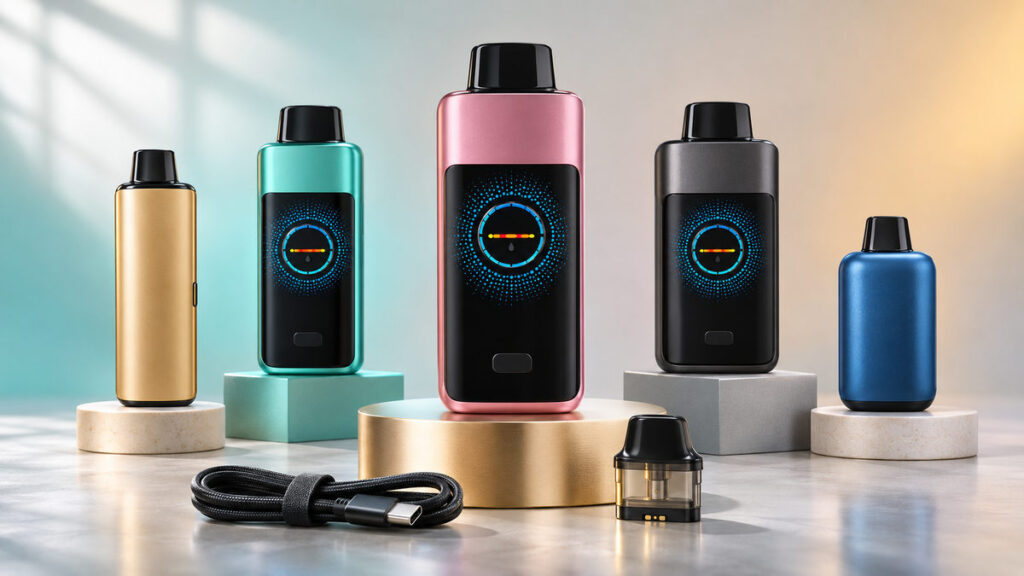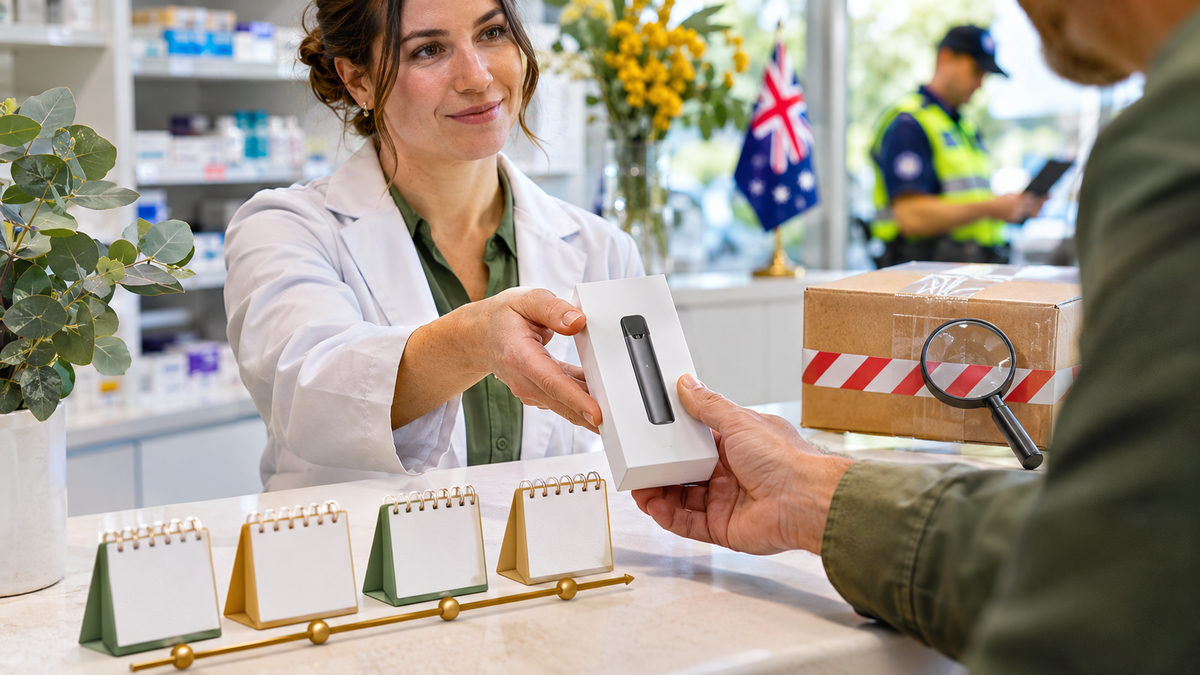
Could a vape bought legally one month become unlawful stock the next? Australia’s Vaping Reforms: A Timeline explains why the answer became surprisingly complicated. Australia introduced a series of overlapping changes covering imports, pharmacies, products, prescriptions, advertising, and commercial supply.
Yet the country did not ban every vaping product outright. It replaced broad retail access with a national therapeutic framework. State and territory laws may impose tighter conditions, so checking the rules where you live is essential.
This guide traces the reforms in chronological order before looking at what they mean in practice. It covers consumers, parents, pharmacists, health professionals, retailers, importers, wholesalers, manufacturers, and property operators.
1. Why Australia Replaced Its Former Vaping Framework
Before the reforms, people generally needed a prescription to use nicotine vaping products lawfully for therapeutic purposes. A patient could speak with an authorised health professional, then obtain an appropriate product through a pharmacy. Some patients could also import prescribed products under the Personal Importation Scheme.

Alongside that regulated pathway, however, a large unlawful retail market continued to operate. Convenience stores, tobacconists, online sellers, and specialist shops often sold disposable vapes without asking for prescriptions. Laboratory testing also found nicotine in some products labelled “nicotine-free.”
The split market was confusing for consumers. A brightly coloured disposable could look like an ordinary retail product even though it failed to meet Australian therapeutic requirements. At the same time, compliant patients had to navigate appointments, prescriptions, import delays, and limited pharmacy availability.
Health and consumer concerns
The government closely linked the reforms to growing youth vaping and nicotine dependence. Small disposable devices came in sweet flavours, bright packaging, and high nicotine concentrations. Many looked more like highlighters, cosmetics, or confectionery than therapeutic products.
National student research from 2022 and 2023 found that 30% of secondary students had tried vaping. Around 16% said they had vaped in the previous month. Those results added weight to calls for tighter supply controls and clearer enforcement powers.
Regulators were also concerned about unknown ingredients and unreliable labels. An unlawful product could contain more nicotine than stated, prohibited chemicals, or poorly controlled contaminants. Consumers had little practical way to check how it was manufactured or confirm what was inside.
Enforcement and environmental concerns
Disposable vapes created another problem: growing volumes of waste. Every discarded unit can contain plastic, electronic parts, nicotine residue, and a lithium battery. Throwing one into ordinary rubbish can therefore create environmental hazards and fire risks.
The earlier enforcement system had practical gaps as well. Officers often had to determine whether a vape contained nicotine before they could decide which rules applied. Misleading nicotine-free labels made that work slower and more expensive.
Above all, the government wanted a clearer rule for the market. Vapes intended for smoking cessation or the management of nicotine dependence would move through a controlled therapeutic pathway. Ordinary retailers would no longer be able to sell vaping products, whatever their claimed nicotine content.
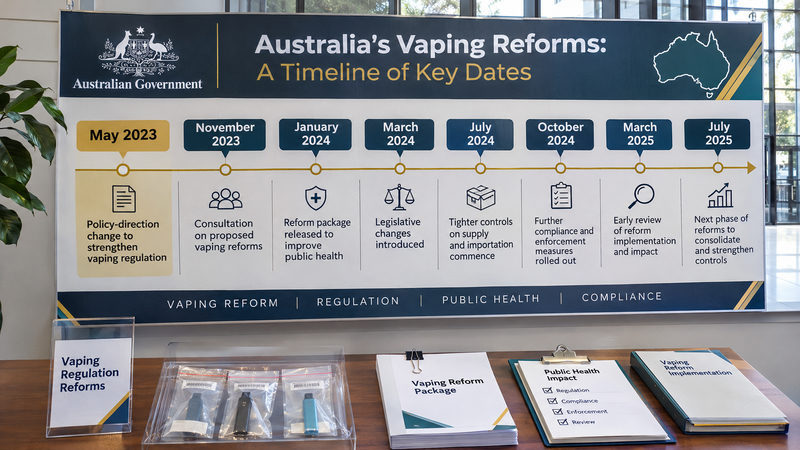
2. Australia’s Vaping Reforms: A Timeline of Key Dates
2 May 2023: The policy direction changes
The Australian Government announced a broad reform package aimed at recreational vaping, particularly among young people. The proposed measures addressed imports, flavours, packaging, nicotine concentrations, therapeutic access, and stronger enforcement. At that point, though, the announcement set out the policy direction rather than changing every legal rule immediately.
Lawful prescription access remained available while the reforms were being developed. Existing rules also continued to distinguish nicotine products from many products claiming to be nicotine-free. Regulators then consulted stakeholders and prepared the required legislation and standards.
28 November 2023: The staged reforms are confirmed
The government announced detailed controls that would take effect in stages throughout 2024. They covered importation, domestic manufacture, advertising, supply, and commercial possession. Each control, however, came with its own commencement date and transitional arrangements.
Businesses could not treat the reforms as a single ban beginning on one date. Import restrictions reached importers before many domestic retail rules took effect. Manufacturers, wholesalers, pharmacies, and consumers also faced different obligations.
1 January 2024: Disposable vape imports are banned
Australia banned the importation of disposable and single-use vapes, whether or not they contained nicotine. The restriction applied to commercial shipments and personal orders from overseas. A prescription could no longer be used to personally import a disposable vape.
During this first stage, non-disposable therapeutic products could still enter Australia through applicable pathways. A new notification pathway also supported prescribing by medical and nurse practitioners. Domestic retail rules had not yet reached their final July form.
1 March 2024: Broader import controls begin
The second import stage extended the controls to all vapes, including reusable devices and nicotine-free products. Importers generally needed an import licence and permit to bring in lawful therapeutic goods. The Personal Importation Scheme for vapes ended as well.
Imported and domestically manufactured therapeutic vapes also had to satisfy stronger requirements. Products needed an appropriate therapeutic purpose and had to comply with relevant standards. Non-therapeutic products could no longer enter through ordinary commercial channels.
These March rules mainly dealt with importation, manufacture, and product requirements. They did not yet establish the final national pharmacy-only supply model. Existing domestic stock and retail activity still had to be considered carefully under transitional arrangements and local laws.
21 March to 27 June 2024: Parliament reshapes the Bill
The government introduced the Therapeutic Goods and Other Legislation Amendment (Vaping Reforms) Bill on 21 March. Following political negotiations, Parliament amended its proposed access arrangements. The Senate passed the amended Bill on 26 June, and Royal Assent followed on 27 June.
One key amendment created a future pharmacist-only pathway for eligible adults. The original proposal had relied more heavily on prescription access. The final Act kept prescriptions in place while allowing limited non-prescription pharmacy access from October.
1 July 2024: National therapeutic-only supply begins
From 1 July, pharmacies became the lawful consumer supply point for therapeutic vapes. Ordinary retailers could no longer legally sell them, including products described as nicotine-free. Advertising and promotion were also generally prohibited.
The Act also strengthened controls on manufacture, commercial possession, wholesale supply, and related activities. Personal possession did not become a federal criminal offence. Holding stock for commercial purposes, however, could bring serious consequences.
Until 30 September, patients generally still needed a prescription to obtain a therapeutic vape. Medical and nurse practitioners could prescribe through the relevant access pathways. Additional restrictions could also apply under state or territory law.
1 October 2024: Limited prescription-free pharmacy access starts
Adults aged 18 or older could ask for therapeutic vapes containing no more than 20 mg/mL of nicotine without a prescription. Before supplying one, a participating pharmacist had to conduct a consultation. The supply also had to support smoking cessation or the management of nicotine dependence.
People under 18 still needed a prescription where local law permitted supply. Anyone requiring a concentration above 20 mg/mL needed one too. For patients with complex health needs, a medical assessment and prescribed access could also be the better option.
1 March and 1 July 2025: Final product transitions end
From 1 March 2025, newly imported or domestically manufactured therapeutic vapes had to comply with the updated product standards. Transitional stock could continue moving through the supply chain under applicable arrangements. This gave wholesalers and pharmacies time to manage earlier inventory.
The supply transition ended on 1 July 2025. From then on, every therapeutic vape supplied lawfully had to meet the updated standards. That deadline applied to wholesale transactions as well as pharmacy supply to patients.
3. What the Vaping Reforms Act Changed on 1 July 2024
The Vaping Reforms Act moved quickly through Parliament, although its terms changed during debate. The government introduced the Bill in March, and the Senate approved an amended version in June. Royal Assent came on 27 June, just four days before the major provisions began.
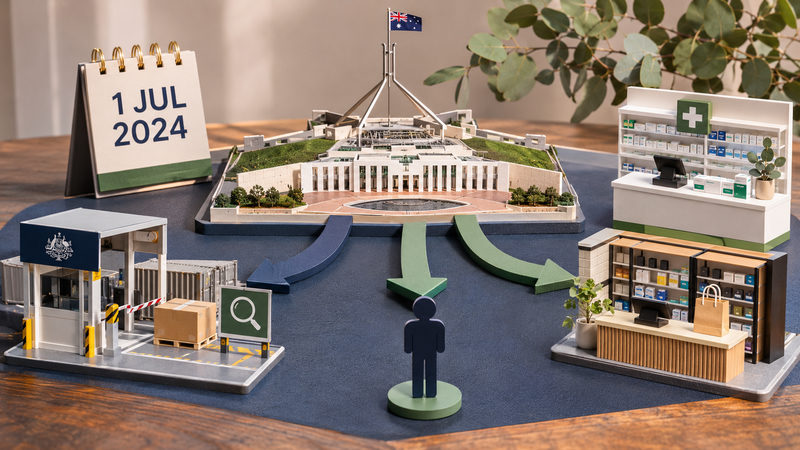
The Act brought vaping goods more consistently under the therapeutic goods framework. It applied both to products containing nicotine and those claiming to contain none. Sellers could no longer depend on a nicotine-free label as an easy justification for general retail supply.
A pharmacy-only consumer supply model
From 1 July, lawful patient supply moved to pharmacies and authorised pharmacy settings. Tobacconists, convenience stores, vape shops, and ordinary online retailers lost their lawful retail pathway. The change covered disposable and reusable goods, with or without nicotine.
Therapeutic purpose became the central requirement. Pharmacists may supply compliant products for smoking cessation or the management of nicotine dependence. They cannot sell vapes as ordinary lifestyle products or general consumer electronics.
From 1 July to 30 September, prescriptions remained the standard route of access. In October, eligible adults gained the pharmacist-only option for lower-strength products. The July Act therefore created the legal foundation for both pathways.
Not a total prohibition on possession or treatment
These reforms did not make personal possession a federal vaping offence. Simply holding a vape does not automatically breach national therapeutic goods law. State laws may still regulate possession, use, smoke-free areas, or supply to minors.
Commercial possession is another matter. Stock held for unlawful sale or distribution can lead to enforcement action. Investigators may look at quantities, packaging, business records, advertising, and the wider circumstances.
The Act strengthened advertising and promotion controls too. Businesses generally cannot market vaping goods through storefront displays, websites, social media, or promotional materials. Limited communications may still be permitted for health professionals and lawful supply activities.
Describing the reforms as an “absolute vape ban” therefore misses a crucial distinction. Recreational retail supply ended, but therapeutic access remained. Eligible patients are instead directed toward health professionals and registered pharmacies.
4. How Consumers Can Legally Access Therapeutic Vapes
Some adults can obtain therapeutic vapes without a prescription, but they must still consult a pharmacist. The person must be at least 18 and seeking treatment for smoking cessation or nicotine dependence. The product must contain no more than 20 mg/mL of nicotine.
Take a 32-year-old smoker asking a participating pharmacist about a compliant 20 mg/mL mint product. The pharmacist will discuss the person’s smoking history, dependence, previous quit attempts, health conditions, and other treatments. Whether supply goes ahead depends on the pharmacist’s professional judgment.
Consumers cannot legally purchase therapeutic vapes from convenience stores, tobacconists, ordinary vape shops, or unapproved websites. Calling a product nicotine-free does not make general retail sale lawful. Nicotine-free therapeutic vapes are also covered by the pharmacy framework.
When a prescription remains necessary
Some consumers still need a prescription from a medical or nurse practitioner. Local laws may also require one in situations where federal rules allow a broader pathway. The main circumstances requiring a prescription include:
- People under 18 years of age, where local law permits supply.
- Patients who need nicotine concentrations above 20 mg/mL.
- Consumers living in jurisdictions that retain stricter prescription requirements.
- Patients whose medical complexity requires greater assessment and support.
Prescription products may contain up to 50 mg/mL when they satisfy the applicable standards and access conditions. A prescription alone does not guarantee supply, however. The chosen product must be on the TGA’s notified list, and a pharmacy must be willing to dispense it.
Local rules may also prevent supply to minors even when a practitioner has written a prescription. South Australia, Tasmania, and Victoria have retained restrictions affecting under-18 supply. Western Australia applies stricter prescription settings for nicotine vaping products as well.
What happens during a pharmacy consultation
The pharmacist should verify the person’s age and intended therapeutic use. The conversation may cover nicotine dependence, current smoking, previous treatments, medicine interactions, pregnancy, and relevant health conditions. The pharmacist can also explain dosing, device use, storage, side effects, and available quitting support.
Before supplying a vape, pharmacists should consider established first-line options. These can include nicotine patches, gum, lozenges, counselling, or prescribed medicines. Therapeutic vaping will not automatically be the best choice for every patient.
Pharmacy participation is voluntary. No pharmacist is required to stock or supply therapeutic vapes, even for someone with a prescription. For rural consumers, that can mean extra travel, ordering delays, or a smaller product selection.
Practical checks before purchasing
It makes sense to contact the pharmacy before setting out. Ask whether it participates, whether a consultation appointment is required, and which compliant products it keeps in stock. Patients with prescriptions should also check whether the pharmacy can obtain the named product.
Consumers should steer clear of social media sellers and personal orders from overseas. Social media purchases may involve unlawful domestic supply, while overseas orders conflict with the closed personal-import pathway. Even a professional-looking website or Australian contact number proves nothing about a seller’s legal status.
Parents should keep vaping substances securely away from children. Nicotine can cause serious poisoning if swallowed or exposed to the skin or eyes. Damaged pods and leaking containers demand particular care.
5. Therapeutic Vape Standards, Flavours, and TGA Status
The updated TGO 110 requirements establish minimum standards for unapproved therapeutic vaping substances and related goods. They control formulation, presentation, nicotine strength, packaging, and labelling. Devices and accessories are covered by separate medical-device requirements.
Permitted ingredients generally include nicotine, propylene glycol, glycerol, water, and approved flavouring components. Flavour choices are restricted to mint, menthol, and tobacco. Unflavoured products may also be available within the lawful framework.
- Pharmacist-only products may contain no more than 20 mg/mL of nicotine.
- Prescription products may contain up to 50 mg/mL under applicable pathways.
- Packaging must use a plain, pharmaceutical-style presentation.
- Labels and information leaflets must provide required safety and usage details.
- Devices must meet design, construction, electrical, battery, and risk-management requirements.
Devices also cannot carry decorative branding that resembles entertainment or confectionery products. Product names are restricted, and packaging must reduce both appeal and confusion. The aim is straightforward: therapeutic vapes should look like treatment products.
Notification does not equal formal approval
A vape appearing on the notified list is still an unapproved therapeutic good. Its sponsor declares that it complies with the applicable standards and notifies the TGA. The TGA can then monitor, test, investigate, or remove products that fail to comply.
Notification does not mean the TGA has evaluated the product’s quality, safety, effectiveness, or performance. Inclusion on the Australian Register of Therapeutic Goods carries a different regulatory status. Registered products undergo an evaluation suited to their classification.
No nicotine vaping goods currently have ARTG inclusion. Lawful pharmacy products therefore generally rely on established pathways for unapproved goods. Minimum standards can reduce some risks, but they cannot guarantee safety or treatment success.
6. Imports, Retail Sales, Enforcement, and Penalties
Consumers can no longer use the former personal-import pathway to order vapes from overseas. Commercial importers need the relevant licence and permit, and imported goods must meet therapeutic requirements. Disposable vape imports remain prohibited, including disposable therapeutic products.
Manufacturers must follow the applicable substance and device standards. Sponsors must notify eligible unapproved products before they can be supplied lawfully. Wholesalers and pharmacies must then deal only with products permitted under the therapeutic framework.
Responsibilities across the supply chain
Ordinary retailers cannot legally sell vapes, even if the packaging says they contain zero nicotine. The same basic restriction applies to online sellers. Advertising bans may also cover websites, social media posts, displays, promotions, and indirect marketing.
Logistics providers need to examine suspicious consignments and customer arrangements with care. Knowingly helping with unlawful importation or distribution may create legal and commercial exposure. Commercial landlords should likewise act when authorities identify illegal vape sales at their properties.
Importers, manufacturers, and wholesalers have extra product-compliance and recordkeeping duties. A false sponsor notification can result in civil or criminal action. Businesses should verify each product, supplier, permit, notification, and supply destination.
Who enforces the rules
The TGA leads national therapeutic-goods compliance. It can investigate unlawful supply, advertising, manufacture, and commercial possession. Its options include issuing warnings, seeking injunctions, seizing goods under warrant, requesting samples, commencing court proceedings, and pursuing the removal of unlawful online content.
Australian Border Force controls goods at the border and intercepts prohibited imports. State and territory health authorities enforce local medicines, retail, tobacco, and public-health laws. Police may support searches, seizures, organised crime investigations, and joint operations.
Depending on the conduct, other regulators may also step in. Consumer, workplace, environmental, customs, corporate, and fire-safety laws can all be relevant. One illegal shipment may attract the attention of several agencies.
Penalties and personal possession
Serious breaches can bring substantial civil penalties, with maximums measured in thousands of penalty units. The maximum for a corporation may be several times the amount applying to an individual. As the monetary value of a penalty unit changes, businesses need to check the current figure.
Serious or deliberate conduct may also attract criminal penalties. Courts consider the particular offence, its scale, the person’s knowledge, any harm caused, and the commercial circumstances. Separate state and territory offences can add fines, licence consequences, closure orders, or product seizures.
Simple personal possession is not criminalised by the national reforms. That distinction avoids automatic federal prosecution of individual users while directing enforcement toward commercial supply. Selling, sharing, importing, or advertising a product, though, can take the conduct beyond personal possession.
7. Are the Reforms Working? Evidence and Practical Impacts
Early data points to a decline in vaping after the reform period began. National analysis estimated that current vaping among people aged 14 and older dropped from 9.1% to 8.2% during 2024. Among those aged 14 to 24, the estimated rate fell from 18.7% to 17.4%.
One study also reported a sizeable reduction among Australians aged 15 to 29. Border and domestic operations, meanwhile, have intercepted millions of unlawful vapes. The signs justify cautious optimism, but they do not prove that legislation caused every change.
Education campaigns, school policies, changing social attitudes, prices, enforcement visibility, and survey methods can all influence reported use. Illicit markets may also adapt through hidden sales, mislabelled shipments, and informal distribution. A sound long-term assessment will need several years of consistent evidence.
Practical benefits and continuing pressures
The reforms clarified product rules and ended lawful general retail access. Pharmacies can now offer consultations, age checks, treatment advice, and safer product handling. The updated standards also limit flavours, ingredients, nicotine concentration, and packaging.
Access is still uneven because pharmacies may choose not to participate. Some consumers will struggle to find local stock, while others may dislike the restricted flavour range. Illegal sellers can exploit those gaps, particularly where enforcement resources are stretched.
Seizure totals alone will not show whether the reforms work over time. Useful measures include youth uptake, dependence, smoking rates, quitting outcomes, poisonings, illegal availability, pharmacy access, and product compliance. Researchers also need to watch for any unintended shift from vaping back to cigarettes.
Early reductions are best viewed as encouraging evidence of implementation, not final proof. Firm conclusions will depend on independent research and stable national data. Access to appropriate therapeutic treatment must be measured alongside reductions in youth use and unlawful supply.
Conclusion
Australia has not banned every vape. It has replaced general retail and personal-import access with a tightly controlled therapeutic system. Ordinary retailers can no longer legally sell disposable, reusable, nicotine, or nicotine-free vaping products.
Eligible adults may obtain compliant products containing no more than 20 mg/mL from participating pharmacies after a consultation. Minors, people who need stronger products, and some patients with complex needs still require prescriptions. State and territory laws may restrict these pathways further.
Importers, manufacturers, wholesalers, online sellers, logistics businesses, and property operators have substantial responsibilities too. Commercial possession, unlawful advertising, and illegal supply can result in seizures, civil action, or criminal penalties. Simple personal possession, by contrast, does not automatically breach federal therapeutic-goods law.
Before taking action, check the latest TGA guidance and the health rules in your state or territory. Do that before purchasing, prescribing, supplying, importing, manufacturing, or selling any vaping product. The details can change, and local requirements may be stricter than the national framework.