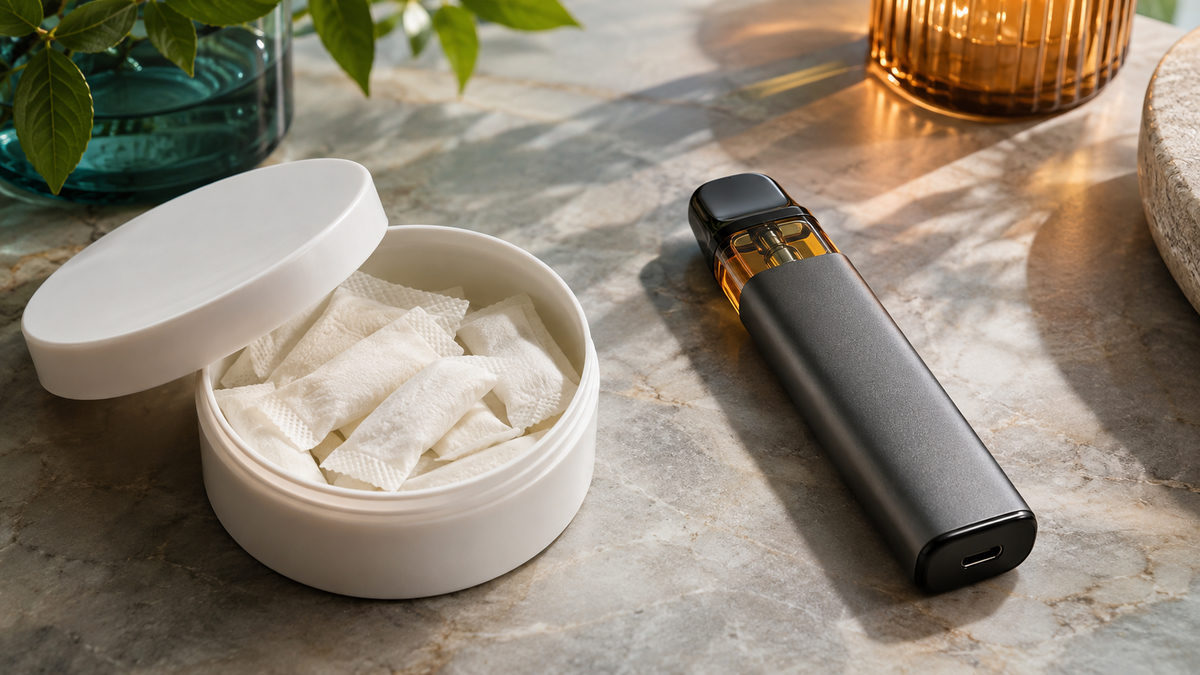
Two smoke-free products can deliver nicotine through entirely different routes. The Difference Between Nicotine Pouches and Vapes starts with the mouth versus the lungs. Pouches release nicotine next to the gum, while vapes produce an aerosol that users inhale. Neither route, however, makes nicotine harmless.
Adults comparing these products often face confusing strength labels and sweeping safety claims. Researchers also still lack complete evidence on the effects of frequent, long-term use. “Lower risk” may sound like “safe,” but the two mean very different things. A useful comparison has to consider exposure, behavior, and what a person would otherwise use.
1. The Difference Between Nicotine Pouches and Vapes at a Glance
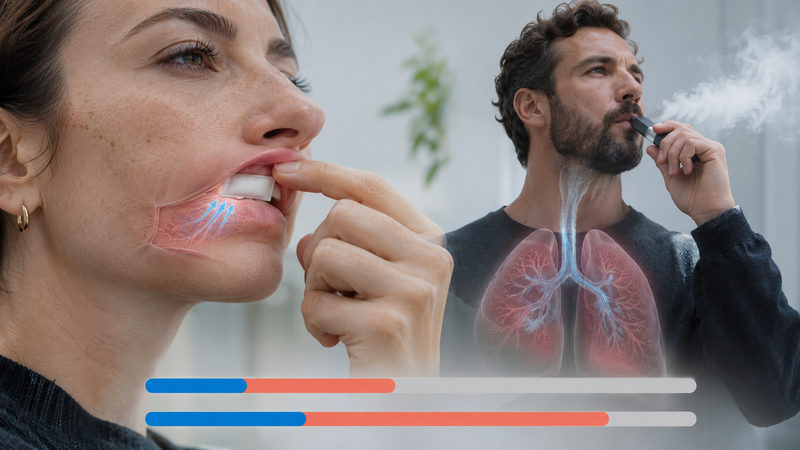
A nicotine pouch rests between the lip and gum. Moisture releases the nicotine, which passes through the lining of the mouth. A vape works differently: it heats liquid to create an aerosol that enters the lungs. Each product therefore exposes different tissues and produces a different pattern of nicotine delivery.
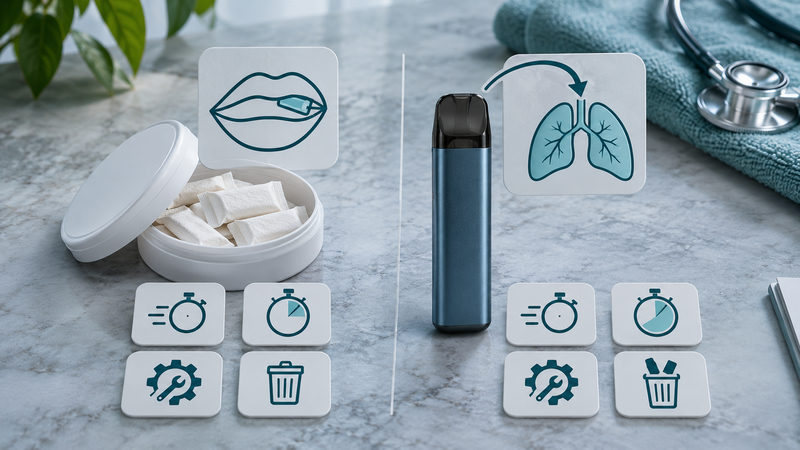
Vaping often has noticeable effects within seconds because the lungs absorb nicotine quickly. Pouches tend to work more gradually, though strong products can still deliver substantial doses. A pouch may also stay in place for 20 to 60 minutes. A vaping session might last only a few minutes, but users can repeat short sessions throughout the day.
| Feature | Nicotine pouches | Vapes |
|---|---|---|
| Delivery method | Absorption through the mouth lining | Inhalation of aerosol into the lungs |
| Typical onset | Gradual, often several minutes | Rapid, often within seconds |
| Typical duration | Often used for 20 to 60 minutes | Short sessions that users may repeat frequently |
| Common ingredients | Nicotine, fillers, flavorings, sweeteners, and acidity regulators | Nicotine, solvents, flavorings, and other formulation chemicals |
| Primary concerns | Gum irritation, oral effects, nicotine exposure, and dependence | Airway irritation, aerosol exposure, nicotine effects, and dependence |
| Secondhand exposure | No exhaled aerosol, but used pouches create handling risks | Exhaled aerosol can expose nearby people |
| Discretion | Usually discreet and nearly odorless | Visible aerosol, scent, and device use may attract attention |
| Maintenance | No charging or cleaning | May require charging, refilling, coil changes, and cleaning |
| Waste | Cans and used pouches | Pods, bottles, coils, batteries, and disposable devices |
| Cost factors | Price per can and pouches used daily | Device, liquid, pods, coils, charging, and replacement frequency |
These differences do not point to one clear winner for everyone. Product strength, frequency, technique, and personal health can all shift the comparison. The alternative behavior matters just as much. Completely replacing cigarettes is very different from adding another nicotine product while continuing to smoke.
2. How Nicotine Pouches and Vapes Deliver Nicotine
Nicotine absorption through the mouth
An oral nicotine pouch is a small fiber packet filled with nicotine and other ingredients. The user tucks it between the upper lip and gum. Saliva moistens the pouch, releasing its contents. The nicotine then passes through the oral mucosa and enters the bloodstream.
The pouch contains no tobacco leaf, although the nicotine may be derived from tobacco or produced synthetically. Products also vary widely in size, moisture, acidity, and nicotine content. These features influence both nicotine release and how the pouch feels inside the mouth. Two pouches with similar labels may therefore feel quite different.
Absorption usually builds more slowly than it does with inhalation. But slower delivery does not necessarily mean a low total dose. A strong pouch kept in place for an extended period can deliver considerable nicotine. Replacing one pouch immediately with another may also keep blood nicotine levels elevated.
Nicotine delivery through the lungs
A vape uses a battery to power a heating element, commonly called a coil. The element heats liquid stored in a tank, pod, or disposable device. This creates an aerosol that the user draws into the mouth and lungs. Despite a common misconception, that aerosol is not harmless water vapor.
Vape liquid commonly contains propylene glycol, vegetable glycerin, flavorings, and sometimes nicotine. Heating may create new compounds that were not present in the original liquid. The aerosol can also pick up small particles and metals from device components. Product design and operating temperature both influence these emissions.
The lungs provide a large surface area for rapid absorption. That allows vaping to produce a quick nicotine effect resembling part of the cigarette experience. Device power, puff length, liquid strength, and inhalation depth all affect the dose. The number printed on a bottle cannot show exactly how much nicotine reaches the bloodstream.
Behavior matters with both formats. One person might use six pouches each day at set times. Another may take hundreds of small vape puffs without keeping count. Labeled strength alone, then, provides only part of the exposure picture.
3. Ingredients, Side Effects, and Signs of Too Much Nicotine
What each product may contain
Nicotine pouch formulas commonly contain nicotine, plant fibers, fillers, flavorings, sweeteners, and ingredients that control moisture. Manufacturers may also adjust acidity to change how nicotine is released. Recipes vary among brands, flavors, strengths, and countries, though. Users should not assume that every pouch contains an equivalent mix of ingredients.
Vape liquids typically blend carrier solvents, flavorings, and optional nicotine. Some contain nicotine salts; others use freebase nicotine. Device materials and heating conditions can also change what ends up in the aerosol. Poorly manufactured or modified products may introduce further, unpredictable exposures.
Labels make the comparison even trickier. A pouch might list milligrams per pouch, milligrams per gram, or simply a strength category. A vape label, meanwhile, may give nicotine per milliliter or show a percentage. Comparing a “6 mg” pouch with a “2%” vape therefore requires more information than either number supplies.
Product-specific irritation
Pouches may cause tingling, burning, sore gums, dry mouth, hiccups, or general mouth irritation. Placing them repeatedly in the same spot can worsen local problems. Some users also become nauseated when saliva carries dissolved ingredients into the stomach. Persistent sores, bleeding, or changes to the gums should be professionally assessed.
Vaping may cause coughing, throat irritation, dry mouth, chest discomfort, or shortness of breath. Propylene glycol, flavorings, and heated particles can irritate sensitive airways. Symptoms may be worse for people with asthma or other respiratory conditions. Chest pain or severe difficulty breathing calls for urgent medical care.
Effects caused by nicotine
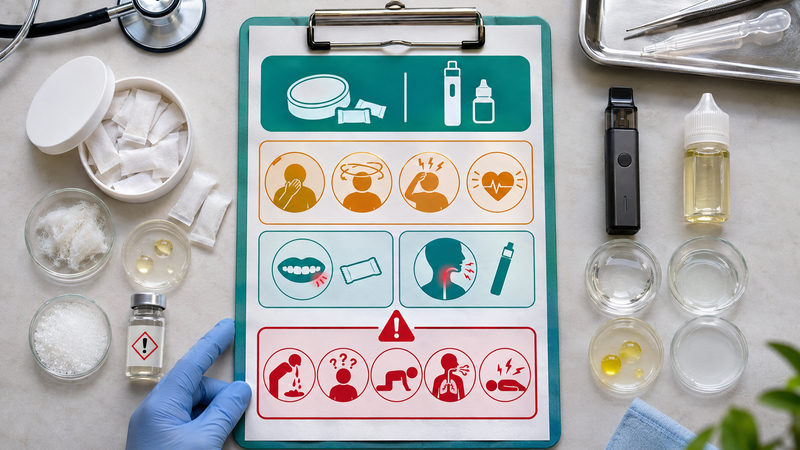
Nicotine itself can temporarily raise heart rate and blood pressure. It may also lead to headaches, dizziness, sweating, shakiness, anxiety, or sleep problems. Nausea and stomach discomfort can become worse as well. These effects may occur with either pouches or vapes.
Too much nicotine often causes a recognizable cluster of symptoms. Someone, for example, might use a strong pouch while vaping at the same time. Within minutes, they may feel dizzy, clammy, nauseated, and unusually restless. Using more nicotine can make the reaction more intense.
- Early warning signs: nausea, headache, dizziness, sweating, excess saliva, stomach pain, and a racing heartbeat.
- More serious signs: repeated vomiting, severe weakness, confusion, breathing problems, fainting, or seizures.
- Immediate response: stop nicotine use, remove the pouch, and move away from the vape.
- Urgent action: contact emergency services or poison-control support when symptoms become severe.
Children and pets are especially vulnerable to liquids and used pouches. Even discarded products can retain nicotine. Supplies should be stored in closed containers and kept well out of reach. Spilled vape liquid should never be left on the skin or on accessible surfaces.
4. Are Nicotine Pouches Safer Than Vaping?
Why the answer needs context
Pouches avoid inhaled aerosol, removing a major exposure route linked with vaping. That advantage does not prove they are safe as a whole. Relative risk varies with the user, product quality, dose, frequency, and duration. It also depends on whether the alternative is smoking, vaping, or using no nicotine at all.
For someone who does not use nicotine, starting either product creates an avoidable risk. An adult who smokes may reduce exposure to many toxic chemicals by switching completely away from combustion. Continuing to smoke while using another product, however, can preserve substantial smoking-related harm. Reducing one hazard never makes a product harmless.
Oral and respiratory concerns
Pouches expose the gums and mouth lining to nicotine, flavorings, acidity regulators, and other ingredients. Short-term irritation seems common, but stronger long-term evidence is still needed. Researchers need more data on gum recession, oral lesions, dental health, and the effects of repeated exposure over decades. Changing product formulas can also make older findings less relevant.
Vapes carry aerosol directly into the respiratory system. Studies have found airway irritation, inflammation, and exposure to fine particles and potentially harmful chemicals. Emissions also vary according to the liquid, coil, temperature, and vaping technique. Long-term respiratory outcomes remain uncertain because devices and formulas keep evolving.
Avoiding inhalation distinguishes pouches from vapes in a meaningful way. Still, the absence of lung exposure does not remove concerns about oral health, cardiovascular effects, or dependence. “Safer for the lungs” does not mean “safe for the body.” Keeping that distinction clear helps prevent misleading conclusions.
Cardiovascular and developmental risks
Both products can deliver nicotine that affects the cardiovascular system. Nicotine stimulates the nervous system and may increase heart rate and blood pressure. Frequent dosing can keep the body exposed for much of the day. Anyone with a cardiovascular condition should discuss nicotine use with a qualified healthcare professional.
Nicotine raises particular concerns during pregnancy and adolescence. The developing brain remains vulnerable to its effects, especially in areas associated with attention, learning, and impulse control. Nicotine can also affect fetal development during pregnancy. Young people, pregnant people, and non-users should avoid both products.
Dependence and missing evidence
Both formats can cause or maintain nicotine dependence. Rapid delivery may make vaping strongly reinforcing, while discreet pouches allow repeated use in almost any setting. Researchers cannot, however, assign every product one simple dependence score. Strength, speed, frequency, tolerance, and personal habits all influence the outcome.
Important evidence gaps remain for these newer products. Researchers do not have decades of consistent data on current pouch formulas or modern high-powered vapes. Manufacturers also change devices, ingredients, and nicotine concentrations regularly. Sound conclusions must distinguish established short-term effects from long-term risks that remain unresolved.
5. Addiction, Secondhand Exposure, and Everyday Use
Dependence and withdrawal
Nicotine teaches the brain to expect repeated doses. As levels fall, users may experience cravings, irritability, restlessness, poor concentration, low mood, or disrupted sleep. Both pouches and vapes can therefore create a cycle of withdrawal and temporary relief. A product may feel calming partly because it briefly stops nicotine withdrawal.
Vapes can deliver nicotine quickly and encourage frequent, almost automatic puffing. Pouches, meanwhile, can stay hidden during work, travel, or social situations. Either pattern may raise total daily exposure. One format is not automatically more addictive than the other.
Consider two people with very different routines. One takes ten strong vape puffs every hour; the other uses eight high-strength pouches a day. Their labels, habits, and delivery speeds differ considerably. Yet both may develop strong cravings when they stop.
Bystanders, storage, and convenience
Pouches produce neither smoke nor exhaled aerosol, so they create less airborne exposure for people nearby. Used pouches still contain residue, however, and can put children or pets at risk. Sharing or handling used products also raises hygiene concerns.
Vape aerosol can expose bystanders to nicotine, particles, and other chemicals. Ventilation may lower the concentration, but it cannot eliminate exposure. Visible clouds and scents may also bother people nearby. Users should follow the rules in smoke-free and vape-free spaces.
Pouches require no battery, liquid, or cleaning. They are generally quiet, discreet, and easy to carry. They still need secure storage and careful disposal. Some workplaces and venues may restrict their use as well.
Reusable vapes need charging, cleaning, liquid refills, and occasional coil replacements. Disposable devices involve less maintenance but produce more electronic waste. Damaged lithium batteries can also start fires. Devices should never be charged with unsuitable equipment or left in extreme heat.
- Pouch waste includes plastic cans, lids, and nicotine-containing packets.
- Vape waste includes pods, coils, bottles, circuit boards, and batteries.
- Both product types require disposal away from children, pets, and wildlife.
- Battery-powered products may need an approved electronic-waste collection point.
6. Cost of Nicotine Pouches vs Vapes
Neither format is always cheaper. Local prices, taxes, brand choice, nicotine strength, and daily consumption all affect the total. Vape costs also depend on whether someone uses disposable or reusable devices. Replacement devices, pods, coils, and liquids can create irregular extra expenses.
Pouch spending is usually easier to calculate. Multiply the price of each can by the number of cans used in a month. For example, someone who uses one 20-pouch can every three days will need about ten cans monthly. At $6 per can, the habit costs roughly $60 before taxes.
Vape users can get a clearer figure by recording every purchase for one full month. Include devices, liquid, pods, coils, chargers, and delivery charges. A reusable device may cost more upfront but less in later months. Frequent disposable purchases, by contrast, can lead to a high and unpredictable total.
For a fair comparison, use this simple method:
- Record every nicotine purchase for 30 days.
- Count pouches used or estimate daily vape liquid consumption.
- Add taxes, delivery fees, accessories, and replacement parts.
- Divide the total by 30 to find the daily cost.
- Multiply the daily figure by 365 to reveal the annual cost.
Daily cost is only part of the picture. Track nicotine strength and frequency of use too. A cheaper product might encourage heavier consumption, while an expensive device could reduce spending later. More importantly, dependence and health consequences deserve far more weight than a small difference in price.
7. Can Pouches or Vapes Help You Quit Smoking?
Complete replacement versus dual use
Moving completely away from cigarettes can reduce exposure to combustion products. Burning tobacco produces many toxic chemicals that neither pouches nor vapes create. Simply adding one of these products while continuing to smoke, though, may bring limited health benefits. Even a few cigarettes each day can maintain meaningful cardiovascular and respiratory risk.
Some adults use vapes to replace the sensory and behavioral aspects of smoking. The hand-to-mouth movement and fast nicotine delivery can make the change feel familiar. Pouches provide a different routine without inhalation. Their discreet nature may help some adults handle cravings in situations where smoking once shaped the day.
Neither option guarantees a complete switch. A smoker may vape indoors but still smoke outside or with friends. Someone else might use pouches at work and smoke every evening. A quitting plan should therefore include a firm date for stopping cigarettes.
How approved treatments differ
Approved nicotine replacement therapies include patches, gum, lozenges, nasal sprays, and inhalers in some countries. They deliver standardized doses and come with instructions developed for smoking cessation. Healthcare professionals can also suggest combinations, such as using a patch alongside gum for sudden cravings. This structure can make dose reduction easier to manage.
Prescription medicines may help suitable adults quit smoking as well. Availability and medical suitability differ, making professional guidance worthwhile. Counseling can further improve the chances of success by addressing triggers, routines, and relapse. Medication and behavioral support often work better together than either does alone.
Nicotine pouches generally do not have the same depth of cessation evidence or standardized quitting guidance as approved treatments. Vaping has helped some adults stop smoking, although evidence and regulatory positions differ by jurisdiction. Long-term vaping may also replace cigarette dependence with ongoing vape dependence. Stopping smoking does not always mean ending nicotine use.
Building a practical quitting plan
Begin by tracking every cigarette, pouch, or vaping session for seven days. Write down the time, strength, trigger, and intensity of the craving. Patterns soon become easier to spot. Morning use, alcohol, driving, stress, and social situations often reveal specific challenges.
Then decide whether the immediate goal is to replace smoking completely or stop all nicotine use. Choose a clear date and move cigarettes, lighters, and ashtrays out of easy reach. Plan ahead for predictable cravings too. A short walk, water, breathing exercises, or an approved nicotine treatment may help.
- Ask a healthcare professional about suitable medicines and nicotine replacement options.
- Use counseling, telephone support, or a recognized cessation service.
- Tell supportive friends which situations may trigger cravings.
- Prepare for slips without treating one cigarette as total failure.
- Review progress weekly and reduce ongoing nicotine exposure when appropriate.
People who already vape or use pouches should avoid combining products without tracking the total. Very strong products may also make later nicotine reduction harder. A clinician can help turn an irregular routine into a controlled plan. The final goal should address both the harm from smoking and lasting nicotine dependence.
Conclusion
Nicotine pouches deliver nicotine through the mouth without creating inhaled aerosol. Vapes send aerosol into the lungs and usually deliver nicotine faster. Their exposure routes and product-specific side effects are therefore different. Both, however, can sustain addiction and cause nicotine overexposure.
Long-term questions remain about modern pouches and vaping products. Reducing exposure to one hazard does not prove that a product is safe as a whole. For adults who smoke, replacing cigarettes completely matters more than occasional substitution. Continuing to smoke while using either product can preserve much of the harm caused by combustion.
Approved cessation treatments provide standardized dosing and stronger support for quitting. Professional guidance can also match a treatment plan to someone’s health history and level of dependence. Take stock of your current nicotine use, quitting goal, monthly exposure, and real spending. Then speak with a healthcare professional or cessation service about a plan to stop smoking and reduce nicotine dependence.