
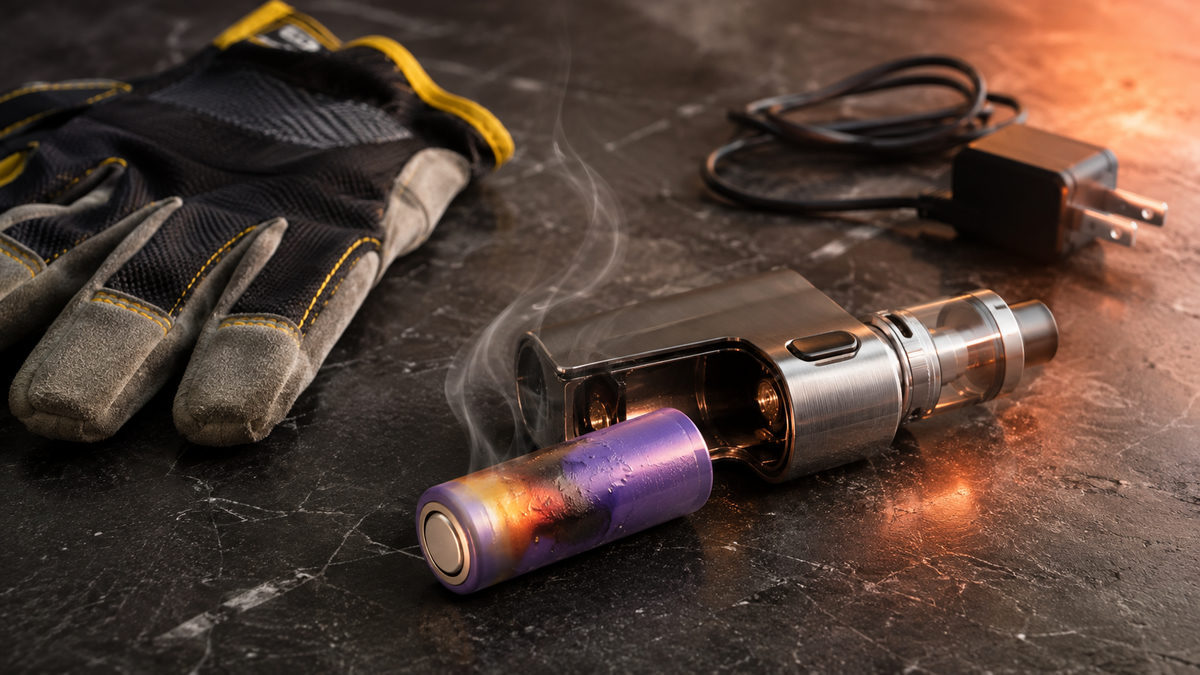
Why can vape batteries overheat when a device seemed perfectly normal moments before? A vape may suddenly feel hot, give off an odd smell, or start hissing. A small warning can turn into a serious battery emergency within seconds. Recognizing the difference between normal warmth and dangerous heat can help prevent injuries and fires.
Heat can come from several parts, including the battery, charger, coil, and blocked airflow. Repeated inhalations and unsuitable power settings may also keep the device from cooling properly. This guide covers common failure causes, urgent warning signs, emergency steps, and safer battery practices. Vaping products are intended for adults and still carry broader health risks.
1. Why Can Vape Batteries Overheat?
How vape batteries produce heat
Lithium-ion cells store chemical energy and release it as electrical energy. Because every cell has internal electrical resistance, some of that energy turns into heat. Mild warmth during charging or normal operation is therefore possible. What matters is where the warmth occurs, how quickly it develops, and how long it lasts.
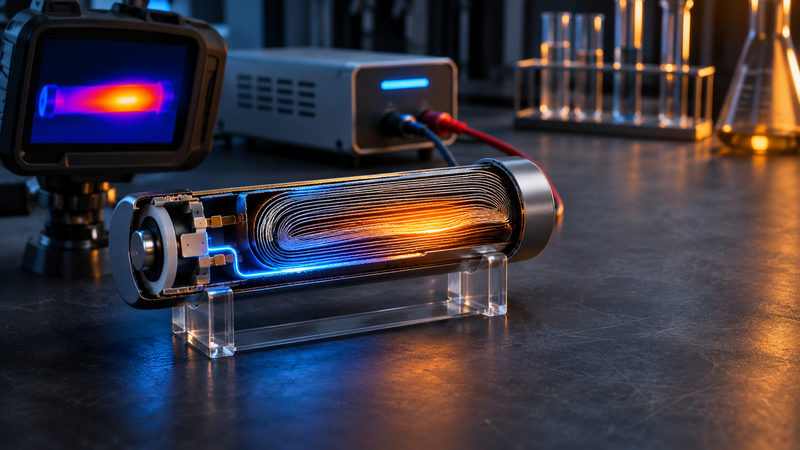
During charging, electrical energy enters the cell and restores its stored charge. This can make the battery and charging electronics slightly warm. Excessive heat, though, may point to an incompatible charger, damaged port, faulty cell, or failed protection circuit. Be cautious if the temperature keeps rising even after charging stops.
While you vape, the battery sends current to a heating coil. The coil is designed to become hot enough to vaporize liquid, so some warmth may spread through the tank, mouthpiece, and device body. Intense heat around the battery compartment is different. It may signal a potentially dangerous problem.
When warmth becomes a warning
Normal warmth should stay mild and fade after a reasonable cooling break. Heat that rises quickly, persists, or remains concentrated in one area is not normal. If the device becomes uncomfortable to touch, stop using it—even when there is no smoke or visible damage. Never keep firing the vape just to see whether the problem goes away.
There is no single touch-based temperature limit that applies to every vape. Cell specifications, device materials, sensor accuracy, and heat transfer all vary. A metal case may feel hotter than a plastic one at the same internal temperature. An insulated exterior, meanwhile, could conceal dangerous heat inside the battery compartment.
Judge the risk by the device’s behavior and the combination of warning signs, not by touching it for longer. Stop using the vape if the heat feels unexpected, uncomfortable, persistent, or increasingly severe. If you also notice hissing, swelling, odors, leakage, smoke, or deformation, move away. Holding a cell that may be failing only increases the risk of burns and sudden venting.
2. Common Causes of Vape Battery Overheating
Short circuits and damaged cells
A short circuit forms an unintended low-resistance path between electrical contacts. Current can then flow suddenly without proper control. Physical damage, contamination, or a manufacturing defect may cause an internal short. An external short can happen when exposed metal touches another conductive surface.
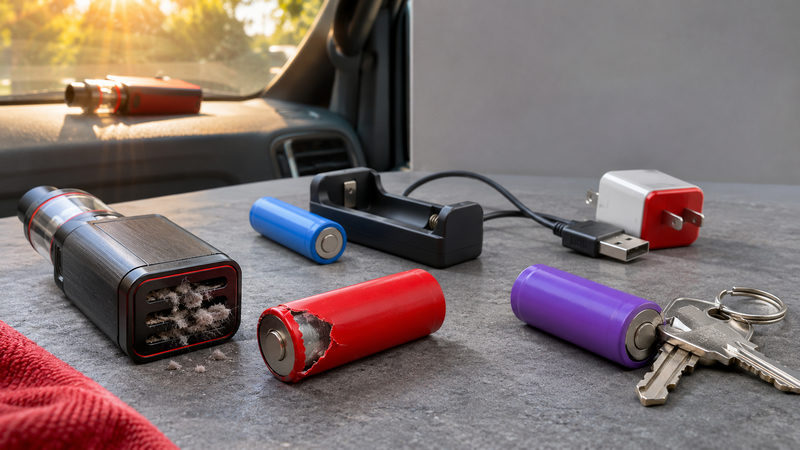
A torn or missing battery wrap is a serious hazard. The wrap insulates most of a removable cell’s metal body, and damage may allow that body to touch a metal mod housing, coin, key, tool, or piece of jewelry. Never carry a loose battery unprotected in a pocket, purse, or toolbox.
Age and damage can weaken a cell’s internal structure as well. Dents, corrosion, swelling, leakage, and repeated hard impacts may compromise critical separators. Counterfeit cells and products of uncertain authenticity bring additional risk. Any battery involved in a serious overheating event should be replaced, even if it later looks normal.
Charging faults and environmental heat
Incorrect chargers, incompatible cables, and damaged charging ports may deliver irregular power. Poor-quality adapters can also lack reliable voltage and current control. If charging protection fails, damaging conditions may continue without an obvious warning. Always follow the device manufacturer’s charging instructions exactly.
Overcharging protection lowers the risk, but no electronic safeguard works perfectly in every situation. Avoid charging overnight or leaving the device unattended. Bedding, sofas, paper, and carpets can trap heat and may ignite if something fails. Moisture around the port can also lead to corrosion, unstable charging, or an electrical short.
The surrounding environment has a major effect on cooling. Direct sunlight, hot vehicles, heaters, and high room temperatures can make an already warm battery even hotter. Blocked vents also keep heat trapped inside the device body. Poor storage may combine heat, pressure, moisture, and metal contact in one dangerous situation.
Unexpected activation is another common route to overheating. A stuck fire button may power the coil continuously, while an unlocked device can activate when pressed inside clothing or luggage. Sustained heating can damage the coil, battery, surrounding materials, and device electronics.
- Stop using any device that fires without deliberate input.
- Keep unlocked devices away from pockets, bags, and upholstered furniture.
- Replace damaged cells instead of testing them through repeated charging.
- Never use a cell when its authenticity or history remains uncertain.
3. Coils, Power Settings, and Vaping Habits That Create Heat
Resistance, wattage, and battery demand
A low-resistance coil generally pulls more current from the battery. Higher wattage settings also increase electrical demand and generate more heat. The battery, wiring, coil, and device electronics must all handle that demand safely. If the combination is unsuitable, components may overheat or protective shutdowns may occur.
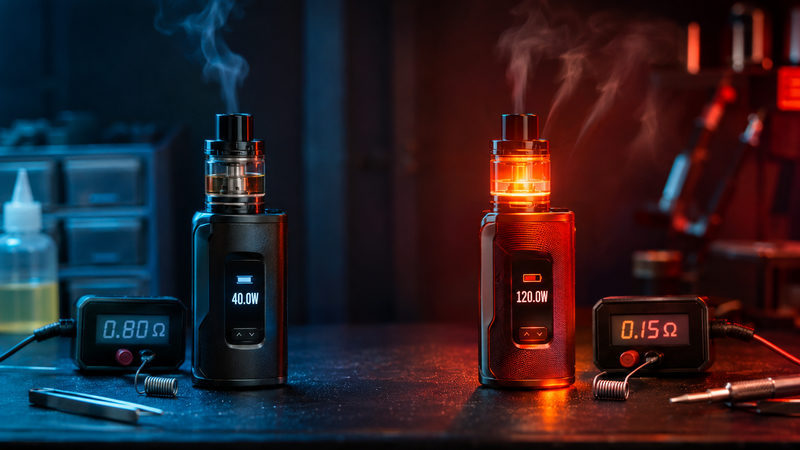
Batteries have continuous discharge ratings that define how much current they can sustain. Some labels also show exaggerated pulse ratings with little practical safety value. A larger advertised number is not permission to experiment with unsafe builds. Stay within every specification provided by the battery, coil, and device manufacturers.
In devices with multiple removable batteries, mismatched cells may discharge unevenly. Manufacturers may therefore require cells with the same model, age, capacity, and usage history. Unknown ratings make it impossible to know how much current a cell can safely provide. Batteries not designed for vaping may lack the necessary performance characteristics as well.
Do not rely on improvised calculations when the specifications are unclear. Avoid coils or settings that exceed the device’s documented limits. A reputable vape retailer or qualified battery specialist can help verify compatibility. Above all, do not trust online claims that conflict with the cell manufacturer’s official rating.
Why a vape gets hot while inhaling
The coil area normally becomes warm because producing vapor requires heat. Several long inhalations may make the tank and nearby body noticeably warm, but that warmth should fade after a cooling pause. Heat concentrated around the battery compartment is more concerning. It may indicate excessive current, damage, or an internal fault.
Chain vaping gives the coil, battery, and device body little time to cool between inhalations. Each cycle then starts while the components are already warm. Rapid, repeated use can also heat the liquid, seals, and airflow channels. If the temperature keeps climbing instead of leveling off, stop and let the device cool fully.
Blocked airflow can make the coil run hotter while reducing cooling inside the device. An incorrectly installed coil may also cause poor contact or an unintended short. Damaged atomizers can produce unstable resistance readings and repeated device errors. Leaking liquid may reach electrical contacts, charging ports, or internal electronics.
- Use coils specifically approved for the device.
- Keep airflow openings clean and unobstructed.
- Replace damaged tanks, atomizers, seals, and connectors.
- Stop after repeated error messages or changing resistance readings.
- Allow cooling breaks during repeated use.
Do not try to solve unusual heat simply by increasing airflow or temporarily lowering the power. Those changes may mask the symptoms without fixing the damaged component. Before using the vape again, inspect the battery, coil, tank, contacts, and charging system. If a part is questionable, replace it instead of repeatedly testing a potentially unsafe device.
4. Thermal Runaway, Venting, and Signs of Battery Failure
How failure can escalate
Vape battery thermal runaway is a self-accelerating internal reaction. As the temperature rises, it triggers more chemical reactions that generate additional heat and gas. The process may continue even after external power is removed. Once thermal runaway begins, stopping it safely can be extremely difficult.
Venting happens when rising internal pressure forces gas and material out of the cell. The released contents may include flammable electrolyte, irritating vapors, smoke, or hot particles. If they ignite, the result can be a fire or an explosion-like rupture. A failed lithium-ion cell may even reignite after the visible flames seem to be out.
Battery failures can escalate fast, which makes early recognition critical. Still, never hold a heating device while looking for more evidence. Move away as soon as severe heat or another serious warning sign appears. Emergency responders are better equipped to handle active fire, smoke, or venting.
Warning signs that demand action
- Unusual, localized, persistent, or rapidly increasing heat
- Swelling, bulging, deformation, dents, or discoloration
- Hissing, popping, crackling, smoke, or strange odors
- Leaking material, corrosion, or a damaged battery wrap
- Charging that stops, restarts, accelerates, or takes unusually long
- Unexpected firing or a button stuck in the firing position
- A device that will not turn off normally
- Rapid battery drain or repeated protection errors
Any serious warning sign means you should stop using the device immediately. Never puncture, crush, open, modify, or deliberately discharge a questionable cell. A battery that has severely overheated, swollen, leaked, or actively vented must not be reused. Just because it has cooled does not mean its internal structure is safe.
A damaged wrap needs prompt attention, even if the battery still appears to work. Exposed metal can cause an external short during installation or transport. Ordinary household tape is not a suitable permanent repair. If correct professional rewrapping cannot be guaranteed, replace the cell.
5. What to Do If a Vape Battery Becomes Very Hot
Immediate safety steps
Stop inhaling, firing, or charging the device at once. Disconnect external power only if you can do so without approaching smoke, flames, hissing, or severe heat. Do not risk a burn just to unplug a charger. If the situation looks unstable, move yourself and everyone nearby away.
Do not hold, pocket, carry, or transport a dangerously hot device. Never try to remove a battery that is swollen, leaking, smoking, hissing, or venting. Doing so could puncture the wrap or expose you to hot gases. Avoid breathing the fumes, and leave the area once active failure begins.
Move the device away from combustible materials only if you can do it safely. You should not have to touch or lean over a failing battery to relocate it. Do not grab the device with metal tools. Put distance, evacuation, and warning others first.
When to seek emergency help
Contact local emergency services if you see flames, smoke, active venting, or any sign of imminent danger. Call as well if you cannot safely isolate the device or assess its condition. Follow official local fire-safety instructions, since buildings and circumstances vary. Make sure responders know the incident involves a lithium-ion battery.
A failed cell may reignite after the visible fire has stopped. Do not rush back to approach, handle, or discard what remains. Keep everyone away until emergency professionals confirm that the area is safe. Smoke and residue may contain harmful substances that need careful cleanup.
- Do not place the battery inside a freezer or refrigerator.
- Do not put it inside a pocket, backpack, purse, or vehicle.
- Do not puncture, crush, bend, or open the cell.
- Do not resume use after the device appears to cool.
- Do not mail or casually transport a damaged battery.
Freezing will not repair internal battery damage and may create condensation. A sealed bag can also trap heat or flammable gases while the cell is failing. Treat every vented or severely overheated battery as damaged hazardous material. Seek local disposal instructions only after the immediate danger has passed.
6. Safer Charging, Storage, Inspection, and Replacement
Charging and everyday handling
Use charging equipment approved by the device manufacturer. Follow its directions for cables, adapters, removable cells, and charging indicators. Connectors that look alike do not necessarily behave the same way. Replace damaged cords or loose adapters rather than trying to adjust them during charging.
Charge the device on a stable, nonflammable surface with clear space around it. Keep it away from bedding, paper, curtains, direct sunlight, and moisture. Charging devices and loose cells should always stay out of reach of children and pets. Remain nearby and watch for unusual heat, odors, sounds, or irregular indicators.
Avoid overnight or unattended charging. If the device becomes unusually hot or starts behaving unpredictably, unplug it when safe to do so. Do not continue charging just because the displayed battery percentage seems wrong. A damaged cell or charging circuit may show misleading status information.
Storage, inspection, and replacement
Carry each loose 18650 or other removable cell in its own nonconductive protective case. Never store loose cells beside coins, keys, jewelry, tools, or other batteries. Check the case for cracks and make sure it closes securely. It offers little protection if damage allows metal objects to get inside.
Store batteries somewhere cool and dry, away from direct heat. Protect them from crushing, vibration, moisture, and contact with conductive objects. Keep incompatible cells separate and follow the manufacturer’s guidance for long-term storage. Never leave batteries in a hot car or close to heating equipment.
Inspect removable cells and devices before charging or installing them. Replace anything with a torn wrap, dent, corrosion, swelling, leakage, or persistent heat. Poor performance, uncertain authenticity, and a history of serious overheating are also good reasons for replacement. Reduced runtime by itself may simply indicate aging, but additional warning signs call for immediate caution.
- Check wraps and insulating rings for tears or displacement.
- Inspect battery contacts for dirt, liquid, and corrosion.
- Examine charging ports for looseness, damage, or debris.
- Confirm that doors, covers, and locks operate correctly.
- Buy replacements from reputable suppliers with traceable products.
Battery rewrapping calls for the correct materials, tools, and technical knowledge. A poor installation may leave metal exposed or damage the insulating ring. If you are not certain the work can be done properly, replace the cell through a reputable supplier. Never improvise a wrap with labels, glue, or general-purpose tape.
Responsible battery disposal
Do not throw lithium-ion batteries into household trash or ordinary recycling bins. Take unwanted cells to an approved battery recycler or household hazardous-waste facility instead. Follow local requirements for damaged batteries, packaging, and terminal protection. Acceptance procedures may differ for swollen, leaking, or recalled cells.
Call the facility before transporting a damaged battery. Explain its condition clearly and follow the handling instructions they provide. Never transport a cell that is actively hot, smoking, hissing, or venting. Emergency services must deal with the immediate danger before recycling is considered.
7. Overheating Risks by Vape Device Type
Regulated and mechanical mods
Regulated mods generally include electronic protections for short circuits, excessive current, overcharging, and low voltage. Those systems cannot compensate for every damaged, counterfeit, or incompatible battery, and sensors or control boards may fail. Protective features lower the risk. They do not replace proper inspection and handling.
Mechanical mods have no electronic protections, leaving very little room for mistakes. Safe use requires expert knowledge of cell condition, battery limits, coil resistance, wiring, and short-circuit prevention. A single torn wrap or unsafe build may expose the cell to excessive current. Anyone without that expertise should avoid mechanical devices.
Mechanical mod battery safety relies heavily on accurate specifications and careful maintenance. There is no control board to stop a dangerous current draw. Wiring mistakes, dirty contacts, and damaged insulators can create immediate hazards, so the consequences of experimental builds may develop far faster than expected.
Pod systems and disposable vapes
Pod systems often use integrated batteries and compact charging circuits. They can still overheat because of damaged ports, incompatible cables, liquid intrusion, or blocked airflow. Rapid, repeated use may also concentrate heat inside the small enclosure. Stop using any pod that becomes hot around the battery area.
Disposable vape overheating may come from internal shorts, physical damage, heat exposure, or manufacturing defects. Rechargeable models can develop charging faults too. Unexpected activation may continuously heat a device while no one is watching. A small battery is not a risk-free battery.
Do not open, puncture, modify, or try to repair integrated-battery pods or disposable vapes. Their cells may be positioned close to wiring, liquid, and thin protective layers. Opening the enclosure could crush or short the battery. Replace and recycle the entire device according to local requirements.
No matter the device type, built-in protections cannot eliminate physical damage or human error. Safe use still depends on regular inspection, protected storage, and responsible disposal. Stop using any device that behaves differently after an impact, leak, or overheating event.
Conclusion
Vape batteries may overheat because of short circuits, damaged cells, torn wraps, or excessive current demand. Incompatible coils, charging faults, blocked airflow, environmental heat, and repeated use can contribute as well. Swelling, hissing, leaking, odors, deformation, or smoke may signal battery failure. Stop using the device, move away, and seek emergency help if the danger remains active.
Prevention begins with authentic, compatible batteries and manufacturer-approved charging equipment. Inspect every device, cell, cable, and port before use. Keep loose cells in individual protective cases, and recycle unwanted batteries through approved facilities. Never reuse a cell after serious overheating or attempt an unsafe repair.
Check your device and charging setup before using them again. Replace any questionable battery or device through a reputable supplier. Keep local battery-recycling instructions and emergency guidance somewhere easy to find. Vaping and nicotine products are for adults, and responsible battery practices do not remove their broader health risks.







