

What happens when you stop vaping? Within hours, your body notices that the nicotine is gone and the repeated aerosol exposure has ended. Those early changes can bring cravings, anxiety, headaches, coughing, brain fog, sleep problems, and increased hunger. They may feel uncomfortable, but many are temporary.
At the same time, your heart, lungs, brain, and everyday routines start adjusting to life without vaping. Recovery does not follow a fixed schedule, and lung healing can vary considerably from person to person. A realistic timeline can help you prepare, handle symptoms, and know when to seek medical care.
1. What Happens When You Stop Vaping?
Two different adjustment processes begin
Stopping vaping immediately ends your repeated exposure to vape aerosol. That aerosol may contain nicotine, flavoring chemicals, ultrafine particles, metals, and other substances. From the final puff onward, your throat and airways no longer receive fresh doses throughout the day.

Giving up nicotine triggers a separate process: withdrawal. A nicotine-dependent brain has come to expect regular stimulation, so it reacts as nicotine levels fall. Cravings, irritability, restlessness, anxiety, headaches, and poor concentration may follow. These symptoms are signs of adjustment, not proof that you need to vape.
Recovery from aerosol exposure may feel different. Throat dryness, chest discomfort, mucus, wheezing, or coughing can change after you quit. One person may breathe more comfortably within days, while another may cough for a while or notice little difference at first.
Early heart and circulation changes
Nicotine can temporarily raise heart rate and blood pressure. It may also narrow blood vessels and affect circulation. Once you quit, those repeated nicotine-driven effects stop, allowing cardiovascular activity to begin returning toward your nicotine-free baseline.
Your experience will depend on factors such as nicotine strength, vaping frequency, years of use, and level of dependence. Disposable vape consumption matters too, since some devices deliver substantial amounts of nicotine. Health conditions, cigarette use, stress, and your chosen quitting method can also shape your symptoms.
If you stop using a genuinely nicotine-free vape, you should not experience nicotine withdrawal. Mislabeled products, however, may contain undisclosed nicotine. You might also miss the hand-to-mouth action, flavors, social routine, or calming ritual. Even without nicotine withdrawal, ending aerosol exposure can still be beneficial.
Researchers cannot simply apply every cigarette recovery milestone to vaping. Combustible smoke and vape aerosol differ in meaningful ways, so precise promises about lung recovery would go beyond the current evidence. Some damage may improve, but complete recovery cannot be guaranteed for everyone.
2. Quit Vaping Timeline: From the First Hours to Long-Term Recovery
First 4–24 hours: Nicotine levels fall
Cravings can begin within several hours, particularly if you used high-strength nicotine or vaped frequently. You may also feel restless, irritable, anxious, or unusually distracted. Headaches can develop, and familiar routines may suddenly seem incomplete. These reactions often come in waves instead of staying constant.
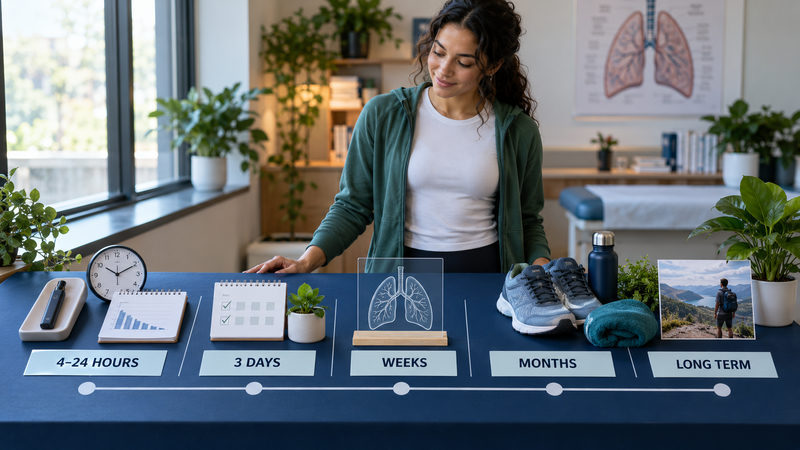
At the same time, your repeated exposure to aerosol has stopped. Your body is no longer experiencing each new nicotine-related increase in heart rate and blood pressure. That makes the first day meaningful progress, even if withdrawal causes you to feel worse before you feel better.
First 1–3 days: Withdrawal often peaks
Nicotine withdrawal often feels strongest during the first few days. Cravings may seem especially urgent during morning routines, work breaks, driving, or stressful conversations. Still, the exact peak depends on your dependence, metabolism, and treatment. Some people have milder symptoms or follow a different timeline.
Because nicotine has a short half-life, blood levels drop quickly after your last use. Cotinine, a nicotine breakdown product, remains detectable for longer. How long depends on the test type, metabolism, kidney function, and previous use, so there is no single clearance time for everyone.
You may experience headaches, fatigue, brain fog, irritability, anxiety, low mood, and increased appetite. Sleep can also become lighter or more fragmented, sometimes with vivid dreams. Strong urges may appear without warning. The good news? Most individual cravings pass within several minutes if you do not act on them.
First 2–4 weeks: Acute symptoms gradually improve
Most acute nicotine withdrawal symptoms ease considerably over several weeks. Progress is rarely a straight line, though. One difficult afternoon does not mean your recovery has stalled. Stress, poor sleep, caffeine, or an unexpected trigger may simply have made the symptoms flare up for a while.
As your brain adapts, concentration and energy may become more stable. Some people notice better taste, smell, sleep, breathing comfort, or exercise tolerance. These changes are uneven and not guaranteed. Existing asthma, respiratory illness, and cigarette smoking can all affect your progress.
Cravings tied to familiar cues can continue after the physical withdrawal settles. Reaching for a device after a meal, for example, may still feel automatic. Replacing those routines remains useful even after the strongest physical symptoms have passed.
First several months and beyond
Over the next several months, cravings usually happen less often and become easier to manage. An unexpected urge can still surface after alcohol, stress, social events, or seeing someone vape. These moments come from learned associations; they do not mean nicotine has somehow returned to your body.
Long-term benefits include less nicotine dependence and lower exposure to aerosol chemicals. Cardiovascular and respiratory health may improve as well, although the extent varies. There are practical benefits too. Many people save money and enjoy no longer having to charge devices, buy supplies, or plan their day around vaping.
For dual users, recovery follows a different pattern if cigarette smoking continues. Combustible tobacco still exposes the heart and lungs to smoke and toxic chemicals, so stopping vaping alone does not eliminate those risks. A clinician can help you create a safe plan for quitting both products.
3. Common Vaping Withdrawal Symptoms and Why They Occur
Mood changes and cravings
Nicotine affects the brain systems that help regulate reward, attention, and stress. After repeated exposure, the brain begins expecting nicotine during ordinary activities. When you stop, cravings, irritability, anxiety, restlessness, or low mood can follow. These feelings may be surprisingly intense, even when nothing else has changed.

Cravings often grow stronger during the first few days, then become shorter and less frequent as you remain abstinent. Psychological triggers can outlast physical withdrawal. Coffee, driving, arguments, or social gatherings may bring back a learned urge even months later.
Headaches, brain fog, and fatigue
Some people who recently quit develop headaches, forgetfulness, poor concentration, or slower thinking. These temporary symptoms can make work or school more difficult. It may help to schedule demanding tasks carefully during the first week. Regular meals, water, movement, and short breaks can also support concentration.
Fatigue may set in once nicotine’s stimulating effects are gone. Someone accustomed to feeling alert after every puff may suddenly feel flat or unmotivated. Your brain needs time to recalibrate its reward and attention systems. Energy often becomes steadier as withdrawal fades.
Sleep, appetite, and weight
Sleep changes may include insomnia, vivid dreams, waking during the night, or feeling groggy during the day. Anxiety and cravings can make it harder to unwind as well. Keeping a consistent bedtime and reducing evening screen use may help. Sleep quality often improves after the early adjustment period.
Because nicotine can suppress appetite, you may feel hungrier after quitting. Snacking may also take the place of the familiar hand-to-mouth ritual. Some people gain weight, but it is not inevitable. Extreme dieting during withdrawal can worsen hunger and irritability while increasing the risk of relapse.
- Eat regular meals containing protein, vegetables, whole grains, or other fiber-rich foods.
- Keep practical snacks available, such as fruit, yogurt, nuts, or sliced vegetables.
- Drink water regularly because thirst can resemble hunger or a nicotine craving.
- Use walking, stretching, or another enjoyable activity to manage stress and restlessness.
- Pause before eating and ask whether you feel hungry, bored, anxious, or triggered.
Mental health and other influences
Anxiety, irritability, or sadness can temporarily worsen during withdrawal. If these symptoms become severe, persist, or deteriorate quickly, they deserve professional attention. Contact a healthcare professional when mood changes interfere with daily life. If you cannot stay safe, seek urgent help.
Acute withdrawal often improves substantially within two to four weeks, though cravings linked to habits can last longer. Caffeine, medications, stress, sleep loss, and quitting cigarettes at the same time may all affect how you feel. Changes in tobacco-use patterns can also alter how some medications work, so speak with a clinician if you are concerned.
4. What Happens to Your Lungs After You Stop Vaping?
Early breathing changes
The moment you quit, your airways stop receiving repeated doses of aerosol. Ongoing irritation in your throat and airways may then begin to ease. Some people notice less dryness, throat clearing, wheezing, or chest tightness. For others, the difference takes longer to appear.
Coughing may briefly become more noticeable. Possible reasons include changing irritation, shifting mucus, a respiratory infection, or simply being more aware of the symptom. A cough does not automatically mean your lungs are “cleaning themselves.” That familiar explanation is too simple for the range of possible causes.
You may find it easier to breathe, exercise more comfortably, or experience less wheezing. The amount or texture of mucus can change too. Results vary because vaping histories and respiratory health differ. A runner who vaped briefly may recover differently from a long-term dual user with asthma.
How much can the lungs recover?
How well the lungs recover after vaping depends on the nature and extent of the injury. Frequency, duration, products, and continued cigarette use all matter. Asthma, chronic lung disease, infections, workplace dust, and air pollution may also affect healing. Continued exposure can slow or limit improvement.
There is not yet one precise lung-recovery timeline that applies to everyone who vapes. Cigarette-specific milestones should not be treated as promises about vaping. Some symptoms or irritation may resolve, while established injury may remain. A complete lung recovery cannot be guaranteed.
When breathing symptoms need medical care
Arrange a medical evaluation if a cough persists or gets worse. You should also seek advice if you cough up blood or develop fever, wheezing, unexplained weight loss, or significant breathlessness. A clinician can look for infection, asthma, lung injury, or another cause. Do not assume that withdrawal explains every symptom.
Get immediate medical help for severe breathing difficulty, chest pain, fainting, or confusion. Blue or gray lips also need urgent attention. These warning signs may point to a serious oxygen or cardiovascular problem. Do not wait at home for them to improve.
5. How to Stop Vaping and Manage Nicotine Cravings
Choose a quitting approach
Going cold turkey means stopping completely on a date you choose. It draws a clear line and removes uncertainty, but early withdrawal may feel more pronounced for some people. Good preparation and appropriate treatment can make this approach easier to manage.
Gradual reduction is another option. You could use a lower nicotine strength, wait longer between sessions, or establish vape-free periods. Set a firm quit date, though, or the reduction phase may continue indefinitely. Track your use closely because deeper or more frequent puffs can cancel out the effect of a lower strength.
The best method is one you can follow with a clear plan. Think about your dependence, past attempts, health, and available support. A difficult previous attempt does not mean you cannot quit. It may only mean that you need stronger treatment or a different strategy.
Use support and appropriate treatment
Counseling, text programs, quitlines, and healthcare support can help with preparation and accountability. Trusted friends or relatives can make hard moments easier too. Ask them directly not to offer you a device or vape nearby. Specific requests often work better than a general request for encouragement.
Nicotine patches deliver a steady amount of nicotine, while gum or lozenges can help with breakthrough cravings. Vaping habits vary widely, however, and treatment needs may differ from those for cigarette cessation. Ask a clinician or pharmacist about appropriate products and dosing. This is especially important during pregnancy, adolescence, or chronic illness.
A clinician can also determine whether prescription cessation medications may help. They may be suitable for people with strong dependence or several unsuccessful attempts. Keep in mind that medication approvals and evidence can differ for smoking and vaping cessation. Discuss the possible benefits, side effects, and your medical history before starting treatment.
For dependable information, consult the CDC’s vaping and quitting resources. National quitlines and public health services can connect you with trained coaches as well. Many of these services offer free or low-cost support.
Respond quickly when a craving arrives
- Delay: Wait several minutes before making any decision about vaping.
- Breathe: Take slow breaths and make each exhale longer than the inhale.
- Drink: Sip water slowly to occupy your mouth and create a pause.
- Move: Walk, stretch, or climb stairs to change your physical state.
- Relocate: Leave the room, car, or social setting connected with the urge.
- Replace: Use sugar-free gum, a straw, a stress ball, or another hand activity.
Before your quit date, clear out devices, chargers, pods, liquids, and disposable vapes. Do not save emergency supplies; easy access makes impulsive use more likely. Plan replacements for your usual routines. If you previously vaped during a break, for example, use that time for a short walk instead.
Think ahead about stress, alcohol, driving, work breaks, and social events. Decide in advance what you will do and say in each situation. Professional advice is particularly valuable for pregnancy, adolescence, mental health concerns, chronic disease, dual use, or severe dependence.
6. Relapse Prevention, Professional Help, and Your Next Steps
Build a practical quit plan
Pick a quit date and write down the reasons that matter to you. Then list your strongest triggers and one practical response for each. Arrange social support and suitable withdrawal treatment as well. Keep your plan somewhere visible, such as your phone, refrigerator, or desk.
A lapse is a brief return to vaping, while a relapse means returning to an established pattern. Neither one wipes out the time, knowledge, or health progress you have already gained. See it as useful information, not proof that you failed.
If you lapse, stop again as soon as you can. Get rid of the device, work out what triggered you, and adjust your response plan. Ask for more support without shame. Acting quickly can keep one difficult moment from turning into regular use.
Know when to seek help
Contact a healthcare professional if withdrawal is severe or persistent, or if depression or anxiety gets worse. Seek help when symptoms interfere with normal daily functioning. Pregnancy concerns, troubling breathing symptoms, and repeated difficulty quitting also warrant personalized care. Effective support may include counseling, medication, and follow-up.
If you have thoughts of self-harm, suicidal intent, severe confusion, or cannot remain safe, seek immediate local emergency or crisis support. Stay with someone you trust whenever possible. Do not try to handle a mental health emergency alone.
Long-term motivation comes from different places. You might value less dependence, lower chemical exposure, possible heart and lung benefits, or simply feeling better day to day. The financial savings can become noticeable quickly too. Track what you save and celebrate milestones that matter to you.
Reliable sources of help include national quitlines, public health cessation services, licensed clinicians, and pharmacists. Established tobacco-cessation programs may also offer structured follow-up. Look for qualified support that takes your circumstances seriously, and avoid programs that promise effortless withdrawal or guaranteed lung recovery.
Conclusion
Stopping vaping ends your ongoing exposure to aerosol immediately. Nicotine withdrawal, however, can temporarily bring cravings, irritability, anxiety, headaches, fatigue, brain fog, appetite changes, and disrupted sleep. Symptoms often peak early and ease over the next few weeks. Respiratory recovery and changes in habit tend to follow a more individual timeline.
Behavioral support, practical tools for cravings, and clinician-guided treatment can make quitting easier to manage. Choose a quit date and remove all vaping supplies. Write down three ways to respond to your strongest triggers. Then contact a healthcare professional or reputable quit service for support tailored to you.