
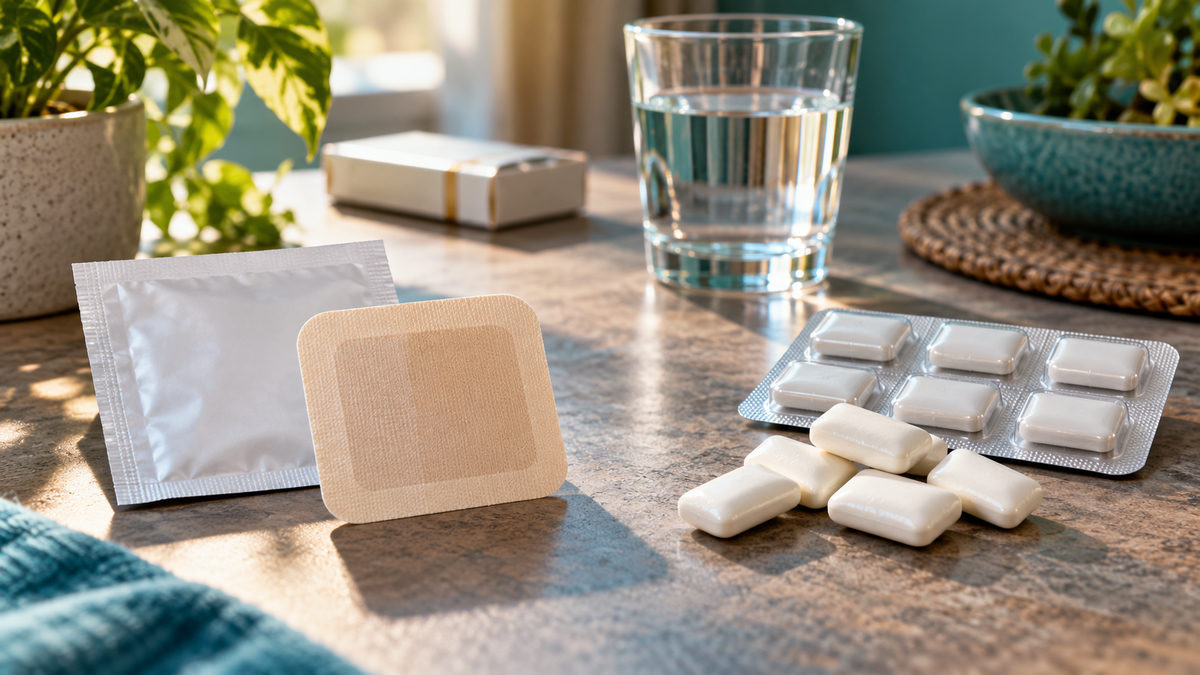
Should you manage nicotine cravings with steady support, or respond to each urge as it comes? Nicotine Patches vs Gum: What Is the Difference? Much of the answer comes down to your craving pattern and daily routine. Patches work quietly for hours. Gum offers faster relief when you need it.
Choosing a product takes more than grabbing the most convenient box, though. Dose, timing, technique, and treatment duration can all affect your results. People quitting vaping may also need help working out how much nicotine they previously used.
This guide compares both options for adults who want to quit smoking or vaping. It covers effectiveness, correct use, side effects, safety, and combination treatment. If you have a health condition, take medicines, or are concerned about withdrawal, medical advice is still important.
1. Nicotine Patches vs Gum: What Is the Difference?
Two forms of nicotine replacement therapy
Nicotine patches and gum are over-the-counter forms of nicotine replacement therapy, commonly known as NRT. Both deliver measured amounts of nicotine without burning tobacco. That means no tar, carbon monoxide, or many of the other toxic substances found in cigarette smoke.
Nicotine can still cause dependence and side effects. Approved NRT products, however, deliver it more slowly and predictably than cigarettes do. This helps ease withdrawal while you work on changing the routines tied to smoking or vaping.
NRT may reduce irritability, restlessness, poor concentration, and powerful urges. These symptoms are often at their worst during the first few days after quitting. Treatment can make that stretch easier, although it will not eliminate every craving.
Steady support versus responsive relief
A patch gradually releases nicotine through your skin. Depending on the product, it stays on for 16 or 24 hours. It can be a good fit if withdrawal symptoms linger throughout the day.
Gum delivers a shorter dose through the lining of your mouth. You can use a piece when a craving begins or just before a familiar trigger. That might be before driving, taking a break at work, or spending time with friends who smoke.
- Onset: Gum acts within several minutes, while a patch builds its effect more gradually.
- Duration: A patch supports you for many hours, while each gum dose works for a shorter period.
- Convenience: Patches require little attention after application, while gum requires repeated use.
- Discretion: Clothing hides a patch, although visible chewing may draw attention in some settings.
- Flexibility: Gum lets you respond to changing cravings, while patches provide a fixed daily dose.
- Technique: Patches need proper placement, while gum requires a specific chew-and-park method.
- Control: Gum gives you more control over timing, while patches reduce dosing decisions.
Neither product produces the rapid nicotine spike associated with smoking. That slower delivery matters because it helps loosen the link between nicotine and an instant reward. A well-structured quit plan should also address triggers, habits, stress, and social situations.
2. How Nicotine Patches and Nicotine Gum Work
How a nicotine patch delivers support
A nicotine patch holds a controlled amount of nicotine in an adhesive system. Once applied, the nicotine passes through the outer skin and enters your bloodstream. Levels rise gradually, then remain fairly stable for many hours.

This slow release provides a background layer of withdrawal control. It may ease morning irritability, poor concentration, and that persistent sense that something is missing. What it cannot do is immediately stop an intense craving caused by a sudden trigger.
A patch may take several hours to reach its full effect. Consistent use and the right daily timing are therefore important. If you apply patches only on stressful days, you may leave unnecessary gaps in withdrawal control.
Twenty-four-hour patches keep delivering nicotine overnight, which may help if you wake up with strong cravings. On the other hand, some people remove them at bedtime because nicotine can contribute to insomnia or vivid dreams.
How nicotine gum reaches the bloodstream
Nicotine gum is not used like regular chewing gum. Chew it slowly until you feel a tingling sensation or notice a peppery taste. Then “park” it between your cheek and gum, allowing the nicotine to pass through the lining of your mouth.
When the sensation fades, start the process again. Using one piece correctly usually takes about 30 minutes. Chewing slowly also reduces how much nicotine you swallow.
Nicotine that reaches the stomach works less efficiently. Chewing too quickly can also bring on hiccups, nausea, heartburn, or throat irritation. Proper technique makes the gum both more comfortable and more effective.
Gum may begin calming an acute craving within several minutes, although the response differs from person to person. It is still slower than smoking because nicotine does not travel rapidly from the lungs. Even so, it provides quicker control than a patch by itself.
Coffee, soda, juice, and other acidic drinks may interfere with nicotine absorption through the mouth. Check the product instructions for how long to avoid food and drinks before and during use. Depending on the label, plain water may be fine.
3. Dosage and Correct Use of Patches and Gum
Choosing a starting strength
Common patch strengths are 21 mg, 14 mg, and 7 mg. Doses and schedules differ by brand and country, and products may be designed for either 16-hour or 24-hour use. Always follow the directions for the specific patch you buy.

Many step-down programs start with a higher-strength patch and gradually move to lower doses. A heavier cigarette user, for example, may begin at 21 mg before stepping down. Someone who smokes less may be better suited to a lower starting dose.
Nicotine gum is commonly available in 2 mg and 4 mg strengths. One widely used cigarette-based rule recommends 4 mg gum for people who smoke within 30 minutes of waking. The 2 mg version often suits those who wait longer for their first cigarette.
Cigarette count tells only part of the story. The right starting dose can also depend on your level of dependence, previous withdrawal symptoms, physical response, and past quit attempts. Product directions vary too, so the schedule for one brand may differ from another.
- How many cigarettes you smoke or how frequently you vape
- How soon you seek nicotine after waking
- Whether cravings continue throughout the day
- How strongly withdrawal affected previous quit attempts
- Which product, strength, and schedule the label recommends
Using a nicotine patch correctly
Place the patch on clean, dry skin with relatively little hair. Suitable spots include the upper chest, upper arm, shoulder, or back. Steer clear of skin that is irritated, oily, scarred, or recently shaved.
Press it firmly for the length of time shown on the package. Wash your hands afterward, and take care not to touch your eyes. Nicotine residue on your fingers can irritate sensitive tissue.
Use a different application site each day to limit skin irritation. Avoid putting a new patch on the same area for several days. Never cut one unless the manufacturer clearly states that it is safe to do so.
If your patch starts to come loose, check the package directions before replacing it. Be mindful of heat as well: heating pads, saunas, and very hot baths may increase nicotine delivery. Unless a professional tells you otherwise, keep the patch away from external heat.
Using nicotine gum correctly
Slowly chew one piece until you notice tingling or a peppery flavor. Then park it between your cheek and gum. Keep repeating this chew-and-park cycle until the sensation is gone, usually after about 30 minutes.
Do not chew nonstop, swallow the gum, or use several pieces at the same time. Avoid food and drinks for the period specified on the label. Using the gum too quickly can cause more side effects without giving you better craving control.
Some treatment schedules recommend using gum regularly during the first few weeks. If you wait until every craving becomes overwhelming, your symptoms may be harder to manage. Follow the package guidance for frequency, the daily maximum, and the step-down schedule.
Special dosing concerns when quitting vaping
Do not estimate your dose solely by counting how often you pick up your vape. Nicotine concentration, device power, liquid use, and delivery vary considerably. Frequent, small puffs can make your total daily exposure especially hard to judge.
A pharmacist or cessation specialist can look at your device, liquid strength, and typical usage. Tell them how quickly you go through pods or liquid and how soon you vape after waking. Those details can help them develop a safer starting plan.
Nausea, dizziness, headache, sweating, or a racing heartbeat can be signs of too much nicotine. Ongoing irritability and strong cravings, by contrast, may point to inadequate treatment or incorrect use. Get professional guidance before making large changes to your dose.
4. Which Nicotine Replacement Therapy Is More Effective?
Effectiveness depends on correct and consistent use
Both patches and gum can improve an adult’s chances of quitting when used correctly. There is no single best choice for everyone. Results depend on factors such as dependence, consistency, craving patterns, personal preferences, and behavioral support.
A patch may be ideal for someone who wants simple, steady coverage. During sudden stress or a social trigger, though, it may not feel like enough. Gum can help in those moments—but only if you remember to use it and follow the right technique.
Too little nicotine can leave withdrawal symptoms needlessly intense. Someone might choose a low-dose patch because it seems safer, for instance. But if cravings remain relentless, confidence can quickly fade and the risk of returning to tobacco may rise.
Poor gum technique creates another issue. Chewing constantly sends more nicotine toward the stomach instead of letting it absorb through the mouth. The result? Nausea and underwhelming relief from cravings.
Skipping patch days can leave similar gaps in support. Ending treatment too soon may also bring difficult cravings back before your new routines have taken hold. Many programs run for several weeks and then reduce the dose gradually.
When combining patch and gum may help
Some adults do better with a long-acting patch and short-acting gum together. The patch manages background withdrawal, while the gum handles cravings that break through. For some people, this combination provides better control than either product on its own.
Consider Maya, who used to smoke shortly after waking and during stressful meetings. A daily patch could ease her morning withdrawal. Gum might then help before a meeting where she previously turned to cigarettes.
Using two products does not mean using either without limits. Follow both labels carefully and seek professional advice when necessary. A pharmacist or clinician can help you choose compatible strengths and avoid taking more nicotine than needed.
Behavioral support strengthens a quit attempt
NRT helps with the physical part of dependence, but smoking and vaping are also learned behaviors. Morning coffee, a tense phone call, or a social drink can prompt an urge almost automatically. A strong quit plan prepares you for those moments ahead of time.
- Counseling: Individual or group sessions can help identify triggers and solve practical problems.
- Quitlines: Trained coaches can provide planning, encouragement, and support during difficult periods.
- Trigger planning: Decide how you will respond to stress, alcohol, driving, meals, and social pressure.
- Coping strategies: Try walking, paced breathing, water, distraction, or a brief change of location.
- Social support: Ask friends and family to avoid offering nicotine or smoking around you.
Before your quit date, clear away cigarettes, vaping devices, chargers, and related supplies. Let supportive people know exactly how they can help. You might ask a colleague to take a quick walk with you instead of going on a smoking break.
One slip does not wipe out your progress. Look at what triggered it, then adjust your plan as soon as possible. Keep asking for support instead of treating a single hard moment as total failure.
5. Side Effects, Safety, and When to Seek Help
Common patch side effects
People who use patches often notice redness, itching, or soreness where the adhesive sits. Headaches, vivid dreams, and insomnia may occur as well. Mild symptoms usually settle as your body adjusts or when you switch application sites.
Rotate the patch among appropriate areas and use it only on healthy skin. Do not apply lotion underneath, since this may stop the adhesive from sticking properly. If redness spreads, forms blisters, or continues after the patch is removed, speak with a healthcare professional.
Vivid dreams or disrupted sleep may be linked to nicotine exposure overnight. Check whether your product can be removed at bedtime. Bear in mind, however, that doing so may make morning cravings harder to control.
Common gum side effects
Nicotine gum may cause irritation in the mouth or throat, jaw discomfort, hiccups, nausea, indigestion, or extra saliva. These problems often happen when the gum is chewed too fast. Slowing down the chew-and-park cycle can make a noticeable difference.
If you have certain jaw conditions, the discomfort may make gum a poor choice. It can also stick to dentures or interfere with some dental work. In those cases, a patch or lozenge may be more practical.
Ongoing nausea, dizziness, sweating, shakiness, or headache could mean you are getting too much nicotine. Stop and ask for professional advice if the symptoms worry you. Also consider whether you are still smoking or vaping and taking in more nicotine than intended.
Who should seek advice before using NRT?
NRT is safe for many adults, and continuing to smoke is generally far more dangerous. Still, personal circumstances can affect which option is safest. If you have significant medical concerns, talk with a clinician or pharmacist first.
- You are pregnant, breastfeeding, or trying to become pregnant.
- You recently experienced a heart attack, serious rhythm problem, or worsening chest pain.
- You have severe skin disease, adhesive allergy, dental problems, or a jaw disorder.
- You are younger than the minimum age listed on the product.
- You take medicines whose effects may change after you stop smoking.
- You previously experienced a serious reaction to nicotine replacement products.
Once you stop smoking, your body may process certain medicines differently. This often happens because smoke exposure has ended, rather than because nicotine itself is gone. Tell your prescriber about your quit plan, particularly if you regularly take prescription medicines.
Warning signs that need urgent help
Get urgent medical help for severe chest pain, fainting, significant breathing difficulty, confusion, or a serious allergic reaction. A very fast or irregular heartbeat also needs prompt attention. Do not assume severe symptoms are simply part of withdrawal.
Changes in mood should not be ignored either. Contact a professional if depression or anxiety becomes severe, gets worse, or continues for more than two weeks. If you have thoughts of suicide or self-harm, seek immediate crisis support.
Safe storage and disposal
Nicotine products can seriously poison children and pets, and used patches or gum may still contain nicotine. Store everything in closed original packaging, well out of reach in a secure, elevated place.
Fold each used patch in half so the adhesive sides stick together. Put it in the disposal pouch or follow the disposal guidance for your area. Never leave loose patches in a car, handbag, open wastebasket, or anywhere around the home.
Wrap used gum before putting it into a secure bin. Keep it away from children, who could easily mistake it for ordinary candy. If a child or pet swallows nicotine, call emergency services or poison control straight away.
6. How to Choose the Right Option for Quitting Smoking or Vaping
Match the product to your craving pattern
Begin by paying attention to when your cravings happen. Are they always in the background, strongest after waking, or tied to particular situations? Keeping a simple log for three days may uncover patterns you would otherwise forget.
If cravings are steady, a patch may make sense because it gives continuous background support. Gum may be a better match for occasional or predictable urges. If you experience both, consider asking a pharmacist or clinician about combined treatment.
- Choose patch simplicity if you prefer once-daily use and fewer dosing decisions.
- Choose gum flexibility if you want control over the timing of each dose.
- Consider discretion because patches stay hidden while gum requires visible chewing.
- Review sleep patterns if overnight nicotine causes dreams or insomnia.
- Consider skin sensitivity because patch adhesive can irritate some users.
- Review dental health if chewing causes jaw pain or affects dental work.
- Consider oral habits if having something in your mouth helps replace smoking routines.
Choosing NRT when quitting vaping
NRT may help adults stop vaping, particularly when nicotine dependence leads to withdrawal. The challenge is that vaping devices can deliver very different levels of nicotine. The label on a pod may not tell you how much your body actually absorbs.
Give a pharmacist, doctor, or cessation specialist a clear picture of how you vape. Share the liquid concentration, daily consumption, device type, puff frequency, and how soon you use it after waking. With those details, they can suggest a suitable product and monitoring plan.
The right option is not automatically the strongest or quickest one. It is the product you can tolerate, use properly, and stick with. A realistic plan that works with your routine will often serve you better than an ideal plan you cannot sustain.
Conclusion
Nicotine patches offer slow, steady support that lasts throughout the day. Nicotine gum works faster and lets you respond to sudden or predictable cravings. Your usual pattern of cravings can help point you toward the better fit.
Either product can support an attempt to quit smoking or vaping when the dose and technique are right. Some adults get better craving control by pairing a patch with gum. Professional guidance is particularly useful when nicotine exposure from vaping is difficult to estimate.
Choose an option that fits your routine, and read the product instructions closely. Set a quit date, then plan for the triggers you know are coming. If you need help choosing a dose or combination, ask a pharmacist, doctor, or cessation specialist.