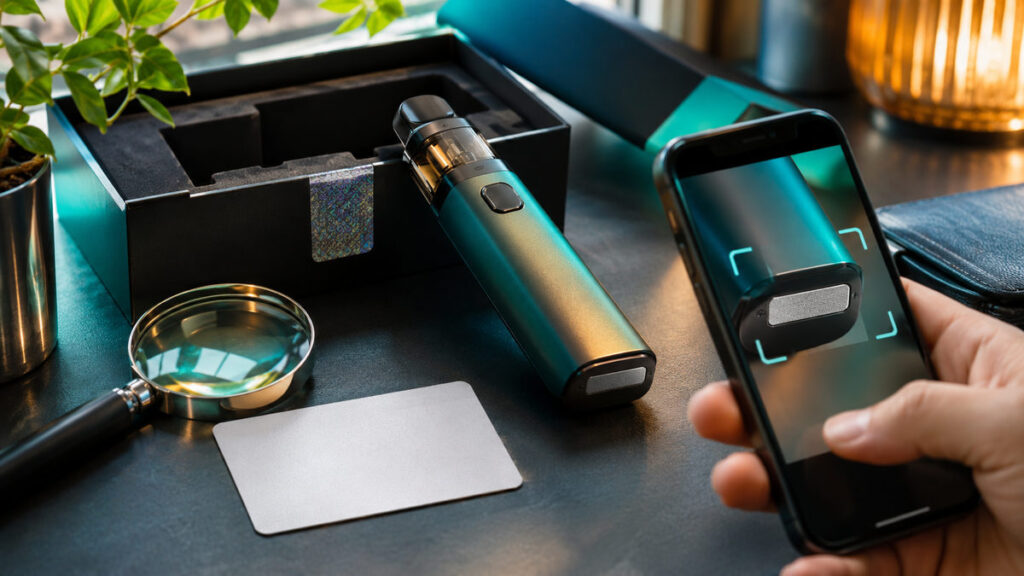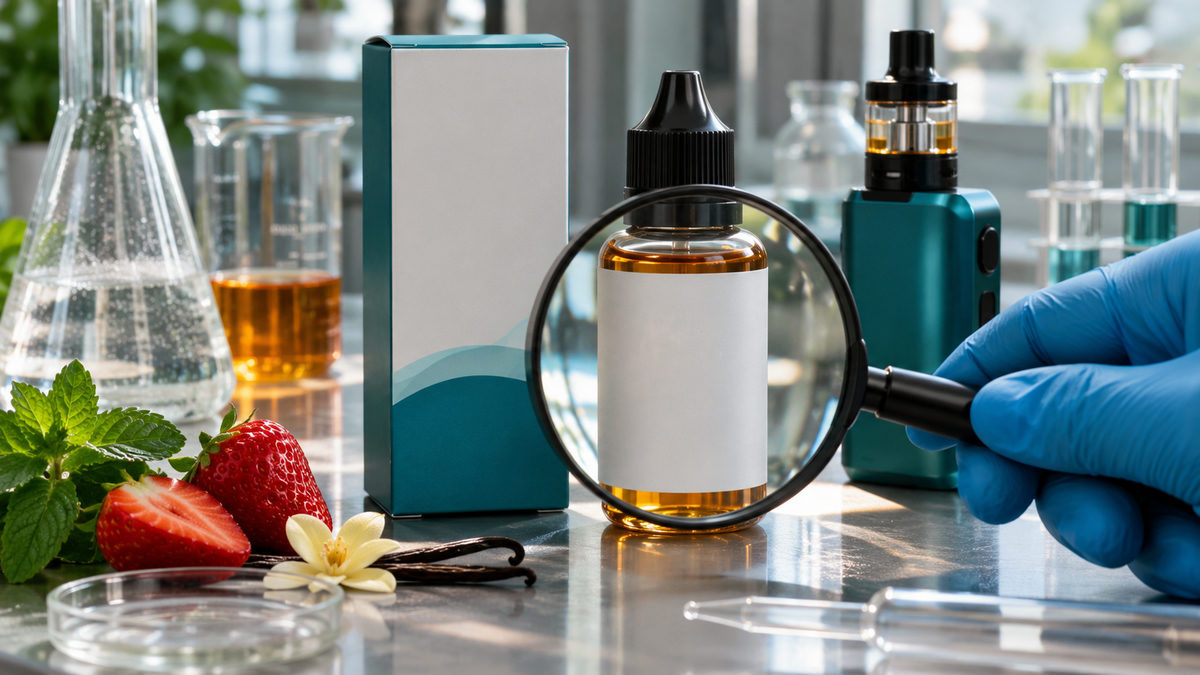
Can a short ingredient list really tell you everything you might inhale from a vaping product? Understanding Ingredient Declarations on Vaping Products takes more than simply recognizing nicotine, propylene glycol, and flavoring. Labels sometimes use vague units, group flavors under collective terms, or leave additives poorly described. Heating can also create chemicals that were never present in the original liquid.
Even so, a close review can reveal useful details about formulation, traceability, and potential warning signs. What it cannot do is prove complete safety, purity, or consistent manufacturing. This guide looks at what declarations reveal, what they leave out, and how to investigate product information that is unclear.
1. Understanding Ingredient Declarations on Vaping Products
Purpose and scope of a declaration
An ingredient declaration lists the substances intentionally used to make a vaping liquid. Consumers can use it to compare products, identify nicotine, and look into possible sensitivities. Healthcare professionals may also refer to this information when assessing irritation, poisoning, or another adverse reaction.
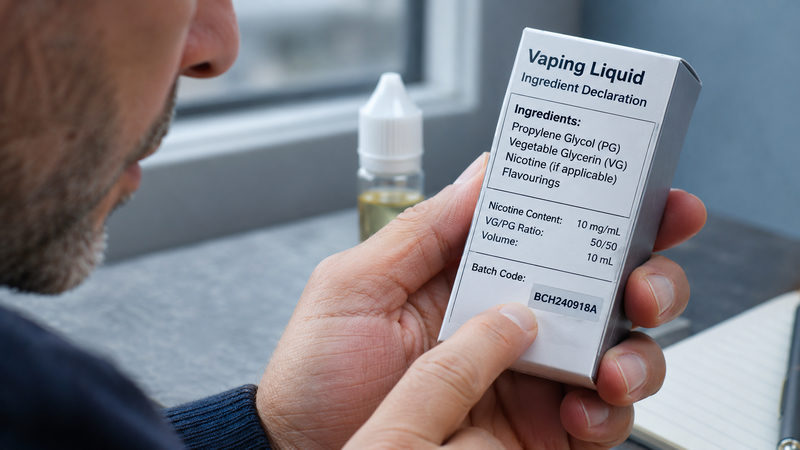
Declarations play a role in product traceability and regulatory compliance as well. A manufacturer, for example, may be able to connect a reported problem to a specific recipe and production batch. That only works, though, if the package provides accurate business and batch details.
Information a useful label should provide
A useful package clearly names the manufacturer or responsible business. It also provides contact information and enough detail to trace the product if something goes wrong. Look for the following items:
- The ingredient list, including nicotine where present.
- Nicotine concentration and, ideally, the nicotine type.
- The total liquid volume inside the container or device.
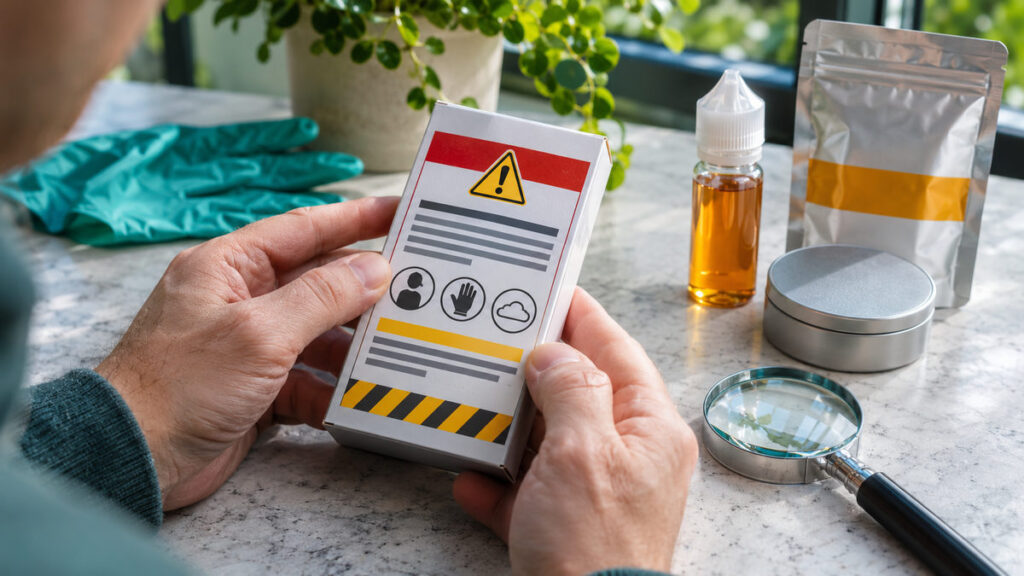
- Required health, age, handling, and poisoning warnings.
- A readable batch or lot code.
- Manufacturing, best-before, or expiry dates where relevant.
- Tamper evidence and suitable storage instructions.
- A business address, telephone number, email address, or official contact route.
Clear labeling distinguishes concentration from container volume. For example, “20 mg/mL” refers to concentration, whereas “10 mL” tells you the liquid volume. Neither number is useful without the correct unit and context.
What disclosure cannot prove
An ingredient list cannot show whether every listed substance has suitable purity. Nor can it confirm accurate mixing, hygienic production, or dependable quality controls. Even polished packaging offers no independent proof of regulatory approval.
Disclosure also does not establish that repeated inhalation is safe. Labels usually describe the liquid before it is used, not the emissions created after heating. Think of a declaration as a source of information, not a safety certificate.
Regulatory variation
Requirements for ingredients, packaging, notifications, and warnings differ between countries and regions. The rules may also change depending on whether the product is a bottled liquid, refillable device, or disposable product. Age restrictions and permitted nicotine concentrations vary too.
For up-to-date requirements, check with the official health, medicines, tobacco, or consumer-safety regulator where you live. Retailer claims are no substitute for official guidance. A product that complies with the rules in one market may not meet those of another.
2. What Is Usually in E-Liquid?
Base liquids
Many e-liquids contain propylene glycol, vegetable glycerin, or a combination of the two. Propylene glycol, often shortened to PG, carries flavors effectively and tends to produce a sharper throat sensation. Vegetable glycerin, or VG, is thicker and generally creates denser aerosol.
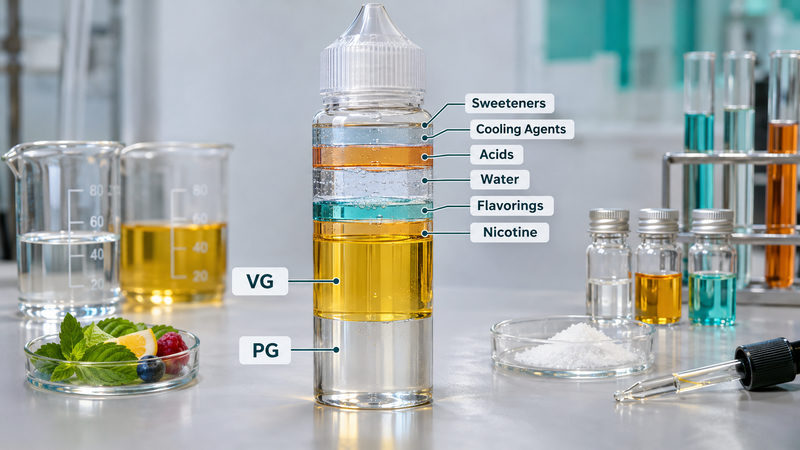
The base influences how the liquid travels through a device as well. Thick, high-VG liquids may move slowly through small openings or compact coils. Thinner mixtures, on the other hand, may leak from devices built for more viscous liquids.
Understanding the PG/VG ratio
A 50/50 declaration generally indicates equal proportions of PG and VG. A 30/70 label usually means 30% PG and 70% VG. The order should still be stated, because a ratio without an explanation is easy to misread.
That ratio cannot predict the entire experience. Aerosol output also depends on device power, coil design, airflow, temperature, and puff duration. Worn coils and low liquid levels can alter both flavor and emissions.
Nicotine, flavors, and other additives
Formulations can differ widely, even when products have similar flavor names. Some contain nicotine; others claim they do not. Manufacturers may also use several supporting ingredients:
- Flavoring mixtures and their carrier liquids.
- Water to adjust viscosity.
- Acids used in nicotine-salt formulations.
- Cooling agents that produce a cold sensation.
- Sweeteners that intensify flavor.
- Other additives intended to alter taste, smoothness, or consistency.
No product necessarily contains every substance listed here. A general description is therefore no replacement for a declaration covering the specific product. Exact concentrations may also be unavailable when regulations allow ingredients to be described collectively.
Food-grade does not mean inhalation-safe
A substance may be suitable for food without having established inhalation safety. When eaten, a chemical passes through the digestive system and is processed by the body in a different way. Inhalation sends droplets and gases straight into the respiratory tract.
Heat adds another complication. At high temperatures, an ingredient may change or generate new compounds. The label “food-grade” should never be treated as evidence that a substance is safe to inhale.
Allergen and irritation considerations
For some people, PG causes throat dryness or irritation. Flavoring chemicals, cooling agents, and other additives can also prompt individual reactions. Aerosol exposure may make symptoms worse in people with sensitive airways.
When disclosure is incomplete, identifying the responsible substance becomes harder. The word “flavors,” for instance, could cover several chemicals and carrier ingredients. Anyone who experiences wheezing, swelling, breathing difficulty, or other severe symptoms should stop exposure and seek medical help promptly.
3. Nicotine Strength Explained: Units, Types, and Claims
Reading mg/mL and percentages
Nicotine strength is commonly shown in milligrams per milliliter, written as mg/mL. This tells you how much nicotine is present in each milliliter of liquid. A strength of 20 mg/mL, for example, means every milliliter contains 20 milligrams of labeled nicotine.
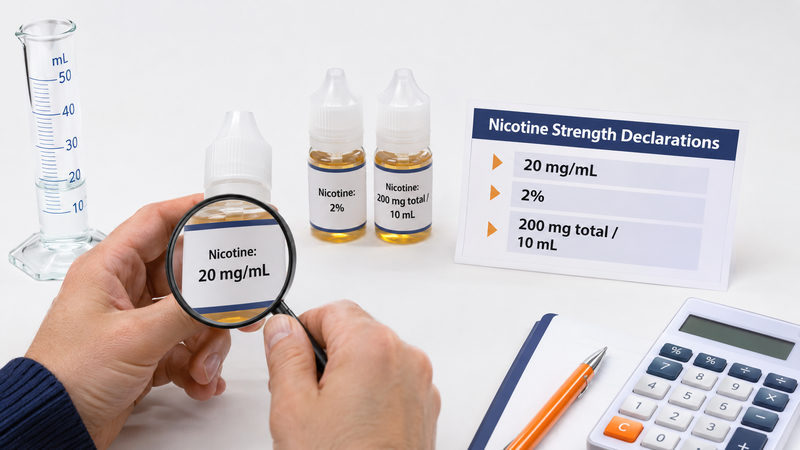
Other labels use percentages. Under a common weight-per-volume convention, 1% is approximately equal to 10 mg/mL. That makes 2% roughly equivalent to 20 mg/mL, though labeling conventions are not always the same.
Concentration is not the same as the dose absorbed during use. Nicotine delivery depends on device efficiency, puff length, inhalation pattern, and individual behavior. Besides, users rarely consume a whole container in a single session.
Worked label examples
Take a 10 mL bottle labeled 20 mg/mL. Multiplying concentration by volume—20 mg/mL × 10 mL—gives 200 mg. The unopened bottle therefore contains 200 milligrams of labeled nicotine in total.
Next, consider a 2 mL disposable marked 10 mg/mL. Its total labeled nicotine content is 20 milligrams. That number still does not tell you exactly how much nicotine the user will absorb.
Conversions are reliable only when the original concentration and convention are clear. A bare “5” might mean 5 mg/mL, 5%, or something else entirely. If the units are missing, do not guess.
Freebase nicotine, nicotine salts, and synthetic nicotine
Freebase nicotine is commonly used in traditional e-liquid formulations. Nicotine salts combine nicotine with an acid, changing the formulation’s properties and sensory effects. In particular, salts may feel smoother at concentrations that would make a freebase liquid seem harsh.
Synthetic nicotine is produced without extracting nicotine from tobacco plants. Its origin, however, does not make it harmless or non-addictive. Every nicotine type needs accurate concentration details, handling warnings, and responsible storage.
Limits of nicotine-free claims
Claims such as “nicotine-free” or “0 mg” need careful interpretation. Cross-contamination, formulation errors, inaccurate declarations, and variations in manufacturing may all lead to unexpected findings. Laboratory instruments also have detection limits, below which a substance cannot be measured reliably.
Marketing language is weak evidence on its own. A credible laboratory report tied to the correct batch offers stronger support, provided the tested sample matches the product. Even then, the report only covers substances included in its testing scope.
Nicotine safety
Nicotine poisoning can occur after swallowing, substantial skin exposure, or other accidental contact. Children and pets are especially vulnerable because even small quantities may have serious effects. Keep these products locked away, and clean spills immediately without touching the liquid directly.
Possible symptoms include nausea, vomiting, dizziness, sweating, confusion, and changes in heart rate. Severe exposure can lead to seizures, breathing problems, or loss of consciousness. Seek urgent medical or poison-control assistance if significant exposure occurs or symptoms are severe.
4. Flavor Disclosures, Hidden Additives, and Label Gaps
Collective flavor descriptions
Manufacturers may list “natural flavors,” “artificial flavors,” or a “proprietary blend.” Depending on the applicable rules, these collective terms may be permitted instead of naming every flavoring chemical. For consumers trying to compare formulations or investigate a reaction, however, such broad language offers little help.
“Natural” describes a category of origin, not a level of safety. Both natural and artificial flavor mixtures may contain many individual substances. Neither label proves that a mixture is suitable for repeated inhalation or heating.
What broad terms can conceal
A collective term can hide individual chemicals, their concentrations, and the carrier liquids used. It may also leave out useful detail about sweeteners, cooling compounds, or substances of concern to sensitive users. This can make it difficult to spot potential allergens or diacetyl-related flavoring agents.
Diacetyl and related compounds may create buttery or creamy notes. Still, the flavor name alone cannot tell you whether they are present. Targeted, reliable testing is far more informative than an unsupported “clean flavor” claim.
Undeclared or unexpected substances
Unexpected substances may come from contamination, formulation mistakes, residual processing chemicals, or inadequate cleaning. Testing sometimes finds nicotine in products marketed as nicotine-free. Undeclared active ingredients can pose further—and potentially serious—risks.
None of this proves misconduct by a particular brand. It does show why traceability and evidence tied to the correct batch are valuable. A report for a different flavor, batch, or production date may say little about the product you actually have.
Common omissions and ambiguities
Missing concentrations, vague nicotine types, and incomplete additive descriptions are all warning signs. Unexplained abbreviations add another layer of uncertainty. If manufacturer details are absent, even asking a basic question or making a complaint becomes difficult.
Be skeptical of claims such as “harmless,” “chemical-free,” or “only water vapor.” All liquids are made of chemicals, water included. Vaping devices also produce an aerosol that may carry substances created during heating.
Disposable and refill products
Bottled refill products typically have more room for instructions and ingredient details. Disposable devices offer less packaging space, while the liquid container is enclosed inside the device. That can make the formulation harder for users to inspect.
Limited space does not remove the need for basic safety and traceability information. Check the outer box, enclosed leaflet, or a verifiable manufacturer document. A sticker on the device should not be your only source.
5. Liquid Ingredients Versus Chemicals in Vape Aerosol
Aerosol versus vapor
Vape emissions are not merely harmless water vapor. They form an aerosol made up of fine liquid droplets, gases, and particles. The mixture may also contain nicotine, flavoring chemicals, reaction products, and material released by the device.
A visible cloud can vanish quickly, but that does not mean it contained only water. Some components stay in the air; others settle on nearby surfaces. An e-liquid ingredient list therefore cannot describe the full emitted mixture.
What changes during heating
Heating turns part of the liquid into an inhalable aerosol. In the process, high temperatures may trigger chemical reactions and thermal decomposition. Given enough heat, some ingredients break apart into smaller compounds.
These changes are influenced by power settings, coil temperature, liquid composition, and airflow. Long puffs or low-liquid conditions may cause the coil to overheat. A burnt taste can be a sign of excessive heat or poor liquid supply.
Substances not shown on the ingredient list
A declaration generally covers ingredients deliberately added to the liquid. It may not mention contaminants introduced while handling raw materials or during manufacturing. Nor can it list every compound that forms later when the device is operating.
Heat may generate carbonyl compounds and other reaction products. Device parts can also release metals or particles as coils wear and heated liquid contacts components. The amount varies with the device, settings, and pattern of use.
Why emissions testing matters
Testing unopened liquid can answer questions about formulation, nicotine concentration, and selected contaminants. Aerosol testing looks instead at what the device emits under defined operating conditions. These approaches are connected, but they provide different kinds of information.
No single test captures every real-world exposure. Laboratory machines operate with fixed puff durations, intervals, airflow, and power conditions. People use different devices in different ways, so test results may not reflect every situation.
Health context
Full disclosure offers better transparency, but it does not prove a product is safe. Adults who have respiratory conditions, allergies, pregnancy, or nicotine sensitivity should discuss exposure concerns with an appropriate healthcare professional. New or worsening symptoms should not be ignored.
Stop using the product if troubling symptoms appear. Severe breathing difficulty, chest pain, confusion, seizures, or collapse call for urgent medical assistance. If it is safe to do so, keep the device and its packaging.
6. How to Read a Vape Label and Verify the Product
Step-by-step label check
Begin with the responsible manufacturer or importer rather than the flavor name. Then compare the ingredient declaration with the nicotine statement and product description. This checklist can help:
- Confirm the manufacturer, importer, or responsible business.
- Read the complete available ingredient declaration.
- Identify nicotine concentration, units, and nicotine type.
- Check the total liquid volume.
- Review health, age, handling, and storage warnings.
- Find the batch or lot code and relevant dates.
- Inspect seals and other tamper evidence.
- Locate reliable customer-contact information.
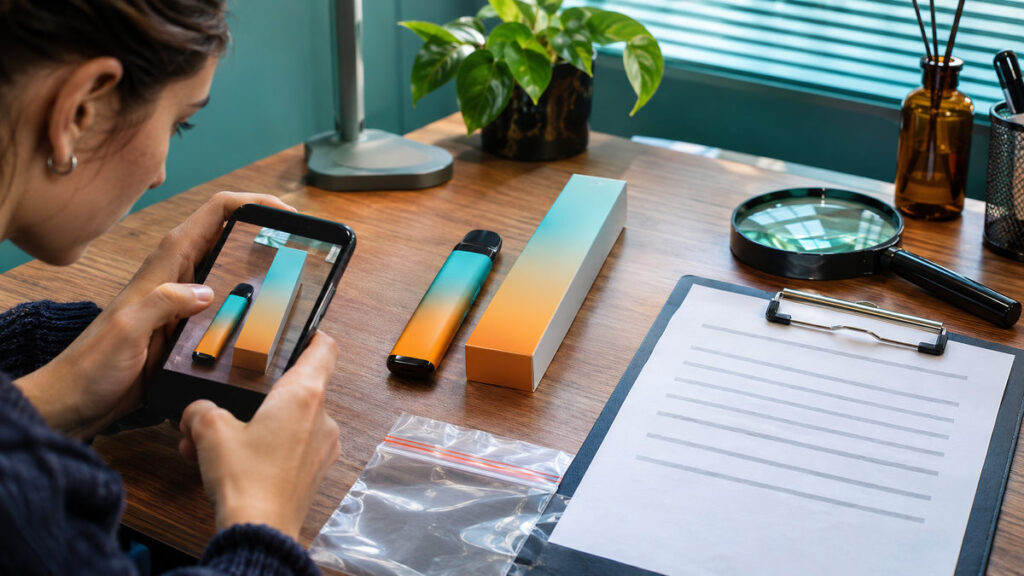
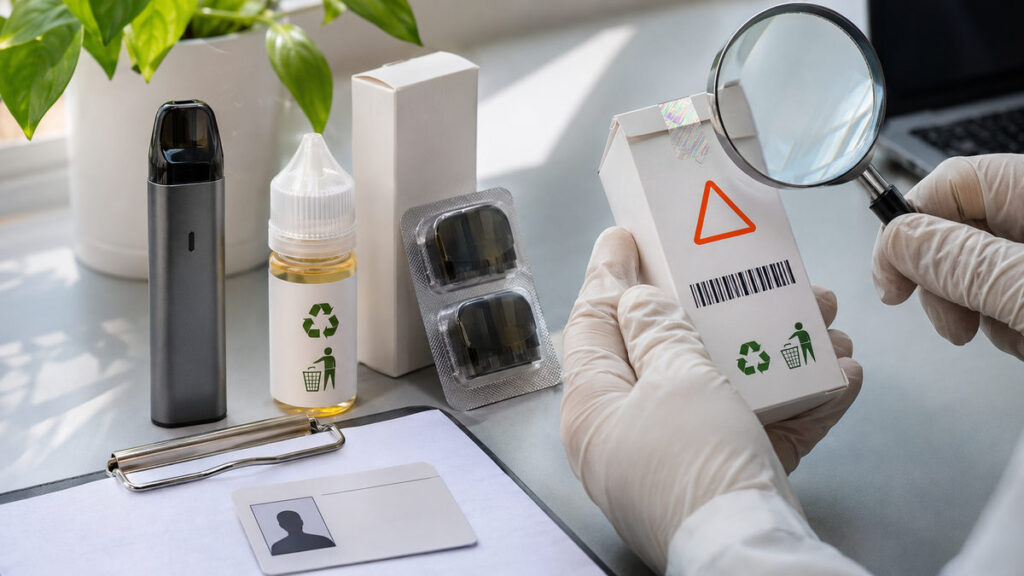
Inspect every visible part of the packaging, including the outer box and any enclosed leaflet. Compare the details printed on the device with those on the box as well. If the strengths, flavors, or batch information do not match, investigate further.
Traceability and packaging clues
A batch number connects a product to a particular production run. Manufacturing and expiry dates can help with stock control and complaint investigations. Intact tamper evidence, meanwhile, may suggest that the package has not been opened since production.
Serial numbers and authentication codes offer more clues. They are not foolproof: counterfeiters may copy codes, packaging, and seals. These features can support verification, but none proves authenticity by itself.
Counterfeit or poorly controlled product warnings
Check for spelling mistakes, blurred printing, altered labels, and broken seals. Mismatched branding and missing traceability information also warrant caution. Pause if you notice any of these signs:
- Authentication codes that cannot be verified through an official route.
- Nicotine information that differs across the box and device.
- Informal sales channels with no receipt or accountable business.
- Packages that imitate another brand’s design.
- Implausible promises of harmless or chemical-free use.
A single printing mistake does not necessarily mean a product is counterfeit. Several inconsistencies, though, raise stronger concerns about authenticity or manufacturing control. Do not use the product until a responsible business offers a credible explanation.
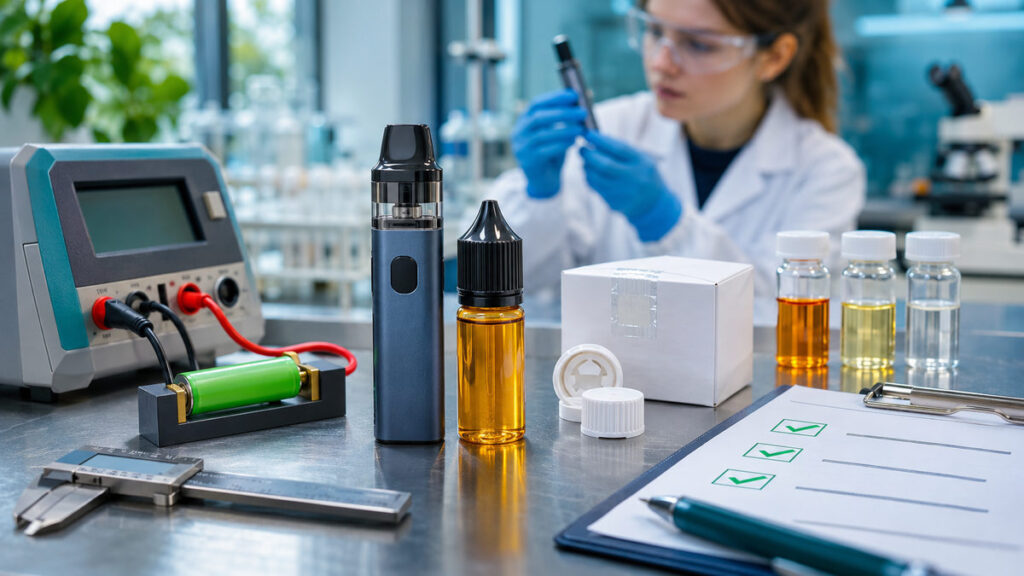
Evaluating a certificate of analysis
A certificate of analysis should name the laboratory and show its relevant credentials. It should also include the report date, testing methods, sample description, and corresponding batch number. Make sure the tested sample matches the flavor, strength, container type, and production lot.
Then review the analyte list and detection limits. Reports may test for nicotine, selected carbonyls, metals, solvents, or microbial contamination. A narrow test for nicotine, however, cannot verify every ingredient, contaminant, or aerosol emission.
Consider who collected and submitted the sample too. Testing arranged by a manufacturer can still be informative, but independent sampling may inspire greater confidence. Reject any report with altered pages, missing identifiers, or results belonging to an unrelated batch.
What to do when information is unclear
Ask the manufacturer or responsible retailer direct, specific questions. Request the complete available ingredient information, the nicotine type, and documents for the relevant batch. If the package conflicts with a laboratory report, ask for a clear explanation.
While questions remain unresolved, avoid products from informal or unverifiable sources. Keep the packaging, receipt, photographs, and correspondence. These materials may become valuable evidence if a regulator, retailer, or healthcare professional investigates.
The authority responsible for complaints depends on local rules. It may be a health, medicines, tobacco, trading-standards, or consumer-safety regulator. Official authorities can also clarify current notification and labeling requirements.
Reporting problems
Get urgent medical help if severe symptoms occur or nicotine poisoning is suspected. After significant ingestion or skin exposure, contact poison-control services without delay. Follow professional advice and keep the product container nearby so it can be identified.
Report adverse reactions, suspected counterfeits, and possible labeling violations through the relevant local channels. Depending on the situation, these may include healthcare providers, poison-control centers, consumer-safety agencies, or product regulators. Notify the responsible manufacturer too, provided doing so does not delay urgent care.
Concise glossary
- Aerosol: A mixture of suspended droplets, gases, and particles produced during vaping.
- Batch or lot number: A code connecting a product with a particular production run.
- Certificate of analysis: A laboratory report describing methods and results for a defined sample.
- Detection limit: The lowest amount a method can reliably detect under stated conditions.
- Freebase nicotine: A commonly used nicotine form that has not been converted into an acid salt.
- Nicotine salt: Nicotine formulated with an acid to change chemical and sensory properties.
- PG: Propylene glycol, a common carrier that supports flavor delivery and a sharper throat sensation.
- VG: Vegetable glycerin, a viscous carrier commonly associated with denser aerosol.
- Synthetic nicotine: Nicotine produced without extraction from tobacco plants.
- Thermal decomposition: Chemical breakdown caused by heat, potentially creating new compounds.
Conclusion
A useful vape label identifies the main formulation, nicotine concentration, responsible business, and traceability details. Broad flavor terms and vague additive disclosures, however, restrict what consumers can find out. Contaminants and chemicals created by heating may not appear on the ingredient list at all.
Ingredient disclosure makes a product more transparent, but it cannot prove that either the liquid or its aerosol is safe. Work through the label checklist before using a product. Check its source, batch details, seals, nicotine units, and responsible business.
If important details are still unclear, ask for credible documentation tied to the correct batch. Questionable labeling, suspected counterfeits, and adverse reactions should be reported to the appropriate manufacturer, healthcare service, poison-control center, or local regulator. Above all, seek urgent help if serious symptoms develop or nicotine poisoning is possible.