You notice a vape with no nicotine warning, odd packaging, or a battery that gets dangerously hot. Knowing how to report a suspected non-compliant vape product can help protect both you and other buyers. The right person or agency to contact, though, depends on the product, the concern, the seller, and your location.
Consumers, retailers, employees, parents, and health professionals can all encounter possible violations. At first, though, an ordinary complaint may look much like a regulatory problem. The key is to identify the concern, gather reliable evidence, and send it to the appropriate authority.
This guide walks through each step without treating one country’s rules as universal. It also covers urgent incidents, retail violations, possible counterfeits, and ways to preserve evidence. Above all, seek emergency help immediately if someone faces an immediate medical or fire risk.
1. What Makes a Vape Product Non-Compliant?
A suspected non-compliant vape product may break rules governing its authorization, ingredients, manufacture, labeling, packaging, marketing, importation, distribution, or sale. Regulators might restrict particular ingredients, nicotine strengths, package designs, or promotional claims, for example. Sellers may also be required to hold licenses, enforce age controls, display tax markings, or maintain specific sales records.
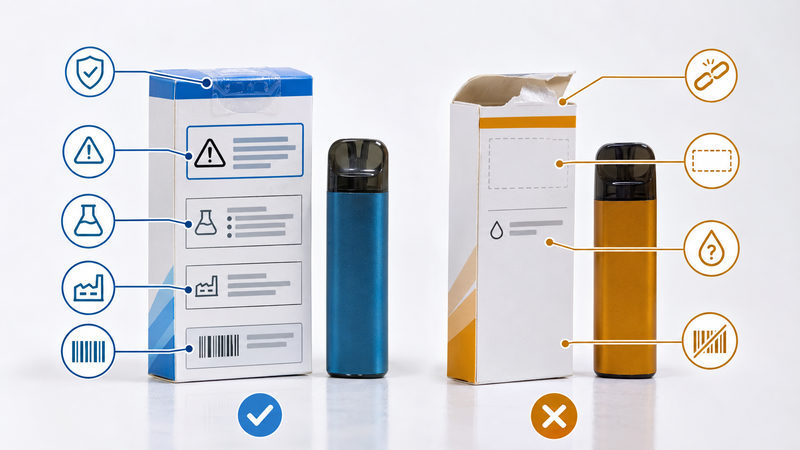
Possible warning signs
One warning sign alone does not prove that a violation has occurred. Still, certain details may warrant a closer look or a formal report. Common concerns include:
- Missing nicotine, ingredient, health, or age-restriction warnings required in the sales location.
- Packaging that appears opened, altered, unsealed, or inconsistent with the manufacturer’s normal presentation.
- A product name, model, or nicotine strength that differs between the package and device.
- Marketing that targets children through cartoons, school themes, toys, or youth-focused promotions.
- Health claims stating that a product treats disease or carries no risk.
- Sales to underage customers or sales without required age verification.
- Missing authorization, import, tax, batch, manufacturer, or distributor information where authorities require it.
- Leaking, overheating, swelling, sparking, or another condition suggesting a product-safety defect.
The same detail can mean different things in different jurisdictions. A missing tax stamp may be significant in one region and irrelevant in another. In the same way, one country may restrict flavors or nicotine strength while another permits them.
A complaint is not always a compliance case
An unpleasant flavor, weak vapor, or short battery life is usually a customer-service matter. Buyer’s remorse is not evidence of a regulatory violation either. These issues may become reportable, however, if they point to deception, contamination, a defect, or false product information.
Consider a package that promises 10,000 puffs, only for the device to stop after several hundred. The gap could result from usage conditions or exaggerated advertising. A visibly swollen battery is different: it raises a separate safety concern that needs prompt attention.
Describe what happened without immediately labeling the product illegal, fake, or dangerous. If you know the specific rule or warning sign involved, include it. If not, stick to what you observed and allow the responsible authority to assess the facts.
Requirements may differ by country, state, province, territory, city, and even sales channel. Online purchases can also involve rules tied to where the seller, buyer, importer, or delivery was located. Check which requirements apply where the product appeared, was sold, or entered the market.
2. How to Check Authorization, Labels, and Recall Status
Begin with the official websites of national health, tobacco, consumer-safety, customs, or market-surveillance authorities. Search for authorized-product lists, enforcement notices, safety alerts, recalls, and guidance for retailers. Current government information is more reliable than assurances from a retailer or claims circulating on social media.
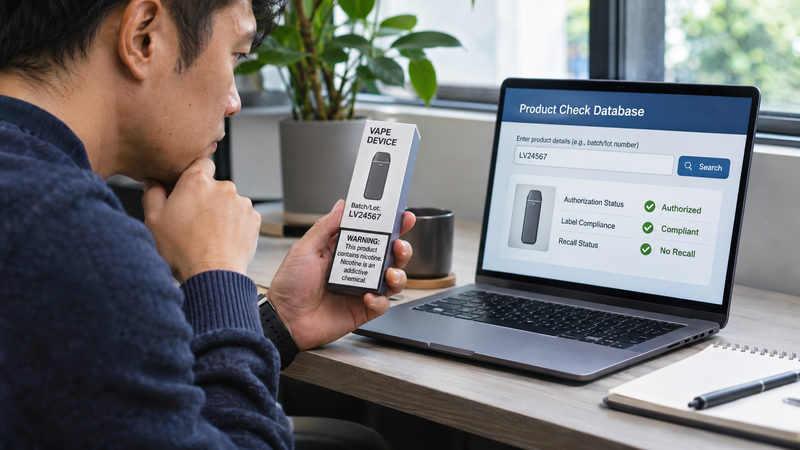
Search with precise product details
Search using the exact brand, model, flavor, nicotine strength, and package size. Check alternate spellings as well as the name of any manufacturer or importer shown on the label. Products in the same family can look almost identical even when some versions are approved and others are not.
- Compare the device name with the name printed on its outer package.
- Record the barcode, serial number, batch code, and manufacturing date.
- Check whether the listed authorization covers that exact flavor and strength.
- Review official recall notices for matching lot or serial numbers.
- Confirm whether the named company appears in an official business or license register.
A product’s absence from an official database does not always answer the question. Some databases include only certain categories, decisions, regions, or publication periods. Exemptions, pending updates, legacy arrangements, and publication delays may also affect what appears online.
A national register, for example, might list authorized products while leaving out accessories or zero-nicotine devices. Another may identify recalled batteries without naming the associated vape brand. Read the database description and its limitations before reaching a conclusion.
Review the physical label
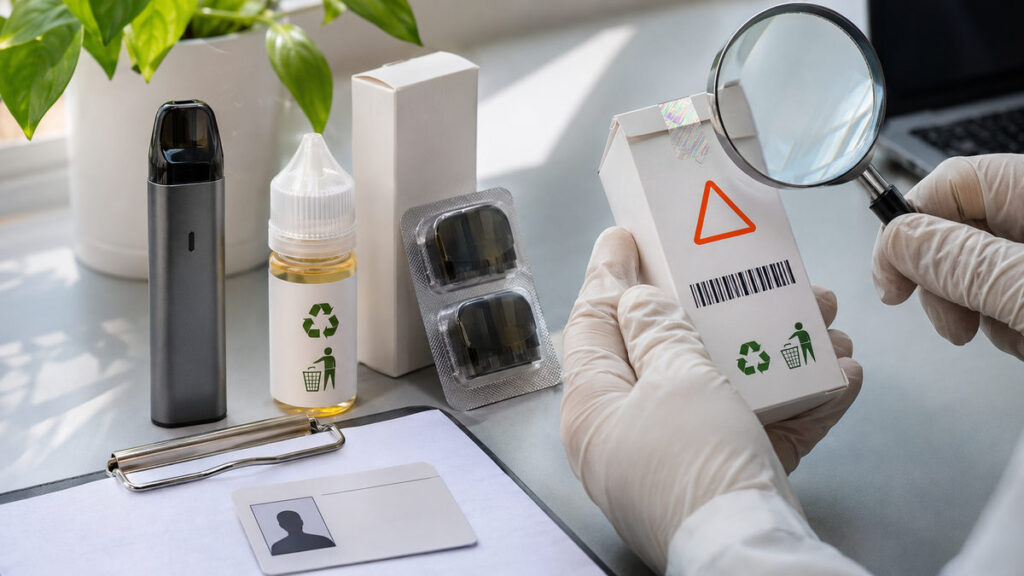
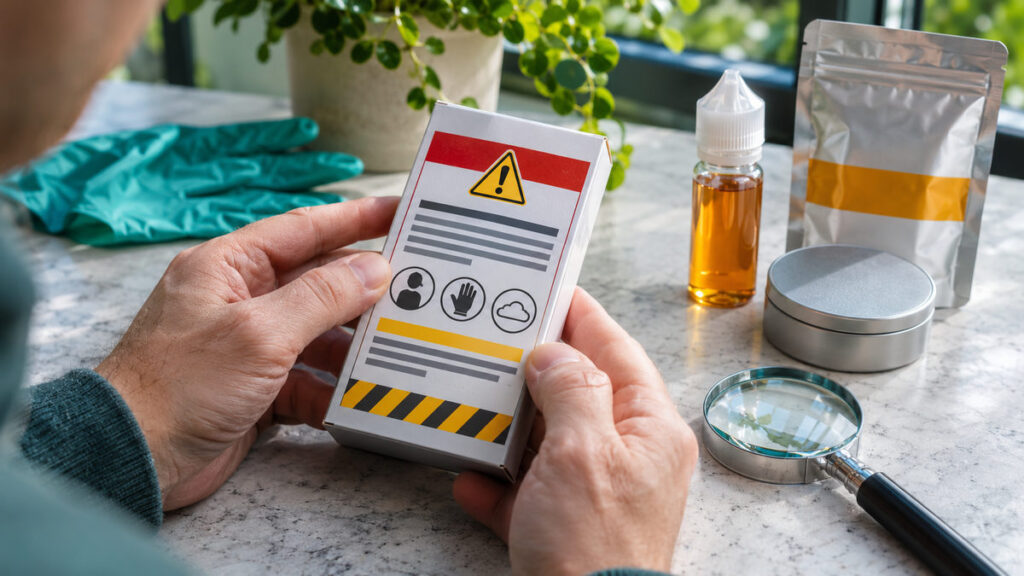
Compare every visible detail with current official labeling guidance. Required information may include nicotine disclosures, health warnings, ingredients, volume, manufacturer details, traceability codes, or child-resistant packaging. Make sure warnings are readable and printed in the required language.
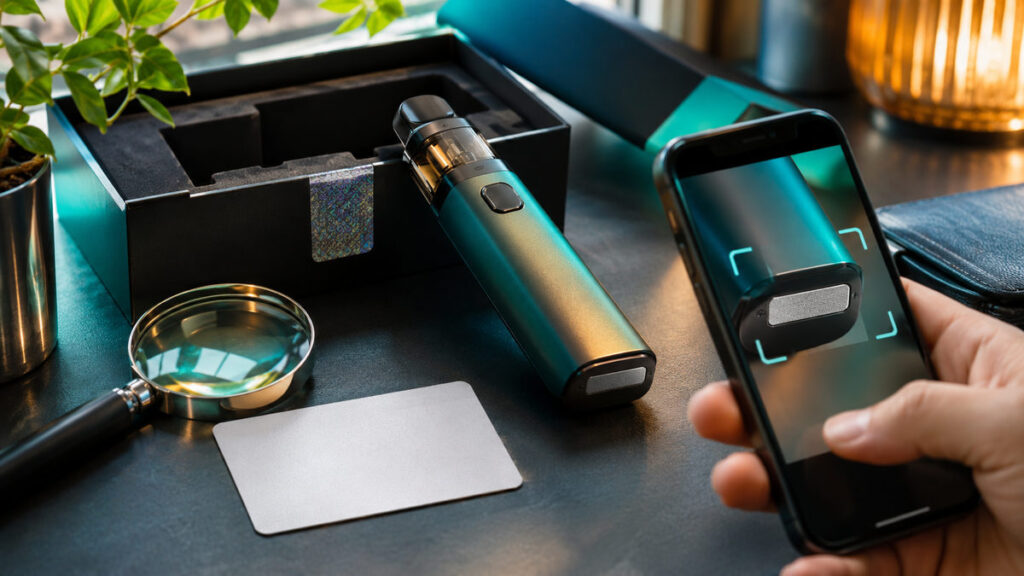
Look for mismatched fonts, poor-quality printing, broken seals, or codes that fail official verification. Such signs can support a counterfeit concern, but they are not proof. Genuine packaging changes over time, and counterfeiters may copy security features.
Do not depend on crowdsourced lists, old screenshots, marketplace descriptions, or comments from other buyers. Save any official page that supports your concern, along with its title and the date you accessed it. Until a qualified authority or rights holder confirms the product’s status, describe it publicly as “suspected.”
3. How to Report a Suspected Non-Compliant Vape Product
Where you report the issue depends on what occurred and where. Even so, a jurisdiction-neutral process can help organize almost any complaint. Deal with immediate safety first, then identify the issue, location, business involved, and responsible authority.

Follow a practical reporting process
- Address urgent danger. Contact emergency services for a fire, explosion, severe poisoning, breathing difficulty, or serious injury.
- Define the concern. Identify whether it involves labeling, authorization, advertising, ingredients, safety, importation, or retail conduct.
- Record the jurisdiction. Note where you viewed the advertisement, placed the order, received delivery, and used the product.
- Identify the business. Record the retailer, website, marketplace seller, importer, distributor, or manufacturer connected with the concern.
- Find the responsible authority. Search official government websites for tobacco, health, consumer-safety, trading, customs, or local licensing offices.
- Select the correct form. Use a tobacco complaint, adverse-event report, unsafe-product report, advertising complaint, or underage-sales form as appropriate.
- Submit factual evidence. Attach clear photographs, transaction records, product identifiers, and a concise timeline.
- Save confirmation details. Keep the case number, submitted form, attachments, date, and any response.
Missing nicotine warnings, for instance, may fall under a tobacco or health regulator. An exploding battery may call for both a product-safety report and an adverse-event report. An underage sale could also need to be reported to local licensing or law-enforcement authorities.
One event may require several reports
Different authorities often handle separate parts of the same incident. One complaint may not automatically reach every office that needs to know. A regulator responsible for packaging, for example, may not deal with injuries, payment disputes, customs breaches, or local retail licenses.
Imagine an online seller shipping an unmarked vape to a child, followed by the battery overheating. That single transaction could raise questions about age controls, labeling rules, delivery requirements, and product safety. The parent may therefore need to file separate reports about the sale and the overheating incident.
Marketplace reporting tools may help remove a listing or preserve transaction details. They do not replace an official regulatory complaint. In the same way, asking for a refund does not notify a health or safety authority.
Confirm current submission instructions
Government responsibilities and reporting systems sometimes change. Check every form, postal address, email address, telephone number, and attachment limit against a current official website. Never send sensitive records to contact details taken from a forum or an outdated post.
Some agencies allow anonymous reports; others need contact information so they can follow up. They may also share complaint details with another agency or with the business being reported. Read the privacy statement before submitting medical, employment, or identification information.
If the correct office is unclear, contact the government’s main consumer or health information service. Ask which authority covers the product category and the suspected conduct. During that first inquiry, provide the location and a brief description of the issue without disclosing unnecessary personal details.
4. Evidence to Collect and a Reusable Complaint Template
Good evidence helps an authority identify the product, seller, transaction, and suspected violation. More files do not necessarily make a stronger complaint, though. A small set of relevant, well-organized records is usually more useful than dozens of screenshots with no explanation.
Evidence checklist
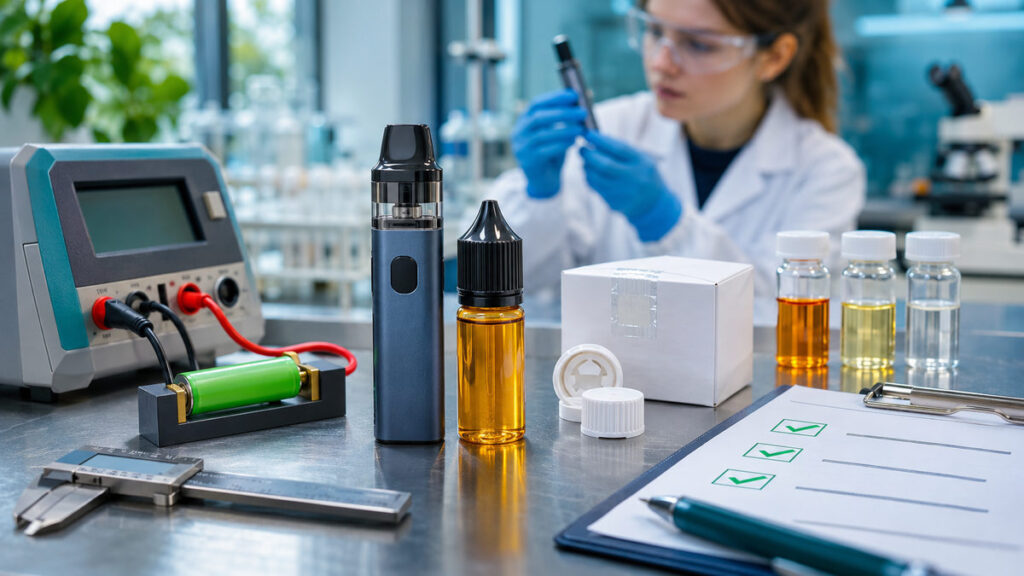
- Photographs of every package side, warning, seal, barcode, batch code, and device marking.
- The product name, model, flavor, nicotine strength, volume, color, and package size.
- The seller’s legal name, trading name, website, physical address, and marketplace profile.
- The purchase date, price, payment method, order number, receipt, and delivery record.
- Screenshots showing the complete advertisement, seller identity, claims, price, and capture date.
- A timeline describing discovery, purchase, opening, use, incident, and communication with the seller.
- Copies of relevant messages, refund responses, medical documents, or incident reports.
- Names and contact details for witnesses who agree to provide their observations.
Keep the original photographs, videos, emails, and downloaded receipts. If you crop or highlight a copy for clarity, preserve an unedited version too. Changing an original file could erase metadata or hide the surrounding context.
Note what each photograph shows and when you took it. Simple, neutral labels such as “front package warning” or “battery swelling after charging” work well. Avoid putting unconfirmed conclusions in filenames.
Witnesses should document only what they personally saw, heard, purchased, or received. They should also distinguish their direct observations from anything another person told them. “I saw no age check” is more useful than a broad statement such as “the shop always sells to children.”
Reusable complaint template
Subject: Suspected non-compliant vape product or sale in [location]
Product and seller: I am reporting [brand, model, flavor, strength, and size], sold or advertised by [business name]. I made the transaction or observed the product on [date] at [store, website, platform, and location]. The relevant order, receipt, batch, or serial reference is [number].
Observed concern: I personally observed [specific label, packaging, advertisement, sale, or product condition]. This may require review because [brief explanation or relevant rule, if known]. I have not independently confirmed that a violation occurred.
Evidence and impact: I have attached [photographs, receipt, screenshots, messages, and timeline]. The product caused or presented [no injury, illness, overheating, leak, burn, fire, or other outcome]. Where appropriate, relevant medical or emergency details are included in [separate report or attachment].
Requested action: Please review this information or forward it to the responsible authority. If you need further details, you may contact me at [contact details]. Please provide a reference number when one is available.
5. Safety Incidents, Counterfeits, and Retail Violations
A regulatory complaint is not the same as an adverse-event report. The first concerns a suspected breach of rules; the second documents illness, poisoning, burns, overheating, fire, explosion, or injury. A single event, however, may call for both.
Act first when health or fire risks exist
Call emergency services if a device burns, explodes, starts a fire, or poses an immediate danger. Seek urgent medical advice after nicotine ingestion, serious breathing symptoms, severe burns, or loss of consciousness. Do not postpone urgent care to collect evidence or fill out an online form.
If poisoning is possible, contact the official poison information service for your location. Keep the package nearby so professionals can check the ingredients and nicotine strength. Never induce vomiting unless a qualified medical professional tells you to do so.
One incident may need to be reported to a health authority, product-safety authority, vape regulator, and emergency service. A workplace event may also trigger occupational-safety reporting. Depending on the circumstances, an insurer, fire investigator, or transport authority may need to be notified as well.
Possible counterfeit products
Signs of a possible counterfeit may include copied branding, false security codes, altered packaging, or unauthorized refilling. Visual differences alone cannot establish authenticity, though. Manufacturers update packaging, and regional versions may use different warnings or identifiers.
Photograph the suspected product next to its packaging, but do not open its internal components. Record where you obtained it and what it cost. When official instructions recommend it, report suspected trademark copying to the appropriate regulator or brand owner.
Do not confront the seller or make public accusations that could put witnesses at risk. Preserve the listing, receipt, messages, and delivery label instead. Leave the final determination about fraud, counterfeiting, or another violation to qualified investigators.
Guidance for different reporters
- Consumers: Stop using a leaking, damaged, swollen, or overheating device. Preserve purchase records and describe exactly how the problem developed.
- Parents: Document the child’s age, sales method, age-check process, delivery, and any marketing that influenced the purchase.
- Healthcare professionals: Record clinical findings, exposure details, product identifiers, treatment, and outcome. Follow professional privacy duties and applicable reporting systems.
- Retailers: Isolate questionable stock from sale and preserve supplier invoices, batch records, quantities, and customer complaints. Follow official recall or quarantine instructions.
- Distributors: Trace incoming and outgoing lots, identify affected customers, and avoid moving suspect inventory. Notify authorities when applicable rules require action.
- Industry employees: Preserve lawful records and report facts through protected channels where available. Avoid removing confidential information without authorization.
Retail violations may include underage sales, missing licenses, prohibited displays, unlawful discounts, or absent age checks. Online issues can involve weak identity controls, misleading listings, or restricted delivery methods. Record the process as it happened, including any prompts shown by the seller.
For example, if a website displayed an age-control screen that failed, do not say there was no age control. Describe each screen and the information the buyer entered instead. Those specifics help investigators tell the difference between a missing control and an ineffective one.
6. Preserving the Product and What Happens After Reporting
Keep the product only if doing so will not create further danger. If the device leaks, swells, hisses, smokes, or grows hot, move everyone away from it. Then ask emergency services or local hazardous-waste professionals for instructions suited to the situation.
Store evidence carefully
Do not charge, test, dismantle, puncture, crush, or repeatedly use a suspect device. Keep nicotine liquid away from children, pets, food, and bare skin. Follow local official guidance for damaged lithium batteries and chemical exposure.
Do not mail or transport a damaged battery unless an authority gives you safe and lawful instructions. Standard postal and courier services may restrict batteries, liquids, and hazardous materials. Improvised packaging could worsen the risk of fire, leakage, or exposure.
Keep receipts, photographs, and reports apart from the physical product. On duplicate documents, remove unrelated personal details if the agency does not require them. Preserve the originals in case an investigator later needs to verify the records.
If an authority requests the product, verify the recipient and transfer method using official contact details. Ask for a receipt or evidence reference when possible. Never take a hazardous device to an office without arranging it first.
What to expect after submission
After submitting a report, you might receive an automated acknowledgment, a reference number, a follow-up question, or no personal response at all. Agencies often review reports alongside other complaints, inspections, laboratory results, and market data. No reply does not necessarily mean your information was ignored.
Investigators may contact the seller, request samples, examine records, or refer the matter to another office. Confidentiality laws, however, may limit what they can tell you about an active case. An agency may protect a reporter’s identity, but it cannot always promise complete anonymity.
Filing a report does not establish that a violation occurred. Nor does it guarantee an inspection, recall, prosecution, refund, replacement, or compensation. Those outcomes may fall under separate consumer, civil, employment, or insurance procedures.
Save the case number and answer reasonable requests for clarification promptly. If a new injury, fire, recall notice, or message from the seller arises, report it through the appropriate channel. Do not submit the same complaint repeatedly unless the authority asks you to.
Conclusion
A useful vape complaint clearly identifies the product, seller, transaction, and suspected violation. It focuses on observable facts, supplies evidence that can be checked, and goes to the authority responsible for the issue. Neutral language makes the complaint stronger by keeping facts separate from assumptions.
When there is an illness, burn, poisoning, fire, explosion, or other safety incident, urgent medical or emergency action comes before regulatory paperwork. The same event may also justify several reports. Never handle, charge, ship, or dismantle a dangerous device simply to collect more evidence.
Use the checklist to document the concern and keep the original records. Next, confirm the current reporting instructions on an official government website and file the appropriate report. Keep the product safely unless an authority tells you to do something else.
This guidance provides general information, not jurisdiction-specific legal, medical, or emergency advice. Rules and reporting systems differ across locations and product categories. Follow current official instructions and seek qualified help whenever the situation calls for it.