
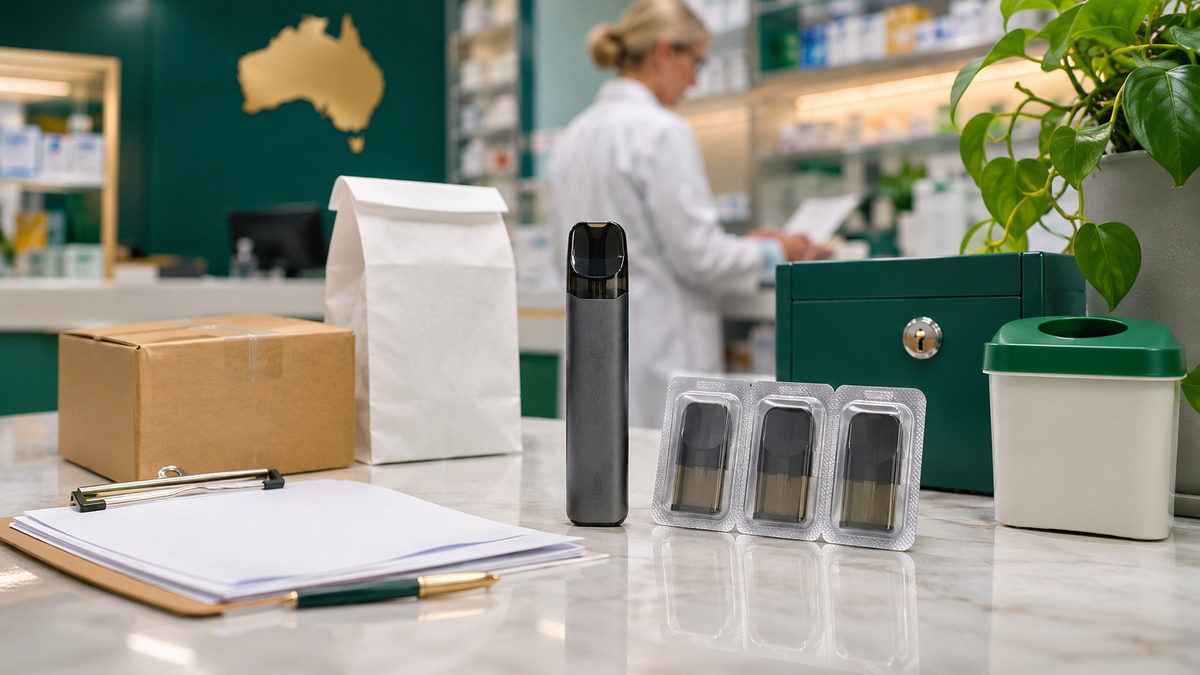
A RELX device may be sold openly overseas, but bringing it into Australia can still breach Australian law. RELX Vape: Brand Overview and Australian Supply Rules explains why the specific product, its supplier, and the way it is purchased all matter. As of 9 November 2026, Australian adults must navigate federal controls, pharmacy requirements, border restrictions, and differing local laws. Familiar branding or genuine packaging, then, is never proof that a particular vape is lawful.
Illicit sellers often promote products as “approved,” “nicotine-free,” or “legal in Australia.” Those claims may leave out crucial details—or be completely false. This guide covers RELX systems, pharmacy access, prescriptions, imports, standards, health risks, and practical ways to verify a product. Before buying, always check the latest requirements with official regulators and a qualified health professional.
1. RELX Vape Brand Overview: Devices, Pods, and Features
What RELX sells
RELX is an international brand known mainly for rechargeable, closed-system vaping devices. Its range includes pod devices, sealed prefilled pods, charging accessories, and replacement components. RELX Infinity is one recognisable example, though available models and specifications vary between countries. A well-known brand name says nothing by itself about compliance with Australian rules.
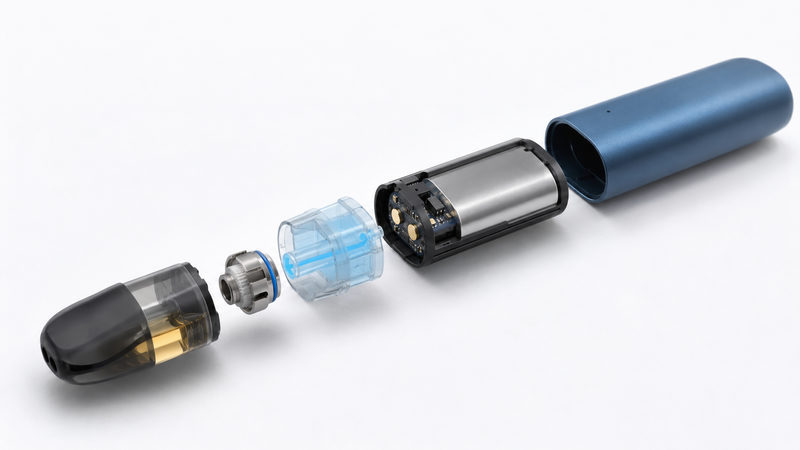
A closed system uses pods made for specific devices rather than general refillable tanks. In most cases, the user inserts a compatible pod and inhales through the mouthpiece. Battery capacity, pod volume, appearance, and activation methods can differ between product generations. Overseas catalogues may also advertise products that Australian pharmacies cannot lawfully supply.
How a closed pod system works
The device body houses a rechargeable battery and electronic controls, while the pod contains e-liquid and a heating element, often called a coil. In many models, drawing through the mouthpiece triggers an airflow sensor. Electrical power then heats the liquid, producing an aerosol for the user to inhale.
The battery is recharged between uses through a charging connection. Depending on the model, that could mean a cable, charging case, or proprietary accessory. Users should follow the manufacturer’s instructions for that exact device. The wrong charger, a damaged cable, or an overheated battery can cause fires and burns.
Sealed pods commonly contain solvents, flavouring ingredients, and, in some cases, nicotine. The nicotine may come in a freebase or salt formulation. Labels can show concentration in milligrams per millilitre, as a percentage, or in another market-specific format. Never try to judge strength by flavour, packaging colour, or throat sensation.
Pod differences and compatibility
RELX pods can vary by country, flavour, nicotine strength, capacity, and warning information. Two packages may look nearly identical yet contain different formulations. Even an authentic overseas product may not meet Australian ingredient, presentation, or labelling standards. Compliance depends on the exact product and the pathway through which it is supplied.
Pods usually fit only the device generations specified by the manufacturer. Even products carrying the RELX name may not connect correctly to another RELX model. Third-party alternatives can also lack dependable controls for electrical safety, materials, or ingredients. Check the model identifier and manufacturer’s instructions before attaching any component.
- Never force a pod into an incompatible device.
- Do not refill or modify a sealed prefilled pod.
- Stop using pods that leak, crack, smell unusual, or overheat.
- Replace damaged batteries and charging equipment safely.
- Keep liquid away from skin, eyes, children, and pets.
Modifying a device can damage its seals, electrical contacts, or temperature controls. Mixing components may also alter aerosol delivery or unexpectedly expose the liquid. If the device starts behaving unpredictably, switch it off where possible and move it away from combustible materials. A battery that still charges is not necessarily safe to use.
2. RELX Vape: Brand Availability and Australian Supply Rules
Availability does not establish legality
A product may be widely available overseas and still sit outside Australia’s lawful supply system. Authentic packaging does not show that an importer obtained the required permission. Nor do an Australian domain name, a local telephone number, or fast domestic delivery. Buyers need to check the specific product and the seller behind it.
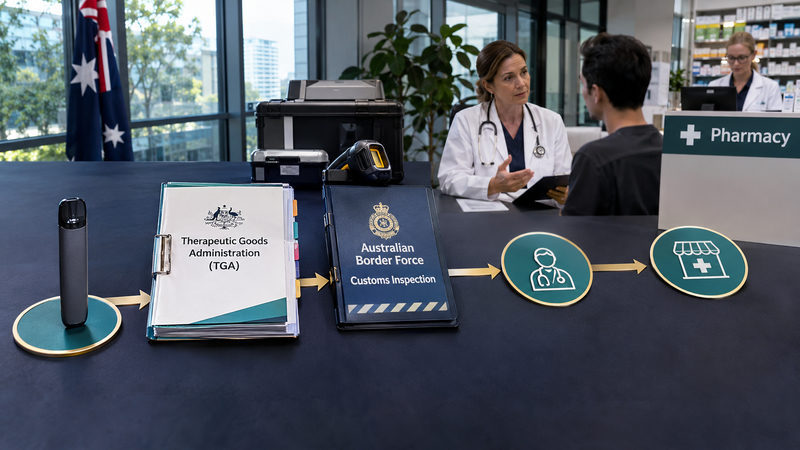
Australian vaping controls extend well beyond nicotine liquid. Federal rules regulate the importation, manufacture, commercial possession, advertising, and supply of vaping goods. These controls can apply to devices, pods, accessories, and items promoted as nicotine-free. State and territory laws may impose further restrictions.
Who regulates the Australian supply chain?
The Therapeutic Goods Administration manages the federal therapeutic-goods framework and related compliance work. Australian Border Force enforces import controls at the border. Authorised health practitioners may prescribe suitable products, while pharmacists handle lawful patient supply. State and territory regulators administer additional rules on medicines, retail sales, possession, and public use.
Under the current federal model, therapeutic vapes are intended to support smoking cessation or manage nicotine dependence. They are not ordinary consumer goods available for unrestricted recreational sale. The lawful pathway generally goes through participating Australian pharmacies. A tobacconist cannot make an unlawful sale legal simply by asking for a prescription.
Advertising is tightly controlled as well. Influencer promotions, social media listings, sponsored posts, and retailer signs may breach federal or local requirements. Commercial possession can also prompt enforcement when goods fall outside permitted supply arrangements. The precise liability depends on the conduct, the products involved, and the relevant jurisdiction.
Notification is not full approval
The TGA publishes information about notified therapeutic vaping goods. Notification means the sponsor has represented that the product meets the applicable requirements. It does not mean the TGA has fully assessed the product for safety, quality, and efficacy. That is different from formal registration or full medicine approval.
This distinction is crucial when sellers use phrases such as “TGA approved.” The claim may overstate a notification or refer to unrelated paperwork. Ask for the exact product name, supplier, nicotine concentration, dosage form, flavour, and notification details. Then check every detail against current TGA information.
One listed RELX product does not make the whole brand lawful. Individual pods can have different strengths, flavours, volumes, formulations, sponsors, or importers. A listing may also change, expire, or apply only to one precisely identified product. Check the live record immediately before supply.
Why ordinary retailers cannot supply vapes
Non-pharmacy retailers generally cannot lawfully supply vapes in Australia. That includes tobacconists, convenience stores, general vape shops, market stalls, and social media sellers. The restriction also applies to products marketed as nicotine-free. No confident sales pitch can override the legislation.
Watch for cash-only transactions, hidden menus, coded product names, and delivery with no consultation. Sellers who remove outer packaging or conceal nicotine information are another warning sign. Even a professional-looking receipt cannot make an unlawful retail channel legitimate. Lawful therapeutic supply requires an eligible product, an authorised pathway, and proper professional involvement.
3. Pharmacy Access, Prescriptions, and Age Requirements
The pathway for adults
Adults aged 18 or older may obtain certain therapeutic vapes from participating pharmacies without a prescription. The product must be used to support smoking cessation or manage nicotine dependence. Its nicotine concentration must not exceed the applicable pharmacist-only threshold, currently 20 milligrams per millilitre federally. The pathway must also be permitted under state or territory law.

The process starts with a pharmacist consultation, not an ordinary retail checkout. A pharmacist must assess whether a therapeutic vape is appropriate for the person’s clinical needs. Being old enough does not create an automatic right to buy one. The pharmacist may suggest another treatment or refuse supply.
When a prescription becomes necessary
A prescription is generally needed when the nicotine concentration exceeds 20 milligrams per millilitre. It may also be required for complex health circumstances or for products outside the pharmacist-only pathway. Some local laws can require prescriptions more broadly. Consumers should check the rules that apply where the pharmacy operates.
People under 18 cannot access the adult pharmacist-only pathway. Federal access generally requires a prescription from an authorised medical or nurse practitioner, together with additional safeguards. Even then, local restrictions may prevent supply to a young person with a prescription. Current arrangements in South Australia and Tasmania, for example, require particular care.
Having a prescription does not guarantee that a product is available, suitable, or lawful in every location. It also does not authorise personal importation from overseas. The prescription supports clinical treatment and pharmacy dispensing within permitted arrangements. It cannot turn an overseas website into an authorised Australian supplier.
What the pharmacist may assess
A pharmacist will usually ask for proof of identity and age. They may then discuss smoking habits, vaping history, dependence, and previous attempts to quit. Questions can also cover medicines, pregnancy, cardiovascular conditions, breathing problems, and past side effects. Honest answers give the pharmacist a clearer picture of the likely benefits and risks.
- Your smoking and vaping frequency
- Previous attempts to quit and treatments tried
- Current medicines and relevant health conditions
- Possible contraindications or interaction concerns
- Suitable strength, directions, and treatment duration
- Quantity limits and a follow-up plan
Through the pharmacist pathway, supply generally cannot exceed one month’s treatment within one month. The pharmacist should also explain proper use, possible adverse effects, and safe storage. Follow-up is useful because nicotine needs often change during a quit attempt. A planned reduction can also help prevent prolonged dependence on both cigarettes and vaping.
Supply is never guaranteed
Pharmacies are not required to stock therapeutic vapes. An individual pharmacist may also refuse supply if the treatment seems unsuitable or the documentation is unclear. Availability can vary because only certain products meet current supply conditions. It is worth calling ahead, particularly before travelling to a pharmacy in a regional area.
Therapeutic vaping is one possible clinical option, not a harmless lifestyle purchase. Pharmacists and doctors can first discuss approved nicotine-replacement products and prescription medicines. Aboriginal Community Controlled Health Services can also offer culturally appropriate support. Evidence-based quit services provide counselling, practical planning, and continued encouragement.
4. Imports, Online Orders, and Unlawful RELX Sales
Why personal overseas orders are risky
Consumers generally cannot use the former personal importation pathway to buy RELX devices or pods from overseas. Current controls cover vaping devices, substances, accessories, and products that contain no nicotine. A prescription alone does not lift the import prohibition. It cannot take the place of an import licence or permission.
An overseas retailer may therefore sell a product lawfully in its own market but still be unable to ship it lawfully to an Australian consumer. Paying customs charges proves nothing about permission. A package can be examined even after the seller has accepted payment. The buyer may end up losing both the goods and the money spent.
Commercial import controls
Lawful commercial imports are restricted to authorised entities working within the therapeutic-goods system. Importers may require licences, permissions, pre-market notifications, and evidence that the products meet relevant standards. Australian Border Force can intercept suspected prohibited imports at airports, ports, and mail facilities. The TGA may then assist with further compliance or enforcement action.
Import documents must describe the goods accurately. Illicit sellers sometimes disguise pods as cosmetics, electronics, samples, or unrelated accessories. Agreeing to a false description can add legal and financial risk. Never ask a seller to hide the package contents or misstate its declared value.
Online claims and counterfeit goods
Online stores can vanish soon after taking a payment. Some display Australian flags, local currency, or copied business details to appear trustworthy. Others claim their products contain no nicotine even when packaging or laboratory findings suggest otherwise. A domestic dispatch address is still not proof of lawful pharmacy supply.
Counterfeit pods can copy colours, seals, serial numbers, and flavour names convincingly. Discontinued stock may also contain expired liquid or have degraded seals. Products can spend months exposed to heat before delivery if they are stored poorly. In most cases, buyers have no reliable way to confirm the original factory, storage conditions, or true nicotine concentration.
- Claims that customs “always allows” small orders
- Offers to alter customs descriptions
- No pharmacist consultation or identity check
- Missing batch, expiry, or supplier details
- Unusually low prices or mixed loose pods
- Statements that all RELX products are “TGA approved”
Possible legal consequences
Unlawful shipments can be detained, seized, or destroyed. Businesses may also face infringement notices, civil penalties, or criminal prosecution for unlawful importation, advertising, commercial possession, or supply. State authorities can take separate enforcement action too. The exact offences and penalties depend on the jurisdiction, conduct, quantity, and available evidence.
Personal possession, purchasing, importation, and commercial supply are separate legal concepts. Federal vape laws do not generally criminalise simple personal possession by itself. State and territory rules are not uniform, however, especially for nicotine products and younger people. Travellers should check the rules at home and at their destination.
Someone might possess a product without committing one offence while still having bought it from an unlawful seller. In the same way, lawful possession does not establish lawful importation. These questions should not be treated as interchangeable. If border or enforcement authorities contact you about a shipment, seek legal advice.
5. Australian Product Standards and Compliance Checklist
Formulation and product limits
Nicotine thresholds vary according to the clinical and supply pathway. Adults using pharmacist-only access are subject to the federal limit of 20 milligrams per millilitre. Prescribed products may follow different requirements, along with local restrictions. Check the current TGA rules rather than trusting old packaging or advice from forum posts.
Australian standards also control ingredients, flavours, device forms, and presentation. Under current standards, therapeutic vaping flavours are tightly restricted to categories including mint, menthol, and tobacco. Products must not feature youth-oriented imagery or misleading therapeutic claims. Overseas fruit, dessert, or confectionery pods may therefore fall short of Australian requirements.
Packaging and labelling checks
Compliant products must meet the relevant Therapeutic Goods Order and associated requirements. Depending on the item, its packaging should show nicotine and ingredient information, required warnings, and clear instructions. It should also include batch and expiry details and identify the responsible Australian sponsor or supplier. Child-resistant features and tamper evidence help limit accidental exposure.
Labels should accurately describe the product, not simply cover foreign information with questionable stickers. Spelling mistakes, blurred printing, broken seals, and missing batch numbers are all reasons to pause. Reject pods with leaks, unusual discolouration, corrosion, or damaged contacts. If the product’s origin or strength is uncertain, do not use it.
Supplier checklist
- Confirm that an Australian pharmacy supplies the product.
- Ensure a pharmacist conducts an appropriate consultation.
- Expect identity and age verification when required.
- Request an itemised receipt and retain treatment records.
- Check the pharmacy’s name, address, and contact details.
- Avoid delivery offers that bypass professional assessment.
A pharmacy logo displayed on a website can easily be copied. Find the pharmacy’s public telephone number independently and call to confirm the service. Ask whether a registered pharmacist will assess the request. Never send identity documents to a social media account you have not verified.
Product checklist
- Match the precise product name against current TGA information.
- Check the sponsor or importer and notification number.
- Compare nicotine form, strength, flavour, and liquid volume.
- Inspect tamper evidence, warnings, batch details, and expiry.
- Confirm that the supplied quantity matches the consultation.
- Reject altered labels, leaks, damage, or unsupported approval claims.
Search using exact product identifiers, not just the RELX brand name. A different nicotine strength, for example, may have its own regulatory record. Changes in packaging can also point to a different formulation or supplier. If anything does not match, ask the pharmacist to explain before opening the product.
Local-law and official-information check
State and territory health departments publish rules on possession, enforcement, advertising, and public use. Smoke-free laws often apply to vaping in much the same way as smoking in enclosed or designated areas. Age requirements and enforcement practices can vary too. Check the relevant local guidance whenever you move, travel, or order from an interstate pharmacy.
This guide reflects publicly available rules checked on 9 November 2026. Regulations and notified-product records may change after publication. Check with the Therapeutic Goods Administration, Department of Health, Disability and Ageing, Australian Border Force, and the health regulator in your jurisdiction. Official guidance should always carry more weight than retailer claims or outdated articles.
6. Health Risks, Lawful Alternatives, Storage, and Disposal
Health effects and uncertainty
Vaping is not risk-free, even when the product comes through a lawful pathway. Nicotine can lead to dependence and withdrawal. Commonly reported effects include throat irritation, coughing, headache, nausea, and dizziness. Some people also experience a faster heart rate or other cardiovascular effects.
Vape aerosol can expose the lungs to fine particles, flavouring chemicals, and contaminants. The chemicals inhaled may also change with different heating conditions. Long-term effects remain uncertain because both the products and the ways people use them keep evolving. Non-smokers should not start vaping recreationally.
Using cigarettes and vapes at the same time can prolong nicotine dependence. Dual use may also fail to provide the expected reduction in smoking-related harm. A health professional can help set out a clear transition and stopping plan. Where achievable, the longer-term goal should be freedom from both smoking and vaping.
Higher-risk groups and poisoning
Nicotine is a particular concern for young people because it can strengthen dependence during development. Pregnant people should ask a medical professional about the safest cessation treatment. Children and pets can also be seriously poisoned by swallowing or coming into contact with e-liquid. A single leaking pod may be enough to create an emergency.
Signs of poisoning can include vomiting, sweating, confusion, weakness, breathing difficulty, or seizures. If an exposure happens, get urgent poison or medical advice at once. Do not cause vomiting unless a qualified professional tells you to do so. Call emergency services for severe symptoms, unconsciousness, or breathing problems.
Wash exposed skin with water and remove any contaminated clothing. Keep the package or pod nearby so professionals can identify it. Do not leave the affected person or animal unattended. If a pet may have been exposed, seek an urgent veterinary assessment.
Illicit pods and battery hazards
Counterfeit or unregulated pods can contain unknown chemicals or unexpected amounts of nicotine. Low-quality components may also release metals or other contaminants. An inaccurate strength label raises the risk of excessive nicotine exposure. Attractive packaging is no substitute for controlled manufacturing and a traceable supply chain.
Lithium-ion batteries may overheat after physical damage, water exposure, or charging with unsuitable equipment. Swelling, hissing, intense heat, smoke, and a sharp chemical smell are warning signs. If a device becomes dangerously hot, stop handling it and move away safely. Call emergency services if it ignites or puts nearby property at risk.
Lawful alternatives and professional support
Ask a doctor or pharmacist whether a lawful therapeutic vape is suitable for you. Other treatments often come with stronger established evidence and more predictable dosing. Options include nicotine patches, gum, lozenges, mouth sprays, and prescribed smoking-cessation medicines. A clinician can help pair treatment with behavioural support.
- Set a realistic quit date and identify triggers.
- Choose an appropriate medicine or nicotine-replacement plan.
- Arrange follow-up after difficult withdrawal periods.
- Use telephone, online, or community quit support.
- Seek culturally appropriate care when preferred.
Good support makes cravings and setbacks easier to manage. A lapse does not mean the entire quit attempt has failed. Look at what triggered it, adjust the plan, and keep going. Professional guidance is especially valuable when dependence, mental health conditions, pregnancy, or complex medicine regimens are involved.
Storage and disposal
Keep pods and devices locked away from children and pets. Store them upright and separate from heat, moisture, food, and medicines. Protect devices from crushing and accidental activation while travelling. Never leave a vape charging unattended or inside a hot vehicle.
Devices and lithium batteries should not go into ordinary household rubbish. Take them to a suitable e-waste or battery-recycling service instead. Follow local guidance, as damaged batteries can require special handling. Pharmacies or councils may also explain where to surrender unused liquid and pods safely.
Conclusion
RELX is a closed-system vaping brand, but its name alone does not make any device or pod lawful. Legal access depends on the exact product, TGA requirements, pharmacy supply, clinical eligibility, age, nicotine strength, and local law. Buying from overseas or through a non-pharmacy seller can bring health risks, seizure, and legal consequences. A genuine-looking product is no replacement for product-specific checks.
Before buying, review the current TGA notified-vape information and match every product detail. Then talk to a participating pharmacist or doctor about an appropriate cessation treatment. Check the rules published by your state or territory health authority as well. Those steps provide far better protection than the promises of a retailer eager to make a sale.







