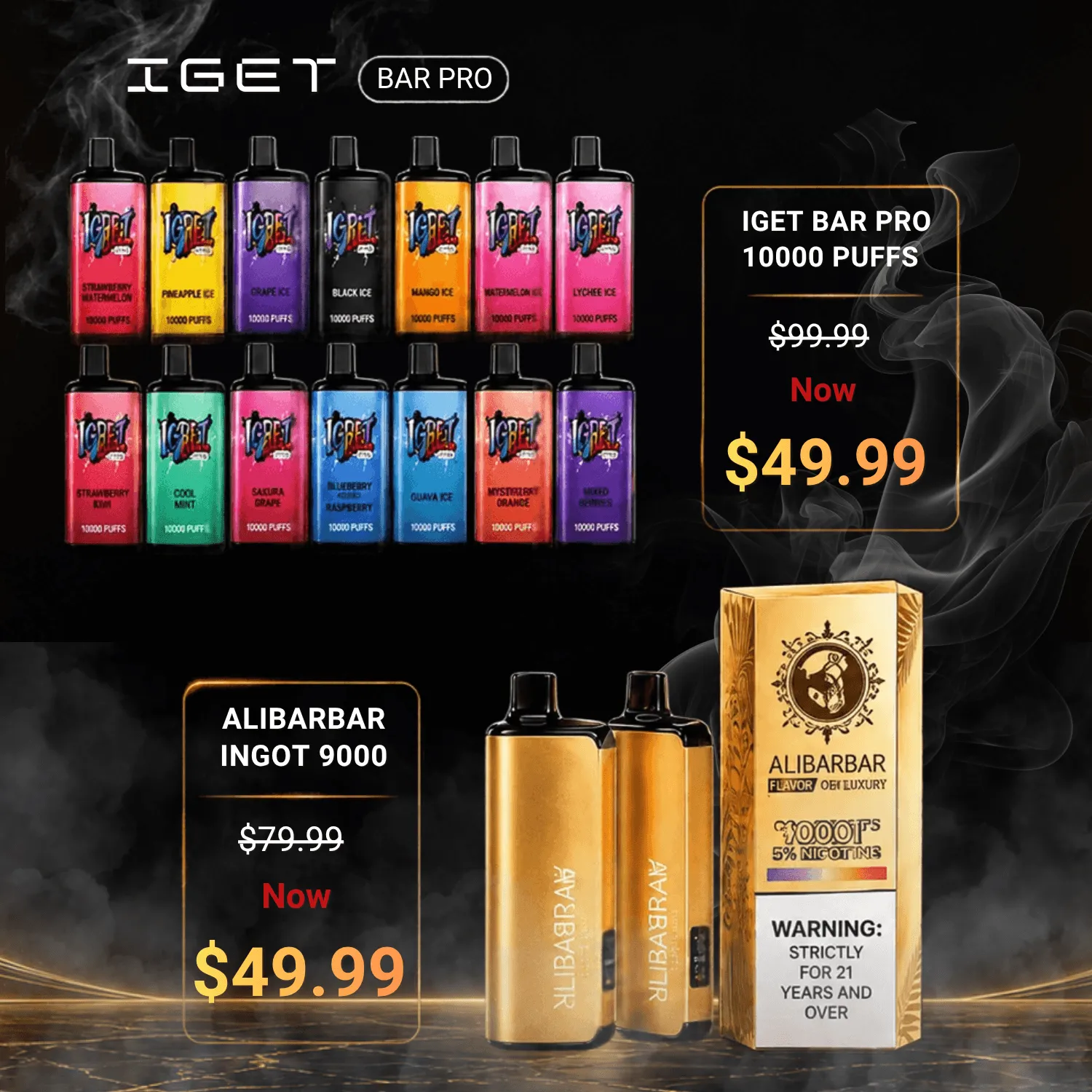

Can You Bring a Vape Into Australia? The short answer is yes—but only if you meet strict conditions covering why you need it, how you carry it, and how much you bring. Australia provides a narrow traveller exemption for therapeutic use. Recreational use on its own does not qualify.
Tourists, returning residents, and business travellers all face the same federal import controls. The rules cover nicotine and nicotine-free products, disposable vapes, liquids, devices, and accessories. Customs requirements are also separate from airline battery rules. A little preparation can help you avoid delays, confiscation, fines, or prosecution.
1. Can You Bring a Vape Into Australia Legally?
Yes, an eligible traveller can bring limited vaping goods into Australia by aircraft or ship. Every condition of the traveller exemption must be met, though. The goods must arrive with you in accompanied baggage, and you must stay within all three official quantity limits.
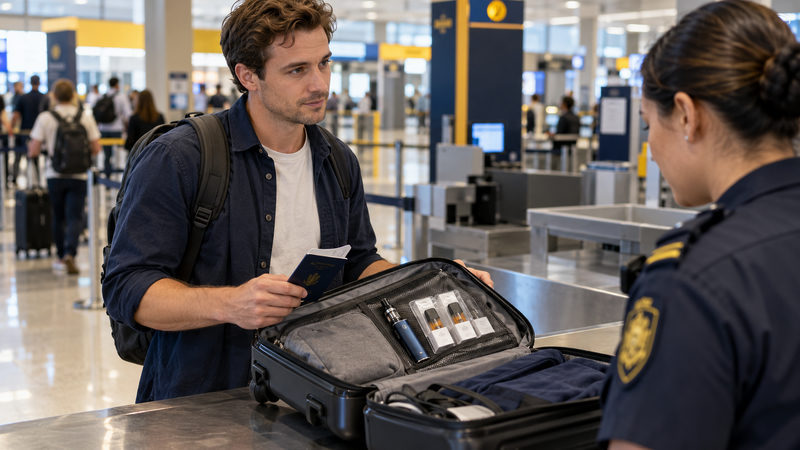
The goods must be used for the traveller’s therapeutic treatment. They can also be intended for someone under the traveller’s care, provided that person arrives on the same aircraft or ship. A parent, for example, could carry qualifying products for an accompanying adult family member in their care.
Therapeutic purpose matters
The exemption does not cover ordinary recreational use alone. Bringing a disposable vape purely for social use, for instance, may not meet the therapeutic-treatment requirement. Treatment can include quitting smoking or managing nicotine dependence. If an officer asks, describe your intended use honestly.
Eligibility does not depend on citizenship or residency. An international tourist may qualify under the same conditions as a returning Australian resident, and so may a business traveller. What matters is the journey, the therapeutic purpose, the baggage arrangement, and the quantities involved.
Australia uses a broad definition of vaping goods. The controls cover reusable devices, disposable vapes, e-hookahs, vape liquids, liquid nicotine, and many accessories—even products that make no medical claims. A damaged, incomplete, or temporarily unusable device may still be treated as a regulated vape.
Nicotine-free products are not exempt
A zero-nicotine label does not automatically get a product around these controls. Nicotine-free devices, liquids, and disposable vapes generally face the same import restrictions. The product’s design and intended use for vaping are what count. Simply removing the nicotine does not create a general border exemption.
Lawful importation and possession after arrival are two separate issues. Federal vaping laws do not generally criminalize genuine personal possession of vaping goods that were imported lawfully. Unlawful supply or commercial possession, however, can lead to serious enforcement action. States and territories may also set additional rules for possession, use, and permitted locations.
2. Australia’s Vape Traveller Exemption and Quantity Limits
Each eligible traveller may bring no more than two vapes, 20 qualifying accessories, and 200 mL of liquid vaping substance. All three limits apply at the same time; they are not alternative allowances. Staying within one limit does not make it acceptable to exceed another.

Take Mia as an example. She carries two reusable devices, 15 prefilled pods, and two 60 mL refill bottles. That gives her two devices, 15 accessories, and 120 mL of liquid, all within the numerical limits. She must still meet the remaining conditions, including therapeutic purpose and accompanied baggage.
How to count your products
Count everything before leaving home, whether opened or unopened. A partly used bottle still contributes to the liquid total, and a pod removed from its box still counts as an accessory. Opened products are not personal effects that sit outside the rules.
- Devices: The limit covers no more than two qualifying vapes.
- Accessories: The limit covers 20 cartridges, capsules, pods, or similar qualifying items.
- Liquid: All liquid vaping substance must remain within a combined 200 mL ceiling.
Disposable vapes are vaping goods too. If they otherwise qualify, each disposable generally counts toward the two-device limit. Three disposable nicotine vapes, for example, would exceed that limit. It makes no difference if the third device contains only a small amount of liquid.
Refill bottles count toward the combined 200 mL liquid allowance, while prefilled cartridges, capsules, and pods count toward the 20-accessory allowance. Carrying both formats? Count each category separately and carefully. Nicotine-free versions remain subject to the same limits.
Accompanied baggage is essential
The goods must enter Australia with the eligible traveller in accompanied baggage. A cabin bag can meet that customs requirement because it travels with you. Postal parcels, courier deliveries, and unaccompanied freight cannot. Sending a vape separately before or after your trip places it under a different import pathway.
Going over a limit does not merely mean paying extra tax. The excess may fall outside the exemption and become a prohibited import, allowing border officers to detain or seize it. These limits are not like a duty-free allowance where you can simply pay for anything extra.
Keep products in identifiable packaging when practical, along with labels and receipts showing their type, volume, and ingredients. A prescription, treatment plan, or doctor’s letter may help demonstrate therapeutic intent. Still, ordinary vaping goods that meet the traveller exemption do not require these medical documents solely for importation.
3. Customs Declarations, Documents, and Import Penalties
Australian Border Force guidance lists vaping goods among the items travellers should declare. Complete your Incoming Passenger Card accurately and present every vaping product if an officer asks. Splitting devices and liquids between different bags to hide them can quickly raise suspicion.
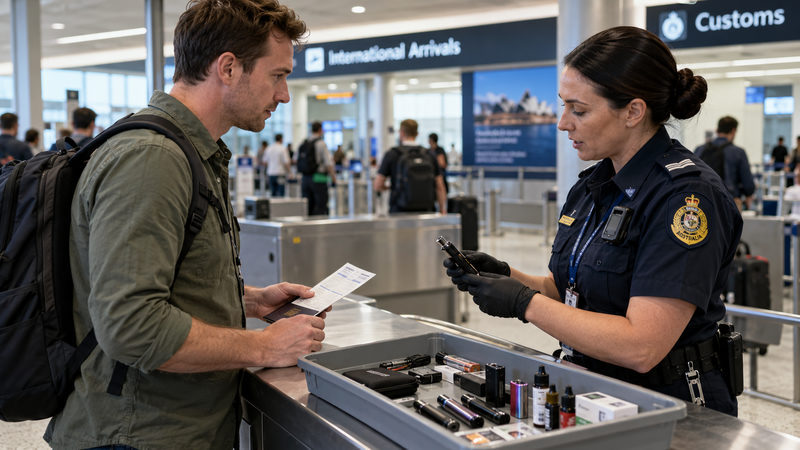
If you are unsure, declare the products and ask an officer. An honest declaration gives border staff the information they need to assess both the goods and your circumstances. Declaration alone does not guarantee you can keep them, however. Every relevant import condition still has to be satisfied.
What documents should you carry?
A prescription or doctor’s letter is not required merely to import ordinary vaping goods under this exemption. Even so, supporting documents can make the assessment smoother. A treatment plan may help explain the therapeutic purpose, while a clear product label can confirm the nicotine strength, ingredients, and bottle volume.
- Keep original labels and packaging where possible.
- Retain receipts showing the product name and quantity.
- Carry a prescription, treatment plan, or medical letter when available.
- Keep ingredient information for liquids with unclear labels.
- Know which accompanying person will use each product.
Know where each item is packed before you reach the inspection point. You should be able to produce devices, spare pods, cartridges, and refill bottles without a long search. Officers may need to verify exact quantities, inspect the packaging, or ask how the products will be used for treatment.
What can happen when the rules are breached?
Breaking the rules can lead to detention, seizure, or destruction of the goods. Authorities may also issue an on-the-spot fine. More serious cases can result in prosecution and substantial financial penalties, while false or misleading declarations may cause problems beyond the loss of the products themselves.
Australian Border Force may refer a suspected unlawful import to the relevant regulator. Officers can consider the quantity, concealment, intended use, and product contents. Controlled drugs bring stricter legal requirements into play. Although cooperation does not make an unlawful import legal, accurate disclosure remains essential.
Imagine a traveller arriving with four devices and 30 pods. They should not expect officers simply to remove two devices and ten pods and return the rest. The assessment may cover the entire import and the surrounding circumstances. Anyone planning to exceed a limit should seek official guidance before departure.
Private individuals generally cannot obtain commercial vaping import permission for personal use, so a business-style permit is not an easy workaround. Cutting down the quantity before travelling is usually the safer choice. Do not mail the surplus to your accommodation either, because personal overseas orders remain prohibited.
4. Carry-On Packing, Vape Batteries, and Airline Rules
Customs permission does not cancel aviation safety requirements. Your device could qualify for the traveller exemption and still breach an airline’s dangerous-goods rules. Check both sets of requirements before packing, as airport security and transit authorities may impose additional conditions as well.
Vapes and electronic cigarettes must be carried on your person or placed in carry-on baggage. Never pack them in checked luggage. Lithium batteries can overheat or catch fire, and trained cabin crew can respond far more quickly if a device begins smoking, heating up, or failing.
Pack batteries against short circuits
Spare lithium batteries belong in carry-on baggage too, with each battery individually protected against short circuits. Original retail packaging, insulated terminals, or separate protective pouches can work. Do not let loose batteries come into contact with coins, keys, cables, or other metal objects.
Turn every device off before boarding. Lock the controls or use another reliable method to prevent accidental activation, and protect the heating element from pressure and damage. If the batteries are removable, follow the operating airline’s directions on removing and storing them separately.
Passengers generally cannot use or charge vapes during a flight. Charging in the cabin can increase the risk of a battery incident that is difficult to control. Follow all cabin-crew instructions, and remember: permission to carry a vape does not mean permission to use it onboard.
Liquids and pressure changes
E-liquid must also comply with security rules at the departure airport. On many international flights, liquids carried in the cabin must be in containers holding no more than 100 mL, usually inside the required transparent bag. Screening arrangements can differ between airports and transit points.
Customs may allow up to 200 mL in total, but airport security may cap each individual container at 100 mL. Two sealed 100 mL bottles, for example, could satisfy both numerical limits. One 200 mL bottle might not pass cabin screening. Check the departure airport’s exact liquid policy before you pack.
Changes in cabin pressure can cause tanks, bottles, and pods to leak. Close airflow controls, tighten refill-bottle caps, and place liquids in a leak-resistant pouch with absorbent material. Keeping devices upright may also help, though it cannot prevent every leak.
Check every operator and transit point
Read the operating airline’s dangerous-goods policy before departure. On a codeshare ticket, the operating carrier may be different from the airline displayed most prominently on your booking. Check battery watt-hour limits and any approval requirements too, as the stricter carrier’s policy may govern the trip.
- Confirm the device can travel in the cabin.
- Check spare-battery quantity and watt-hour limits.
- Review codeshare and connecting-airline policies.
- Check every transit country’s vaping restrictions.
- Confirm departure and transfer-airport liquid rules.
For customs purposes, your cabin bag can count as accompanied baggage. Aviation rules, however, determine exactly where battery-powered devices must be carried. In practical terms, keep devices and spare batteries out of checked luggage and protect them properly inside your carry-on allowance.
5. Cannabis Vapes, THC Products, IQOS, and Heat-Not-Burn Devices
Cannabis and THC vaping products need far more caution. Several legal regimes may apply at once, including controlled-drug, medicine, customs, and state laws. The standard limits for vaping goods do not authorize cannabis or any other controlled substance. A THC cartridge is not treated like an ordinary nicotine pod.
A disposable cannabis vape must meet separate traveller requirements for medicines and controlled substances. It is not covered by the ordinary vaping-goods traveller exemption. Recreational cannabis and THC vapes should not be brought into Australia. Buying a product legally overseas does not make it lawful at the Australian border.
Reusable devices create two assessments
A traveller may use medicinal cannabis in a reusable vape. In that case, the cannabis itself must meet the relevant traveller rules for medicines or controlled substances. The reusable device must separately qualify under the vaping-goods traveller exemption. Passing one assessment does not mean you automatically pass the other.
Keep controlled medicines in their original packaging and carry a valid prescription or doctor’s letter identifying the medicine and treatment. Confirm the allowed supply and required paperwork before travelling. The exact rules can depend on the substance, quantity, traveller relationship, and intended use.
A foreign cannabis card alone may not prove compliance with Australian federal requirements. Transit countries may also prohibit the medicine even if Australia permits you to bring it in. When the legal position is unclear, get written guidance that addresses your specific product.
IQOS and heat-not-burn products
IQOS devices, heatsticks, and similar heat-not-burn goods are controlled imports as well. They may require advance permission instead of falling automatically within the ordinary vape exemption. Because their classification can involve both vaping and tobacco controls, airline approval alone is not enough.
Heatsticks containing tobacco may also be subject to tobacco quantity limits, declarations, duty, and tax. Permission under one legal category does not erase obligations under another, and permission for the device may not cover its tobacco consumables. Border officers may consider both the product’s composition and its packaging.
Before travelling, ask the Therapeutic Goods Administration, Office of Drug Control, and Australian Border Force for product-specific guidance. Provide details about the device, consumable, active substance, and exact quantity. Be clear about whether it contains tobacco, cannabis, THC, nicotine, or another controlled ingredient.
6. Buying Vapes After Arrival and the Pre-Flight Checklist
Once in Australia, travellers cannot order additional vaping goods from overseas retailers for personal importation. The ban covers disposable vapes, devices, accessories, liquids, and therapeutic vaping packs—even when the buyer has a prescription. An overseas website cannot legally top up your travel supply.
For consumers, lawful access generally comes through participating Australian pharmacies for therapeutic purposes such as quitting smoking or managing nicotine dependence. Products can contain nicotine or be nicotine-free. Pharmacies are not required to stock or supply therapeutic vaping products, though.
Pharmacy access for adults
Adults aged 18 or older may obtain qualifying products containing no more than 20 mg/mL nicotine without a prescription. First, a participating pharmacist must hold a consultation and decide whether supplying the product is clinically appropriate. State or territory law must also allow this pharmacist-only route.
A prescription is needed for nicotine concentrations above 20 mg/mL. People under 18 also need one where local law allows supply, although some jurisdictions may ban supply to minors altogether. A prescription may also be necessary where local law does not permit pharmacist-only access or when the patient has complex needs.
Zero-nicotine vaping goods are still limited to lawful pharmacy supply; the absence of nicotine does not put them back on ordinary retail shelves. Pharmacists may also decline to supply a product after considering the circumstances. Do not assume every pharmacy will have suitable stock available.
Understand local rules after entry
Federal permission at the border does not answer every legal question after arrival. States and territories can regulate possession, age limits, supply, and where vaping is allowed. Smoke-free laws commonly cover vaping in public places, so check the rules for your destination and anywhere else you plan to visit.
A product might enter Australia lawfully under the federal exemption yet still be illegal to use in a restaurant, station, workplace, or covered public area. Hotels may impose their own no-vaping policies too. Follow all posted signs and staff instructions.
Pre-flight checklist
- Confirm that the goods support a genuine therapeutic purpose.
- Count every device, disposable vape, pod, cartridge, capsule, and liquid container.
- Stay within two vapes, 20 qualifying accessories, and 200 mL of liquid.
- Keep all vaping goods in accompanied baggage.
- Place devices and spare batteries in carry-on baggage.
- Protect every spare battery against short circuits.
- Switch devices off and prevent accidental activation.
- Seal liquids against leakage and follow airport liquid limits.
- Retain labels, receipts, prescriptions, or treatment documents when available.
- Check operating-airline, codeshare, airport, and transit-country rules.
- Declare the vaping goods accurately at the Australian border.
Before leaving, check the latest guidance from the Therapeutic Goods Administration and Australian Border Force. Review advice from the Civil Aviation Safety Authority and your airline’s dangerous-goods policy as well. If relevant, consult the Office of Drug Control and the health authority for your destination state or territory.
This information is general guidance, not legal or medical advice for an individual situation. Australian rules covering borders, aviation, medicines, and vaping can change. If your product or circumstances leave any doubt, seek current advice from an official source or qualified professional.
Conclusion
Eligible travellers can bring no more than two vapes, 20 pods or similar accessories, and 200 mL of vape liquid. The goods must be for therapeutic treatment and must arrive in accompanied baggage. These controls apply to nicotine and nicotine-free products alike. Cannabis products and heat-not-burn goods, however, may need separate approval.
The traveller exemption does not override customs declarations, airline safety rules, controlled-drug requirements, or local restrictions. Count your products and pack them correctly before leaving. Check current guidance from the TGA, Australian Border Force, CASA, your airline, and local authorities—and declare all vaping goods honestly when you enter Australia.