
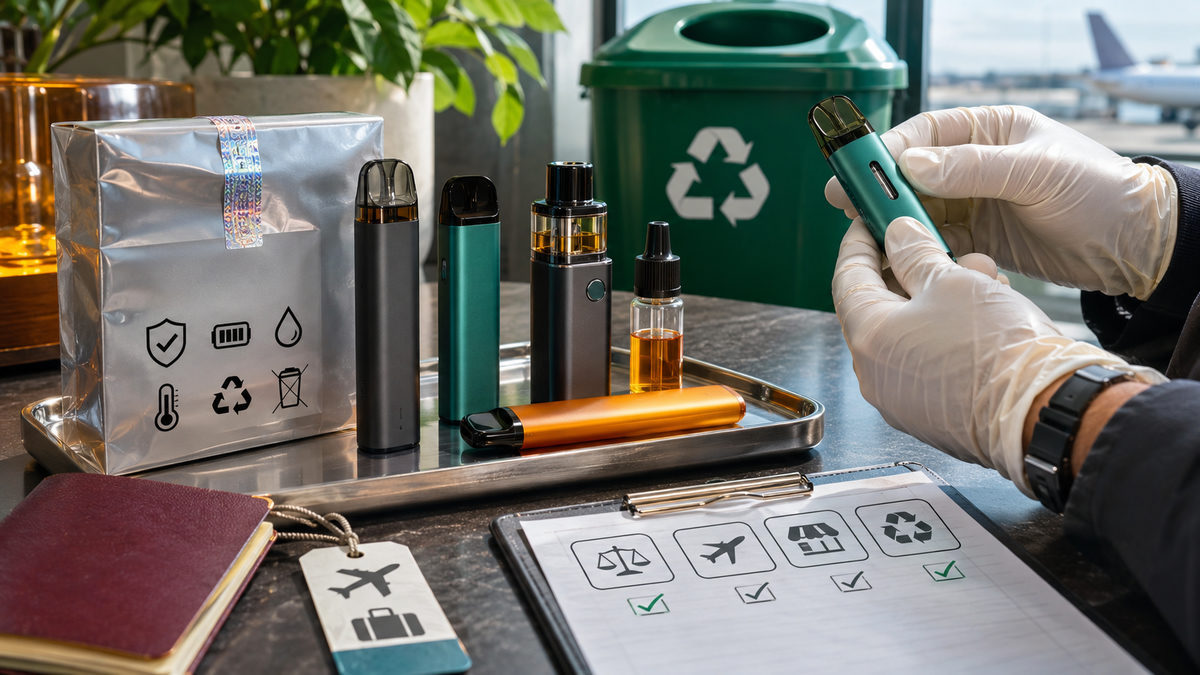
What does a claim of thousands of puffs really tell you about a vape device? Assessing ALIBARBAR Vape: Product Types and Regulatory Considerations involves more than comparing flavors, batteries, and impressive numbers. Consumers and businesses also need to look at authenticity, nicotine exposure, battery safety, and local law. A product listing alone cannot prove that a device is genuine, authorized, or legal at its destination.
Specifications can vary by country, supplier, and product generation. Two packages with similar names may even list different capacities or nicotine strengths. This neutral guide covers common formats, specifications, ingredients, safety checks, and compliance questions. Still, buyers should verify every claim using official documentation and information from the relevant regulatory authorities.
1. ALIBARBAR Vape: Product Types and Regulatory Considerations
Understanding the Brand and Available Formats
An ALIBARBAR vape generally means a vaping device sold under the ALIBARBAR name. The name by itself, however, does not confirm the manufacturer, specifications, authorization, or origin. Documentation issued by the manufacturer is stronger evidence than descriptions copied onto retailer pages. Buyers should distinguish verified technical details from promotional claims and marketplace content.
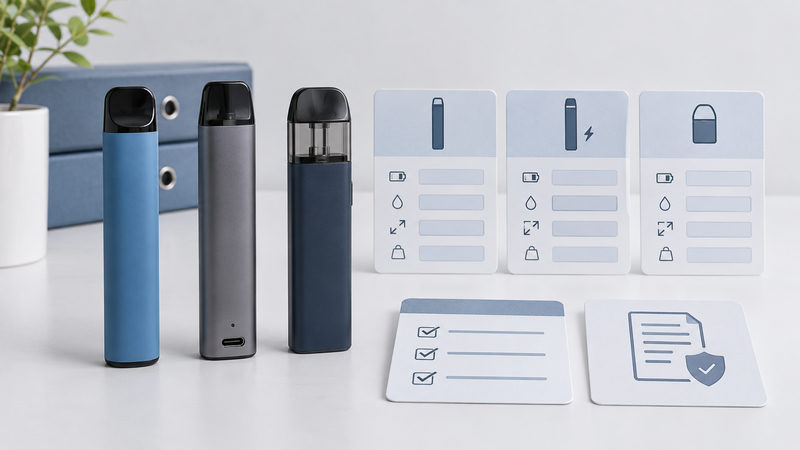
Several device formats may appear in listings, though their actual availability needs independent confirmation. A conventional disposable comes prefilled and usually works until the liquid or battery is depleted. A rechargeable-disposable has a battery that can be charged, but its liquid reservoir is generally sealed. It is still disposable because the tank cannot be replaced and the internal parts are not serviceable.
A pod-based format pairs reusable hardware with a replaceable or refillable pod. But does ALIBARBAR offer such a model in every market? Buyers should include a pod model in their comparisons only after confirming its official availability. They should also check whether replacement pods comply with the destination market’s rules.
Why Market Variation Matters
Model names, flavor labels, nicotine concentrations, and packaging can differ from one market to another. Manufacturers may also revise batteries, displays, coils, or reservoir sizes while keeping familiar branding. Importers sometimes carry products originally intended for another country. For that reason, buyers should inspect the exact stock-keeping unit, package, and batch rather than relying on photographs.
| Product format | Intended use cycle | Charging capability | Replaceable pod or tank | Typical specification fields | Disposal method | Principal compliance questions |
|---|---|---|---|---|---|---|
| Conventional disposable | Used until depleted | Usually none | No | Puff estimate, liquid volume, nicotine strength, coil type | Approved battery or electronic-waste channel | Are disposables, capacity, nicotine, and flavors permitted? |
| Rechargeable-disposable | Recharged until the sealed liquid supply ends | Usually USB | No | Battery capacity, charging port, liquid volume, display, puff estimate | Approved battery or electronic-waste channel | Does it meet authorization, charging, labeling, and capacity rules? |
| Pod-based device, if verified | Hardware reused with compatible pods | Usually USB | Yes | Pod capacity, battery size, coil resistance, charging method | Separate device, battery, and pod disposal where required | Are the device and every pod registered or otherwise permitted? |
A seller offering a product does not prove its authorization, safety, authenticity, or legal status. Advertised popularity is no better as evidence of regulatory compliance. Nor can a high puff figure replace ingredient records, laboratory evidence, or formal approval. Promotional language should always be treated as a claim that needs checking.
2. Product Specifications, Puff Counts, Nicotine, and Flavors
Reading Performance Specifications
Useful specifications include puff count, battery capacity, liquid volume, charging method, airflow, display features, and coil technology. Battery capacity is usually shown in milliampere-hours, or mAh, while liquid volume is stated in milliliters, or mL. Listings may also mention USB-C charging, adjustable airflow, status screens, or mesh heating elements.
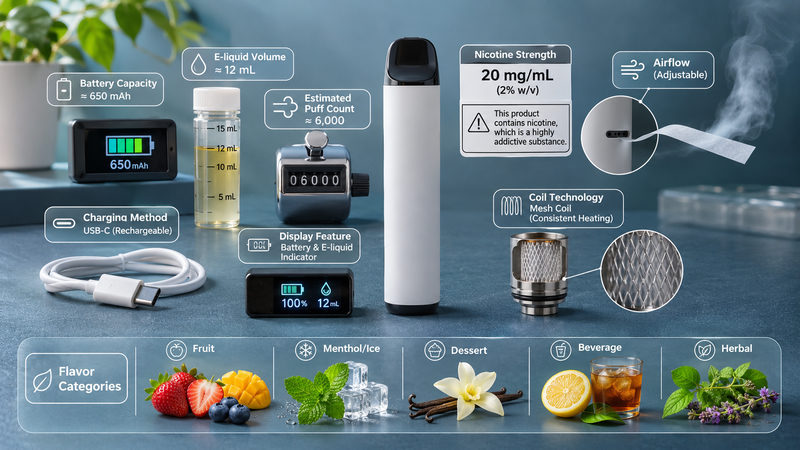
These details are worth comparing only after the model-specific information has been confirmed in reliable documents. One model, for example, may use a compact battery designed for repeated charging. Another may combine a larger battery with a sealed reservoir and no charging port. Bigger numbers do not necessarily mean better construction, safer operation, or a lawful design.
Mesh coils may offer a wider heating surface than some traditional wire designs. Airflow systems, meanwhile, can affect draw resistance and aerosol production. Displays might show battery level, estimated liquid remaining, or operating indicators. These features still need verification, since copied listings often mix details from different product generations.
Why Puff Counts Are Estimates
An advertised puff total is only an estimate, not a guaranteed number of inhalations. Long draws use more liquid and battery energy than short, laboratory-style puffs. Frequent use, open airflow, and high aerosol output may also lower the total a user actually gets. Battery condition and liquid delivery make a difference too.
Imagine two adults using identical devices. One takes short, occasional draws; the other takes longer draws throughout the day. Their final puff totals may be very different. Buyers should not use the headline claim to calculate an exact service life.
Battery size, liquid volume, and charging capability all influence how a device performs. A rechargeable battery may allow the user to consume liquid left after the first charge runs out. Charging, however, cannot replenish depleted e-liquid in a sealed reservoir. A large reservoir may also raise compliance issues in markets that cap liquid capacity.
Nicotine Strength and Labeling
ALIBARBAR products may contain nicotine, but formulas can vary by model and jurisdiction. Some markets limit nicotine concentration; others require prescriptions or ban nicotine vapes altogether. Buyers should inspect the physical label instead of assuming that every flavor uses the same formula. Even a nicotine-free claim needs support from trustworthy product documentation.
Nicotine may be listed as a percentage or in milligrams per milliliter. A 2% label commonly corresponds to approximately 20 mg/mL, while 5% commonly corresponds to approximately 50 mg/mL. Formulation methods and local labeling conventions can affect how those figures are interpreted, so the package and technical file remain the deciding sources.
Flavor Categories and Verification
Verified flavors can be grouped without resorting to exaggerated or youth-oriented descriptions. Availability may change, though, and some jurisdictions restrict named flavors. Broad categories may include:
- Fruit: single-fruit or mixed-fruit formulations.
- Mint or cooling: mint profiles and cooling formulations.
- Beverage: flavors described using drink-inspired profiles.
- Confectionery: sweet profiles where local rules permit them.
A flavor name does not disclose every ingredient or prove that the product is legally available. The same familiar name may even refer to different formulations from different suppliers. Check the package label, official technical documents, and regulator databases first. Copied marketplace listings may show outdated capacities, images, or nicotine information.
3. Ingredients, Health Risks, and Responsible Adult Use
Typical Ingredients
Vape liquids commonly include propylene glycol, vegetable glycerin, flavoring substances, and nicotine where applicable. They may also contain cooling agents, acids, sweeteners, or other additives. Only product-specific records can establish the exact mixture. A general ingredient list should never be taken as confirmation of what is inside a particular ALIBARBAR model.

Heating the liquid creates an aerosol for the user to inhale. That aerosol may contain irritants or harmful substances originating from the liquid, the heating process, or the device components. Vaping does not create conventional tobacco smoke, but that does not make it risk-free. Exposure can also vary with product quality and operating conditions.
Nicotine and Accidental Exposure Risks
Nicotine can lead to dependence and withdrawal symptoms. It may increase heart rate and cause nausea, dizziness, or other effects. Leaking nicotine liquid can also enter the body if swallowed or absorbed through the skin. For children and animals, even small amounts of concentrated liquid can pose serious poisoning risks.
Store devices and liquids securely. Do not touch leaked liquid with bare skin, and follow appropriate cleanup guidance. If poisoning is suspected, contact a suitable poison-control or medical service promptly. Seek urgent medical attention for severe symptoms, breathing problems, seizures, or reduced consciousness.
Who Should Avoid Vaping
Minors and non-smokers should not use vape products. Pregnant people should also avoid nicotine and discuss any exposure with a qualified healthcare professional. Some medical conditions may create additional risks. Anyone who has been advised to avoid nicotine should follow that professional guidance.
Careful wording matters because the evidence may differ across products and populations. ALIBARBAR products should not be described as safe, healthy, harmless, or approved for smoking cessation without authoritative, product-specific evidence. Lower-risk claims should also be avoided unless reliable evidence and local law allow that exact wording. Neutral information gives adults room to assess the risks without hiding the uncertainty.
4. E-Cigarette Laws, Import Rules, and Travel Restrictions
A Jurisdiction-Neutral Legal Checklist
Vape laws vary widely between countries and, in some places, between cities or states. Before buying, check whether the exact product is authorized for that market. Its nicotine concentration and liquid capacity must also fall within local limits. Buyers should investigate restrictions on disposables, flavors, public use, and possession as well.
A device that complies with one market’s rules may breach another market’s requirements. A nicotine strength that is lawful at the point of origin, for example, might exceed the destination limit. Packaging prepared for one country may also be missing warnings required in another. International branding is never a guarantee of international compliance.
Sales and Product Requirements
Sales rules may establish a minimum purchasing age and call for reliable age verification. Online retailers may have to perform stronger checks during both ordering and delivery. Businesses might also need retail licenses, tax registration, or special permission. In some jurisdictions, distance sales are restricted or nicotine products require a prescription.
Product requirements often go far beyond the customer’s age. Authorities may demand registration, authorization, ingredient reporting, emissions testing, or regulator notification. They can also limit nicotine concentration, refill volume, or total liquid capacity. Requirements may extend to child-resistant packaging, tamper evidence, local-language labels, and mandatory health warnings.
- Confirm authorization or registration for the exact model and variant.
- Check nicotine, reservoir, refill, and packaging limits.
- Review ingredient, emissions, and notification obligations.
- Verify warnings, batch information, and local-language requirements.
- Determine whether flavor or disposable-device restrictions apply.
Marketing and Promotional Controls
Marketing laws may restrict advertising, sponsorships, social media posts, and product displays. Discounts, free samples, testimonials, and unsupported health claims may also be prohibited. Images or wording likely to appeal to minors can create particularly serious compliance issues. On top of that, platform policies may be stricter than government rules.
Retailers need to review the entire presentation, not just the written description. A product photograph, for instance, might show prohibited claims or noncompliant packaging. An influencer’s informal post can still qualify as commercial promotion. Every campaign therefore needs legal and platform-specific review before it goes live.
Imports, Customs, and Online Orders
Different rules often apply to personal and commercial imports. Customs authorities may require permits, set quantity limits, impose duties or carrier conditions, or ban imports completely. Commercial shipments can also require an authorized importer and extensive technical documentation. Goods that fail to comply may be delayed, returned, seized, destroyed, or subject to financial penalties.
A seller’s willingness to ship says nothing about whether the product is legal at its destination. Checkout software may accept an address even where importation or possession is prohibited. Buyers remain responsible for understanding local requirements. Check the rules before paying rather than trusting a delivery promise.
Online purchases may create traceability problems too. A distant seller might be unable to provide genuine batch records, compliant warnings, or recall support. Payment protection cannot turn an unlawful import into a lawful one. Businesses should seek customs advice whenever classification, permits, or importer responsibilities are unclear.
Air Travel and Changing Rules
Lithium-battery vape devices generally need to travel in carry-on baggage, not checked baggage. Each device should be protected against accidental activation, short circuits, crushing, and leakage. Passengers usually cannot use or charge vapes on an aircraft. Airlines may apply stricter conditions or quantity limits.
Before traveling, check the rules of the airline, departure airport, transit country, and destination. A device permitted aboard the aircraft may still be illegal to possess on arrival. Security screening requirements are not a substitute for customs or public-health law. Passing one checkpoint does not confirm full legality.
Vape rules can change quickly, sometimes across several levels of government. Verify national, state, provincial, municipal, customs, aviation, and public-health requirements close to the date that matters. Consult official regulator publications and current legal guidance when necessary. Retail listings, forum discussions, and old travel advice are not dependable sources of legal confirmation.
5. Authenticity, Labeling, and ALIBARBAR Vape Safety
Authenticity Checks and Warning Signs
Begin by checking any security or verification code through an official channel. Compare the packaging, seals, spelling, batch details, and manufacturer information against verified references. Ask the seller for invoices and traceable sourcing records as well. A legitimate supply chain should be able to answer reasonable questions about origin and distribution.
Missing warnings, altered codes, poor printing, and mismatched specifications can all signal a counterfeit. An unusually low price may also warrant a closer look. Leakage, damaged packaging, or missing batch information should stop the purchase. So should a seller who cannot produce sourcing documents.
Visual checks only go so far. Convincing packaging cannot conclusively prove authenticity, ingredient quality, regulatory authorization, or legal status. Counterfeiters may copy colors, logos, and verification layouts with surprising accuracy. Package inspection should therefore be combined with official verification and supply-chain evidence.
Reviewing the Label
Look for nicotine content and ingredient information where the law requires it. The label should also state the product capacity and identify the responsible manufacturer or importer. Check for batch data, age restrictions, health warnings, and disposal symbols. Any required local-language text should be clear, complete, and securely attached.
Pay attention to inconsistencies. The outer package might state one liquid volume while the seller advertises another, for example. A nicotine percentage may likewise conflict with the figure shown in milligrams per milliliter. Stop and investigate these differences before using, stocking, or distributing the product.
Charging, Damage, and Storage
Follow the directions for the exact model and use compatible charging equipment. Charge the device on a stable, nonflammable surface and keep an eye on it. Keep it away from heat, water, direct sunlight, and combustible materials. Once charging is complete, disconnect it as directed by the manufacturer.
Do not continue using a device that is swollen, punctured, leaking, or unusually hot. Apply the same caution after a severe impact or any abnormal operation. Never open, modify, crush, or attempt an unsafe repair. Keep a damaged device away from combustible materials and seek suitable disposal guidance.
Store devices upright if the instructions recommend it. Protect them from extreme temperatures, moisture, keys, coins, and other metal objects. Every device should remain out of reach of children and animals. Proper storage helps prevent accidental activation, poisoning, leaks, and battery damage.
6. Retailer Compliance, Distribution, and Responsible Disposal
Retailer and Distributor Duties
Retailers should verify each customer’s age using legally accepted procedures. They must hold any required licenses, sell only permitted products, and display mandatory notices. Online sellers also need compliant controls for ordering, identity checks, and delivery. Staff training should cover refusal procedures and ways to document difficult transactions.
Distributors have wider responsibilities across the supply chain. They should verify product authorization, importer identity, packaging compliance, and tax treatment. They also need traceable batch records and dependable recall procedures. In some markets, products must be reported to regulators before entering commerce.
Businesses should clearly establish which party is responsible for each legal duty. A foreign manufacturer, for example, may not fulfill the obligations placed on a local importer. A wholesaler’s assurance may not shield a retailer from enforcement either. Written responsibilities improve accountability, but they cannot override statutory obligations.
Advertising and Due-Diligence Records
Every description, image, promotion, testimonial, sponsorship, and social post needs review. Look for prohibited health claims, youth appeal, flavor restrictions, and unlawful discounts. Make sure the displayed specifications match the exact model in stock. Remember that platform rules may ban content that local law would otherwise permit.
Keep supplier invoices, authenticity evidence, and batch information. Where required, retain technical files, test reports, customs paperwork, and tax records too. Consumer complaints, safety incidents, withdrawals, and recalls should all be documented. Well-organized records can speed up investigations and help prevent affected batches from staying on sale.
- Record the supplier, importer, model, variant, and batch number.
- Retain authorization, testing, labeling, and authenticity evidence.
- Document customs clearance, taxes, complaints, and corrective actions.
- Maintain recall contacts and a practical product-withdrawal procedure.
Responsible Consumer and Business Disposal
Disposable and rechargeable vapes contain electronic parts and lithium batteries. They should not go into household trash or curbside recycling. Crushing equipment can damage the batteries and cause fires. Use an approved battery or electronic-waste collection service that accepts vape devices instead.
Some local programs treat residual nicotine liquid differently from ordinary electronics. Consumers should ask the collection provider how the device needs to be prepared and packaged. Do not remove the battery or pour liquid down a drain. Keep used devices secure until proper disposal is available.
Businesses should work through approved battery, electronic-waste, hazardous-waste, or producer-responsibility channels. Damaged lithium batteries may need special containers, labels, storage, and transport arrangements. Employees should be trained to respond to leaks, overheating, and fire hazards. Before collection, waste contractors should confirm that they accept mixed vape products.
Final Compliance Checklist
- Verify that the exact product and variant are lawful.
- Confirm customer age controls and retail licensing duties.
- Check nicotine, capacity, disposable-device, and flavor limits.
- Validate registration, authorization, labeling, and importer status.
- Review customs, duties, taxation, and commercial import requirements.
- Examine advertising, display, discount, and social media restrictions.
- Confirm battery transport, air-travel, storage, and charging rules.
- Arrange compliant collection, recycling, and damaged-battery handling.
Finish these checks before buying, importing, stocking, or advertising any device. Run through them again whenever laws, suppliers, packaging, or product generations change. A model that was once acceptable may become noncompliant after a rule change. Consistent due diligence helps protect consumers, workers, and businesses.
Conclusion
ALIBARBAR products can differ in format, liquid capacity, nicotine strength, flavor, and charging design. Puff counts are still estimates, shaped by user behavior and the condition of the device. Seller claims need to be checked against labels, official technical records, and regulator information. Large specifications by themselves do not prove quality, safety, authenticity, or legality.
Consumers and businesses also need to account for nicotine risks, counterfeit products, battery hazards, and responsible disposal. Authorization, import, marketing, and sales requirements depend on the relevant jurisdiction. Before buying, importing, stocking, or traveling with an ALIBARBAR vape, verify the exact model. Then check with current health, customs, aviation, and local regulatory authorities.







