
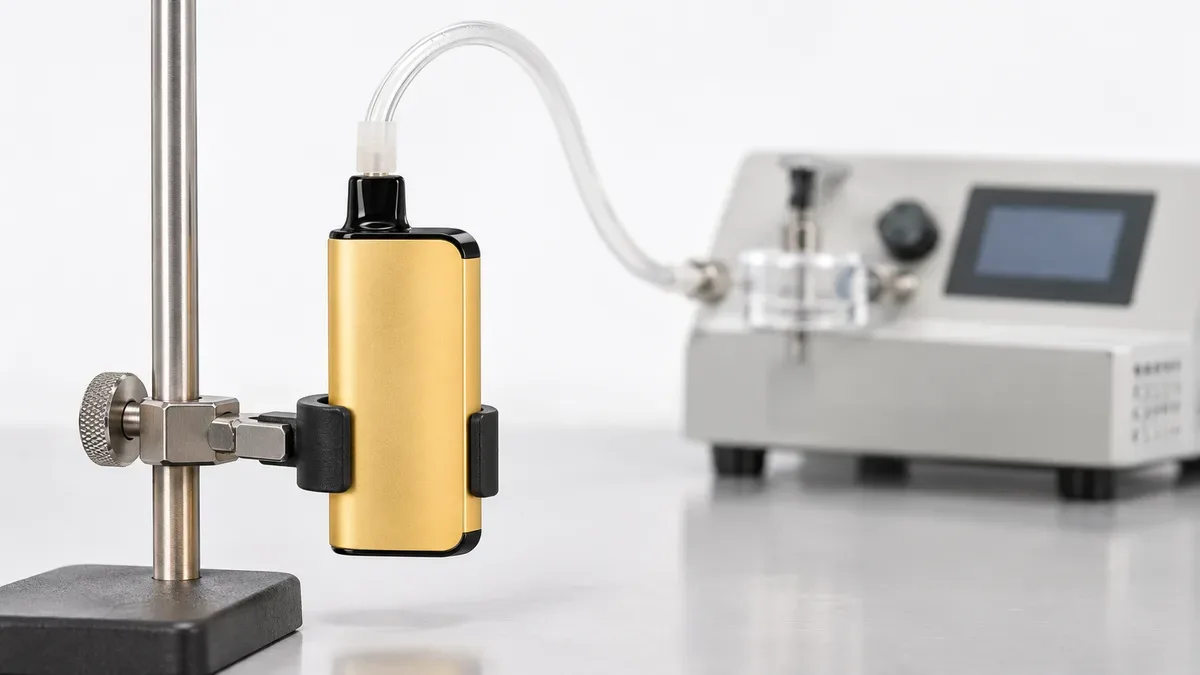
Does a device labeled for 9,000 puffs really deliver exactly 9,000 draws? ALIBARBAR INGOT 9000 Puffs: Understanding Puff Count Testing Methods begins with that deceptively simple question. In practice, the advertised number usually reflects controlled testing, not an identical result for every user. Therefore, your daily experience may differ considerably from the figure printed on the package.
Puff claims are difficult to compare without detailed testing information. Draw duration, airflow, equipment, rest intervals, and stopping rules can vary between tests. Moreover, human vaping habits are much less consistent than programmed machine cycles. Understanding those differences makes the 9,000-puff figure far more useful.
Below, you will see how manufacturers may calculate puff counts and how machine testing commonly works. You will also learn which variables change real-world results. Finally, a simple calculation will help you estimate a realistic lifespan based on your daily use.
1. What the ALIBARBAR INGOT 9000-Puff Rating Means
An advertised puff count represents an estimated number of successful activations under particular conditions. It does not guarantee precisely 9,000 satisfying draws from every individual device. Specifically, the test may use fixed draw lengths, controlled airflow, and regular cooling intervals. A person may use the product very differently.
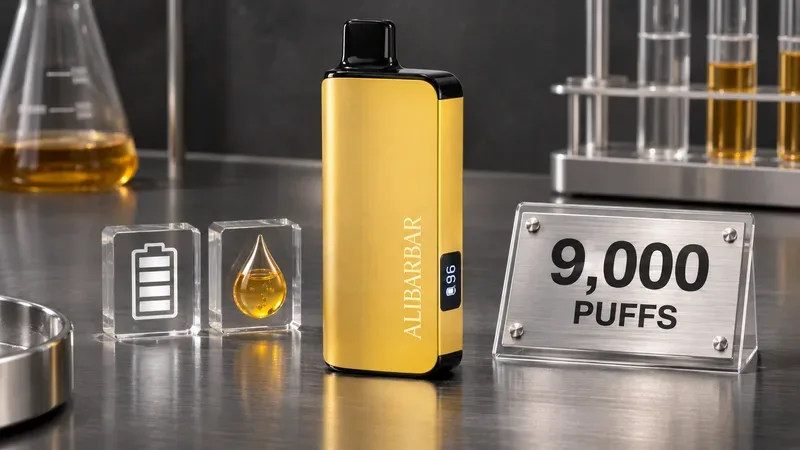
Puff count also differs from total vapor output. Two devices could each record 9,000 activations while producing different vapor quantities. For instance, one short machine puff may create much less vapor than one long human draw. Therefore, counting activations alone does not reveal the total amount of vapor delivered.
Puffs, liquid use, and calendar lifespan
E-liquid consumption measures how much liquid the coil vaporizes over time. Meanwhile, calendar lifespan describes how many hours, days, or weeks the device remains usable. These measures relate to puff count, but they are not interchangeable. A light user may keep a device much longer than someone who vapes frequently.
Several product systems influence the final puff total. These include the battery, e-liquid supply, heating coil, power delivery, airflow, and activation design. Moreover, each part interacts with the others during use. No single specification can reliably predict the complete lifespan by itself.
- Battery system: Supplies energy for heating and activation.
- E-liquid supply: Determines how much liquid remains available to the coil.
- Heating coil: Converts electrical energy into heat and vapor.
- Power delivery: Influences coil temperature and energy use during each draw.
- Airflow: Affects activation, cooling, draw resistance, and vapor production.
- Activation design: Determines when the device recognizes and records a puff.
Meaningful interpretation requires more than a number on the packaging. Ideally, the manufacturer should disclose its test parameters, sample size, endpoint, and recorded results. Additionally, a range across several samples provides more insight than one unusually strong result. Without those details, the claim remains difficult to reproduce or compare.
The central distinction involves repeatability. A machine can create the same programmed draw thousands of times. However, people naturally change their draw duration, pressure, frequency, and timing. That variation explains why two users can obtain very different lifespans from similar devices.
2. ALIBARBAR INGOT 9000 Puffs: Testing Methods Explained
Machine puff testing uses automated equipment to activate a vaping device repeatedly. The equipment applies controlled suction while sensors record whether the device responds. Moreover, the operator can program consistent conditions for every cycle. This approach reduces the unpredictable variation found in human use.
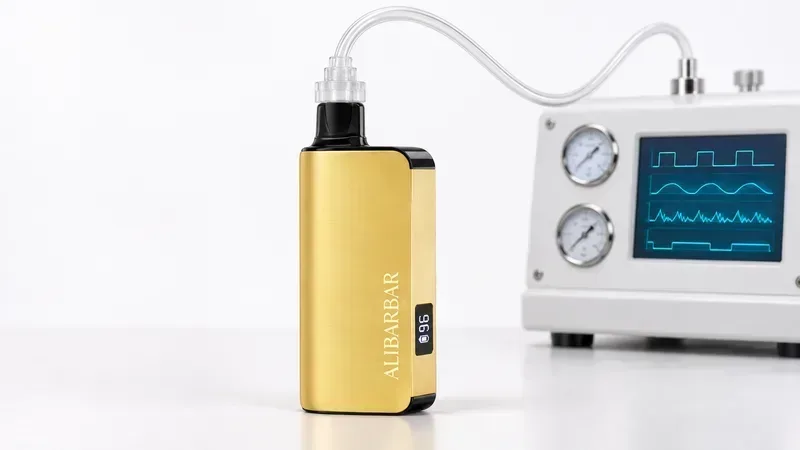
A puffing machine may hold one device or test several samples through separate channels. During each cycle, it draws air through the mouthpiece using a programmed profile. Specifically, the system can control how quickly suction begins and how long it continues. It can then pause for a defined interval before repeating the process.
Draw duration and volume
Draw duration describes how long each machine puff lasts. Draw volume describes the total air pulled through the device during that puff. Both values must accompany a reported result because they shape energy and liquid consumption. However, no single duration or volume should represent every product without supporting documentation.
Consider two hypothetical tests using the same device design. One test uses brief, gentle activations, while another uses longer and deeper draws. The first method may record more activations before reaching its endpoint. Meanwhile, the second may create more vapor during each activation and finish sooner.
That example shows why the headline puff number needs context. A 9,000-puff result from short cycles cannot automatically match 9,000 longer personal draws. Therefore, consumers should compare products only when the test profiles use equivalent conditions. Otherwise, the larger number may not indicate proportionally longer use.
Other controlled testing variables
Automated testing can control many additional variables. These include airflow rate, vacuum pressure, activation threshold, rest interval, ambient temperature, and device orientation. Furthermore, technicians may monitor humidity, device temperature, and electrical performance. Consistent controls help researchers repeat the procedure and investigate unexpected results.
- Airflow rate: Controls how quickly air passes through the device.
- Pressure or vacuum: Influences whether the draw sensor activates correctly.
- Rest interval: Determines the cooling and resaturation time between cycles.
- Ambient conditions: Keep temperature and humidity consistent between samples.
- Orientation: Influences liquid movement inside some device structures.
- Activation threshold: Defines how much suction starts the heating system.
Rest time deserves particular attention. Longer intervals may allow the heating coil to cool and the wick to absorb more liquid. As a result, vapor production may remain more consistent across a long test. Rapid consecutive cycles can increase heat and temporarily outpace liquid resaturation.
On the other hand, generous rest intervals may not reflect chain use. Someone taking repeated draws can expose the device to greater thermal stress. Additionally, warmer components may consume liquid differently or produce less consistent vapor. A laboratory result should therefore state the pause between activations.
Device designs can also respond differently to the same testing profile. One airflow sensor may activate at light suction, while another requires stronger pressure. Similarly, coil structures and liquid-delivery systems may recover at different rates. Therefore, a suitable protocol for one design may create misleading comparisons with another.
3. How a Disposable Vape Puff-Count Test Is Conducted
A credible puff-count test begins before the first machine draw. Technicians first select samples and document their identifying information. Specifically, records may include the product name, batch number, packaging condition, and storage history. This information helps investigators trace variation or unusual failures.
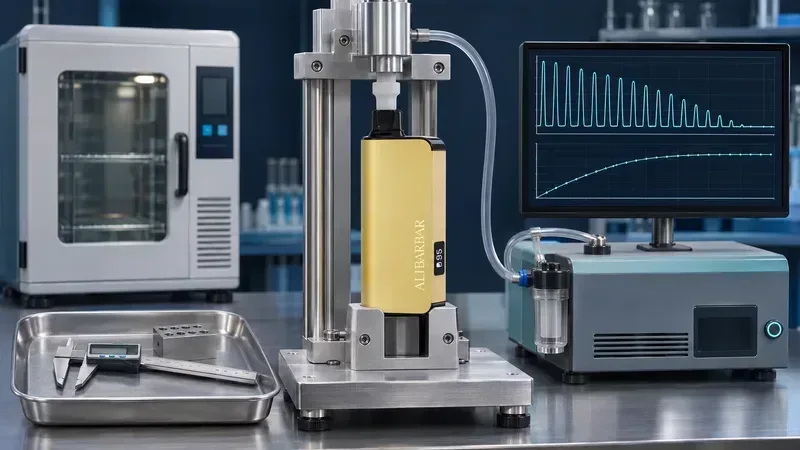
Each sample also needs a physical inspection. The tester can check for leakage, visible damage, loose parts, blocked airflow, or packaging defects. Moreover, the initial battery or device status should be recorded where measurement is possible. A damaged or previously activated sample could distort the final total.
Conditioning and machine setup
Next, testers place the samples in a consistent environment for a defined conditioning period. This step helps reduce differences caused by transport or recent temperature exposure. For instance, a cold device may initially behave differently from one stored at room temperature. Conditioning gives every sample a more comparable starting point.
The tester then connects the device mouthpiece to the puffing machine using an appropriate seal. The connection must avoid unwanted air leaks without blocking the intended airflow path. Additionally, the mounting position should remain consistent across all samples. A poor connection may cause missed activations or inaccurate flow measurements.
After setup, the operator programs the draw profile and rest interval. The machine then applies repeatable cycles until the sample reaches a defined endpoint. Meanwhile, the system counts successful activations and may capture pressure, airflow, or vapor-response data. Some setups also track device temperature and electrical changes.
Recording performance changes
Counting attempted draws is not always enough. A cycle might trigger the indicator without producing meaningful vapor. Therefore, a robust test should distinguish attempted activations from successful vapor-producing events. The test method should also explain how it identifies partial, weak, or interrupted draws.
Throughout the test, technicians can record declining output, inconsistent activation, unusual heat, and unexpected pauses. Moreover, they should document leaks, automatic firing, charging interruptions, or device resets when relevant. These events can reveal weaknesses hidden by an average puff total. They can also explain large differences between samples.
Temperature monitoring can provide useful context during intensive cycles. Excessive heat may change vapor performance or signal a safety concern. Most importantly, testing should stop if a sample leaks severely, overheats, or becomes physically unsafe. A puff-count target never justifies continuing a hazardous test.
Choosing the endpoint
The endpoint is the condition that officially ends the count. Possible endpoints include depleted liquid, exhausted battery power, activation failure, or persistent burnt output. Another method may stop when vapor production falls below a defined threshold. Notably, each choice can produce a different reported total.
- No successful activation after a specified number of attempts
- Vapor output remaining below a stated measurement threshold
- Persistent dry, burnt, or otherwise unacceptable output
- Battery power becoming insufficient for normal coil operation
- Accessible e-liquid becoming depleted under the test conditions
- A safety-related event requiring immediate test termination
For example, a device might still activate after its vapor output becomes very weak. Counting those weak cycles would increase the reported number. However, many users would consider the device practically finished earlier. Therefore, the endpoint must reflect meaningful output, not merely electronic activation.
Finally, credible evaluation requires multiple samples. Testers should report the average, range, early failures, and notable performance differences. Furthermore, samples from several batches can reveal manufacturing variation more effectively. One exceptional unit cannot represent every product leaving a production line.
4. Why Advertised and Real-World Puff Counts Differ
Real users rarely reproduce laboratory draw cycles. Some people take long, deep draws, while others prefer short and gentle puffs. Longer draws generally consume more liquid and battery energy per activation. As a result, they usually reduce the available number of total activations.
Shorter draws may increase the final count, but each puff may produce less vapor. Therefore, a higher number does not necessarily mean greater total vapor output. Consider two users taking 100 activations daily. One may consume the device faster because every draw lasts longer and demands more energy.
Draw strength, frequency, and cooling
Draw strength can affect activation timing, airflow, cooling, and vapor production. Stronger suction may activate the device quickly and move more air across the coil. However, its exact effect depends on the airflow and sensor design. Different pressure can also change how efficiently liquid reaches and cools the heating area.
Vaping frequency creates another major difference. Frequent consecutive draws give the coil and wick less recovery time. Consequently, the coil may stay warmer while the liquid-delivery material struggles to resaturate. This pattern can increase inconsistency, weaken later puffs, or create an unpleasant dry taste.
Meanwhile, longer pauses allow heat to dissipate and liquid to move toward the coil. That recovery may support steadier vapor output. Nevertheless, excessive resting does not create additional liquid or energy. It only changes how efficiently the remaining resources serve later activations.
Device systems work together
Battery capacity alone does not determine puff count. Available liquid, power output, coil resistance, airflow, and overall efficiency also influence the result. Specifically, higher power may produce stronger vapor while consuming more energy and liquid per second. A lower-power design may behave differently despite carrying a similar battery.
The relationship between the battery and liquid supply matters near the device’s end. A battery may become unable to power the coil while some liquid remains inaccessible. On the other hand, usable liquid may run out while the battery still holds energy. Therefore, balanced component design strongly affects practical lifespan.
Coil performance can also change during extended use. Residue, repeated heating, or uneven liquid delivery may reduce vapor quality before complete depletion. Moreover, a device that technically activates may no longer provide acceptable output. This difference reinforces the need for a clear and practical endpoint.
Manufacturing, storage, and handling
Manufacturing tolerances can produce small differences between devices. Coil resistance, liquid filling, seals, sensors, and battery performance may vary within permitted ranges. Additionally, leakage or an imperfect seal can reduce the liquid available for vaporization. These differences can widen across several thousand activations.
Storage conditions also matter. Excessive heat may accelerate liquid loss, stress the battery, or affect seals. Meanwhile, prolonged cold storage can temporarily reduce battery performance and change liquid movement. Device age, physical damage, and rough transport may create further variation.
For rechargeable designs, charging behavior adds another variable. Incomplete charging can shorten each operating period, while damaged cables or unsuitable power equipment may create risks. Therefore, users should follow the supplied charging instructions where applicable. They should never charge a leaking, swollen, unusually hot, or damaged device.
Ultimately, real-world puff totals reflect many linked conditions. Draw length, suction, frequency, temperature, component variation, and storage can all change the outcome. Consequently, two careful users may still obtain different totals from nominally identical products. An advertised figure works best as a reference point, not a personal guarantee.
5. How Long Does a 9,000-Puff Vape Last?
A 9,000-puff claim does not directly reveal the number of usable days. Calendar lifespan depends mainly on your actual usable puffs and average daily consumption. Therefore, a frequent user may finish the same device weeks before an occasional user. Storage and performance variation can further change that timeline.
The basic estimation formula is simple: expected days of use equals estimated usable puff count divided by average puffs per day. This calculation can use the advertised total as an initial reference. However, a more conservative usable-puff estimate may support better planning. Your final result will still depend on draw behavior and device performance.
Hypothetical lifespan examples
The following examples assume that a device delivers the full 9,000 theoretical puffs. They also assume that every counted puff has equal value. In reality, draws differ in duration, strength, and vapor output. Therefore, treat these figures as planning estimates rather than promises.
- 100 puffs per day: 9,000 divided by 100 equals about 90 days.
- 200 puffs per day: 9,000 divided by 200 equals about 45 days.
- 300 puffs per day: 9,000 divided by 300 equals about 30 days.
A user averaging 200 daily activations might initially expect around 45 days. However, longer draws could reduce the usable total below 9,000. Accidental triggers and weak end-stage activations may also inflate the counter without providing satisfying vapor. The practical lifespan could therefore be shorter.
Measuring your daily use
You can estimate consumption by tracking activations for several typical days. Use a phone tally, a manual counter, or a reliable built-in counter where available. Additionally, include both quiet days and heavier-use days in your sample. Divide the recorded total by the number of tracked days.
- Choose three to seven days that reflect your usual routine.
- Record each deliberate draw with a phone tally or manual counter.
- Note unusually long sessions or repeated chain use separately.
- Add the daily totals and divide by the number of tracked days.
- Divide your estimated usable puff total by that daily average.
Puff counters have important limitations. A counter may miss weak activations or record accidental triggers. Furthermore, it may count partial draws that produce little vapor. Most counters measure activation events rather than the quality or quantity of output.
Watch practical performance instead of relying only on a number. End-of-life signs include declining vapor, weak activation, inconsistent operation, or a depleted-battery indication. A persistent burnt or unusual taste also signals that you should stop. Most importantly, discontinue use immediately if the device overheats, leaks, or appears damaged.
6. How to Evaluate Puff-Count Claims and Product Value
A puff-count claim may come from manufacturer testing or a contracted laboratory. However, consumers should not assume independent verification without supporting evidence. The company should identify who conducted the test and explain the method. Transparent documentation allows retailers and users to judge the result more fairly.
No universally applied protocol makes every disposable vape claim directly comparable. Technical testing frameworks can guide machine measurements, but brands may choose different draw profiles and endpoints. Therefore, two identical headline numbers may represent different testing conditions. The missing details can matter as much as the final count.
Details worth requesting
A useful report should describe the complete draw cycle. Specifically, look for puff duration, draw volume, airflow, rest interval, and test environment. The report should also state the endpoint and sample size. Ideally, it will present the average, range, and any early failures.
- Programmed puff duration and total draw volume
- Airflow rate, suction pressure, and activation threshold
- Rest interval between consecutive machine cycles
- Ambient temperature, humidity, and device orientation
- Exact definition of a successful activation
- Endpoint used to stop counting each sample
- Number of samples, batches, failures, averages, and ranges
Repeat testing increases confidence because one sample may perform unusually well or poorly. Moreover, coverage across multiple batches helps reveal manufacturing consistency. Calibrated equipment and documented quality controls also improve reliability. Independent verification provides additional confidence when the full method and results remain available.
Look beyond the headline number
Puff count should not serve as the only measure of product value. A larger claim may reflect shorter laboratory draws instead of proportionally longer real-world use. Therefore, buyers should consider test transparency, consistency, safety information, and customer support. Lawful availability and responsible retailing matter as well.
Consumers should also assess whether the company provides clear handling and end-of-life instructions. Retailers can ask for batch documentation, safety information, and evidence supporting package claims. Additionally, both groups should compare results obtained under equivalent conditions. Comparing unmatched protocols can create a false impression of superiority.
Use this checklist when interpreting the ALIBARBAR INGOT claim:
- Confirm the testing basis: Ask how the 9,000-puff figure was established.
- Compare equivalent methods: Match draw profiles, intervals, environments, and endpoints.
- Estimate personal use: Measure your average daily activations over several representative days.
- Allow for variation: Account for draw length, frequency, storage, and manufacturing tolerances.
- Follow end-of-life guidance: Stop using any device that leaks, overheats, or appears damaged.
Responsible use and disposal
These products are intended only for adults who meet the legal age requirement. Nicotine can cause dependence, and users should understand that risk before use. Moreover, devices must remain away from children and pets. Store them away from direct sunlight, excessive heat, and physical damage.
Follow the supplied charging instructions when charging applies to the product design. Use suitable equipment and inspect the device before connecting power. Furthermore, never charge a leaking, swollen, damaged, or unusually hot device. Stop using it if performance changes create a safety concern.
Disposable vaping products may contain a battery, electronics, and residual liquid. Therefore, do not place them casually in household rubbish where local rules prohibit that practice. Use an approved battery or electronic-waste collection route. Local waste services can explain the correct disposal option for your area.
Conclusion
The 9,000-puff figure works best as a controlled-test estimate, not an exact promise. Real results depend on the protocol, endpoint, device consistency, environment, and individual draw behavior. Specifically, puff duration, airflow, frequency, battery performance, liquid availability, and coil efficiency can change the usable total. Even small differences may accumulate across thousands of activations.
Therefore, track your average daily puffs before estimating calendar lifespan. Request the manufacturer’s disclosed testing parameters and compare products under equivalent conditions. Moreover, allow for normal variation and follow all end-of-life safety guidance. When the device finishes, use an appropriate battery or electronic-waste program for responsible disposal.







