
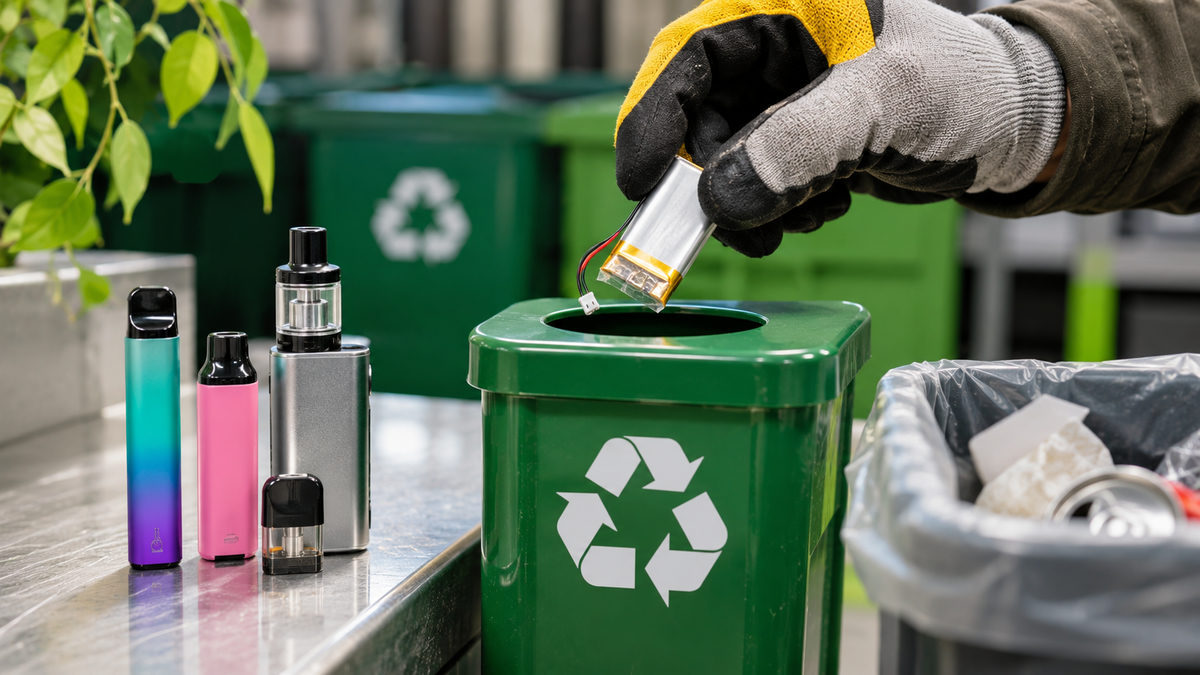
Before you toss out a dead vape, picture its battery being crushed inside a garbage truck. That pressure can spark a dangerous lithium-ion fire in seconds. So, can vape batteries be recycled? Yes, most can—but they require specialized handling. Household trash and curbside recycling bins are generally not safe options.
The right disposal method, though, depends on the device and local regulations. Removable batteries, rechargeable vapes, disposable devices, pods, and cartridges may all follow different routes. This guide explains how to prepare each item safely and find a suitable collection program.
1. Can Vape Batteries Be Recycled?
Most vape batteries can be processed through specialized battery or electronic-waste recycling programs. These programs have equipment designed to handle lithium-ion cells safely. Loose batteries and complete vapes should not go into curbside recycling, however. Standard sorting facilities rarely have the right systems for dealing with batteries hidden inside products.
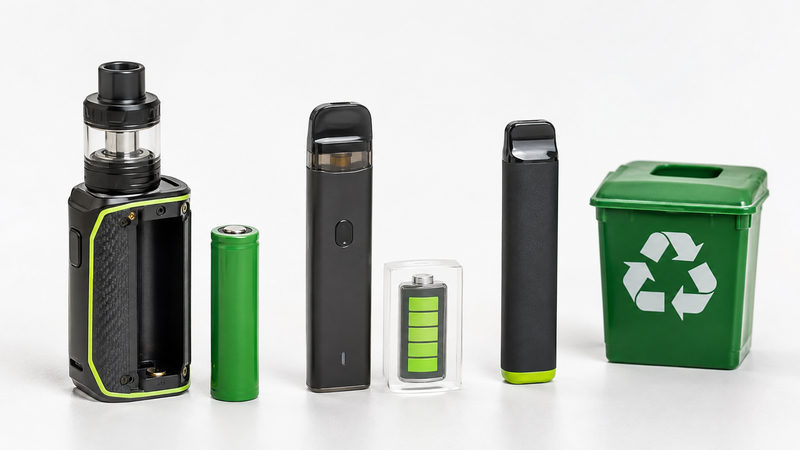
Your device design largely determines the correct route. Some vapes use removable cylindrical cells that look like oversized household batteries. Others have built-in rechargeable batteries connected to internal electronics. Disposable vapes, meanwhile, usually contain a small lithium battery sealed inside a plastic or metal body.
Different devices require different disposal routes
A removable cell can often be taken to an authorized battery collection point. Remove it first, following the manufacturer’s instructions, and protect its terminals before storing or transporting it. If the manufacturer did not design the cell for user removal, leave it in place.
With built-in batteries, the entire vape usually counts as electronic waste. Take the complete device to a facility that accepts rechargeable electronics. Sealed disposable vapes are more complicated because each one combines a battery, circuit board, casing, heating element, and possible nicotine residue.
Local authorities may classify these products in different ways. One region, for example, may treat lithium-ion cells as electronic waste, while another regulates them as universal waste or household hazardous waste. Always follow the latest guidance from your local waste authority.
Why ordinary bins create serious risks
Garbage trucks and waste facilities rely on compactors, conveyor belts, and heavy sorting machinery. Any of these machines can crush or puncture a vape battery. Once damaged, the cell may short-circuit, overheat, and set nearby paper or plastic on fire. One small battery can cause a much larger facility fire.
Curbside recycling poses much the same risk because workers may never see the battery. A complete vape can easily look like an ordinary plastic or metal object. Sorting machinery may break it apart before anyone recognizes what it is. Keep battery-powered vape products out of household recycling unless your local program specifically says it accepts them.
2. How to Recycle Vape Batteries Safely
Safe recycling starts before you head to a collection site. Switch off the vape and unplug it from the charger. Does the device feel warm? Put it somewhere safe and wait for it to cool. Never handle, package, or transport a battery that is unusually hot.
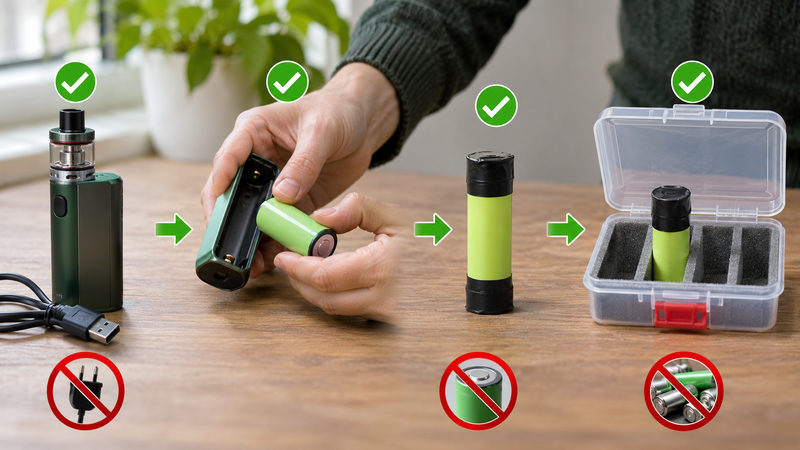
Then work out whether the battery is meant to come out. Remove it only if the manufacturer designed the device for battery replacement. Follow the supplied instructions and open the normal battery door. Never pry open, cut, crush, or puncture a sealed vape.
Inspect the battery before packaging it
Check removable batteries in good light. Look closely for swelling, dents, corrosion, leaks, torn wrapping, or dark heat marks. Pay attention to unusual smells as well, and notice whether the cell feels warmer than the surrounding area. Any of these signs could point to internal damage.
Do not keep using a suspicious battery just because it still powers the vape. Internal damage may become worse during charging or heavy use. Separate the cell from undamaged batteries and ask the collection site for handling instructions. It may require special packaging.
If the battery is undamaged, cover its exposed terminals with clear, non-conductive electrical tape. Make sure the tape is secure, but do not hide any damage that needs to be reported. You can also put each battery in its own clear plastic bag. Keeping cells separate stops their terminals from touching other batteries or metal objects.
Store batteries carefully before your trip
Store prepared batteries upright in a cool, dry place. Choose a sturdy, non-metal container that will not conduct electricity. Keep it well away from children, pets, direct sunlight, heaters, and anything combustible. Coins, keys, tools, and loose wires should stay out of the container too.
Try not to keep unwanted cells for months while waiting for a convenient trip. Arrange disposal reasonably soon after taking them out of service. While they are stored, check them regularly for heat, leakage, or swelling. If anything changes, contact a hazardous-waste professional before moving them.
Prevent movement and damage during transport
Secure the container in your vehicle so it cannot tip over or slide around. Make sure no heavy objects can fall onto the batteries or device. Drive directly to the collection point, and never leave lithium batteries in a hot vehicle—especially one parked in direct sunlight.
Confirm the facility’s packaging rules before leaving home. Some sites accept cells in individual bags, while others require taped terminals. Damaged batteries may also need to be separated from ordinary consumer cells. A quick phone call can save you from being turned away and making another trip.
- Switch off: Turn off the vape and disconnect every charging cable.
- Cool down: Wait until the battery reaches a normal temperature.
- Inspect: Check for swelling, leakage, corrosion, dents, or damaged wrapping.
- Protect: Tape exposed terminals or bag each undamaged battery separately.
- Confirm: Ask the destination about acceptance and packaging requirements.
3. Where to Recycle Vape Batteries and Devices
You may have several collection options close to home. Possible destinations include authorized battery collection points, electronic-waste centers, and household hazardous-waste facilities. Some retailers and manufacturers also run take-back programs. The best choice depends on whether you are disposing of a loose cell or a complete device.
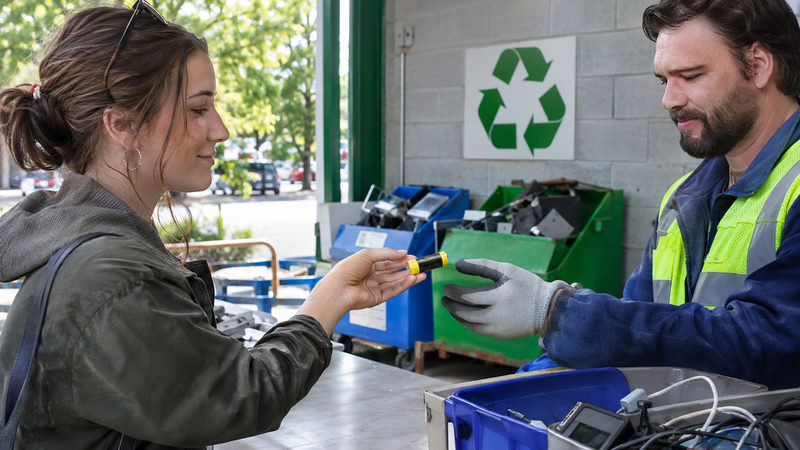
Battery collection points often accept removable rechargeable cells, but they may turn away complete vapes, disposable devices, or products contaminated with nicotine. Electronic-waste facilities are usually better prepared for devices with built-in batteries. Household hazardous-waste programs may be able to handle both the battery and any remaining nicotine components.
Retail and manufacturer programs
Some vape shops collect used batteries or disposable vapes from customers. Participation is voluntary in many places, though, so each shop may set its own rules, quantity limits, and packaging requirements. Never leave unwanted devices outside a closed shop or next to a collection box.
Manufacturers may offer store-based collection or mail-back services as well. Check the device packaging or the manufacturer’s official support information for details. Some programs accept only products from their own brand. Mail-back services may also apply strict rules to lithium batteries and damaged devices.
Finding a suitable local facility
Begin with the official directory from your municipal or regional waste authority. Search terms such as vape recycling near me and battery recycling center can also help. Once you find a result, verify it through the facility’s official information. General map listings sometimes have outdated opening hours or acceptance policies.
Call before visiting and explain exactly what you need to dispose of. Say whether you have a loose lithium-ion cell, a rechargeable vape, or a sealed disposable device. Mention any remaining e-liquid or visible damage too. With those details, staff can direct you to the right counter or facility.
- Does the site accept loose lithium-ion vape batteries?
- Can it take complete devices with built-in batteries?
- Does it accept disposable vapes containing residual e-liquid?
- Are damaged or swollen batteries handled separately?
- Must users tape terminals or package each item individually?
Many consumer battery and electronic-waste drop-off programs are free. Commercial recyclers, municipal events, and mail-back services may charge fees, however. Some also impose quantity limits or serve local residents only. Before setting out, check the opening hours, fees, identification requirements, and daily limits.
4. Disposable Vapes, Pods, and Cartridge Disposal
A disposable vape is more than a piece of plastic. Inside are a lithium battery, circuit board, heating element, metals, and electronic connections. The device may also hold nicotine-containing liquid after it stops producing vapor. That combination usually makes it electronic waste with potentially hazardous residue.
Never force open a disposable vape to reach the battery. A tool could puncture the cell or connect its electrical contacts. The battery might then heat up rapidly or release flammable gases. Only attempt removal if the manufacturer provides a clear, safe procedure for users.
Handling complete disposable devices
If an intact disposable vape has an off switch, use it. Place the device in a non-metal container, away from heat and combustible materials. Cover any exposed charging ports or contacts with suitable non-conductive tape. Then take the whole device to a program that has confirmed it will accept it.
Not every electronic-waste center takes disposable vapes. Residual nicotine can introduce handling requirements that do not apply to ordinary electronics. Be specific when you contact the facility. Ask whether it accepts the device intact and whether you need to package it in a particular way.
Managing pods, cartridges, and leftover liquid
Nicotine can harm people, pets, and wildlife if swallowed or absorbed through the skin. Even a pod that looks empty may still contain concentrated residue. Keep used pods and cartridges closed whenever possible, and store them away from food, children, pets, and household medicines.
Never pour leftover e-liquid into a sink, toilet, storm drain, or onto soil. Do not empty it into a curbside recycling container either. Water treatment systems may not remove every chemical component. Ask your local hazardous-waste program how to handle unwanted nicotine liquids safely.
Put a leaking pod into a compatible, leak-resistant container without touching the liquid. If it gets on your skin, follow the product’s safety guidance and seek professional advice when necessary. Tell the disposal facility about the leak as well. Staff may ask you to package the item separately.
Clean, empty outer packaging may be accepted for local recycling. That depends on the material and your community’s collection rules, and the packaging must be free of nicotine and e-liquid contamination. If you are unsure, ask the local program instead of relying on the recycling symbol alone.
5. Damaged Battery Safety and Lithium Fire Risks
A damaged lithium-ion battery can become unstable with little warning. Signs of trouble include swelling, leakage, corrosion, torn wrapping, dents, and other physical deformation. Hissing, crackling, strange odors, smoke, or repeated overheating are also serious warnings. If any of these appear, stop using or charging the battery immediately.
Back away if the device becomes dangerously hot or starts releasing smoke. Never touch leaking material with bare skin. Keep other people and pets out of the area, and avoid breathing fumes from the failing battery.
When the situation becomes an emergency
Do not transport a battery that is hot, smoking, hissing, or actively failing. If there is an immediate risk of fire, contact your local fire service instead. Follow the emergency operator’s instructions and keep a safe distance. An actively failing cell should never go inside your vehicle.
If the situation is not an immediate emergency, call an authorized hazardous-waste facility. Describe every sign of damage before you try to transport the battery. Ask specifically about temporary isolation, approved containers, and delivery procedures. Staff may send you to a specialist location rather than a standard drop box.
Never put a damaged battery into an ordinary retail collection bin without permission. A swollen or leaking cell may require special packaging and direct supervision from staff. Dropping it among other batteries could expose it to terminal contact or physical pressure. Either can increase the risk of a short circuit.
How lithium-ion fires begin
A battery packs considerable energy into a small case. If its terminals make contact, that energy can flow through an unintended electrical path. Crushing, puncturing, overheating, or internal damage can also break the protective layers within the cell. The resulting failure may trigger a chain reaction known as thermal runaway.
During thermal runaway, a battery produces heat faster than it can release it. The increasing temperature may damage nearby cells and ignite surrounding materials. Flammable gases can escape as well. That is how a tiny cell can start a rapidly spreading waste fire.
Collection trucks compact waste so they can carry more of it. Sorting facilities use crushers, grabs, and fast conveyor systems too. A hidden vape battery can therefore ignite among cardboard, plastic, and other fuel. Such fires put workers at risk and disrupt essential waste services.
Careful disposal interrupts that sequence. Protected terminals help prevent accidental contact, while secure packaging limits movement and crushing. More importantly, trained facilities can identify the battery chemistry and handle damaged cells correctly. Ordinary bins offer none of these protections.
6. What Recycling Achieves and How to Reduce Vape Waste
Professional battery recycling takes place in several controlled stages. Facilities begin by sorting collected batteries according to chemistry, condition, and device type. Trained operators then safely discharge suitable cells and prepare them for processing. Damaged batteries may be sent through a separate treatment route.
Prepared batteries can be shredded mechanically inside controlled equipment. The facility then separates the plastics, steel, aluminum, copper, and battery-rich material. Specialized chemical processes may also recover lithium, cobalt, and nickel. Those recovered materials can be used in future industrial products.
Environmental and safety benefits
Recovering useful metals reduces demand for newly mined resources. Proper treatment also keeps battery components and nicotine-contaminated devices out of soil and waterways. It prevents complete vapes from piling up in landfills too. Most importantly, separate collection lowers the risk of fires throughout ordinary waste systems.
Recycling cannot recover every material from every device, though. The results depend on battery chemistry, facility technology, contamination, and how the product was built. Processing sealed disposable vapes may take more labor than handling loose rechargeable cells. Preventing waste is therefore just as important as recycling it responsibly.
Choosing devices that create less waste
When suitable, choose a durable refillable device rather than frequently replacing disposables. A well-maintained device can last far longer than a single-use product. Models with replaceable rechargeable batteries may also be easier to handle at the end of their life. Always use batteries recommended for the device.
Use a compatible charger and stay within the manufacturer’s charging limits. A mismatched charger may deliver the wrong voltage or current. Do not charge devices unattended, near flammable materials, or in extreme temperatures. Stop using any equipment that gives off unusual heat or smells, or behaves strangely while charging.
Keep batteries away from drops, water, direct sunlight, and freezing conditions. Try not to drain a rechargeable cell repeatedly until the device shuts down completely. Moderate charging habits can reduce stress on the battery and extend its useful life. When a cell becomes worn or damaged, replace it promptly through a safe collection program.
Carry spare batteries in protective cases, not loose in pockets or bags. Coins and keys can unexpectedly connect exposed terminals. A cell touching two metal objects, for instance, may discharge quickly and become dangerously hot. A simple case removes that avoidable risk.
Quick vape battery recycling checklist
- Switch off the device: Disconnect chargers and allow warm components to cool.
- Remove only suitable cells: Never dismantle a sealed or disposable vape.
- Inspect everything: Look for heat, swelling, corrosion, leakage, or physical damage.
- Tape the terminals: Use clear, non-conductive electrical tape on undamaged removable cells.
- Separate the batteries: Bag each cell individually or use a protective battery case.
- Verify acceptance: Describe the battery, device, residue, and condition to the collection site.
- Deliver safely: Secure the container and never leave batteries inside a hot vehicle.
A few good habits make disposal much easier when a battery finally reaches the end of its life. Keep the device manual and record the battery model when you buy replacements. Find a nearby collection program before you need one too. That small amount of preparation keeps dead devices from collecting in drawers—or ending up in ordinary trash.
Conclusion
Most vape batteries can be recycled through authorized battery, electronic-waste, take-back, or hazardous-waste programs. They do not belong in household trash or regular curbside recycling. To prepare them safely, switch off the device, inspect the battery, and protect any exposed terminals. Careful storage and transport further lower the risk of a short circuit.
Disposable vapes need extra attention because they contain electronics, lithium batteries, and residual e-liquid. Damaged batteries may also require specialist packaging and hands-on help from facility staff. Never dismantle a sealed device or transport a cell that is hot, smoking, or actively failing. If a battery poses an immediate fire threat, contact emergency services.
First, identify what you have: a removable cell, rechargeable device, disposable vape, or nicotine-contaminated component. Next, check the latest guidance from your local waste authority. Then contact an authorized collection site and confirm that it accepts the item before you travel. One careful choice can prevent pollution, equipment damage, and a serious lithium-ion fire.







