
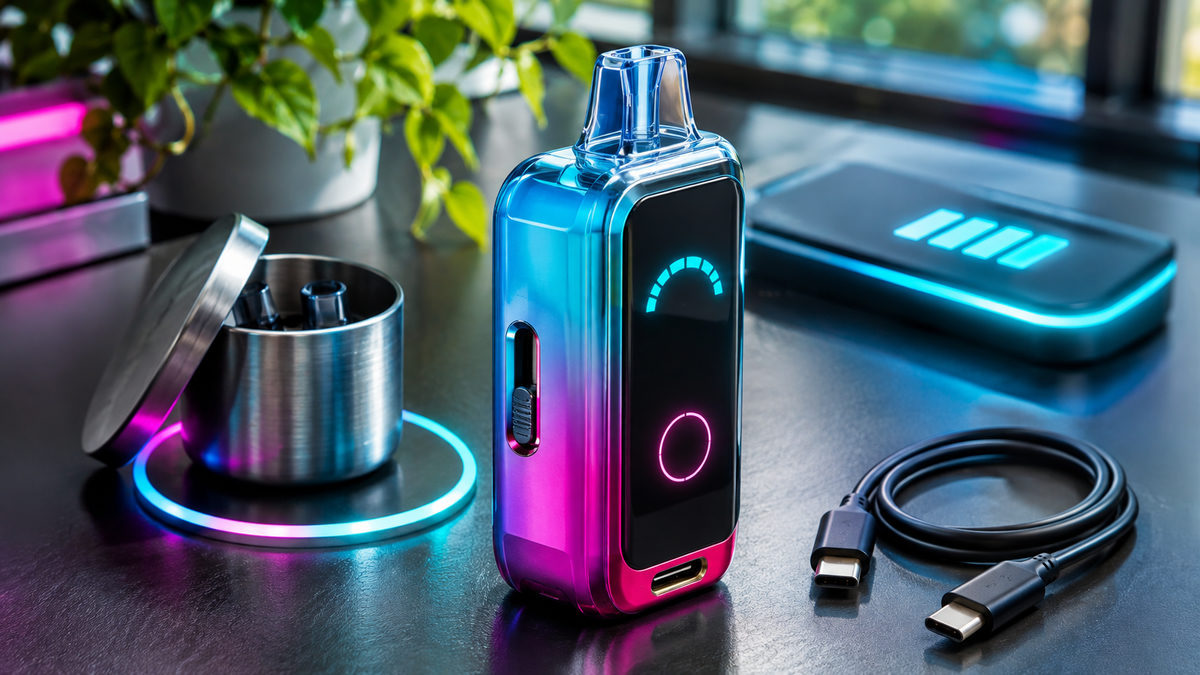
Can a compact rechargeable vape really deliver 20,000 puffs? Crystal Mary Pulse 20000: Understanding Device Specifications begins with one crucial detail: “up to” matters. Actual puff totals vary with draw length, airflow, output, charging habits, and the regional version of the device.
Conflicting listings make direct comparisons tricky. Sources may give different battery sizes, liquid capacities, nicotine strengths, and operating modes. For that reason, buyers should rely on the packaging and current manufacturer information for their specific device.
1. Crystal Mary Pulse 20000: Understanding Device Specifications
The Crystal Mary Pulse 20000 is a high-puff, draw-activated vape intended for adults who already use nicotine. It pairs a rechargeable battery with a sealed, prefilled liquid reservoir. When the user inhales, an internal coil heats the liquid.
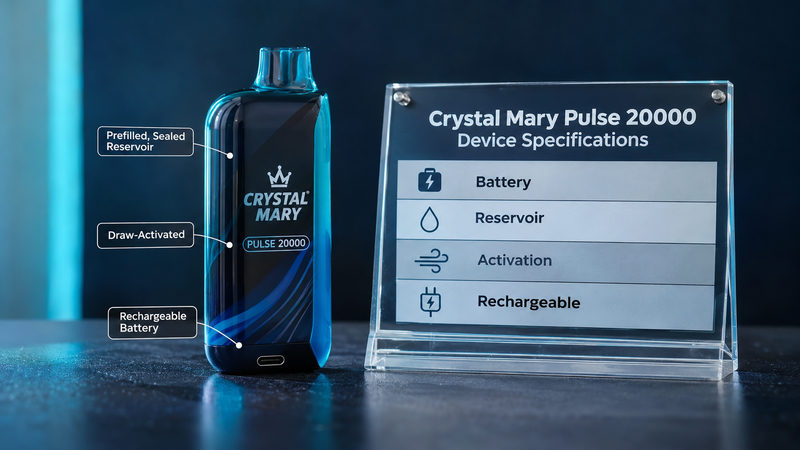
The battery provides power, and the coil turns the stored liquid into aerosol. Airflow channels shape the draw resistance while helping to cool the heating system. Depending on the version, a screen may display battery power and an estimate of the liquid remaining.
The device is rechargeable, but it generally is not refillable. Nor does it have a user-replaceable coil. Charging restores battery power; it does not add liquid or renew the heating element.
Specification table
- Advertised puff rating: Up to 20,000 puffs, confirmed by manufacturer and retailer listings.
- Battery: 650mAh on the manufacturer product page; some regional listings report 850mAh.
- E-liquid capacity: 14mL from the manufacturer specification page; retailers also report 16mL, 23mL, or 25mL variants.
- Nicotine strength: Common retailer listings show 5%, or 50mg/mL. Some regional products show 2%.
- Coil: Dual-mesh technology; the manufacturer lists a 20W output and 0.8-ohm specification.
- Resistance variants: Several retailers report a 0.4-ohm and 0.8-ohm dual configuration.
- Charging port: USB-C or Type-C according to multiple retailers; confirm it on the package.
- Dimensions: 32.3 by 57.8 by 88.6 millimetres on the manufacturer product page.
- Airflow: Adjustable airflow appears in manufacturer and retailer descriptions.
- Operating modes: Some variants offer Regular and Pulse modes. Other versions list only 20W output.
- Display: A full screen showing battery and e-liquid information is manufacturer-confirmed.
- Activation: Retailers generally describe automatic draw activation, although buyers should check their packaging.
Verification notes
A manufacturer product page lists the 650mAh battery, 14mL capacity, dual-mesh coil, 20W output, display, airflow, and dimensions. Details such as USB-C charging, resistance combinations, nicotine levels, and named modes differ across distributor listings. Those specifications should therefore be treated as retailer-reported or region-dependent.
A device marked 850mAh and 25mL may be a different revision or market configuration. It should not automatically be considered identical to the 650mAh model. Before comparing products, match the package model, batch code, and specification panel.
Intended users
This product is intended only for adults who already use nicotine products. Nicotine is addictive and can create avoidable dependence in non-users. The device is not suitable for minors, non-smokers, or anyone who has been medically advised to avoid nicotine.
Pregnant or breastfeeding people should not use nicotine products without professional medical guidance. People with cardiovascular, respiratory, or other health concerns should speak with a qualified clinician. Product advertising is no substitute for personal medical advice.
2. Puff Count, E-Liquid Capacity, and Expected Lifespan
Understanding the 20,000-puff rating
The advertised 20,000 puffs are an upper estimate, not a guarantee for every user. Manufacturers typically test short, standardized draws under controlled conditions. Real inhalations are often longer, though, and use more liquid with each puff.
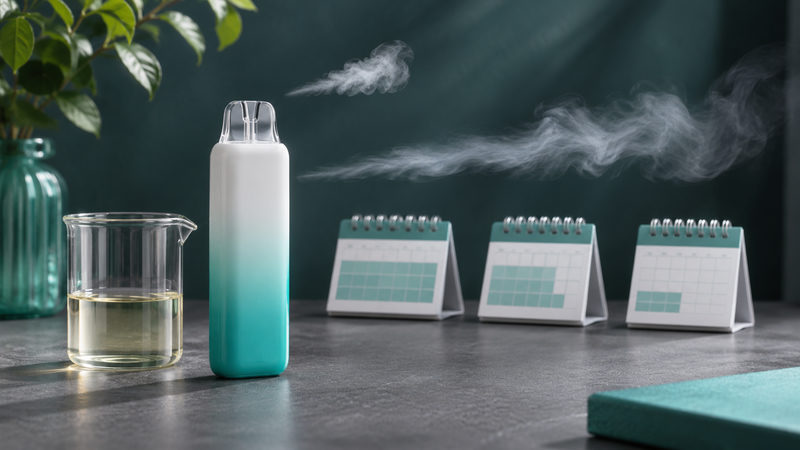
Consider two users who each take 300 puffs a day. One uses one-second draws; the other inhales for three seconds. Their devices may produce very different final puff totals even though the daily frequency is identical.
Higher-output modes generally heat more liquid with every draw. Open airflow may also encourage deeper inhalations, although individual technique makes a difference. Coil temperature, liquid movement, and battery management can all affect usable output.
Some regional listings claim 20,000 puffs in Regular mode and roughly 10,000 in Pulse mode. That distinction is not shown consistently across every version. Users should follow the mode labels printed on their own packaging.
E-liquid and nicotine options
The manufacturer specification page gives the reservoir capacity as 14mL. Retailer pages, however, also describe 16mL, 23mL, and 25mL configurations. Why the difference? It could reflect regional variants, product revisions, inaccurate listings, or unrelated devices with similar names.
Retailers commonly advertise 5% nicotine, which is equivalent to 50mg/mL. Some markets carry 2% versions because local nicotine rules vary. Buyers should always read the nicotine statement on both the device and its sealed package.
Across different catalogues, flavor names include mint, fruit, ice, gummy, and mixed-fruit options. Availability depends on the distributor and jurisdiction. A flavor name alone says nothing about safety, ingredient quality, or reduced health risk.
Real-world lifespan
Any lifespan estimate needs to be treated cautiously because draw duration plays such a large role. A light user taking 100 to 200 short puffs per day might keep the device for several weeks. Its calendar life could still end sooner because of aging, leakage, or coil deterioration.
A moderate user taking 300 to 500 daily puffs might get roughly two to five weeks. For a frequent user taking 700 or more puffs per day, the range may be one to three weeks. These are broad illustrations of usage patterns, not performance promises.
- Long draws: Consume more liquid and battery energy during each activation.
- High output: Produces more aerosol but may lower the achievable puff total.
- Open airflow: Can support larger draws and faster consumption.
- Heat exposure: May accelerate leakage, liquid deterioration, and battery aging.
- Repeated charging: Supports continued use but cannot restore depleted liquid.
As the device nears its end, vapor production may fall even when the battery still has power. Flavor may weaken, the liquid indicator may remain low, or the coil may begin to taste dry. If a burnt taste persists, stop using the device immediately.
3. Battery Capacity, USB-C Charging, and Power Management
Battery specification
The manufacturer product page identifies a 650mAh internal battery. Some regional sellers list 850mAh instead, making package verification essential. Whichever version you have, the rechargeable battery is designed to support the reservoir through multiple charging cycles.
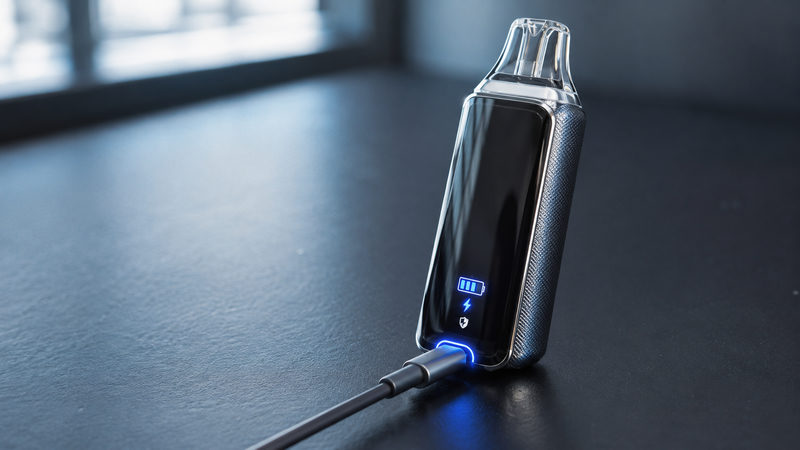
Several retailer specifications list a USB-C charging port, usually located on the base or lower edge of the device. This port supplies power only; it does not make the device refillable. Before plugging it in, check the port for liquid, debris, or visible damage.
Charging procedure
- Place the device upright on a dry, heat-resistant surface.
- Inspect the USB-C port and cable for dirt, moisture, bending, or exposed wires.
- Connect a compatible USB-C cable without forcing the plug.
- Use a suitable low-voltage USB power source that meets the package instructions.
- Watch the screen or indicator for a charging animation.
- Disconnect the cable after the device shows a full charge.
There is no consistently documented charging time that applies to every listed variant. Cable quality, the power source, room temperature, and battery condition can all change how long charging takes. Claims such as an exact 30-minute recharge should not be relied upon without supporting documentation.
While charging, the display may show a percentage, a segmented battery icon, or an animated symbol. A full icon or completed percentage usually means charging is finished. Still, users should consult the package guide because the symbols can vary between revisions.
A blinking icon, weak output, or failure to activate may indicate low power. Start by charging the device with compatible equipment. If the warnings continue afterward, stop using it and contact the seller.
Battery safety
Never leave the device charging unattended or overnight. Keep it away from damaged cables, wet ports, direct sunlight, and hot vehicles. Do not use charging equipment that conflicts with the voltage or other instructions printed on the package.
Store the device away from children, pets, water, and loose metal objects. Protect it from punctures, crushing, and extreme temperatures as well. When practical, keep it upright to limit liquid movement toward the airflow path.
- Stop charging if the casing becomes unusually hot.
- Stop using it if the battery swells or changes shape.
- Disconnect it after detecting a chemical smell, smoke, or hissing.
- Retire it after severe impact, puncture, or visible casing damage.
- Do not continue after persistent charging errors or repeated warning symbols.
4. Coil Technology, Modes, Airflow, and Display Features
Coil configuration
The manufacturer describes a dual-mesh coil with a 20W output and 0.8-ohm specification. Several retailers instead mention 0.4-ohm and 0.8-ohm elements. Buyers should not assume, however, that every regional version contains exactly that combination.
Mesh offers a wider heating surface than some traditional wire designs. This can affect aerosol volume, heating speed, and the consistency of delivery. Resistance and the active coil arrangement also shape power demand and liquid consumption.
None of these engineering features makes vaping healthy or harmless. The aerosol may contain nicotine and other potentially harmful substances. Coil terminology is a technical description, not a medical safety claim.
Operating modes
Some retailer-listed versions feature Regular and Pulse modes. Regular mode is intended for longer use, while Pulse mode applies stronger output or activates an additional heating arrangement. That extra output may use liquid and battery power more quickly.
The method for switching modes differs across listings and product revisions. Some devices have a physical control, while others refer to single and double output states. Follow only the switch or interface instructions provided with your specific device.
Do not force a control that refuses to move normally. Avoid repeatedly triggering an unfamiliar setting, especially when the device feels hot. If the mode icon behaves unexpectedly, stop and check the package guide or contact the seller.
Airflow and activation
An adjustable-airflow control is usually found near the lower part of the casing. A tighter setting adds draw resistance, while a more open setting reduces it. Either option may increase consumption if it leads to longer inhalations.
The device generally activates when the user inhales through the mouthpiece. Before using it for the first time, remove any protective plugs and inspect the airflow openings. Keep the device upright, and make sure your fingers do not cover the inlet.
Draw gently. Pulling too forcefully can bring condensation or excess liquid into the central airway. Repeated rapid puffs may also overheat the coil and prevent the liquid from saturating it properly.
Screen and indicators
The manufacturer confirms a full display showing battery and e-liquid information. Certain variants may also display the operating mode or an animation during use. The battery reading estimates electrical charge, while the liquid bars estimate how much remains in the reservoir.
These indicators are estimates, not laboratory measurements. Liquid can cling to the internal material or shift as temperatures change. As a result, the displayed level may move unevenly, particularly near the end of the device’s life.
Use several clues to judge how much life remains rather than relying on a single screen bar. Reduced vapor, dry flavor, repeated warnings, and empty-liquid indications all add context. If the device tastes burnt or behaves abnormally, stop using it at once.
5. User Guide, Troubleshooting, and Authenticity Checks
Basic user guide
- Check the sealed package for damage, incorrect labeling, or signs of tampering.
- Remove the device and inspect its casing, mouthpiece, screen, and charging port.
- Remove every protective cap, sticker, and airflow seal.
- Set adjustable airflow to a moderate starting position.
- Select a documented mode only after checking the package instructions.
- Take a gentle draw and confirm normal activation.
- Charge when the battery indicator becomes low.
- Store the device upright in a cool, dry, secure location.
Avoid chain vaping, as repeated activation may overheat the coil. Do not block the air inlet or inhale with excessive force. These habits can contribute to leaks, gurgling, condensation, and burnt flavor.
Retire the device once the liquid is gone, the coil continues to taste burnt, or serious faults remain. Charging cannot replace depleted liquid or repair damaged heating material. Never puncture, refill, open, or attempt to repair a sealed unit.
Common troubleshooting
Failure to activate: Check for remaining seals, make sure the airflow inlet is clear, and look at the battery level. Charge the device with compatible equipment, then try one gentle draw. If it still does not activate, stop using it.
Weak or intermittent output: Look at the battery indicator and airflow position, then check the mouthpiece for a blockage. After frequent use, allow the device to rest upright. If the weakness continues, the liquid may be low or the coil may be deteriorating.
Charging problems: Inspect the cable and port, but never insert metal tools. Try a different known-compatible cable and an appropriate power source. Stop charging if the port becomes loose or hot, produces an unusual smell, or repeatedly displays errors.
Leaking or gurgling: Wipe away external liquid with disposable tissue and keep it off your skin. Store the device upright, and avoid inhaling forcefully. If it continues to leak, isolate it and contact the seller.
Burnt taste: Stop using the device and give it time to cool. A brief dry sensation after rapid puffs may improve with rest. A persistent burnt taste, however, means the device has become unsafe or unusable.
Inaccurate liquid indicator: Set the device upright and give the internal liquid time to settle. The indicator only estimates available liquid and may lag during heavy use. Consider the flavor, vapor output, and any leakage alongside the bars on the display.
Use the supplied manual or packaging to interpret blinking lights and warning messages. Similar-looking icons may have different meanings on different revisions. If you cannot identify a warning, stop using the device instead of experimenting.
Authenticity checks
Inspect the verification code, QR code, scratch panel, tamper seal, batch number, and manufacturer information. Compare the fonts, spelling, colors, and nicotine labels with current official packaging. A valid code should open the address printed by the manufacturer.
- Missing or already-exposed verification codes
- Damaged seals or mismatched batch information
- Blurry printing, spelling errors, or inconsistent colors
- Nicotine labels that differ between the device and package
- Prices far below normal local retail levels
- Seller details that cannot be verified
- Codes that fail or lead to an unrelated website
Counterfeiters can reproduce visible packaging details, even QR graphics. Appearance by itself cannot confirm authenticity. Compare the product against current manufacturer guidance, and purchase only from lawful, verifiable sellers.
6. Safety, Legal Requirements, and Responsible Disposal
Nicotine and user safety
Nicotine is addictive, and vaping products are not meant for minors or non-smokers. Anyone under medical restrictions should follow professional advice. Keep the device—and any liquid that leaks from it—away from children and pets.
If liquid is accidentally swallowed or there is significant exposure, seek urgent medical or poison-control guidance. For contact with the eyes or skin, rinse with clean water while getting professional instructions. Call emergency services if serious symptoms appear.
Anyone with health concerns should consult a qualified healthcare professional. Labels and seller claims cannot evaluate an individual’s risk. Stop using the device after severe irritation, breathing difficulty, chest pain, or any other concerning reaction.
Regional legality
Vaping laws differ widely across countries, states, and cities. Buyers need to check minimum-age requirements, nicotine limits, flavor restrictions, import rules, and sales regulations. Local laws may also prohibit disposable or rechargeable prefilled devices.
A product being legal in one jurisdiction does not make it legal everywhere. Online availability is not proof that importation or possession is lawful, either. Because regulations change, consult current government health, customs, and consumer-protection guidance before buying.
Responsible disposal
The device contains electronic components and a built-in lithium battery. Do not put it in household trash, curbside recycling, fire, or water. Damaged lithium cells pose both fire and contamination risks.
Bring an empty or faulty device to an approved battery, electronic-waste, or vape-device collection program. Protect it from crushing during transport. Do not open the casing unless an authorized facility gives you specific instructions to do so.
FAQ: Is the Crystal Mary Pulse 20000 refillable or only rechargeable?
It is generally sold as a sealed, prefilled device with a rechargeable battery. The battery can be recharged through the documented charging port. Users should not attempt to refill the device or replace its coil.
FAQ: Does it always provide 20,000 puffs?
No. That number is an advertised maximum based on particular testing conditions. Longer draws, stronger modes, open airflow, and variations in coil behavior can cut the actual total considerably.
FAQ: How long does charging take, and which cable is required?
Retailers commonly list USB-C charging, but there is no reliably documented universal charging time for every variant. Use a compatible USB-C cable with a suitable low-voltage power source. Disconnect the device once its indicator shows that charging is complete.
FAQ: What do the battery and e-liquid indicators show?
The screen provides estimates of the remaining battery power and e-liquid. Some variants also show the chosen mode. Liquid bars are only approximate, though, and may become less accurate as the device nears its end.
FAQ: How long can the device last under different usage patterns?
With light use, the device may last several weeks. Frequent use can empty the reservoir much sooner. Daily puff count, draw duration, mode, airflow, storage, and charging habits all play a part, so no calendar estimate can guarantee a particular lifespan.
FAQ: What should a user do if it leaks, tastes burnt, or displays a warning?
Stop using the device, stand it upright, and keep any leaked liquid away from people and animals. Do not open, puncture, refill, or try to repair the casing. If the issue continues, isolate the device and contact the seller or an approved disposal service.
FAQ: How can a buyer check authenticity and local legality?
Inspect the verification codes, seals, batch details, nicotine labels, and seller credentials, then compare them with current manufacturer information. Check local requirements with the appropriate government health, customs, and consumer-protection authorities as well.
Conclusion
The Crystal Mary Pulse 20000 brings together a rechargeable battery, prefilled reservoir, coil system, airflow control, and status display. Listed capacities and features can differ between markets and revisions. The advertised puff count also depends heavily on draw habits and output settings.
Before using the device, compare its packaging and verification code with current manufacturer information. Confirm the nicotine label, the seller’s legitimacy, and local vaping laws too. Once the device is empty, damaged, or unreliable, take it to an approved electronic-waste collection service.







