
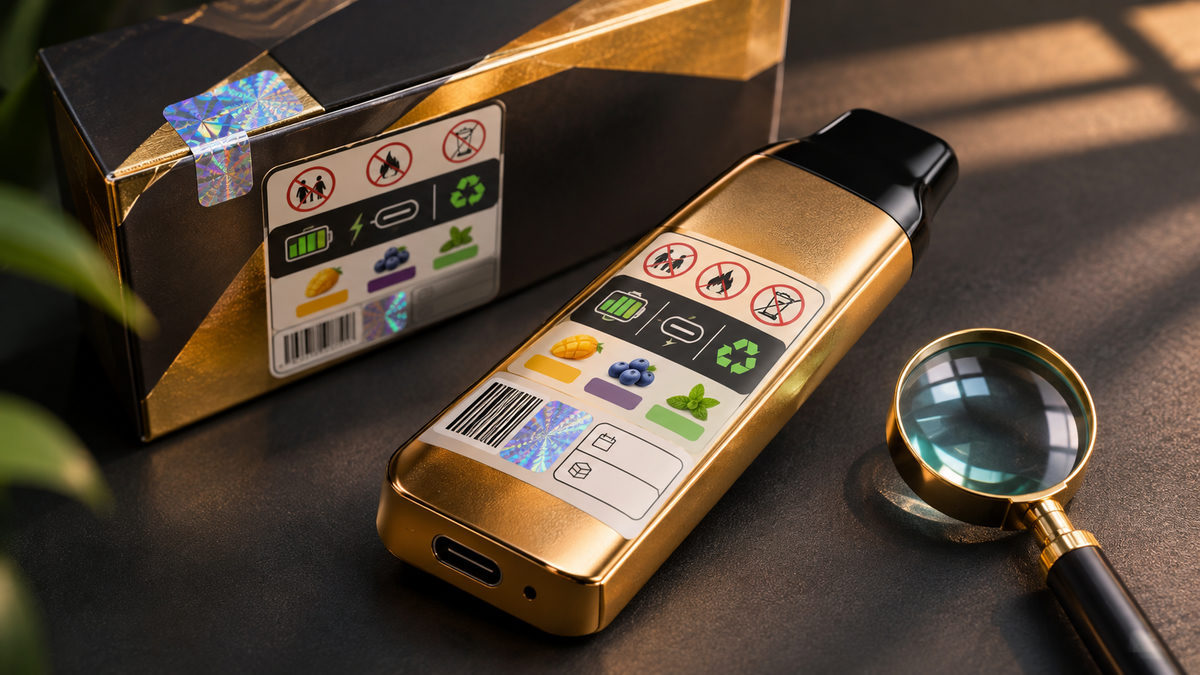
Can a tiny code on a vape box tell you more than the bold claim on the front? That is the practical question behind ALIBARBAR Ingot 9000: Understanding the Product Label. The small specifications, warnings, and verification details can help you assess suitability, compliance, and possible authenticity.
Packaging can vary by market and production run. Nicotine figures, puff estimates, technical specifications, date codes, and security features may all appear in different places. A careful, label-first check is essential before you use, sell, or stock the device.
1. ALIBARBAR Ingot 9000: Understanding the Product Label
Think of the product label as a compact identity record. It explains what the device claims to contain, how it works, and where it entered the supply chain. It should also clearly communicate the restrictions and safety information required for its intended market.
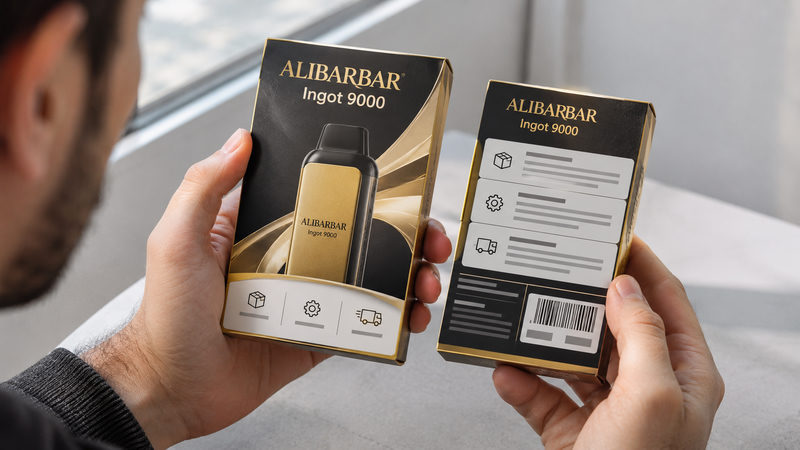
The front panel typically highlights the product name, flavor, and advertised puff count. Side and rear panels often contain nicotine details, warnings, symbols, and business information. Check the bottom too, as it may carry a batch code, barcode, date marking, or verification feature.
Read the package as one complete record
Do not judge the product by one eye-catching panel. Turn the package around and inspect every printed surface. Check any leaflet, sealed wrapper, removable label, or insert that comes with the device as well.
First, make sure the product name is consistent across the entire package. The outer box, internal wrapper, and device should not display conflicting model names. Minor design differences happen, but unexplained changes in identity call for a closer look.
- Identity: Product name, model, flavor, and brand markings.
- Specifications: Puff claim, liquid capacity, battery details, and charging method.
- Contents: Nicotine concentration, ingredient statement, and package quantity.
- Safety: Health warnings, age restrictions, storage advice, and disposal instructions.
- Traceability: Batch codes, dates, business names, and regional contact details.
Above all, rely on the physical package in your hands. A photo from another country may show a genuine but different version. Compare your package with current information provided by the manufacturer or an authorized regional distributor.
2. Puff Count, E-Liquid Capacity, Battery, and Charging Details
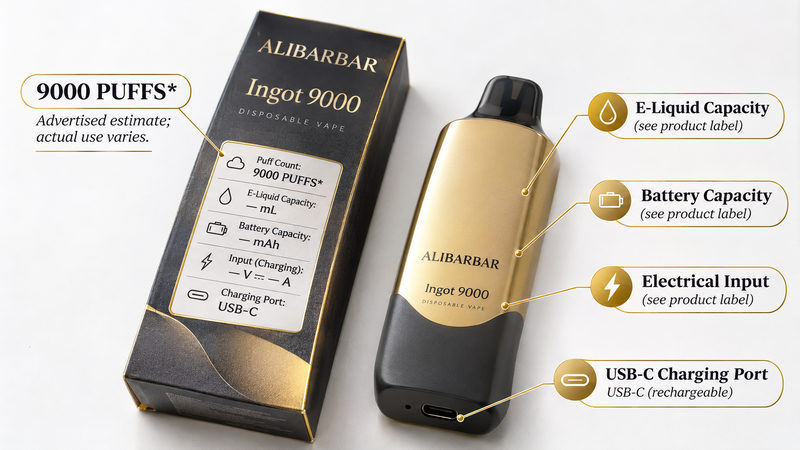
The “9000” in the product name points to an advertised puff count. It is an estimate, not a promise of an exact number of inhalations. Draw length, frequency, airflow, temperature, and battery behavior can all affect how long the device actually lasts.
Short one-second draws, for example, may allow more activations than longer ones. Someone taking deeper puffs could reach the end of the device much sooner. That is why two people using identical devices may report very different totals.
Finding the main specifications
Check the front badge, specifications panel, or bottom label for the puff claim. Look for the e-liquid capacity too, usually shown beside units such as milliliters or “mL.” If your regional package does not state a value clearly, do not guess.
Battery capacity may be listed in milliampere-hours, commonly shortened to “mAh.” Charging information might identify the port type, input rating, or a specific warning. Inspect the device itself as well, since some details may be printed near the charging port.
- Confirm the advertised puff count on the physical package.
- Find the stated e-liquid volume, if the market requires it.
- Locate the battery capacity or electrical rating.
- Identify the charging port and compatible power input.
- Check whether the package includes a charging cable.
Do not fill in missing values using a seller’s photo or a listing from another market. Ask the seller for a clear image of the exact stock instead. Then compare those details with current information from an authorized source that serves your region.
Advertised specifications describe how the product is expected to perform under certain conditions. Results will not be identical for every user. Unusually low performance could come from usage habits, damage, poor storage, or a questionable product.
3. Nicotine Strength, Ingredients, and Flavor Information
Nicotine information is often printed near the health warning or ingredients panel. It may be expressed as a percentage, in milligrams per milliliter, or in another format approved for that market. Read the unit closely before comparing products.
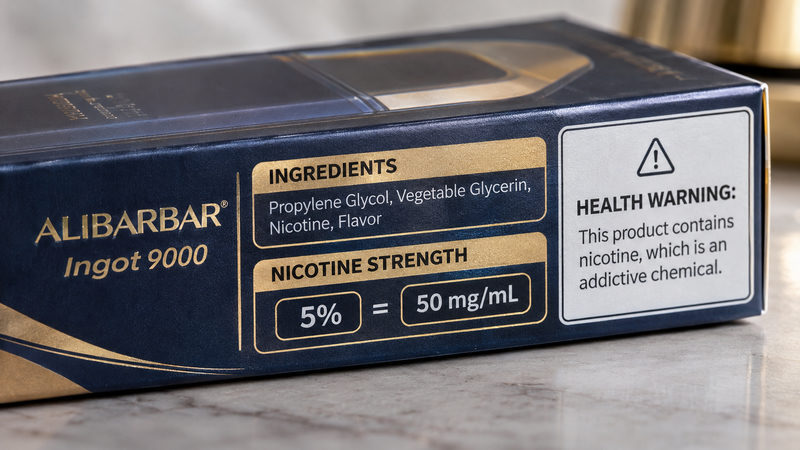
Percentages and milligram figures present concentration in different ways. One market may use a percentage while another lists milligrams per milliliter. Never convert or compare the two until you have confirmed the label’s precise wording and the relevant regulatory convention.
Check every nicotine reference
Look for nicotine statements on the front, sides, rear, and base. Also inspect any stickers added by an importer or regional distributor. Every visible figure should agree unless the package clearly explains why multiple formats are used.
Take care when a large figure on the front conflicts with smaller text elsewhere. Compare the outer box with any nicotine marking printed directly on the device. A mismatch may signal a packaging error, unauthorized relabeling, or a product that needs further verification.
- The nicotine concentration and its measurement unit.
- A clear statement confirming whether the product contains nicotine.
- The flavor name and any flavor variation.
- An ingredient or contents statement where required.
- Market-specific warnings related to nicotine exposure.
Ingredient disclosures can vary by country, flavor, and regulatory system. Broad ingredient categories do not reveal every detail of a formulation. Two flavors with similar names should not be assumed to contain identical ingredients.
A flavor name describes the intended taste, not the full contents. Words such as “ice,” “cool,” or “mint” may suggest a cooling sensation. Only authoritative product information, though, can clarify the exact formulation or address a potential allergen concern.
If you have allergies, sensitivities, or medical concerns, vague flavor wording is not enough. Contact an authorized regional source before using the product. Remember, nicotine can cause dependence, and people who do not use nicotine should not start.
4. Warnings, Packaging Symbols, and Regional Label Differences
Warnings deserve just as much attention as the specifications. They may cover nicotine dependence, age limits, pregnancy, accidental exposure, or safe storage. Some markets also require particular wording, dimensions, placement, or visual presentation.
Read every warning before opening the package. A missing warning can be as significant as an unusual one. It might point to stock intended for another region, incomplete labeling, repackaging, or a failure to meet local requirements.
Understanding common symbols
Packaging symbols often give instructions for handling, recycling, or electrical disposal. Similar-looking marks may have different legal meanings in different jurisdictions. Always interpret a symbol in the context of the market where the product was supplied.
- Age restriction: Indicates the minimum legal purchase or use age for that market.
- Keep away from children: Warns against access, ingestion, or accidental contact.
- Battery disposal: Directs users toward suitable electronic waste collection.
- Recycling marks: Identify packaging materials or local recovery schemes.
- Warning icon: Draws attention to hazards or mandatory safety statements.
A symbol alone does not prove that a product has regulatory approval. In the same way, one missing symbol does not necessarily mean the product is counterfeit. You need to compare the entire package with local requirements and authorized regional examples.
Why legitimate packages can look different
Countries set their own nicotine limits, age thresholds, language rules, and disclosure requirements. Importers may also apply regional stickers with local warnings or contact details. Certification notices and disposal instructions can differ from one market to another.
One package, for example, may display several languages while another uses only English. A legally imported version might also carry an additional distributor label. Such differences can be legitimate when the added information is clear, consistent, and traceable.
Poor spelling, covered warnings, or contradictory nicotine figures are a different matter. They deserve closer inspection. Do not peel off or dismiss an unfamiliar label; ask the seller or authorized distributor to explain why it is there.
5. Batch Numbers, Manufacturing Details, and Expiration Dates
Traceability details connect the device to its production and distribution history. A batch number allows a supplier to investigate complaints, defects, or recalls. Its readability and consistency matter, especially when you are checking an unfamiliar package.
Search the bottom flap, rear panel, side seam, and any removable sticker. Inspect the internal wrapper before throwing it away too. Batch markings may contain letters, numbers, or both.
Identify the responsible businesses
The package may identify a manufacturer, importer, distributor, or another responsible business. The exact term used will depend on regional rules. Check whether the listed company details make sense for the market where you bought the product.
- A readable batch or lot number.
- A manufacturer or responsible business name.
- An importer or distributor where regional rules require one.
- A country-of-origin statement, when applicable.
- A contact method for product questions or complaints.
A barcode is mainly used for product identification and retail handling. By itself, it does not prove authenticity. Counterfeiters can copy visible barcodes from genuine packages.
Reading date markings carefully
Production, expiration, and best-before dates can follow different formats. A numeric date, for example, might use day-month-year or month-day-year order. If the format is unclear, do not guess.
Labels such as “MFG,” “EXP,” or “BB” can help explain what a date means, although abbreviations vary by market. The date may also sit beside the batch code rather than on the main specifications panel.
Consider whether the date appears to have been printed during normal production. A little smudging does not automatically indicate a fake, but signs of alteration should not be ignored. Reject any product with erased, overwritten, impossible, or deliberately concealed traceability details.
If you cannot read a date or code, take a photo before opening the package. Send the image to the seller or an authorized regional distributor. This quick step preserves evidence and makes the product easier to verify.
6. Authenticity Checks and Counterfeit Warning Signs
A sound authenticity check combines digital verification, physical inspection, and seller validation. No single logo, barcode, or polished verification page offers complete proof. The real question is whether several independent details support one another.
Start with the seller’s identity and explanation of the supply chain. An established retailer should be able to provide clear business details, purchase records, and regional product information. Still, a professional-looking storefront is no guarantee that the stock is genuine.
Step-by-step ALIBARBAR Ingot 9000 authenticity check
- Inspect the seal. Look for tears, extra adhesive, resealing, or damaged shrink wrapping.
- Compare identities. Match the model and flavor across the box, wrapper, and device.
- Review print quality. Check spelling, alignment, colors, icons, and small text.
- Check traceability. Record the batch number, dates, barcode, and responsible business.
- Use official verification tools. Enter or scan codes only through a confirmed manufacturer resource.
- Validate the seller. Request an invoice, supply information, and regional authorization details.
- Escalate inconsistencies. Send photographs to an authorized regional distributor before use.
Handle verification codes carefully. Counterfeit packaging may reproduce a genuine code or send you to a convincing imitation page. Whenever possible, type the confirmed official address yourself instead of following an unfamiliar printed link.
Pay attention if the verification system reports previous checks or suspicious activity. Even a successful-looking result needs support from the package and the seller’s records. An intact code, for instance, cannot explain conflicting nicotine labels or absent batch details.
Physical warning signs
- Blurry printing, spelling errors, or visibly uneven label placement.
- Conflicting model, flavor, nicotine, or capacity information.
- Missing batch details or codes that appear altered.
- Broken seals, liquid leakage, swelling, dents, or corrosion.
- A price far below normal regional offers without a credible explanation.
One cosmetic flaw does not automatically mean a product is counterfeit. Packages can pick up minor damage in transit. Look at the full pattern of evidence, and stop if important details cannot be verified.
7. Safe Use Checklist and Frequently Asked Label Questions
Perform one final check before opening or charging the device. It helps protect the user and preserves evidence if questionable stock needs to be returned. Retailers can use the same process when inspecting incoming inventory.
Pre-use label and condition checklist
- Confirm that the product, model, flavor, and nicotine details match throughout.
- Read every health warning, age restriction, and storage instruction.
- Check the seal, wrapper, device body, mouthpiece, and charging port.
- Reject devices showing leakage, swelling, corrosion, cracks, or unusual heat.
- Confirm the charging method and use only a suitable power source.
- Record the batch code, date marking, and seller information.
- Keep the device away from children, pets, heat, and direct sunlight.
- Follow local battery and electronic waste disposal requirements.
Never charge a device that is wet, leaking, damaged, or unusually hot. Do not leave it unattended while it charges. If you notice overheating, deformation, an unusual odor, or unexpected operation, stop using it immediately.
Frequently asked label questions
Does “9000 puffs” guarantee exactly 9,000 uses?
No. It is an advertised estimate based on particular testing or usage conditions. Draw length and individual behavior will affect the result.
Why does my package look different from an online image?
Regional regulations and production updates may change the language, warnings, symbols, or distributor details. The key information should still be internally consistent and possible to verify.
Does a working barcode prove authenticity?
No. A barcode may identify the product type, but it can also be copied. Authenticity depends on supporting evidence from the packaging, traceability information, verification process, and seller.
What if the nicotine figure appears in an unfamiliar format?
Do not estimate or assume that two formats are equivalent. Confirm the unit and regional labeling convention with an authorized source. Ask for written clarification before using or stocking the product.
Can I use a device with a missing date or batch code?
Missing traceability information is a serious concern. Leave the product unopened and contact the seller. Ask for an explanation that aligns with regional requirements and authorized product information.
What should I do with a damaged device?
Do not use, puncture, crush, or charge it. Keep it safely away from heat and combustible materials. Follow local instructions for damaged lithium battery products and electronic waste.
Conclusion
The ALIBARBAR Ingot 9000 label is a complete product record, not mere decoration. It covers identity, advertised performance, nicotine concentration, contents, warnings, traceability, and regional compliance. Read those details together instead of relying on one prominent claim.
Packaging and regulatory requirements may change across markets and production runs. Compare the physical label with current information from an authorized regional source. Treat the 9,000-puff figure as an estimate too, since actual usage varies.
Before using or stocking the device, work through the full label-reading checklist. Contact the seller or an authorized regional distributor if a specification, warning, seal, code, or origin detail is missing. Keep the package unopened whenever the information appears damaged, inconsistent, or impossible to verify.







