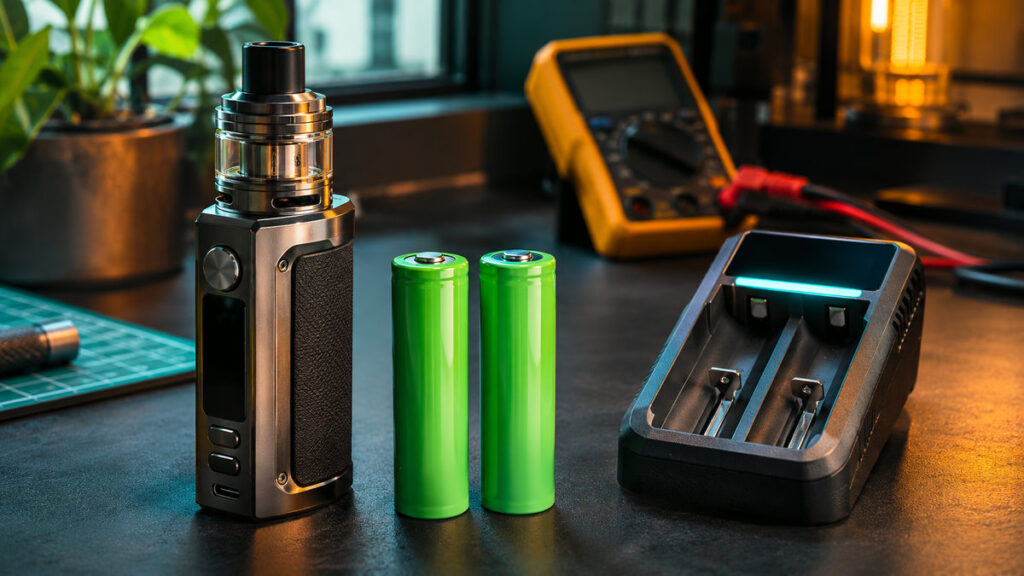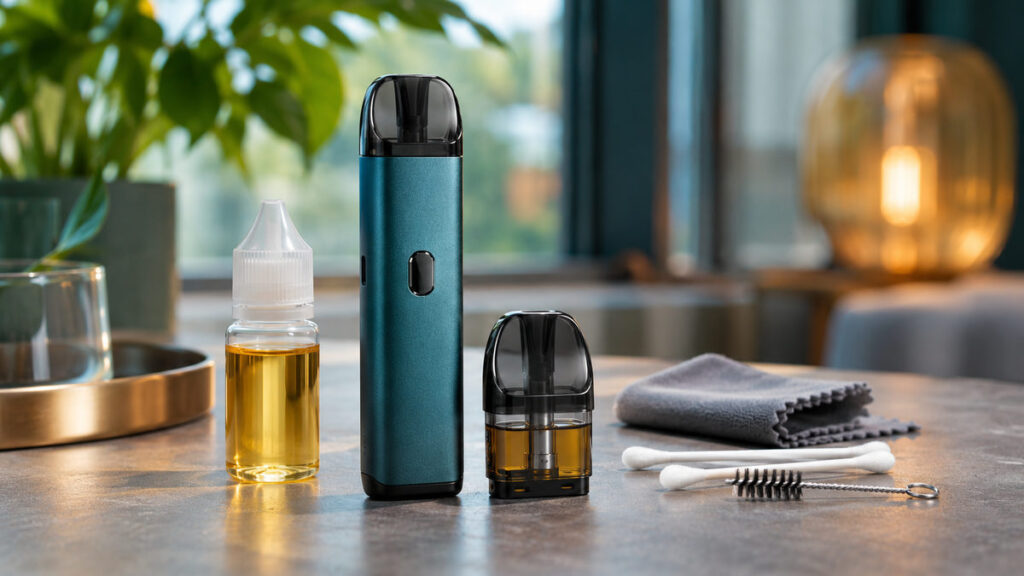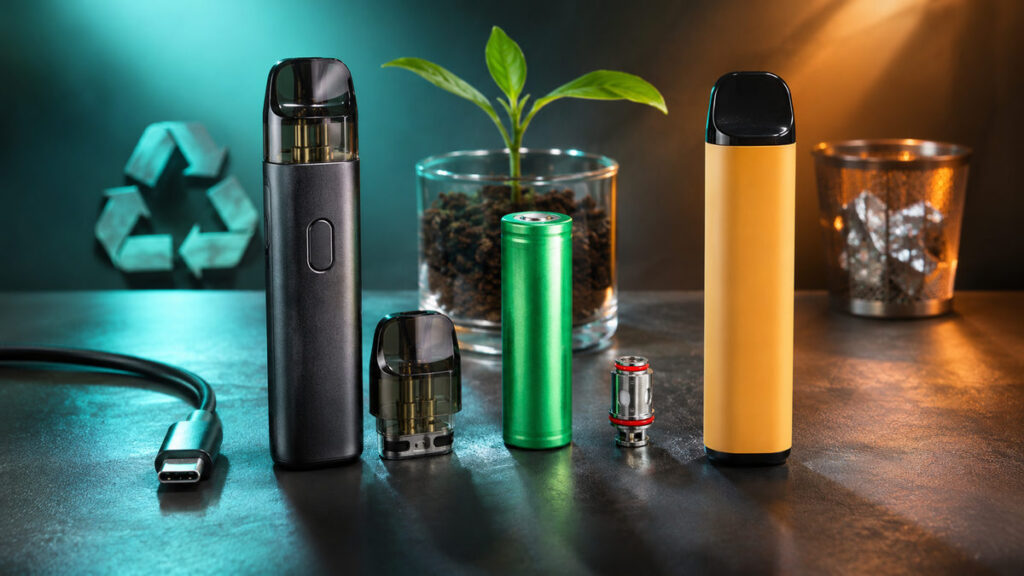

A vape can suddenly taste burnt, start leaking, or produce weak vapor. Often, one tiny component is to blame. So, what is a vape coil? It is the heating part that transforms e-liquid into an inhalable aerosol. Knowing how resistance, power range, and compatibility work can help you avoid plenty of frustrating problems.
Choosing a coil can be confusing for beginners, especially when similar-looking products perform very differently. This guide covers coil types, inhaling styles, lifespan, priming, maintenance, replacement, and common faults. Above all, vaping products are intended only for adults and are not risk-free.
1. What Is a Vape Coil and What Does It Do?
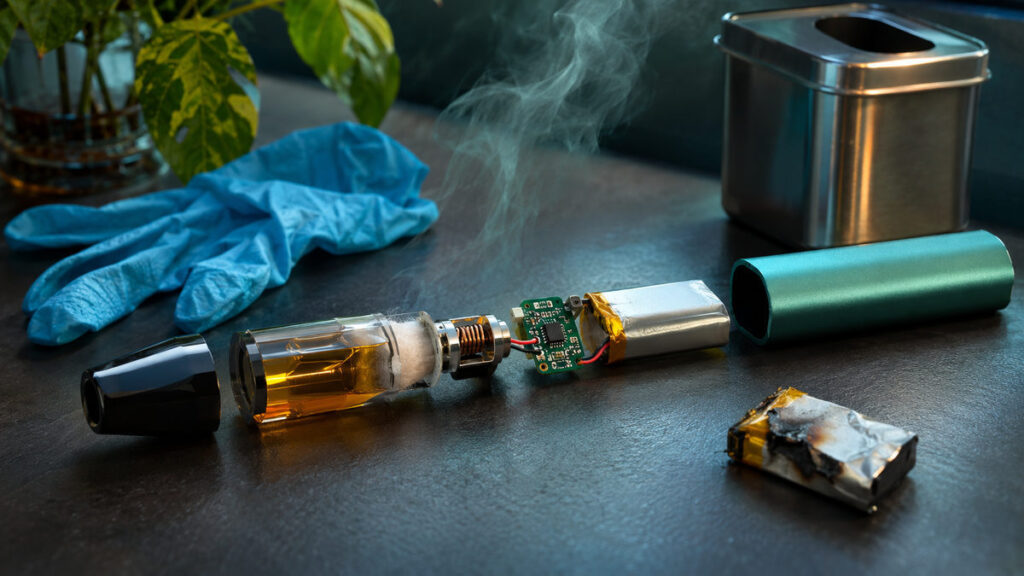
A vape coil is the heating component inside an electronic cigarette or vaping device. The battery sends electrical power through the heating element, which heats the e-liquid held in an absorbent wick. That liquid then turns into an aerosol for the user to inhale.
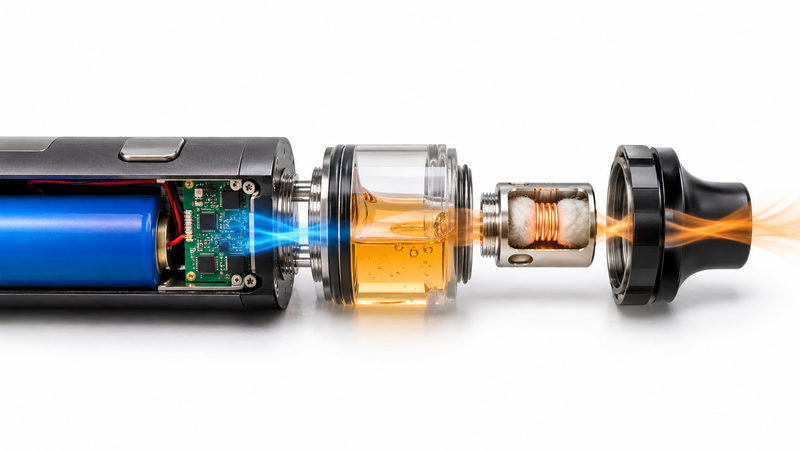
The word coil can refer to two closely related parts. Sometimes it means only the shaped heating element made from conductive material. More commonly, users mean the complete factory-made coil head. This assembly usually includes the heating element, wick, casing, seals, and liquid openings.
How the coil works with other components
Every device depends on several connected components working together. The battery or mod provides power, while the atomizer houses the heating system. A tank or pod holds e-liquid around the coil and wick. From there, the airflow system and mouthpiece guide the aerosol toward the user.
- Battery or mod: Supplies electrical energy and may control wattage or temperature.
- Atomizer: Holds the coil and creates the aerosol.
- Wick: Draws e-liquid toward the heating element.
- Tank or pod: Stores e-liquid and supports the coil assembly.
- Airflow system: Cools the coil and shapes the draw.
- Mouthpiece: Provides the final path for the aerosol.
Even a small change in coil design can noticeably affect the experience. The coil influences flavor intensity, aerosol volume, warmth, airflow requirements, and power consumption. High-output coils also use more e-liquid with each puff. In short, your coil choice affects both performance and running costs.
People often call the visible cloud “vapor,” but it is not harmless water vapor. Vaping produces an aerosol containing small particles and substances from the e-liquid. Nicotine products can also cause dependence and must be stored carefully. Keep all vaping products away from children and pets.
2. Coil Resistance, Ohms, and Recommended Wattage
Coil resistance measures how strongly the heating element opposes electrical current. It is measured in ohms and shown with the Ω symbol. A package, for example, might list 0.8 Ω or 1.2 Ω. Your device may also display the detected resistance once the coil is installed.
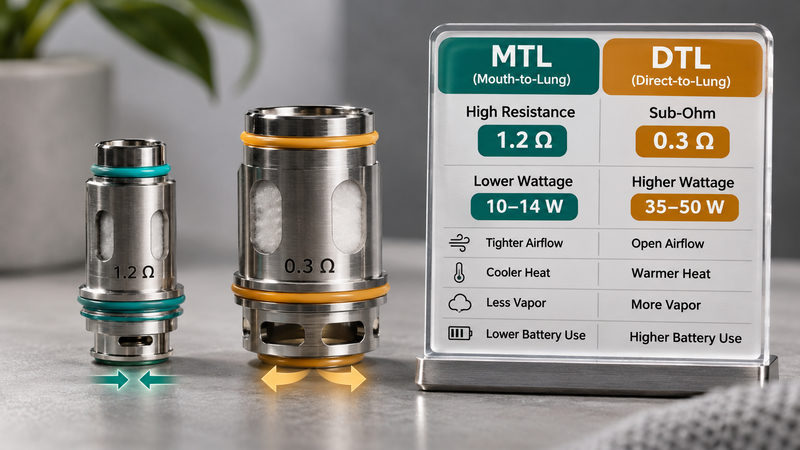
Resistance matters, but it does not determine performance by itself. Coil shape, heating surface, airflow, wire mass, and device output all play a part. Two 0.8 Ω coils can produce noticeably different levels of warmth and aerosol. They may also have different recommended power ranges.
High resistance versus low resistance
Higher-resistance coils usually run at lower wattages. They tend to create a cooler, tighter draw that suits mouth-to-lung vaping. They also typically use less battery power and e-liquid. Many compact pod systems rely on these characteristics to produce discreet, moderate amounts of aerosol.
Lower-resistance coils generally require more power and stronger airflow. Any coil below 1.0 Ω is commonly known as a sub-ohm coil. These coils often produce warmer aerosol and larger clouds, but there is a tradeoff: they can drain batteries faster and use considerably more e-liquid.
- Higher resistance: Often cooler, lower-powered, tighter, and more economical.
- Medium resistance: Often balances warmth, airflow, flavor, and power use.
- Lower resistance: Often warmer, airier, more powerful, and more liquid-intensive.
Every factory coil comes with a recommended wattage range based on its construction. This range accounts for the heating surface, wick capacity, airflow needs, and intended temperature. A coil marked 15–20 watts, for instance, should not be started at 30 watts. Too much power can scorch the cotton before fresh liquid has time to reach it.
Why wattage range matters
Using power below the recommended range may cause the coil to heat too slowly. The result can be weak flavor, gurgling, or excess liquid collecting around the coil. Go above the range, and you risk harsh aerosol, dry hits, and early coil failure. The printed range is there to provide a safer operating boundary.
Do not assume that the lowest resistance will give you the best experience. A 0.2 Ω coil may be far too intense for someone who prefers a cool, cigarette-like draw. A compact device might not support the required output either. Consider resistance alongside wattage, airflow, liquid, and your preferred inhaling style.
3. Vape Coil Types, Materials, and Inhaling Styles
Traditional coils use round wire wound into a small spiral. It is a familiar design that can deliver focused heating and dependable flavor. Mesh coils take a different approach, using a perforated strip or grid with a wider surface. That extra surface area often heats the wick more evenly.
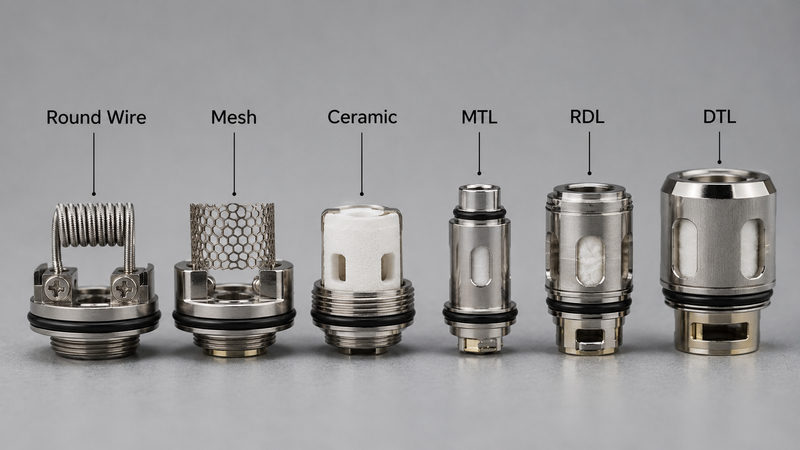
Mesh is common in modern factory-made coil heads. It can offer quick heating, consistent flavor, and efficient contact with the cotton. Still, mesh is not automatically the best choice for every device or user. Its performance continues to depend on airflow, power settings, and a steady liquid supply.
Round wire, mesh, and ceramic designs
Ceramic coils include ceramic material within or around the heating assembly. Depending on the design, the ceramic may support the wire, hold liquid, or distribute heat. So, the term “ceramic coil” does not necessarily mean ceramic replaces the metal element. Construction can vary widely between manufacturers and product families.
- Round-wire coils: Use a spiral wire and often provide focused heating.
- Mesh coils: Use a broad grid that can heat a larger wick area.
- Ceramic designs: Use ceramic to support, surround, or assist the heating system.
Factory-made replacement coils come as sealed assemblies that are ready to fit compatible hardware. The user simply removes the old head and installs a new one. Rebuildable atomizers work differently because users must install and wick their own heating elements. These devices include RTAs, RDAs, and RDTAs.
Rebuildable devices require a solid understanding of resistance, battery limits, connections, and wick placement. Without proper instruction and safe equipment, they are not suitable for beginners. Factory coils are simpler because the manufacturer specifies compatibility and wattage. Even so, users still need to follow the printed ratings.
Tanks, pods, and integrated coils
With a replaceable-coil tank, users keep the tank and change only the coil head. Some pods work in much the same way, accepting small replacement coils through the base. Others have permanently integrated coils. Once an integrated coil fails, the entire pod must be replaced.
Check the product design before trying to remove anything. Forcing an integrated coil out of a pod can crack the casing and release e-liquid. Damaged seals may then lead to persistent leaks. The manual or packaging should clearly identify which component you need to replace.
MTL, RDL, and DTL styles
Mouth-to-lung, or MTL, vaping uses a tighter draw and usually runs at lower power. The aerosol enters the mouth first and is then inhaled. Restricted-direct-lung, or RDL, offers a looser draw with moderate output. Direct-to-lung, or DTL, uses open airflow and typically creates more aerosol.
- MTL: Tighter airflow, lower wattage, smaller aerosol volume, and cooler operation.
- RDL: Moderate airflow, medium wattage, and a balance of warmth and output.
- DTL: Open airflow, higher wattage, warmer aerosol, and greater liquid use.
These labels are useful guides, not complete specifications. You still need to consider airflow, wattage, e-liquid viscosity, and nicotine strength. A coil labeled RDL might feel tight in one pod but airy in another. The complete setup matters more than any single abbreviation.
4. How to Choose a Compatible Replacement Vape Coil
Begin with the exact model of your device, tank, or pod. Coils that look nearly identical can have different diameters, seals, contacts, or locking mechanisms. Looks alone are not enough to confirm compatibility. Check the model name printed on the hardware, packaging, or instruction manual.
Then consult the manufacturer’s compatibility chart to find the correct coil family. Confirm the series name, physical dimensions, connection type, resistance, and supported power range. Check the packaging for model-specific exclusions too. Some coil families contain several versions, and each may fit only selected devices.
- Match the exact tank, pod, or device model.
- Confirm the coil family or series.
- Check resistance and recommended wattage.
- Compare the connection, shape, and sealing rings.
- Verify that the device supports the required power.
Never force a coil into a tank or pod you are unsure about. A snug fit does not guarantee that the electrical contact or seal is correct. Forcing the coil may damage the base, crush a seal, or cause leaks. If it does not slide in and lock naturally, stop.
Match the coil to your preferred draw
Choose an MTL option if you prefer tighter airflow, lower output, and reduced power use. For moderate warmth and a slightly airier draw, RDL may be a better fit. DTL coils are designed for open airflow and higher aerosol output. They also require compatible hardware, suitable liquid, and more battery capacity.
E-liquid viscosity makes a difference to wicking. Thinner, higher-PG liquids often work well in small MTL coils with narrow liquid ports. Thicker, higher-VG liquids usually need larger wicking openings. Suitable RDL or DTL hardware can feed that thicker liquid more effectively.
Very thick liquid may not wick properly in a small coil, leading to dry hits. At the other extreme, very thin liquid can flood a large, open coil. Follow the device maker’s liquid guidance whenever it is available. Changing the power setting cannot fully solve a serious mismatch.
Consider nicotine delivery and device output
High-output coils create more aerosol with every puff. That means they can deliver more nicotine per puff than lower-output setups. Adults who use nicotine should select the strength carefully and stop if they feel unwell. Seek medical advice if concerning symptoms develop.
Finally, make sure the device can operate within the coil’s rated range. A coil that requires 50 watts will not perform properly on a 20-watt device. If the device uses removable cells, use suitable batteries. Replace any damaged batteries and follow all safety instructions from the manufacturer.
5. Vape Coil Lifespan, Priming, and Replacement
Many factory coils last anywhere from several days to about two weeks. There is no universal replacement schedule, though. A light user may get considerably more life from a coil, while a frequent user vaping sweet liquid may need to replace it much sooner.
Long puffs and quick, repeated puffs keep the heating element hot. The wick may then struggle to absorb fresh liquid fast enough. High wattage can also speed up residue buildup and damage the cotton. Dark flavorings and sweeteners, meanwhile, often leave deposits on the heating surface.
- Vaping frequency and daily e-liquid use
- Puff duration and time between puffs
- Operating wattage and available airflow
- E-liquid sweetness, color, and flavoring content
- VG-to-PG ratio and wicking speed
- Coil design, size, and manufacturing quality
Signs that a coil needs replacement
A persistent burnt or unpleasant taste is the clearest warning sign. You may also notice weaker flavor, less aerosol, or a visibly darkened wick. An aging coil can cause repeated gurgling or leaking as well. If basic adjustments no longer bring performance back to normal, replace it.
A burnt taste immediately after installation usually suggests poor priming. The wick may not contain enough liquid, or the starting power may be above the rated range. Several quick puffs can also dry out fresh cotton before it has fully stabilized. Once the cotton is scorched, cleaning rarely gets rid of the taste.
How to replace and prime a factory coil
- Turn off the device and place it on a stable, protected surface.
- Remove the tank or pod according to the manufacturer’s instructions.
- Empty remaining e-liquid when the design requires it.
- Unscrew or pull out the old coil without using excessive force.
- Inspect the seals, coil chamber, and contacts for damage or residue.
- Install an exact compatible replacement and seat it evenly.
- Refill the tank or pod without exceeding its fill line.
- Allow the wick to saturate before switching the device on.
Some manufacturers allow users to add several drops of e-liquid directly to the exposed cotton openings. Doing so can help wet the wick before the tank is filled. Be careful not to flood the central airflow tube with liquid. If the manufacturer advises against direct priming, skip this step.
Once filled, give the wick enough time to saturate. Five to ten minutes is sufficient for many factory coils, although thicker liquid may take longer. Always follow the product instructions if they specify a waiting period. Through exposed openings, a fully soaked wick should no longer appear dry or pale.
Begin below or close to the bottom of the printed wattage range. Take a few gentle puffs, then raise the power gradually in small steps. A 20–30-watt coil, for example, might be started near 20 watts. Stop increasing the power when the flavor, warmth, and airflow feel right.
Do not keep using a coil that remains burnt, damaged, or electrically unstable. Wipe any spilled e-liquid off the device and wash exposed skin promptly. Used coils contain metal, cotton, and liquid residue, so discard them in line with local household waste or recycling guidance.
6. Maintenance, Troubleshooting, and Coil Safety
Keep enough e-liquid around the wick while using the device. Pause between puffs as well, giving the cotton time to absorb more liquid. Adequate airflow and power within the rated wattage range also matter. These simple habits can limit overheating and help the coil last longer.
Some removable factory coils can handle a gentle rinse if their instructions permit it. A rinse may loosen residue on the surface, but it rarely brings the coil back to its original performance. The wick must also dry completely before reuse. Any trapped water may dilute the e-liquid and cause sputtering.
Cleaning will not fix scorched cotton, damaged seals, degraded wire, or a burnt flavor that refuses to go away. Replace any coil that is physically damaged or unpleasant to use. Never scrape, pierce, or reshape a sealed factory coil. Altering it can cause electrical faults or unpredictable heating.
Troubleshooting dry hits and burnt flavor
Start by checking the e-liquid level, then allow time for the wick to saturate. Make sure the liquid is not too thick for the coil. If the wattage is above the rated range, lower it. Open the airflow as needed, and avoid taking repeated puffs without a pause.
- Refill before the wick openings become exposed.
- Wait longer after installing or refilling the coil.
- Lower excessive wattage within the approved range.
- Use a suitable e-liquid viscosity.
- Leave more time between puffs.
Troubleshooting leaking, gurgling, and spitback
Flooding occurs when too much liquid enters the coil’s airflow path. You may hear gurgling or popping, notice leaks, or feel hot droplets at the mouthpiece. Check the seals, coil seating, fill level, and any visible cracks. It is also worth confirming that the power is not set too low for the installed coil.
Overfilling can force liquid into the central air channel. Condensation may also gather beneath the pod or inside the mouthpiece. With the device switched off, wipe accessible areas using a dry cloth. Torn seals, cracked pods, and damaged tank glass should be replaced immediately.
Strong popping sometimes happens when liquid pools on the heating surface. A little light crackling, however, can be perfectly normal. Persistent spitback needs attention because hot droplets may reach the mouth. If inspection and correct settings do not solve the issue, stop using the device.
Troubleshooting weak flavor or aerosol
Check the battery charge first and make sure the correct power setting is selected. Look for blocked airflow openings and clean any accessible electrical contacts. An old coil may still heat while producing dull, muted flavor. When performance fades gradually, replacing the coil often fixes it.
Make sure the coil genuinely matches both the device and tank. A weak electrical connection can cause resistance errors or inconsistent output. If the problem continues, the cause may be a defective coil, damaged pod, unsuitable liquid, or failing device. Stop using it if the device becomes unusually hot or repeatedly displays errors.
Beginner coil checklist
- Select: Match the exact device, coil family, resistance, and power range.
- Inspect: Check seals, contacts, packaging, and the new coil for damage.
- Prime: Wet exposed cotton only when permitted, then fill the reservoir.
- Wait: Allow enough time for complete wick saturation.
- Start low: Begin near the bottom of the recommended wattage range.
- Operate carefully: Maintain liquid, airflow, and pauses between puffs.
- Troubleshoot: Check settings, viscosity, installation, seals, and battery charge.
- Replace: Discard coils that remain burnt, damaged, leaking, or unreliable.
Conclusion
A vape coil heats the e-liquid stored in its wick. Its resistance, design, wattage range, airflow, and compatibility all affect flavor, warmth, aerosol output, and power use. The right e-liquid and careful operating habits can prevent many common problems. Replacing worn coils on time also helps protect the device from persistent leaks and poor performance.
Before fitting your next coil, check the exact device compatibility and printed wattage range. Prime the wick thoroughly, give it enough time to saturate, and raise the power little by little. If the coil remains burnt, damaged, unstable, or unsafe, replace it immediately.