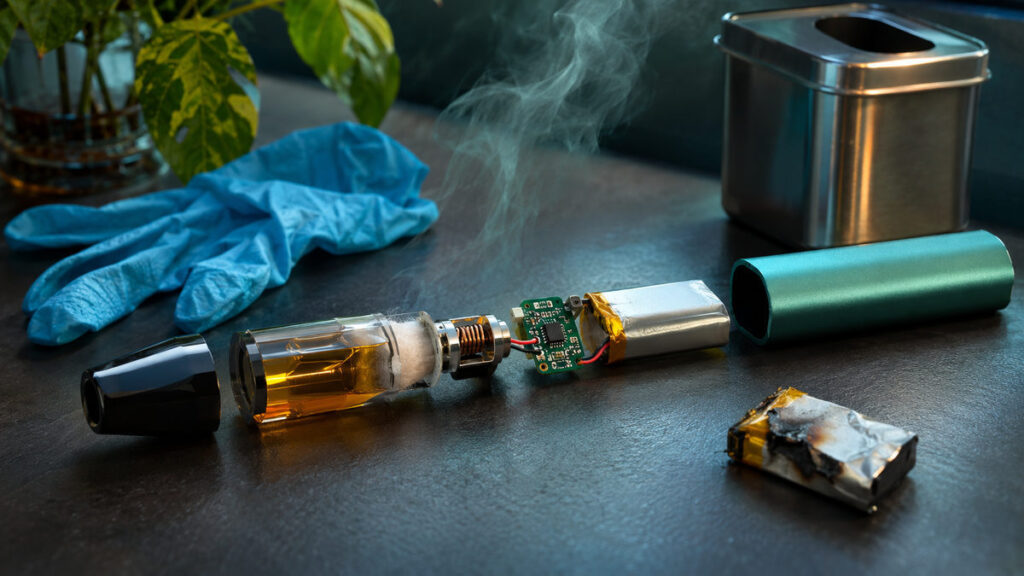
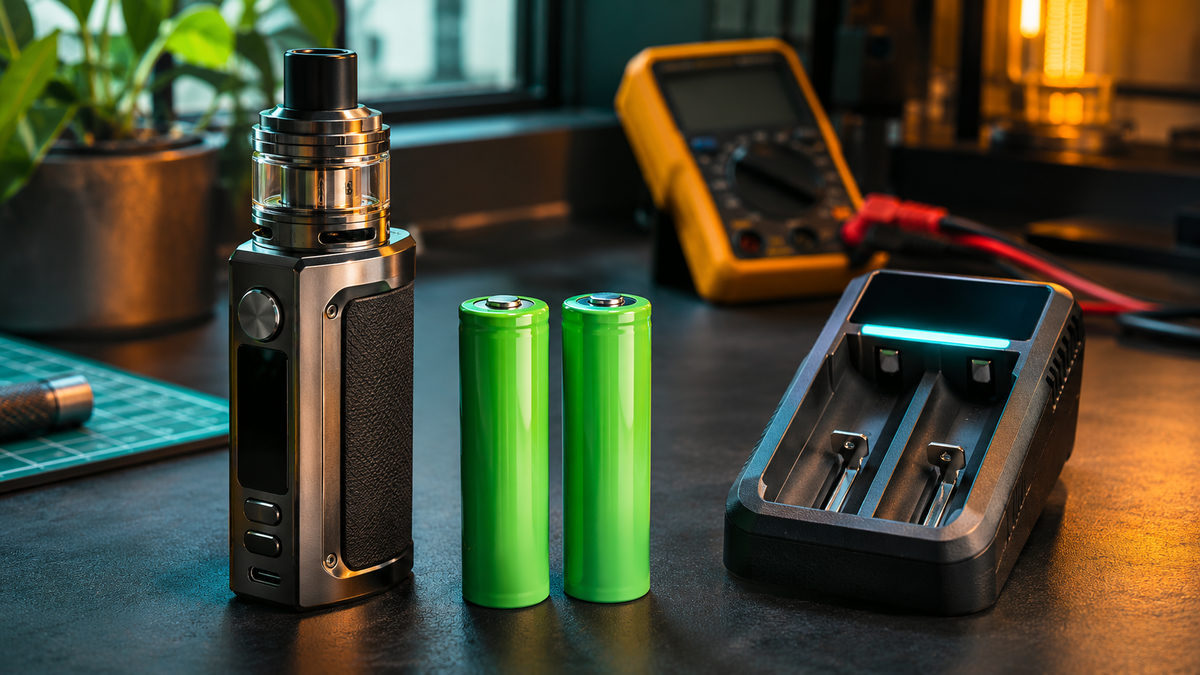
Why does one vape battery last all day while another needs charging before lunch, even when their labels look similar? Understanding Vape Battery Capacity and mAh helps make sense of that frustrating difference. Still, capacity is only part of the picture. Voltage, wattage, current limits, device efficiency, and personal habits all influence runtime.
Battery labels often pack several unfamiliar numbers into a small space. It is easy to assume that a higher capacity rating automatically means better performance or greater safety, but that is not always true. This guide breaks those specifications down in practical terms. It also explains how to estimate runtime, compare batteries, troubleshoot rapid drain, and handle lithium-ion cells responsibly.
1. Understanding Vape Battery Capacity and mAh
What milliamp-hours actually measure
Battery capacity is the amount of electrical charge a battery can store under specified test conditions. Manufacturers typically state it in milliamp-hours, or mAh. To put that into perspective, 1,000 mAh equals one amp-hour, or Ah. In theory, a 3,000 mAh battery could supply 3,000 milliamps for one hour.
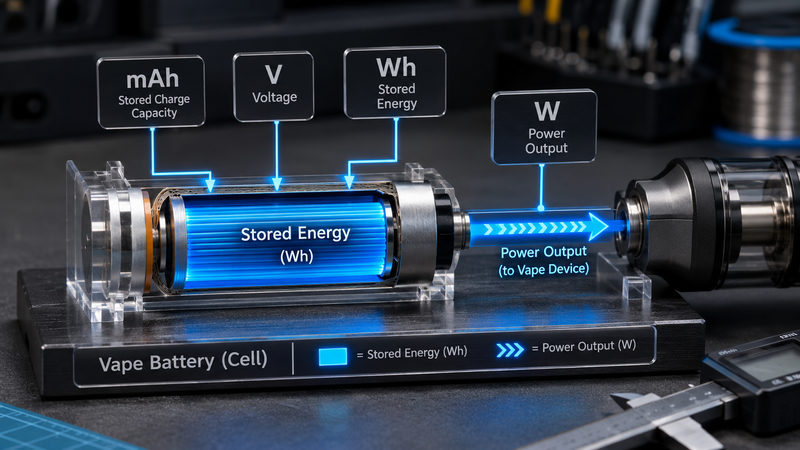
That does not mean a vape will run continuously for one hour. Vaping uses short bursts of power rather than a steady current. The device might draw a high current for three seconds, then sit idle for several minutes. The stored charge is therefore spread across many individual puffs.
Testing conditions matter too, including the discharge rate and cutoff voltage. Two batteries with identical labels can behave quite differently under heavy loads. Age, temperature, manufacturing quality, and internal resistance may all reduce usable capacity. Counterfeit cells are another concern because their printed ratings may bear little resemblance to genuine laboratory results.
Charge, energy, voltage, and power
Milliamp-hours indicate stored charge, not stored energy directly. Watt-hours are more useful when comparing energy and estimating runtime. To calculate them, multiply amp-hours by the battery’s nominal voltage. A 3,000 mAh cell, for example, equals 3 Ah, and 3 Ah multiplied by 3.6 volts gives 10.8 watt-hours.
Voltage refers to electrical potential, while wattage tells you how quickly energy is being used. Amperage measures the current flowing through the circuit. The three are related, but they are not interchangeable. Put simply, power in watts equals voltage multiplied by current in amps.
A regulated vape adjusts battery output to provide the wattage you select. As the battery voltage drops, the device may pull more current to maintain the same power. High-wattage settings can therefore place considerable demand on the cell. Crucially, a high mAh rating does not mean a battery can safely deliver high current.
- mAh: The amount of electrical charge stored under stated test conditions.
- Wh: The battery’s approximate stored energy and a better basis for runtime estimates.
- V: The electrical potential available from the battery.
- W: The rate at which the device consumes energy.
- A: The current flowing through the battery and device.
2. How to Estimate Vape Battery Runtime
Start with watt-hours
A watt-hour calculation gives a useful runtime estimate because it connects stored energy to device power. Start by converting mAh to Ah, dividing the stated capacity by 1,000. Then multiply the result by the battery’s nominal voltage. A 2,500 mAh battery at 3.6 volts, for example, stores about 9 watt-hours.
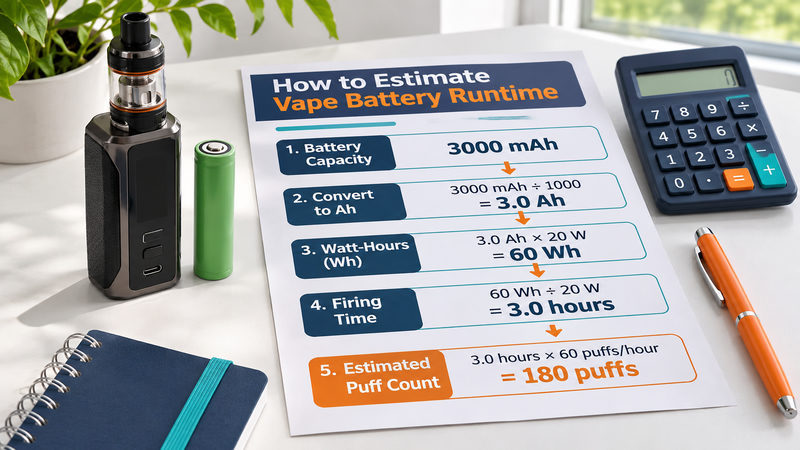
Next, divide the watt-hour figure by your chosen wattage. At 30 watts, 9 watt-hours theoretically provides 0.3 hours of continuous output, or about 18 minutes of uninterrupted firing. Of course, people do not normally fire a vape continuously. Puff duration offers a far more useful comparison.
Imagine that each puff lasts three seconds. Eighteen minutes is 1,080 seconds, giving a theoretical total of 360 puffs. Real-world results will be lower because of conversion losses and voltage limits. Applying an efficiency factor of between 0.80 and 0.90 gives you a more realistic place to start.
At 85% efficiency, the estimate falls from 360 to roughly 306 puffs. Treat that as a planning figure, not a guarantee. The device may stop firing before the battery has released every calculated watt-hour. Longer puffs and higher settings can also reduce the total substantially.
Estimating a multi-battery device
A regulated device using two matched cells generally carries about twice the energy of a single equivalent cell. Two 3,000 mAh, 3.6-volt cells, for instance, contain roughly 21.6 watt-hours in total. At 60 watts, that works out to 0.36 theoretical hours of continuous output. Once adjusted to 85% efficiency, usable firing time is about 18 minutes.
In two-battery configurations, cells may be connected in series or parallel. The device design determines how voltage and capacity are combined internally, so displayed mAh does not simply double in every setup. Total watt-hours provide a better comparison. Always follow the manufacturer’s battery requirements as well.
Why the estimate changes
Real batteries cannot deliver every rated unit of energy in all conditions. High current generates heat and causes more voltage sag, while cold temperatures can temporarily limit performance. Older batteries also hold less capacity and develop higher internal resistance.
The coil and device electronics add further variables. Screens, standby circuits, and safety monitoring all use small amounts of energy. Rebuildable coil resistance may shift as components heat up or connections loosen. That is why two people using identical devices can experience very different daily runtimes.
- Use nominal voltage, not the fully charged voltage, for basic energy estimates.
- Apply an efficiency allowance of roughly 80% to 90%.
- Count average puff duration instead of relying only on daily puff totals.
- Treat displayed battery percentages as estimates, especially near empty.
- Expect capacity to decline as the cell accumulates charging cycles.
3. What Determines How Long a Vape Battery Lasts?
Power settings and coil behavior
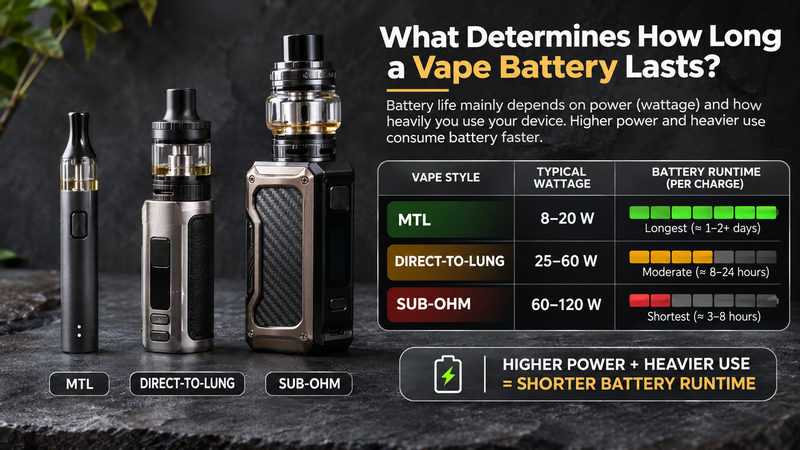
Wattage usually has the most obvious effect on battery runtime. At 60 watts, a device uses energy about twice as quickly as it does at 30 watts, provided puff length and frequency stay the same. That detail matters. Longer or more frequent draws can quickly cancel out the savings of a lower setting.
Coil resistance affects regulated and mechanical devices in different ways. A regulated device changes current to meet the chosen power level, so selected wattage often predicts battery demand better than resistance alone. With an unregulated device, resistance directly determines current according to Ohm’s law.
Temperature control, boost modes, and preheat settings can change consumption too. A strong preheat, for example, may briefly send extra power to a cold coil. Larger coils also need more energy to reach operating temperature. As a result, heavy metal builds may use noticeably more power than smaller, simpler coils.
Habits that change daily runtime
Vaping habits differ enormously. One person might take five short puffs in an hour, while another takes several long draws every few minutes. With the same battery, the second user could be looking for a charger before midday.
Airflow and inhaling style also shape the power range a user prefers. Tight mouth-to-lung devices generally pair smaller coils with modest wattage, so compact batteries often last longer. Direct-to-lung devices tend to heat larger coils at higher power, increasing energy consumption.
A small pod, for example, might run between 10 and 18 watts. A moderate regulated device may operate between 25 and 50 watts, while a high-output setup can exceed 80 watts. These figures show common patterns, though every device has its own approved operating range.
- Light pod use: Short, occasional puffs at low power may last through a normal day.
- Frequent mouth-to-lung use: Moderate puff frequency can require daily charging.
- Restricted direct-to-lung use: Medium power often produces variable half-day to full-day runtime.
- High-power direct-to-lung use: Long, frequent draws may require spare cells or repeated charging.
Environmental and device factors
Cold weather slows battery chemistry and increases voltage sag, though performance may return once the battery reaches a comfortable indoor temperature. Excessive heat is more serious because it speeds up degradation. Never leave a vape in a hot vehicle or next to a heater.
The condition of the device matters as well. Dirty contacts create extra resistance, and a damaged charging port may prevent reliable charging. A failing coil or liquid leak can also cause unexpected electrical issues. Regular checks make it easier to tell genuine battery decline from a fault elsewhere in the device.
Standby drain is usually minor, but it becomes more noticeable when a device sits for several days. Bright screens, wireless features, and frequent adjustments also use energy. When the manufacturer recommends it, switch the device off during transport. Doing so helps prevent accidental firing and needless discharge.
4. Capacity Versus Discharge Rate: Choosing the Right Battery
Why capacity cannot guarantee safety
Capacity describes how much charge a battery can store. The continuous discharge rating tells you how much current it can safely supply continuously under specified conditions. Those ratings serve different purposes, which is why choosing a cell by mAh alone can create a dangerous mismatch.
Battery design often trades capacity against current capability. A high-capacity cell may work well at moderate power but lack the current rating for demanding use. A high-current cell, by contrast, may offer less runtime. Required discharge capability must always take priority over extra capacity.
Some battery wrappers advertise inflated pulse ratings, but those claims may rely on vague durations, temperatures, or recovery periods. A verified continuous rating is a more reliable basis for comparison. Check the device manual and trustworthy cell documentation before buying removable batteries.
Matching batteries to regulated devices
For a regulated device, worst-case battery current should be calculated using the lowest operating voltage and expected efficiency. One conservative estimate divides device wattage by the number of cells, low-voltage cutoff, and efficiency. For example, 80 watts shared across two cells demands less current from each cell than 80 watts supplied by one. The exact calculation, however, depends on the device design.
If you are not comfortable with electrical calculations, do not rely on an improvised formula alone. Follow the device maker’s specified cell type and minimum continuous discharge rating. Never exceed the stated power or battery requirements. If the manual is unclear, a reputable specialist can help confirm compatibility.
In a multi-cell device, use batteries with the same brand, model, capacity, age, and charging history. This is commonly called marrying batteries. Keep the set together, then charge and replace the cells as a group. Pairing an old cell with a new one can cause uneven voltage sag and added stress.
Built-in batteries and removable cells
Built-in batteries make compatibility simpler because the manufacturer integrates the cell with the charging controls. You still need to follow the approved cable, input limits, and temperature range. Stop using the device if the enclosure swells, separates, or grows unusually hot. Do not open a sealed device; seek qualified recycling guidance instead.
Removable cells are easy to replace, but they call for more careful handling. Purchase authentic cells from reputable battery specialists, not unknown marketplace sellers. Check the wrapper and insulating ring before every installation. Even a small tear near the positive terminal may cause a short circuit.
- Confirm the exact battery size required by the device.
- Meet or exceed the manufacturer’s continuous discharge requirement.
- Choose authentic cells with independently credible specifications.
- Use matched sets in every multi-cell device.
- Never force a cell into a tight or damaged compartment.
- Reject batteries with dents, corrosion, leakage, or persistent overheating.
Mechanical devices lack electronic regulation and many common protection features. Safe use requires advanced knowledge of resistance, current, cell condition, and short-circuit risks. New users are better served by a regulated device with documented protections. No amount of extra capacity makes it safe to exceed a cell’s current limit.
5. Charging Time, Cycle Life, and Fast-Drain Troubleshooting
Estimating charging duration
A basic charging-time estimate comes from dividing battery capacity by charging current. A 3,000 mAh battery charging at 1,000 mA, for instance, needs at least three theoretical hours. Lithium-ion charging slows as the battery nears full capacity so voltage can be controlled safely. Temperature controls and conversion losses add more time.
In real use, the same battery may take three and a half hours or longer. A 2-amp charger will only charge it faster if both the cell and device support that rate. The cable and power source must meet the proper specification too. A higher-rated adapter cannot force extra speed when the device limits its input current.
Charge batteries on a stable, nonflammable surface out of direct sunlight. Stay nearby and watch for unusual heat, odors, swelling, or noise. Once charging is complete, disconnect the device as directed in its instructions. Never charge a damaged cell or use a charger with cracked wiring.
Understanding cycle life
Lithium-ion batteries slowly lose capacity through regular use and calendar aging. One full cycle is the accumulated use of 100% of the battery’s capacity. Two separate 50% discharges, for example, add up to roughly one cycle. Actual cycle life varies with chemistry, temperature, charging rate, and discharge stress.
Repeated overheating and deep discharge wear a battery out faster. Moderate temperatures and reasonable power demands generally help it last longer. A cell may continue working after a noticeable loss of capacity, but its voltage sag can still worsen. Replace aging batteries once their runtime or performance becomes unreliable.
Fast-drain troubleshooting checklist
Rapid battery drain does not necessarily mean the cell has failed. Start by comparing your current settings with the ones you used previously. A new coil may call for more wattage, and slightly longer puffs can raise consumption without being obvious. A firmware option or powerful preheat mode might also have changed.
- Confirm the wattage, temperature, preheat, and screen settings.
- Check whether puff duration or daily frequency has increased.
- Inspect the coil, tank, contacts, charging port, and battery compartment.
- Clean accessible contacts according to the device instructions.
- Try an approved cable and suitable power source.
- Check whether the device reaches a complete charge normally.
- Compare performance with a known-good compatible battery when appropriate.
- Stop immediately if the device becomes hot while idle.
If one cell in a matched pair drains faster than the other, stop using the set until you find the cause. Repeated low-battery warnings at a moderate charge can also point to excessive voltage sag. Never keep testing a battery that is hot, dented, leaking, or swollen. Isolate it safely and arrange responsible recycling.
6. Vape Battery Safety, Maintenance, and Capacity Guide
Daily lithium-ion battery care
Lithium-ion cells pack a great deal of energy into a small metal container. Loose batteries should never go into pockets, bags, or drawers alongside metal objects. Keys or coins can connect the terminals and trigger a severe short circuit. Carry removable cells only in individual protective cases.
Check every removable cell before using it. Look closely for wrapper tears, damaged insulator rings, dents, rust, moisture, or leakage. Stop using any cell that has physical damage or heats up without explanation. Do not attempt repairs unless a qualified specialist has confirmed the correct procedure.
- Use only compatible batteries, chargers, cables, and power sources.
- Keep cells dry and away from extreme heat or freezing conditions.
- Never carry an unprotected removable battery.
- Do not leave charging batteries unattended or charge them overnight.
- Keep batteries away from children and pets.
- Store unused cells in cases at a moderate charge and temperature.
- Recycle batteries through an approved collection program.
If a battery vents, hisses, smokes, or becomes dangerously hot, back away and keep other people clear. Do not handle it with bare hands or breathe in the fumes. Contact local emergency services if there is a fire or immediate danger. Afterward, follow local hazardous-waste guidance.
Capacity priorities for common devices
Low-power pod users can focus on compact size and enough capacity to cover a typical day. Frequent users, however, may prefer a larger built-in battery or easy access to daytime charging. At moderate power, balance available watt-hours against the required current capability. Device compatibility still comes first.
For high-power users, verified discharge performance matters more than additional mAh. Multi-cell devices also demand matched batteries and careful handling. Removable spares can be useful while traveling, but each cell needs its own protective case. Because transport rules vary, check the carrier’s requirements before every trip.
For extended storage, switch the device off and remove detachable cells if the manual allows it. Do not leave lithium-ion batteries completely full or empty for long periods. Check stored cells from time to time for damage or severe voltage loss. A battery showing swelling, leakage, corrosion, or enclosure damage should never go back into service.
Conclusion
Battery capacity in mAh is useful for comparing stored charge, but it cannot predict runtime on its own. Real performance also depends on watt-hours, power settings, puffing habits, efficiency, temperature, and cell condition. Safe use comes down to continuous discharge capability and confirmed device compatibility as well. Capacity must never take priority over the required current rating.
Careful charging, protected transport, moderate storage temperatures, routine inspections, and responsible recycling all reduce preventable risks. Treat unexplained heat, swelling, leakage, or wrapper damage as an unmistakable warning. Check your device manual and current battery specifications today. If a cell is damaged or incompatible, replace it with an authentic, manufacturer-approved option from a reputable seller.