Why does a vape labeled for thousands of puffs last one person for weeks but another for only a few days? What does puff count mean on a vape? It’s an estimate of capacity, not an exact promise. After all, each draw can use a different amount of e-liquid and battery power.
Advertised numbers may look precise, but there’s no universal puff size. Draw style, power, airflow, battery performance, and liquid consumption all affect the result. Understanding these variables makes it easier to compare devices realistically. It also helps you tell when a device has reached the end of its usable life.
1. What Does Puff Count Mean on a Vape?
Understanding the advertised number
Puff count is the estimated number of inhalations a vape can deliver over its usable life. That life typically ends when the device runs out of e-liquid, battery charge, or functioning hardware. Whichever component fails first can stop the device, even if the others still have some capacity. A non-rechargeable battery, for example, may die before the reservoir is completely empty.
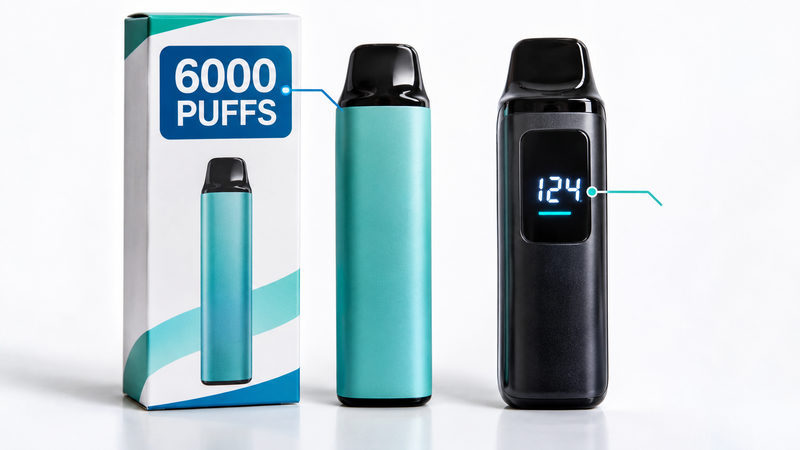
Manufacturers determine advertised ratings under selected test conditions. So, a label showing 3,000 puffs doesn’t guarantee exactly 3,000 inhalations for every user. Your draws may be longer or demand more power than those used in testing. Temperature, storage, and normal manufacturing differences can also affect the final result.
What counts as one puff?
One puff generally means one device activation paired with one inhalation. Draw-activated models turn on when a sensor detects airflow, while button-operated products activate when the user presses the control. Either action may count as a single puff, even when the duration and strength differ significantly.
A gentle one-second draw and a deep five-second draw may each register as one puff. The longer draw, though, usually produces more vapor and uses more liquid. There is no universal puff size shared by every manufacturer, laboratory, device, or user. That makes direct comparisons less exact than the labels might imply.
Puff ratings versus live puff counters
An advertised puff rating estimates a device’s total capacity. A live puff counter, on the other hand, records activations as the device is used. Some counters don’t account for draw length, vapor output, or liquid consumption. Even an accidental activation could raise the displayed total without representing a normal inhalation.
Puff totals can’t show exact nicotine intake either. Nicotine delivery depends on concentration, device output, draw behavior, and individual inhalation patterns. Most of all, a larger puff count doesn’t prove better quality or greater safety. It simply describes estimated device capacity under a particular set of assumptions.
2. How Vape Puff Count Is Calculated
Controlled draw testing
Manufacturers may test a device by taking repeated draws under controlled conditions. They choose specific assumptions for puff duration, draw strength, airflow, power output, and the time between activations. A machine, for example, might take identical short draws with fixed pauses in between. Testing continues until the device reaches a chosen depletion or performance threshold.
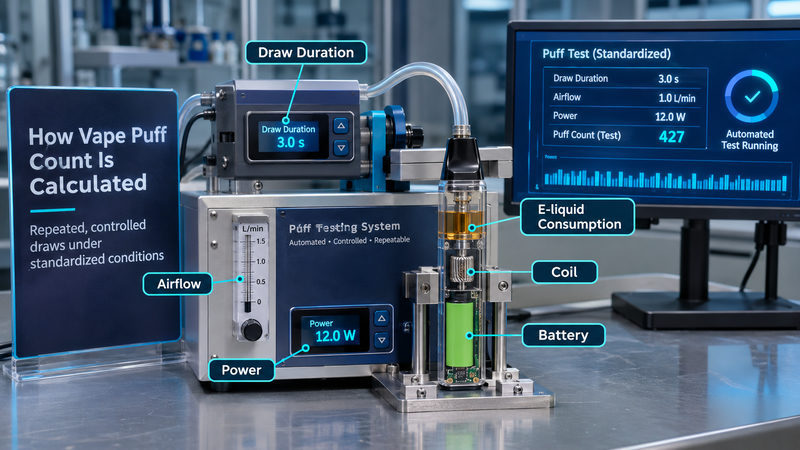
Controlled testing produces repeatable results within the same testing system. Real users, however, rarely inhale with machine-like consistency. One person might take quick draws every few minutes. Someone else may take longer draws in several closely spaced sessions.
A simplified calculation
The basic calculation compares usable e-liquid with the amount consumed during each standardized draw. Put simply, estimated puff count equals usable e-liquid volume divided by estimated e-liquid consumed per test puff. Suppose a device contains 6 milliliters of usable liquid. If every test puff consumes 0.002 milliliters, the theoretical result is 3,000 puffs.
That example explains the principle, though real testing may involve additional measurements. Not all the liquid inside a device necessarily reaches the coil. Some residue may remain in the wick or reservoir after vapor production drops. This means the assumed usable volume matters just as much as the reservoir capacity printed on the label.
Why test-puff duration matters
Short test draws generally use less liquid per activation, allowing them to produce a higher estimated total than longer draws. Someone taking four-second inhalations may go through liquid faster than a test based on shorter activations would suggest. The exact difference, however, depends on the coil, airflow, power, and control system.
Coil resistance helps determine how the device turns electrical energy into heat. Wick efficiency affects how quickly liquid reaches the heated coil. Higher power often creates more vapor with each activation, so increased vapor output usually means fewer available draws from the same liquid supply.
Airflow design shapes both draw behavior and vapor production. Open airflow may allow larger inhalations, while restricted airflow can produce a more concentrated draw. Some devices regulate power throughout an activation; others gradually lose output as battery voltage falls. Because of these design differences, devices with similar liquid and battery specifications can still produce different totals.
Testing methods and the way claims are presented can vary among manufacturers. They may also differ across laboratories and legal jurisdictions. One brand’s 5,000-puff estimate, for instance, may rely on different assumptions from another brand’s figure. It’s better to treat the number as a comparison clue, not an exact measurement.
3. Why Advertised and Real-World Puff Counts Vary
Draw style and usage frequency
Longer, deeper, or stronger draws keep the coil active for more time. Each activation will usually use more e-liquid and battery energy as a result. Someone taking two-second draws may get more activations than a person taking five-second draws. They could follow the same daily routine and still empty identical devices at very different rates.
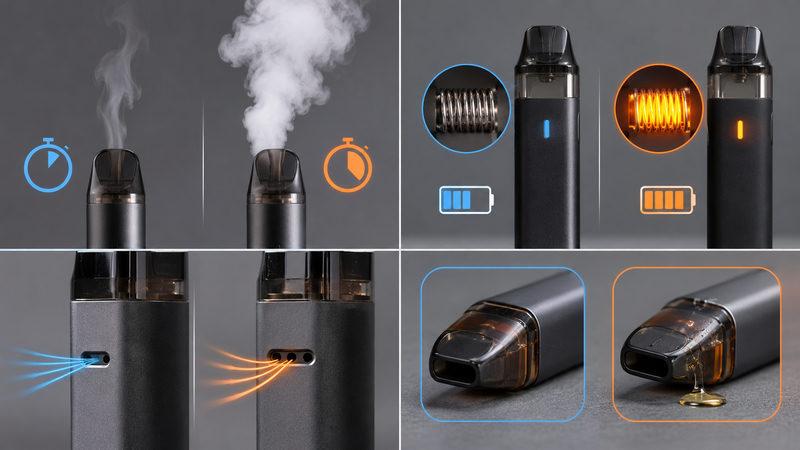
Frequent back-to-back use can change how a device behaves too. Repeated draws give the coil less time to cool and the wick less time to absorb fresh liquid. A warmer coil may produce vapor differently during later activations. Rapid sessions can therefore increase consumption or lead to an unpleasant dry taste.
Power, airflow, and internal design
Higher power settings send more energy to the coil, usually creating warmer, denser vapor while consuming liquid faster. Adjustable devices may deliver dramatically different totals at their lowest and highest settings. The advertised number might reflect only one chosen mode.
More open airflow can encourage larger draws because inhaling feels less restricted. Tighter airflow, by comparison, may lead to longer draws or smaller mouthfuls. Neither design guarantees a higher count every time. Actual consumption comes from the interaction between device engineering and personal behavior.
Several additional variables can affect useful lifespan:
- Coil resistance and heating efficiency
- Wick saturation and liquid delivery
- Battery age, condition, and charging efficiency
- Storage temperature and device age
- Sensor sensitivity and airflow condition
- Normal manufacturing tolerances between units
Extreme heat, for example, can strain a lithium battery and thin the e-liquid. Cold conditions may temporarily weaken battery performance and change how the liquid flows. Long storage periods can also degrade seals, liquid quality, and battery condition. In some cases, useful life drops before regular use even starts.
Why a vape may stop earlier than expected
A vape may stop working before reaching its expected count for several reasons. The battery could be depleted, or leaking liquid might interfere with internal components. Blocked airflow can keep a draw sensor from activating. A damaged sensor may also fail while usable liquid remains in the device.
Dry or failed coils can cause weak vapor, harsh flavor, or a burnt taste. Poor storage may likewise damage the battery or cause leaks. Draws that last longer than the testing standard will usually consume available resources more quickly. An early stop, then, doesn’t always mean the advertised calculation was wrong; the user conditions may simply have been different.
A rechargeable disposable can still run out of e-liquid. Charging restores electrical energy, but it can’t replace liquid that has already been consumed. Nor can it repair a burnt coil, damaged wick, leaking seal, or failed sensor. Once a device shows signs of depletion or damage, users should stop rather than repeatedly charging it.
4. How E-Liquid, Battery Capacity, and Rechargeability Affect Lifespan
E-liquid sets a physical limit
E-liquid capacity places a clear physical limit on total vapor production. Once the usable liquid is gone, the device can no longer produce normal vapor safely. Battery capacity and electrical efficiency, however, determine whether it can use all that liquid. In a non-rechargeable product, a weak battery may die while some liquid remains in the reservoir.
Milliliters offer useful context when you’re comparing products. A device with more liquid may have greater potential capacity under similar operating conditions. Still, milliliters can’t predict an exact number of inhalations. Coil output, puff duration, and unusable residue all influence the final total.
What mAh means on a vape
The abbreviation mAh stands for milliamp-hours. It describes battery charge capacity rather than guaranteeing a particular puff count. In general, a higher figure means the battery can store more electrical charge. The rating alone, though, doesn’t show how efficiently the device uses that energy.
Two vapes with the same mAh rating can have very different lifespans. One may run at higher power and create more vapor during every activation. Another might use a higher-resistance coil and draw less energy per puff. Electronics, voltage control, battery quality, and heat loss affect performance as well.
What rechargeability changes
Rechargeable disposable vapes let users restore battery power during the product’s intended life. This allows the battery to keep supporting the device while liquid remains. Charging won’t refill the reservoir, though. It also can’t undo normal wear to the coil and wick.
High-puff devices often combine several features that increase capacity. These can include larger liquid reservoirs, rechargeable batteries, efficient electronics, or improved coil systems. Some models also offer adjustable output or multiple coils. Each added feature can affect consumption, reliability, and real-world lifespan.
Users should follow the provided charging instructions and use compatible equipment. Never open, puncture, modify, or refill a sealed device. Doing so can damage the lithium battery or expose users to leaking liquid. A product should only be serviced when its manufacturer has explicitly designed and documented it for user servicing.
5. How Long Does a Disposable Vape Last?
Calculate an approximate lifespan
A simple formula gives you a rough estimate for planning. Approximate days of use equals advertised puff count divided by estimated puffs per day. For example, divide a 3,000-puff rating by your usual daily total. Both numbers carry some uncertainty, so the answer can’t guarantee a specific lifespan.
Consider these calculation examples:
- Light-use example: 3,000 divided by 100 equals an estimated 30 days.
- Moderate-use example: 3,000 divided by 200 equals an estimated 15 days.
- Frequent-use example: 3,000 divided by 300 equals an estimated 10 days.
These labels are calculation scenarios, not medical or behavioral categories. Usage differs widely from person to person and can even change from one day to the next. Dependence, nicotine concentration, device type, draw style, and personal routine all affect frequency. No single daily average will work reliably for everyone.
Estimate your personal daily total
If the device has a built-in puff counter, that’s the easiest place to start. Keep in mind that it may count activations rather than complete inhalations. You can also keep a manual tally on paper or your phone. Record each session, or check the counter at the same time every day.
A log covering several days usually gives a better estimate than one isolated day. Record a few typical weekdays and weekend days, then add the totals together. Divide that sum by the number of days you recorded. This way, an unusually busy, stressful, or social day has less influence on your average.
Suppose your five-day record shows 160, 210, 180, 250, and 200 puffs. That adds up to 1,000 activations, for an estimated daily average of 200. On paper, a 3,000-puff device could last about 15 days. Actual performance may still land above or below that estimate.
What puff tracking can and cannot show
Tracking can show when and how often you reach for a vape. You might notice, for example, that sessions become more frequent during commutes, breaks, or evenings. That information can support a personal reduction plan with measurable steps. It can also help you compare your own use across similar devices.
What puff totals can’t measure is exact nicotine exposure. A longer draw may deliver more aerosol than a short activation, and nicotine concentration and device output can vary between products. Anyone worried about nicotine dependence can seek advice from a qualified healthcare professional.
6. How to Compare, Store, and Dispose of Vapes Responsibly
Compare more than the puff rating
Consider puff count alongside the device’s other specifications. Look at e-liquid volume, battery capacity, rechargeability, power settings, airflow options, and coil design. Build quality, warranty details, charging instructions, and compliant product labeling matter too. Together, these details offer far more context than one large number.
A larger rating doesn’t automatically mean better value. Device reliability, usable liquid, test assumptions, and your draw style all shape actual lifespan. A product that leaks or develops a burnt coil may also waste its remaining capacity. For that reason, price per advertised puff can be a misleading comparison.
A higher count doesn’t make a vape safer, healthier, or less addictive. It doesn’t necessarily lower total nicotine exposure either. Vaping is not risk-free, and nicotine can cause addiction. Minors and people who don’t currently use nicotine should not start.
Consider regional product rules
Product availability and legal requirements differ between countries and regions. Local rules may cover nicotine limits, liquid capacity, marketing, packaging, and puff-count claims. A format sold legally in one place may not satisfy another location’s requirements. Before purchasing or traveling with a device, check the information provided by the relevant local regulator.
Markets that follow TPD-related requirements may impose limits on nicotine strength and tanks or containers. Exact rules and enforcement still vary by jurisdiction and product type. Local requirements can change over time as well. Check current details directly with the responsible authority.
Recognize depletion and damage
Several signs can indicate that a disposable vape is nearing depletion:
- Weaker or inconsistent vapor production
- Fading, altered, or unpleasant flavor
- Blinking indicator lights
- Failure to activate after a draw
- Gurgling or liquid entering the mouthpiece
- A dry, harsh, or burnt taste
Stop using any device that becomes unusually hot, leaks heavily, swells, or smells abnormal. The same applies if you see cracks or visible battery damage. Never charge a device that is wet, crushed, punctured, or swollen. Keep it away from combustible materials and follow local safety guidance instead.
Store and discard devices safely
Store a vape upright when practical and follow the manufacturer’s directions. Keep it away from children, pets, water, direct sunlight, and extreme temperatures. It should also be kept clear of coins, keys, and other loose metal objects. Metal can create an electrical connection around exposed charging components.
Depleted vapes still contain electronic parts and lithium batteries. They generally belong at a suitable battery or electronic-waste collection point. Don’t put them in curbside recycling, where batteries may be crushed during sorting. Household trash can create fire and environmental risks too.
Disposal programs and legal requirements depend on location. Some retailers accept small electronic devices, while local waste facilities may offer dedicated battery collection. Damaged batteries might require special handling rather than a standard collection bin. Always follow the manufacturer’s instructions and advice from your local waste authority.
Conclusion
Puff count is a useful estimate of device capacity, not a guaranteed lifespan. Real results depend on draw length, frequency, airflow, power, coil performance, liquid volume, battery capacity, storage, and condition. Compare several specifications before deciding on capacity or value. And remember: a higher rating says nothing about reduced health risk.
Track your daily total over several typical days, then use it to calculate a realistic lifespan range. Puff tracking can also reveal personal patterns, rather than treating every activation as identical. Check local rules for products, charging, and disposal before making decisions. When a lithium-powered device is depleted, take it to an appropriate battery or electronic-waste collection point.