
Can you legally buy, carry, or use a vape in Western Australia? And did the rules change in May 2026? Western Australia Vape Laws and 2026 Updates involve overlapping state and Commonwealth controls, with different rules applying to therapeutic supply, personal possession, commercial conduct, public use, online orders, and imports.
A vape that meets federal standards may still be subject to stricter WA requirements. This guide covers pharmacy access, prohibited products, penalties, closure powers, vape-free locations, travel, reporting, and support for quitting. Rules can change, though, so confirm any important decision with official sources.
1. Western Australia Vape Laws and 2026 Updates at a Glance
Vapes are not treated like ordinary retail products in Western Australia. Legal supply generally takes place through registered pharmacies for smoking cessation or the management of nicotine dependence. Both the product and the transaction must meet Commonwealth and WA requirements.

Before a pharmacy can supply a nicotine vape in Western Australia, the patient needs a valid prescription from a registered medical practitioner. This remains the case even though federal arrangements allow certain pharmacist-only supplies without prescriptions elsewhere. In short, WA adults cannot assume the national Schedule 3 pathway provides prescription-free access.
WA controls extend beyond nicotine liquid. They cover vaping devices, substances, components, and accessories, including products promoted as nicotine-free. Tobacconists, convenience stores, specialist vape shops, market traders, and non-pharmacy online retailers therefore cannot lawfully supply them.
- Legal seller: A participating registered pharmacy, subject to prescription and therapeutic requirements.
- Legal purpose: Smoking cessation or management of nicotine dependence.
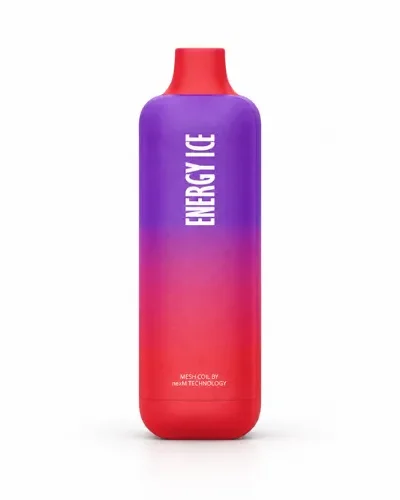
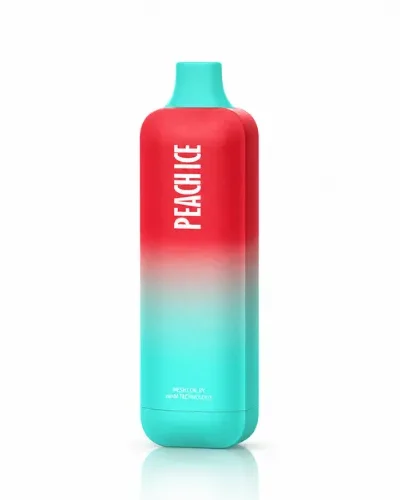
- Prohibited products: Disposable vapes, whether they contain nicotine or not.
- Public use: Places where WA prohibits smoking are also vape-free.
- Reform date: The strengthened state controls commenced on 18 May 2026.
Personal possession needs to be considered carefully. Having one vape for personal use is not automatically the same as holding stock for illegal sale. Still, the product’s origin, quantity, location, packaging, and the evidence around it can all affect the legal position.
Commercial possession, storage, sale, or supply can bring serious consequences. The highest penalties are reserved for large commercial quantities and serious illicit trading. Authorities can also seize products and close premises being used for prohibited activities.
This guide provides general legal information, not legal or medical advice. For authoritative updates, check WA Health, the Therapeutic Goods Administration, Australian Border Force, and current consolidated legislation. Seek independent advice if you are personally affected by a purchase, seizure, investigation, or charge.
2. How Commonwealth and WA Vaping Rules Work Together
The two regulatory layers
Commonwealth law controls major parts of the vaping supply chain, including importation, domestic manufacture, product standards, advertising, and therapeutic access pathways. WA law adds local requirements for medicines, supply, enforcement, possession linked to illegal trade, and places where vaping is prohibited.

The main federal framework includes the Therapeutic Goods Act 1989 and Commonwealth import controls. In WA, key legislation includes the Tobacco and Other Products Control Act 2006. The Medicines and Poisons Act 2014 also regulates relevant medicine access and supply.
Meeting one set of rules does not guarantee compliance with the other. A product may satisfy a federal technical standard but still be unavailable without a prescription that complies with WA law. A pharmacy must likewise follow both national therapeutic pathways and state dispensing controls.
Products and purposes covered
A nicotine vape has nicotine in its vaping substance, while a non-nicotine vape does not. Yet laboratory testing sometimes reveals that product claims are inaccurate. Legal controls may also apply regardless of what the package says about nicotine.
Therapeutic vaping goods can include eligible devices, substances, cartridges, pods, and related accessories intended for treatment. Reusable devices may fall into this category when supplied through a lawful pathway. Disposable vapes, however, cannot be supplied through the ordinary therapeutic pharmacy route.
Lawful therapeutic goods must be used for smoking cessation or the management of nicotine dependence. Australia has no general recreational retail market for vapes. Eye-catching packaging or a “nicotine-free” label does not make a convenience-store sale lawful.
What makes a product illicit?
Illicit vaping products include disposable vapes and products supplied in WA without the required prescription. The term may also apply to goods imported, manufactured, stored, commercially possessed, sold, or supplied outside the relevant rules. Legality depends on several things: the product, the pathway, the seller, the purpose, and the surrounding conduct.
Federal reforms prohibit the domestic manufacture, commercial possession, and sale of non-therapeutic and disposable vapes outside lawful exceptions. Patients can also no longer use the former personal importation pathway to order vapes directly from overseas. Narrow traveller and authorised commercial pathways remain, but strict conditions apply.
WA adds its own prescription and enforcement requirements on top of those controls. Taking a product across a state border does not make WA obligations disappear. Anyone who supplies or commercially stores vapes needs to understand every regulatory layer that applies.
3. Buying Therapeutic Vapes Legally in Western Australia
Steps for lawful adult access
An adult should begin by speaking with an appropriate healthcare professional about quitting or managing nicotine dependence. The clinician can explain approved first-line treatments and assess whether a therapeutic vape is suitable. If it is clinically appropriate, a registered medical practitioner can issue a valid prescription that meets WA requirements.

The patient then takes the prescription to a participating registered pharmacy. The pharmacist checks the prescription, patient details, product eligibility, and lawful access pathway. Not every pharmacy stocks therapeutic vapes, so calling ahead can save a wasted trip.
- Discuss smoking or nicotine dependence with a qualified healthcare professional.
- Consider established treatments, behavioural support, and personal health risks.
- Obtain a valid prescription from a registered medical practitioner when clinically appropriate.
- Use a registered pharmacy that participates in therapeutic vape supply.
- Follow the prescribed quantity, nicotine strength, directions, and review schedule.
Adults in WA cannot use the federal prescription-free Schedule 3 route to obtain nicotine vapes. In some jurisdictions, pharmacists may supply products containing no more than 20 milligrams per millilitre under federal conditions. WA still requires a prescription, whatever the nicotine concentration.
Patients should check the current position with both their prescriber and pharmacist. A medical practitioner may need to use a Special Access Scheme or Authorised Prescriber pathway. Which route is correct depends on the patient, their age, the product, and the clinical circumstances.
Eligible goods and product standards
Pharmacies can supply only therapeutic vaping goods permitted under an applicable TGA pathway. In general, the product must appear on the relevant notified vape list or have another lawful authorisation. The pharmacist must also confirm that it is intended for smoking cessation or nicotine-dependence management.
Federal standards limit flavours to mint, menthol, and tobacco. They also set nicotine concentration limits, control ingredients, and require pharmaceutical-style packaging and labels. Vaping products containing more than 50 milligrams of nicotine per millilitre are not permitted.
Appearing on the notified list does not mean a product has been approved by the TGA. Most notified therapeutic vapes are still unapproved therapeutic goods. They have not undergone the same pre-market assessment as medicines listed on the Australian Register of Therapeutic Goods.
Patients should therefore be aware of the remaining uncertainty around quality, effectiveness, and long-term risks. Pharmacists should explain the product’s status and obtain informed consent when the relevant pathway requires it. Therapeutic vapes are also not considered the first treatment choice for quitting.
Pharmacy duties and younger patients
A pharmacist should assess clinical suitability, confirm the patient’s identity, and check their age. The pharmacist must also follow relevant quantity limits and offer advice about dose, duration, interactions, and alternative treatments. Vaping goods must be kept behind the counter and out of public view.
Supply should be made directly to the patient or an appropriate carer. Pharmacists must also meet recordkeeping, notification, dispensing, and adverse-event reporting obligations. In some cases, legal limits mean a patient receives less than the full quantity stated on the prescription.
People under 18 require a prescription and closer clinical supervision. For patients aged 16 or 17, an eligible notification or authorised pathway may be available, subject to WA law. Patients under 16 generally need Special Access Scheme Category B approval or a suitable Authorised Prescriber arrangement.
Young people should see a qualified clinician with experience in nicotine dependence and adolescent health. Withdrawal can disrupt mood, concentration, sleep, and school participation. A planned approach to treatment can address those problems without pushing a teenager toward an illegal seller.
Avoiding unlawful sellers
Tobacconists, convenience stores, vape shops, market sellers, and social-media vendors cannot legally supply vapes in WA. Neither can non-pharmacy online retailers. A seller cannot create a retail exception simply by claiming that a product contains “zero nicotine.”
Take care with remote pharmacy services as well. Check that the business is a registered Australian pharmacy and can legally dispense into Western Australia. Above all, make sure it verifies the prescription and follows WA dispensing requirements before taking payment.
4. Possession, Online Orders, Imports and Travel
Personal possession versus illicit trade
Possessing a vape for personal use should not automatically be treated in the same way as commercial sale or supply. But personal possession alone does not show that the product was legally imported or supplied. Where it came from—and the facts surrounding it—still matters.
Consider someone carrying one pharmacy-labelled product with a matching prescription. That is very different from a storeroom holding 300 boxed devices alongside a customer price list. Investigators can look at a range of indicators when deciding whether commercial activity may be involved.
- Large quantities or repeated bulk purchases
- Stock stored at retail or commercial premises
- Sales records, order lists, or customer messages
- Advertising, promotional posts, or price boards
- Packaging materials and products arranged for resale
- Evidence of repeated distribution or supply
One factor by itself will not necessarily decide a case. Several commercial indicators taken together, however, may support enforcement action. Anyone questioned, investigated, or affected by a seizure should obtain independent legal advice promptly.
Online orders and imports
Buying a vape through a website does not make it legal. Domestic vape retailers, marketplace sellers, and social-media accounts may operate outside Australian and WA rules. Buyers can have their goods seized and may face other consequences.
Imports into Australia are governed by Commonwealth border law. The former personal importation pathway is closed, meaning patients cannot simply order vapes from overseas with a prescription. Only narrow traveller exemptions and other specifically authorised routes remain.
Overseas sellers may also misrepresent nicotine content or use misleading customs descriptions. A parcel labelled as an “aroma device” may still contain regulated vaping goods. Authorities look at what the product actually is, not just the description supplied by the sender.
Entering Australia and travelling interstate
Before departing, travellers entering Australia should check the latest Australian Border Force and TGA requirements. To qualify under the traveller exemption, goods must be for treatment and carried in accompanied baggage. Current quantity limits can include two vapes, 20 cartridges or pods, and 200 millilitres of liquid.
These exemptions come with detailed conditions, and some drug-containing products may be treated differently. Keep goods in their original packaging and carry supporting medical documents where possible. The products must also generally be for the traveller or another traveller in their care.
Bringing a product into WA from another Australian jurisdiction does not avoid WA law. Once the product is in WA, state rules on prescriptions, supply, public use, and illicit trade apply. A purchase made legally under another state’s pharmacy arrangements may still need careful consideration in Western Australia.
When travelling, carry the prescription, pharmacy label, and a reasonable quantity for personal use. Check airline rules separately for lithium batteries, cabin baggage, device activation, and airport security. Airlines also commonly ban vape use and charging during flights.
Legal outcomes turn on the exact facts. If goods are seized, or authorities allege unlawful possession, importation, supply, or storage, seek independent legal advice. A general explanation online cannot assess the evidence or replace advice about a particular investigation.
5. What Changed Under WA’s May 2026 Vape Reforms?
Commencement and new offences
WA Parliament passed the Tobacco Products Control Amendment Act 2026 in March. Its main strengthened tobacco and vaping controls began on 18 May 2026. The legislation also renamed and broadened the existing regulatory framework.
The reforms created and strengthened offences relating to illicit vaping products. They target the sale, supply, storage, and commercial possession of prohibited stock. Higher offence tiers apply when commercial or large commercial quantities are involved.
Disposable vapes are covered by the prohibited product framework. Other vaping products may also become illicit when businesses store or supply them outside lawful pharmacy and prescription requirements. Taking nicotine out of a product does not open a legal retail pathway.
Enforcement and penalty tiers
The reforms give WA Health stronger inspection and compliance powers. Authorised officers can investigate suspected illicit trade and seize products under the legislation. WA Health also works with police and other agencies to disrupt unlawful supply networks.
The applicable penalty depends on the offence, the quantity, the circumstances, and the defendant. Courts also treat individuals and corporations differently. A small-scale offence will not carry the same maximum consequences as an organised bulk operation.
For the most serious offences involving large commercial quantities, individuals face maximum fines of $4.2 million. Companies can be fined up to $21 million. People involved in serious cases may also face as much as 15 years in prison.
Those are maximum penalties, not automatic sentences. Prosecutors still need to prove the relevant offence and its factual elements. Even so, the scale of the penalties shows why retailers and property operators need reliable compliance systems.
Three levels of closure orders
An interim closure order can close qualifying non-residential premises for up to 72 hours. The Department of Health’s chief executive officer may issue one when the statutory grounds are met. This gives authorities a fast way to interrupt suspected prohibited trade.
A short-term closure order can remain in force for up to 90 days. The Minister may issue it after receiving the required recommendation and considering the prescribed public-health factors. A business could therefore stay closed well beyond the initial investigation period.
A long-term closure order requires an application to the Magistrates Court. If the legal requirements are met, the Court may close the premises for up to 12 months. Further orders may follow if the conditions in the legislation continue to apply.
- Interim order: Up to 72 hours under the chief executive officer’s statutory power.
- Short-term order: Up to 90 days through the ministerial process.
- Long-term order: Up to 12 months when ordered by the Magistrates Court.
A closure notice is usually displayed near a main entrance, and the premises must close at once. Entry is generally prohibited without written approval or a narrow legal exception. No one may remove, conceal, damage, or interfere with the notice.
Continuing prohibited supply while a closure order is in force creates additional risk. Owners, employees, contractors, and landlords may all need approval before entering. Going inside simply to remove stock, for example, can breach the order if prior authorisation has not been obtained.
Implications for businesses and property owners
Retailers and wholesalers should review their stock, suppliers, invoices, online promotions, and staff practices. Operators should also make sure back rooms are not being used to store products for other sellers. Pharmacies, meanwhile, need sound procedures for lawful sourcing, prescriptions, storage, dispensing, and therapeutic access.
Commercial landlords should understand how a closure order may affect access and leasing arrangements. An order does not automatically end a lease or tobacco licence. It can, however, have serious consequences for operations, insurance, reputation, and future licensing decisions.
Lawful tobacco sellers are still governed by licensing rules and existing tobacco controls. Compliant, licensed tobacco activity is not itself the focus of these illicit-trade reforms. The target is prohibited products and businesses operating outside the law.
6. Vape-Free Places, Reporting and Help to Quit
Where vaping is prohibited
Under the 2026 reforms, vaping is prohibited anywhere WA law bans smoking. That includes regulated indoor and outdoor public places. Check local signs and venue conditions as well, since individual sites may impose broader restrictions.
Common vape-free locations include enclosed public spaces and many workplaces. The rules also cover schools, education settings, public transport vehicles, and regulated transport facilities. Several outdoor community areas are included in the smoke-free and vape-free framework too.
- Enclosed public places and regulated workplaces
- Schools and specified education settings
- Public transport vehicles and facilities
- Regulated outdoor eating areas
- Children’s playgrounds and nearby regulated spaces
- Patrolled beaches and other designated outdoor locations
- Venues covered by specific smoke-free rules
Vaping is banned in regulated outdoor eating areas. Cafés, restaurants, event organisers, landlords, and venue managers may also set wider no-vaping conditions. A private policy can therefore apply beyond the minimum required by law.
Employers should update smoke-free policies to mention vaping explicitly. Boundaries need to be communicated, supervisors trained, and a clear complaint process put in place. Workplace health and safety duties may also be relevant when managing aerosol exposure and battery risks.
Venue operators and local governments should use appropriate signs and staff procedures within the limits of their legal powers. Event rules and lease conditions can help clarify who is responsible for what. Enforcement roles differ, so organisations should not claim powers they do not have.
Reporting suspected breaches
Suspected illegal vape sales can be reported to the WA Department of Health Tobacco and Vape Regulation Directorate. The designated email address is [email protected]. Provide factual details where possible, including the location, date, product type, and conduct you observed.
To report a suspected breach of a closure order, use [email protected]. Helpful details include the address, time, people entering the premises, and any apparent trading activity. Do not trespass, threaten staff, or confront suspected sellers.
Anonymous reports can be made to Crime Stoppers WA on 1800 333 000 or through its online reporting service. If it is safe to do so, record exact observations rather than assumptions. Visible signs, packaging, advertisements, vehicle details, and transaction times can all be useful.
Support for adults, young people, and families
Adults who want to quit can call Quitline on 13 7848 or use its web chat. A GP, pharmacist, or another qualified healthcare professional can also explain the available treatment options. Approved nicotine-replacement products and behavioural support may work well for many people.
Young people can seek help through Clear the Air, Headspace, Kids Helpline, and school support services. Student wellbeing teams may help with withdrawal, stress, and social pressure. Families can also contact a GP or youth health professional if dependence begins to affect everyday life.
Parents should keep the conversation calm rather than turning it into an interrogation. Ask what the young person is using, how often they vape, and how they feel when they stop. The focus should be on practical help and safety, not punishment alone.
For authoritative updates, check WA Health, HealthyWA, the TGA vaping hub, Australian Border Force, and current WA legislation. Each source deals with a different part of the system. When supply, importation, travel, and state rules overlap, it makes sense to consult more than one authority.
Conclusion
Lawful access to vaping products in WA is tightly limited to therapeutic pharmacy supply under federal and state rules. Nicotine vapes require a valid prescription that complies with WA law, while disposable vapes remain prohibited. Ordinary retailers cannot sell devices, substances, accessories, or products promoted as nicotine-free.
The May 2026 reforms strengthened offences, penalties, seizure powers, and closure powers. They also extended vape-free rules to public places where smoking is banned. Personal possession, however, still needs to be distinguished carefully from possession, storage, or supply linked to illicit commercial activity.
Before buying, carrying, or supplying a vaping product, check the latest guidance from WA Health and the TGA. Ask a registered pharmacist or medical practitioner about lawful access and treatment options. Report suspected illegal sales through official channels, and call Quitline on 13 7848 if you need help quitting.