Introduction
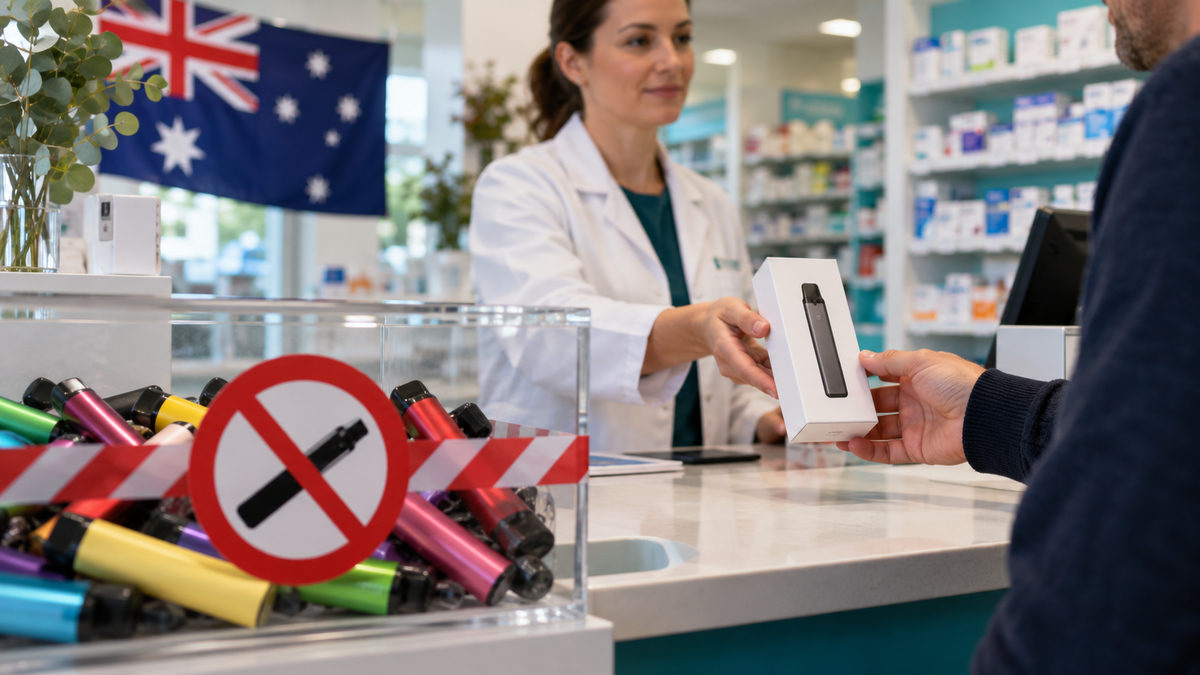
Are all vapes illegal in Australia, or can adults still get certain products from a pharmacy? Australian Vape Ban Explained: What Consumers Need to Know begins with a crucial distinction. Recreational vape sales are restricted, but controlled access to qualifying therapeutic products is still available.
The difficulty is that federal, state and territory laws overlap, which can leave consumers unsure about what applies. One rule may cover importation, while another deals with possession or use in public. Each activity must be considered separately before you buy, carry, use or dispose of a vape.
This guide looks at pharmacy access, prescriptions, product standards, possession, imports, travel and penalties. It also covers safer ways to quit and practical disposal steps. Cannabis vapes and nicotine pouches are subject to separate controls, so specific advice is needed.
1. Australian Vape Ban Explained: What Consumers Need to Know
Australia has not banned every form of vaping. Instead, lawful supply is largely limited to therapeutic vapes obtained from participating pharmacies. These products must be used to support smoking cessation or manage nicotine dependence.

The controls go well beyond nicotine liquids. They also cover nicotine-free vapes, reusable devices, liquids, pods, cartridges and many related accessories. A “zero nicotine” label does not automatically make a product lawful.
Why the rules cover so many products
The reforms were designed to curb youth vaping and remove recreational products from ordinary shops. They also target brightly packaged products with sweet flavours and uncertain ingredients. At the same time, the rules move treatment for nicotine dependence into a healthcare setting.
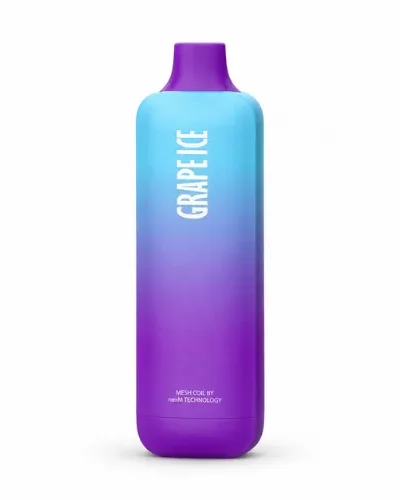
Take a fruit-flavoured disposable sold behind the counter at a convenience store. It is not part of a lawful supply pathway. A plain therapeutic product provided after a pharmacy consultation may qualify, but only if it meets strict quality and supply requirements.
The framework is also intended to make products more consistent. Illicit vapes may contain nicotine even when the packaging claims otherwise. Attractive packaging alone tells consumers very little about a liquid’s actual ingredients or strength.
Federal and local laws have different roles
Federal law governs major activities such as importation, manufacture, advertising, commercial possession and supply. It also sets standards for qualifying therapeutic products and limits which businesses can supply vaping goods to consumers.
States and territories, meanwhile, regulate areas such as possession, prescribing, age restrictions and smoke-free locations. The details can vary, particularly for younger people and products containing nicotine. Advice that is correct in one jurisdiction may be wrong in another.
Most importantly, there is no single, universal status called a “legal vape.” The product, supplier, buyer, intended purpose and location all count. Consumers should check both national guidance and the rules published by their local health authority.
2. Which Vaping Products Are Legal and How Can Adults Buy Them?
A legal therapeutic vape must be intended to help someone quit smoking or manage nicotine dependence. It has to reach the patient through an authorised healthcare pathway. The product must also meet the relevant standards and appear on the applicable notified product list.
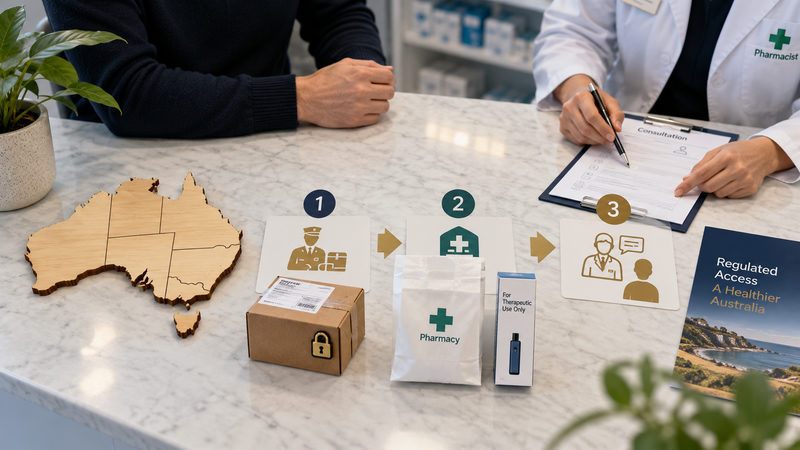
Pharmacy access does not make vapes ordinary retail goods. A pharmacist must decide whether supplying one is suitable for that person’s therapeutic needs. Someone looking for a recreational product cannot lawfully use a pharmacy to sidestep the retail restrictions.
Access without a prescription
Adults aged 18 or older can generally obtain therapeutic vapes containing no more than 20 mg/mL nicotine without a prescription. Local state or territory law still applies. The adult must consult a pharmacist and show proof of age.
During that consultation, the pharmacist may ask about smoking history, nicotine dependence and earlier attempts to quit. They should also explain established treatment options, appropriate dosing and possible interactions with medicines. Supply can proceed only after the customer gives informed consent.
Consider a 35-year-old smoker who has already struggled with patches and gum. A pharmacist might decide that a lower-strength therapeutic vape is clinically appropriate. In another case, the pharmacist may recommend a different treatment if vaping would create unnecessary risks.
Some therapeutic vapes supplied through these pathways remain unapproved products. In other words, they have not received the same full assessment as registered medicines. The pharmacist must make that status clear before completing the supply.
When a prescription remains necessary
Nicotine concentrations above 20 mg/mL require a prescription from an authorised medical or nurse practitioner. People under 18 also need a prescription where local law permits access, and extra safeguards may apply to younger patients.
A prescription may also be appropriate for someone with complex medical needs. Pregnancy, significant heart disease or potential medicine interactions, for example, may call for a wider clinical assessment. Only a qualified healthcare professional can assess those individual circumstances.
Local legislation may impose additional prescription requirements. A national rule that allows pharmacist-only supply does not automatically displace stricter state or territory controls. Before visiting a pharmacy, consumers should confirm the rules where they live.
Pharmacists can decline supply
Pharmacies are not required to stock therapeutic vapes. A pharmacist may also refuse supply even when the customer has a valid prescription. The decision can depend on professional judgement, product availability and local law.
A pharmacist might decide that vaping is not clinically appropriate for a particular person. A registered treatment may be a better choice for someone making their first attempt to quit, for example. Calling ahead can save time, especially where few pharmacies participate.
Under the pharmacist-only pathway, a person cannot receive more than a reasonable one-month therapeutic amount. The pharmacist may supply that amount only once in a month. This helps reduce stockpiling and the diversion of products into unlawful sales.
- Age: The prescription-free pathway generally applies only to adults aged 18 or older.
- Strength: Nicotine concentration must not exceed 20 mg/mL without a prescription.
- Purpose: Supply must support smoking cessation or nicotine-dependence management.
- Consultation: A pharmacist must assess suitability and provide professional advice.
- Quantity: Supply generally cannot exceed one reasonable month’s treatment per month.
A prescription does not permit someone to buy from a tobacconist or an overseas website. It supports dispensing through an authorised pharmacy pathway. It should never be treated as blanket permission to obtain any vape from any source.
3. Illegal Retail Sales, Disposable Vapes and Product Standards
Tobacconists, convenience stores, service stations and vape shops cannot legally sell vaping goods to consumers. Recreational products sold online are covered by the same restriction. Calling a product “nicotine-free” does not create an exception.
Imagine a service station selling sealed mint vapes from under the counter. The packaging may appear professional, and the seller might insist that the product contains no nicotine. Even so, the business is not an authorised pharmacy supplier.
Disposable products and commercial restrictions
Single-use disposable vapes cannot be bought as ordinary pharmacy products. Their importation and supply are subject to particularly strict restrictions. A disposable offered by a general retailer should never be confused with lawful therapeutic stock.
Federal controls restrict unauthorised importation, manufacture, supply and commercial possession. Promotion and advertising are also tightly limited. Businesses cannot lawfully create a recreational vape market through websites, social media accounts or informal delivery services.
Commercial possession is different from a person carrying a small quantity for personal use. Dozens of packaged devices being stored for resale, for instance, present a very different enforcement scenario. Retail premises may also face specific possession offences even when the amount is below a broader commercial threshold.
Standards for therapeutic products
Pharmacies can supply only therapeutic vaping goods that satisfy the relevant standards and notification requirements. The ingredients permitted in liquids are tightly controlled. They generally include nicotine, propylene glycol, glycerol, water and restricted mint, menthol or tobacco flavouring.
The standards also limit nicotine levels and potentially harmful contaminants. Container volumes, device design and technical performance are regulated too. Before qualifying goods are imported or supplied, sponsors must retain supporting evidence and notify regulators.
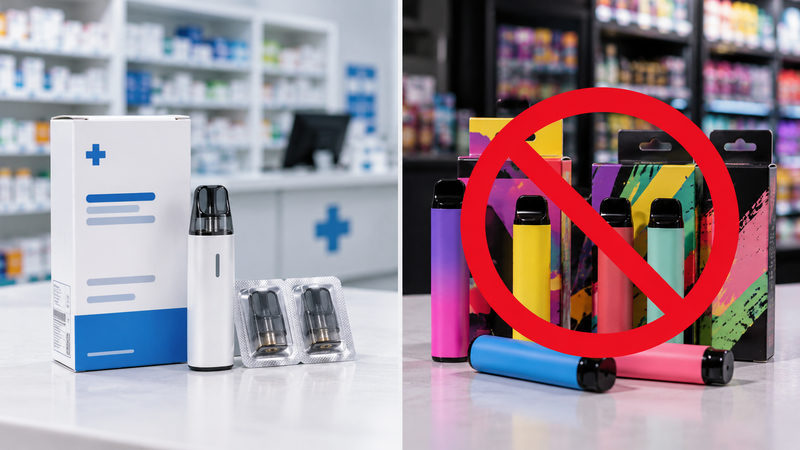
Packaging must have a plain, pharmaceutical-style appearance rather than branding aimed at young people. Labels also need to display required information, including warnings, ingredients, strength and directions for use. Information leaflets and traceability requirements provide further support for safer clinical use.
- Only permitted ingredients and flavours may appear in therapeutic liquids.
- Packaging and device designs must remain plain and restrained.
- Labels must provide required warnings and product information.
- Devices and accessories must meet applicable safety and performance standards.
- Sponsors must complete the required notification process.
Meeting these requirements can reduce certain risks, but it does not prove that a product is completely safe or effective. Many therapeutic vapes are still unapproved goods. Pharmaceutical-style packaging should never suggest that inhaling the aerosol is harmless.
4. Possession, Importation, Travel, Public Use and Penalties
Buying, possessing and using a vape are legally distinct from selling, importing or advertising one. Manufacturing products and holding commercial quantities raise still more issues. That is why a simple statement about “vape legality” cannot cover every situation.
The federal reforms place a strong emphasis on commercial activity and criminal supply. They do not automatically make every case of small-scale personal possession unlawful under federal law. State and territory offences may still apply, however, particularly to nicotine products or possession by younger people.
Personal possession is not a universal exemption
Government enforcement messaging suggests that people carrying small quantities for personal use are not the main federal target. That does not provide immunity from every local offence. Police, health authorities and other regulators may still take action under state or territory law.
An adult carrying one device may be treated differently from a shop storing several cartons. A teenager’s possession can also trigger powers that would not apply to an adult. Age, quantity, location and intended use all shape the legal risk.
Consumers should not supply vapes to friends, either. Selling or simply giving away a product can take the conduct beyond personal possession. The absence of profit does not necessarily make unauthorised supply lawful.
Ordering from overseas is prohibited
The former personal importation pathway can no longer be used to order vapes from overseas. That remains true even if the buyer has a prescription. A prescription does not permit an international website to deliver a vape to an Australian address.
Border controls apply to all vaping goods, including devices, substances, pods and accessories. Nicotine content and therapeutic claims do not remove those controls. Only eligible commercial importers holding the necessary permissions may use the relevant business pathways.
An overseas seller might promise discreet packaging or guaranteed customs clearance. Those assurances do not change Australian law. Border officers can intercept, seize and destroy prohibited imports, and the buyer may lose both the goods and the money paid for them.
The limited traveller exemption
A narrow exemption may let travellers bring small quantities in accompanied baggage for treatment. The goods must be for the traveller’s treatment or for someone in their care travelling on the same aircraft or ship. Strict numerical limits also apply.
- No more than two vapes in total, whether disposable or reusable.
- No more than 20 cartridges, capsules or pods.
- No more than 200 mL of vaping substance in liquid form.
These limits are not a general duty-free allowance for recreational products. Controlled substances, including cannabis products, may be subject to separate requirements. Travellers should not assume that the standard vape exemption covers every device or liquid.
Requirements may change, while airlines have their own safety rules for batteries in baggage. Before leaving, travellers should check the current position with the TGA and Australian Border Force. They should also review their airline’s requirements for lithium batteries and cabin baggage.
Declaring questionable goods is safer than attempting to conceal them. Still, a declaration does not guarantee entry when the goods are prohibited. Border officers may inspect the items and decide whether the exemption applies.
Where vaping is prohibited
Rules on public use generally follow smoke-free tobacco laws. Vaping is prohibited in many enclosed workplaces, public transport areas and hospitality venues, for example. Some jurisdictions also restrict it near entrances, children’s areas, schools, hospitals and outdoor dining spaces.
Local regulations and individual venue policies can be stricter. Having a lawfully supplied therapeutic vape does not mean it can be used anywhere. If there is any doubt, check the signs and ask venue staff before vaping.
Seizure, fines and serious penalties
Authorities may seize and destroy goods that were unlawfully imported or supplied. They can also issue infringement notices, pursue civil penalties or start criminal proceedings. Businesses may face additional consequences for unlawful advertising and commercial possession.
The most serious federal offences can carry years of imprisonment and penalties running into millions of dollars. The maximum depends on the offence, the offender and the number of goods involved. Actual penalties are decided by courts after the circumstances have been considered.
The risk rises sharply when a consumer’s conduct begins to look like organised supply. Bulk stock, sales messages, customer lists and repeated deliveries may all support a commercial case. Holding products for resale therefore creates far greater exposure than straightforward personal use.
Enforcement policy should not be mistaken for legal permission. Saying that individuals are not the main target does not wipe away offences that may still apply. Consumers should rely on current local guidance, not claims circulating on social media.
5. Health Risks, Legal Quitting Options and Safe Disposal
Vaping is not harmless. Nicotine can lead to dependence, cravings and withdrawal. Vape aerosols may also expose users to irritants, fine particles and other substances that could cause harm.
Evidence about long-term effects is still developing, especially for people who vape frequently over many years. Illegal products create added uncertainty because they may contain undisclosed nicotine or unknown ingredients. A colourful label is no guarantee of purity, dosage or manufacturing quality.
Consider established quitting support first
Therapeutic vapes are clinical tools, not everyday lifestyle products. Health guidance generally recommends registered treatments before vaping. A doctor or pharmacist may first discuss options backed by stronger evidence on safety and quality.
- Nicotine patches for steady nicotine delivery.
- Nicotine gum, lozenges, sprays or inhalers for breakthrough cravings.
- Approved prescription medicines when clinically suitable.
- Behavioural support from a pharmacist, doctor or trained counsellor.
- Quitline support by calling 13 7848.
Someone might use a patch to control background cravings and gum when a sudden urge strikes. A healthcare professional can recommend suitable doses and help manage side effects. Combining medicine with behavioural support may also make a structured quit attempt more effective.
Recognising legitimate supply
A legitimate supplier works through a participating registered pharmacy. The pharmacist verifies the customer’s age, holds a consultation and discusses available treatments. Lawful products also come in plain, pharmaceutical-style packaging with instructions and required warnings.
Be wary of sellers offering fruit flavours, cartoon packaging or cash-only delivery. Social media accounts and websites that promise prescription-free overseas shipping are another red flag. These features often point to unlawful recreational supply.
Dispose of vaping products safely
Never tip vape liquid into a sink, toilet or stormwater drain. Keep leaking products well away from children, pets, heat and open flames. Nicotine liquid can cause poisoning if it is swallowed, inhaled or absorbed through the skin.
Devices containing lithium batteries do not belong in household recycling. If damaged or crushed during waste processing, the batteries can catch fire. Ask a pharmacy or local council about appropriate medicine, hazardous-waste and battery disposal services instead.
If a device starts leaking, avoid touching the liquid and put the device in a secure container. Do not unnecessarily handle a battery that is swollen, hot or smoking. Move away, call emergency services if there is danger and follow local fire-safety advice.
6. Frequently Asked Questions About Australia Vaping Laws
Are all vapes illegal in Australia?
No. Participating pharmacies may supply qualifying therapeutic vapes for smoking cessation or the management of nicotine dependence. Recreational sales through convenience stores, tobacconists, vape shops and similar retailers are unlawful.
Can an adult buy a vape without a prescription?
Generally, an adult aged 18 or older can obtain a therapeutic vape containing no more than 20 mg/mL nicotine after consulting a pharmacist. State or territory law may add further requirements. The pharmacist must also decide that supply is clinically appropriate.
When does someone need a prescription?
Products containing more than 20 mg/mL nicotine require a prescription. People under 18 need one as well where local law permits access. A prescription may also be necessary because of local legislation or complex clinical circumstances.
Can a pharmacy refuse to sell a therapeutic vape?
Yes. A pharmacy is not obliged to stock therapeutic vapes, and a pharmacist can refuse to supply one. Even a valid prescription does not force a pharmacist to dispense the product.
Can tobacconists sell nicotine-free vapes?
No. Pharmacy-only supply restrictions generally apply to vaping goods both with and without nicotine. A “zero nicotine” label does not make retail sale by a tobacconist lawful.
Can consumers buy disposable vapes from pharmacies?
No. Single-use disposable vapes are not available as ordinary pharmacy products. They are also subject to strict controls on importation and supply.
Can I order a vape from overseas with a prescription?
No. The former personal importation pathway is no longer available for overseas vape orders. A prescription supports authorised dispensing by a pharmacy, not personal orders sent through international mail.
Can travellers bring vapes into Australia?
A limited traveller exemption may cover products carried in accompanied baggage for treatment. The current limits are two vapes, 20 pods or similar accessories, and 200 mL of liquid. Travellers should check the latest requirements before each trip.
Is personal possession always legal?
There is no single answer. Federal reforms do not automatically criminalise every small quantity held for personal use. State and territory offences may still vary according to location, age, substance and the surrounding circumstances.
Can I vape wherever smoking is allowed?
Not always. Vaping is commonly banned wherever smoking is prohibited, though the precise rules differ between jurisdictions. Venues and property owners may also set stricter policies.
What should I do with an unwanted vape?
Keep it out of reach of children, and never pour the liquid down a drain. Lithium batteries should not go into household recycling. Ask a pharmacy or council service where you can dispose of the product safely.
Conclusion
Australia has not introduced a blanket ban on every vape. Lawful access is, however, tightly limited to qualifying therapeutic products supplied by participating pharmacies. Prescribing requirements, product standards and local laws may narrow that access further.
Import controls, traveller limits, possession laws and restrictions on public use each need to be considered separately. Unlawful supply may result in seizure, destruction, fines and serious criminal penalties. A prescription does not permit overseas ordering or recreational retail purchases.
Before buying, travelling with or disposing of a vape, review current TGA guidance and the advice from your state or territory health authority. Check border requirements with Australian Border Force before any trip as well. For suitable, evidence-based help with quitting, speak to a pharmacist or another healthcare professional.