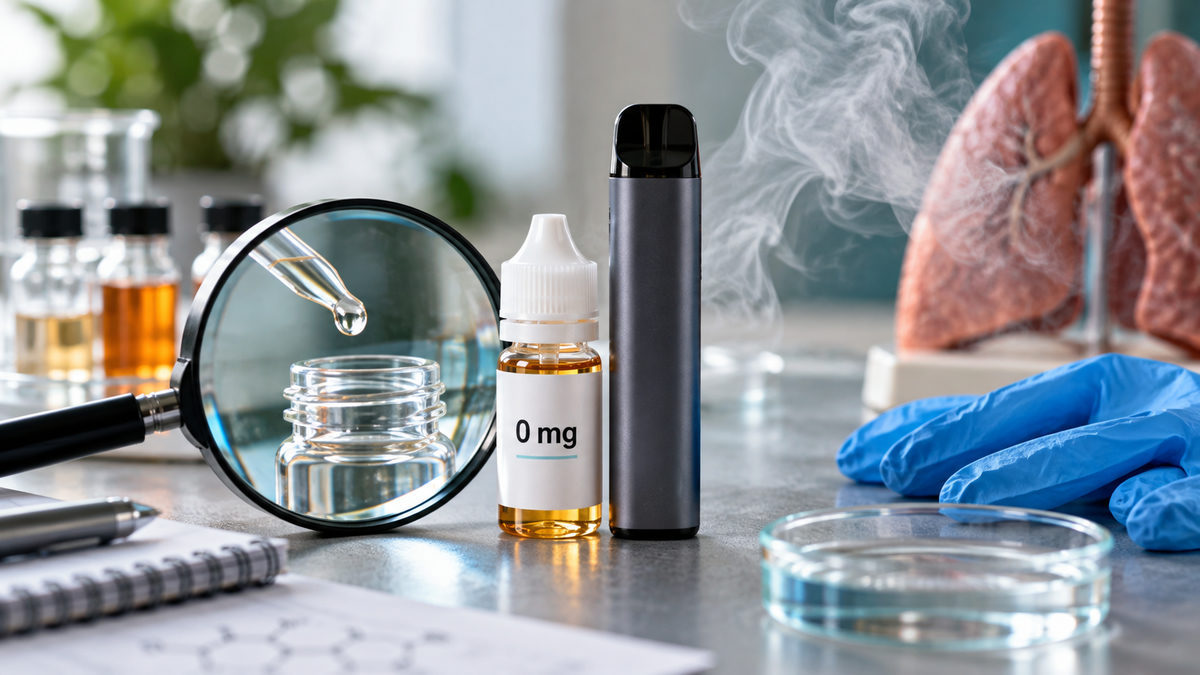
A vape marked “0 nicotine” removes one addictive substance—but what else are you breathing in? Is Nicotine-Free Vaping Safe? Labels, Ingredients and Risks calls for a closer look beyond the reassuring packaging. When vape liquid is heated, it forms an aerosol made up of droplets, particles, chemicals, and potential contaminants. The long-term health effects are still unclear.
Marketing often presents this cloud as harmless “water vapor.” It isn’t. Vape liquid rarely contains water alone, and heating can alter its chemical composition. Safety depends on the ingredients, device, temperature, manufacturing quality, and how often someone vapes. Comparisons with smoking need context, too: “less harmful” does not mean harmless.
1. Is Nicotine-Free Vaping Safe? What the Evidence Says
Nicotine-free vaping is not risk-free. Taking nicotine out may prevent dependence and reduce nicotine-related effects, such as temporary increases in heart rate. Even so, users still inhale aerosol created from heated solvents, flavorings, and other additives. That aerosol comes into direct contact with the mouth, throat, airways, and lungs.

Vape emissions are not the same as steam from boiling water. They contain suspended liquid droplets and solid particles, which may include propylene glycol, vegetable glycerin, flavoring chemicals, ultrafine particles, and volatile compounds. Metals and other contaminants can also come from the device itself. Describing the emission as “water vapor” is therefore both incomplete and misleading.
The level of risk also depends on the device and how it is used. An overheated coil, for example, may create more irritating chemicals than one running at a lower temperature. Deep, frequent inhalation raises exposure further. An old or damaged coil may also release contaminants that a properly maintained coil would not.
Understanding the risk hierarchy
Combustible cigarettes generally pose the greatest danger because burning tobacco produces tar, carbon monoxide, and thousands of chemicals. Vaping usually exposes users to fewer toxicants associated with combustion. That difference, however, does not make vaping safe. Someone who has never smoked gains no health benefit from taking up a nicotine-free vape.
Nicotine vaping combines aerosol exposure with dependence and other nicotine-related effects. When labels are accurate, nicotine-free products may avoid those particular harms. Clean air avoids both. Not smoking or vaping remains the lowest-risk choice.
2. What Is in Nicotine-Free Vape Juice?
Most nicotine-free liquids contain propylene glycol, vegetable glycerin, or a blend of the two. Propylene glycol carries flavors effectively and gives a noticeable sensation in the throat. Vegetable glycerin creates a thicker visible cloud and contributes mild sweetness. Neither becomes simple water vapor when heated inside the device.

Other possible ingredients include sweeteners, cooling agents, acids, and concentrated flavor blends. A fruit-ice liquid, for instance, might mix several flavorings with menthol-like cooling chemicals. Some formulas also contain preservatives, colorants, or substances listed only as “natural flavors.” Descriptions that broad reveal very little about what a person is actually inhaling.
Food-safe does not automatically mean inhalation-safe
A substance can have a long record of safe use in food and still be unsuitable for inhalation. Swallowing and breathing expose different tissues through different biological pathways. The digestive system processes many substances before they enter the bloodstream. Inhaled droplets, by contrast, can reach delicate lung tissue almost at once.
Diacetyl is a useful historical example. It produces a buttery flavor and has accepted uses in certain foods, yet occupational inhalation exposure has been linked to serious lung damage. Its history makes the lesson clear: food approval alone cannot establish that repeated inhalation is safe.
A flavor name also says nothing about the individual chemicals used or their concentrations. Two liquids sold as “mango” may have entirely different formulas. Once heated, their emissions can differ from the original liquids as well. An ingredient list tells only part of the story.
Where contaminants can enter
Impurities can come from raw ingredients, poorly controlled manufacturing, unsuitable storage, or reused equipment. Heat, sunlight, and air may also degrade ingredients and change the liquid over time. Counterfeit products and refilled disposables add even more uncertainty. If a product has been tampered with, it may contain oils, drugs, or other substances that were never meant for the original device.
3. Heating Byproducts, Metals and Nicotine-Free Vaping Lung Risks
A vape coil heats liquid rapidly until it becomes an inhalable aerosol. As this happens, propylene glycol and vegetable glycerin can break down into carbonyl compounds, including formaldehyde, acetaldehyde, and acrolein. Several carbonyls irritate the airways, and some raise additional concerns about long-term health.

Temperature has a strong influence on how much of these compounds is produced. High power settings can overheat the liquid around the coil, while a nearly empty tank may cause a dry or burnt puff. A harsh taste can be a warning that unwanted chemical changes have occurred. Normal-tasting aerosol, though, is not necessarily harmless.
Metals and ultrafine particles
Metals can enter the aerosol from coils, solder joints, wiring, and other parts of the device. Studies have found substances such as nickel, chromium, tin, copper, and lead in some products. The amounts vary considerably between devices and even across batches of the same product. Exposure may be affected by coil age, liquid acidity, and manufacturing quality.
Vape aerosol also carries particles small enough to move deep into the respiratory system. Ultrafine particles may reach the areas where oxygen passes between the lungs and blood. Their effects depend on their size, composition, concentration, and the length of exposure. You cannot judge the risk simply by looking at the cloud.
Possible short-term effects
After vaping, some people report coughing, throat irritation, dry mouth, or chest discomfort. Others experience headaches, nausea, dizziness, or sensitivity reactions. Flavorings and cooling agents can affect each person differently. A pleasant flavor may even hide the harshness that would otherwise prompt someone to stop inhaling.
- Airway symptoms: coughing, wheezing, throat burning, or uncomfortable breathing.
- General symptoms: headache, nausea, dizziness, or unusual fatigue.
- Sensitivity symptoms: mouth irritation, rash, swelling, or worsening allergy complaints.
Severe breathlessness, chest pain, blue lips, confusion, or rapidly worsening symptoms require urgent medical assessment. Anyone who develops new respiratory symptoms after using a product should stop using it. Save the packaging, too—it may help clinicians or safety authorities identify the ingredients and batch.
What research can and cannot show
Laboratory research and short-term human studies have raised concerns about inflammation, oxidative stress, and weakened airway defenses. Some studies also point to temporary cardiovascular changes and irritation in the mouth. Drawing broad conclusions is difficult, however, because products vary so much. Findings from one liquid or device may not apply to every nicotine-free vape.
Modern vaping products also lack decades of consistent exposure data. Researchers cannot yet measure every possible long-term outcome with confidence. Biological changes do not mean that every user will develop a disease. But uncertainty is a reason for caution, not reassurance.
4. Can Zero-Nicotine Vape Labels Be Trusted?
A “zero nicotine” label is not a guarantee that laboratory testing will find none at all. Trace nicotine can enter a product through contaminated equipment or mixed raw materials. In other cases, inaccurate results may stem from poor quality control, unreliable testing, or misleading marketing. Anyone avoiding nicotine for medical or personal reasons should look beyond the front label.
Disposable products can be especially difficult to assess. Packaging may leave out full ingredient lists, manufacturer addresses, batch numbers, or testing information. Imported and unverified products may also move through markets with different regulations and levels of enforcement. Eye-catching packaging is no substitute for documented quality control.
A practical product checklist
Check both the packaging and the manufacturer’s information before using any product. A credible company should answer basic questions clearly, without falling back on vague claims. Look for evidence connected to the exact product and batch. One generic certificate for a single sample does not show that every later unit is the same.
- Check for a complete ingredient list and clearly stated nicotine content.
- Look for a batch number, production details, and manufacturer contact information.
- Review batch-specific laboratory results from an identifiable independent laboratory.
- Confirm that reports test for nicotine, carbonyls, metals, and relevant contaminants.
- Check whether the product has intact seals and recognized compliance markings.
- Avoid liquids with unexplained oils, drugs, supplements, or homemade additions.
Make sure any laboratory report matches the product name, flavor, strength, and batch number. Check the testing date and detection limits as well. When a result says “not detected,” it means the amount was below that test’s limit. It does not necessarily mean the substance was completely absent.
Terms such as “clean,” “natural,” “organic,” and “vitamin” may sound comforting, but they do not prove inhalation safety or purity. Be particularly wary of the phrase “only water vapor,” since standard vape liquids contain solvents designed to form an aerosol. Bold claims without precise supporting evidence deserve skepticism.
5. Who Faces Greater Risks From Nicotine-Free Vaping?
Teenagers should not use nicotine-free vapes. Their lungs are still developing, and exposure to aerosol chemicals offers no health benefit. Repeated hand-to-mouth use can also build a strong behavioral habit. Flavors, social reinforcement, and easy access may make later experimentation with nicotine products more likely.
A teenager might start by taking occasional flavored puffs with friends. Before long, vaping can become associated with breaks, stress, or a sense of belonging. Removing nicotine does not eliminate every route to habitual use. Parents should talk about the chemical exposure as well as the behavior that develops around vaping.
Pregnancy, breastfeeding, and existing health conditions
Nicotine-free vaping is not considered a safe exposure during pregnancy or breastfeeding. Heating byproducts, aerosol ingredients, metals, and the possibility of undeclared nicotine create unnecessary uncertainty. Evidence about how repeated exposure could affect a pregnancy or an infant remains limited. When help with smoking cessation is needed, a clinician can suggest better-studied options.
People with asthma or chronic lung disease may be particularly sensitive to airway irritants. Those with cardiovascular conditions should likewise avoid unnecessary exposure to particles and reactive chemicals. Allergies and chemical sensitivities may worsen discomfort, too. Even a familiar flavor can cause problems if its formula or batch changes.
Secondhand aerosol and household hazards
People nearby can breathe in exhaled aerosol as well as emissions released directly from the device. Their exposure is usually different from that of the person vaping, but it is not the same as breathing clean air. Avoid vaping around children, pregnant people, and anyone with a respiratory illness. Vaping indoors may also leave chemical residue on surrounding surfaces.
The hazards are not limited to inhalation. Leaking liquid can irritate the skin or eyes, and swallowing it may poison children or pets. Even a product labeled nicotine-free could contain undeclared nicotine. Damaged or improperly charged batteries can also overheat, catch fire, or explode.
- Store devices and liquids in locked areas away from children and pets.
- Wash exposed skin and rinse affected eyes promptly with clean water.
- Contact local poison services after suspected ingestion or significant liquid exposure.
- Use the correct charger and replace damaged, swollen, or leaking batteries.
- Never leave a charging device unattended or exposed to extreme heat.
6. Comparisons, Quitting Support and Safer Alternatives
Smoking generally does more harm than vaping because combustion creates many highly toxic chemicals. An adult smoker who switches completely may reduce exposure to numerous smoking-related toxicants. Using cigarettes and vapes together, however, can leave substantial risk in place. Even a few cigarettes each day are not a harmless compromise.
Nicotine-free vaping avoids nicotine only if the product actually contains what the label says. Nicotine vaping brings the added risks of dependence and other nicotine effects. Neither is safer than avoiding vape aerosol altogether. People who have never smoked or vaped should not start for the flavors, relaxation, or social appeal.
Quitting support and practical substitutes
A zero-nicotine vape can preserve the familiar hand-to-mouth ritual, but a consumer vape is not the same as a regulated cessation treatment with known doses and quality standards. Evidence-based options include counseling, quit services, approved medications, and nicotine replacement products. A healthcare professional can help choose an approach suited to someone’s medical needs and what is available locally.
Simple substitutes can break up the routine without adding another inhalation exposure. Try sugar-free gum, cold water through a straw, paced breathing, or a short walk. Remove spare devices and pay attention to situations that trigger cravings. A firm quit date can turn a general intention into a workable plan.
Adults who keep vaping can still take steps to reduce avoidable harm. Buy regulated products from reputable sellers, and never alter the liquids. Avoid burnt coils, extreme power settings, and homemade mixtures. Keep devices away from other people, and seek medical care if symptoms develop.
- Do not return to smoking or combine vaping with cigarettes.
- Use the lowest practical frequency and avoid continuous puffing.
- Stop immediately if the aerosol tastes burnt or causes breathing problems.
- Never add cannabis oils, medicines, vitamins, or household ingredients.
- Plan to reduce use instead of treating vaping as a permanent requirement.
Conclusion
Nicotine-free vaping may prevent nicotine dependence and some effects linked specifically to nicotine. It still exposes users to aerosolized solvents, flavorings, particles, metals, heating byproducts, and possible contaminants. People nearby may be exposed to those emissions as well. The lowest-risk option remains simple: do not inhale vape aerosol.
Product labels do not always match laboratory findings, and the long-term outcomes are still uncertain. Check each product for clear ingredient information and batch-specific testing. Stop using it if coughing, chest discomfort, breathing changes, or other symptoms appear. For help replacing smoking, nicotine use, or the vaping habit, speak with a healthcare professional or an evidence-based cessation service.