

If vaping avoids burning tobacco, is it actually safe—or just less harmful than smoking cigarettes? Vaping vs Smoking: Understanding the Health Risks involves more than comparing smoke, odors, or visible symptoms. Both products can expose users to harmful chemicals and keep nicotine addiction going, but their health risks differ considerably.
Smokers and vapers often encounter conflicting claims about lung damage, cancer, heart disease, and quitting. A useful comparison must separate well-established evidence from questions researchers have yet to answer. The harm caused by smoking is extensive and thoroughly documented. Vaping, meanwhile, carries known short-term risks, while its long-term consequences remain uncertain.
1. Vaping vs Smoking: Understanding the Health Risks
How smoking and vaping work
Smoking involves inhaling smoke produced by burning tobacco, usually at temperatures above 600°C during a puff. Combustion releases nicotine along with thousands of chemicals, including many toxic and cancer-causing substances. It also produces carbon monoxide, tar-like particles, and reactive gases. Once inhaled, these substances enter the lungs and circulate throughout the body.
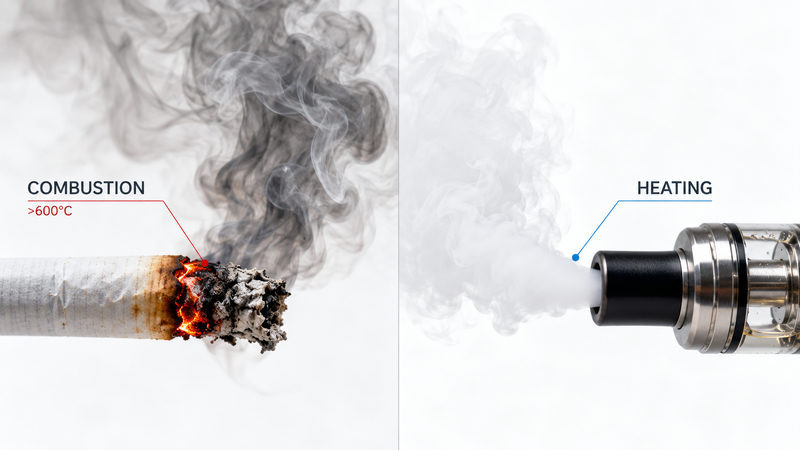
Vaping uses a different process. An electronic device heats a liquid and turns it into an inhalable aerosol. A typical device has a battery, heating element, cartridge or tank, and mouthpiece. The liquid commonly contains nicotine, propylene glycol, vegetable glycerin, and flavorings, though some products also include cooling agents, sweeteners, or ingredients that are poorly disclosed.
Because an e-cigarette does not burn tobacco, it usually produces fewer combustion-related toxins than a cigarette. That does not mean its aerosol is clean air or harmless water vapor. Heating may form new compounds, and device components can release tiny metal particles. Vaping may reduce certain exposures, but it does not eliminate health risks.
Less harmful does not mean safe
The central evidence-based finding is clear: cigarette smoking generally causes substantially more harm than vaping. Combustion generates exceptionally high concentrations of carcinogens and cardiovascular toxins. Decades of research have linked smoking to cancer, heart disease, stroke, and chronic lung disease. Vaping has a much shorter history, so its lifetime effects are still less certain.
Relative risk is not the same as absolute safety. Something can be less dangerous than cigarettes and still harm the lungs, heart, mouth, or developing brain. Think of falling from one floor instead of ten. The first fall is less dangerous, but neither is safe.
Switching completely matters. Even a few cigarettes each day can preserve meaningful cardiovascular and cancer risks. Someone who replaces every cigarette may reduce exposure to many combustion products, while someone who vapes between cigarettes continues to inhale smoke toxins. Prolonged dual use may therefore provide far less benefit than expected.
Conventional cigarettes burn tobacco; e-cigarettes heat a liquid. Heated-tobacco products belong to a third category because they heat processed tobacco without fully burning it. They still release nicotine and toxic chemicals, however. Consumers should not mistake these products for ordinary vapes or harmless alternatives.
2. Cigarette Smoke Toxins and Smoking-Related Diseases
What enters the body with cigarette smoke
Cigarette smoke is a complex mixture of gases, particles, and reactive chemicals. Carbon monoxide reduces the blood’s ability to carry oxygen, while tobacco-specific nitrosamines can damage DNA and encourage cancer development. Benzene, formaldehyde, arsenic, cadmium, and hydrogen cyanide place even more toxic stress on the body.

- Carbon monoxide: Displaces oxygen and forces the heart to work harder.
- Nitrosamines and benzene: Damage genetic material and increase cancer risk.
- Formaldehyde and hydrogen cyanide: Irritate airways and damage protective respiratory structures.
- Arsenic and cadmium: Accumulate in tissues and harm several organ systems.
- Particulate matter: Travels deep into the lungs and contributes to inflammation.
Repeated exposure eventually overwhelms the body’s repair systems. Smoke injures airway cells, damages the lining of blood vessels, and fuels chronic inflammation. It also triggers genetic changes that may allow abnormal cells to multiply. The damage keeps accumulating, even when symptoms are mild or completely absent.
Cancer and cardiovascular disease
Smoking has a strong causal link to lung cancer, including its most common major forms. The danger goes well beyond the lungs. It also causes cancers of the mouth, throat, voice box, esophagus, bladder, pancreas, kidney, and cervix. Smoking further contributes to cancers involving the stomach, liver, colon, rectum, and blood.
Blood vessels suffer with every exposure, too. Nicotine puts extra strain on the cardiovascular system, while carbon monoxide limits oxygen delivery. Smoke also promotes inflammation, blood clotting, and the buildup of fatty plaque inside arteries. Together, these changes accelerate atherosclerosis and restrict blood flow.
Smokers consequently face greater risks of coronary heart disease, heart attack, stroke, and peripheral artery disease. Narrowed arteries in the legs may cause pain while walking and delay wound healing. Unstable plaques can also rupture, causing dangerous clots. Even relatively light smoking can seriously damage cardiovascular health.
Lung disease and wider health effects
Over time, smoke destroys lung tissue and weakens the tiny cilia responsible for clearing mucus and germs. Smoking therefore causes chronic bronchitis and emphysema, the main conditions within chronic obstructive pulmonary disease. It can worsen asthma and make respiratory infections more likely as well. Many smokers develop a morning cough years before receiving a formal diagnosis.
The harm reaches nearly every organ system. Smoking can reduce fertility, damage sperm, and cause complications during pregnancy. It also raises the risk of gum disease, tooth loss, poor wound healing, and weakened immune responses. Bones may become more fragile, while eye diseases can put vision at risk.
Above all, smoking shortens both life expectancy and the number of years spent in good health. One person may survive a heart attack but be left with heart failure or reduced mobility. Another may need oxygen after emphysema destroys functioning lung tissue. Quitting has value at any age—even after decades of smoking.
3. Health Effects of Vaping: What Evidence Shows
Effects on breathing and lung defenses
With every inhalation, vape aerosol comes into contact with delicate airway surfaces. Many users report coughing, wheezing, throat irritation, chest discomfort, or shortness of breath. Some studies have also found airway inflammation and changes in respiratory function. For people with asthma, symptoms may become more frequent or severe.
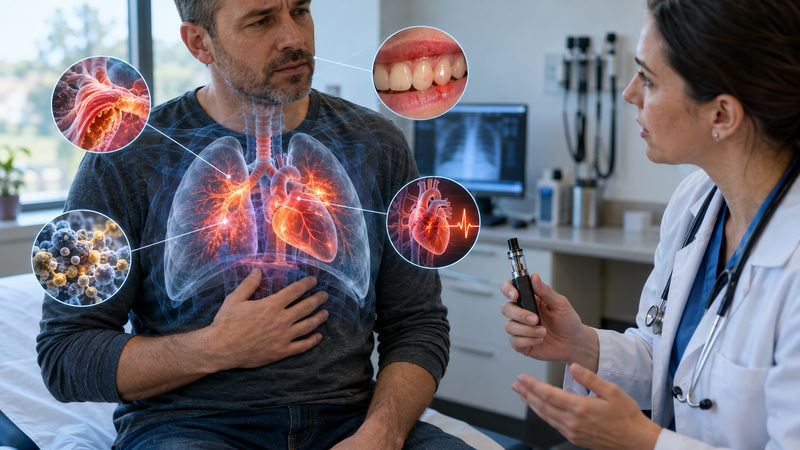
Laboratory research indicates that aerosol can stress airway cells and disrupt their normal responses. It may also affect immune cells that clear microbes and damaged material. Still, laboratory exposure cannot perfectly recreate everyday human use. Researchers therefore consider those findings alongside clinical and population evidence.
Clinical observations suggest that vaping can change airway inflammation and defensive function. These effects may influence susceptibility to infection or the speed of recovery, though researchers are still working out how large they are. Devices also produce very different exposures. A low-powered pod is not equivalent to an overheated refillable tank.
The long-term burden of diseases such as COPD is still unknown because vaping has not existed across a full adult lifespan. Some serious illnesses take decades to appear. The absence of decades-long data is not proof of safety. It simply means researchers cannot calculate lifetime risk with the same confidence they have for smoking.
Heart, blood-vessel, and systemic effects
Vapes containing nicotine can temporarily increase heart rate and blood pressure. Aerosol exposure may also contribute to oxidative stress, inflammation, and impaired blood-vessel function. Why does that matter? Healthy arteries need to widen and contract efficiently, and repeated dysfunction could contribute to cardiovascular disease over time.
Vaping may also cause headaches, dizziness, nausea, shakiness, or a racing heartbeat. These symptoms often point to excessive nicotine exposure, particularly in inexperienced users. Repeated puffs or swallowing condensed liquid can raise the dose quickly. Severe symptoms call for prompt medical advice or poison-control guidance.
Possible oral effects include dry mouth, irritated gums, mouth discomfort, and changes in oral bacteria. Less saliva can worsen discomfort and may contribute to dental problems. Sweet flavorings do not make the aerosol protective for teeth. Anyone who vapes should continue getting regular dental care.
Cancer uncertainty and changing exposure
Can vaping cause cancer? Under certain heating conditions, vape aerosol may contain carcinogens such as formaldehyde and other carbonyl compounds. Some devices also release metals, including nickel, chromium, or lead. Researchers do not yet have the decades-long population evidence needed to measure lifetime cancer risk precisely.
The amount and type of exposure depend on device power, temperature, coil condition, liquid composition, and puffing behavior. A damaged or overheated coil, for example, may generate more degradation chemicals. Nicotine strength, flavorings, frequency of use, and manufacturing quality also change what gets inhaled. Product labels do not always list every ingredient accurately.
Nicotine-free vapes avoid intentional nicotine exposure, but that does not make them harmless. Their aerosol can still contain ultrafine particles, solvents, metals, flavoring chemicals, and products created by heat. Some products labeled nicotine-free have also been found to contain measurable nicotine. Removing nicotine does not remove every respiratory or systemic concern.
4. Nicotine Addiction, Dual Use, and Higher-Risk Groups
How dependence develops
Nicotine reaches the brain and activates reward pathways that encourage repeated use. With regular exposure, the brain adapts and starts to expect it. Users may then smoke or vape to avoid discomfort rather than to feel pleasure. Familiar cues—driving or drinking coffee, for instance—can make the habit even stronger.
Withdrawal may bring cravings, irritability, anxiety, restlessness, and trouble concentrating. Some people also experience poor sleep, low mood, or an increased appetite. Symptoms are often strongest in the first few days after stopping. Cravings tend to come in waves, though, and usually become easier to handle over time.
Cigarettes deliver nicotine rapidly, which helps make them highly addictive. Modern e-cigarettes can deliver high or sustained doses as well, especially when they use nicotine-salt liquids. These formulations often feel smoother even at higher concentrations. Users may therefore inhale substantial amounts of nicotine without the harsh sensation they expect.
Nicotine is not the main cause of smoking-related cancer; combustion products account for much of that risk. Even so, nicotine drives dependence and can raise heart rate and blood pressure. It may also affect developing brains and poses a poisoning risk if concentrated liquids are swallowed.
Why dual use may prolong harm
Dual use means vaping while continuing to smoke cigarettes. Some people cut their cigarette consumption but never stop entirely. This pattern keeps nicotine dependence in place and maintains exposure to smoke toxins. Smoking fewer cigarettes does not reduce every health risk in equal proportion.
Someone might, for example, cut back from 20 cigarettes to five but vape throughout the day. That could lower certain toxic exposures, yet the person still inhales carbon monoxide, carcinogens, and fine particles from daily combustion. At the same time, frequent vaping may maintain—or even increase—their total nicotine intake.
Groups needing greater caution
Adolescents and young adults face particular risks because the brain continues developing into early adulthood. Nicotine can affect attention, learning, impulse control, and the pathways involved in dependence. Early exposure may also create habits that are difficult to break. Young people who do not already use nicotine should not begin vaping.
During pregnancy, nicotine can cross the placenta. It may disrupt fetal brain and lung development and expose the pregnancy to avoidable risks. Vaping is not a safe substitute during pregnancy without clinical guidance. Pregnant people should discuss approved quitting strategies with a qualified healthcare professional.
People living with cardiovascular disease, asthma, COPD, or other chronic conditions need individualized advice as well. Aerosol irritation may worsen respiratory symptoms, and nicotine can add to the heart’s workload. Medications and mental health conditions may also shape the safest quitting approach. Professional support can help balance these factors.
5. Secondhand Smoke, Vape Aerosol, and Common Myths
What bystanders may inhale
Secondhand cigarette smoke exposes people nearby to toxic particles and gases. Strong evidence links it to lung cancer, heart disease, stroke, asthma attacks, and respiratory illness. Children are especially vulnerable because their lungs and immune systems are still developing. Breathing someone else’s smoke offers no meaningful health benefit.
Secondhand vape aerosol is different from cigarette smoke, but it is not harmless. It may contain nicotine, ultrafine particles, volatile organic compounds, flavoring chemicals, and metals. Many toxicants are usually present at lower concentrations than in cigarette smoke. Still, levels vary according to the device, liquid, room size, and ventilation.
Exposure can become concentrated inside homes and vehicles, especially when the windows are closed. The same concern applies to workplaces and other rooms with poor ventilation. Aerosol residue may also settle on surfaces and combine with indoor dust. Vaping outdoors helps protect children, guests, coworkers, and people with respiratory conditions.
Three misleading claims
- “It is only water vapor.” Vape emissions are aerosols containing liquid droplets, particles, and chemicals.
- “Nicotine-free means harmless.” Solvents, metals, flavorings, and heating by-products may remain, while labels can be inaccurate.
- “No smell means no risk.” Many harmful exposures cause no immediate odor, coughing, or visible reaction.
No smoke does not mean no exposure. A pleasant smell is no reliable measure of chemical safety, either. Some harmful substances are invisible and cause no immediate symptoms at all. Sensible indoor policies should protect health instead of relying on whether anyone notices an odor.
6. Can Vaping Help You Quit Smoking Safely?
Where vaping may fit
Vaping may help some adults stop smoking, particularly after other attempts have failed. It replaces nicotine and the familiar hand-to-mouth action without burning tobacco. Even so, it is neither safe nor effective for everyone. Most of the potential health benefit depends on giving up cigarettes completely.
A brief transition period may be part of changing products. Prolonged dual use, however, should not become the end point. A clear plan can establish a date for the final cigarette, with remaining vape dependence addressed later. Without one, occasional smoking can quietly turn back into a daily habit.
Several established treatments can make quitting easier. Nicotine replacement products deliver measured doses without smoke and are available in short-acting and long-acting forms. When medically appropriate, prescription medicines may also ease cravings. Counseling can help people change routines, cope with stress, and recover after a lapse.
- Nicotine replacement therapy: Patches, gum, lozenges, sprays, or inhalers where available.
- Prescription treatment: Clinician-selected medicines based on health history and local approval.
- Behavioral counseling: Individual, group, or telephone support for triggers and coping skills.
- Quitlines and digital support: Structured coaching, reminders, and progress tracking.
- Clinician-guided care: A combined plan for medication, behavior, and follow-up.
Reducing avoidable risks during a quit attempt
Adults using vaping to quit should choose regulated products from reputable sellers whenever possible. Modified devices, damaged batteries, and liquids from unknown sources are best avoided. Illicit cartridges and undisclosed ingredients can create unpredictable exposures. Oils and substances not intended for inhalation should never be placed in a vape device.
Safe storage matters because concentrated nicotine can poison children and pets. Keep liquids locked away in their original containers. Replace damaged coils, and stop using any device that overheats, leaks, or develops a burnt taste. These steps can reduce some hazards, but none of them makes vaping harmless.
A practical quitting framework
- Choose a clear goal. Decide whether you will stop cigarettes, vaping, or both, then select a realistic date.
- Identify triggers. Record situations linked with use, including stress, alcohol, meals, driving, or social events.
- Select treatment and support. Discuss medicines, nicotine replacement, counseling, and other suitable options with a professional.
- Plan for withdrawal. Prepare snacks, brief activities, breathing exercises, and supportive contacts for difficult moments.
- Remove products. Clear cigarettes, vapes, liquids, chargers, ashtrays, and reminders from your usual spaces.
- Track progress. Record nicotine-free days, money saved, improved breathing, and successfully managed triggers.
- Respond constructively to lapses. Identify what happened, adjust the plan, and continue without treating one lapse as failure.
People who are quitting vaping may gradually lower their nicotine strength or reduce how often they use it, if that approach works for them. They could delay the first morning puff, for example, and designate certain rooms as vape-free. Reductions need measurable targets, or tapering can continue indefinitely. A final stop date keeps the effort moving.
Some users prefer to stop all at once; others do better with a staged plan. The right method depends on dependence level, previous attempts, health conditions, and personal preference. A clinician or cessation specialist can help manage withdrawal and monitor symptoms. That support is especially valuable when anxiety, depression, or other substance use makes quitting more complicated.
Pregnant people, adolescents, and those with complex medical conditions should not try to manage their nicotine use with vaping products on their own. They need advice tailored to their health, medications, and level of nicotine exposure. Severe chest pain, major breathing difficulty, fainting, or signs of poisoning require urgent medical care. A quitting plan should protect immediate safety as well as long-term health.
Conclusion
Smoking remains substantially more dangerous because burning tobacco releases a wide range of cancer-causing and cardiovascular toxins. The damage reaches DNA, arteries, lungs, and many other organs. Adults who switch completely from cigarettes to vaping may reduce their exposure. Reduced exposure, however, does not make vaping safe.
Vape aerosol can irritate the airways, affect blood-vessel function, maintain nicotine addiction, and expose nearby people. Researchers also cannot yet measure every lifetime consequence precisely. Dual use preserves substantial exposure to cigarette smoke and may keep dependence going longer. Using neither product remains the lowest-risk choice.
Pick a realistic quit date, then tell someone who can support you. Speak with a healthcare professional or evidence-based cessation service about creating a plan that fits your needs. It can address cigarettes, vaping, or both while preparing you for withdrawal and setbacks. One lapse does not erase your progress; it can help shape your next attempt.