Can an Australian adult legally buy a vape without a prescription? And what happens if a traveller brings one across the border? Vaping in Australia: Key Questions Answered explores why neither question has a simple yes-or-no answer. National therapeutic-goods controls operate alongside state and territory laws, so several conditions come into play.
The central rule, though, is fairly clear. Lawful consumer access generally goes through participating pharmacies for smoking cessation or nicotine-dependence management. Below, we cover pharmacy access, prescriptions, travel, product restrictions, health risks, quitting options, and urgent support.
1. Vaping in Australia: Key Questions Answered
Vaping involves using an electronic device to heat a liquid, creating an aerosol that can be inhaled. These devices are commonly called vapes or e-cigarettes. The aerosol is not harmless water vapour. It may contain nicotine, solvents, particles, flavouring chemicals, metals, and other substances.
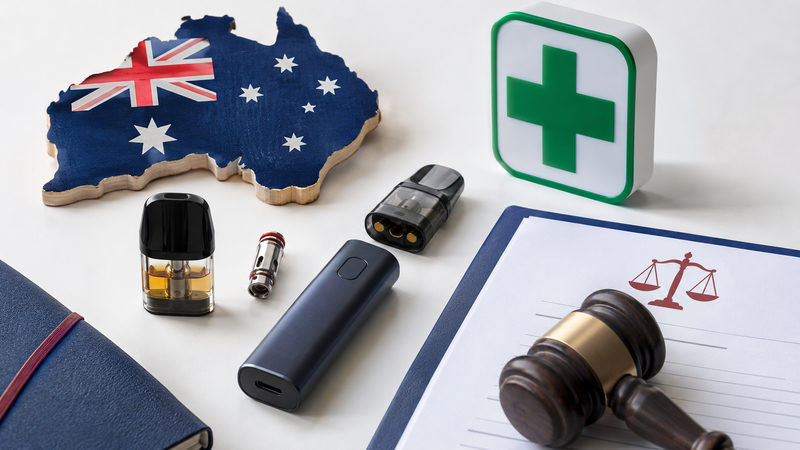
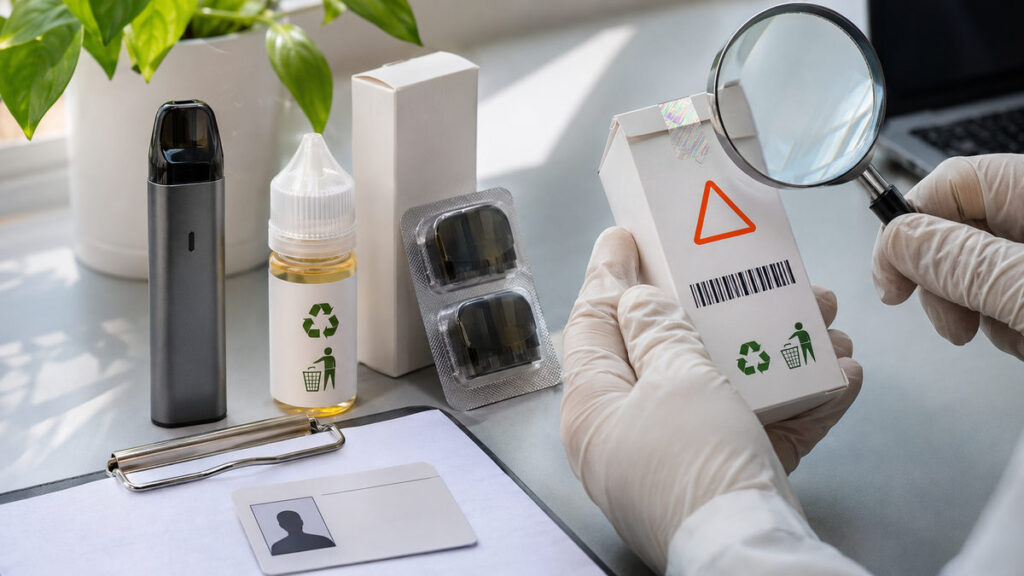
Reusable devices typically have a rechargeable battery, a heating coil, and either a refillable tank or a replaceable pod. Disposable vapes come prefilled and usually stop working once they are empty or discharged. Cartridges, capsules, and pods contain liquid for compatible devices, while e-liquid is the fluid heated inside the device.
Some products are labelled nicotine-free. That does not make them harmless, nor does it necessarily make them lawful for ordinary retail sale. Testing has found nicotine in some products marketed as containing none, so packaging from unregulated suppliers cannot always be trusted.
What counts as a therapeutic vaping good?
A therapeutic vaping good is intended to help a person quit smoking or manage nicotine dependence. The term may cover a device, vaping liquid, pod, cartridge, capsule, kit, or related accessory. For supply to be lawful, it must follow Australia’s therapeutic-goods pathways and all relevant local laws.
In Australia, lawful consumer supply is restricted to therapeutic use. National rules cover importation, manufacture, advertising, commercial possession, and supply. States and territories may also set extra conditions for access, possession, use, and smoke-free locations.
The framework is designed to limit youth access and reduce the risk of new nicotine dependence. It also targets unregulated products, misleading promotion, and exposure to potentially harmful chemicals. At the same time, it directs people seeking help to quit toward trained health professionals.
2. Is Vaping Legal in Australia, and Where Can Vapes Be Bought?
Vaping products are legal only under a tightly controlled therapeutic framework. Whether something is lawful depends on the product, its intended purpose, where it came from, the user’s age, and local law. A product being openly sold by a general retailer does not automatically make it legal.

Whether they contain nicotine or not, vapes may reach consumers only through participating Australian pharmacies. They must be used for smoking cessation or nicotine-dependence management. Tobacconists, convenience stores, vape shops, general retailers, and overseas online sellers cannot lawfully sell consumer vaping products in Australia.
Pharmacies are not required to stock or supply therapeutic vapes. A pharmacist may refuse supply if it appears clinically inappropriate. Even inclusion on an official product list does not guarantee that a product will be available locally.
Access for adults without a prescription
In many jurisdictions, an adult aged 18 or over may access an eligible therapeutic vape without a prescription. The person must still attend an in-person consultation with a participating pharmacist. During that consultation, the pharmacist checks identification, confirms age, assesses clinical needs, and discusses approved first-line treatments.
The pharmacist must then decide whether a therapeutic vape is suitable for that individual. Smoking history, nicotine dependence, earlier quit attempts, current medicines, and health conditions can all shape the decision. Any supply must be for quitting or managing dependence, not recreational use.
Without a prescription, a product cannot contain more than 20 mg/mL of nicotine. It must also appear on the Therapeutic Goods Administration’s notified vape list. Nicotine-free pharmacy products remain subject to the relevant therapeutic pathway and product requirements.
When is a prescription required?
Products containing more than 20 mg/mL of nicotine must be prescribed by a medical practitioner or nurse practitioner. A prescription may also be appropriate for someone with complex clinical needs who requires closer supervision. Therapeutic vapes containing more than 50 mg/mL, however, cannot enter lawful pharmacy supply.
People under 18 need a prescription wherever local law permits therapeutic supply to minors. Even with one, access is not assured. Some jurisdictions prohibit supply to anyone under 18, including young people who hold prescriptions.
Broader local requirements may apply too. A jurisdiction might, for example, require a prescription for products that national scheduling otherwise allows pharmacists to supply without one. Consumers and health professionals should check current state or territory rules before proceeding.
What happens during a pharmacy consultation?
A pharmacist should make clear that therapeutic vapes are generally not a first-line treatment. The conversation may cover patches, gum, lozenges, sprays, inhalators, counselling, and prescription medicines. It should also include dosing, safe use, possible adverse effects, storage, and a plan for gradually reducing dependence.
Take an adult who smokes 15 cigarettes a day and has already tried to quit twice without success. A pharmacist may begin by reviewing how the person used patches and fast-acting nicotine products. The best recommendation might be to correct problems with that earlier treatment rather than supply a vape.
3. Product Rules, Disposable Vape Ban, Possession, and Penalties
Flavours in lawfully supplied therapeutic vapes are tightly restricted. The permitted options are mint, menthol, tobacco, and unflavoured products. Confectionery, fruit, dessert, soft-drink, and novelty flavours have no place in lawful therapeutic pharmacy supply.
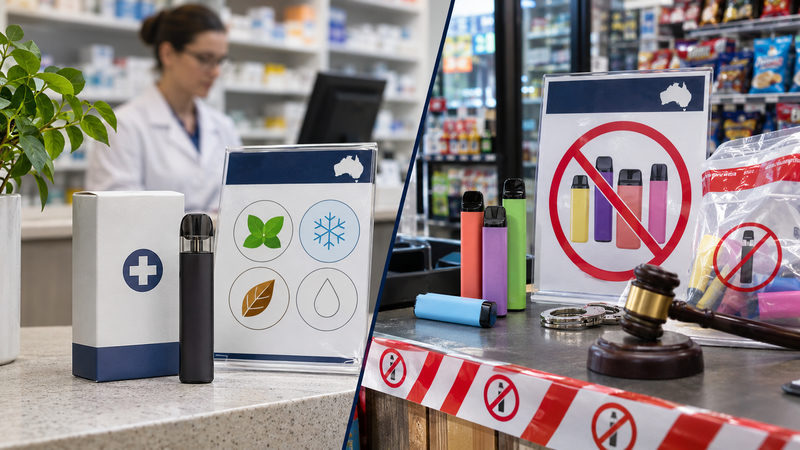
Australia’s vaping controls prohibit disposable single-use vapes. The restrictions apply to importation, domestic manufacture, commercial possession, supply, and advertising. They cover disposable products regardless of branding or claimed nicotine content.
Non-therapeutic vapes are also banned from ordinary commercial supply. Calling a product “nicotine-free” does not create a retail loophole. All consumer vaping products now sit within the controlled framework, whether or not they contain nicotine.
Personal possession is not the same as selling
National law draws a distinction between personal possession or use and commercial possession, unlawful sale, or supply. That does not give consumers unrestricted rights. State and territory laws may create further offences or controls relating to possession, use, age, location, or product type.
Even giving a product to a friend may count as supply when no money changes hands. Likewise, keeping large quantities for resale may indicate commercial possession. Simply avoiding a cash transaction does not necessarily make distribution lawful.
Vaping is commonly banned anywhere smoking is prohibited. Depending on local law, this may include:
- Schools, childcare facilities, and surrounding areas
- Indoor workplaces and enclosed public spaces
- Public transport, stations, platforms, and shelters
- Vehicles carrying children
- Outdoor dining areas and selected public venues
Enforcement and possible consequences
Enforcement may involve the TGA, Australian Border Force, police, and state or territory regulators. Authorities can inspect premises, intercept imports, seize products, investigate advertising, or prosecute unlawful suppliers. Larger operations may involve several agencies working together.
Unlawful importation, manufacture, advertising, commercial possession, or supply can lead to serious consequences. These may include civil penalties, criminal prosecution, forfeiture, product seizure, licence action, and other sanctions. The outcome can vary with the conduct, quantity, jurisdiction, and offender.
Fixed penalty figures can quickly become outdated when legislation changes. For current information, check TGA guidance and the official health or legislation website for the relevant jurisdiction. Legal advice may also be worthwhile when a specific investigation, charge, or commercial arrangement is involved.
4. Importing Vapes, Travelling to Australia, and TGA Status
Consumers generally cannot import vaping goods without a valid pathway, permission, or exemption. Ordering from an overseas website is not a routine alternative to pharmacy access. Customs officers may intercept the goods even if the seller claims that international delivery is lawful.
The former personal importation pathway should not be treated as permission to place ordinary overseas orders. Current controls extend to devices, accessories, vaping substances, and liquid nicotine. They may apply whether the package claims personal use or therapeutic use.
The traveller exemption
A limited exemption allows eligible vaping goods to be carried into Australia in accompanied baggage. The goods must be for the traveller’s treatment or the treatment of someone in their care. This exemption is separate from ordinary postal importation and remains subject to customs requirements.
The current limits for each traveller are:
- Up to two vaping devices
- Up to 20 cartridges, capsules, or pods
- Up to 200 mL of vaping liquid
Staying within these limits does not guarantee that every product will be allowed in. Separate product-specific controls may apply, including rules for cannabis products and other regulated substances. Travellers should check the requirements just before departure instead of relying on what happened during an earlier trip.
Before travelling, review guidance from Australian Border Force and the TGA. Check the rules of the airline, transit country, departure country, and destination as well. A product allowed under one system may still be prohibited under another.
Flying with a vaping device
Airline safety rules commonly require vaping devices and spare lithium batteries to be carried in cabin baggage rather than checked luggage. Vaping and charging devices onboard are usually prohibited. Devices should also be protected against accidental activation, while spare batteries must be secured against short circuits.
Airlines may impose stricter limits or refuse certain equipment altogether. Passengers should contact their carrier before packing. Border permission does not override aviation safety rules.
What the notified vape list means
Products on the TGA notified vape list have sponsors who told the regulator that the products comply with applicable standards. The list helps support lawful supply through the relevant therapeutic pathways. It does not mean that every pharmacy stocks every listed product.
Crucially, notified vapes are generally unapproved therapeutic goods. The TGA has not necessarily assessed each product for safety, quality, efficacy, or performance. Notification should not be confused with the approval granted to an individually assessed registered medicine.
5. Vaping Health Risks, Ingredients, and Effects on Young People
Vape aerosol may contain much more than what appears on the label. Common ingredients include nicotine, propylene glycol, vegetable glycerine, and flavouring chemicals. When heated, they can also produce fine particles, volatile organic compounds, and carbonyl compounds such as formaldehyde or acetaldehyde.
Some aerosols contain metals released by coils or other device components. Poor manufacturing, storage, or ingredient control may introduce further contaminants. As a result, two products in similar-looking packaging can deliver very different chemical mixtures.
Labels from unregulated suppliers may be inaccurate or incomplete. Some products advertised as nicotine-free have contained nicotine or other unwanted substances. Looks, smell, and packaging alone cannot reliably tell you what is inside.
Short-term effects and immediate injuries
Short-term effects may include coughing, throat irritation, headache, nausea, dizziness, and breathlessness. Some people notice a faster heart rate or worsening asthma and respiratory symptoms. Frequent use may also irritate the mouth, gums, and airways.
Nicotine can lead to dependence, tolerance, cravings, and withdrawal. Heavy exposure may cause poisoning, and severe cases can involve confusion, seizures, collapse, or breathing problems. Defective batteries pose another risk: they may overheat, ignite, or explode, causing burns and impact injuries.
Acute lung reactions are also possible. Anyone experiencing sudden chest pain, severe coughing, blue lips, or difficulty breathing needs urgent assessment. Severe symptoms call for emergency help, not a wait for the next available appointment.
Long-term concerns
The full lifetime impact of vaping is still uncertain because widespread use is relatively recent. But uncertainty is not the same as safety. Existing evidence raises concerns about respiratory, cardiovascular, oral-health, reproductive, and possible cancer risks.
Repeated exposure to aerosol may affect airway function and inflammation. Nicotine can influence heart rate, blood pressure, and blood vessels as well. Over time, mouth irritation and dryness may also contribute to dental and gum problems.
Nicotine-free vaping is not harmless. The aerosol may still contain heated solvents, flavouring chemicals, fine particles, metals, and contaminants. Removing nicotine does not eliminate every risk to the lungs, heart, mouth, or people nearby.
Second-hand exposure, pregnancy, and poisoning
People nearby may be exposed to nicotine, particles, and other chemicals through exhaled aerosol. Avoid vaping around children, pregnant people, and anyone with a heart or respiratory condition. Simply opening a window does not reliably prevent exposure.
Nicotine can affect pregnancy and fetal development. Pregnant people should discuss their quitting options with a doctor, pharmacist, or specialist maternity service. They should not start vaping solely because it is promoted as cleaner than smoking.
Liquid nicotine can cause poisoning if it is swallowed or comes into contact with the skin or eyes. Small children are especially vulnerable because bottles and pods may be colourful or appealing. Carers should keep all supplies locked away and clean spills without touching them directly.
Why young people face particular risks
Teenagers and young adults may become dependent on nicotine quickly. Their brains continue developing into early adulthood, including the systems involved in attention, learning, memory, mood, and impulse control. Regular nicotine exposure may therefore affect concentration and emotional wellbeing.
Appealing flavours can make experimentation seem less risky. Discreet devices also allow frequent use without obvious smoke or strong odours. With high nicotine delivery, occasional social use can soon develop into regular cravings.
Peer pressure and online promotion may further normalise vaping. A teenager might begin by sharing a device on weekends. Within weeks, withdrawal between uses could lead to daily vaping at school or home.
Environmental harm
Discarded devices contain plastic, metal, electronic circuits, batteries, and chemical residue. In bins and recycling equipment, they can create a fire hazard. Leaking nicotine may also harm people, animals, and the wider environment.
Single-use products create particularly avoidable waste, but reusable devices still need responsible battery and electronic-waste disposal. Follow local hazardous-waste guidance, and never put damaged lithium batteries in general recycling.
6. Vaping Versus Smoking and How to Quit Safely
Combustible cigarettes remain extremely harmful. Burning tobacco produces smoke containing many toxic and cancer-causing chemicals. Anyone who smokes should be offered practical support to stop completely.
Vaping is not risk-free and should not be promoted to people who do not smoke or vape. Switching completely from cigarettes may reduce exposure to some smoking-related toxins. Using both, however, preserves much of the harm caused by combustible tobacco.
After a suitable assessment, therapeutic vapes may help some adults. They are not a universal answer and are generally not the first treatment considered. The decision should take account of dependence, previous quit attempts, health conditions, personal preferences, and available support.
Preferred quitting treatments
Approved nicotine replacement options include patches, gum, lozenges, sprays, and inhalators. Counselling and other evidence-based medicines can also strengthen a quit attempt. For some smokers, combining a nicotine patch with a fast-acting product helps control sudden cravings.
A doctor or pharmacist can explain which combinations are safe and how to use the correct dose. Professional advice is especially valuable during pregnancy, adolescence, or significant physical illness. People with complex mental health needs may also benefit from coordinated clinical support.
A practical plan for quitting vaping
A straightforward plan can make quitting feel less daunting. Choose a realistic quit date, then identify the situations that usually trigger vaping. Remove devices, pods, chargers, and liquids from your surroundings before that date arrives.
Let supportive friends, relatives, or colleagues know what you are doing. Plan alternatives for driving, social occasions, stress, boredom, and alcohol use. Keeping track of vape-free days and money saved can make your progress easier to see.
When a craving hits, try these strategies:
- Delay acting on the craving for several minutes
- Take slow, deep breaths
- Drink water and keep your hands occupied
- Change location or begin another activity
- Walk, stretch, or complete brief exercise
- Call or message a supportive person
Clinically appropriate nicotine replacement therapy may help some nicotine-dependent vapers handle withdrawal. The right product and dose may differ from those used in a smoking quit plan. Discuss the options with a doctor or pharmacist.
What withdrawal can feel like
Common withdrawal symptoms include cravings, irritability, anxiety, restlessness, and low mood. Some people also experience sleep problems, headaches, poor concentration, or a stronger appetite. These symptoms usually become easier to manage as the body adjusts.
One difficult day does not cancel the progress already made. If you have a lapse, work out what triggered it and restart the plan promptly. Professional support can help adjust treatment before a single lapse turns into a full return to regular use.
Australian support and urgent help
Help is available from doctors, pharmacists, Quitline, Aboriginal Quitline, My QuitBuddy, and QuitCoach. Quitline counsellors can help people prepare for triggers, withdrawal, setbacks, and medications. Culturally appropriate support may also make care feel safer and more relevant.
After suspected nicotine poisoning or harmful e-liquid exposure, call the Poisons Information Centre on 13 11 26. Do not wait for symptoms to appear before seeking advice. Keep the container close by so staff can ask about its ingredients and concentration.
For breathing difficulty, seizures, collapse, severe confusion, or serious burns, call Triple Zero on 000. Call for any other immediate medical emergency too. Emergency services can give instructions while help is on the way.
Conclusion
Australia allows tightly regulated access to therapeutic vaping products through participating pharmacies. Ordinary retail sales, disposable vapes, and non-therapeutic commercial supply remain prohibited. The conditions of access depend on age, nicotine strength, clinical suitability, product status, and state or territory law.
Vaping brings risks of addiction, poisoning, injury, and wider health effects, particularly for young people. Evidence-based treatments and professional quitting support should remain the first priority. Before purchasing, travelling, or supplying products, check the latest guidance from the TGA, Australian Border Force, and relevant local government.
For advice suited to your circumstances, speak with a doctor, pharmacist, or Quitline counsellor. They can compare treatment options and help you build a realistic quit plan. If poisoning is suspected, call 13 11 26; for a medical emergency, call 000.