What happens after a disposable vape delivers its final puff? Concerns about Vape Waste and Environmental Impact begin when batteries, plastics, electronics, and nicotine residue all end up in the same bin. It may be a tiny device, but the disposal problems it creates are anything but small.
Many users get little guidance when a device stops working. Waste workers, meanwhile, may come across crushed batteries, leaking liquid, or electronic parts they cannot immediately identify. Communities are left dealing with litter, fire hazards, toxic contamination, and the loss of useful materials.
Looking at the product’s entire journey makes the practical solutions easier to see. Consumers, manufacturers, schools, communities, and policymakers all have a part to play. Safe collection and smarter product design can prevent harm while recovering valuable resources.
1. What Vape Waste Is and Why It Is an Environmental Problem
Vape waste covers discarded devices, components, liquids, consumables, chargers, and packaging. It is far more complicated than ordinary plastic litter. One discarded device can fall into several regulated or specialized waste categories at once.
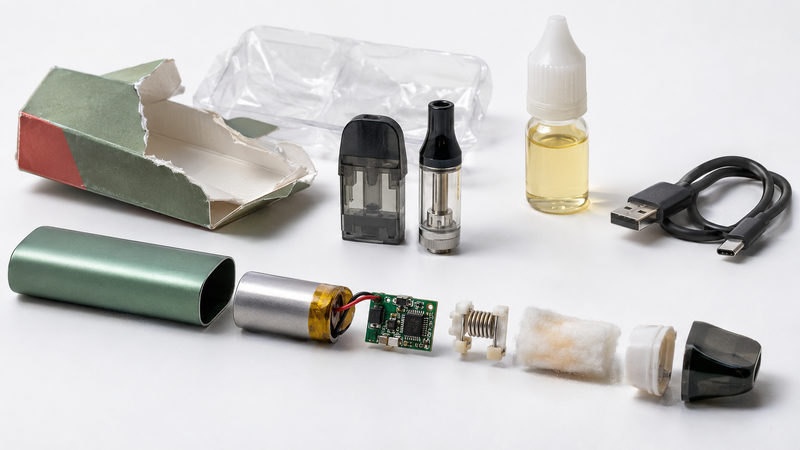
Single-use vapes contain a battery, liquid reservoir, heating element, and electronic controls. Once the liquid or battery runs out, users throw away the whole unit. Each replacement can therefore send another battery and circuit board into the waste stream.
Reusable systems work differently, but they still produce waste. Discarded items can include replaceable pods, cartridges, coils, bottles, mouthpieces, chargers, and batteries. Eventually, the main device also becomes electronic waste when it breaks or reaches the end of its useful life.
A small object with several waste types
One vape can contain plastic waste, electronic waste, battery waste, and chemical residue. Each material calls for a different processing method. Yet the device’s compact construction makes safe separation difficult for consumers and waste facilities alike.
- Electronic waste: Circuit boards, sensors, wiring, lights, and control chips.
- Battery waste: Rechargeable lithium-ion cells that may retain electrical energy.
- Plastic and metal waste: Casings, mouthpieces, tanks, frames, and connectors.
- Contaminated waste: Wicking material, pods, and containers holding nicotine or e-liquid residue.
- Packaging waste: Boxes, plastic wraps, instruction sheets, and protective inserts.
Even without precise global estimates, rapid product turnover can expand this waste stream. Disposable products may be used for only days or weeks, while their materials remain in the environment much longer. New flavors, designs, and device formats can also encourage people to replace equipment before it physically fails.
The problem goes well beyond visible litter. A vape tossed into a bin may pass through compactors, collection vehicles, sorting equipment, and landfills. One careless disposal decision can put many workers and facilities in avoidable danger.
2. Materials Inside Vapes and Their Full Life-Cycle Footprint
Most vapes contain far more components than their smooth exterior would suggest. Beneath a plastic or metal shell sit the battery, wiring, heating system, and liquid reservoir. Even a basic disposable model is, in effect, a compact electronic appliance.
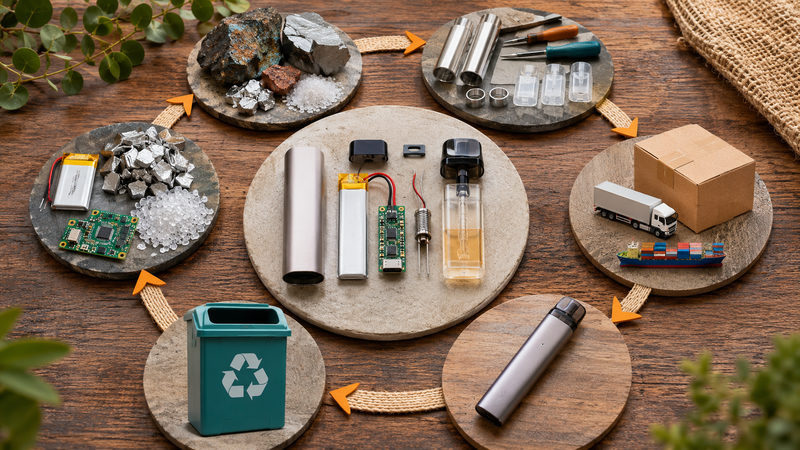
- Plastic housings, mouthpieces, tanks, buttons, and internal supports
- Aluminum or steel frames, connectors, and protective shells
- Copper wiring and conductive contacts
- Circuit boards, sensors, control chips, and LED elements
- Lithium-ion cells with metal-containing battery materials
- Heating coils made from electrically resistant metal alloys
- Cotton or another absorbent material holding e-liquid
- Printed packaging, plastic film, and protective inserts
A product that looks empty may still contain chemicals. Nicotine, flavoring compounds, vegetable glycerin, propylene glycol, and other ingredients can remain trapped in the wick or reservoir. Looking empty does not mean the device is clean or harmless.
Liquid can also gather around seals, coils, or damaged cartridge edges. Nicotine may enter the body through skin contact and can harm aquatic organisms. Avoid touching leaks, and never pour leftover liquid into a sink or storm drain.
The footprint starts before purchase
A vape starts affecting the environment long before it reaches a store. Lithium, copper, aluminum, steel, and other materials must be mined, refined, and processed. Those operations consume energy, disturb land, and may produce emissions or polluted wastewater.
Manufacturers then make cells, chips, coils, plastic parts, and packaging at different facilities. Components may cross several borders before final assembly. At every stage, more energy, transportation, protective packaging, and material loss enter the picture.
Finished devices often travel long distances by ship, road, rail, or air. Each product is lightweight, but large shipments create substantial combined freight demand. Short-lived devices repeat this manufacturing and delivery cycle with every replacement.
Single-use design creates a poor balance between service life and production effort. A battery may work only briefly, even though extracting and processing its metals took considerable resources. A durable product, by contrast, can spread its manufacturing footprint across many more uses.
Valuable resources leave circulation
Throwing away vapes also means losing recoverable materials. Copper is an efficient conductor, aluminum has many industrial uses, and lithium is essential to rechargeable battery production. But mixed construction and chemical contamination often make recovery costly or impractical.
When these products are landfilled or burned, their materials leave productive circulation. Manufacturers must then depend more heavily on newly extracted resources. Better collection and smarter design could keep selected metals and plastics in use for much longer.
3. Disposable Vape Pollution, Toxicity, and Safety Hazards
Disposable vapes create several waste problems after a relatively short working life. Every unit can add plastic, electronic components, a battery, and packaging to the discarded material stream. When littered, these devices may remain in streets, parks, beaches, and waterways.

The battery poses an immediate safety risk. Even after disposal, a cell may hold enough energy to produce intense heat. Crushing, puncturing, or bending the device can cause a short circuit and possibly a fire.
Waste equipment routinely compresses materials to save space. Inside a collection truck, one damaged battery can ignite nearby paper, plastic, or other combustible waste. Fires can also start on sorting belts, inside recycling plants, or beneath landfill material.
Chemical leakage and environmental exposure
Damaged pods and reservoirs can leak nicotine-containing liquid. Rain may then wash the residue into soil, gutters, storm drains, streams, and groundwater. Improper disposal can carry chemical contamination far beyond the spot where the device was dropped.
Nicotine is toxic and must be handled carefully. Depending on the dose and circumstances, it can affect people through swallowing, inhalation, or skin exposure. Leaked liquid may also pose a threat to fish and other aquatic organisms.
Flavorings and solvents bring more uncertainty when released into the environment. These formulations were never designed to enter soil or water. Treat any remaining liquid as contamination, not harmless moisture.
Persistent litter and physical dangers
Sunlight, traffic, weather, and mechanical pressure can crack and fragment plastic casings. The smaller those pieces become, the harder they are to collect, and they may persist for long periods. Continued breakdown can also contribute to microplastic pollution.
Sanitation workers may come into direct contact with these hazards. Without recognizing them first, a worker could handle leaking devices, sharp metal, broken plastic, or smoking batteries. A concealed battery fire may force an evacuation, require an emergency response, and shut down costly equipment.
Brightly colored devices can look like toys or sweets to children. Pets and wildlife may chew, swallow, or carry small components. That can expose them to nicotine residue, sharp edges, batteries, and choking hazards.
- Handling may transfer nicotine liquid onto skin or into the mouth.
- Swallowed pieces may cause poisoning, choking, or internal injury.
- Broken metal and plastic may cut feet, paws, hands, or mouths.
- Wildlife may become caught in packaging or damaged components.
- Chewed batteries may leak, short-circuit, or generate dangerous heat.
A littered vape is more than an eyesore. It brings chemical, electrical, fire, and physical hazards together in one appealing package. Proper collection can prevent many of these risks.
4. How to Dispose of Vapes, Pods, and Cartridges Safely
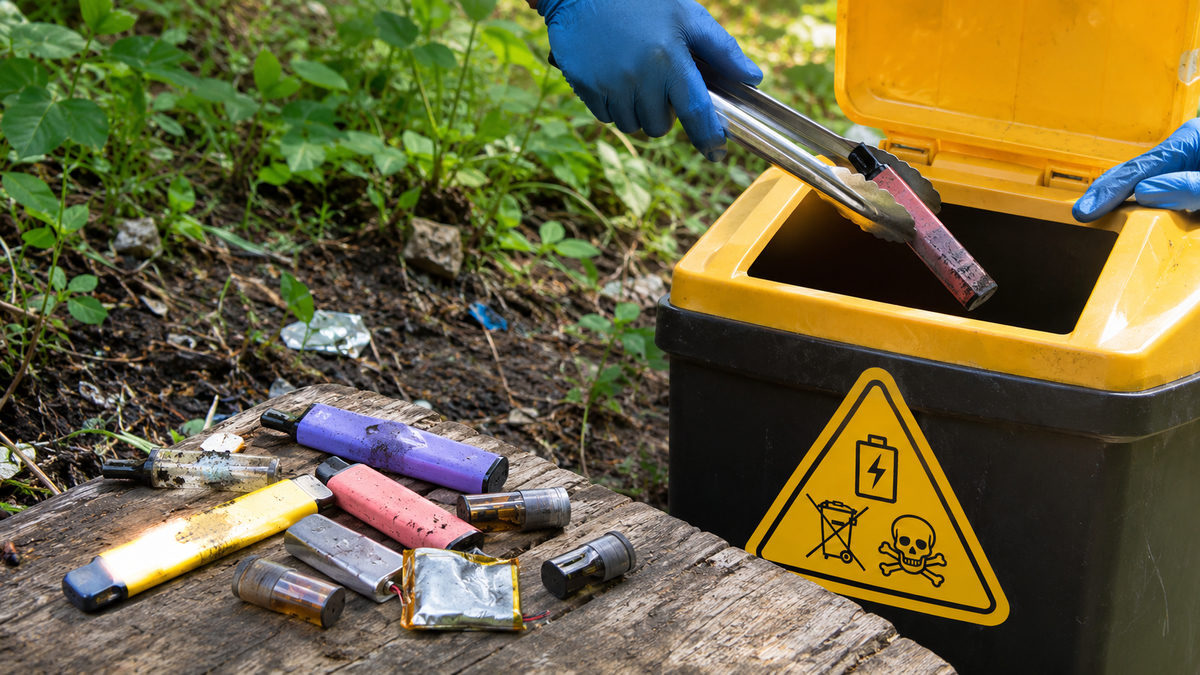
Never put a used vape in household trash. A compactor can damage the battery, and leaking nicotine may contaminate nearby waste. Never pour leftover e-liquid onto the ground or down household plumbing either.
Mixed curbside recycling is not a safe alternative. Standard facilities cannot separate sealed batteries from contaminated components on ordinary sorting lines. A hidden battery can also ignite equipment and contaminate materials that would otherwise be recyclable.
The United States Environmental Protection Agency advises individuals to use household hazardous-waste collection services. Its guidance outlines the risks posed by both the battery and nicotine. Readers can find the agency’s official advice by searching for “How to Safely Dispose of E-Cigarettes” on the EPA website.
Handle damaged devices carefully
Stop using a device if it becomes swollen, unusually hot, punctured, crushed, or wet. The same applies if it leaks, hisses, smells unusual, or has severe casing damage. Move it away from flames and combustible materials.
Do not crush or take apart a sealed vape. Never pry out an embedded battery unless the manufacturer specifically designed the product for safe user removal. A tool could puncture the cell or connect its electrical contacts.
While waiting for disposal, keep the device away from heat, water, children, and pets. Follow local directions on containers, terminal protection, and damaged batteries. Do not tape wet, leaking, or dangerously hot equipment unless a professional tells you to do so.
Find a verified collection service
Begin with your local waste authority, environmental agency, or public-health department. Ask whether it offers a program that explicitly accepts complete vape devices. Confirm before making the trip, since ordinary battery sites may refuse products contaminated with nicotine.
- Approved household hazardous-waste facilities or collection events
- Designated electronic-waste services that explicitly accept vapes
- Battery programs approved to receive complete vaping devices
- Verified retailer take-back services with safe downstream handling
- Manufacturer programs that clearly explain accepted products
Pods and cartridges require similar care when nicotine or liquid remains inside. Even items that look empty may hold residue in their wicks, seals, and corners. Ask whether the hazardous-waste service accepts cartridges, pods, coils, and e-liquid containers.
Whenever possible, keep loose liquid in its original labeled container. Do not mix it with cleaners, medicines, fuels, or unrelated chemicals. Follow the collection program’s directions for preventing leaks during storage and transportation.
Rules vary between countries, states, provinces, and municipalities. Households may also receive different instructions than schools, retailers, or businesses. Local authorities should always have the final say on classification, storage, transport, and disposal.
A simple disposal sequence
- Stop using the device if it becomes damaged, hot, swollen, or leaky.
- Place it in a secure location away from heat, water, children, and pets.
- Contact the local hazardous-waste or environmental authority.
- Confirm that the selected program accepts vapes and nicotine-contaminated parts.
- Follow its exact packaging, transport, and drop-off instructions.
5. Can Vapes Be Recycled, and Are Reusable Devices Better?
Some materials in vapes can technically be recovered. After safe separation, specialized processors may reclaim metals, battery materials, and certain plastics. That does not mean a vape belongs in a household recycling bin.
Consumers should use only services that clearly state they accept vaping products. A general electronics collection point may turn away devices with nicotine residue. When asking about acceptance, describe the complete product.
Why recycling remains difficult
Many devices are held together with glue, welds, or tightly fitted parts. Batteries may sit directly beside contaminated wicks and liquid reservoirs. Safe dismantling therefore requires trained workers, protective controls, and appropriate fire precautions.
- Sealed batteries that consumers cannot safely remove
- Compact parts that require slow manual separation
- Mixed plastics, metals, electronics, and absorbent materials
- Glue, welds, and fasteners that obstruct disassembly
- Nicotine contamination inside reservoirs and wicks
- Inconsistent sizes, materials, and product designs
- Limited collection and processing infrastructure
Pods and cartridges bring their own difficulties. They may appear empty while liquid remains hidden in absorbent material or narrow chambers. That is why most do not belong in ordinary plastic recycling.
Reusable does not mean harmless
A durable rechargeable device can cut down on repeated battery and circuit-board disposal. The longer its owner keeps it working, the greater that benefit becomes. Frequent upgrades, however, can wipe out much of the waste advantage.
Reusable systems still produce pods, coils, bottles, packaging, and, eventually, electronic waste. They also need electricity for charging and require safe battery management. Their environmental performance depends on much more than a reusable label.
Durability, repairability, replacement frequency, packaging, and consumable design all matter. So does access to responsible collection when parts wear out. Replaceable batteries can help recovery, but only if users remove and handle them safely.
This comparison is not meant to encourage nicotine or tobacco-product use. From a waste standpoint, avoiding unnecessary consumption creates the least product waste. For current adult users, keeping devices longer and disposing of them responsibly can limit avoidable environmental harm.
6. Reducing Vape Waste and Environmental Impact
Reducing waste takes action both before and after a product reaches consumers. Collection programs deal with devices already in use, while durable design can prevent some future waste. Clear responsibilities also make it easier to keep hazardous products out of ordinary bins.
Take-back programs and producer responsibility
Retailer and manufacturer take-back programs can make disposal easier. Still, a collection box by itself does not guarantee responsible processing. Users should check which products are accepted, how batteries are controlled, how items are transported, and where the collected materials ultimately go.
Policymakers can shift more responsibility for end-of-life products onto producers. Extended producer responsibility programs may require manufacturers to pay for collection and treatment. Deposit-return systems can also give consumers a clear incentive to bring used devices back.
- Dedicated and accessible collection networks
- Clear waste-reporting and recovery requirements
- Deposit refunds for returned products
- Litter enforcement and public education
- Electrical and electronic equipment rules where applicable
- Transparent standards for treatment and material recovery
Products designed for safer recovery
Better design can make end-of-life handling much simpler. Removable batteries and standardized components support safer separation. Durable construction and readily available replacement parts can also keep products in service longer.
Designers can reduce the number of material types and avoid unnecessary glue. They can use more recycled content and cut down on packaging as well. Above all, prominent disposal labels should tell users exactly where the complete device belongs.
Clear labels should address pods, cartridges, batteries, and liquid containers. A generic recycling symbol can mislead consumers when specialized handling is still required. Instructions need to make a clear distinction between take-back services and curbside recycling.
Actions for schools and communities
Schools often find devices in bathrooms, on school grounds, or among confiscated property. Staff should not simply build up an informal pile in an accessible cupboard. Administrators need to arrange secure procedures with approved hazardous-waste professionals.
- Train designated staff to recognize battery and nicotine hazards.
- Use secure collection procedures that restrict public and student access.
- Develop protocols for leaking, hot, or visibly damaged devices.
- Record collected quantities and recurring litter locations.
- Teach families why trash and curbside recycling are unsafe.
- Arrange collection through authorized hazardous-waste handlers.
Community litter audits can reveal parks, transit stops, and streets where vape waste repeatedly appears. Cleanup teams need clear instructions for handling damaged devices without crushing them. Organizers should also prepare for leaking products and seek professional assistance with any battery that is hot or smoking.
Realistic steps for current users
Current users can reduce immediate risks with a few simple habits. Never litter a device or leave it within reach of children and animals. Do not allow damaged products to pile up without an approved disposal plan.
When practical, keeping durable equipment for longer may reduce repeated battery and circuit-board waste. Users can also skip unnecessary accessories, frequent replacements, and excessive packaging. Even so, every device needs responsible end-of-life management.
Recovery and redesign both support a circular economy. In such a system, lithium, copper, other metals, and suitable plastics stay useful instead of becoming pollution. This reduces the need for resource extraction while lowering disposal risks.
Conclusion
Vape waste brings together batteries, electronics, plastics, valuable metals, and potentially toxic nicotine residue. It belongs in neither household trash nor mixed curbside recycling. Disposable products make litter and resource loss worse because complete electronic devices are discarded after only brief use.
Reusable devices may reduce some waste when owners keep them working for longer. They still produce cartridges, coils, bottles, batteries, and eventual electronic waste. Safe end-of-life management matters for every type of product.
Use approved local hazardous-waste, electronic-waste, or verified take-back services. Before transporting devices, pods, or liquids containing nicotine, confirm that the service accepts them. Requirements differ by jurisdiction, so local authorities should provide the final instructions.
Follow this final safe-disposal checklist:
- Do not litter, crush, burn, or dismantle vape devices.
- Do not place vapes in household trash or curbside recycling.
- Secure used or damaged products away from heat, water, children, and pets.
- Find a verified local collection or hazardous-waste program.
- Confirm that the program accepts vapes and nicotine-contaminated parts.
- Follow its packaging, storage, transport, and drop-off instructions.
- Share correct guidance with your household, school, workplace, and community.
Properly returning one device may feel like a small achievement. Yet it can prevent a fire, limit chemical exposure, and keep valuable materials in circulation. Better disposal begins when every used vape is treated as the complex electronic product it really is.