Introduction
A familiar logo can conceal a surprisingly complex supply chain. Knowing How to Identify a Vape Product Manufacturer can help you discover who actually made the device, cartridge, or e-liquid. The name displayed most prominently, however, may belong only to the brand owner. The factory itself could trade under an entirely different company name.
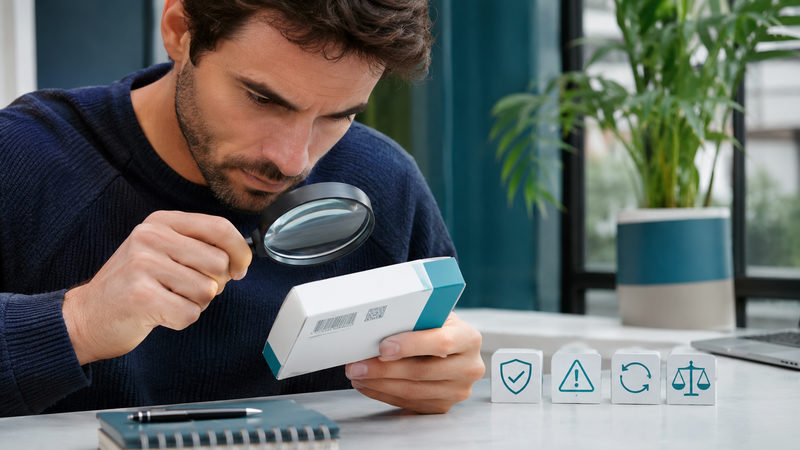
This difference matters when you need to confirm authenticity, assess a supplier, manage a recall, or report an unsafe product. Importers, distributors, and retailers may also be listed on the packaging even though they manufactured nothing. A dependable investigation combines label inspection, code verification, company research, and supporting documents.
You do not need specialist equipment for this process. You do need patience and careful records. The following steps explain how to inspect a product, spot warning signs, verify the companies involved, and preserve useful evidence.
1. Why Vape Manufacturer Identification Matters
Risk, traceability, and accountability
Identifying the manufacturer gives you a starting point for tracing a vape through its supply chain. It can connect the product to production records, quality controls, and the companies responsible for it. That link becomes especially valuable if a device overheats, leaks, misfires, or causes unexpected symptoms.

Consider two identical disposable vapes bought from different retailers. One package lists a legal company, address, model, and batch number. The other shows nothing beyond a colorful brand name and flavor description. Which one would be easier to investigate? Clearly, the second product leaves far fewer leads.
Once confirmed, a manufacturer or responsible company can help with several common needs:
- Authenticating a device, cartridge, coil, pod, or e-liquid.
- Requesting a refund, replacement, warranty review, or technical explanation.
- Checking whether a batch appears in a recall or safety notice.
- Reporting labeling problems, defects, injuries, or suspected counterfeits.
- Tracing suppliers during an incident or inventory investigation.
- Supporting legal, customs, and regulatory recordkeeping requirements.
Traceability also matters when businesses accept stock. Retailers may need to establish who supplied each batch and which customers later received it. Clear records make returns and recalls less confusing. They can also stop questionable products before they reach the shelves.
Identification does not prove safety
A company name by itself never proves that a vape is safe, genuine, or legally compliant. Counterfeiters frequently copy legitimate names and addresses. Even polished packaging, a valid barcode, or a professional website offers only limited assurance when considered alone.
Do not use a product if its origin cannot be verified, its seal is damaged, its label has been altered, or it shows signs of tampering. Stop using any device that leaks, overheats, sparks, swells, or behaves unpredictably. Store it safely, and seek appropriate help if an exposure or injury has occurred.
2. Manufacturer vs. Brand Owner, Importer, and Distributor
Understanding each company’s role
The physical manufacturer runs the facility where the product is made or assembled. A different company may own the brand and control its packaging, marketing, or specifications. So the biggest name on the box is not necessarily the name of the factory.

Several organizations may be involved before a vape reaches its buyer:
- Manufacturer: Produces, fills, mixes, or assembles the product.
- Brand owner: Owns or licenses the consumer-facing name and design.
- OEM factory: Manufactures a product using another company’s brand or specifications.
- ODM factory: Designs and manufactures a product that another company may rebrand.
- Private-label company: Sells an existing product under its own branding.
- Importer: Brings products into a particular country or customs territory.
- Authorized distributor: Supplies products with permission from the brand or manufacturer.
- Wholesaler: Resells stock to businesses, sometimes without brand authorization.
- Retailer: Sells the final product directly to consumers.
- Responsible party: Accepts defined legal duties within a specific jurisdiction.
A responsible party may manage notifications, records, labeling, or communication with regulators. That does not necessarily mean the company made the product. Local regulations determine which names and addresses must be printed on the packaging.
Why contract manufacturing complicates identification
Contract manufacturing separates factory work from the brand consumers see. One factory, for example, might make similar devices for ten private-label companies. Those companies can then use different packaging, flavors, model names, and distribution networks.
An e-liquid brand might also hire another business to mix, bottle, or package its formulas. Yet the label may mention only the brand owner or local importer. This arrangement is not automatically deceptive. It does, however, make documentary evidence much more useful.
Invoices, purchase orders, customs documents, and supplier declarations can link the visible brand to the factory behind it. Business buyers can also ask for written confirmation of that manufacturing relationship. Names, addresses, product descriptions, and dates should remain consistent across the records.
3. How to Identify a Vape Product Manufacturer on Packaging
Inspect every physical component
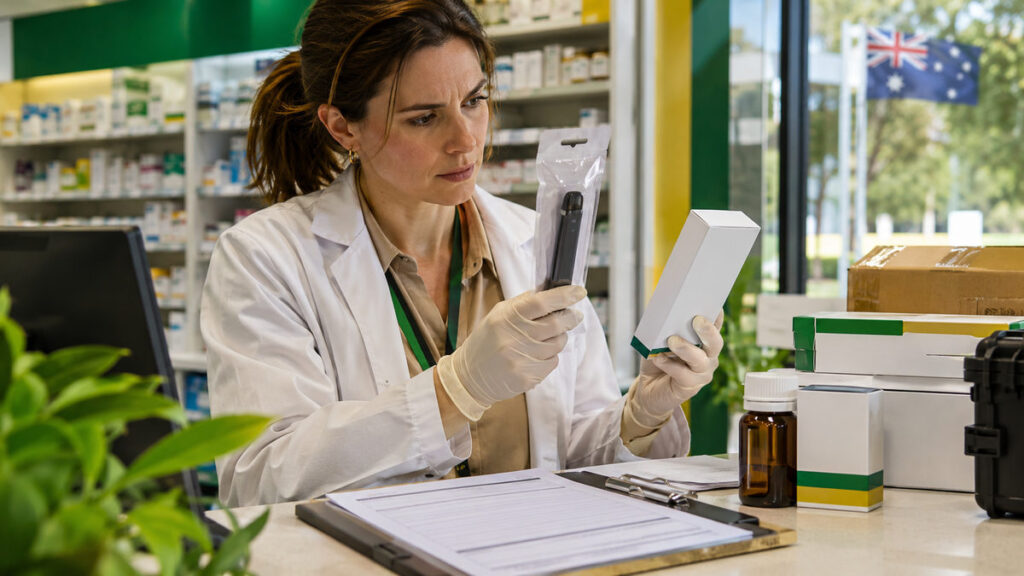
Examine the whole product, not only the front panel. Check the device, bottle, cartridge, inner tray, outer box, insert, warranty card, and shipping label. Small but useful manufacturing details are often tucked beside warnings or beneath folded sections of packaging.
Look for a complete legal company name, not just a trademark. Record the physical address, website, customer-service information, model number, country of origin, and any responsible-party statement. Phrases such as “manufactured by,” “produced for,” and “imported by” can help distinguish each company’s role.
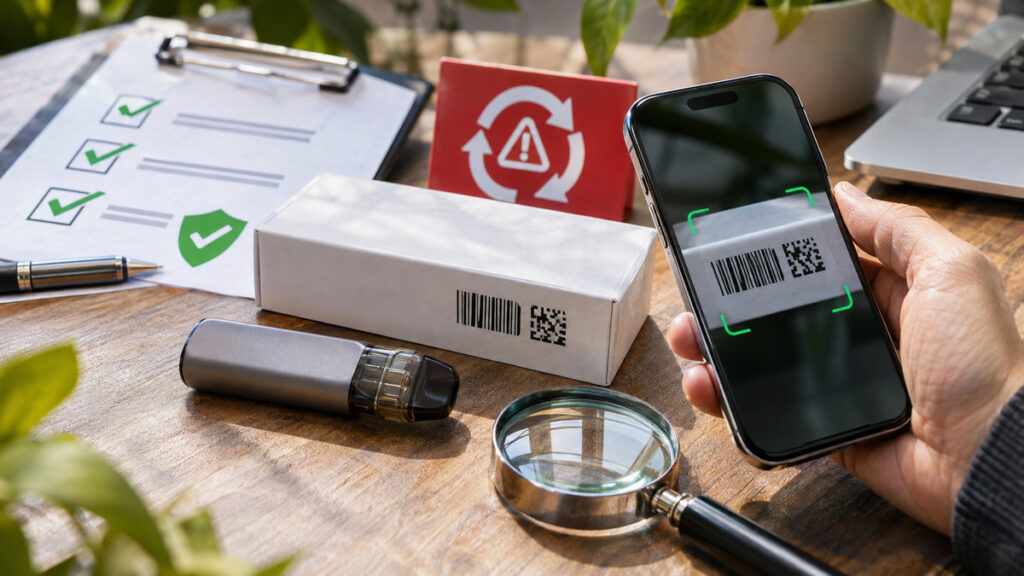
Take pictures of every side before opening sealed packaging. Get close, clear shots of codes, seals, labels, and fine print as well. These photographs preserve evidence if a label later peels off or the retailer changes its online listing.
Check product-specific locations
On disposable vapes, identifiers often appear on the underside, rear panel, or outer box. Refillable devices may display a manufacturer, model, or serial number inside the battery compartment. Charging details and compliance markings are also commonly printed near the charging port.
Coils, pods, and cartridges have less room for printed information. Useful details may instead appear on blister packs, foil seals, or carton flaps. Compare resistance values, model compatibility, batch markings, and security stickers with the information on the outer packaging.
E-liquid bottles generally provide more space for label details. Check the ingredients, nicotine strength, liquid volume, warnings, lot information, producer, and responsible company. Compare the bottle against its box, since counterfeit or repackaged products may contain obvious inconsistencies.
Read the wording carefully. “Designed by” is not the same as “manufactured by,” and “distributed by” describes a sales role. A country-of-origin statement may reveal where production took place without identifying the factory’s legal name.
4. Decode Serial Numbers, Batch Codes, Barcodes, and QR Codes
What each identifier can reveal
Different product identifiers do different jobs, so they should not be treated as interchangeable. A model number points to a type of product, while a serial number may refer to one specific device. Batch and lot numbers usually tie a group of units to the same production run.
You will commonly encounter the following identifiers:
- Model numbers: Distinguish designs, capacities, versions, or compatible components.
- Serial numbers: Support individual tracking, warranty service, or authentication.
- Batch or lot codes: Link products with manufacturing dates and production records.
- Barcodes: Support inventory, retail scanning, and product identification.
- QR codes: Open verification pages, instructions, registrations, or marketing content.
- Security labels: Use scratch panels, holograms, microprinting, or changing colors.
Copy every code exactly, including letters, zeros, spaces, and hyphens. Note where each one appears and check whether the different parts of the packaging carry matching numbers. Conflicting lot codes on a bottle and its box call for a closer look.
Understand the limits of code verification
A barcode prefix does not always reveal the physical factory or country of manufacture. It may simply point to the company that licensed the number. Barcode data alone is therefore not conclusive proof of origin.
In the same way, “Made in” wording may name a country without identifying a particular facility. Other markings can refer to the destination market, importer, or local responsible party. Some products are assembled, filled, and packaged in separate locations.
Counterfeiters can reproduce genuine QR codes, serial numbers, and holograms. A copied code may lead to a legitimate website even though the product itself is fake. Some verification systems flag codes that have been checked repeatedly, but such a warning still requires further investigation.
Treat QR destinations with caution. Compare the scanned domain with the official domain you enter manually in your browser. If the page looks unusual or asks for unnecessary details, do not submit personal or payment information.
5. Verify the Product and Company Through Official Sources
Use the brand’s official verification process
Enter the known brand website directly into your browser instead of following an untrusted link from the package. Find the product verification or support section from there. Then compare its domain, company details, and contact information with reliable packaging and business records.
Type the security code exactly as shown. Make sure the resulting record matches the model, color, capacity, and product category you are holding. Save a screenshot that includes the result, date, domain, and code entered.
Contact the brand if a code is invalid, has already been checked, or points to another model. Share photographs, but avoid publishing complete security codes publicly. You can also ask whether the seller appears on the brand’s authorized distributor or retailer list.
Cross-check independent records
Official corporate registries can show whether a named company exists and where it was registered. Registration by itself does not prove that the business can manufacture the product or that the item is genuine. Compare its status, directors, addresses, and filing dates with what the supplier claims.
Useful sources vary by jurisdiction but may include:
- Government corporate registration databases.
- Health or product-registration databases.
- Consumer product recall databases.
- Trademark registration records.
- Manufacturing and business license registers.
- Customs or importer records available to the public.
- Official authorized distributor lists.
Consumers in the United States, for example, can consult public safety information from the relevant federal health regulator. Other countries rely on different agencies, databases, and reporting systems. Search for the local authority responsible for tobacco, nicotine, medicines, customs, or consumer products.
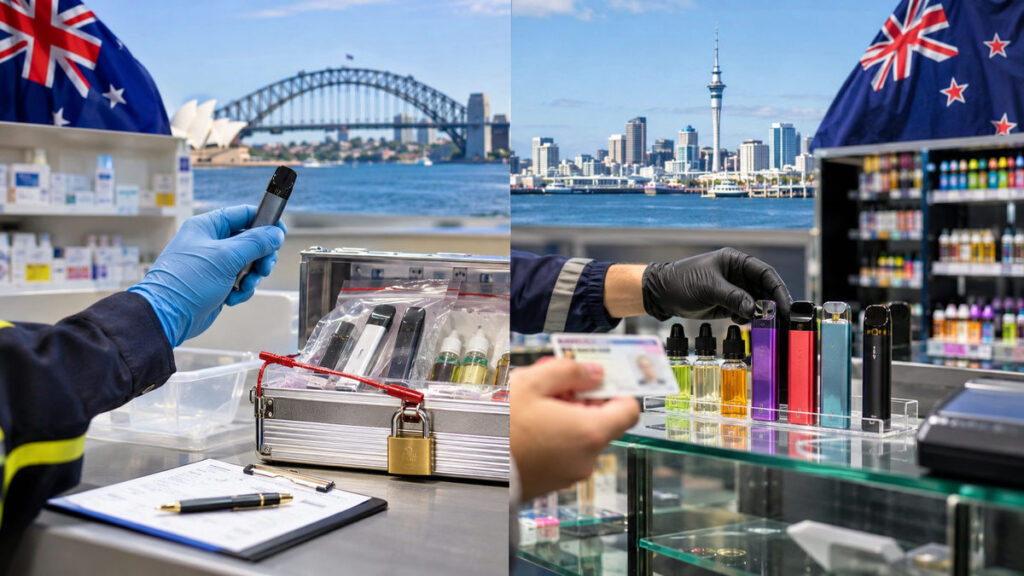
Labeling and registration rules differ widely between jurisdictions. A product allowed in one market may be restricted in another. Check the requirements for the locations where it was sold, imported, and intended to be used.
6. Counterfeit Warning Signs and Missing Manufacturer Details
Recognize common warning signs
Counterfeit packaging may look convincing at first. Look closer, though, and several small inconsistencies often emerge together. Whenever possible, compare the questionable item with confirmed genuine packaging obtained from an authorized source.
Possible warning signs include:
- A missing, incomplete, or unverifiable company address.
- Different company names across the device, box, and insert.
- Spelling errors, uneven fonts, faded colors, or poor print quality.
- Labels placed over original text or regulatory markings.
- Broken seals, leaking containers, or damaged tamper features.
- Duplicate, invalid, scratched, or mismatched verification codes.
- A verification result showing a different model or flavor.
- Prices far below normal authorized retail prices.
- Unsupported claims that the product is healthy or risk-free.
- Sales through unknown, unauthorized, or untraceable channels.
A single mistake might come from a packaging update or printing defect. Several red flags together are much harder to dismiss and may justify rejecting the product. A functioning QR code should never outweigh contradictory physical evidence.
Escalate unresolved concerns
If the manufacturer cannot be identified or confirmed, stop using the product. Contact the retailer, authorized distributor, importer, or brand owner and ask for a written explanation. Keep a copy of every response you receive.
Never dismantle a device with a leaking, swollen, burned, or otherwise damaged battery. Keep it away from combustible materials without touching exposed liquid or damaged cells. If it poses an immediate hazard, follow local emergency and hazardous-waste guidance.
Suspected counterfeit, defective, mislabeled, recalled, or unsafe products should be reported to the appropriate local authority. Depending on the problem, this may be an agency overseeing consumer protection, customs, public health, trading standards, or regulated nicotine products. If the seller misrepresented the item, notify the marketplace or payment provider too.
Seek medical advice promptly if anyone develops symptoms after exposure. Keep the product, packaging, receipt, and usage information for investigators. Do not continue testing a questionable device simply to collect more evidence.
7. Manufacturer Due Diligence and Quick Decision Checklist
Verify suppliers before accepting stock
Retailers, importers, distributors, and private-label buyers must investigate more deeply than ordinary consumers. Confirm the company’s registration, manufacturing authorization, applicable licenses, ownership, and facility address. Check these details independently rather than accepting a sales presentation at face value.
Request trade references and evidence of authorized sales status. Review the company’s recall history, regulatory notices, and proof of earlier shipments as well. Be cautious when a newly established business claims decades of manufacturing experience.
Compare the quotation, contract, invoice, bank beneficiary, packing list, and shipping record side by side. The listed companies and addresses should make commercial sense. Payments directed to unrelated individuals or businesses without a clear explanation create a serious risk.
Request evidence that fits the product
A supplier’s documents should match the exact model, formulation, and batch. A broad laboratory report, for example, cannot verify every flavor or nicotine strength. Review the report dates, sample identifiers, laboratory information, methods, and results.
Relevant records may include:
- Detailed product specifications and component lists.
- Certificates of analysis for relevant batches.
- Reports from appropriately accredited laboratories.
- Quality-management certificates with verifiable scope and status.
- Manufacturing authorizations or compliance records.
- Batch production and release documentation.
- Commercial invoices and purchase records.
- Shipping, importer, distributor, and supply-chain records.
Every certificate should name the issuing organization and the facility it covers. Its scope must also include the relevant manufacturing activity. If its authenticity remains uncertain, contact the issuer using details found through an independent source.
Document findings and make a clear decision
Before returning or transferring a questionable product, build a case file. Include photographs, receipts, packaging, codes, verification screenshots, correspondence, and seller information. Where safety is a concern, record symptoms, failures, charging conditions, and incident dates too.
A straightforward decision process can help:
- Verify: Continue checking when information remains incomplete but no immediate danger appears.
- Reject: Refuse products with unresolved identity, document, or authenticity problems.
- Quarantine: Separate affected stock and prevent further sale or distribution.
- Return: Seek a documented return through the responsible seller or supplier.
- Report: Notify the proper authority when counterfeit, recall, defect, or safety concerns remain.
Never sell quarantined stock while you wait for answers. Keep it in its original condition and document everyone who handles each item. This simple discipline supports later investigations and helps prevent accidental redistribution.
Conclusion
Reliable identification comes from several pieces of evidence that support one another. Begin with the physical labels, then distinguish the manufacturer from the brand owner, importer, and distributor. Compare product codes against official verification tools and independent company records.
No barcode, origin statement, certificate, or website result can prove authenticity on its own. Look instead for consistent names, addresses, models, batches, documents, and supply-chain records. Any conflict deserves further investigation, particularly when seals or labels appear to have been altered.
Use this identification checklist before buying a vape or accepting commercial stock. Keep the packaging, receipts, photographs, codes, screenshots, and correspondence. If the product’s origin, authenticity, labeling, or safety cannot be confirmed, reject, quarantine, return, or report it.