
Could a therapeutic vape meet TGA rules and still be unlawful to import or supply? Yes. Its device, formula, packaging, or sponsor notice might fail a separate requirement. The TGA Product Standards for Therapeutic Vapes work alongside laws governing access, importation, pharmacies, advertising, and the supply chain. Australian businesses therefore need to assess every substance, device, accessory, kit, and pack on its own merits.
Meeting a product standard does not amount to market authorisation. Many therapeutic vapes are still unapproved goods outside the Australian Register of Therapeutic Goods. Before importing, manufacturing, or supplying a product, sponsors need to identify every instrument that applies. This guide covers the main standards, evidence requirements, responsibilities, and consequences of non-compliance.
1. TGA Product Standards for Therapeutic Vapes Explained
Purpose and therapeutic scope
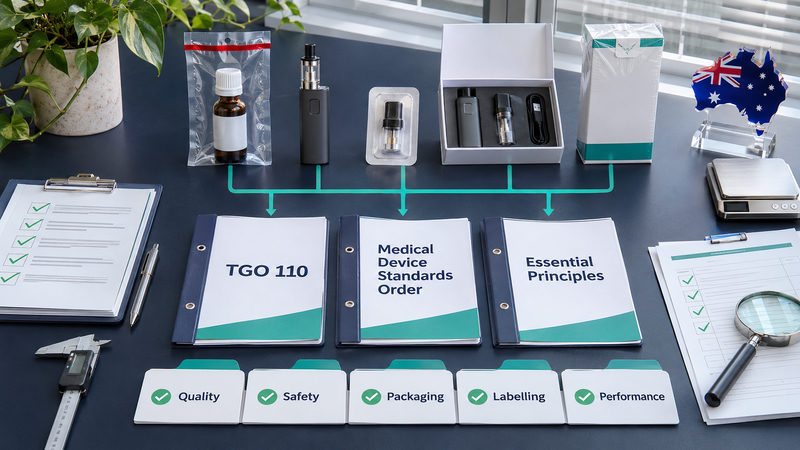
The standards set minimum requirements for product quality, safety, packaging, labelling, and performance. They target risks such as contamination, incorrect nicotine strength, leakage, battery faults, unsafe ingredients, and misleading presentation. Compliance does not make a product risk-free, however. Nor does it prove the product will help every patient stop smoking.
The framework applies to goods indicated only for smoking cessation or the management of nicotine dependence. Products promoted for recreation, lifestyle use, enjoyment, or unrelated medical purposes fall outside that therapeutic purpose. A therapeutic claim cannot simply be used to disguise a recreational product. Its name, design, instructions, advertising, and supply arrangements must all support the permitted purpose.
Important product and supply-chain terms
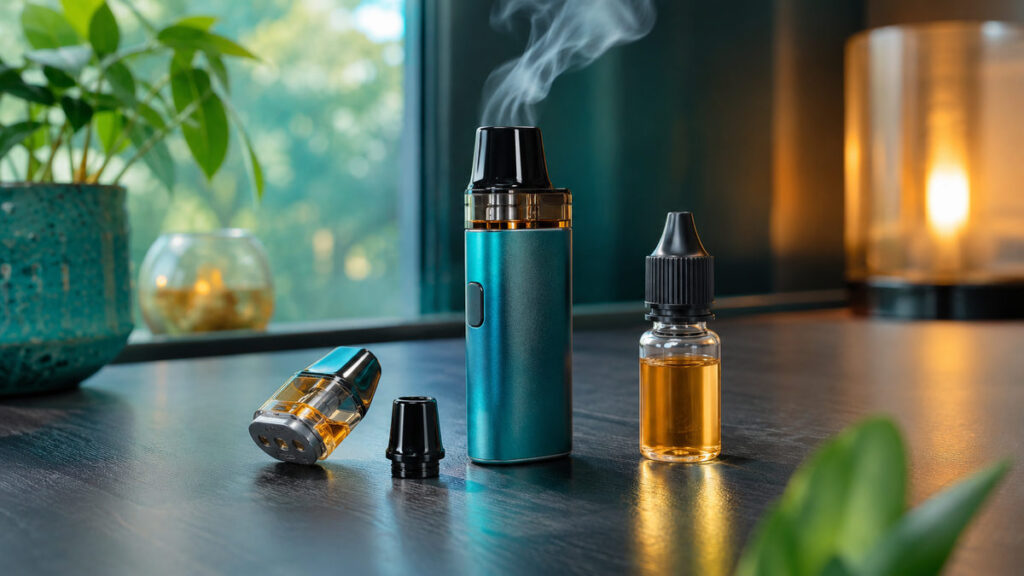
- Therapeutic vaping substance: A substance intended for administration through a therapeutic vaping device.
- Substance accessory: A filled pod, cartridge, capsule, or similar vessel containing a vaping substance.
- Device: Equipment that heats or otherwise delivers the substance for inhalation.
- Device accessory: An empty pod, battery, mouthpiece, charger, or related article supporting device use.
- Kit: A combination of substances or substance accessories that contains no therapeutic vaping device.
- Pack: A combination that includes a device or device accessory with other vaping goods.
- Finished product: A good that has completed production, final packaging, and labelling for patient supply.
- Sponsor: The Australian person responsible for importing, exporting, or supplying the therapeutic good.
Manufacturers carry out production steps, while importers bring goods into Australia. One organisation may fill several of these roles. Wholesalers and pharmacies have their own supply responsibilities as well. A contract cannot remove a statutory duty placed on a particular participant.
Many therapeutic vapes that can be lawfully accessed are unapproved therapeutic goods. They are not included in the ARTG and have not undergone its usual premarket assessment. Appearance on the notified vape list is not the same as ARTG inclusion. The list records a sponsor declaration, not a TGA assessment of safety, quality, efficacy, or performance.
TGO 110 governs relevant substances, substance accessories, kits, packs, and the applicable contents of those products. Devices and device accessories, meanwhile, must comply with the relevant Medical Device Standards Order or Essential Principles. Meeting these standards alone does not authorise importation, prescribing, advertising, dispensing, or supply. Separate Commonwealth, state, and territory requirements continue to apply.
2. TGO 110 Scope, Exceptions, and Product Classification
Goods covered by TGO 110
TGO 110 applies to specified finished therapeutic vaping substances and substance accessories. It also covers therapeutic vaping kits, packs, and the relevant substance goods they contain. The permitted indications must be limited to smoking cessation or nicotine-dependence management. If a product carries broader indications, it may not qualify for the relevant pathway.
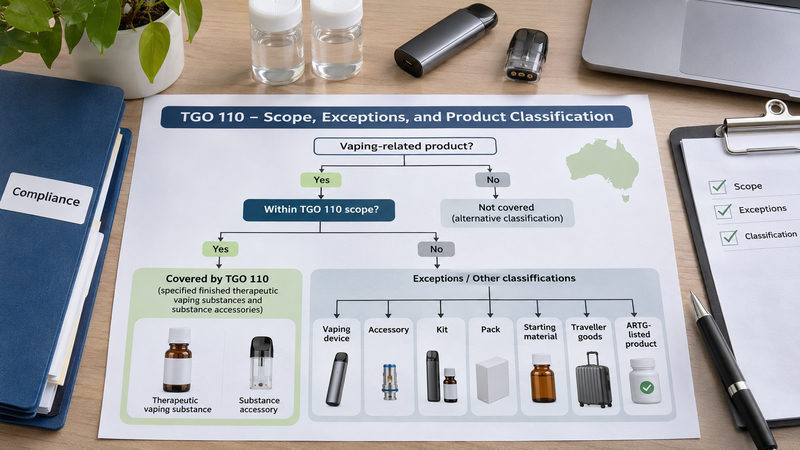
Putting a device inside a pack does not bring the device solely under TGO 110. The standard applies to the pack and its relevant substance components, while the device remains subject to the applicable device framework. One retail presentation may therefore require two connected compliance assessments.
A practical classification workflow
Begin with the product’s intended purpose and actual composition. Identify whether it contains liquid, an empty vessel, a heating system, or a combination of goods. From there, review its presentation, pack configuration, ARTG status, and proposed supply pathway. Classify every component before choosing the applicable standards and notices.
- Confirm the only indications and intended patient use.
- Map every ingredient, component, accessory, and packaging layer.
- Decide whether the presentation forms a substance, device, kit, or pack.
- Check whether an ARTG entry covers that exact good.
- Identify the import, manufacture, access, pharmacy, and supply conditions.
ARTG inclusion follows a separate regulatory route that involves an application and premarket assessment. An unapproved pathway instead depends on a specific exemption, approval, or authority. Sponsor notification and compliance with the standards will usually support that pathway. Neither process should be mistaken for ordinary consumer-product clearance.
Exclusions, boundaries, and exceptional pathways
TGO 110 excludes certain goods carried by travellers, subject to the applicable limits. Export-only goods, conventional nicotine-replacement therapies, and goods already covered by an ARTG entry may also be treated differently. Starting materials and components intended for further manufacture in Australia generally fall outside the finished-product requirements. Even so, notification, import, manufacturing, or other controls may still apply.
Personal importation rules need close attention because Australia’s vaping reforms restrict the available import pathways. Traveller exceptions do not create a general right to commercial supply. Goods carried for a traveller’s treatment are not the same as stock imported for sale. Sponsors should never apply a personal exception to a commercial consignment.
Bulk nicotine, flavour ingredients, empty containers, and unfinished mixtures may qualify as starting materials. A packaged and labelled product that is ready for a patient, however, is a finished product. Extemporaneous production can also move a good across that line. Once compounding produces the patient-ready form, the finished product must meet the applicable requirements.
Historical transition periods have ended, so they should not guide current decisions. Sponsors need to work from the latest consolidated instruments and current TGA guidance. Where legislation allows, a sponsor may seek statutory consent for specified non-compliance. Such consent is exceptional, risk-based, and time-limited, and it must usually be obtained before the relevant declaration or supply occurs.
3. Formulation, Nicotine, Testing, and Container Rules
Permitted formulation and nicotine limits
The strengthened TGO 110 framework confines relevant formulations to a narrow group of ingredients. These include nicotine, propylene glycol, glycerol, water, and permitted mint, menthol, or tobacco flavour ingredients. Extra ingredients should not be added simply for colour, novelty, sweetness, or marketing appeal. Sponsors must be able to justify every component of a formulation under the detailed instrument.

For relevant unapproved vaping substances, nicotine in base or salt form is the only permitted active ingredient. The maximum nicotine concentration is 50 mg/mL as base equivalent. Labels and specifications must therefore express salts using the required equivalent base concentration. Laboratory results must also stay within the relationship to the labelled claim allowed by the standard.
The 50 mg/mL limit is a ceiling under the product standard. It does not override separate concentration conditions that may govern a particular pharmacy access or supply pathway. In other words, a product can comply with TGO 110 and still be unavailable through the chosen pathway. Sponsors and pharmacists must check both the product rules and the supply rules.
Flavours, ingredients, and contaminants
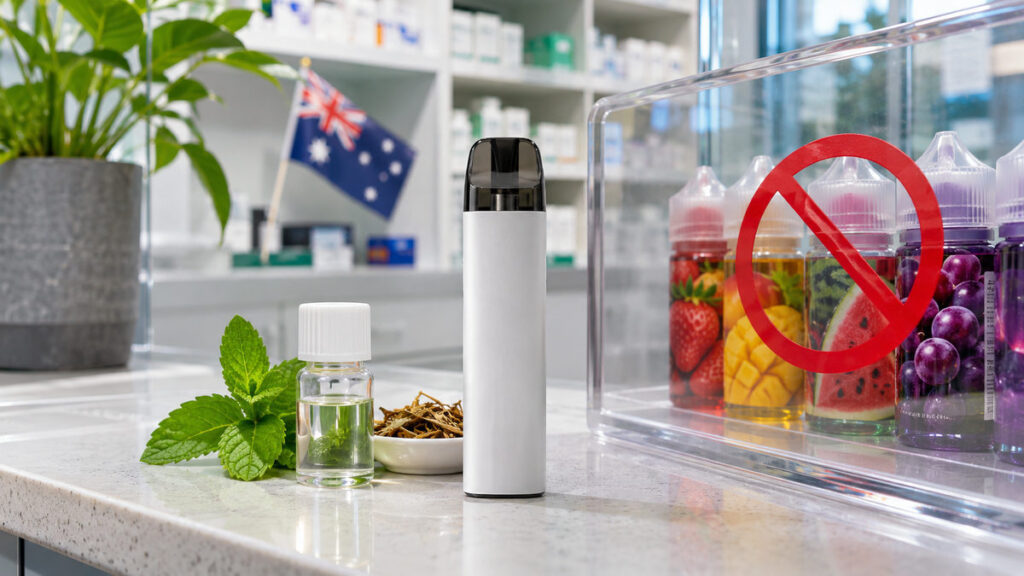
Permitted flavour categories are restricted to mint, menthol, and tobacco. Characterising fruit, dessert, beverage, confectionery, and mixed novelty flavours are not acceptable. Menthol must stay within the applicable concentration limit. Sponsors should also leave out unnecessary flavouring components that serve no permitted technical function.
Nicotine and excipients must comply with the relevant pharmacopoeial and instrument requirements. Sponsors should keep specifications, certificates of analysis, supplier audits, and qualification records. Each ingredient’s identity, grade, quantity, and purpose should be documented as well. A supplier’s sales description is not enough assurance on its own.
Contaminant controls cover prohibited substances, impurities, degradation products, and microbiological quality. Testing may need to address diacetyl, acetoin, aldehydes, unintended glycols, and vitamin E acetate. The governing standard sets the relevant prohibitions or limits. A toxic substance does not become acceptable simply because only a small amount is present.
Testing and stability evidence
Sponsors need evidence that reflects the product placed on the market, not an early prototype. Validated methods should, for example, measure nicotine identity and concentration as well as relevant impurities and contaminants. Representative batch reports should record the methods, acceptance criteria, results, dates, and sample traceability. Laboratories also need suitable controls, calibration, and quality procedures.
- Approved specifications for raw materials and finished products
- Representative batch certificates and complete laboratory reports
- Validated or verified analytical methods
- Stability protocols, results, and trend reviews
- Manufacturing records linking every result to a batch
- Investigations for deviations, failures, and unexpected trends
Stability evidence should support nicotine content, impurity control, container compatibility, and microbiological quality for the full shelf life. The product should be studied in its final container under suitable storage conditions. One release test cannot demonstrate two years of stability. Ongoing stability programs and sound change controls are therefore essential.
Container performance
TGO 110 sets liquid-volume limits for applicable containers, pods, and cartridges. Sponsors need to confirm the exact limit for each presentation under the current instrument. Containers must also include child-resistant features where required. During normal handling, they need to resist leakage, tampering, breakage, and accidental opening.
Container materials must stay compatible with the formulation throughout its shelf life. Seals, for instance, should not swell, crack, or release concerning chemicals after prolonged contact. Dose-delivery features should allow consistent use without dangerous spills. Transport testing should also account for pressure, vibration, heat, orientation, and foreseeable mishandling.
4. Therapeutic Vape Labelling and Plain-Packaging Requirements
Where mandatory information must appear
Labelling requirements may apply at several physical layers: the immediate container, primary pack, intermediate packaging, therapeutic kit, and therapeutic pack. An approved over-sticker may also be needed to correct imported packaging before supply. Where the standard requires it, relevant products must be accompanied by information sheets.
Mandatory particulars generally cover the product name, nicotine content, permitted flavour description, and liquid volume. Labels must also include required ingredients, batch details, expiry information, storage instructions, and sponsor identification. Directions and prescribed safety statements need to appear in the required locations. Sponsors should confirm the exact particulars for every packaging level.
Warnings, legibility, and consumer information
Required information must be in English and remain visible, durable, and easy to read. The standard governs contrast, placement, and minimum text height, although modified rules may apply to small and very small containers. Limited space does not automatically remove essential warning obligations.
The prescribed nicotine warning panel must use the correct signal heading and warning wording. Its exact text, layout, size, and placement are set by the current instrument. Businesses should copy these elements directly from the official requirement. Even a well-intended paraphrase can leave a label non-compliant.
Instructions should cover safe operation, dosing, storage, and disposal where relevant. Safety information may also need to address contraindications, accidental exposure, poisoning, pregnancy, and the need to keep products away from children. An accompanying leaflet can hold information that will not safely fit on a small container. It does not, however, automatically replace mandatory particulars on the container itself.
Plain packaging and youth-appeal controls
Packaging must follow the required predominantly white presentation. Additional colours are tightly restricted and should be used only for permitted informational purposes. Logos, decorative graphics, promotional statements, metallic finishes, and reflective effects also face controls. The finished appearance must not turn a therapeutic good into an entertainment product.
- No cartoons, mascots, fictional characters, or youth-oriented imagery
- No food, dessert, confectionery, soft-drink, or novelty associations
- No lifestyle cues suggesting popularity, excitement, or social status
- No decorative branding or attention-attracting surface treatments
- No names that imply recreational flavours or experiences
These controls reach beyond obvious images. Playful typography, imagined flavour experiences, or collectible designs may also appeal to young people. Sponsors should judge the presentation as a whole, not simply approve each feature in isolation. Devices and accessories are also subject to plain-design requirements under the applicable device rules.
Artwork and dispensing controls
Pharmacies need enough clear space to apply a dispensing label. That label cannot cover nicotine warnings, batch details, expiry dates, or directions. Packaging teams should set aside a dedicated dispensing area while developing the artwork. Dispensing simulations can then expose potential problems before commercial printing begins.
Useful safeguards include approved label masters, controlled artwork files, print proofs, and version histories. Businesses should also reconcile printed components and inspect every packaging layer before release. A final comparison between physical samples and the approved master can catch missing leaflets, covered warnings, and outdated sponsor details.
5. Device and Accessory Standards: MDSO vs Essential Principles
Selecting the applicable device framework
Unapproved therapeutic vaping devices and device accessories have their own regulatory requirements. Depending on the device and pathway, sponsors may establish compliance through the applicable MDSO or the Essential Principles. The MDSO offers a standards-based route for qualifying products, while the Essential Principles remain the overarching safety and performance requirements for medical devices.
Reusable and disposable devices, batteries, chargers, mouthpieces, and empty vessels all require careful classification. A filled pod or cartridge generally combines a substance with its container and may be a substance accessory. An empty pod, by contrast, will usually function as a device accessory. Classification needs to come before the testing requirements are selected.
Quality, risk, and design controls
Manufacturers need an appropriate quality-management system, including current ISO 13485 certification where the relevant device standard requires it. Supplier controls should extend to critical batteries, coils, plastics, seals, and electronic components. Production records must provide traceability from incoming materials through to finished-product release. Sponsors should actively oversee overseas manufacturers instead of relying on assurances alone.
- Documented supplier approval and monitoring
- Controlled manufacturing and inspection records
- Serial, lot, or batch traceability
- Nonconformance investigation and disposition
- Corrective and preventive action procedures
- Complaint, vigilance, and recall processes
Risk management must consider both intended use and foreseeable misuse. Designers should think about children, incompatible pods, repeated charging, blocked airflow, drops, and liquid ingress. Verification and validation should examine dose consistency, leakage, overheating, mechanical strength, and user interaction. Human-factors work should also confirm that patients understand the controls and warnings.
Electrical, chemical, and toxicological safety
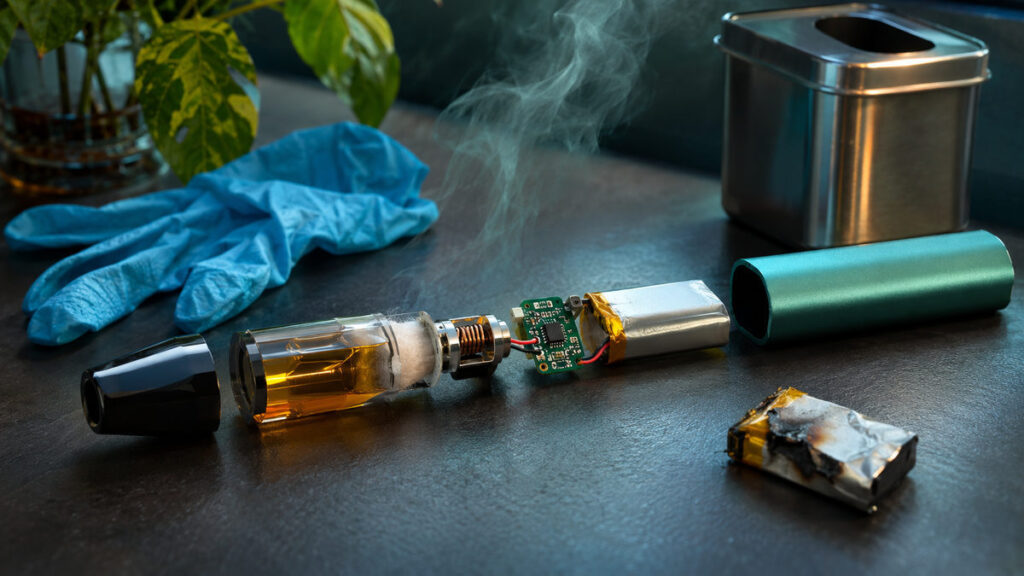
Battery safeguards should prevent overcharging, short circuits, excessive discharge, and unsafe temperatures. Chargers and connections also require assessment for electrical and thermal hazards. Testing should account for electromagnetic effects and foreseeable transport conditions as well. A battery certificate by itself may not prove that the complete assembled device is safe.
Materials that contact the liquid or aerosol pathway require chemical assessment. Sponsors should consider extractables, leachables, emissions, corrosion products, and degradation caused by heat. A toxicological risk assessment may also need to examine patient exposure during normal and worst-case use. That assessment should reflect the final materials, temperatures, power settings, and expected usage.
Instructions and the technical evidence package
Instructions should clearly cover filling, installation, operation, cleaning, maintenance, charging, storage, and disposal. They should identify compatible substances, pods, chargers, and replacement parts too. Warnings need to address leakage, damaged batteries, overheating, and improper modification. Devices and accessories must also comply with the relevant plain-design and presentation restrictions.
Sponsors should keep quality certificates, risk files, technical drawings, and bills of materials. Their evidence package should also contain test reports, toxicological assessments, manufacturing records, and design-verification results. Post-market procedures must cover complaints, serious incidents, safety actions, and recalls. The TGA may ask for this evidence within a specified period.
6. Sponsor Notifications, Supply Duties, and Non-Compliance
Sponsor notices and supporting evidence
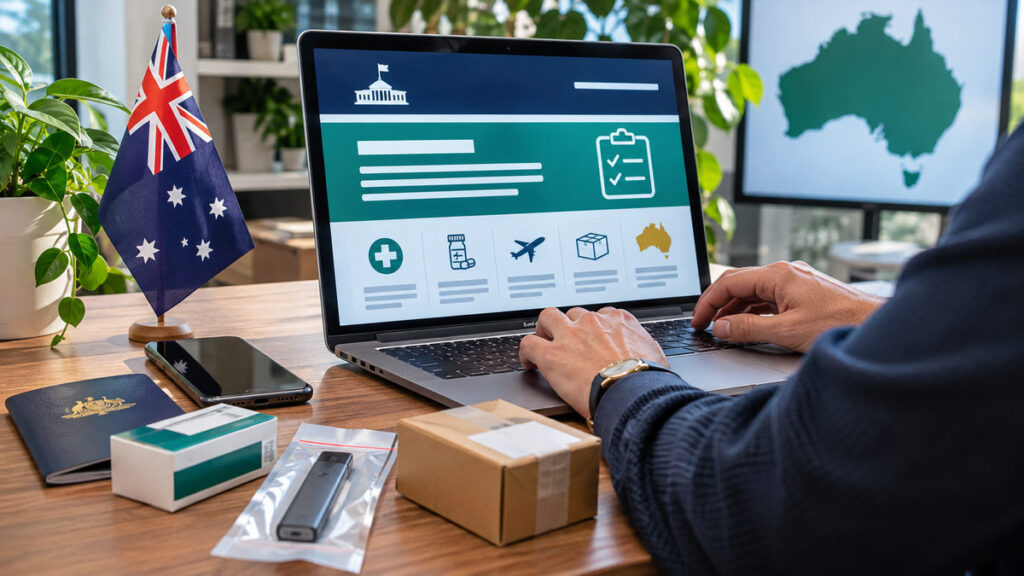
The Australian sponsor generally needs to submit the required notice before importing covered unapproved vaping goods. For goods made in Australia, the notice must generally be provided before their first supply. Each distinct product type may need a separate submission. A change to flavour, nicotine strength, container, device characteristics, or product name can trigger a new notice.
The notice identifies the sponsor, product, manufacturers, formulation, or device characteristics. It also includes declarations about the applicable standards and permitted therapeutic indications. Packs may require separate notices for individual components. Sponsors therefore need to understand how kits and packs are treated before submitting anything.
A declaration must be backed by evidence available at the time it is made. Relevant records include batch results, certificates, specifications, stability files, and manufacturing documents. Sponsors should also keep distribution histories, complaints, adverse-event information, and quality investigations. If evidence or samples are requested, they must be supplied within the legally specified timeframe.
Responsibilities across the supply chain
Manufacturers control production and should generate dependable technical evidence. Australian sponsors hold central responsibility for notification, compliance oversight, and communication with regulators. Importers and wholesalers must preserve traceability and avoid distributing unlawful stock. Suppliers also need to confirm that each recipient and transaction meets the applicable legal conditions.
Prescribers and other healthcare professionals must follow the relevant access pathway and their professional obligations. Pharmacists need to check product eligibility, notified status, concentration rules, and patient supply conditions. Clinical documentation does not excuse a non-compliant product. A pharmacist cannot stock or supply one simply because a patient asks for it.
Post-market vigilance and consequences
Compliance does not end with the first shipment. Sponsors need systems for handling complaints, reporting adverse events, investigating defects, and controlling product changes. They should also monitor suppliers, review trends, maintain traceability, and test their recall readiness. A change in formulation or manufacturer may invalidate earlier evidence and notification details.
Non-compliant goods can be detained or rejected at the border. Authorities may also block supply, order recalls, seize stock, or take stop-supply action. Breaches can expose participants to infringement notices and civil or criminal penalties. Where relevant, manufacturing or wholesale licences may face consequences as well.
Corrective action and current-source checks
Businesses should immediately quarantine questionable goods and preserve all related records. They should then investigate the scope, root cause, patient risk, and quantities already distributed. Corrective action might involve supplier remediation, process changes, updated notifications, or additional testing. Relabelling or repackaging may help, but only where the law allows it before supply.
If affected goods have entered distribution, a recall assessment may be necessary. Sponsors can also consider whether statutory consent is available for the specific non-compliance. Consent is never automatic and should not be used to justify supply before approval. Independent regulatory or legal advice can help identify the available corrective pathways.
Before making a product-specific decision, consult the latest TGA vaping hub and the consolidated TGO 110 instrument. Check the relevant MDSO, Essential Principles, Therapeutic Goods Act, and regulations as well. State or territory rules and professional guidance may also apply. When summaries or old transition guidance conflict with current official instruments, the current instruments prevail.
Conclusion
TGO 110 governs relevant therapeutic vaping substances, substance accessories, kits, packs, and applicable contents. Devices and device accessories, meanwhile, must comply with the relevant MDSO or Essential Principles. Lawful supply also depends on sponsor notification, supporting evidence, access pathways, pharmacy duties, and supply-chain controls. Product-standard compliance is only one part of the wider legal assessment.
Classify every product and pack configuration before taking commercial action. Then carry out a documented gap assessment against the current TGA instruments. Above all, seek qualified regulatory or legal advice before importing, manufacturing, or supplying the product. That work can stop a compliant component from becoming part of an unlawful product.