

What if quitting felt less like a daily fight and more like a treatment plan you could actually manage? Smoking Cessation Medicines in Australia can reduce cravings, withdrawal symptoms, and the pull of familiar routines. Still, choosing between pharmacy products and prescription tablets is not always straightforward. Questions about cost, safety, and PBS rules can make the decision even harder.
The right choice depends on your nicotine dependence, health, current medicines, personal preferences, and previous quit attempts. Professional support can also make a real difference, helping you use treatment properly and deal with unexpected triggers. This guide compares the main options, explains current access pathways, and covers practical support for quitting.
1. How Smoking Cessation Medicines in Australia Support Quitting
Why nicotine withdrawal feels difficult
Repeated exposure to nicotine changes the brain’s reward pathways. Eventually, the brain comes to expect regular nicotine as part of familiar feelings and routines. Stopping suddenly can then bring strong cravings, irritability, anxiety, low mood, and restlessness. Some people also experience poor concentration, disrupted sleep, and a bigger appetite.

These symptoms are often most intense early in a quit attempt. Yet certain situations can bring cravings back long after physical withdrawal has eased. Morning coffee, driving, alcohol, stress, or simply seeing someone else smoke may reactivate learned associations. Recognising these patterns makes it easier to prepare instead of depending on willpower alone.
How medicines improve a quit attempt
Quit-smoking medicines work in different ways. Some deliver controlled nicotine without tobacco smoke, tar, or carbon monoxide. Others ease withdrawal or make nicotine feel less rewarding to the brain. This gives people more room to focus on their habits, triggers, and coping strategies.
Medication can increase the chance of quitting successfully, but it will not remove every craving or stressful moment. People may still need a plan for social events, difficult emotions, and routines associated with smoking. Realistic expectations matter. One uncomfortable day does not mean the treatment has failed.
Medicines usually work best when paired with behavioural support. Counselling, a structured quit plan, Quitline coaching, and relapse-prevention strategies can all help. Regular follow-up also gives a healthcare professional the chance to review side effects, technique, and whether treatment is being used consistently. Together, these measures address both nicotine dependence and everyday smoking habits.
Regulation and realistic expectations
The Therapeutic Goods Administration evaluates and regulates registered therapeutic products in Australia. Registered smoking-cessation medicines are different from unapproved therapeutic vaping goods. Unapproved goods have not undergone the same assessment for quality, safety, and effectiveness. That distinction is worth understanding when comparing established medicines with therapeutic vapes.
Above all, nicotine dependence is treatable. Many people make several attempts before they quit permanently. A lapse may point to a missed trigger, an insufficient dose, or a gap in support. A better-planned attempt is progress, not a personal failure.
2. Nicotine Replacement Therapy: Products, Access, and Correct Use
What nicotine replacement therapy does
Nicotine replacement therapy, usually called NRT, provides nicotine without cigarette smoke. It delivers nicotine more slowly and predictably than smoking, avoiding tar, carbon monoxide, and thousands of substances created when tobacco burns. This can ease withdrawal while a person works on changing established smoking routines.
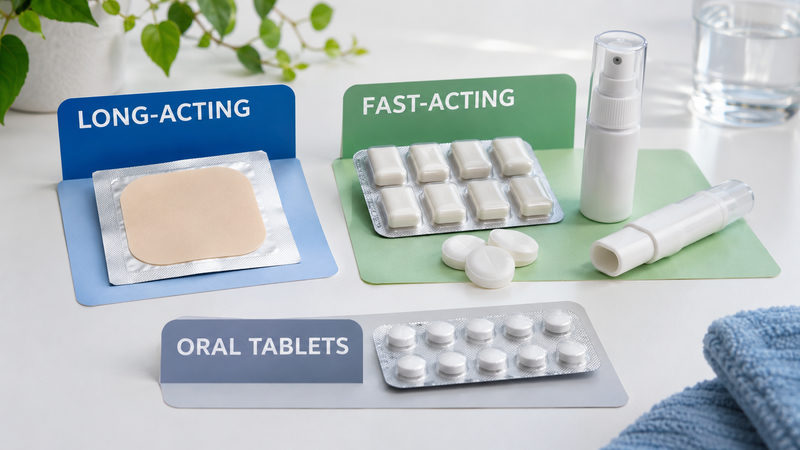
Many NRT products are available without a prescription from pharmacies and some retailers. Choices may include patches, gum, lozenges, mouth spray, inhalers or inhalators, and oral tablets. Brands and formats differ between locations, though. A pharmacist can explain which strengths are available and show you how to use them correctly.
Long-acting and fast-acting options
A nicotine patch releases a steady dose over several hours. It may suit someone who has persistent background cravings throughout the day, and it needs less attention than an oral product. Some people use a daytime patch, while others wear a longer-lasting product as directed.
Fast-acting NRT is designed for sudden or breakthrough cravings. Gum, lozenges, spray, inhalers, and tablets can be useful in situations closely tied to smoking routines. Someone might, for example, use a fast-acting product before driving or meeting friends who smoke. Each format has its own instructions and delivers nicotine at a different speed.
Combination NRT generally involves wearing a patch and using a fast-acting product when required. The patch handles background withdrawal, while the second product targets cravings that break through. Using two forms together is generally more effective than relying on one alone. A pharmacist can recommend compatible products and appropriate strengths.
Correct technique makes a difference
Nicotine gum is not meant to be chewed continuously like regular gum. Chew it slowly until the taste grows strong, then “park” it between your cheek and gum. Continue this process as directed. Chewing without a break may lead to nausea, hiccups, or indigestion.
Lozenges need to dissolve slowly, not be chewed or swallowed whole. Patch sites should be rotated to limit skin irritation, while mouth sprays must be used carefully according to the product directions. Pay attention to warnings about food or acidic drinks too, as these may reduce nicotine absorption.
- Patches: Apply to clean, dry, hairless skin and rotate the location each day.
- Gum: Use the chew-and-park method instead of chewing continuously.
- Lozenges: Allow each lozenge to dissolve slowly inside the mouth.
- Sprays: Follow positioning, timing, and maximum-dose instructions carefully.
- Inhalers or tablets: Use the supplied technique and dosing schedule.
Choosing a dose and treatment duration
The right strength depends partly on the level of nicotine dependence. Useful signs include how many cigarettes a person smokes each day and how soon they smoke after waking. The severity of withdrawal and experiences during earlier quit attempts also offer clues. Smoking soon after waking, in particular, can indicate stronger dependence and the need for more intensive treatment.
Too little NRT often makes treatment less effective. Waiting until a craving becomes severe can also make it harder to find relief, while stopping too soon may bring on avoidable withdrawal. Follow the recommended frequency, and ask for advice before reducing the dose.
Depending on the product instructions and professional advice, NRT may start on the quit date or shortly before it. It should usually continue for the recommended course rather than ending after a few comfortable days. Not every product needs to be tapered. When a gradual reduction is appropriate, a pharmacist can help plan it.
Possible side effects
Side effects differ between products and from one person to another. Possible problems include skin irritation, nausea, hiccups, indigestion, headache, and irritation of the mouth or throat. Patches can sometimes cause sleep disturbance or vivid dreams. Gum may lead to jaw discomfort, especially if it is chewed too quickly.
Many mild problems improve once the technique or timing is corrected. Rotating patch sites, for example, may ease local irritation. Symptoms that persist should be reviewed by a professional. A pharmacist can check the dose, look for another cause, or suggest a different NRT format.
3. Prescription Quit-Smoking Medicines: Varenicline and Bupropion
Varenicline
Varenicline partially stimulates nicotine receptors in the brain. In doing so, it can ease cravings and withdrawal while making smoking less rewarding. A cigarette may simply feel less satisfying during treatment. Varenicline does not contain nicotine and is available by prescription in Australia.

Treatment often begins before the planned quit date. To make side effects easier to tolerate, prescribers may increase the dose gradually. Completing the prescribed course helps preserve the medicine’s benefits. If a clinician considers it suitable, extended treatment may also help prevent relapse.
Before prescribing, a clinician should review kidney function, pregnancy or breastfeeding, and the person’s full medication history. Kidney impairment may call for a different dosing approach. Severe changes in mood or behaviour, or signs of an allergic reaction, should be reported promptly. If symptoms are serious or worsening quickly, urgent assessment is needed.
Common effects may include nausea, headache, vivid dreams, and disturbed sleep. Constipation, indigestion, and other gastrointestinal symptoms can also occur. Experiences vary widely, however. Taking the medicine exactly as directed may help reduce some problems.
Bupropion
Bupropion is a prescription medicine that does not contain nicotine. It acts on noradrenaline and dopamine pathways involved in cravings and withdrawal. Treatment usually starts before the quit date so therapeutic levels have time to build. The prescriber decides the dose, timing, and length of the course.
Bupropion is not suitable for everyone. Key contraindications include seizure disorders and current or previous eating disorders. Suddenly stopping alcohol or sedatives can raise the risk as well. Certain interacting medicines and health conditions also need careful medical assessment.
Possible effects include insomnia, dry mouth, headache, nausea, and anxiety. Seizures are an uncommon but serious risk. Users should never exceed the prescribed dose or alter the schedule themselves. Any unusual neurological symptoms need immediate assessment by a doctor.
Comparing prescription treatments
Many people with cardiovascular or mental health conditions can still use cessation medicine. Even so, a doctor or pharmacist should review their symptoms, possible interactions, and follow-up needs. Quitting smoking can change how some regular medicines work. Monitoring may therefore be needed even if the cessation treatment stays the same.
Varenicline and combination NRT are commonly ranked among the most effective medicine-based options. There is no single best choice for everyone, though. Contraindications, side effects, access, preferences, and past experiences all play a part. Bupropion can remain a useful option when other treatments are unsuitable or not well tolerated.
4. How to Choose the Best Medicine to Quit Smoking
Start with a personal assessment
Choosing well starts with an honest look at nicotine dependence. Consider the severity of withdrawal, everyday smoking patterns, and what happened during previous quit attempts. Health conditions, pregnancy status, current medicines, lifestyle, costs, and product preferences matter too. Together, these details often show which options are both safe and realistic.
Over-the-counter NRT is easy to access and comes in several flexible formats. Varenicline and bupropion, by contrast, require an assessment and prescription. A pharmacist’s advice is still useful when no prescription is needed. A GP is particularly important when there are medical conditions, possible interactions, or repeated problems with treatment.
Compare convenience and tolerability
A once-daily patch can work well for someone with a busy schedule. Fast-acting NRT needs to be used repeatedly, but it gives greater control when cravings appear suddenly. Combination NRT offers both steady coverage and extra relief. Prescription tablets follow a set schedule and need to be taken consistently.
Side effects may determine the final choice. Someone with jaw pain, for instance, might find lozenges or spray more comfortable than gum. A person troubled by vivid dreams could discuss patch timing or an alternative treatment. Before changing doses or combining products, users should speak with a healthcare professional.
- Consider how soon after waking you usually smoke.
- Identify situations that produce the strongest cravings.
- Choose formats that fit work, travel, and daily routines.
- Review previous benefits, side effects, and treatment duration.
- Compare full-course costs rather than one pack.
Plan the quit date
Some treatments start before the quit date; others may begin on the day itself. The right timing depends on the product instructions and the prescriber’s plan. Whenever possible, have the medication ready before quitting. Keep fast-acting strategies on hand for predictable high-risk periods as well.
Someone who always smoked after lunch, for example, might plan a short walk and use their prescribed treatment correctly. Another person may choose to avoid alcohol for the first few weeks. Planning around known triggers reduces rushed decisions and gives you a clear response when a craving hits.
Special populations and medicine interactions
Pregnant or breastfeeding people need an individual assessment before using any cessation medicine, including NRT. Behavioural support is especially valuable during this time. A qualified professional should weigh smoking risks, nicotine exposure, product choice, and treatment duration. Choosing a medicine without advice may overlook important considerations for the parent or infant.
Adolescents, older adults, and people with cardiovascular disease also need advice tailored to their circumstances. The same is true for anyone with a mental health condition, seizure risk, or significant kidney or liver impairment. These factors do not always rule out treatment. They do mean that selection, monitoring, and follow-up should be handled carefully.
Give the clinician a complete list of prescription medicines, pharmacy products, and supplements. Mention alcohol use and any recent medicine changes too. Stopping tobacco smoke can alter how the body processes certain medicines, so dosage monitoring may be needed after quitting.
When the first option does not work
Start by checking technique, adherence, dose, and the length of treatment. Then look at ways to strengthen counselling and practical support. Where appropriate, a professional may recommend combination NRT or another medicine. Users should not put together unapproved combinations on their own.
A lapse does not have to turn into a full return to smoking. Get support quickly and work out what happened. After a professional review, the medicine may be continued, restarted, or changed. The next supported attempt can build directly on what the previous one taught you.
5. PBS Coverage, Eligibility, and Quit-Smoking Medicine Costs
How PBS access works
The Pharmaceutical Benefits Scheme subsidises selected cessation medicines for eligible people who meet the current criteria. Listed choices may include specified nicotine products, varenicline, and bupropion. Brands, restrictions, stock, and supply can change, however. A prescriber or pharmacist should confirm what is available when treatment starts.
Even when an NRT product is sold over the counter, a prescription is required to claim it under a PBS listing. Purchasing that same product privately does not involve PBS arrangements. The subsidy also does not automatically apply to every form of NRT. Listings may be limited to particular products, quantities, and circumstances.
Course limits and counselling requirements
PBS rules may limit quantities, repeats, course length, and when another course can begin. Current Australian Government guidance describes up to nine weeks of subsidised bupropion each year. It also describes up to 24 weeks of varenicline yearly, subject to eligibility. The relevant PBS criteria still need to be checked at the time of prescribing.
Subsidised treatment may require a person to take part in, or agree to receive, quitting support. Quitline or an appropriate healthcare professional may provide this support. In practice, counselling and medicine often become parts of the same coordinated plan. The prescriber can explain the documentation and conditions attached to the chosen listing.
PBS support for nicotine products applies to specific listings, not every format on the market. Someone might receive subsidised patches, for example, while buying fast-acting NRT privately for combination treatment. Current listings may cover other specified nicotine products in certain circumstances. A pharmacist can check the live schedule before dispensing.
Understanding the complete cost
PBS patient contributions are different from private prescription prices and standard retail costs. Gum, lozenges, sprays, inhalers, and extra products used in combination can add to the expense. Compare costs across the full treatment course, not just the first purchase. The cheapest individual pack may not produce the lowest total cost.
- Ask whether the medicine qualifies for a PBS subsidy.
- Check general or concession patient contribution arrangements.
- Ask about Closing the Gap eligibility and access pathways.
- Compare pack sizes, daily use, and total course length.
- Explore local health service or community support programs.
Prices, brands, shortages, and eligibility requirements can all change. For up-to-date details, consult the official PBS schedule or Services Australia guidance. A GP or pharmacist can also confirm the rules that apply to your prescription. This avoids making a decision based on an old price or a brand that is no longer available.
6. Safety, Vaping Cessation, and Professional Quitting Support
Use cessation medicines safely
Use the medicine according to the product directions and agreed treatment plan. Do not change the dose or combine medicines without professional advice. Keep nicotine products safely away from children and pets. Used patches may still contain nicotine, so dispose of them as instructed.
Arrange follow-up if side effects continue, become worse, or make treatment difficult. Chest pain, seizures, or a severe allergic reaction require urgent medical help. The same applies to suicidal thoughts or serious changes in mood or behaviour. In an emergency, call Triple Zero on 000.
Quitting vaping
NRT may ease nicotine withdrawal when a person stops vaping. The treatment plan should account for nicotine intake, dependence, device use, and whether the person continues to smoke cigarettes. Vape labels may not accurately reflect the amount of nicotine being consumed. A professional assessment can reduce the risk of using too little or too much treatment.
Evidence supporting varenicline and bupropion for cigarette cessation cannot automatically be applied in the same way to vaping cessation. Emerging research in adults may still guide individual clinical decisions. Clinicians need to consider dependence, medical history, and the behavioural support available. Plans may evolve as stronger evidence emerges.
Therapeutic vapes are not a standard first-line treatment for quitting in Australia. At present, no therapeutic vape is registered on the Australian Register of Therapeutic Goods for smoking cessation or nicotine dependence. Pharmacy access is also governed by Commonwealth requirements as well as state or territory rules. The therapeutic vaping goods available remain unapproved products.
Professional and culturally appropriate support
Talk to a GP or pharmacist before treatment if you are pregnant, breastfeeding, or under 18. Professional guidance is also important for people with interacting medicines, complex illness, or repeated difficulty with treatment. Aboriginal Community Controlled Health Services can offer trusted, culturally appropriate care. Eligible people can also ask about Closing the Gap medicine pathways.
Quitline offers free, confidential counselling on 13 78 48. Its counsellors support people who are quitting smoking or vaping and can arrange callback services. They can help with motivation, cravings, medicine use, and getting back on track after a lapse. Aboriginal and Torres Strait Islander callers can request culturally safe support from Indigenous counsellors where available.
General practitioners, community pharmacists, and recognised digital programs can provide further support. The Australian Government’s My QuitBuddy app helps people track progress towards smoke-free or vape-free goals. Digital tools are most useful when they complement suitable clinical care. They cannot identify medical contraindications or take the place of emergency services.
Create a relapse-prevention plan
- Identify emotional, social, and routine-based triggers.
- Prepare fast-acting craving strategies before difficult situations.
- Track medicine use, cravings, and possible side effects.
- Reward progress with meaningful smoke-free milestones.
- Contact Quitline or a healthcare professional quickly after a lapse.
This information is for general education and does not replace a personalised medical assessment. It cannot provide a diagnosis, individual prescribing advice, or emergency care. Discuss treatment choices with a qualified health professional, and seek urgent help if symptoms suggest a medical or mental health emergency.
Conclusion
NRT, varenicline, and bupropion can ease cravings and withdrawal symptoms, but their costs, access, risks, and suitability are not the same. Using the correct dose for an adequate length of time can improve the outcome. Counselling and a plan tailored to the individual also address the routines that medicine alone cannot change.
Call Quitline on 13 78 48 for free, confidential support with quitting. Before beginning treatment, arrange a consultation with a GP or pharmacist. They can help you choose a safe option, check current PBS eligibility, and put together a practical quit plan. A difficult previous attempt does not mean the next one cannot succeed.