

Within hours of your last cigarette, vape, pouch, or tobacco use, you may notice changes in your mood and concentration. You might naturally ask, How Long Does Nicotine Withdrawal Last? Most symptoms peak early, though physical discomfort and learned cravings tend to follow different timelines. Knowing what to expect can make quitting feel much more manageable.
The first few days can feel unpredictable. Still, every craving passes, and symptoms usually ease as your brain and body adjust. The timeline below covers what you may experience, safe ways to cope, and signs that professional support could help.
1. How Long Does Nicotine Withdrawal Last?
Nicotine withdrawal generally starts within several hours of your last use. Symptoms often peak around days two and three, then improve considerably over the next two to four weeks. That timeline is an estimate, not a personal guarantee. Your nicotine exposure, health, stress levels, and daily routines can all shape the experience.
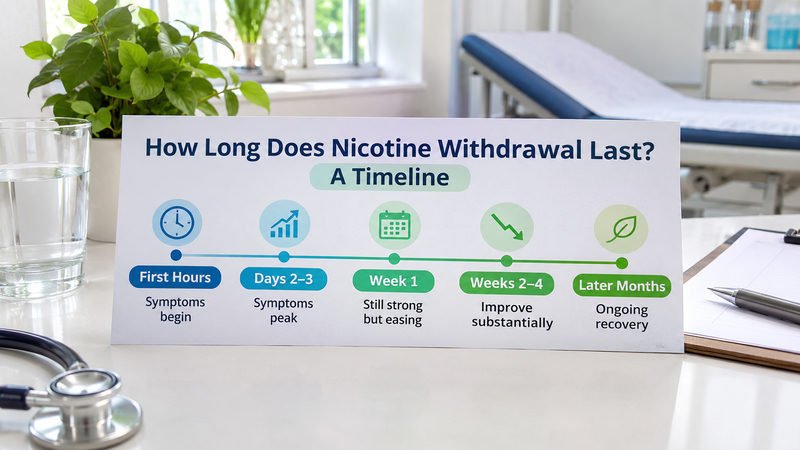
Acute physical withdrawal may cause headaches, fatigue, restlessness, and increased appetite. Emotional symptoms can include irritability, anxiety, low mood, or trouble concentrating. These issues often improve during the first month, although sleep changes and mood fluctuations sometimes last longer.
Cravings work a little differently. An urge usually arrives like a wave: it rises quickly, peaks, and fades within several minutes. You may have many separate waves in a single day. That can make the cravings seem constant, even though each individual urge is brief.
Trigger-related urges may return for weeks or months after the physical symptoms have settled. Coffee, alcohol, driving, stress, or finishing dinner can bring an old association rushing back. This does not mean your body still needs nicotine. It means your brain remembers the routine.
The good news is that symptoms usually grow weaker and less frequent with time. One difficult morning does not mean your recovery has stalled. Ups and downs are common during the first few weeks. Each time you face a trigger without nicotine, you also weaken the connection between that trigger and nicotine use.
2. Nicotine Withdrawal Timeline: From the First Hours to Later Months
The First Few Hours
For someone who used nicotine frequently, withdrawal can begin within one or two hours. Early signs may include cravings, restlessness, irritability, or difficulty focusing. You might also find yourself automatically reaching for a product during a familiar activity. That response combines chemical withdrawal with learned habit.

Someone who vaped every 20 minutes, for example, may feel discomfort sooner than an occasional user. A person who smoked only at night might notice a slower onset. Neither pattern says anything about your ability to quit. It simply reflects differences in exposure and dependence.
The First 24 Hours
During the first day, urges may grow stronger or come more often. Anxiety, headaches, hunger, and impatience can show up too. Even ordinary routines suddenly require conscious choices. Morning coffee, work breaks, driving, and phone calls may feel surprisingly uncomfortable.
A little preparation goes a long way at this stage. Before your quit time, remove nicotine products, chargers, ashtrays, and other reminders. Keep water, healthy snacks, and a short list of distractions close at hand. Then, when an urge hits, you have something ready to do.
Days Two to Three
Days two and three commonly bring the strongest withdrawal symptoms. Cravings, irritability, fatigue, low mood, disturbed sleep, and brain fog may all peak. By this point, nicotine has largely left the body, but the brain has not yet adjusted to working without repeated nicotine stimulation.
This stretch can be discouraging because several symptoms often overlap. Poor sleep may make concentration harder, while hunger can add to irritability. When possible, ease up on unnecessary demands. Short walks, regular meals, and frequent breaks can make these peak days more bearable.
Days Four to Seven
Symptoms often come and go during the rest of the first week. You might feel fine in the morning, then struggle after a stressful meeting. One quiet day could be followed by several powerful cravings. These shifts usually reflect triggers, sleep, stress, and the normal adjustment process.
The risk of returning to nicotine is high during the first week, so avoid testing yourself around strong triggers. You might skip alcohol, change your coffee routine, or take a different route home. Small, temporary changes can protect an important early achievement.
Weeks Two to Four
Most physical symptoms noticeably improve during weeks two through four. Headaches, restlessness, and constant cravings often lose their intensity. Appetite, sleep, mood, and concentration may take longer to settle, though. Progress can still be uneven, particularly during stressful periods.
Familiar routines may also trigger sudden urges. Someone can feel comfortable all day, only to crave nicotine after dinner. Each time that person chooses a different activity, the old association becomes weaker. Eventually, the new routine starts to feel normal.
The Following Months
Later cravings usually come from cues rather than acute physical withdrawal. Celebrations, arguments, alcohol, or seeing someone else smoke can stir up powerful memories. Even so, these urges generally become shorter, weaker, and less frequent. Having one planned response for each major trigger can help prevent an impulsive lapse.
The nicotine detox timeline is not the same as the full recovery process. Nicotine leaves the body fairly quickly, but dependence also involves changes in the brain and deeply repeated behaviors. Chemical clearance cannot erase habits or emotional associations overnight. Recovery continues as the brain adapts and new routines take hold.
3. Why Withdrawal Happens and What Affects Its Severity
Nicotine reaches receptors in the brain and influences pathways involved in reward, attention, and mood. With repeated exposure, the brain learns to expect regular nicotine stimulation and adapts to that signal. When nicotine stops, the temporary imbalance produces withdrawal symptoms.

Dopamine has an important role in reward and motivation. Nicotine repeatedly affects dopamine-related signaling, particularly during rewarding or stressful moments. After quitting, everyday activities may briefly feel less satisfying. With time, the brain readjusts to functioning without repeated nicotine doses.
The severity of withdrawal depends more on total dependence than on the product name. Dose, frequency, delivery speed, and years of use all count. Using nicotine shortly after waking may point to stronger dependence. Waking during the night to use it can also indicate heavy exposure.
Past quit attempts can shape the next one. You may recognize early triggers and prepare for them more effectively. At the same time, memories of difficult symptoms can create extra worry. A structured plan turns previous attempts into useful information, not proof of failure.
Your personal circumstances matter as well. Important factors include:
- Current stress and daily responsibilities
- Sleep quality and work schedules
- Anxiety, depression, or other mental health conditions
- Respiratory, cardiovascular, digestive, or chronic health conditions
- Genetic differences affecting nicotine metabolism
- Support from family, friends, counselors, or healthcare professionals
Some people stop all at once, while others gradually reduce their nicotine use. Quitting abruptly may bring a sharper initial change, but it also creates a clear stopping point. Gradual reduction may make the transition gentler, though it requires firm limits. Either approach can benefit from medication, counseling, and a specific quit date.
4. Physical and Psychological Nicotine Withdrawal Symptoms
Withdrawal can affect both the mind and body. Symptoms differ widely, and some people experience only a handful. Their intensity may also shift from one hour to the next. Knowing the common symptoms can make them less frightening and help you prepare practical ways to respond.
Common Psychological Symptoms
- Strong or recurring nicotine cravings
- Irritability, frustration, or anger
- Anxiety or nervousness
- Low mood or reduced enjoyment
- Restlessness and impatience
- Poor concentration or forgetfulness
- Brain fog and slower thinking
Anxiety, depression, and insomnia may begin or temporarily worsen after quitting. But withdrawal does not account for every emotional change. Existing mental health conditions, stress, medication changes, and lack of sleep can cause similar symptoms. Seek professional advice if anything feels severe, unusual, or persistent.
Common Physical Symptoms
- Headaches or lightheadedness
- Fatigue and changing energy levels
- Difficulty falling asleep or staying asleep
- Increased hunger or appetite
- Constipation or digestive changes
- Muscle tension or general discomfort
Coughing may increase after a person stops smoking or vaping, but it is not always a direct symptom of nicotine withdrawal. The airways may begin clearing mucus once smoke exposure ends. Lingering irritation or an unrelated respiratory illness can also cause a cough.
Do not assume every severe or unusual symptom comes from withdrawal. Chest discomfort, serious breathing problems, fainting, or coughing blood require prompt medical evaluation. Persistent vomiting, confusion, or severe weakness also needs professional attention. Another condition could require treatment.
Existing conditions may alter the pattern of symptoms. Insomnia, for example, can be more disruptive for someone who already has a sleep disorder. Respiratory symptoms may need closer assessment in a person with asthma or chronic lung disease. Anyone with cardiovascular or mental health conditions should consider planning the quit attempt with a clinician.
5. Does Withdrawal Differ After Cigarettes, Vaping, or Nicotine Pouches?
Cigarettes, vapes, pouches, smokeless tobacco, and other nicotine products can all cause substantial dependence. What matters most, though, is the individual pattern of use. Dose, frequency, delivery speed, and routines all influence withdrawal intensity. Product strength by itself does not show a person’s total daily exposure.
Cigarettes deliver nicotine quickly and reinforce repeated hand-to-mouth and smoke-related routines. Quitting also ends exposure to combustion products, so recovery may involve coughing, mucus changes, or changes in taste alongside nicotine withdrawal. Social breaks and smoking rituals can remain powerful triggers.
Frequent vaping can keep nicotine exposure almost continuous throughout the day. Someone may take hundreds of puffs without having a clear sense of the total amount. Stopping a high-strength vape can therefore cause strong cravings and concentration problems. Easy access also creates habits tied to many different places.
Concentrated nicotine pouches can deliver substantial doses without smoke or vapor. Frequent smokeless-tobacco use may create strong dependence too. Because these products can stay in the mouth for extended periods, users may receive nicotine again and again. Withdrawal can be every bit as significant as it is after quitting cigarettes.
Delivery speed matters as well. When nicotine arrives rapidly, the brain can form a strong connection between a specific action and feelings of relief or reward. Slower products may instead maintain steadier exposure for longer periods. Either way, repeated use teaches the brain to expect nicotine in certain situations.
Anyone who combines cigarettes, vaping, and pouches needs a plan that accounts for every source. Replacing cigarettes with untracked vaping, for instance, may simply maintain heavy nicotine exposure. When possible, estimate total daily use with a healthcare professional. A complete plan lowers the risk of under-treatment or continued dependence.
6. How to Manage Nicotine Withdrawal and Prevent Relapse
Respond Quickly to Cravings
A craving may feel urgent, but you do not have to act on it. Delay the decision for several minutes and take a few deep breaths. Drink water, switch activities, or go for a brisk walk. Remember: the wave will pass whether you use nicotine or not.
Try keeping your response plan simple:
- Delay nicotine use for ten minutes
- Take ten slow, controlled breaths
- Drink a full glass of water
- Move to a different room or location
- Walk, stretch, or climb stairs briefly
- Repeat one personal reason for quitting
Before your quit date, identify the triggers most likely to catch you off guard. Common ones include alcohol, stress, driving, meals, coffee, and social events. Being around other nicotine users can also make urges stronger. Ask supportive people not to offer you products or use them nearby.
Consider Nicotine Replacement and Medication
Nicotine replacement therapy supplies controlled nicotine without the toxic combustion products found in cigarette smoke. It can ease cravings and other withdrawal symptoms while you work on changing your routines. Options include patches, gum, lozenges, oral inhalers, and nasal sprays. Always follow the package instructions and professional guidance.
A patch provides a steady nicotine supply, while gum or lozenges can help with sudden urges. Some adults combine a long-acting patch with a short-acting option. The right product and dose depend on your level of dependence, health needs, pregnancy status, and other medications. A pharmacist or clinician can help you make a safe choice.
Nicotine replacement does not simply drag out the full withdrawal experience. It eases symptoms while supporting a controlled taper and changes in behavior. Prescription treatments may help some people as well. Varenicline and bupropion are common examples, but a qualified professional should decide whether they are suitable.
The Centers for Disease Control and Prevention quitting guide covers treatment and counseling options. Combining behavioral support with suitable medication often improves the chances of long-term success. Quitlines, support groups, digital programs, and individual counseling can all add helpful structure. A personalized plan may be especially valuable after previous relapses.
Target Specific Symptoms
- Insomnia: Keep a regular bedtime, reduce evening screens, and limit late caffeine.
- Increased appetite: Plan balanced meals and keep fruit, vegetables, or sugar-free gum available.
- Constipation: Increase water, fiber, and gentle physical activity when medically appropriate.
- Poor concentration: Divide work into short blocks and postpone demanding tasks during peak symptoms.
- Stress: Use breathing exercises, walking, stretching, or brief conversations with supportive people.
- Low mood: Maintain social contact, daily movement, regular meals, and professional care when needed.
A lapse does not wipe out the progress you have made. Look at what triggered it and remove any nicotine products that remain. Adjust the plan, then return to quitting promptly. When you treat a lapse as information, one use is less likely to become a full return.
Early health improvements can help keep motivation alive. Soon after cigarette cessation, the body begins recovering from smoke exposure. Taste, smell, breathing, circulation, and energy may improve with time. Staying nicotine-free for the long term reduces serious health risks and protects others from secondhand smoke.
7. When to Seek Medical or Mental Health Support
Professional support is worth seeking when withdrawal feels severe, persistent, or increasingly hard to manage. Ask for advice if symptoms repeatedly lead to relapse or interfere with normal responsibilities. You should also contact a clinician if you cannot tell whether withdrawal or another condition is responsible. Treatment can make the process safer and easier to handle.
Get prompt medical attention for alarming physical symptoms, including:
- Chest pain, pressure, or unexplained tightness
- Major difficulty breathing or rapidly worsening breathlessness
- Fainting, severe confusion, or sudden weakness
- Coughing blood
- Other intense or rapidly worsening symptoms
Contact a healthcare professional if you experience significant depression, severe anxiety, or prolonged insomnia. Do the same when symptoms interfere with work, self-care, or safe daily functioning. Withdrawal may be part of the problem, but another condition could also need treatment. Getting help early can keep symptoms from becoming overwhelming.
Thoughts of suicide or self-harm require immediate crisis or emergency support. Do not wait and hope those thoughts disappear as withdrawal improves. Contact local emergency services or a crisis service now. Stay with someone you trust and move away from anything that could cause harm.
Family members and caregivers should take major changes in mood or behavior seriously. Sudden hopelessness, agitation, isolation, or reckless behavior, for example, needs attention. Help the person contact a clinician, crisis service, or emergency team. If their immediate safety is uncertain, do not leave them alone.
Withdrawal is temporary, even when those first days feel intense. Medical treatment, counseling, and practical support can lighten the load. Many people make several quit attempts before nicotine-free living becomes stable. Each attempt can reveal new triggers and make the next plan stronger.
Conclusion
Nicotine withdrawal usually starts within hours and often feels most intense during the first three days. Most symptoms improve considerably within two to four weeks, though cue-driven cravings can return for longer. With time, those urges generally become shorter, weaker, and less frequent.
Set a quit date and plan a specific response for each of your strongest triggers. Talk with a healthcare professional or cessation service about counseling, nicotine replacement, or prescription medication. One hard day does not undo your progress. Every nicotine-free choice helps your brain and daily routines move closer to lasting recovery.