
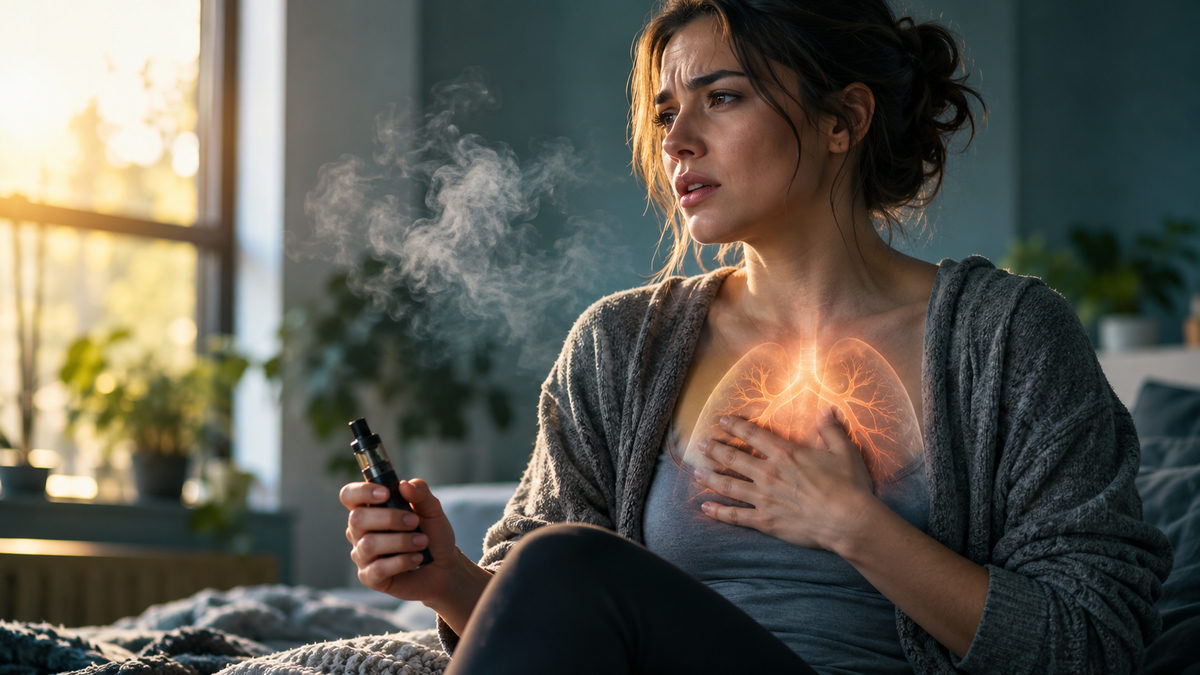
A vape may look cleaner than a cigarette, but what actually reaches your lungs with every inhale? Does vaping affect your lungs? Yes. Vape aerosol can carry particles, solvents, flavorings, nicotine, metals, and newly formed chemicals deep into lung tissue. Even claims such as “nicotine-free” and “water vapor” can obscure real respiratory risks.
Mixed messages make those risks hard to assess. Some people call vaping harmless, while others blame every breathing problem on severe lung disease. To understand the evidence, it helps to separate what researchers have established from what they are still studying.
This guide looks at how vaping affects the respiratory system, which symptoms deserve attention, and how vaping compares with smoking. It also covers serious lung injury, secondhand exposure, and possible recovery after quitting. The information comes from guidance issued by the CDC, NIH, and FDA, along with peer-reviewed respiratory research.
1. Does Vaping Affect Your Lungs? The Direct Answer
What happens when you inhale vape aerosol
An e-cigarette uses a battery-powered coil to heat liquid, producing an aerosol that the user inhales. This aerosol travels through the throat, bronchial tubes, and smaller airways. Tiny particles can reach the alveoli, where the lungs normally exchange oxygen and carbon dioxide.
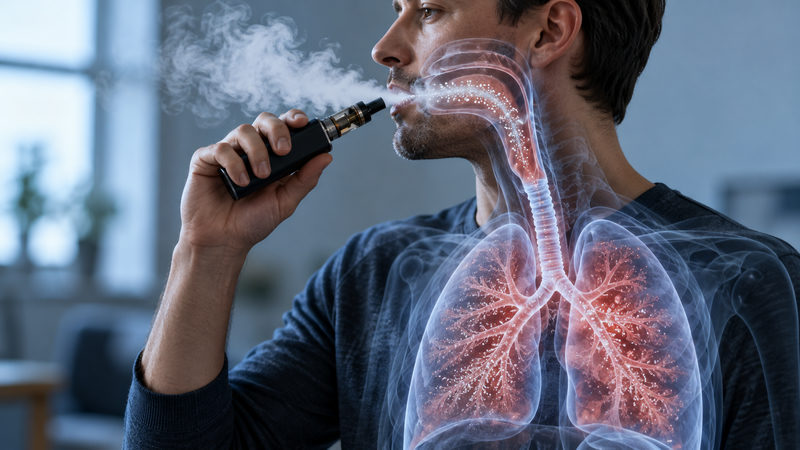
Despite how it is often described, the cloud is not harmless water vapor. It may contain nicotine, solvents, flavoring chemicals, metals, and compounds created by heat. The exact mixture depends on the device, liquid, temperature, condition of the coil, and the way a person inhales.
The evidence-based answer
Vaping can irritate and inflame the respiratory system, and in some cases it can cause injury. Users may develop coughing, wheezing, chest discomfort, excess mucus, or shortness of breath. The kind of harm—and how severe it becomes—varies widely from one person to another.
How often someone vapes matters, but frequency is only part of the picture. A device running at high heat may create a different chemical mixture from a lower-powered product. Even occasional use of a contaminated liquid can pose risks that have little to do with normal use frequency.
Established findings versus open questions
Researchers have found harmful substances in vape aerosol and measured biological changes after exposure. Studies also link vaping to airway irritation, inflammation, respiratory symptoms, and rare cases of acute lung injury. Laboratory research has shown effects on airway cells, immune activity, mucus clearance, and oxidative stress.
What scientists cannot yet describe with certainty is every possible lifetime outcome. Products change quickly, and users may switch devices, liquids, or substances many times. Studies of adults who vape can also be difficult to interpret when participants have a history of cigarette smoking.
Some long-term diseases take decades to appear. A lack of complete lifetime data does not show that exposure is safe. It simply means researchers need to keep studying newer products and following users over time.
Why risk differs among users
Device power, coil temperature, liquid ingredients, flavorings, and nicotine strength can all change the level and type of exposure. THC or cannabis ingredients add another group of variables. Informal products, altered cartridges, and unknown additives may also introduce contaminants that users do not expect.
A person’s health influences the response too. Someone with asthma might begin wheezing after an exposure that causes only slight irritation in somebody else. Using cigarettes and vapes together can also preserve several harmful exposures instead of reducing them.
2. What Is in Vape Aerosol, and How Can It Harm Lung Tissue?
From e-liquid to inhaled aerosol
Most e-liquids contain propylene glycol, vegetable glycerin, flavorings, and, in many cases, nicotine. When heated, these ingredients form a mixture of gases, droplets, and fine particles. Heat can also alter the original ingredients and produce new chemical byproducts.

High temperatures and overheated coils may raise levels of certain unwanted compounds. Parts inside the device can release small amounts of metal into the aerosol as well. Labels do not always disclose every contaminant or accurately state the dose a user receives.
Potentially harmful components
The CDC and FDA identify several substances that may be present in e-cigarette aerosol. The amount and even the presence of each substance can vary by product and operating conditions. Potential exposures include:
- Nicotine, which causes dependence and can affect the developing brain.
- Ultrafine particles that can travel deep into the lungs.
- Volatile organic compounds that may irritate respiratory tissue.
- Carbonyl compounds, including formaldehyde, acetaldehyde, and acrolein.
- Flavoring chemicals that may harm airway cells when inhaled.
- Metals such as nickel, tin, chromium, and lead.
A flavoring that is safe to eat is not automatically safe to inhale. The digestive system handles chemicals differently from delicate lung tissue. A food-safe label, then, should never be treated as evidence of respiratory safety.
How the lungs respond
The airways defend themselves with mucus, moving cilia, immune cells, and tightly connected surface cells. Vape aerosol may interfere with several parts of this protective system. Irritation, for example, can increase inflammation and disrupt normal mucus production.
Oxidative stress develops when reactive molecules overwhelm a cell’s protective systems. Airway cells may then become damaged or release inflammatory signals. If cilia stop working effectively, the lungs may also struggle to clear mucus, particles, and microbes.
Laboratory and animal studies suggest changes in immune responses too. These models cannot always predict exactly what will happen in a person, but they still help researchers identify credible pathways for irritation, infection risk, and tissue injury.
Nicotine-free does not mean harmless
A nicotine-free label tells you about only one potential ingredient. The aerosol can still carry solvents, flavorings, fine particles, metals, contaminants, and chemicals produced during heating. Independent tests have also found labeling inconsistencies in some vaping products.
Even without nicotine, these liquids can irritate sensitive airways. A sweet flavor, for instance, may contain several chemicals that change when heated. Taking out nicotine does not turn inhaled aerosol into clean air.
Popcorn lung and vaping
“Popcorn lung” is another name for bronchiolitis obliterans, a rare disease that scars and narrows the small airways. Occupational exposure to inhaled diacetyl and certain other toxicants has been linked to the condition. Authorities have also found diacetyl in some flavored vaping products.
Still, available evidence has not shown that typical vaping causes widespread popcorn lung among users. Saying that every flavored vape causes the disease goes beyond what research supports. That uncertainty, however, does not make flavoring chemicals safe to inhale.
3. Short-Term and Potential Long-Term Effects of Vaping on Lungs
Short-term respiratory effects
Some users notice symptoms while vaping or soon afterward. Common complaints include coughing, throat irritation, chest discomfort, wheezing, increased mucus, and shortness of breath. Others report reduced exercise tolerance or unexpected breathlessness during ordinary activities.

Imagine someone who usually climbs three flights of stairs without trouble. After vaping frequently, that person may begin coughing or need to stop halfway to catch their breath. Symptoms can reveal that something is wrong, but they cannot identify the cause or show how much lung injury has occurred.
Vaping and breathing problems
Breathing problems may come from airway irritation or a temporary tightening known as bronchospasm. They can also point to asthma, an infection, an allergy, heart disease, or another medical condition. Symptoms that persist or worsen need a proper assessment, not a self-diagnosis.
The timing of symptoms can give a clinician useful clues. Note whether they start during use, appear after trying a new product, or ease when vaping stops. Keep track of fever, digestive symptoms, chest pain, and any recent cannabis or THC use as well.
Asthma and chronic respiratory conditions
People with asthma often have airways that respond strongly to irritants. Vape aerosol may bring on coughing, tightness, wheezing, or an asthma flare. It can also make symptoms harder to control, even when someone is using prescribed treatment.
Those with chronic bronchitis, COPD, allergies, or sensitive airways may react more intensely too. Responses differ, though, and a mild first reaction does not guarantee that future exposure will be safe. For some users, repeated irritation can make everyday breathing increasingly difficult.
Potential long-term effects
Observational studies have found links between vaping and persistent cough, phlegm, wheezing, and bronchitis-like symptoms. Research also raises concerns about airway inflammation, altered immune defenses, and chronic respiratory disease. An association alone, however, does not prove that vaping caused every reported outcome.
Long-term research has to account for many other influences. Past smoking, secondhand smoke, air pollution, workplace exposure, and underlying illness can all affect respiratory health. People who both smoke and vape may also face different risks from those who use only one product.
Researchers need to consider these differences and track participants over time. Responsible summaries do not claim exact disease probabilities without supporting evidence. Nor do they treat uncertainty as evidence that vaping is safe.
Why uncertainty does not equal safety
Modern e-cigarettes have not been around long enough to provide full lifetime data. The products also change faster than many long-term studies can keep up with. At the same time, users switch flavors, devices, nicotine strengths, and inhaling habits.
Some respiratory diseases emerge slowly after years of exposure. Current studies may therefore miss conditions that will only appear later. Sensible prevention does not mean waiting until every possible disease can be measured.
Youth vulnerability
Adolescent lungs and brains keep developing into early adulthood. Nicotine can lead to dependence quickly and affect attention, learning, mood, and impulse control. Starting young may also mean a longer lifetime of potential aerosol exposure.
Flavors and discreet devices can make experimenting seem low risk. Yet a teenager who begins with occasional social use may gradually start vaping more often. Preventing that first use offers better protection than trying to treat dependence once it has taken hold.
4. EVALI, Warning Symptoms, and When to Seek Medical Care
What EVALI means
EVALI stands for e-cigarette or vaping product use-associated lung injury. The condition can trigger severe inflammation and reduce the lungs’ ability to deliver oxygen. There is no single symptom or laboratory test that confirms every case.
Clinicians look at recent vaping, symptoms, imaging, examination findings, and test results. They also have to consider infections, heart problems, and other possible explanations. Diagnosing EVALI requires carefully ruling out competing causes.
Products connected with the outbreak
The major EVALI outbreak was strongly associated with THC-containing products obtained from informal sources. Investigators also linked many cases closely to vitamin E acetate. This oily additive was found in lung-fluid samples from many affected patients.
Removing vitamin E acetate from informal THC supply chains addressed one known danger. It did not prove that other vaping products are safe. Contamination, unknown additives, excessive heating, and product modification can create hazards of their own.
Possible EVALI symptoms
EVALI can initially resemble a respiratory or digestive illness. Symptoms may build over several days, then worsen quickly. Possible signs include:
- Cough, chest pain, or shortness of breath.
- Fever, chills, sweating, or marked fatigue.
- Nausea, vomiting, abdominal discomfort, or diarrhea.
- Rapid breathing, dizziness, or declining exercise tolerance.
Having these symptoms does not necessarily mean someone has EVALI. Influenza, pneumonia, asthma, and other conditions may cause a similar pattern. Medical assessment becomes especially important when an illness follows vaping or gets worse unexpectedly.
Symptoms requiring prompt evaluation
Contact a clinician if coughing, wheezing, breathing trouble, chest discomfort, fever, or reduced exercise capacity persists. Get advice as well if symptoms start after using a new liquid or modified device. An early assessment may uncover a treatable cause before breathing deteriorates.
Be specific about what you used and how often you used it. Mention nicotine, THC, cannabis, where the product came from, any additives, and device modifications. Honest details help clinicians choose the right tests and treatment; leaving them out can delay a diagnosis.
Emergency warning signs
Get emergency care immediately for severe breathing difficulty, intense chest pain, confusion, fainting, or symptoms that are worsening rapidly. Bluish or gray lips can be a sign of dangerously low oxygen. Coughing blood or being too breathless to speak also requires urgent help.
Do not drive yourself if you are severely short of breath, confused, or fainting. Contact local emergency services or have someone else help you instead. Stop vaping while you wait for medical evaluation.
5. Vaping Versus Smoking and the Risks to People Nearby
Is vaping safer for lungs than smoking?
Burning tobacco produces smoke with thousands of chemicals, including many substances known to be toxic or cancer-causing. E-cigarette aerosol generally contains fewer harmful chemicals than cigarette smoke. For adults who already smoke, switching completely may reduce exposure to some toxicants.
Fewer harmful chemicals does not mean zero exposure or zero risk. Vaping still carries particles and chemicals directly into the respiratory system. People who do not smoke gain no lung-health benefit from taking up vaping.
Adults who smoke should use proven quitting support when possible. If someone turns to vaping as a way to leave cigarettes behind, switching completely matters more than replacing only the occasional cigarette. Medical guidance can help balance withdrawal, dependence, and health risks.
The danger of dual use
Dual use means vaping while continuing to smoke cigarettes. Some people vape indoors and smoke elsewhere, assuming they have done a great deal to protect their lungs. But even if they smoke fewer cigarettes each day, they remain exposed to combustion products.
CDC guidance warns that dual use does not effectively protect health. It may lead to greater toxic exposure and worse respiratory outcomes than exclusive vaping. Simply adding a vape while continuing to smoke is not a lung-protection strategy.
Secondhand vape aerosol
The cloud a user exhales does not vanish immediately. People nearby may breathe in nicotine, fine particles, volatile compounds, flavoring chemicals, and metals. Some devices also release aerosol between inhalations or leave residue on surrounding surfaces.
Research into secondhand vaping is not yet as extensive as research into secondhand smoke. Even so, limited evidence is no reason to expose others without their agreement. Clean indoor air remains the safest choice for the lungs.
People who need added protection
Children breathe more air in relation to their body size, and they cannot choose whether they are exposed. Pregnant people should avoid nicotine and needless aerosol exposure too. Extra caution is also warranted around anyone with asthma, COPD, allergies, or increased respiratory sensitivity.
Keep homes and vehicles entirely vape-free. An open window cannot reliably clear fine particles or stop people nearby from being exposed. Never vape around children or anyone who is already experiencing breathing symptoms.
6. Can Lungs Heal After Vaping, and What Is the Safest Way to Quit?
What may improve after quitting
Once exposure stops, irritated airways have a chance to recover. Coughing, mucus, wheezing, breathing comfort, and exercise tolerance may all improve after quitting. How much they improve will differ from person to person.
Someone dealing with temporary irritation may notice changes sooner than a person with asthma or a history of smoking. Symptoms may also feel different for a short time as mucus clearance and daily routines shift. If they persist, a medical assessment is still needed.
How long lung recovery takes
There is no single recovery timeline that fits everyone who vapes. It depends on how long the exposure lasted, what the products contained, smoking history, existing health conditions, and whether any lasting injury occurred. Claims that everyone’s lungs return to “normal” after a set number of days are not reliable.
After quitting, keep track of breathing, coughing, sleep, and exercise capacity. A brief weekly record may reveal progress that is hard to notice from one day to the next. If symptoms level off, worsen, or return, a clinician can investigate why.
Limits of recovery
The lungs have their own repair and defense systems, but those systems can only do so much. Severe inflammation, scarring, chronic disease, or established structural damage may not fully heal. Quitting ends the ongoing exposure, but it cannot guarantee complete recovery.
Evidence-based quitting support
A plan tailored to the individual often works better than willpower by itself. Behavioral counseling, quitlines, text programs, digital tools, trigger management, and support from other people can all strengthen a quit attempt. Follow-up also gives people a chance to adjust their approach after cravings or setbacks.
Treating nicotine dependence
A qualified clinician can explain nicotine-replacement products and prescription medicines for quitting. The best option depends on age, level of dependence, pregnancy, medical history, and other medications. Adolescents and pregnant people should get professional advice before using any cessation medication.
A practical first step
For several days, write down every situation that triggers vaping, including stress, social events, driving, and waking up. Then choose a quit date or develop a structured reduction plan with professional support. Remove devices and supplies, let supportive people know, and arrange follow-up for withdrawal or respiratory symptoms.
Conclusion
Vaping exposes the lungs to particles and chemicals capable of causing irritation, inflammation, respiratory symptoms, and, at times, serious injury. Cigarette smoking generally produces greater toxic exposure, but that does not make vaping harmless. Scientists are still working to understand its long-term effects on respiratory health.
After exposure stops, coughing, mucus, wheezing, breathing comfort, and exercise tolerance may improve. Recovery depends on previous exposure, existing disease, smoking history, and the seriousness of any injury. Lasting inflammation, scarring, or chronic disease may prevent a complete recovery.
If you vape, speak with a healthcare professional or an evidence-based quit service about a plan that fits your needs. Seek prompt assessment if breathing symptoms persist after vaping. Get immediate medical care for severe or rapidly worsening breathlessness, chest pain, confusion, fainting, blue lips, or coughing blood.