
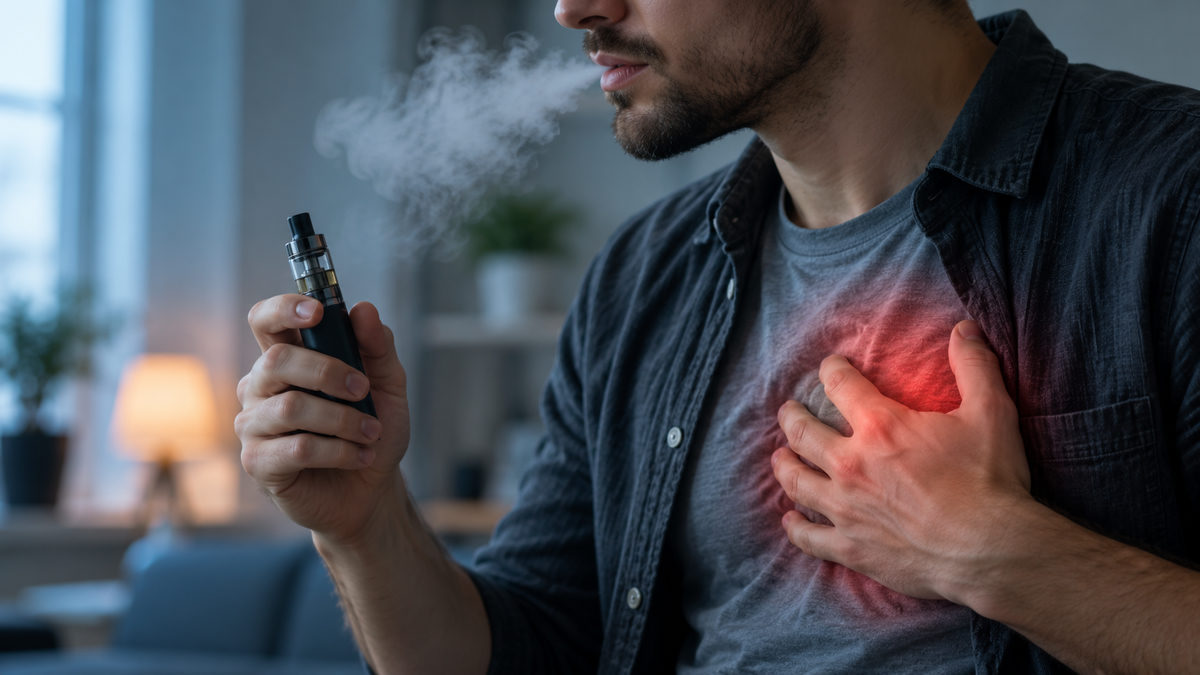
A racing heartbeat or sudden chest discomfort after vaping can be frightening. Can vaping affect your heart? Yes. Both nicotine and ingredients in the aerosol may influence your cardiovascular system, although separating confirmed effects from possible long-term risks requires a careful look at the evidence.
E-cigarettes are often described in extremes: either harmless or just as dangerous as smoking. The evidence points to a more nuanced answer. Vaping can affect heart rate, blood pressure, blood vessels, and cardiovascular stress, but researchers still need longer studies to determine its exact impact on heart attacks, strokes, and cardiovascular deaths.
This guide covers what scientists know, where the evidence is still developing, and which symptoms call for medical attention. It also compares vaping with smoking and outlines practical ways to quit safely.
1. Can Vaping Affect Your Heart? The Short Answer
Vaping can affect your heart and blood vessels, so it is not harmless. Nicotine causes some of the clearest immediate effects. Even nicotine-free aerosol, however, may contain particles and chemicals that interfere with vascular function.
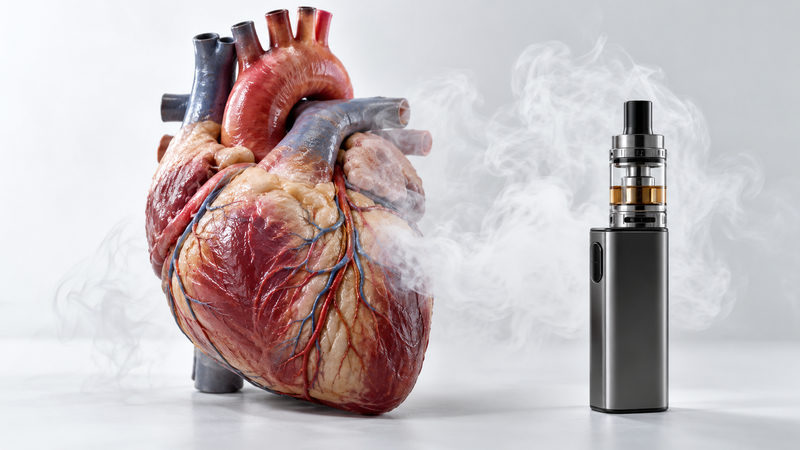
These effects can begin during a vaping session or soon afterward. Nicotine may speed up your pulse, raise your blood pressure, and narrow your blood vessels. That makes the heart work harder, even if you notice no symptoms. Some people do feel the change, reporting palpitations, dizziness, shakiness, or chest discomfort.
Immediate effects versus long-term disease
A temporary rise in heart rate does not mean someone will develop heart disease. By the same token, a normal pulse after vaping does not prove the exposure was harmless. Short-term physiological changes and long-term cardiovascular events are separate research questions, so scientists investigate them using different methods and timelines.
The evidence for short-term cardiovascular effects is stronger than the evidence for precise lifetime risk. Controlled studies can measure blood pressure, arterial stiffness, or blood-vessel function within minutes. Establishing the risk of a future heart attack, stroke, or cardiovascular death is much harder. It requires large groups and years of follow-up, while rapidly changing products make long-term comparisons even more difficult.
Researchers have established that nicotine stimulates the cardiovascular system and that vape aerosol can contain potentially harmful substances. Laboratory studies also reveal possible mechanisms involving oxidative stress, inflammation, and impaired vessel function. Observational studies have found associations with cardiovascular disease, though they cannot always prove cause and effect. One major question remains: how does the risk change after decades of exclusive vaping?
E-cigarettes have not been widely used for nearly as long as combustible cigarettes. A shortage of long-term evidence, then, is not evidence of long-term safety. It mainly reflects the fact that researchers have not yet followed users across an entire adult lifespan. New devices, stronger liquids, and changing ingredients create even more uncertainty.
Even occasional use can cause short-term cardiovascular changes. The response varies with nicotine dose, session length, device design, health status, and other exposures. Someone with an abnormal heart rhythm, for example, may respond differently from a healthy adult. The key point is simple: “occasional” does not mean risk-free.
2. How Nicotine Changes Heart Rate and Blood Pressure
Nicotine activates the sympathetic nervous system, which drives the body’s rapid stress response. It prompts the release of adrenaline and related stress hormones. The heart may then beat faster and with greater force, while constricting blood vessels cause a temporary rise in blood pressure.
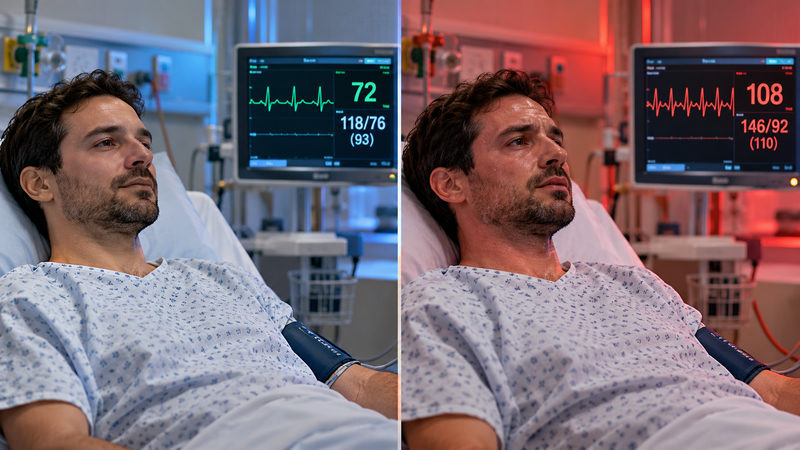
This raises the heart’s workload because it needs more oxygen while pumping harder. Narrowed vessels also create more resistance to blood flow. A healthy person may tolerate a brief change without obvious harm, but the same stress can matter much more to someone with heart disease or uncontrolled hypertension.
Why nicotine can cause palpitations
Changes in heart rate caused by nicotine may feel like pounding, fluttering, or skipped beats. Shakiness, sweating, dizziness, nausea, and anxiety can occur as well. Anxiety and nicotine stimulation may also feed into each other, making a fast heartbeat feel especially intense.
There is no single explanation for vaping heart palpitations. Nicotine may be responsible, but dehydration, caffeine, medication, stress, or an abnormal rhythm could also contribute. Symptoms alone cannot tell you the cause. A clinician may need to review your medical history and check your pulse, blood pressure, and heart rhythm.
Why the cardiovascular response varies
Two people using the same product may absorb very different amounts of nicotine. Device power, nicotine concentration, puff frequency, and inhalation depth all shape the dose. With repeated inhalations, nicotine levels can rise before the body has cleared the previous dose. Experience and tolerance may make symptoms less noticeable, but they do not eliminate cardiovascular stimulation.
Several factors can shape the response:
- Nicotine concentration and liquid formulation
- Device power, temperature, and aerosol output
- Puff length, inhalation depth, and session frequency
- Personal nicotine tolerance and body size
- Caffeine, stimulants, decongestants, and prescription medicines
- High blood pressure, heart disease, anxiety, or rhythm disorders
High-nicotine products can deliver substantial doses, particularly during repeated sessions. Compact devices also make it easy to vape frequently throughout the day. Someone may take dozens of small puffs without realizing they are creating one nearly continuous exposure. The cardiovascular system then receives repeated stimulation with little time to recover.
Never dismiss chest pain or persistent palpitations as a harmless reaction to nicotine. The symptoms could reflect an abnormal rhythm, reduced blood flow to the heart, or another urgent condition. Stop vaping and seek clinical advice for anything new or unexplained. If emergency warning signs appear, get help immediately.
3. How Vape Aerosol May Damage Blood Vessels and Arteries
E-cigarette aerosol is more than water vapor. Depending on the product, it may contain ultrafine particles, solvents, volatile chemicals, carbonyl compounds, flavoring by-products, and metals. Nicotine may even appear because of inaccurate labeling, not just intentional formulation. The mixture can vary from one product to another—and sometimes from puff to puff.

Heating propylene glycol and vegetable glycerin may produce thermal breakdown products. Coils and other device parts can also release metals into the aerosol. Higher temperatures alter chemical production, while an old or damaged coil may change the exposure further. How someone vapes matters too, since longer puffs can increase heating and aerosol output.
Oxidative stress and inflammation
Aerosol exposure may promote oxidative stress, a state in which reactive molecules overwhelm the body’s protective systems. These molecules can disrupt cells and normal signaling. Exposure may also trigger inflammation, the body’s response to irritation or injury. When oxidative stress and inflammation persist, they can contribute to pathways associated with cardiovascular disease.
Laboratory experiments allow researchers to examine these pathways in controlled settings. They can expose cells or animals to specific aerosol ingredients, for example. Such findings demonstrate biological plausibility—that is, a credible mechanism for injury. What they cannot do on their own is calculate a person’s future risk of having a heart attack.
Endothelial dysfunction and arterial stiffness
The endothelium is the thin layer of cells lining the inside of blood vessels. It helps vessels relax, regulates inflammation, and keeps clotting in balance. Endothelial dysfunction occurs when this lining stops carrying out those jobs normally. As a result, blood vessels may not respond properly when tissues need more blood flow.
Healthy arteries expand and recoil as blood passes through them. Arterial stiffness means those vessels have lost some of their flexibility. The heart may then have to work harder to move blood through the circulation. Stiffness can also alter the pressure waves traveling between the heart and arteries.
Short-term human studies have detected changes in vascular function or arterial stiffness after vaping. Results vary, sometimes considerably, depending on the product, nicotine content, participant group, and measurement method. The findings support concerns about vascular stress, but they do not show exactly how much permanent damage may develop over years of use.
Does vaping clog arteries?
“Clogged arteries” usually refers to atherosclerosis, the gradual buildup of plaque within artery walls. Researchers cannot yet measure precisely how exclusive vaping affects plaque formation across a lifetime. Still, vascular dysfunction, inflammation, oxidative stress, and abnormal clotting activity can create conditions associated with cardiovascular injury.
A more accurate statement is that vaping may disrupt the processes that protect arteries. Claiming that every exposure directly creates plaque would go beyond the evidence. Yet uncertainty about plaque formation does not make repeated vascular stress safe. Long-term studies are needed to connect these early biological changes with later clinical disease.
Why nicotine-free products still raise concerns
Nicotine-free aerosol can still expose users to particles, solvents, flavorings, thermal by-products, and metals. Some experiments have found vascular effects even without nicotine. Those effects may differ in size from the effects of nicotine-containing aerosol, but removing nicotine eliminates only one potential source of cardiovascular harm.
A zero-nicotine label does not necessarily guarantee the complete absence of nicotine or other concerning substances. Contamination, inaccurate labeling, and inconsistent manufacturing controls can all create a gap between the package and what is inside. Chemical levels may also change when a liquid is used in a particular device. Whatever the label says, inhaled aerosol is not the same as clean air.
4. Vaping, Heart Attack, Stroke, and Abnormal Rhythms
Research suggests possible links between e-cigarette use and heart disease, heart attack, stroke, and abnormal rhythms. The strength of the evidence is not the same for every outcome. Several short-term cardiovascular effects are well supported, while the independent risk of major future events remains harder to pin down.
Human experiments can track pulse, blood pressure, vessel relaxation, and arterial stiffness after a controlled vaping session. Laboratory research can also investigate inflammation, cell injury, clotting activity, and electrical changes in heart cells. These findings reveal credible ways harm might occur. They cannot tell us how often users will suffer a heart attack years later.
Understanding observational associations
Observational studies often compare cardiovascular diagnoses among people who report different vaping habits. Some have linked vaping with heart attacks, strokes, or cardiovascular disease more broadly. A link, though, does not automatically prove that vaping caused the event. Researchers must also consider age, smoking history, existing health differences, and other exposures.
Previous smoking is particularly hard to untangle. A person might start vaping after decades of cigarette use, then develop disease caused partly by that earlier exposure. Many studies also rely on people accurately reporting their product use and medical history. Participants may forget past use, underestimate how often they vape, or change products during follow-up.
The devices themselves keep changing. Findings from an older, low-powered model may not apply to a newer high-output product. Nicotine strengths and flavoring formulations also vary widely. Study groups can differ in diabetes, hypertension, obesity, and access to healthcare. Statistical adjustments help, but they cannot account for every hidden difference.
Heart rhythm concerns
Nicotine can push the nervous system toward sympathetic activity, potentially raising heart rate and increasing electrical instability. Users sometimes describe rapid beats, skipped beats, or fluttering sensations. Laboratory findings also suggest that certain aerosol ingredients may affect the heart’s electrical behavior. Direct evidence connecting ordinary vaping with specific rhythm disorders in humans, however, is still incomplete.
Palpitations do not always signal a dangerous arrhythmia, but the sensation alone cannot rule one out. Repeated episodes should be medically assessed, especially when they occur with fainting, chest pain, or breathlessness. A clinician may suggest an electrocardiogram or longer-term rhythm monitoring. Anyone with a known rhythm disorder should get individualized advice before using nicotine.
Vaping versus smoking heart risk
Combustible cigarettes burn tobacco, producing thousands of chemicals that include carbon monoxide and numerous combustion toxicants. The evidence that smoking causes severe cardiovascular harm is clearer and far more extensive. According to the Centers for Disease Control and Prevention, e-cigarette aerosol usually contains fewer harmful chemicals than cigarette smoke. Fewer harmful chemicals, however, does not mean harmless exposure.
An adult smoker who switches completely may reduce exposure to some combustion-related toxicants. Completely is the crucial word. Even occasional smoking can maintain substantial cardiovascular exposure, and switching cannot undo damage from earlier smoking. For people who have never smoked, starting to vape offers no cardiovascular benefit.
Why dual use is not a safe compromise
Dual use means continuing to smoke combustible cigarettes while also vaping. Some people vape in places where smoking is prohibited, then smoke elsewhere. Their total nicotine intake may remain high, while exposure to cigarette toxicants continues. That makes dual use an unreliable strategy for protecting cardiovascular health.
Cutting the number of cigarettes may still leave considerable risk because cardiovascular harm does not fall in a simple straight line. Vaping can also sustain nicotine dependence, making complete tobacco cessation more difficult. The healthier goal is to stop combustible smoking and, when possible, eventually stop nicotine use as well. Clinical support can make the process easier to manage.
Who may face greater risk?
Personal vulnerability affects how well the cardiovascular system tolerates nicotine and aerosol exposure. People who already have disease may have less capacity to handle a faster heart rate or higher blood pressure. Concern is especially warranted for:
- People with coronary artery disease, heart failure, or previous stroke
- People with high blood pressure or abnormal heart rhythms
- People with diabetes or multiple cardiovascular risk factors
- Pregnant people and developing fetuses
- Adolescents and young adults
- People using high nicotine concentrations or vaping frequently
- People combining vaping with cigarettes or other stimulants
Secondhand aerosol may expose people nearby to nicotine, particles, and other constituents. Exposure levels depend on ventilation, product, device, and distance. Although the long-term cardiovascular effects are not fully understood, that does not make involuntary exposure acceptable. Avoid vaping around children, pregnant people, and anyone with heart or lung disease.
5. Chest Pain After Vaping: Symptoms and Warning Signs
Chest pain after vaping should not be ignored, since many different conditions can cause it. Nicotine stimulation, anxiety, airway irritation, muscle strain, and heart problems may produce similar sensations. You cannot reliably identify the cause by how the discomfort feels. New or unexplained symptoms need appropriate clinical evaluation.
Symptoms that can occur during or after vaping include:
- Chest pressure, tightness, burning, or pain
- A rapid, pounding, fluttering, or irregular heartbeat
- Skipped beats or repeated palpitations
- Dizziness, lightheadedness, or weakness
- Breathlessness or difficulty taking a full breath
- Nausea, sweating, or unusual fatigue
If cardiovascular symptoms appear, stop vaping. Seek prompt clinical advice when symptoms are new, recurring, getting worse, or have no clear explanation. Do not take another puff just to see whether the reaction happens again. That only adds more nicotine or aerosol exposure and may delay needed care.
When to contact emergency services
Call local emergency services for severe or persistent chest pain, fainting, or serious breathing difficulty. A sustained, very rapid, or irregular heartbeat also needs urgent attention, particularly when accompanied by weakness or chest pressure. Do not drive yourself if symptoms are serious. Emergency teams can begin assessing and treating you on the way to the hospital.
Stroke symptoms demand immediate action. Look for these warning signs:
- Facial drooping or an uneven smile
- Sudden weakness or numbness on one side
- Slurred speech or difficulty understanding words
- Sudden confusion or loss of coordination
- Sudden vision loss or major visual changes
- A sudden, unusually severe headache
Do not wait to see whether emergency symptoms disappear. They may ease temporarily even while a serious problem is still developing. Contact emergency services right away and record when the symptoms started. Timing can affect treatment options for strokes and other cardiovascular emergencies.
Tell clinicians exactly what you used, whether it contained nicotine, cannabis, or another substance. Describe the product, the estimated amount, when you inhaled it, and when symptoms began. Include any medicines, supplements, caffeine, and previous heart problems. Those details can help the medical team assess possible causes and interactions.
This information is educational and cannot provide an individual diagnosis. It is no substitute for an examination, heart tracing, blood tests, or professional medical advice. If your symptoms feel severe or unusual, seek urgent evaluation instead of relying on reassurance from an online source.
6. Heart Health After Quitting Vaping and How to Stop
Quitting vaping ends repeated nicotine-driven stimulation of the cardiovascular system. It also stops ongoing exposure to particles, solvents, metals, and thermal breakdown products. Put simply, every vape-free day prevents another session of acute stress. Quitting may also ease dependence and make other cardiovascular risk factors simpler to manage.
Heart rate and blood pressure may start to settle as nicotine leaves the body. Recovery is different for everyone, though, and there is no universal timeline. Vascular function may be influenced by how heavily and how long someone vaped, along with smoking history, age, and existing disease. Researchers do not yet have enough long-term data to promise that every effect will reverse completely or quickly.
Build a practical quit plan
A useful quit plan addresses nicotine withdrawal as well as the routines built around vaping. Someone might reach for a device while driving, working, socializing, or coping with stress. Once those moments are identified, it becomes easier to prepare specific alternatives. Setting a clear quit date also turns a vague intention into a concrete commitment.
Useful preparation steps include:
- Choose a quit date within a realistic planning period.
- Write down personal reasons for stopping.
- Identify places, feelings, and routines that trigger vaping.
- Remove devices, liquids, chargers, and spare supplies.
- Plan brief activities for cravings, such as walking or controlled breathing.
- Ask supportive friends or family members for encouragement.
- Arrange professional help before the quit date when needed.
Cravings usually rise and fall rather than building forever. When one hits, wait several minutes before acting and move to a different environment. Drink water, use a substitute you planned in advance, or contact someone supportive. Avoid keeping a device nearby “just in case.” Easy access can turn a passing urge into renewed use.
Use evidence-based support
Behavioral counseling can help you spot triggers, handle stress, and respond constructively to lapses. A clinician can also discuss treatments for nicotine dependence based on your age, health, and current pattern of use. The right approach may differ for frequent users, pregnant people, adolescents, and people with heart disease. Professional guidance is especially valuable if earlier attempts have not worked.
Under clinical guidance, some adults may use approved nicotine-replacement medicines or other cessation treatments. These options provide controlled dosing without vape aerosol or cigarette smoke. They are not suitable for everyone, so personal health, pregnancy status, current medicines, and dependence level all matter. A clinician or pharmacist can explain how to use them safely and what side effects to watch for.
Avoid returning to cigarettes
Smokers who are stopping vaping should not return to combustible cigarettes. That would restore exposure to combustion toxicants with well-established cardiovascular dangers. Seek support for quitting all tobacco and nicotine products instead. A planned transition is safer than repeatedly switching between them.
One lapse does not have to become a complete return to vaping or smoking. It may simply expose a trigger that needs a better response plan. Remove the device, think through what happened, and restart as soon as possible. If cravings remain difficult to control, contact your support person or clinician.
Track symptoms and cardiovascular progress
Keep track of cravings, triggers, vaping episodes, and symptoms as you quit. Record the timing of any palpitations, dizziness, chest discomfort, or breathlessness. This information may help a clinician recognize patterns. It can also make gradual progress easier to see from one day to the next.
Arrange follow-up care for persistent palpitations, elevated blood pressure, or other cardiovascular concerns. Pregnant people, adolescents, and anyone with cardiovascular disease should get advice tailored to their needs. Quitting should not depend on willpower alone. The most effective support may combine medical care, behavioral strategies, and help from people around you.
Conclusion
Vaping can raise heart rate and blood pressure, increasing the heart’s workload. Its aerosol may also expose blood vessels to particles, chemicals, metals, and thermal breakdown products. Research has identified biological changes connected with inflammation, vascular dysfunction, and arterial stiffness. Vaping should never be called harmless.
The exact long-term risk of heart attack, stroke, and cardiovascular death is less certain than the established risk from smoking. That uncertainty is not proof of safety. Nicotine-free products still raise concerns, and dual use can preserve substantial cardiovascular exposure. People who have never smoked gain no heart-health advantage by starting to vape.
If you vape, speak with a healthcare professional about cardiovascular symptoms and options for quitting. Get emergency help immediately for severe chest pain, fainting, serious breathing difficulty, or signs of a stroke. Stop vaping while you wait for advice instead of testing whether the symptoms return. Acting promptly can protect both your immediate safety and your long-term heart health.