
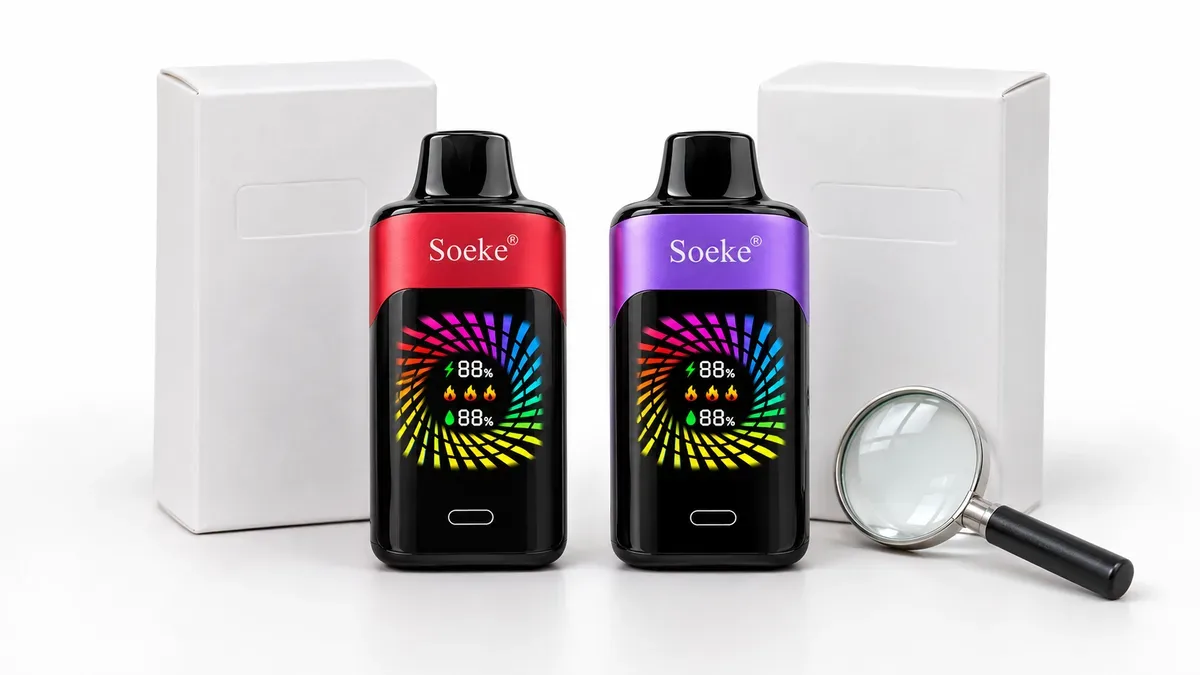
If a SOEKE S9 box says 28000 puffs, what evidence would show whether that number is realistic? SOEKE S9 28000 Puffs Strawberry Lychee and Blackberry Pomegranate Cherry: Product Label Accuracy starts with the package for each variant. However, public listings can only show how sellers describe the product. Adult consumers, reviewers, and retailers need batch records and test documentation to check claims about a specific unit.
Public listings identify both flavors, but this review had no physical samples, complete package photographs, or purchase records. Likewise, no matching manufacturer records or independent puff tests surfaced in the public evidence reviewed. Therefore, the findings below identify what the listings support and what remains open for both variants.
SOEKE S9 28000 Puffs Product Label Accuracy Review
Identify the samples
Public listings use the S9 model name for both Strawberry Lychee and Blackberry Pomegranate Cherry. However, neither listing identifies a physical sample for this review. Therefore, the actual sale market, seller of record, purchase date, device identifier, and lot remain unknown for both variants.

For a physical audit, create one record per unit and give each photograph a reference number. Then, record the purchase date and seller from the receipt, alongside the jurisdiction where the sale occurred. Additionally, capture the model and lot from the box and any corresponding identifiers on the device. Keep records for different batches separate, even when the boxes look identical.
Build a claim inventory
Photograph every box panel, including the base and any overlapping stickers. Next, capture the seals, inserts, inner packaging, and visible device markings. Moreover, take both a wide shot showing where each claim appears and a close-up showing the exact wording. Use a ruler in the photo if warning size needs verification.
- Record the model, flavor name, puff figure, and nearby qualifiers.
- Copy the nicotine strength, its unit, the ingredient declaration, and the stated liquid volume.
- Capture the battery rating, charging information, and any advertised modes or display features.
- Document warnings, disposal instructions, business names, addresses, and batch or date markings.
Specifically, preserve spelling, capitalization, decimal points, and units when transcribing the label. For instance, a puff number on the front may have qualifying text in small print on another panel. Likewise, a missing insert and an insert nobody photographed call for different entries in the record.
Match each claim to its evidence
Compare the box, device, and authentication result with official information for the same flavor, model, and market. Then, check whether the documentation covers the lot or packaging revision in question. For example, an official product sheet can corroborate a listed battery rating when it identifies the matching version.
Additionally, track spelling differences, unreadable text, and conflicting numbers as separate findings. Mark a field missing only after checking every relevant surface or insert. In this review, package fields remain unverified because the available records do not show the units themselves.
Do the Strawberry Lychee and Blackberry Pomegranate Cherry Labels Match?
Strawberry Lychee
Public seller listings use “Strawberry Lychee” for the S9 variant. For instance, one listing uses that order in its title but reverses the two words in its flavor tags. That difference concerns two fields on a webpage. However, the available evidence cannot show whether the device and box use the same wording.
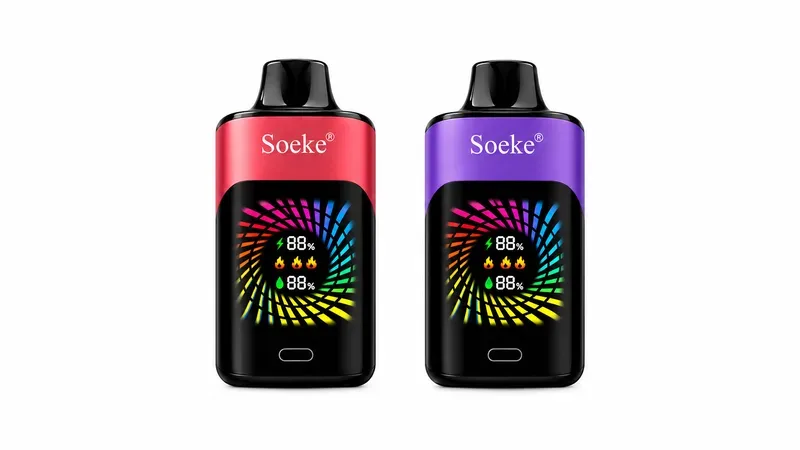
One seller describes strawberry and lychee as separate notes within the blend. However, the review found no matching manufacturer description or documented independent impressions tied to a unit or batch. Therefore, the evidence leaves open whether reviewers could recognize both notes or consistently found one more prominent.
Blackberry Pomegranate Cherry
Public listings use “Blackberry Pomegranate Cherry” in that order. However, a seller’s description discusses cherry before pomegranate, even though its product title keeps the original order. Prose can describe the same three notes in any sequence. To check the actual label, compare the full printed name on the box, device, and official record.
Additionally, the review found no independent tasting record with a traceable sample for this variant. Therefore, it cannot establish whether reviewers distinguished blackberry from pomegranate or found cherry easier to identify. If a published review describes two notes blending together, record that observation alongside its sample and batch details.
Set an evidence standard for flavor claims
A spelling error, missing fruit name, or reversed order is observable when the source images are clear. By contrast, the prominence of a flavor note depends on the person describing it. For example, “Pomegranate” missing from a photographed device would be a naming discrepancy if the matched specification requires it there.
Here, the flavor comparison covers public listings and zero physically inspected units or verified batches. Therefore, neither variant earns a confirmed box-to-device match. Moreover, flavor names and tasting notes cannot establish ingredient composition. A product could use a flavor name without containing the fruit itself, so check the ingredient declaration and supporting records.
Is the 28000-Puff Estimate Realistic?
Find the basis for the number
Both variants appear publicly with a 28,000-puff figure. However, some seller copy describes it as an approximate maximum associated with Regular Mode. That wording comes from seller listings. Without a complete package photograph, the audit cannot quote the box or confirm whether it carries the same qualifier.
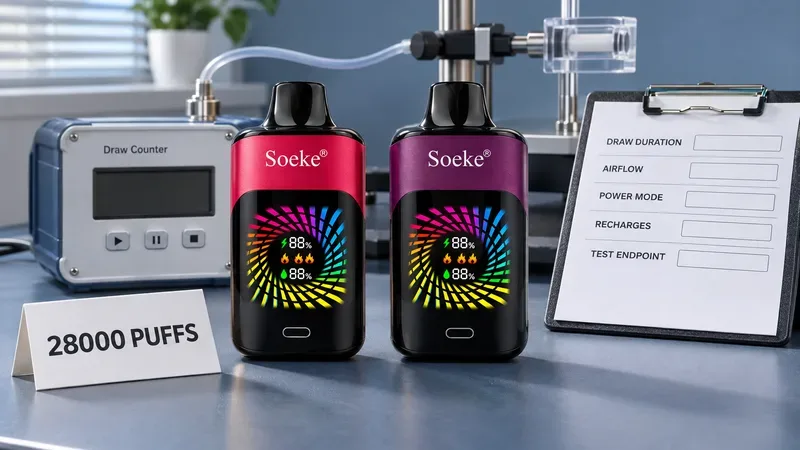
First, transcribe the full printed claim, including any footnote, mode name, or wording such as “up to” or “estimated.” Then, ask whether the manufacturer counted draws on a test bench or projected the total from measured liquid consumption. The two approaches answer different questions about what the device actually delivered.
- Record the draw duration, airflow, time between draws, and power mode.
- Check the recharge protocol and the number of devices and batches tested.
- Ask how the test defined a counted draw and when counting stopped.
- For projections, request the measured consumption, calculation, and assumptions behind the final figure.
Explain what changes the total
A puff count treats each draw as one event, even when draws have different durations. For example, a three-second draw lasts three times as long as a one-second draw. Liquid consumption does not necessarily rise in the same proportion. Meanwhile, airflow and power settings can change output and the amount of liquid used during a test.
Additionally, the interval between draws affects how much time the device has to cool. Battery performance can also determine when output drops or the device stops operating. If the design supports recharging, the test protocol needs to say whether recharges counted toward the same unit’s total. Therefore, changes in individual draw patterns make a single protocol a poor basis for a typical-use claim.
Assess the evidence
An independent count is comparable only when the report identifies the model, settings, batch, and endpoint. For instance, one test might end at battery cutoff and another when the liquid runs out. A third might stop once output drops below a defined threshold. As a result, devices with similar performance could produce different totals under those definitions.
Fill volume and rated battery capacity can help check whether a test report’s assumptions fit the device. However, milliliters alone reveal little without measured liquid consumption per draw. Likewise, a battery rating in milliamp-hours cannot establish a count without power, cutoff, and recharge information. Use those figures to question an estimate when its assumptions conflict with the hardware records.
This review found no comparable independent counts or batch-matched manufacturer protocol for either flavor. Therefore, 28,000 remains an independently unverified estimate, and the typical-use total remains unresolved. Even a well-documented result would first establish what happened to the test samples under those specific conditions.
Nicotine, Ingredients, E-Liquid Capacity, and Battery Specs
Nicotine strength and e-liquid volume
Copy the nicotine statement as printed, including its number, unit, and any explanation nearby. Then, record the fill volume on a separate line. A value in mg/mL is a concentration, whereas a value in mL describes volume. A value in mg can represent total nicotine when the label clearly defines it that way.
However, a percentage needs a documented basis before converting it to mg/mL. For instance, 1% by mass per volume means one gram per 100 milliliters, equivalent to 10 mg/mL. A percentage by mass needs additional information, such as liquid density, for that conversion. Neither figure is a SOEKE S9 specification.
Similarly, multiplying a documented concentration by the fill volume gives the nominal nicotine content of that fill. It does not measure how much nicotine a person would absorb. For both flavors, the printed strength, unit basis, and fill volume remain unverified. If matched records disagree, preserve both values and ask which applies to the lot.
Ingredient disclosure
List only the ingredients declared on the package or in matching documentation. Then, record whether the source names individual ingredients, groups them under broad terms, or provides no list. For example, a declaration reading “flavorings” identifies a category and leaves the individual substances unspecified.
Additionally, check what the applicable market requires on the package, in an insert, or in supporting records. A regulator may require information that a public seller listing never displays. For these two variants, no batch-matched ingredient declaration was available. Therefore, the audit cannot judge either the composition or the completeness of the disclosure.
Battery capacity, charging, and device features
Compare the stated battery capacity in mAh, port type, charging input, and available modes across the sources. Additionally, check whether the display or controls correspond with the advertised features. A clear photograph can document a visible connector or button. However, the connector shape alone cannot establish supported charging voltages or currents.
One public seller describes both variants as non-rechargeable and lists two power modes. However, those claims have no batch-matched device markings or technical documentation in this review. Therefore, battery capacity, charging input, and mode behavior remain independently unverified. A manufacturer datasheet or qualified electrical test could help resolve a conflict without opening the device during a label inspection.
Warnings, Traceability, and Market-Specific Labeling Rules
Identify the applicable market
Start with where the unit was sold, then check which jurisdiction the packaging appears to target. For instance, a local importer address, warning language, or country-specific sticker can point toward an intended market. However, an Australian-facing listing cannot establish the destination or sale history of a particular batch.
Australia’s Therapeutic Goods Administration restricts disposable single-use and non-therapeutic vapes and lists mint, menthol, and tobacco as permitted therapeutic vape flavors. Therefore, if a unit was supplied in Australia, its product category and supply status need checking alongside the label. The TGA’s guidance on vaping reforms and therapeutic vape standards explains those requirements. For each audit, record the rule in force on the review date and any applicable exception.
Check warnings and safety information
Photograph each principal display panel and document the nicotine warning’s wording, language, size, and placement. Additionally, record any age-restriction statement and check whether an insert carries relevant safety or disposal instructions. Note anything that affects legibility, such as an importer sticker covering text or a seam crossing the warning.
Nicotine can cause dependence, and this review addresses adult consumers and professionals checking labels. In the United States, FDA guidance requires the nicotine warning on qualifying packages to occupy at least 30% of each principal display panel. However, a sales-age restriction and a packaging statement are separate requirements. Check the rule that applies to the unit before making either finding.
For disposal, the U.S. Environmental Protection Agency directs households to take discarded vapes to household hazardous waste collection sites. It advises keeping them out of household trash and curbside recycling. Elsewhere, check the local waste authority’s rules for whole devices containing batteries and residual e-liquid. Additionally, retailers should confirm which collection arrangements apply to commercial stock.
Check who is accountable for the product
Record the manufacturer and importer names, contact details, and any local sponsor identified on the package. Then, copy the lot, production date, and expiry date wherever they appear or the applicable rule calls for them. Keep photos of stickers and underlying text when both are visible.
A field can be absent from the inspected package even when the applicable rule permits it elsewhere. Therefore, record the location you checked and verify the exact requirement before calling it an omission. For both variants, warnings, traceability details, and market compliance remain unverified without identified units and complete packaging.
Authentication Checks and What to Do About Label Discrepancies
Check identifiers through an official channel
Look for a verification code, QR code, serial number, or batch ID on the box and device. Then, confirm the manufacturer’s verification address through an independently established official source before using the printed code. Save the result and its date, and keep any full verification code out of public images.
Specifically, compare the returned model, flavor, and batch with the physical unit wherever the service supplies those fields. For example, a successful response that names a different flavor leaves a discrepancy to investigate. Likewise, a response that only says “valid” offers less evidence than one that identifies the unit. No unit-specific authentication result was available for either variant here.
Investigate suspicious differences
Check for blurred printing, misspellings, overwritten labels, missing contacts, and specifications that conflict across the box and device. Additionally, note any invalid code or unexpected history of repeated queries. Photograph each issue in context so the manufacturer can identify the panel, label layer, or marking involved.
However, repeated queries can reflect prior checks, and label changes can accompany a legitimate packaging revision. Ask the seller or manufacturer whether the specific lot used that artwork or identifier. Until the response or other evidence resolves the difference, report the observable issue and leave authenticity open.
Publish a verdict and give readers a next step
Give each finding a status and an evidence reference that a reader can follow. For example, cite the panel photo for wording, the manufacturer’s reply for a lot correction, or the report page for a test result. Then, state whether the evidence applies to one unit, several samples, or the whole batch.
- Confirmed: The public listing names match the two names under review at the listing level.
- Unclear: Seller copy qualifies the puff figure, but the exact box wording and its test basis remain unresolved.
- Discrepant: Use this status when matched records conflict. This review established no physical label discrepancy.
- Independently unverified: Batch identity, package wording, measured puff count, nicotine, ingredients, hardware ratings, and warnings lack matching evidence.
If a label raises a concern, preserve the box, receipt, and original photos. Next, send the seller or manufacturer the exact disputed wording and lot number when requesting clarification or a return. Retailers can place the affected lot on stock hold while checking supply records and seeking written confirmation. If the evidence suggests a labeling violation, use the reporting channel for the authority overseeing that market.
Conclusion
Strawberry Lychee: Public listings support the flavor name, while the box-to-device match and batch identity remain unverified. Blackberry Pomegranate Cherry: Public listings support the three-part name in that order, while the physical wording and batch identity remain unverified. Neither variant had an inspected batch, so no batch-level verdict is available.
For both flavors, the 28,000-puff figure needs a documented test method and comparable results. Likewise, nicotine, ingredients, battery specifications, and warnings need batch-matched evidence or market-specific confirmation. Photograph the box and device, save the receipt, and send the seller or manufacturer the exact disputed wording and lot number. If the evidence points to a labeling violation, report it through the relevant regulator’s channel.







