
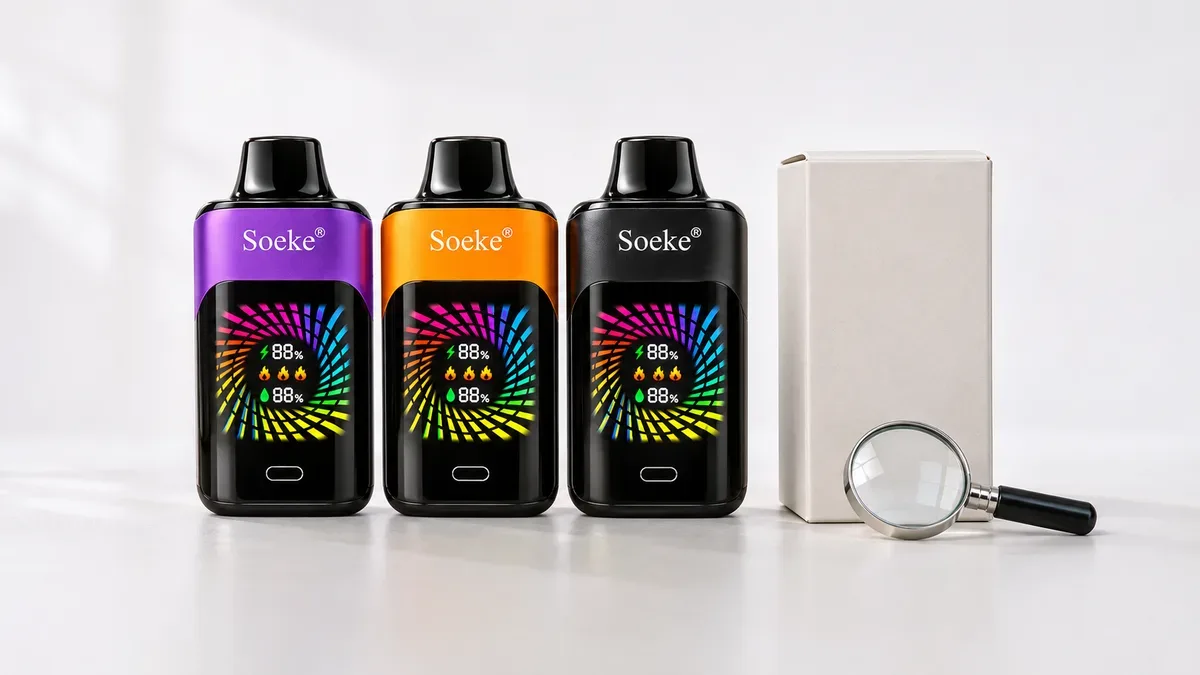
If a vape box advertises 28,000 puffs, what can a parent or educator actually learn from that number? To answer, start with three details about the SOEKE S9 28000 Puffs: Packaging, Nicotine Warnings and Australian Regulatory Requirements. The product name helps identify the version, while the puff figure makes a claim about use. Meanwhile, a nicotine warning alerts readers to a health risk.
A photo of the front panel might show the name and puff claim while leaving the side panels out of view. As a result, you may miss a nicotine declaration or the details needed to identify the Australian supplier. Here’s how to read the evidence you have and check what official Australian records say about lawful supply.
SOEKE S9 28000 Puffs Packaging and Label Claims
SOEKE S9 28000 Puffs is the product name used here. During research, no traceable set of packaging photographs could be verified for this model. Therefore, the exact wording, placement and visibility of any puff claim or nicotine warning on the box remain unconfirmed. A product name in a listing gives you a starting point for identification.
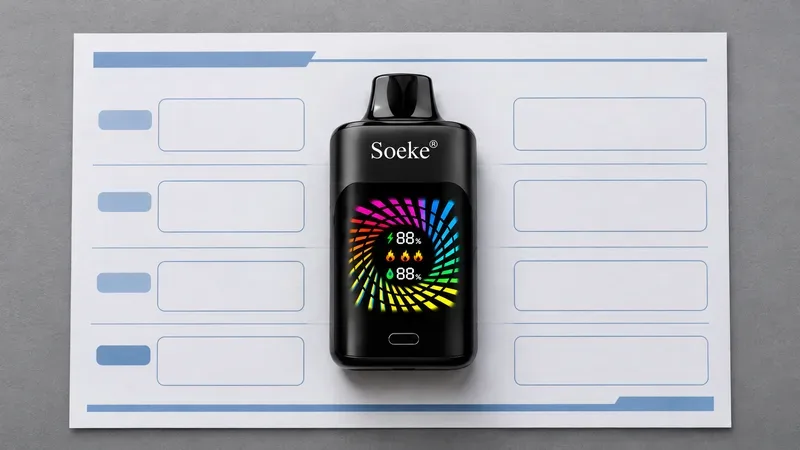
Record what the photographs actually show
If you find traceable images, start by recording where they came from and when you accessed them. For instance, a dated set of photos showing one physical box can help link a warning to a specific variant. A front panel from one source and a side panel from another may show two different versions.
Next, transcribe the legible text exactly as it appears. Keep the original wording, numbers and units, even when the formatting looks unusual. If the photo identifies an intended market, record that detail alongside the text. Otherwise, leave the market unknown, since English wording alone cannot establish where the seller intended to supply it.
- Source and date. Record who supplied or published the image and when you reviewed it.
- Market and variant. Record any country designation, model code, flavour or other visible version detail.
- Batch identifiers. Copy the lot or batch code exactly if you can read it.
- Panel coverage. Note which sides you can read and which are cropped, blurred or unphotographed.
Keep missing information visible in your notes
Imagine a school receives a photo showing the model name on the front and a sliver of one side. The side contains a block of print, but the edges of several words disappear. In that case, record the model name as visible and mark the side-panel text as unknown. That record can guide a follow-up when clearer photos become available.
Similarly, keep the wording on the package separate from any caption attached to the image. Someone may add “28,000 puffs” to a listing even when the visible panel carries different wording. If the photo shows a qualifier such as “up to,” include it in the transcription. Small differences like that change how a reader understands the claim.
What Does the 28,000-Puff Claim Mean?
The figure 28,000 is an advertised puff count. It could represent a machine-counted total under a defined test protocol. However, the SOEKE S9 test method and result could not be verified. Without those details, readers cannot tell what counted as a puff, when the count stopped or which version underwent testing.
What a puff test would need to tell you
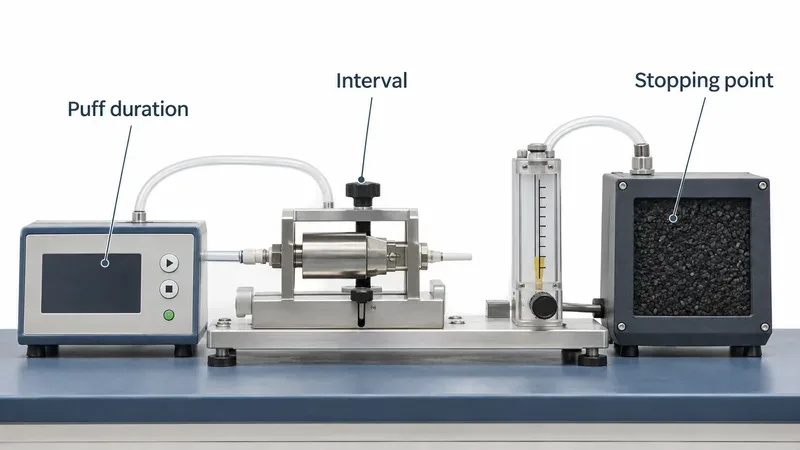
A machine can take repeated draws under controlled conditions and count them until a specified stopping point. For instance, a protocol might define each draw by its duration and the volume of air pulled through the device. It might also set a fixed interval between draws. Those choices shape what the final count means.
- Draw settings. Check the duration, airflow or volume, and interval the test used.
- Device settings. Check which version and operating mode the researchers tested, where relevant.
- Stopping point. Look for the condition that ended the count, such as aerosol output falling below a defined threshold.
- Sample size. Check how many units the test covered and whether the result describes an average or a single unit.
For example, imagine two machines each count 100 draws. One takes two-second draws, while the other takes four-second draws. The counts match, but the second machine spends twice as long drawing from the device. Even this simple difference shows why a count alone tells you little about the conditions behind it.
Why the count cannot predict lifespan or nicotine delivery
In everyday use, people vary how long they draw and how often they use the device. Meanwhile, liquid use and battery behaviour can also affect how long a device keeps producing aerosol. Dividing 28,000 by someone’s estimated daily puff count gives an arithmetic result. However, that calculation depends on their draws matching the conditions behind the advertised figure.
Nicotine delivery raises a separate question. A puff count says how many draws an advertiser claims, while nicotine delivery depends on what reaches the aerosol. For instance, two devices could share an advertised count while using liquids with different nicotine concentrations. Their puff counts would give you no reliable basis for comparing exposure.
Therefore, leave the lifespan and nicotine dose open when discussing the SOEKE S9 figure. A useful follow-up would be a test report that identifies the exact version and describes the procedure. Even then, the result would describe that version under those particular conditions.
SOEKE S9 Nicotine Warnings, Content and Exposure
The exact SOEKE S9 nicotine warning and any declared nicotine strength remain unverified. Confirming either would require a readable label tied to the specific variant. Therefore, a missing panel or blurred warning leaves nicotine content uncertain. The puff count offers no way to resolve that uncertainty.
Read the warning and concentration as separate details
A nicotine warning alerts readers to risks such as dependence. For instance, a warning may identify nicotine as addictive without stating how much the liquid contains. A concentration, when declared in milligrams per millilitre, describes how much nicotine the label reports in each millilitre of liquid. The Australian Government’s vaping and nicotine guidance explains the health risks and effects of nicotine dependence.
Suppose a clearly identified bottle lists 10 mg/mL and contains 2 mL. Multiplying those figures gives 20 mg of nicotine in the liquid, according to the label. However, that example uses hypothetical figures and provides no measurement for the SOEKE S9. It simply shows why nicotine concentration and total liquid content answer different questions.
Similarly, copy a percentage claim exactly as printed if the label gives one. Look for wording that clarifies what the percentage measures before comparing it with a figure in mg/mL. If the unit or declaration is unclear, record it as unclear. A transcription that preserves the original detail gives someone else a chance to check your reading.
Separate liquid content from the amount a person absorbs
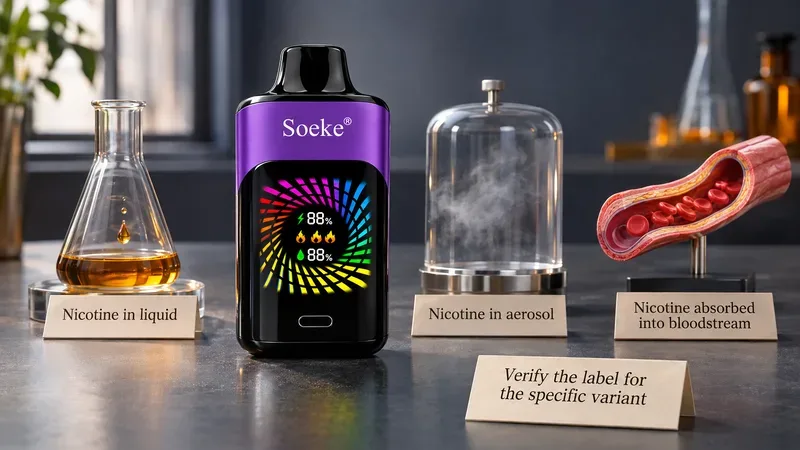
Nicotine in the liquid, nicotine in the aerosol and nicotine absorbed by the body are distinct measurements. For example, a concentration and volume let you calculate the declared amount in the liquid. Estimating exposure requires information about the aerosol and how much a person inhales. Absorption depends on how much nicotine enters the body.
Meanwhile, a warning can help start a conversation even when the dose remains unknown. A student might ask whether the advertised count means every draw delivers the same amount. Explain that a puff count gives no measurement of what anyone inhaled. Then discuss dependence using the government guidance, which covers the addictive effects of nicotine.
Likewise, a cropped label can leave a family with a practical question about what to say next. A simple explanation works well. “We can see the product name, but the photo leaves the nicotine content unclear.” From there, you can talk about the health effects of vaping and where to find support.
Australian Vape Packaging, Labelling and Supply Requirements
Australian requirements depend on what the product contains and how the supplier presents it. The Therapeutic Goods Administration, or TGA, sets minimum standards for therapeutic vaping goods supplied in Australia. Start by identifying whether the item contains liquid, a filled accessory, hardware or a combination. Those details help you find the relevant rules in the TGA’s therapeutic vape product standards.
Identify which standard covers each component
TGO 110 covers relevant therapeutic vaping substances, substance accessories and packs. For instance, a filled pod can be a substance accessory because it holds vaping liquid for use with a device. The separate Therapeutic Vaping Devices medical device standard covers applicable devices and device accessories. Where a pack combines hardware with a vaping substance, both standards can be relevant.
Consider a carton with a reusable device and two prefilled pods. The device raises questions about hardware design, relevant warnings and instructions. Meanwhile, the filled pods raise questions about liquid ingredients, concentration and container labelling. The combined carton then needs checking against the requirements for that pack configuration.
Check each packaging layer and the included information
The outer pack is the package in which the supplier presents the goods. Intermediate packaging sits between that outer pack and the immediate container, when present. The immediate container directly holds the vaping substance. For instance, a box might contain a wrapped pod, with the wrapper serving as intermediate packaging.
- Outer pack. Check the main label for applicable product details, including the nicotine declaration and required warnings where relevant.
- Intermediate packaging. Where applicable, check the wrapper or other layer for the information TGO 110 requires there.
- Immediate container. Check the bottle, pod or other container against the rules for its type and size.
- Included information. Check how the supplier provides the required leaflet or instructions for that product configuration.
For instance, TGO 110 treats very small containers differently from larger ones. Some details that belong on a larger container may appear elsewhere on a qualifying small package. Therefore, confirm the container category before judging which text should appear there. The TGA’s standards page links to detailed guidance for the different packaging layers.
Additionally, the TGA summarises requirements for plain packaging, English labelling and information leaflets. Depending on the product, required information may address use, precautions, storage or other details. Consequently, a front photograph can help with an initial check, while the complete package allows a fuller assessment. A readable warning alone leaves several of those requirements open.
Check the supply rules as well as the label
Australia restricts lawful retail supply to pharmacies under the therapeutic vaping framework. Therapeutic supply is for smoking cessation or managing nicotine dependence. Furthermore, the national rules prohibit retail supply of disposable single-use vapes, including versions without nicotine. A puff count alone cannot establish whether a product falls within that category.
Finally, check the rules for the circumstances of supply. The applicable pathway can depend on factors such as age, nicotine strength and state or territory requirements. For the SOEKE S9, an assessment starts with the actual version and configuration. Then check the standards and the current official notification records for that exact product.
How to Check the SOEKE S9’s Regulatory Status in Australia
On 25 November 2026, a text search of the public notified vape list page returned no visible match for SOEKE. The terms SOEKE S9 28000 Puffs, S9 and 28000 also returned no visible match. The brand result was consistent with the earlier research. These results describe a search of the visible text on the TGA’s notified vape list page.
Look for an exact product match
Start with the full product name and model identifier as they appear on the package. Then try the sponsor or supplier name if the packaging identifies one. For instance, a search by brand alone might miss a product entered under a longer name. An exact-product check needs enough identifying details to compare the item with an official entry.
- Search record. Note the check date, exact search terms and list or file you used.
- Product identity. Compare the full name, product type and available version details with the package.
- Sponsor or supplier. Check the name in the entry against the details you can verify for the product.
- Entry status. Record the notification number and check whether the product appears on the current list or among withdrawn entries.
For example, a hardware entry and a filled-pod entry may share part of a name. The hardware entry answers a question about that device. If you are checking a filled pod or a combined pack, look for the entry that describes those goods. Similarly, compare the declared nicotine strength, flavour and liquid volume where the list provides them.
Furthermore, the date you checked the web page may differ from the date the TGA extracted the underlying data. Keeping both dates helps someone reproduce the search later. If the visible page search leaves the result unclear, check the relevant downloadable table and any sponsor details you have. Where identifying details remain missing, record the exact-product status as unverified.
Understand what a notification means
An entry reflects a sponsor’s notification that the product meets applicable standards under the unapproved therapeutic goods framework. The TGA does not pre-assess listed products for quality, safety, efficacy or performance. However, it conducts compliance assessments as part of ongoing monitoring. An entry therefore gives you a record of the sponsor’s notification for those particular goods.
The TGA states that goods outside the notified vape list cannot be legally supplied under this framework. Applying that rule to a particular SOEKE S9 requires a verified product identity and a current search. Therefore, if the brand name is all you have, report the search result in those terms. Recheck the official page at publication and whenever you rely on the result later.
Where to Check Official Australian Vaping Guidance
Parents and educators can start with the Australian Government’s guidance on nicotine dependence and the health effects of vaping. For instance, someone might ask why cravings can continue after the vape is gone. The guidance offers plain-language information you can use to discuss dependence. For age-relevant resources, see Young people and vaping.
Researchers can use the national standards to identify which packaging, labelling and information requirements apply to the product. Next, use the notified list to look for the corresponding product and sponsor. Record the dates for both checks, particularly if you are preparing a report others may revisit. See the TGA product standards and the TGA notified vape list.
Meanwhile, use the relevant state or territory health department for local supply rules. Look for guidance that covers the place and circumstances you are checking. For example, a school preparing information for families can use its jurisdiction’s guidance for local supply questions. It can then use the national youth resources to explain health effects in everyday terms.
Finally, keep the date beside each regulatory finding in a handout or report. That small detail tells readers when the finding applied and what to recheck. If you update the material later, repeat the search using the same terms and record any differences.
Conclusion
A verified package can show what a particular version of the SOEKE S9 declares. However, the advertised 28,000 puffs and any nicotine warning leave the amount of nicotine someone absorbs unknown. To assess lawful Australian supply, check the exact product, its configuration, the applicable standards and the current official records.
Check the TGA’s notified vape list for the exact product and sponsor. Record the date, the search terms and any matching notification number. Finally, use the Australian Government’s youth vaping guidance when discussing nicotine with students or families.







