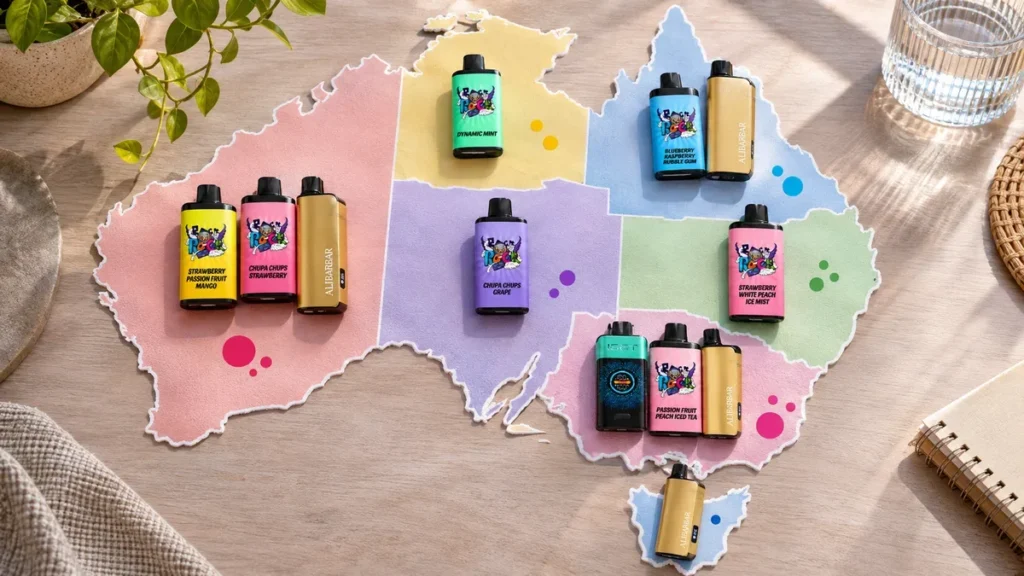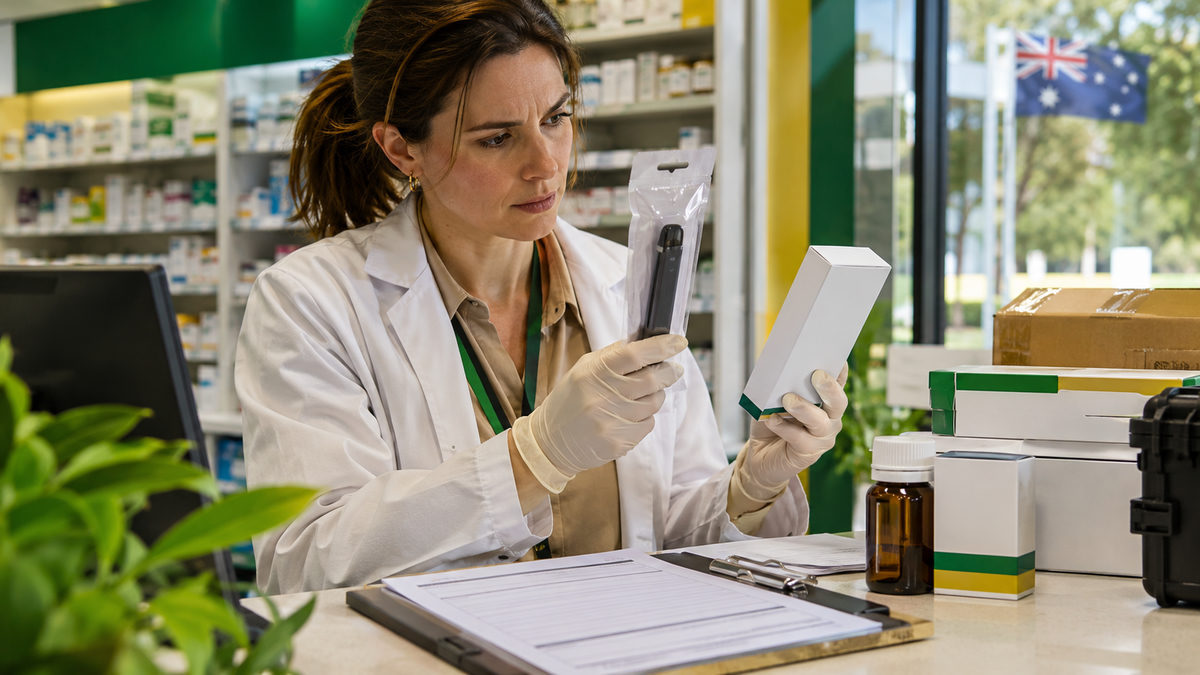
Could a vape sitting openly on display still be unlawful in Australia? Yes. And a “TGA-compliant” label does not answer the question. The Role of the TGA in Vape Regulation goes well beyond checking packaging or nicotine strength, as several national, state, and territory rules may apply to the same product.
Australia regulates vapes under therapeutic goods, customs, pharmacy, medicines, and public health laws. A product can satisfy one requirement and still fail another. For example, a lawful import permit does not automatically allow retail sale. Nor does inclusion on a government list mean the TGA has approved the product.
The framework is designed to limit vaping to smoking cessation and nicotine-dependence management, with access provided through supervised health pathways. The rules are not identical for everyone, though. Different requirements may apply to adults, minors, higher-strength products, and particular jurisdictions. Knowing how these layers fit together can help consumers and businesses avoid expensive mistakes.
1. The Role of the TGA in Vape Regulation
What the TGA regulates
The Therapeutic Goods Administration, or TGA, is Australia’s Commonwealth regulator for therapeutic goods. It administers the Therapeutic Goods Act 1989 and related legal instruments. Its remit includes the quality, safety, presentation, manufacture, importation, advertising, and lawful supply of therapeutic vaping goods, whether they contain nicotine or not.
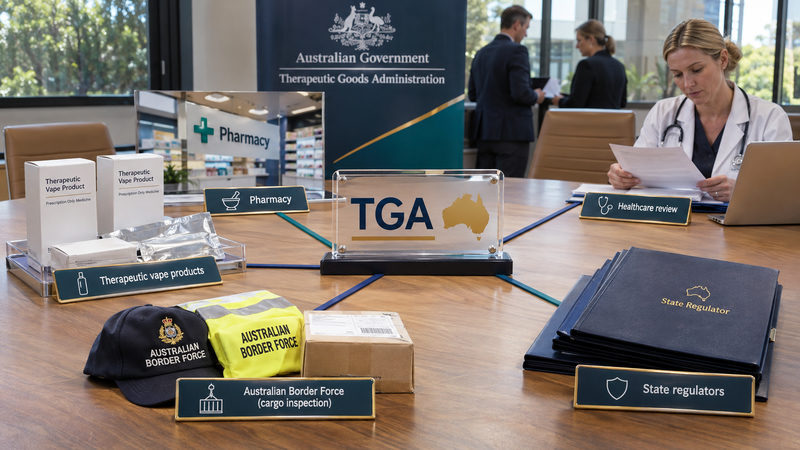
The TGA does not run the entire system by itself. The Office of Drug Control manages import licences and consignment permits under customs rules, while the Australian Border Force examines goods at the border. State and territory authorities oversee other areas, including pharmacy practice, medicines supply, licensing, possession, and local enforcement.
The TGA also manages pathways that allow access to unapproved therapeutic goods. It sets minimum product standards, receives sponsor notifications, investigates suspected breaches, and can take regulatory action. Its role therefore extends from a product’s entry into Australia through to advertising and post-market monitoring.
Why Australia applies a therapeutic model
Australia does not treat vaping as an ordinary consumer market. The national framework instead limits lawful use to helping people quit smoking or manage nicotine dependence. That approach reflects the dependence risk associated with nicotine, as well as concerns that vape aerosols may expose users to chemicals with uncertain short-term and long-term effects.
Protecting young people is a major part of the policy. Bright packaging, sweet flavours, and easy retail access can make vapes especially appealing to them. Illicit sellers may skip age checks altogether. By limiting lawful supply to pharmacies, the system creates a controlled point where trained professionals can assess whether a product is suitable.
The framework also acknowledges that approved treatments do not work for every established smoker. Someone may have tried nicotine patches, gum, and prescribed medicine without lasting success. In that situation, a therapeutic vape could become part of a supervised plan. Even so, the TGA says vapes are not first-line treatments.
Regulation cannot remove every risk associated with these products. Minimum standards address particular hazards, but they do not prove that a product will deliver a clinical benefit. A person’s health can also affect whether vaping is appropriate. Patients should speak with a qualified professional about respiratory conditions, pregnancy, medicines, and previous attempts to quit.
2. Which Vaping Products Are Legal in Australia?
Lawful therapeutic vaping goods
To qualify as a lawful therapeutic vape, a product must be intended for smoking cessation or nicotine-dependence management. In most cases, it must appear on the TGA’s notified vape list before it can be lawfully supplied. Another possibility is inclusion in the Australian Register of Therapeutic Goods, known as the ARTG. The TGA advises, however, that therapeutic vapes currently available through these pathways remain unapproved goods.

Lawful categories may include vaping substances, filled pods, devices, accessories, kits, and packs. The framework also covers nicotine-free therapeutic vapes. So, a “nicotine-free” label does not automatically make a retail vape legal. Its intended use, notification status, product compliance, and route of supply still count.
A product must satisfy the relevant standards and supply requirements as well. Businesses importing vaping goods also have to follow customs controls. Importers generally need a licence from the Office of Drug Control, plus a permit for each consignment. A licence on its own does not authorise a shipment.
Products that remain prohibited
Non-therapeutic vapes cannot be sold lawfully through Australia’s ordinary retail market. That includes products marketed for recreation, lifestyle use, or general enjoyment. Tobacconists, convenience stores, petrol stations, and specialist vape shops are not allowed to sell vapes lawfully. The same national restrictions apply to online consumer retailers.
The main prohibited or unlawful categories include:
- Disposable and non-therapeutic vapes sold outside the therapeutic framework.
- Products supplied by supermarkets, tobacconists, convenience stores, petrol stations, or vape shops.
- Therapeutic products absent from the notified vape list and the ARTG.
- Products that breach applicable quality, packaging, ingredient, device, or information standards.
- Vaping goods imported without the required business licence and consignment permit.
Picture a brightly coloured disposable vape being sold from behind a shop counter. The seller might insist that it contains no nicotine, but that claim does not turn it into a lawful consumer product. Non-therapeutic disposable vapes remain banned, whatever their stated nicotine content.
Pharmacies as the lawful consumer channel
Consumers generally obtain therapeutic vapes only through participating Australian pharmacies, and not every pharmacy chooses to stock them. Pharmacists must also consider whether supply is clinically appropriate and permitted under local law. Even if a product appears on the notified list, there is no guarantee a pharmacy will carry it.
State and territory laws may set tighter conditions than the national framework. In some jurisdictions, for example, a prescription may be required even where Commonwealth settings would otherwise allow pharmacist supply. Consumers should check the local rules before going to a pharmacy. Simply crossing a state border can change the conditions that apply.
Under national vaping laws, possessing a product for personal use is different from engaging in unlawful commercial activity. The TGA says these laws do not criminalise an individual’s personal possession. State or territory laws may still affect possession in certain circumstances, though. Selling, importing, advertising, or commercially possessing illicit stock creates a far greater legal risk.
3. Pharmacy Access, Prescriptions and Patient Safeguards
How adults can access therapeutic vapes
An adult can ask a participating pharmacist about a therapeutic vape containing no more than 20 mg/mL nicotine. Commonwealth rules may allow the pharmacist to supply it without a prescription after a consultation. Local law can still require a prescription, however, and the pharmacist may refuse supply if the treatment does not appear appropriate.

The consultation should explore previous attempts to quit and the first-line treatments available. The pharmacist should also cover dosage, device operation, side effects, storage, and the risk of dependence. The product must be sought for smoking cessation or nicotine-dependence management. Recreational use is not a valid basis for lawful therapeutic supply.
Take an adult who smokes 15 cigarettes a day and has relapsed several times. A pharmacist may begin by discussing approved nicotine replacement products and behavioural support. If clinically appropriate, the pharmacist could then consider a notified low-strength therapeutic vape. Any decision should fit within a structured plan to reduce smoking or quit.
When a prescription becomes necessary
Anyone under 18 needs a prescription from a medical or nurse practitioner. Adults also require one for nicotine concentrations above 20 mg/mL. Local law may go further and require prescriptions for all therapeutic vapes. Patients should check the rules that apply wherever the pharmacy operates.
Access pathways vary with the patient’s age and the product’s scheduling:
- Adults may access products containing 20 mg/mL nicotine or less through eligible pharmacist supply, where local law permits.
- Patients aged 16 or 17 need a prescription and use an applicable unapproved-goods pathway.
- Patients under 16 generally require individual approval or treatment through an authorised medical practitioner.
- Any patient seeking a product above 20 mg/mL needs a valid prescription.
- Patients in stricter jurisdictions may need prescriptions regardless of age or nicotine concentration.
Having a prescription does not compel a pharmacy to dispense a vape. The pharmacy must stock an appropriate product that is eligible for lawful supply, and the pharmacist still has to verify the prescription and relevant product details. It is sensible for patients to call ahead before making the trip.
Special Access and authorised prescriber pathways
Most therapeutic vapes are supplied through pathways for unapproved therapeutic goods. The Special Access Scheme provides several routes, depending on the patient and product. When eligible adults receive a product from a pharmacist, pharmacists generally use the Category C notification pathway and must notify the TGA within the required period after supply.
Prescribers may also use relevant Special Access Scheme pathways for prescribed products. Category B, for instance, can require approval before an individual patient receives the product. Category C permits notification in defined circumstances. An authorised prescriber can treat qualifying groups of patients without requesting separate approval for each person.
These pathways come with detailed procedural rules. A notification may be tied to a specific patient, prescriber, product, and indication, so a change could require a fresh notification. Health professionals should rely on current TGA guidance, not an outdated clinic procedure.
Safeguards during pharmacy supply
Supplying vapes through pharmacies adds professional oversight to a product category with recognised uncertainties. A pharmacist may spot interactions, an unsuitable dose, or signs of ongoing dependence. They can also explain that swallowing vape liquid calls for urgent medical attention. Safe storage is especially important in homes with children or pets.
Patients need straightforward guidance on correct use and possible adverse effects. They should also know where the vape fits into their cessation plan. Above all, no one should assume vaping is risk-free. Product standards can reduce selected risks, but they cannot remove them entirely.
Follow-up provides another useful safeguard. After several weeks, for example, a pharmacist might review cravings, cigarette use, adverse effects, and nicotine strength. The next step could be to reduce nicotine exposure or change treatments. Pharmacy involvement can therefore support an exit strategy instead of leaving patients to vape indefinitely without supervision.
4. Notified Vape List, ARTG and Unapproved Goods
Why most therapeutic vapes remain unapproved
Approved medicines normally undergo TGA evaluation before they are included in the ARTG. That process examines evidence about quality, safety, and effectiveness. Therapeutic vapes, by contrast, generally reach patients through special pathways for unapproved goods. They have not been through the same pre-market assessment as approved medicines.
The TGA’s notified vape list shows products that may be eligible for lawful supply. It records product names, suppliers, types, nicotine details, and notification numbers, along with notices that sponsors have withdrawn or ceased. Pharmacies and other businesses should consult the live list before making any significant supply decision.
A vaping good that does not appear on the notified list generally cannot be supplied lawfully through these pathways. ARTG inclusion may offer a separate basis where relevant. Careful searching matters because similar brand names can refer to different strengths or formats. Listing one liquid does not automatically validate every device sold by the same company.
Notification does not mean TGA approval
A sponsor provides information declaring that its product meets the applicable requirements. The TGA then adds qualifying notified goods to the public list. This is a crucial distinction: the process does not mean the agency has independently assessed the product. Nor does it establish its safety, effectiveness, quality, or performance for a particular patient.
Marketing language often muddies that distinction. Terms such as “TGA-notified,” “TGA-compliant,” and “available under TGA pathways” are not the same as “TGA-approved.” Businesses should avoid language that suggests official endorsement, while consumers should view inflated approval claims with caution.
The TGA may review notifications and carry out compliance assessments. Sponsors can withdraw notices, and the regulator can identify non-compliance. A pharmacy should never depend on an old screenshot or a supplier’s brochure. The current online record is stronger evidence of a product’s notification status.
What the list can and cannot confirm
The list allows users to match a product to its supplier and declared features. It can help confirm details such as nicotine strength, product type, flavour, volume, and notification number. What it cannot do is prove that the physical product in hand is genuine. Counterfeit packaging can copy legitimate details.
Businesses should cross-check invoices, batch information, supplier identity, and packaging. Pharmacies should also buy through lawful, traceable wholesale channels. Patients can ask their pharmacist to explain why a particular product is eligible for supply. If the details do not line up, supply should stop until the discrepancy is resolved.
5. TGA Product Standards and Supply-Chain Duties
Minimum requirements for substances and packaging
TGA product standards establish minimum safety and quality requirements for unapproved therapeutic vaping goods. TGO 110 applies to relevant substances, filled accessories, kits, and packs. It covers ingredients, nicotine concentration, contaminants, labelling, packaging, record keeping, and other matters. These rules apply when businesses import, supply, or export covered goods.
Therapeutic vape substances must contain permitted ingredients and remain within the relevant limits. Some flavours and ingredients are restricted because they may add risk or make a product more appealing. Nicotine content must also stay within the applicable parameters and match the required information. Sponsors need evidence to support their declarations of compliance.
Required warnings and product information must appear clearly on the packaging. Child-resistant features help lower the risk of accidental exposure to nicotine liquid. Product presentation must not resemble food or appeal to young people either. Even when the liquid meets chemical limits, candy-style packaging can raise regulatory concerns.
Devices and accompanying information
Therapeutic vaping devices must comply with applicable medical device requirements and essential principles. These cover safety, performance, construction, and foreseeable risks. A device should, for example, manage hazards related to batteries, heating, leakage, and incorrect operation. Relevant standards may also restrict design features and require supporting information.
The instructions should cover assembly, charging, filling, use, maintenance, and disposal. Warnings also need to address foreseeable misuse and known hazards. Clear guidance can help patients avoid overheating, exposure to liquid, and incompatible components. It cannot, however, make a defective device compliant.
Meeting minimum standards is not a guarantee. A compliant product may still cause side effects or do nothing to help a particular patient quit. Long-term risks may remain uncertain as well. Technical compliance does not remove the need for healthcare advice and continued monitoring.
Duties across the supply chain
Every participant in the supply chain has distinct responsibilities. A contract cannot simply shift every statutory duty to someone else. Organisations need clear written procedures setting out who checks products, keeps evidence, and responds when something goes wrong. Poor handovers can let unlawful goods find their way into pharmacy stock.
- Sponsors: Submit required notices, maintain evidence, keep records, report supply data, and support product compliance.
- Manufacturers: Follow applicable manufacturing, quality, design, testing, and documentation requirements.
- Importers: Obtain required licences and permits, verify notification status, and ensure imported goods meet Australian requirements.
- Wholesalers: Hold required local authorisations, source lawful goods, maintain traceability, and supply only permitted recipients.
- Pharmacies: Check the notified list, confirm lawful access, counsel patients, retain records, and follow notification duties.
The sponsor usually imports, exports, manufactures, or arranges those activities within Australia. That puts the sponsor at a key compliance point. It must notify the TGA before importing or supplying relevant unapproved goods. Importation still requires separate permission from the Office of Drug Control.
Importers must obtain a business licence before bringing vaping goods into Australia, along with a permit for each relevant consignment. Individuals cannot obtain these licences for personal importation. Permission at the border does not replace therapeutic-goods compliance or local wholesale authorisation.
Wholesalers must protect a product’s identity throughout transport, storage, and delivery. Poor temperature control or damaged packaging, for example, can compromise the goods. Pharmacies should refuse stock that is altered, unexplained, or impossible to trace. Every business should also maintain recall procedures and complaint records.
State and territory licensing may add yet another layer. A wholesaler might need authority to handle substances covered by relevant medicines schedules. Pharmacies likewise have to comply with local dispensing, storage, and record-keeping laws. National notification never overrides those duties.
6. Advertising, Enforcement and Consumer Protection
Strict controls on promotion
Australia places tight restrictions on advertising vaping goods. Businesses cannot freely promote therapeutic vapes on social media, through shop displays, on websites, via sponsorships, or in influencer campaigns. Even factual communication may count as advertising if it encourages people to use or buy a product. Context matters—the images and presentation can be just as significant as the words.
A pharmacy can give necessary information during a professional consultation. Public promotional claims, however, need careful legal review. Claims of guaranteed quitting success or TGA approval are especially risky. Businesses should seek specialist advice before publishing vape-related content.
Indirect promotion can draw regulatory attention too. A retailer might, for instance, promote colourful “collectable devices” without referring to inhalation. Investigators can still look at the product, intended audience, sales process, and broader context. Clever wording does not necessarily sidestep the advertising rules.
How enforcement works
The TGA monitors online advertising, supply chains, sponsor compliance, and reports of suspected breaches. It works alongside the Australian Border Force, Australian Federal Police, and state or territory agencies. Authorities also carry out inspections and intelligence-led operations, with a strong focus on commercial dealers and black-market supply networks.
The regulatory response will depend on the facts. Authorities may provide education or issue warning notices, infringement notices, injunctions, recalls, and suspensions. They can also seize unlawful goods or begin court proceedings. Serious breaches may leave both individuals and corporations facing substantial civil or criminal penalties.
Enforcement can address several activities:
- Importing vaping goods without the required licence or consignment permit.
- Manufacturing or supplying products that breach applicable standards.
- Selling vapes through non-pharmacy retail channels.
- Commercially possessing illicit vaping stock.
- Advertising or promoting vaping goods unlawfully.
- Providing false or misleading information in a sponsor notice.
National enforcement is only part of the picture. State and territory officers may investigate illegal retail sales, medicines offences, licensing breaches, or sales involving minors, while border authorities deal with prohibited imports. By working together, regulators can track goods from overseas suppliers all the way to retail shelves.
How to verify a product
Consumers should start with the current notified vape list. Check the exact product name, supplier, nicotine strength, volume, flavour, and product type, then buy only through a participating Australian pharmacy. An overseas seller or marketplace listing is not a lawful alternative.
Businesses need to go further. They should confirm the supplier’s identity, invoices, batch details, notification status, and required licences. Importers must also have Office of Drug Control permission in place before shipment. Just as importantly, businesses should retain documents showing how each decision was made.
If a product’s details do not match the public list, it may need closer investigation. Missing batch information, unusually low prices, altered labels, and unsupported approval claims are all warning signs. Stock offered through messaging applications may also lack a lawful supply trail. Pharmacies should quarantine questionable goods rather than dispense them.
Reporting suspected problems
Consumers and businesses can report suspected unlawful advertising or supply to the TGA. They may also report adverse events and product quality concerns through the relevant government channels. Useful reports include product photographs, seller details, dates, receipts, and website addresses. Clear evidence makes it easier for authorities to assess the problem.
Suspected illegal importation may also need to be reported to the Australian Border Force or Office of Drug Control. State or territory offences can be referred to local health departments. If someone experiences an urgent medical reaction, immediate clinical care comes first. A regulatory report is no substitute for emergency treatment.
Consumers should not confront suspected illicit sellers. A safer approach is to preserve the evidence and submit it through the proper channels. Businesses should record their internal investigations and any corrective action taken. This can help regulators uncover repeat suppliers, copied packaging, and broader distribution networks.
Conclusion
The TGA treats vaping goods as therapeutic products within a broader national system. Lawful use is centred on smoking cessation and nicotine-dependence management, with qualifying products generally supplied through participating pharmacies. Prescriptions are required for minors, higher-strength products, and any circumstances covered by local law.
Sponsor notification is not the same as formal TGA approval. Nor do product standards and lawful supply pathways prove that a vape is safe or effective. Customs controls govern importation, while state and territory rules may create extra obligations. Everyone involved must check the requirements for their particular role and location.
Before buying or supplying a vape, consult the current TGA notified vape list and check the rules in your state or territory. Importers and manufacturers should confirm licences, permits, standards, and supply-chain records before taking action. If the position is still unclear, seek guidance from a qualified health professional or regulatory specialist.