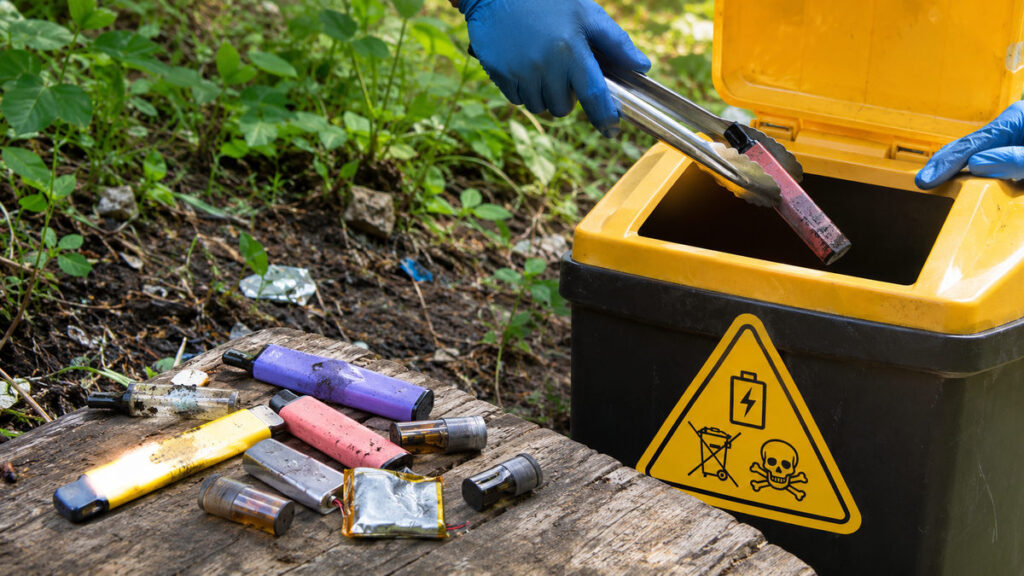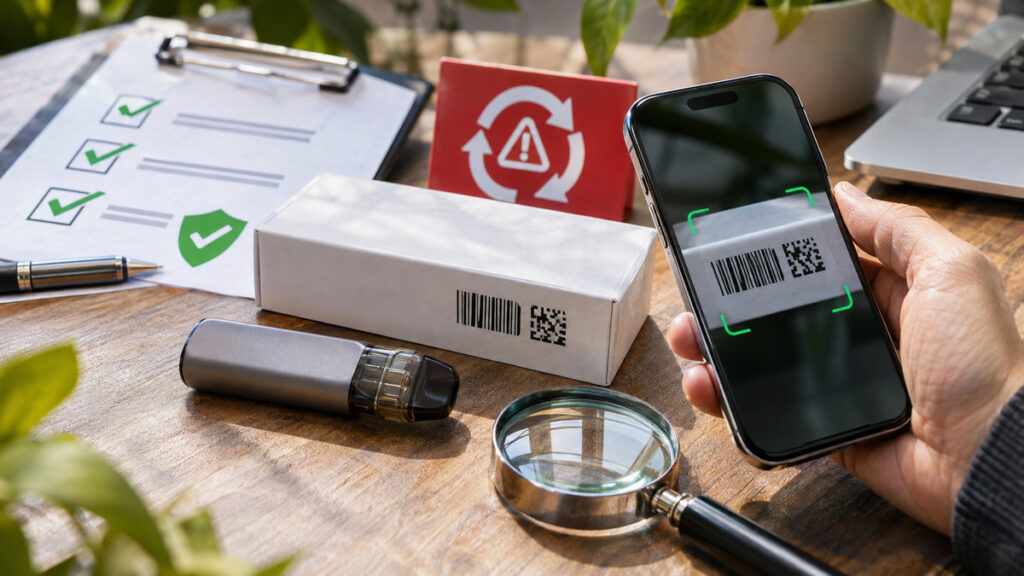
A nicotine pouch might be legal when your flight takes off, only to cause trouble at the border when you land. So, are nicotine pouches legal in Australia? From 24 July 2026, ordinary consumers have no legal way to buy or personally import them. The rule includes tobacco-free products and well-known overseas brands such as ZYN.
Older advice online may still refer to prescriptions, pharmacy supply, or personal import arrangements. Those options no longer apply to nicotine pouches. This guide sets out the current rules for consumers, travellers, parents, retailers, and health professionals. It also looks at enforcement, health risks, limited exceptions, and lawful alternatives.
1. Are Nicotine Pouches Legal in Australia?
No, nicotine pouches are not legally available to ordinary consumers in Australia. Since 24 July 2026, consumers have been unable to lawfully purchase or personally import them. Australian retailers cannot legally sell or supply them either. These nationwide rules sit under Commonwealth therapeutic-goods legislation.
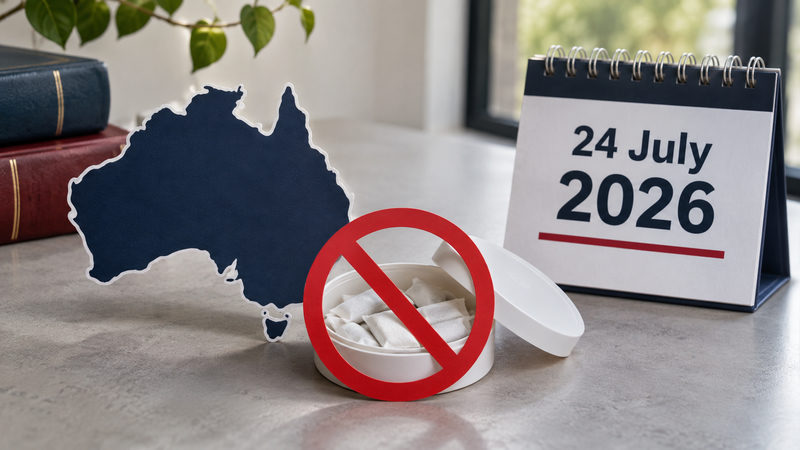
Nicotine pouches are small sachets that release nicotine inside the mouth. Since they contain nicotine, federal law treats them as therapeutic goods. That remains the case even if a pouch contains no tobacco or makes no medical claim. Calling a product “tobacco-free” or “recreational” does not exempt it.
Which sellers are covered?
The supply restriction extends well beyond traditional tobacco shops. It covers tobacconists, convenience stores, pharmacies, domestic websites, and social-media sellers. Informal transactions between commercial operators and customers may also attract regulatory attention. Describing the product as a supplement or lifestyle accessory does not get a seller around the rules.
Popularity overseas changes nothing under Australian law. ZYN and similar brands, for example, may be sold legally in other countries. Brand recognition, however, does not authorise their importation or supply in Australia. Nor does saying they are intended for personal use.
Approval status and narrow exceptions
No nicotine pouch currently appears on the Australian Register of Therapeutic Goods, or ARTG. The TGA has not assessed any nicotine pouch for quality, safety, or effectiveness. That means consumers cannot choose an approved pouch from an Australian pharmacy. Without approval, ordinary retail supply is also unavailable.
A few statutory routes remain outside normal consumer access. They could apply to a future ARTG-registered product or to properly authorised research. The Clinical Trial Notification and Clinical Trial Approval schemes, for instance, may allow qualifying research. In exceptional circumstances, another specific statutory exemption may apply.
These narrow routes do not allow consumers to order pouches for themselves. Nor do they restore the former prescription or personal-import pathways. You can review the current TGA guidance on nicotine pouches for official details. Accuracy note: this information reflects the rules from 24 July 2026 and should be checked before purchasing or travelling.
2. Buying, Prescriptions, Pharmacies, and Online Advertising
Consumers cannot legally buy nicotine pouches from an Australian shop or domestic online seller. Keeping the stock hidden behind the counter makes no difference. The restriction also covers orders arranged through messaging apps, private groups, or social-media pages. A discreet payment method does not turn an unlawful sale into a lawful one.
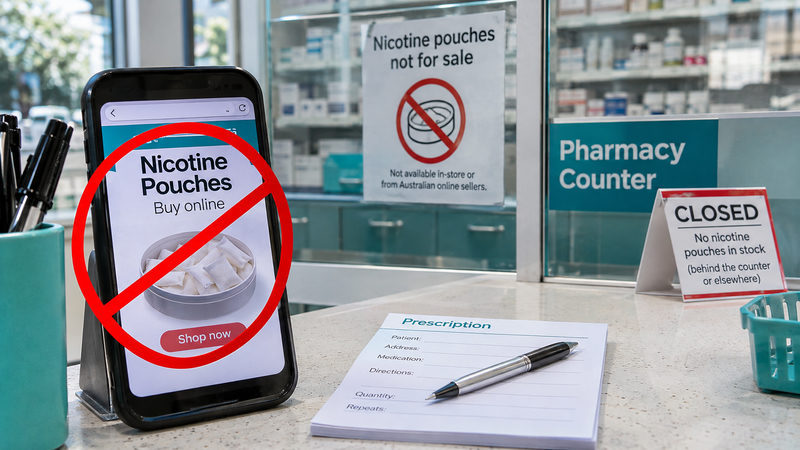
Finding an overseas checkout page does not create a legal route for importation. You may be able to pay and receive an international tracking number. The parcel can still be intercepted before it reaches you. If that happens, the buyer may lose both the order and the money.
Can a doctor prescribe nicotine pouches?
Doctors cannot prescribe nicotine pouches through the Special Access Scheme or Authorised Prescriber Scheme. These schemes usually give controlled access to certain unapproved therapeutic goods. The 2026 changes, however, specifically excluded nicotine pouches from those pathways. A prescription cannot make a personal pouch order lawful.
Pharmacies cannot supply nicotine pouches under the former arrangements for unapproved goods. Pharmacists are also barred from making them through the pharmacist compounding exemption. In other words, a pharmacy cannot prepare a pouch as an individual formula. Approved nicotine replacement products remain available because they use different regulatory pathways.
Advertising and quitting claims
Businesses cannot lawfully promote nicotine pouches on websites, social media, retail displays, or through influencer content. The restrictions may also extend to emails, digital advertisements, sponsorships, and other media. Replacing “buy now” with softer lifestyle wording may still amount to an advertising breach. Regulators look at the content and what it is designed to achieve.
Sellers cannot lawfully market unapproved pouches as products for quitting smoking or vaping. In fact, making a quitting claim may reinforce the product’s therapeutic presentation. Personal testimonials are no substitute for TGA assessment and approval. Retailers and influencers should not portray anecdotal success as proven treatment evidence.
Suspected unlawful supply or promotion can be reported through the TGA breach-reporting service. A report may concern questionable practices, unapproved products, or advertising that fails to comply with the rules. State or territory health authorities may also accept reports that fall within their responsibilities. When it is safe to do so, consumers should keep screenshots, seller details, dates, and product photographs.
3. Import Laws, Travellers, and Australian Border Force
Nicotine pouches can no longer be brought into Australia through the Personal Importation Scheme. Even an Australian medical prescription does not change that. A letter from an overseas doctor will not solve the issue either. Advice that describes prescription-based personal importation may have been written before 24 July 2026.
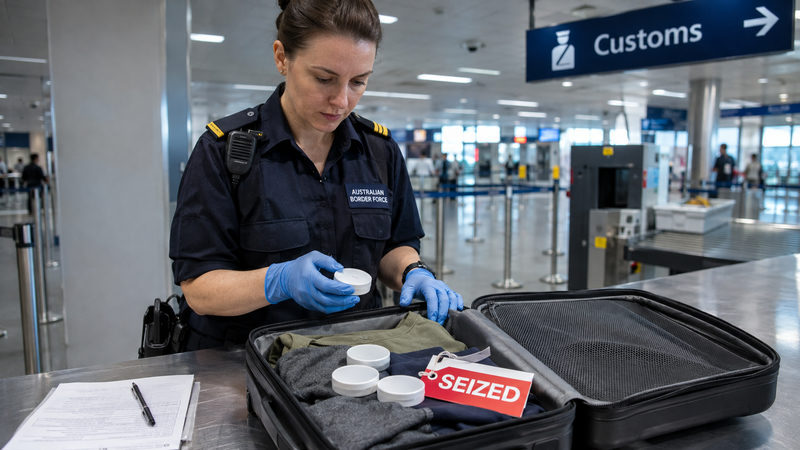
The traveller exemption no longer includes nicotine pouches. Australian residents and overseas visitors therefore cannot carry them into the country for personal use. The same rule applies to a two-day trip and a permanent return. Even a partly used container receives no special allowance.
Mail, hand luggage, and checked bags
How the pouches enter Australia makes no difference. The rule covers international post, courier parcels, checked baggage, and hand luggage. Splitting containers between several bags does not create an exemption. Commercial freight is controlled as well and may raise more serious concerns about supply.
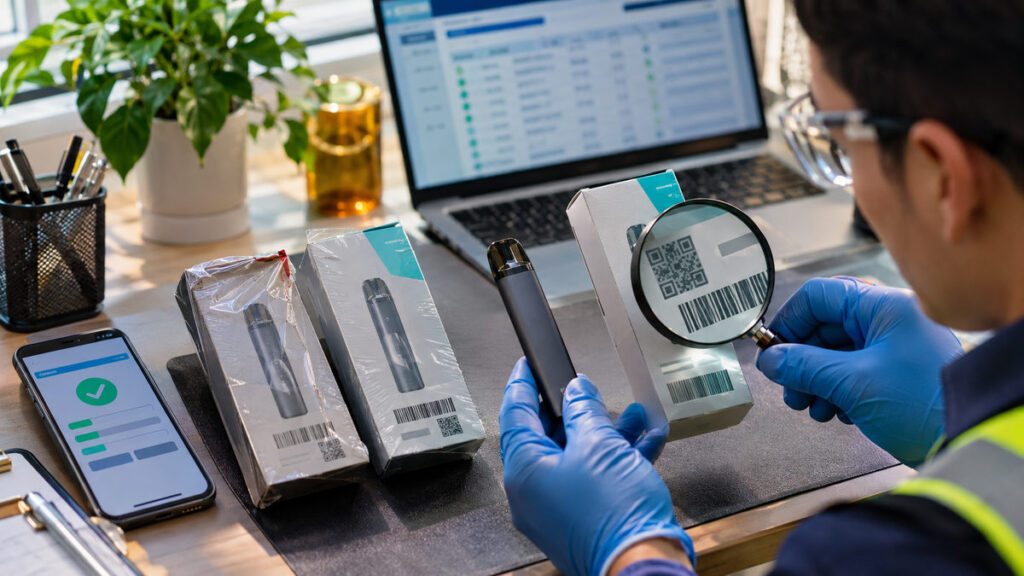
Australian Border Force may detect, seize, and destroy nicotine pouches imported unlawfully. Border officers rely on declarations, inspections, screening systems, intelligence, and mail examinations. Buyers may end up with neither the goods nor a refund. Shipping insurance may also exclude products that cannot legally enter the destination country.
Declaring a product does not make an otherwise unlawful import legal. A declaration gives border officers the relevant information, but it cannot override the prohibition. If there is any uncertainty, travellers should contact Australian Border Force before departure. Current border guidance confirms that nicotine pouches cannot be brought into Australia by travellers.
Personal mistakes and commercial conduct
A failed personal import will not necessarily draw the same response as organised commercial supply. Authorities consider the quantity, frequency, advertising, payment records, intended distribution, and other surrounding facts. Possession tied to commercial supply may lead to stronger enforcement. Large mixed shipments can also trigger an investigation that goes beyond simple seizure.
Take a visitor carrying five containers for a month-long holiday. The pouches may be legal at home and meant only for that person. Even so, those facts do not revive the Australian traveller exemption. The sensible option is simple: leave every container behind.
Australians returning home should plan before boarding too. Speak with a healthcare professional about handling cravings during the journey and after arrival. Approved gum, patches, lozenges, or mouth sprays may be suitable for some adults. Preparing early makes it less tempting to conceal pouches or order replacements online.
4. Penalties, Exceptions, and State or Territory Laws
The Therapeutic Goods Act 1989 provides for civil and criminal consequences when advertising, importation, or supply is unlawful. It may also apply to possession connected with commercial supply. Which provision applies depends on the conduct and the surrounding circumstances. Regulators can respond with education, warnings, infringement action, civil proceedings, or criminal prosecution.
Certain advertising and supply offences carry the possibility of imprisonment and substantial financial penalties. Depending on the facts, some criminal offences can reach five years’ imprisonment or 4,000 penalty units. The corresponding civil maximum can reach 5,000 units for an individual. For some contraventions, a company may face up to 50,000 units.
Maximum penalties are not automatic
These maximums are not automatically imposed on every traveller or consumer. Courts and regulators look closely at the specific offence, the evidence, the date, and the person’s legal status. Penalty-unit values can also change. Different legal issues may arise for a company, director, retailer, courier, or individual buyer.
At the border, seizure and destruction are the most immediate practical risks. Repeated imports intended for resale, by contrast, may point to deliberate commercial activity. Advertising to Australian customers can create separate problems as well. Businesses should not assume that losing a shipment is the only possible consequence.
Commonwealth and local laws can overlap
Federal therapeutic-goods controls work alongside state and territory laws. Local legislation may cover medicines, poisons, retail conduct, public health, and enforcement powers. The exact requirements can vary from one jurisdiction to another. Businesses and health professionals should seek advice tailored to their location and activities.
Limited lawful circumstances remain possible for goods included in the ARTG or for properly authorised research. Clinical trials must meet the relevant notification, approval, ethics, and governance requirements. These routes are not available for ordinary personal use. A research exemption cannot be used as a retail channel in disguise.
Check the latest guidance from the TGA, Australian Border Force, and your local health department. Rules and penalty-unit values may change after publication. This guide provides general information and does not replace legal advice. Anyone facing enforcement action should speak with a qualified Australian lawyer.
5. Nicotine Pouches vs Snus, Tobacco, and Nicotine-Free Pouches
Nicotine pouches are small sachets worn between the lip and gum. They commonly contain extracted or synthetic nicotine, flavourings, sweeteners, and plant-based fillers. Nicotine is absorbed through the lining of the mouth while the pouch stays in place. Most contain no tobacco leaf, but that does not make them legal.
Snus is a different product because it contains tobacco. This moist oral tobacco is traditionally placed under the upper lip. Australia has separate, longstanding restrictions covering the supply of oral tobacco. For that reason, “snus” and “nicotine pouch” should not be used as interchangeable terms.
Chewing tobacco and approved nicotine treatments
Chewing tobacco contains tobacco leaf and may need to be chewed before it releases nicotine. Oral snuff and similar tobacco products are also subject to tobacco-specific controls. Nicotine pouches, by comparison, generally contain nicotine without tobacco leaf. The ingredients produce different legal classifications, although both categories face significant restrictions in Australia.
Approved nicotine replacement therapies have a separate purpose and regulatory history. Familiar examples include nicotine patches, gum, lozenges, and mouth sprays. They provide measured doses and come with approved directions and warnings. They also have established therapeutic roles in easing withdrawal and supporting attempts to quit.
Therapeutic vaping products fall under a different legal framework again. They are not oral nicotine pouches and should not be treated as though they are. Access may involve participating pharmacies, professional guidance, product standards, and state requirements. A rule that applies to therapeutic vapes does not authorise the possession or importation of pouches.
What about nicotine-free pouches?
A genuinely nicotine-free pouch is not regulated simply because it is a nicotine product. Still, that does not mean every nicotine-free pouch is automatically lawful or safe. Its tobacco content, ingredients, therapeutic claims, consumer law obligations, and product-safety rules may all matter. State or territory restrictions can impose further requirements.
You cannot confirm a product’s contents or legal status from marketing language alone. Products promoted as nicotine-free or tobacco-free may contain undeclared nicotine, nicotine analogues, or other substances. Overseas labels can also use unfamiliar ingredient names or leave out important details. Laboratory results do not always match the promises printed on attractive packaging.
Brand recognition is no shortcut either. ZYN and similar overseas brands do not become lawful just because consumers know the name. Legal sale in America, Europe, or Asia does not authorise supply in Australia. Australian law takes effect when the product enters the country or is supplied to consumers here.
6. Health Risks and Legal Nicotine Alternatives
Tighter controls followed concerns about increasing availability and promotion, particularly among young people. Bright flavours, small containers, and discreet use make pouches easy to hide. On social media, nicotine may be presented as fashionable, productive, or harmless. That messaging can mask the risks of dependence and poor product quality.
Nicotine can cause and sustain addiction. In the short term, pouch use may bring nausea, dizziness, hiccups, or stomach discomfort. Contact with the pouch can also irritate the gums and the lining of the mouth. Other reported concerns include mouth lesions, gum problems, and possible dental damage.
Nicotine and product-quality concerns
Nicotine can raise heart rate and blood pressure. Its cardiovascular effects warrant particular care for people with relevant medical conditions. Young people, pregnant people, and those who have not previously used nicotine may face added concerns. A clinician can assess personal risk far more reliably than an overseas seller.
Unapproved products may contain more nicotine than the label states. Nicotine delivery can also vary between pouches in the same container. Contaminants from manufacturing or undeclared ingredients add another layer of risk. Appearance, flavour, and brand reputation cannot reveal these problems.
Some packaging may not include adequate warnings or child-resistant features. A small, flavoured pouch can look like confectionery to a child. Accidental exposure may cause serious nicotine poisoning. Keep every nicotine product out of children’s reach, and contact emergency services if a dangerous exposure is suspected.
The long-term health effects of nicotine pouches are still uncertain. No pouch has been approved in Australia as nicotine replacement therapy. Limited evidence about cessation cannot replace a formal assessment of quality, safety, and effectiveness. A seller’s claim that a pouch helps people quit is no guarantee of clinical benefit.
Lawful options for managing cravings
Approved nicotine replacement choices include patches, gum, lozenges, and mouth sprays. A patch can deliver a steady amount of nicotine throughout the day. Gum, lozenges, or spray may help with cravings that appear suddenly. A doctor or pharmacist can advise on suitable doses, combinations, and precautions.
Prescription medicines for quitting may be useful when clinically appropriate. They are not right for everyone, so an individual assessment matters. A healthcare professional can take account of other medicines, medical conditions, pregnancy, and earlier attempts to quit. Good guidance also helps prevent avoidable side effects.
- Create a personalised quit plan with realistic dates, triggers, and craving strategies.
- Combine treatment with behavioural support rather than relying on willpower alone.
- Call Quitline on 13 QUIT, which is 13 7848, for confidential professional support.
- Visit quit.org.au for practical tools and information about smoking or vaping cessation.
- Use the My QuitBuddy app to track progress, manage cravings, and maintain motivation.
Therapeutic vaping and advice for current users
Some adults remain unable to stop smoking after trying approved cessation treatments. In those circumstances, therapeutic vaping products may be available from participating pharmacies. Access should include advice from a health practitioner and must comply with state or territory requirements. A therapeutic vape is still not the same thing as a nicotine pouch.
People who currently use pouches should not place replacement orders through overseas websites or social-media accounts. Instead, tell a doctor or pharmacist about the strength you use, your daily intake, and any withdrawal symptoms. Those details can help them develop a realistic transition plan. Support can manage cravings without depending on products whose quality has not been verified.
Stopping nicotine can cause irritability, restlessness, difficulty concentrating, or strong urges to use it again. The symptoms may be uncomfortable, but structured support can make them easier to handle. Ask for help early, before your supplies are gone. Individual risks and treatment choices require qualified medical advice, which this guide cannot replace.
Conclusion
From 24 July 2026, consumers cannot lawfully purchase, personally import, obtain by prescription, receive from a pharmacy, or carry nicotine pouches into Australia. The narrow statutory exceptions do not provide a route for ordinary consumers. No nicotine pouch currently appears on the ARTG. Approved nicotine replacement products and professional support remain safer, lawful options.
Check the latest TGA and Australian Border Force guidance before ordering a product or travelling. If you use nicotine pouches now, talk to a doctor or pharmacist about managing dependence. You can also call 13 QUIT for an evidence-based plan. Preparing early can prevent border trouble and support a safer move away from nicotine.