
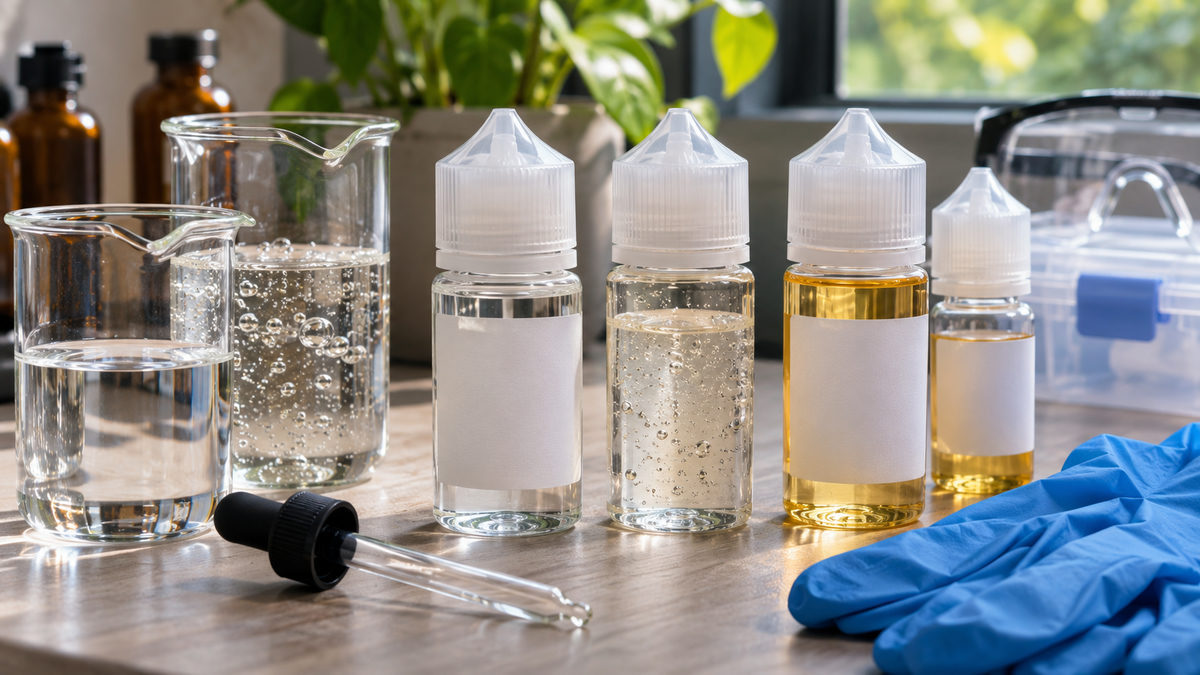
What exactly is in the liquid that a vaping device turns into an inhaled aerosol? Understanding E-Liquid Ingredients can be challenging when labels are packed with unfamiliar ratios, nicotine types, and vague flavor descriptions. Learning the basic components makes it easier for adults to spot warning signs and compare products with care. It can also lead to safer choices around handling, use, and storage.
E-liquid typically contains propylene glycol, vegetable glycerin, flavorings, and, in some cases, nicotine. Certain formulas also include sweeteners, cooling agents, acids, water, alcohol, or other additives. Once heated, the liquid may produce substances that were never listed among the original ingredients. So, a label alone cannot prove that an inhaled product is harmless.
1. Understanding E-Liquid Ingredients and How They Work
The main components
Most e-liquids begin with two carrier liquids: propylene glycol and vegetable glycerin, commonly shortened to PG and VG. They dilute the other ingredients and help form an aerosol as the device heats the liquid. The balance between them also affects thickness, flavor delivery, visible aerosol, and how well the liquid performs in a particular device.
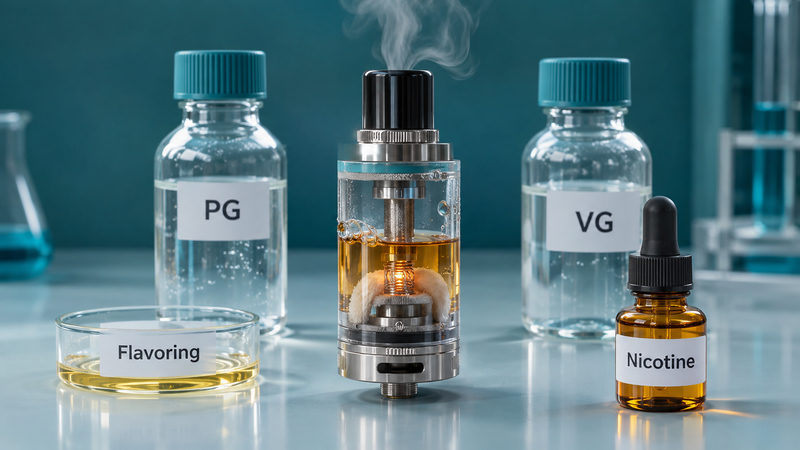
Flavorings create everything from tobacco and mint profiles to fruit, candy, and dessert flavors. Nicotine may be extracted from tobacco plants or produced synthetically, while some products contain no intentionally added nicotine at all. Even then, consumers should review labels and any available test results, since contamination and inaccurate declarations can happen.
Optional ingredients may alter sweetness, acidity, cooling sensation, or shelf stability. Manufacturers might, for example, add organic acids to produce nicotine salts. Water or alcohol may also be used to make a formula less viscous. That means two bottles with nearly identical flavor names can have very different formulations.
Ingredients can change during heating
An ingredient list tells you what is in the liquid before heating. It cannot identify every chemical that ends up in the aerosol. Heat may change individual ingredients or cause them to react with one another, and an overheated coil can generate more unwanted breakdown products than a device operating properly.
Aerosol composition also depends on device power, coil material, airflow, and puff duration. A nearly dry wick, for example, can produce a harsh “dry hit” and unusually high temperatures. Residue around the coil may change after repeated heating as well. Safety therefore depends on more than the formula—it also depends on how the device is used.
Clear, detailed labels still matter, but they cannot answer every safety question. A complete label can help users avoid known sensitivities and reduce the risk of accidental nicotine exposure. Batch information also makes recalls and quality complaints easier to trace. Even so, long-term inhalation risks may remain uncertain when every original ingredient is disclosed.
2. Propylene Glycol, Vegetable Glycerin, and PG/VG Ratios
How PG and VG compare
| Ingredient | Viscosity | Primary function | Sensory effect | Device considerations | Possible sensitivity |
|---|---|---|---|---|---|
| Propylene glycol | Relatively thin | Carries flavors and nicotine | Stronger throat sensation and clearer flavor | Usually wicks easily in smaller devices | May cause dryness, irritation, or sensitivity in some users |
| Vegetable glycerin | Thick | Creates a denser visible aerosol | Smoother feel with mild sweetness | May require larger liquid ports or suitable coils | May cause irritation or discomfort in some users |
PG is a clear, fairly thin liquid that carries flavors well. Compared with VG, it often produces a more noticeable sensation in the throat. Its lower viscosity also helps liquid reach the wick in many compact devices. Still, some users report a dry mouth, coughing, throat irritation, or other discomfort.
VG is thicker and creates a denser visible aerosol. It tastes slightly sweet and often feels smoother to inhale. The drawback? Thick liquid may not reach coils designed for thinner formulas quickly enough. Poor wicking can lead to overheating, burnt flavors, coil damage, and unpleasant emissions.
Reading a PG/VG ratio
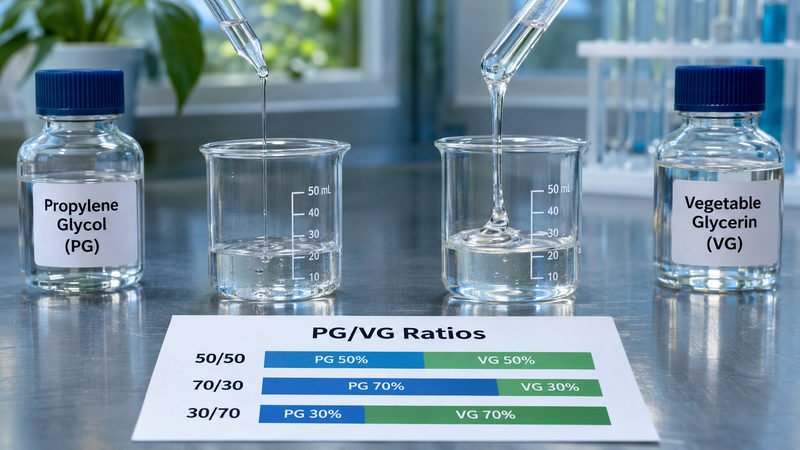
A 50/50 label usually indicates equal amounts of PG and VG, while 30/70 commonly means 30% PG and 70% VG. Sellers generally display these figures in PG/VG order. Conventions are not always consistent, though, so it is worth confirming the order instead of guessing.
A 50/50 formula often works well in smaller, lower-powered devices. By contrast, a 30/70 formula may be better suited to equipment built for thicker liquids and greater airflow. These are useful guidelines, not hard rules. Users should always follow the device manufacturer’s recommendations for liquids and coils.
More PG does not automatically make a liquid safer or more dangerous, and the same is true of VG. Exposure depends on several factors, including concentration, device conditions, individual sensitivity, and the other ingredients in the formula. Neither carrier has been shown to be harmless when inhaled repeatedly over a lifetime.
Possible reactions and practical concerns
Because PG can attract moisture, it may contribute to dryness in the mouth or throat. Water can help with ordinary dryness, but it will not treat a serious reaction. Persistent coughing, wheezing, chest discomfort, or swelling calls for prompt attention. Stop the exposure and seek appropriate medical advice.
VG may leave heavier deposits on some coils, particularly when the liquid also contains sweeteners. The coil can darken, and the flavor may gradually worsen. Do not keep using a burnt or contaminated coil. Replace damaged parts, and never try to solve the problem by increasing power without first checking the device limits.
Visible aerosol is not a reliable measure of safety. A large cloud may contain more total material even if it feels smooth, while a smaller cloud can still deliver a substantial amount of nicotine. Put simply, appearance and sensation reveal very little about the chemical risk of an exposure.
3. Nicotine Strengths, Freebase, Salts, and Synthetic Nicotine
Understanding label units
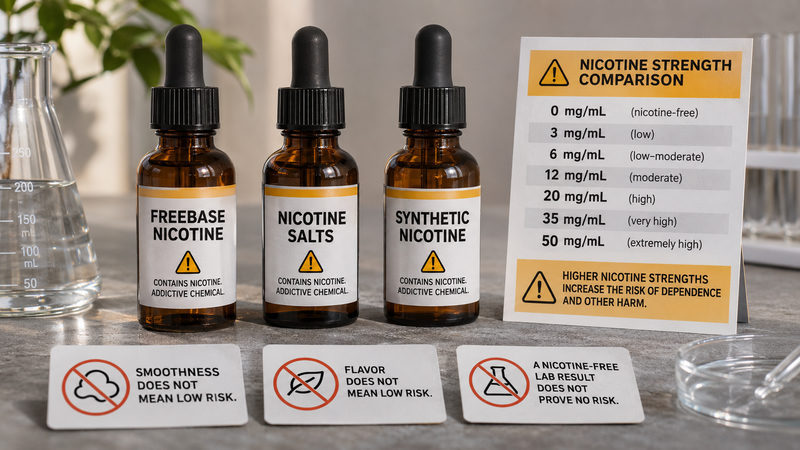
Nicotine strength is often listed in milligrams per milliliter, or mg/mL. A 10 mL bottle labeled 20 mg/mL contains 200 mg of nicotine in total. Other labels use percentages. For example, 2% usually works out to approximately 20 mg/mL, though consumers should confirm the manufacturer’s stated concentration.
The total amount in the bottle matters because concentrated nicotine can cause serious poisoning. Swallowing the liquid or spilling it on the skin may create an urgent risk. Children and animals are especially vulnerable, as even small exposures can be severe. Treat every bottle containing nicotine as potentially toxic.
Freebase, salt, and synthetic nicotine
Freebase nicotine is widely used and may feel increasingly harsh as its concentration rises. Nicotine salts combine nicotine with an acid, often producing a smoother sensation that makes higher strengths easier to inhale. That smoother feel does not make nicotine salts harmless or less addictive.
Synthetic nicotine is made without extracting nicotine from tobacco leaves. The source may be different, but the nicotine molecule can still cause toxic effects and support dependence. “Tobacco-free nicotine” is not the same as nicotine-free. The actual strength matters far more than the marketing on the front of the package.
- Freebase nicotine: Often delivers a sharper throat sensation, especially at higher strengths.
- Nicotine salts: Often feel smoother and may appear in high-concentration pod products.
- Synthetic nicotine: Comes from manufacturing processes but still carries nicotine-related risks.
Neither flavor nor smoothness tells you how much nicotine enters the body. Delivery also varies with device power and inhalation habits. When a product feels mild, users may take longer or more frequent puffs without noticing. Personal comfort is therefore a poor guide to dosage.
Recognizing possible nicotine poisoning
Possible signs of nicotine poisoning include nausea, vomiting, sweating, dizziness, headache, confusion, weakness, or a racing heartbeat. A severe exposure may lead to breathing difficulty, seizures, collapse, or unconsciousness. Stop using the product immediately if exposure is suspected. Remove contaminated clothing and rinse affected skin with clean water.
Do not induce vomiting unless a medical professional tells you to do so. Contact local poison-control services or emergency services without delay. Keep the package close by, since responders may ask for the strength, ingredients, and batch information. If a child swallows or handles nicotine liquid, do not wait for severe symptoms to appear.
4. Flavorings, Additives, and Ingredients to Look Out For
Food flavoring does not equal inhalation safety
Some compounds used in e-liquid flavorings also appear in ordinary food flavors. That does not establish that they are safe to inhale. Digestion and inhalation affect different tissues and involve different biological processes. An ingredient considered suitable for food may still irritate or harm the respiratory system.
The lungs do not process every substance the way the digestive system does. Stomach enzymes and the liver, for instance, transform many swallowed compounds before they circulate throughout the body. Inhaled substances come into direct contact with delicate airway surfaces. Heating may also change a flavoring before it ever reaches those tissues.
Terms such as “food-grade,” “natural,” and “premium” say little about inhalation safety. Natural substances can still trigger allergies, irritation, or poisoning. Food-grade status generally relates to ingestion under specific conditions; it does not automatically mean an ingredient is suitable for repeated heating and inhalation.
Common formulation additives
Sweeteners can intensify candy, fruit, and dessert flavors, but some leave deposits that shorten coil life and make overheating more likely. Cooling agents produce a cold sensation without necessarily adding a mint flavor. Acids, meanwhile, alter nicotine chemistry and may affect harshness, stability, and absorption.
Formulas may also contain water, alcohol, colorants, or preservatives. Every added ingredient becomes another variable once the mixture is heated. Look for products that clearly identify both their contents and manufacturer. Vague phrases such as “proprietary blend” make useful comparisons much harder.
- Unexplained oils or oily ingredients
- Colorants with no clear purpose
- Unusually strong chemical odors
- Floating particles, cloudiness, or unexpected separation
- Missing nicotine strength or ingredient information
- No batch number, maker identity, or contact details
- Damaged seals or evidence of tampering
Why testing and traceability matter
A reliable laboratory report can offer useful details about nicotine concentration and certain contaminants. But it is only relevant if it matches the exact product and batch. Check the date, batch identifier, laboratory information, and tests performed. A generic certificate says very little about the bottle you actually have.
Laboratory testing has limits, too, because a report only covers the substances that were tested. Poor storage or device overheating may also alter the liquid after testing. Clear manufacturing records can still help authorities trace quality failures, but neither testing nor traceability can promise zero risk.
Do not add household flavorings, essential oils, supplements, or unknown concentrates to e-liquid. Products intended for food, fragrance, or skin care may behave dangerously when heated, and oils raise particular respiratory concerns. Use only liquids intended for the specific compatible device, while remembering that intended use still carries risk.
5. E-Liquid Safety, Side Effects, and Common Myths
Irritation and allergic reactions
Some people experience irritation or allergic reactions after exposure to e-liquid ingredients. Mild effects can include a dry mouth, sore throat, cough, headache, or nausea. Those same symptoms may also point to excessive nicotine exposure or a different medical issue. If they persist, worsen, or keep returning, seek a professional assessment.
Hives, itching, facial swelling, wheezing, and breathing difficulty may indicate an allergic reaction. Stop the exposure at once. Severe swelling, breathing trouble, faintness, or rapidly worsening symptoms require emergency care. Never try the product again simply to confirm whether it caused the reaction.
Common myths
- “Nicotine-free means risk-free.” Other ingredients and heating products may still cause harm.
- “Smooth vapor is safer.” Cooling agents, salts, and flavors can mask harshness.
- “Natural ingredients are harmless.” Natural substances can irritate lungs or trigger allergies.
- “A clear liquid is pure.” Appearance cannot reveal dissolved chemicals or microbial contamination.
- “Legal products are harmless.” Legal sale does not eliminate toxic, respiratory, or dependence risks.
Evidence about long-term exposure is still developing because devices, products, and user habits vary so much. That uncertainty does not erase what is already known. Nicotine can cause dependence, and liquid nicotine can poison someone through swallowing or skin contact. Heated aerosols may contain irritants and harmful breakdown products as well.
Comparing risks takes care. One product may expose users to fewer selected chemicals than combustible smoke and still cause harm. “Less harmful” does not mean harmless. People who do not already use nicotine products should not begin vaping because of that phrase.
When to seek urgent help
Contact poison-control or emergency services after suspected nicotine ingestion, substantial skin exposure, or unexpectedly severe symptoms. Seizures, collapse, confusion, chest pain, and breathing difficulty all require emergency help. So do serious signs of an allergic reaction. Keep the product container nearby if possible, but never delay treatment while looking for it.
New or worsening respiratory symptoms also need attention, even when no direct liquid exposure is obvious. Severe coughing, blue lips, marked breathlessness, or intense chest tightness may signal an emergency. Stop using the device and move away from the aerosol. Follow medical advice—do not take another puff to see what happens.
6. How to Choose, Read, and Store E-Liquid Responsibly
A practical label checklist
Before buying, inspect the entire package rather than focusing only on the flavor name. A responsible label should make essential details easy to locate. The bottle should also have an intact seal and, where local rules require it, a child-resistant closure. Avoid products with leaking caps, altered labels, or unclear origins.
- Confirm the nicotine strength and its measurement unit.
- Check whether the ratio uses PG/VG or VG/PG order.
- Review the full ingredient list and allergen information.
- Find the manufacturer, importer, or responsible supplier.
- Match the batch or lot number with any available test report.
- Check the production date, expiry date, and storage directions.
- Look for required warnings and local compliance information.
- Inspect the seal, bottle, dropper, and child-resistant cap.
Words such as registration, approval, notification, or regulatory compliance do not make a product risk-free. They may simply mean that a company completed certain legal requirements. Those requirements differ by location and product category, so check what a claim actually covers before taking it as reassurance.
Storage and disposal
Keep e-liquid upright in its original container and away from heat, sunlight, food, and medicines. Store it locked up and well beyond the reach of children and animals. Never pour it into a drink bottle or an unmarked container. Brightly colored liquid can easily be mistaken for juice or candy.
Do not use e-liquid that is expired, counterfeit, contaminated, or poorly stored. A change in smell, color, clarity, or consistency may suggest deterioration, although some darkening can occur normally. Appearance by itself cannot confirm that a liquid is safe. If you are unsure, stop using the bottle and follow local disposal guidance.
Clean spills quickly while avoiding direct contact with the skin. For a small spill, disposable gloves can help reduce exposure. Keep contaminated materials away from children and pets until they can be discarded safely. If the spill is large or anyone develops symptoms, contact local poison-control services for advice suited to the situation.
Never combine products unless the manufacturer specifically supports doing so. Mixing at home can lead to concentration mistakes, contamination, and accidental poisoning. Concentrated nicotine, in particular, demands precise measurement and specialized controls. Purchasing a sealed product from a traceable supplier avoids some preventable handling hazards, though it cannot remove every inhalation risk.
Conclusion
E-liquid generally combines PG, VG, flavorings, and optional nicotine. Yet its ratios, nicotine types, additives, manufacturing controls, and storage conditions can significantly affect both the experience and the risk. Heating may also produce substances that were not present on the original ingredient list. No inhaled e-liquid should be assumed harmless.
Transparent labeling helps people make better-informed choices, but it cannot remove uncertainty about long-term effects. Before buying or using e-liquid, review the full label, nicotine strength, PG/VG ratio, batch traceability, packaging, and local compliance information. Avoid anything expired, contaminated, counterfeit, leaking, or poorly stored. If an exposure or symptom causes concern, seek medical, poison-control, or emergency advice promptly.







