

Quitting nicotine can bring intense cravings, restless nights, and abrupt mood changes. You do not have to get through them on willpower alone. Nicotine Replacement Therapy Explained simply means understanding how medication can ease withdrawal. With the right approach, new routines have room to take hold.
Choosing among patches, gum, lozenges, sprays, and inhalers can still feel overwhelming. Questions about dosing, combinations, side effects, and safety are common too. This guide compares the options and explains how to use them correctly. It can also prepare you for a more informed conversation with a healthcare professional.
1. Nicotine Replacement Therapy Explained: How NRT Works
What nicotine replacement therapy is
Nicotine replacement therapy, or NRT, treats tobacco dependence by providing controlled amounts of nicotine. Unlike cigarettes, it does not expose you to tar or carbon monoxide. It also avoids most of the toxic substances produced when tobacco burns. Depending on the format, nicotine is delivered through the skin, mouth, or nose.
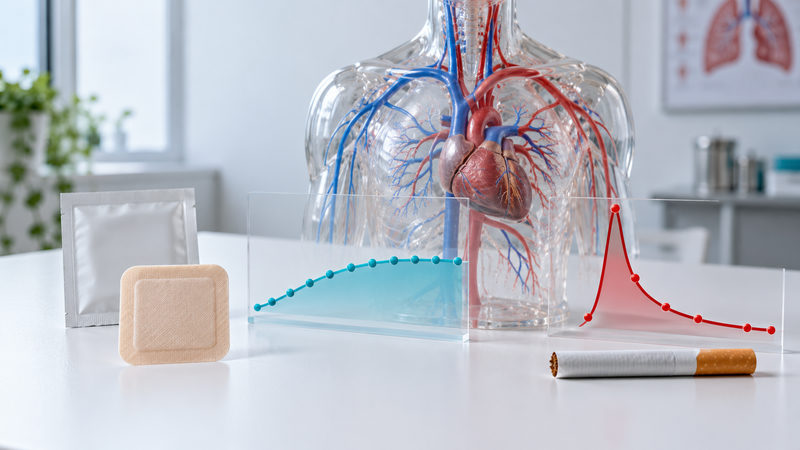
How NRT supports smoking cessation
Your brain adapts to receiving nicotine repeatedly. Take nicotine away suddenly, and cravings, irritability, restlessness, poor concentration, or disrupted sleep may follow. NRT replaces some of the missing nicotine, making those symptoms less severe. That leaves more energy for changing long-established smoking behaviors.
NRT versus smoking
Nicotine drives dependence, but burning tobacco causes most of the serious harm linked to cigarettes. Cigarette smoke contains thousands of chemicals, including many toxic or cancer-causing substances. Approved NRT delivers nicotine without the smoke. When used correctly, it is substantially safer than continuing to smoke cigarettes.
Dependence and addiction concerns
NRT may maintain some nicotine dependence, but it generally delivers nicotine more slowly than cigarettes do. The effect is less immediate and usually less rewarding. Some people use short-acting products for longer than planned. Even so, prolonged NRT use is generally less dangerous than returning to smoking.
The role and limits of NRT
NRT mainly addresses the physical side of dependence. It cannot automatically erase emotional triggers, social cues, or routines tied to smoking. Coffee, driving, stress, or alcohol may still spark an urge. Medication works best when paired with a practical plan for changing those patterns.
2. Types of NRT and How to Choose the Right Format
Long-acting nicotine patches
Patches release nicotine gradually through the skin over many hours. They are useful for steady background cravings and need little attention during the day. Some are designed for daytime wear, while others can be worn for 24 hours. Wearing one overnight may reduce morning cravings, though it can also cause vivid dreams or sleep problems.

Short-acting NRT products
Short-acting products offer a more direct response to sudden cravings. Gum and lozenges are discreet, portable, and available without prescriptions in many countries. Nasal sprays tend to work quickly but can irritate the nose. Nicotine inhalers also provide a hand-to-mouth action, although availability and prescription requirements vary.
- Gum: Offers flexible dosing but requires the correct chew-and-park technique.
- Lozenges: Work discreetly without chewing, although they may cause hiccups or heartburn.
- Nasal sprays: Deliver nicotine quickly but can cause watering eyes or nasal irritation.
- Inhalers: Replace some hand-to-mouth behavior but may irritate the mouth or throat.
Matching NRT to nicotine dependence
Dependence is about more than the number of cigarettes you smoke. A clinician may ask how soon you smoke after waking or whether cravings wake you at night. The severity of past withdrawal and previous unsuccessful quit attempts also offer useful clues. Frequent smoking, or having your first cigarette within 30 minutes of waking, may point to stronger dependence.
Matching NRT to preferences and daily routines
Your health and daily routine can help narrow the options. Gum may be unsuitable if you have dentures, jaw pain, or significant dental problems. Patches can bother sensitive skin, while sprays may aggravate nasal disorders. And if you spend much of the day in meetings, a discreet patch or lozenge may be more practical than an inhaler.
When professional guidance matters
Talk with a pharmacist or clinician if you are unsure which product to choose. Professional guidance is also useful after unsuccessful NRT attempts or when dependence feels particularly strong. Be sure to mention relevant heart conditions, pregnancy, breastfeeding, complex medication use, or severe skin disease. A professional can tailor treatment to your nicotine exposure and medical history.
3. NRT Dosage and Correct Use of Patches, Gum, and Lozenges
How the starting dose is determined
Your starting dose depends on the product and your current nicotine intake. Common factors include daily tobacco use and how soon you smoke after waking. Package instructions may set different thresholds for patches, gum, and lozenges. Follow local labeling and professional advice rather than copying someone else’s dose.

Consider two people who each smoke ten cigarettes a day. One reaches for a cigarette immediately after waking; the other waits several hours. Their needs may be different, because cigarette count does not tell the whole story. Vaping and other nicotine products make dose estimates even harder to predict.
Using nicotine patches correctly
Place each new patch on clean, dry, hairless skin. Avoid areas with cuts, rashes, creams, or heavy irritation. Rotate application sites as well; this helps reduce skin reactions. Press the patch firmly as directed, then wash your hands to remove any nicotine residue.
Follow the instructions for daytime or overnight wear. If the patch disrupts your sleep, ask whether that particular product can be removed at bedtime. Do not apply a new patch over the previous site. Never cut a patch unless its instructions specifically say that cutting is permitted.
Using nicotine gum correctly
Nicotine gum is not meant to be chewed like regular gum. Chew it slowly until you feel tingling or notice a peppery taste. Then “park” it between your cheek and gum until the sensation fades. Continue this chew-and-park cycle according to the package directions.
Chewing continuously may release nicotine too quickly. This can lead to nausea, hiccups, heartburn, or jaw discomfort. Do not swallow the gum. Try not to swallow large amounts of nicotine-containing saliva caused by chewing too rapidly either.
Using nicotine lozenges correctly
Put a lozenge in your mouth and let it dissolve slowly. Move it from one side of your mouth to the other now and then. Do not chew it, crush it, or swallow it whole. Using it too quickly may cause more stomach discomfort and reduce nicotine absorption through the mouth.
Food, drink, and common technique errors
Acidic drinks can interfere with nicotine absorption from gum and lozenges. Coffee, soft drinks, and many fruit juices fall into this category. Check the product instructions for guidance on avoiding food and drinks before and during oral NRT use. When the label allows it, water is often the easiest choice.
Underdosing is another frequent issue. Some people wait until a craving feels unbearable or take fewer scheduled doses than directed. Others stop after a few good days, even though the risk of withdrawal remains. Consistent use early on may prevent cravings more effectively than waiting to treat them once they become intense.
Missed doses and excess nicotine
Missed-dose instructions differ from one product to another. Follow the individual label, and do not double the next dose. Check before combining NRT with cigarettes or other nicotine products. Personalized guidance can be especially helpful when your nicotine exposure changes unexpectedly.
Too much nicotine may cause nausea, vomiting, dizziness, headache, sweating, weakness, confusion, or tremor. A rapid or irregular heartbeat is also possible. Stop using the product and seek urgent professional guidance if worrying symptoms appear. Call emergency services if they are severe or worsen quickly.
4. Combination NRT, Timing, and Treatment Duration
Why long-acting and short-acting NRT may be combined
A patch supplies steady nicotine to ease background withdrawal. Yet stress, meals, driving, and social situations can still trigger breakthrough cravings. Gum, lozenges, inhalers, or sprays can help during those moments. Used together, these products can address both ongoing withdrawal and sudden urges.
Using a nicotine patch and gum combination
One common approach is to apply the patch as directed each day. You then use the appropriate dose of gum when a craving begins or before an expected trigger. Some plans also schedule short-acting doses during the early stages of treatment. Stay within the limits on the label or those set by your clinician.
Who may benefit from combination nicotine replacement therapy
Combination treatment may suit people with stronger dependence or cravings that continue despite using one product. It may also help after several unsuccessful quit attempts. Someone who regularly craves a cigarette after meals, for example, might add gum to a daily patch. If the dosing is unclear, have a pharmacist or clinician review the plan.
When to start NRT
The usual approach is to begin NRT on or near a planned quit date. Some evidence-based plans, however, start treatment before smoking stops completely. Others use NRT while gradually reducing cigarette use. Because approved instructions vary by product and country, follow the relevant product directions or professional advice.
Can NRT be used after a smoking lapse?
Smoking one cigarette does not have to derail the whole quit attempt. Look at what triggered the lapse, then return to your plan as soon as possible. Review the NRT directions and stay alert for signs of too much nicotine. Rather than abandoning treatment automatically, ask for personalized advice.
Duration, tapering, and discontinuation
Many NRT plans run for several weeks and gradually lower nicotine exposure. The recommended duration and tapering schedule vary across products and brands. Follow the schedule for your specific product instead of stopping as soon as cravings ease. Get help if strong cravings continue or you think longer treatment may be needed.
5. How Effective Is Nicotine Replacement Therapy?
What the evidence shows
Approved forms of NRT improve the chances of quitting compared with placebo or no cessation medicine. Still, no treatment guarantees success for any one person. Results depend on correct use, the level of dependence, available support, environment, and continued effort. Many people need more than one attempt before they quit for good.
Why combination NRT can improve outcomes
Combination NRT manages symptoms in two complementary ways. A patch eases continuous withdrawal, while a short-acting product tackles sudden cravings. Research reviewed by Cochrane found that combination NRT works better than using a single type of NRT. The advantage comes from better symptom control, not stronger willpower.
Counseling and behavioral support
Medication helps with physical dependence; behavioral support focuses on triggers and routines. Options include individual counseling, group programs, quitlines, text services, and reputable digital tools. Family members or caregivers can help too, offering encouragement and practical accountability. Pairing medication with counseling often works better than relying on either one alone.
Building a practical cessation plan
A practical plan turns a broad goal into clear actions. Pick a quit date, then obtain your NRT beforehand. Remove cigarettes, ashtrays, lighters, and other tobacco supplies from your surroundings. Let supportive people know what you need from them, including extra patience during difficult moments.
- Identify situations, emotions, and routines that prompt nicotine use.
- Plan alternatives, such as walking after meals or holding a water bottle while driving.
- Keep short-acting NRT accessible if your plan includes it.
- Arrange professional support before cravings become difficult.
What to do when cravings continue
Ongoing cravings do not necessarily mean NRT has failed. Start by checking your technique, dose timing, and consistency. Change your surroundings, delay acting on the urge, or go for a short walk. Slow breathing may also help you stay with the craving until it passes.
Speak with a healthcare professional if cravings remain intense. The dose, product, or timing may not match your level of dependence. Do not go beyond the recommended treatment without guidance. When appropriate, a professional can also discuss other approved cessation medicines.
Responding to relapse
A lapse or return to nicotine use is useful information, not evidence that you have failed. Think about where you were, how you felt, and what kind of support was missing. You can use those details to build a stronger plan around your actual triggers. Restart support quickly and discuss medication changes if necessary.
6. NRT Side Effects, Safety, and Warning Signs
Common and product-specific side effects
Patches may cause mild redness, itching, or irritation. Gum can lead to discomfort in the mouth, jaw, or throat, particularly when it is chewed too quickly. Gum and lozenges may also cause hiccups, nausea, or heartburn. Sprays can irritate the nose, while inhalers may bother the mouth or throat.
Managing mild side effects
Rotate patch sites and double-check your application technique. With oral products, slow down and avoid swallowing the product or using it continuously. Consider whether certain foods or drinks are contributing to stomach symptoms. If problems continue, ask a pharmacist or clinician whether another NRT format might suit you better.
Signs of excessive nicotine exposure
Excess nicotine can cause nausea, vomiting, pronounced dizziness, sweating, tremor, or weakness. Confusion, a severe headache, or a rapid or irregular heartbeat also needs attention. Stop using NRT and seek urgent medical or poison-control guidance if these symptoms occur. The right response will depend on their severity and the services available locally.
Emergency symptoms
Get emergency care for chest pain, fainting, seizures, or severe difficulty breathing. A serious allergic reaction also requires immediate help. Warning signs may include facial swelling, throat tightness, or hives that spread rapidly. Treat any severe or quickly worsening reaction as an emergency.
Storage and accidental exposure
Keep every NRT product out of reach of children and pets. Used patches still contain nicotine and can cause poisoning. Fold them with the sticky sides together and dispose of them according to the directions. Discarded gum, lozenges, and packaging should also stay well beyond the reach of curious hands or animals.
7. Who Should Seek Medical Advice Before Using NRT?
Pregnancy and breastfeeding
Quitting tobacco is particularly important during pregnancy and breastfeeding. Treatment, however, requires an individual assessment of smoking risks, nicotine exposure, and the benefits of stopping. Discuss behavioral support, product choice, dosing, and timing with a qualified clinician. An over-the-counter label does not automatically make every product appropriate.
Heart and circulation conditions
Many people with stable cardiovascular disease may be able to use NRT with suitable guidance. A recent heart attack, worsening angina, serious rhythm problems, or uncontrolled blood pressure needs careful assessment. Chest pain or other acute cardiac symptoms require prompt medical attention. A clinician can weigh the risks of NRT against the substantial dangers of continued smoking.
Adolescents and complex health needs
Anyone under 18 should speak with a clinician before using NRT. Professional advice is also helpful for people with severe skin disorders, significant dental problems, jaw conditions, or nasal disease. Get help if the dosing instructions are difficult to understand. Safe treatment depends on knowing when, how, and how often each product should be used.
Medicines and other nicotine sources
Tell your clinician about all prescription medicines, nonprescription products, and supplements you take. Mention vaping, nicotine pouches, smokeless tobacco, and every NRT product as well. Stopping exposure to cigarette smoke can alter the way the body processes certain medicines. Some medication doses may therefore need clinical monitoring after you quit.
Using NRT to quit vaping or other nicotine products
Dosing rules based on cigarette use may not apply neatly to vaping or nicotine pouches. Nicotine delivery varies widely between devices and products. Tell a professional the product strength, how often you use it, the length of each session, and whether you use it in the morning. A personalized plan can better match your true level of dependence and likely withdrawal pattern.
Medical disclaimer
This guide offers general education, not a diagnosis or an individual treatment plan. Formulations, approved uses, and instructions vary between locations. Always follow the label supplied with your particular product. For advice based on your health, medicines, and nicotine use, consult a healthcare professional or pharmacist.
Conclusion
Nicotine replacement therapy can ease cravings without exposing you to the toxic substances produced by burning tobacco. The right format, used consistently, can make withdrawal easier to manage. For some people, combining long-acting and short-acting NRT provides better control. Behavioral support strengthens the plan further by addressing habits, emotions, and social triggers.
Pick a quit date and prepare your preferred coping strategies now. Then talk through your nicotine use, health history, medicines, and NRT preferences with a healthcare professional or pharmacist. An evidence-based quitline can also help you create a realistic cessation plan. Your next attempt does not need to be perfect. It does deserve preparation and support.