A familiar logo can conceal a surprisingly unfamiliar supply chain. Learning How to Identify Vape Manufacturing Information helps you find out who made a product and which company legally stands behind it. Still, no single label or code reveals the full story.
A brand might hire one factory, work with several suppliers, or sell a private-label device. Counterfeiters can also copy packaging, serial numbers, and verification codes. Reliable identification therefore takes several checks across the product itself, its packaging, company records, and recall notices.
1. What Vape Manufacturing Information Actually Includes
Core identity and traceability
Vape manufacturing information starts with the legal manufacturer, production location, and country of origin. It also covers the brand owner, product name, model, and contact details for the responsible company. Those names, however, may refer to different businesses within the same supply chain.
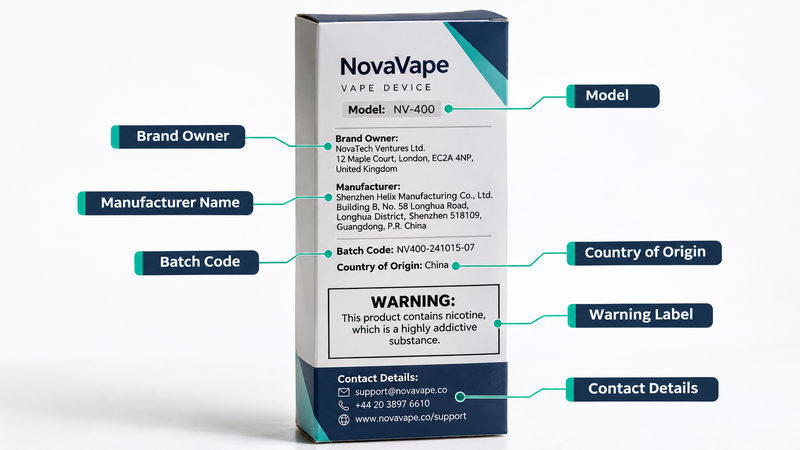
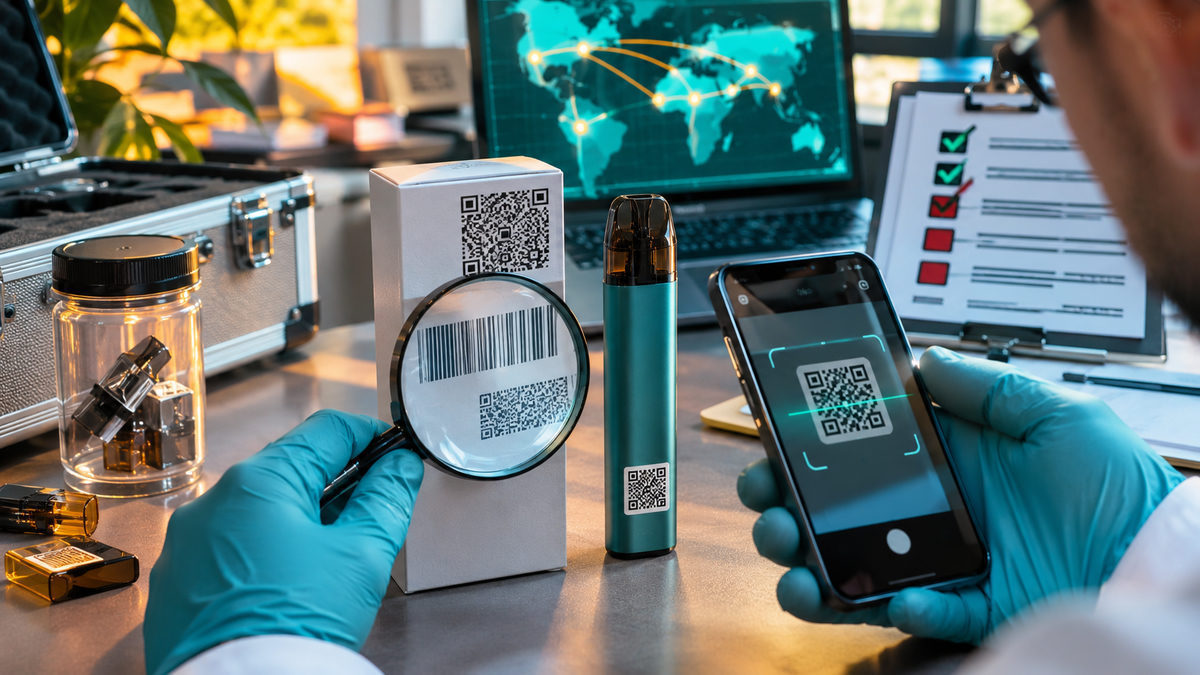
Traceability details tie a specific unit to its production history. They can include batch numbers, lot codes, serial numbers, manufacturing dates, and expiration dates. Manufacturers may also use barcodes, QR codes, or scratch-off authentication codes.
Product specifications add another useful layer of identification. Check the nicotine strength, e-liquid volume, ingredients, battery capacity, voltage, and charging requirements. Where applicable, the instructions should also explain safe storage, charging, use, and disposal.
- Product identity: Brand, model, flavor, device type, and capacity.
- Company identity: Manufacturer, brand owner, importer, distributor, or responsible business.
- Production identity: Batch, lot, serial, date, factory, or production-line information.
- Safety information: Warnings, ingredients, electrical ratings, instructions, and disposal symbols.
Understanding supply-chain roles
The manufacturer physically makes or assembles the product. An original equipment manufacturer, or OEM, produces goods to another company’s specifications. An original design manufacturer, or ODM, creates a design that other businesses can customize and sell.
The brand owner controls the name and presentation consumers see. An importer brings the product into a particular country, while a distributor supplies stores or regional sellers. The retailer is the business that sells the item to the consumer.
These roles sometimes overlap, but they often belong to separate companies. A package, for example, might list a British importer and an American brand address even though a contracted factory in another country made the device.
Crucially, a company name or conformity mark does not guarantee safety, authenticity, legality, or low health risk. Even a genuine product may be damaged, recalled, or sold unlawfully in a particular market. Think of identification as one part of a broader safety assessment.
2. How to Identify Vape Manufacturing Information on the Product
Inspect the product before scanning anything
Start with the physical product under bright light. Examine the device body, disposable casing, pod, coil, battery compartment, e-liquid bottle, and bottle base. Look closely for information that has been engraved, printed, embossed, or laser-marked.
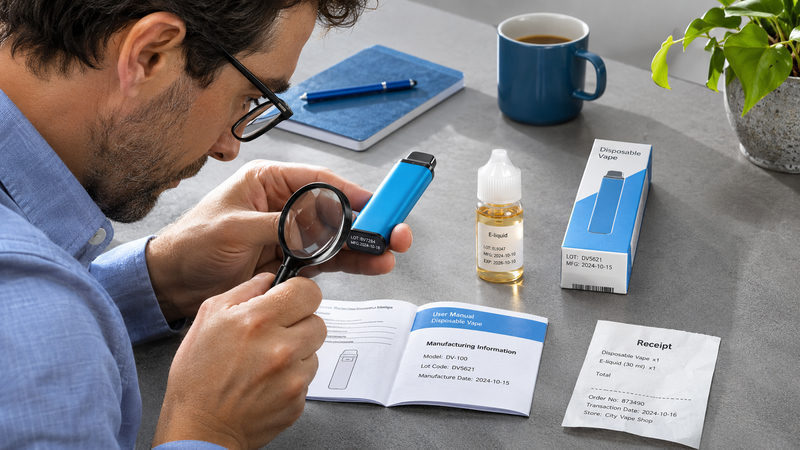
Tiny markings can reveal more than the front label. A disposable, for instance, may show its model beneath the mouthpiece or beside the charging port. A bottled liquid might carry its batch code on the shoulder, cap seal, or base.
Then inspect every side of the retail box. Look at the tamper seal, box flaps, internal tray, manual, warranty card, and authenticity insert. Keep the receipt too, since it links the unit to its seller and purchase date.
Read company wording carefully
The wording used to describe a company matters. “Manufactured by” usually points to the producer, whereas “produced for” often names the company that commissioned the product. Even so, neither phrase necessarily identifies every factory involved in making components or filling the device.
- Manufactured by or made by: Usually indicates the legal producer named on the package.
- Produced for: Often identifies the brand owner or contracting business.
- Imported by: Names the business responsible for bringing goods into that market.
- Distributed by: Identifies a supply or sales company, not necessarily the manufacturer.
- Responsible person: Names an accountable legal representative in some jurisdictions.
Be careful not to confuse the country-of-origin statement with a nearby address. “Made in” usually names the manufacturing country, while an importer’s address identifies its local office. The market where a product is distributed does not tell you where it was made.
Dates may appear in several spots. Check the bottom, rear label, box flap, bottle shoulder, cap seal, and any ink-jetted code area. “MFG” commonly refers to the manufacturing date, while “EXP” generally means expiration.
Account for different product categories
Disposable vapes often carry codes on the bottom of the casing or on the outer box. Refillable devices may place model and electrical details inside the battery compartment. Pods and coils, with little room on their surfaces, commonly rely on blister packs or cartons instead.
Replaceable batteries should show their chemistry, capacity, voltage, and manufacturer information. Bottled e-liquids typically list nicotine strength, liquid volume, ingredients, warning statements, and batch details. Exactly what must appear depends on local requirements.
Legitimate packaging usually provides a clear product identity and details for the responsible company. It may also include nicotine warnings, age restrictions, ingredients, electrical ratings, instructions, and local compliance statements. Safety text should be readable and permanently attached.
Compare the item with images on the brand’s official website, which you should locate independently. Bear in mind that lawful packaging can differ between countries, languages, batches, and design revisions. Small visual differences call for a closer look; they are not automatic proof of counterfeiting.
3. How to Read Batch Codes, Serial Numbers, Barcodes, and QR Codes
Separate model, batch, and serial identifiers
A model number identifies a design, size, or product variant. Many units may share the same model number, so it rarely points to one particular production run. It may not identify the factory either, especially when several facilities make the same design.
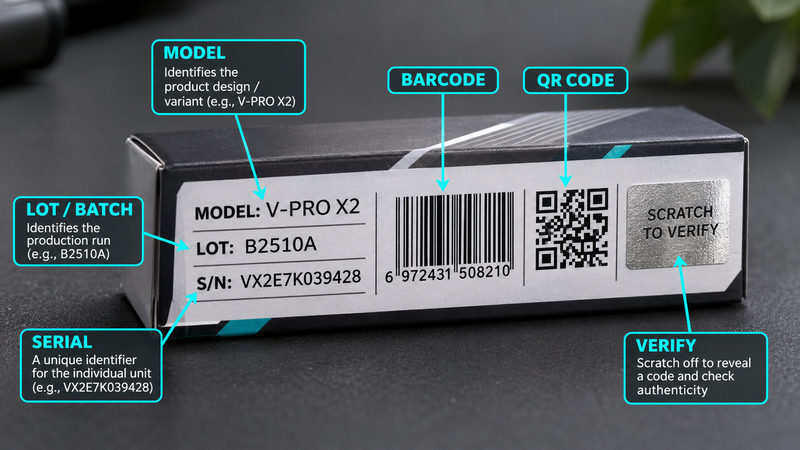
A batch or lot code links units produced under related conditions. It might represent a date, facility, production line, or work shift. There is no universal format, though. Each manufacturer creates its own system, and many never publish how it works.
Serial numbers generally identify individual devices rather than whole batches. They may be used for warranty registration, service requests, or authentication. To rely on one, however, you need to confirm it through an official company system.
A clearly labeled date is more trustworthy than an unexplained string of characters. “MFG 18-09” may look obvious, for example, but the date order could differ by market. Never decode a proprietary date format by guesswork when documented guidance is unavailable.
Use digital codes cautiously
UPC, EAN, and GTIN barcodes can point to a registered product listing and an associated company. That company might be the brand owner, license holder, or importer rather than the factory. A barcode does not necessarily identify who assembled the vape.
Before opening a QR destination, preview the web address if your phone allows it. Compare its spelling and domain ending with the official website you found independently. Watch for substituted letters, added words, odd subdomains, and unexpected redirects.
Scratch-off panels often conceal authentication codes. Enter them only on a verified brand page reached independently. Before leaving the page, record the response, the time you checked it, and the product details shown.
- Valid and unused: Encouraging, but not conclusive evidence of authenticity.
- Previously checked: Possible resale, earlier inspection, or a copied code.
- Invalid: Possible typing error, database issue, wrong regional portal, or counterfeit product.
- Wrong product shown: A serious mismatch requiring confirmation from official support.
Counterfeiters can reproduce genuine barcodes, QR graphics, serial numbers, and packaging designs. A single valid authentication code may even be copied onto hundreds of products. So a successful code check, by itself, cannot prove authenticity.
Compare every identifier you have. The online model should match the device, packaging, color, capacity, and intended market version. If any codes conflict or return confusing results, contact official support.
4. Verify the Manufacturer, Origin, and Regulatory Details
Build verification from independent sources
Find the brand’s official website on your own. Carefully type the known company name, or confirm its domain through a trusted government record. Do not depend solely on printed QR codes, advertisements, marketplace listings, or sponsored results.
Review the official product catalog, support pages, manuals, warranty terms, and authenticity portal. Check any published lists of authorized sellers, importers, and distributors as well. If the product is missing, investigate further, while remembering that discontinued models may no longer appear in current catalogs.
Compare the label with official sources, line by line. Verify legal names, physical addresses, telephone numbers, email domains, trademarks, and origin statements. A free email address, for example, deserves a closer look if the company normally communicates through its corporate domain.
Reach customer support using contact details you verified independently. Send the model, batch code, serial number, seller name, purchase location, and clear photographs. Ask whether the package design and codes are correct for the market where it was sold.
Check public records and recalls
Useful government sources may include product registries, tobacco databases, business records, customs information, and public compliance notices. Their availability varies widely by jurisdiction. Check the official regulator responsible for the market in which the product was sold.
Public databases have limits too. An entry might appear late, remain online after a product is discontinued, or apply only to one market. The listed applicant may also be an importer or authorization holder, not the physical factory.
Electrical, recycling, conformity, and laboratory marks mean different things in different jurisdictions. A printed symbol proves little on its own because it is easy to copy. When a public lookup is available, verify the certification number directly with the issuing organization.
Search recall notices using the exact brand, model, batch, and manufacturing date. Review regulator notices, consumer-safety databases, manufacturer recall pages, and distributor alerts. Remember that a recall may cover only specific batches, not every product sold under that name.
5. OEM, ODM, and Private-Label Vape Manufacturer Identification
Understand the manufacturing arrangement
An OEM makes products to another company’s requirements or branding. An ODM creates a base design that clients can customize. A white-label supplier, meanwhile, sells a largely standardized product to multiple brands.
Private-label production refers to goods sold under a retailer’s or brand owner’s name. A supplier might manage the design, production, filling, packaging, or just a few of those stages. One vape can therefore pass through several factories and specialist contractors.
This helps explain why a package may name only the brand owner or importer. Some laws emphasize the business that places the product on the local market. As a result, the contracted factory’s commercial identity may not appear on the packaging at all.
Follow the available evidence
Begin with corporate disclosures, trademark records, regulatory submissions, manuals, and warranty terms. Where they are available, review conformity documents, lawful import records, and verified business directories too. Matching legal names and addresses may expose relationships between companies.
Comparing products can offer useful clues. Look at model identifiers, dimensions, component layouts, manuals, packaging structures, and certification documents. But appearance alone cannot prove a manufacturing link, since companies often copy designs or buy the same components.
Suppose two devices have identical shell dimensions and screen layouts. They might come from one factory, or two separate factories may have purchased the same housing. Treat those similarities as leads, not confirmation.
Put direct questions to the brand owner or importer. Does it own the factory, outsource production, or work with several suppliers? Ask for the legal manufacturer’s name, production country, and traceability contact as well.
Some companies lawfully keep factory identities confidential as commercial information. Even careful research may not uncover a public OEM name. That lack of disclosure does not automatically signal wrongdoing, though it does limit independent verification.
If you still cannot identify the manufacturer, retain the product and every piece of packaging. Ask the seller or importer for invoices, declarations, or other traceability records. Rather than assuming the visible brand owns the factory, contact the relevant regulator.
6. Counterfeit Warning Signs and a Vape Verification Checklist
Recognize physical and digital warnings
Suspicious packaging usually shows a pattern of problems, not just one small flaw. Check for missing legal details, spelling errors, fuzzy printing, altered labels, broken seals, and mismatched fonts. Implausible performance claims or major differences from verified packaging also warrant caution.
Online warning signs include domains that cannot be verified and websites designed to resemble genuine ones. Newly created sites, redirected QR codes, repeated authentication codes, and unrelated support email domains should also raise questions. While investigating an uncertain page, do not enter personal or payment details.
Stop using any vape that leaks, overheats, smells strange, or activates without warning. A swollen, dented, or corroded battery is an immediate safety concern. If traceability information is missing, do not use the product until its origin has been adequately confirmed.
Complete a pre-use verification checklist
- Confirm that the seller operates lawfully and provides reliable contact details.
- Inspect seals, labels, warnings, instructions, and package condition.
- Record the model, batch, serial, barcode, and manufacturing date.
- Locate the official company domain independently.
- Use authentication tools only through a verified official page.
- Compare legal names, addresses, contacts, and origin statements.
- Check applicable product records and recall notices.
- Pause if any important detail conflicts or remains unverifiable.
Consider a common scenario. A buyer scans a code, sees a valid result, and assumes the product must be genuine. Yet the package names an unrelated importer, and the identical code appears on a second unit.
That inconsistency carries more weight than the initial successful result. The buyer should photograph both units and save the verification responses. With that evidence, official support has a better chance of investigating possible code duplication.
Document, report, and respond safely
Photograph every side of the package, along with each seal, warning, code, and device marking. Save the receipt, online seller listing, shipping details, verification results, and correspondence. Do not scratch away or throw out evidence before the investigation is complete.
When appropriate, contact the manufacturer or brand owner first. Then report the concern to the retailer, importer, or distributor. If the issue remains unresolved, escalate it to the payment provider, market regulator, or consumer-protection authority.
Do not charge, dismantle, puncture, crush, or keep using a suspicious device. Isolate it from heat, moisture, children, pets, and combustible materials. For damaged lithium-powered products, follow local fire-safety and battery-disposal guidance.
Buy only from lawful sellers that provide clear contact and return information. Avoid any vape whose origin, responsible company, or production history cannot be reasonably verified. A low price is never worth an uncertain battery condition or missing accountability.
Conclusion
Reliable identification takes a combination of physical inspection, careful code reading, official company confirmation, public-record research, and recall checks. You also need to understand the separate roles of the manufacturer, brand owner, importer, distributor, and retailer. No barcode, QR code, symbol, or database entry can prove authenticity, legality, or safety on its own.
Before buying or using a vape, work through the verification checklist and save the available traceability evidence. Stop using any product with a damaged battery, unusual behavior, or an origin you cannot verify. Serious concerns should be reported to the seller, responsible company, and appropriate local authority.