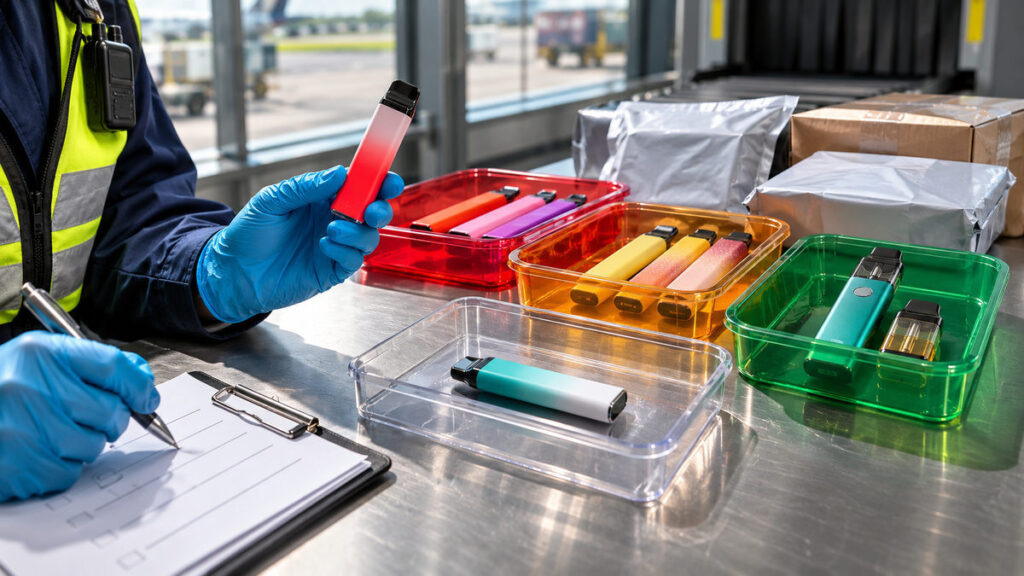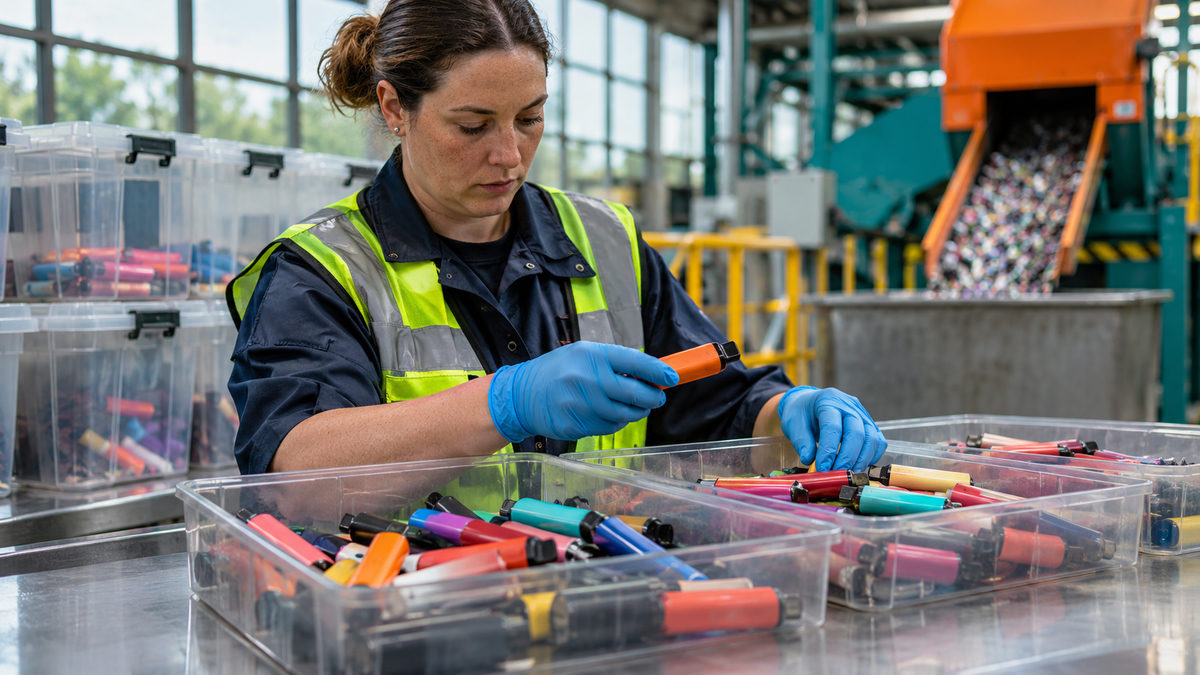
A shipment is stopped at customs, or inspectors pull vape products from store shelves. What comes next often happens out of public view. What Happens to Seized Non-Compliant Vape Products? The answer involves much more than stacking boxes in a warehouse.
Authorities may document every item, take samples, test liquids, and secure batteries as evidence. At the same time, owners may face tight deadlines for claims, appeals, export requests, or corrective action. The process may end in release, forfeiture, controlled destruction, or another lawful outcome.
There is no single procedure everywhere. The rules depend on the jurisdiction, product type, alleged violation, and agency involved. Businesses should therefore treat every detention or seizure notice as a serious legal document that requires prompt attention.
1. Why Authorities Seize Non-Compliant Vape Products
What makes a vape product non-compliant?
Non-compliant vape products include devices, components, cartridges, and e-liquids that break applicable rules. Those rules may address authorization, registration, taxation, ingredients, labeling, packaging, marketing, imports, or product safety. Regulators may also look at whether the business sold the product under permitted conditions.
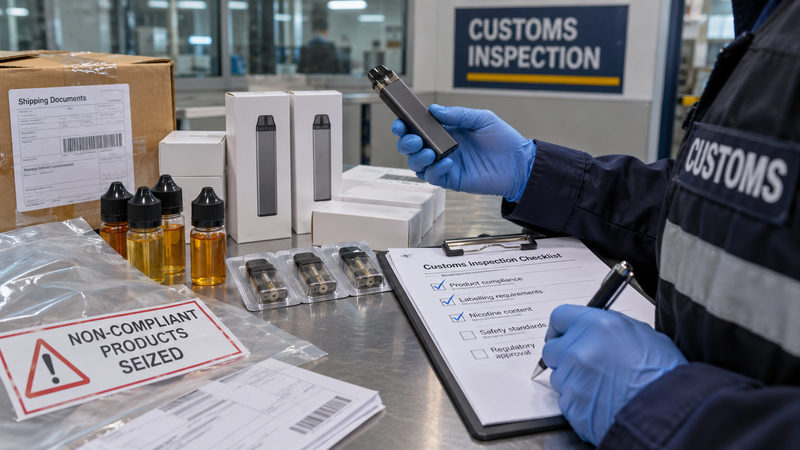
Legality can differ sharply from one market to another. A flavor permitted in one country may be restricted in the next. National, state, provincial, and municipal rules may also apply at the same time. Even the product category and intended use can change what the law requires.
Authorization issues often lead to enforcement. Examples include unauthorized e-cigarettes, unregistered products, prohibited formulations, and modified products that fall outside an existing approval. Even a change in nicotine strength or a device component may alter the product’s regulatory status.
Packaging, imports, and marketing violations
Labeling failures can immediately concern inspectors. A package might list the wrong nicotine level or leave out a required health warning. Incomplete ingredient details, ineffective child-resistant closures, and missing tax stamps can also support detention or seizure.
Customs agencies also watch for suspicious imports. Officials may stop shipments involving false classifications, missing declarations, counterfeit trademarks, or incomplete origin records. A vague description such as “electronic accessories,” for example, may attract attention when the boxes actually contain filled nicotine cartridges.
Marketing and sales practices can lead to separate violations. Frequent concerns include youth-oriented designs, unlawful health claims, restricted flavors, and inadequate age checks. Bright cartoon packaging, for instance, may draw scrutiny even if the liquid meets composition limits.
Safety and composition concerns
Authorities may move quickly when a product poses a physical or chemical danger. Tests might uncover prohibited substances, contamination, excessive nicotine, or inaccurate ingredient claims. Leaking containers also put workers, customers, and transport personnel at risk of exposure to concentrated liquid.
Hardware can be just as dangerous. Unsafe chargers, damaged cells, poor wiring, and defective lithium-ion batteries may cause burns or fires. Regulators may therefore isolate a whole batch while specialists inspect representative devices.
Common grounds for enforcement include:
- Missing authorization, registration, licenses, or tax documentation.
- False labels, inadequate warnings, or non-compliant packaging.
- Restricted ingredients, flavors, nicotine levels, or product designs.
- Counterfeit branding, deceptive declarations, or prohibited imports.
- Unsafe batteries, chargers, liquids, containers, or manufacturing defects.
2. Who Can Conduct a Vape Product Confiscation?
Border, health, and market authorities
Customs and border agencies commonly deal with imported vape products. They may detain suspicious cargo while reviewing declarations, invoices, licenses, classifications, and product eligibility. Customs law may also allow them to seize counterfeit, undeclared, prohibited, or poorly documented goods.
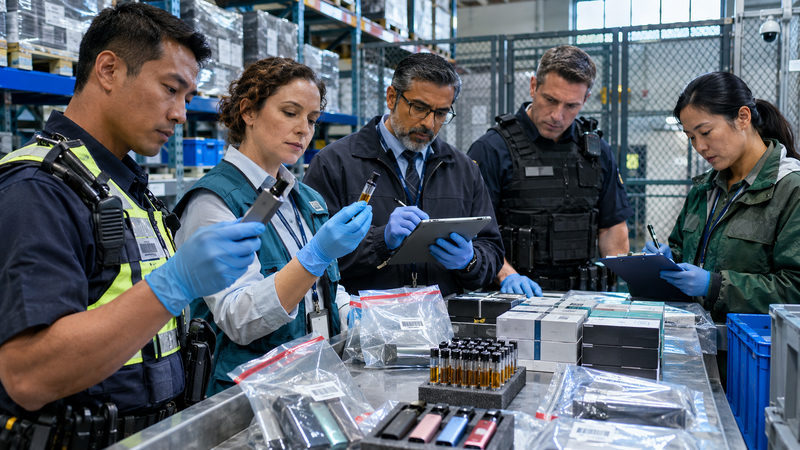
Health and product regulators concentrate on public-health and manufacturing requirements. Their powers may cover product authorization, ingredients, nicotine limits, warnings, manufacturing practices, and sales conditions. Inspectors may also collect samples or direct a business to stop distributing an affected product.
Trading standards and consumer-protection bodies often inspect stores and online sellers. They may investigate misleading claims, unsafe devices, inaccurate labels, or inadequate packaging. An inspector could, for example, test whether a bottle advertised as child-resistant opens too easily.
Tax, criminal, and safety enforcement
Tax and revenue authorities investigate unpaid excise duties, missing tax stamps, unlicensed sales, and illicit distribution. This means an otherwise lawful product can still be seized if the required taxes have not been paid. Detailed purchase and distribution records often become crucial in these investigations.
Police and prosecutors may become involved when criminal activity is suspected. Cases can include smuggling, organized illicit trade, counterfeiting, fraud, or deliberate falsification of documents. Police involvement alone, however, does not establish criminal responsibility.
Environmental and fire-safety authorities may step in when stored inventory creates other hazards. Large volumes of nicotine liquid need proper spill controls. Hundreds of damaged batteries, meanwhile, can pose a severe fire and thermal runaway risk.
Joint operations are common too. Agencies may exchange intelligence, inspect premises together, and hand evidence to the authority with the appropriate powers. One inspection can therefore lead to separate customs, tax, safety, and criminal inquiries.
3. What Happens to Seized Non-Compliant Vape Products?
Stage 1: Inspection or border detention
The process typically starts with an inspection, shipment hold, or border detention. Officials check the product’s identity, quantity, origin, authorization, ownership, and intended destination. They may compare the physical goods directly with invoices, import declarations, permits, and shipping records.

A temporary hold gives officials time to investigate before reaching a final decision. During that period, the owner may have no access to the goods. Sales, transfers, alterations, or removal from the site may also be prohibited.
Stage 2: Notice and inventory
Authorities generally make a formal record of all detained or seized inventory. That record may include item counts, photographs, batch numbers, serial numbers, package descriptions, and storage locations. Officials may also note opened boxes, damaged containers, and differences between the documents and the actual quantities.
The notice should name the responsible authority and set out the legal basis for its action. It may also specify response deadlines, storage conditions, and available review procedures. Recipients should keep the original notice, along with every related envelope and electronic message.
Stage 3: Evidence and chain of custody
The products may be used as evidence in administrative, civil, or criminal proceedings. Officials can attach seals, evidence labels, tamper indicators, and unique reference numbers. Transfer logs then identify each custodian and record when the products move from one location to another.
Secure transport and controlled access help preserve the integrity of the evidence. They show that no one substituted, contaminated, or altered the samples being tested. Poor documentation can create a real dispute over whether laboratory results relate to the products originally seized.
Stage 4: Testing and inspection
Laboratories may test nicotine concentration, contaminants, prohibited chemicals, and the product’s general composition. Inspectors can compare the measured contents with the label as well. Authenticity checks may uncover counterfeit trademarks, copied packaging, or false claims about manufacturing origin.
Technical teams may examine chargers, electrical protection, wiring, and battery condition. Leaking cartridges and damaged seals can also come under inspection. Authorities do not always need to test every unit; representative sampling may be enough to support an investigation.
Stage 5: Secure storage
Products in storage need protection against theft, tampering, spills, and fire. Facilities may rely on segregated areas, ventilation, temperature controls, spill kits, and restricted entry. Staff may also keep damaged batteries and leaking nicotine containers apart from unaffected inventory.
The storage approach depends on the quantity and condition of the goods. A handful of sealed devices presents very different risks from thousands of swollen batteries. When an ordinary evidence room cannot safely handle those risks, agencies may bring in specialist contractors.
Stage 6: Enforcement decision
Once the evidence has been reviewed, authorities decide on a legal disposition. They might release the goods, allow export, approve relabeling, require remediation, or order a recall. Other cases may lead to formal seizure, forfeiture, destruction, financial penalties, or prosecution.
The process can take days, months, or even longer. Laboratory delays, notice requirements, ownership disputes, court proceedings, and agency backlogs may all extend a case. Silence should never be taken to mean that officials have closed the matter.
4. Detention, Seizure, Forfeiture, Recall, and Return
Understanding each legal status
Detention generally means a temporary restriction imposed while officials inspect products or records. An authority may hold a shipment without permanently taking ownership of it. Even so, the owner normally cannot move or sell the detained goods without permission.
Confiscation is often used as a broad, informal term. It may refer to detention, physical removal, seizure, or final forfeiture. Businesses should look beyond that general word and establish the exact legal status of their goods.
Seizure occurs when an authority takes legal control or possession because of suspected violations. Ownership does not necessarily transfer straight away. The owner may still have the right to challenge the action through administrative or judicial procedures.
Forfeiture is the legal transfer of ownership to the government. It may result from an administrative process, civil court case, or criminal proceeding. In some systems, simply failing to file a claim on time can trigger automatic forfeiture.
Recall, destruction, and possible return
A recall is not the same as government disposal. A manufacturer or seller may withdraw products voluntarily, or a regulator may order the withdrawal. Destruction after forfeiture, by contrast, takes place under government authority or through an approved disposal arrangement.
Release may still be possible in certain cases. Where local law allows, authorities might permit return, export, relabeling, reconditioning, or another corrective measure. The owner may first have to demonstrate lawful ownership, valid authorization, accurate labeling, and effective remediation.
Some defects, however, cannot be corrected legally or safely. Counterfeit, contaminated, prohibited, or materially altered products rarely qualify for release. Unknown formulations and unsafe batteries also give authorities strong grounds for controlled destruction.
Notice, appeals, and expenses
Notice rules may call for personal service, postal delivery, publication, or electronic communication. Affected parties might be able to file ownership claims, petitions, administrative reviews, hearing requests, or judicial challenges. These options often come with short, rigid deadlines.
Anyone appealing a vape seizure should begin by identifying the authority that issued the notice and the law governing it. The business should retain the notice, verify every deadline, and gather proof of ownership. Qualified counsel can then advise whether a claim, petition, hearing, or court action is the correct route.
Owners should never tamper with relevant evidence or make technical statements they cannot support. One inaccurate response may undermine an otherwise sound challenge. Legal and regulatory professionals should review any significant representations before they are filed.
Expenses can keep accumulating while the dispute is unresolved. Depending on the relevant laws, contracts, or orders, businesses may be charged for testing, storage, transport, export, remediation, and destruction. Even recovering the products may not erase the case’s financial impact.
5. How Confiscated Vapes Are Destroyed or Recycled
Why authorities rarely permit resale
Reselling seized vapes usually carries unacceptable legal and safety risks. Authorities may not have dependable information about their authenticity, ingredients, storage history, or battery condition. Resale could also put prohibited products straight back into the market that enforcement was meant to protect.
Donation raises many of the same concerns. Contaminated liquid, excessive nicotine, or a defective cell could harm the recipient. The products may also need to stay intact until every proceeding and evidentiary hold has ended.
Controlled destruction methods
Once legal holds have expired, licensed contractors may crush, shred, dismantle, or thermally process the products. The method used depends on local rules and the facilities available. Throughout transport and processing, contractors must prevent intact products from finding their way back into commerce.
Nicotine liquids need cautious handling because concentrated nicotine can injure workers. A spill may also contaminate soil, drains, or surface water. Contractors may use containment, chemical treatment, or regulated hazardous-waste processing to manage these risks.
Lithium-ion batteries follow a separate safety process. Workers may cover battery terminals, isolate individual cells, and put damaged units in suitable fire-resistant containers. Specialist carriers can then take the batteries to qualified recycling or treatment facilities.
Separation, safety, and records
Where the law and available equipment permit it, recycling can recover useful materials. Contractors may separate batteries, circuit boards, metals, plastics, glass, cartridges, and cardboard packaging. Complete separation is not always practical, particularly when products are contaminated or made from mixed materials.
Workers require appropriate protective equipment, ventilation, and spill-response supplies. Facilities must be ready for chemical exposure, battery fires, and thermal runaway as well. Ordinary bins and uncontrolled landfill disposal are generally unsuitable for this kind of mixed vape waste.
A compliant disposal process may produce several records:
- Certificates identifying the quantities and destruction dates.
- Transport manifests showing custody between approved facilities.
- Contractor names, licenses, and treatment methods.
- Photographs or recordings of supervised destruction.
- Regulatory approval, witness signatures, or final sign-off.
Counterfeit and contraband products often stay in evidence storage until the proceedings are over. Officials may keep representative samples even after the bulk of the inventory has been disposed of. Controlled destruction ultimately stops those goods from returning to an illicit supply chain.
6. Business Response, Penalties, and Seizure Prevention
Immediate steps after a detention or seizure
Keep every notice, inspection record, receipt, photograph, shipping document, and official communication. Do not change labels, records, products, or electronic files related to the case. Potential evidence should remain secure, with a clear record of who has access to it.
Record every deadline for claims, petitions, appeals, exports, remediation, and hearings. Missing just one may lead to automatic forfeiture or eliminate an important review option. Note both the filing date and the required delivery method.
Businesses may need to stop selling affected products and quarantine related stock. They should also trace matching batches through suppliers, warehouses, retailers, and customers. Contracts may require quick notification to insurers, distributors, landlords, or other commercial partners.
Gather documents that can prove legality and ownership. These may include authorizations, supplier invoices, laboratory reports, ingredient files, labeling approvals, tax records, and import declarations. Bills of lading, certificates of origin, batch codes, and payment records should also be preserved.
Speak with qualified regulatory and legal professionals before admitting liability or giving up the goods. The same care is needed before signing an agreement or making technical claims. Early advice may stop a hurried response from closing off options later.
Potential penalties and wider consequences
The consequences can go well beyond the value of the lost inventory. Authorities may impose fines, tax assessments, recalls, import restrictions, injunctions, and licensing sanctions. Businesses may also be responsible for storage, laboratory, transportation, remediation, and destruction costs.
The commercial fallout can be substantial too. Retailers may lose shelf space, and distributors may cancel supply agreements. Legal bills, operational disruption, and damage to reputation can ultimately exceed the purchase value of the seized goods.
Serious or repeated conduct may bring civil or criminal exposure. Fraud, smuggling, counterfeiting, deliberate evasion, and the knowing distribution of unsafe products receive particular scrutiny. The possible charges and evidence required, however, vary between jurisdictions.
Practical prevention measures
Check authorization and market eligibility separately for each jurisdiction where a product will be sold. Approval in one market does not guarantee legality anywhere else. Confirm the rules for every device, liquid, strength, flavor, package size, and sales channel.
Thorough supplier checks can prevent many problems. Authenticate brands, review manufacturing records, and insist on current independent laboratory reports. Contracts should also require accurate compliance documents and prompt disclosure of formulation or manufacturing changes.
A complete compliance review should cover:
- Ingredient restrictions, nicotine limits, and product registrations.
- Health warnings, package content, and child-resistant closures.
- Tax stamps, licenses, and excise-duty obligations.
- Advertising claims, flavor restrictions, and age-verification controls.
- Battery safety, charger compatibility, and transport requirements.
Keep customs classifications, declarations, invoices, bills of lading, and origin certificates accurate and up to date. Businesses should retain purchase records, distribution logs, batch codes, and tested recall procedures as well. That way, staff can quickly trace affected stock if officials raise a concern.
Give a responsible person ownership of regulatory monitoring and regular inventory reviews. National, state, provincial, and local rules do not always change at the same time. Enforcement powers, terminology, deadlines, appeals, and disposal obligations also vary widely by jurisdiction.
Businesses should rely on current official regulations and professional advice tailored to the case. General guidance cannot determine the right response to a particular notice. Local specialists can assess the evidence, deadlines, likely costs, and realistic outcomes.
Conclusion
Seized vape products generally move through detention, documentation, testing, evidence controls, and secure storage. Authorities then decide whether to release, export, remediate, recall, forfeit, or destroy them, or take further legal action. The final outcome depends on the violation, available evidence, product condition, and governing jurisdiction.
Affected businesses can face lost inventory, disposal costs, fines, licensing action, and drawn-out legal proceedings. More serious cases may also result in civil or criminal exposure. Acting quickly to preserve records and obtain careful professional advice can make a meaningful difference.
Check the current official rules in every market you serve. Audit product approvals, supplier files, labels, tax records, and import documents before trouble starts. Above all, seek qualified legal advice as soon as you receive a detention or seizure notice.